EduNinja
[Maximum number: 4]

Fig. 1.1 is a diagram showing part of a cell surface membrane of an animal cell.
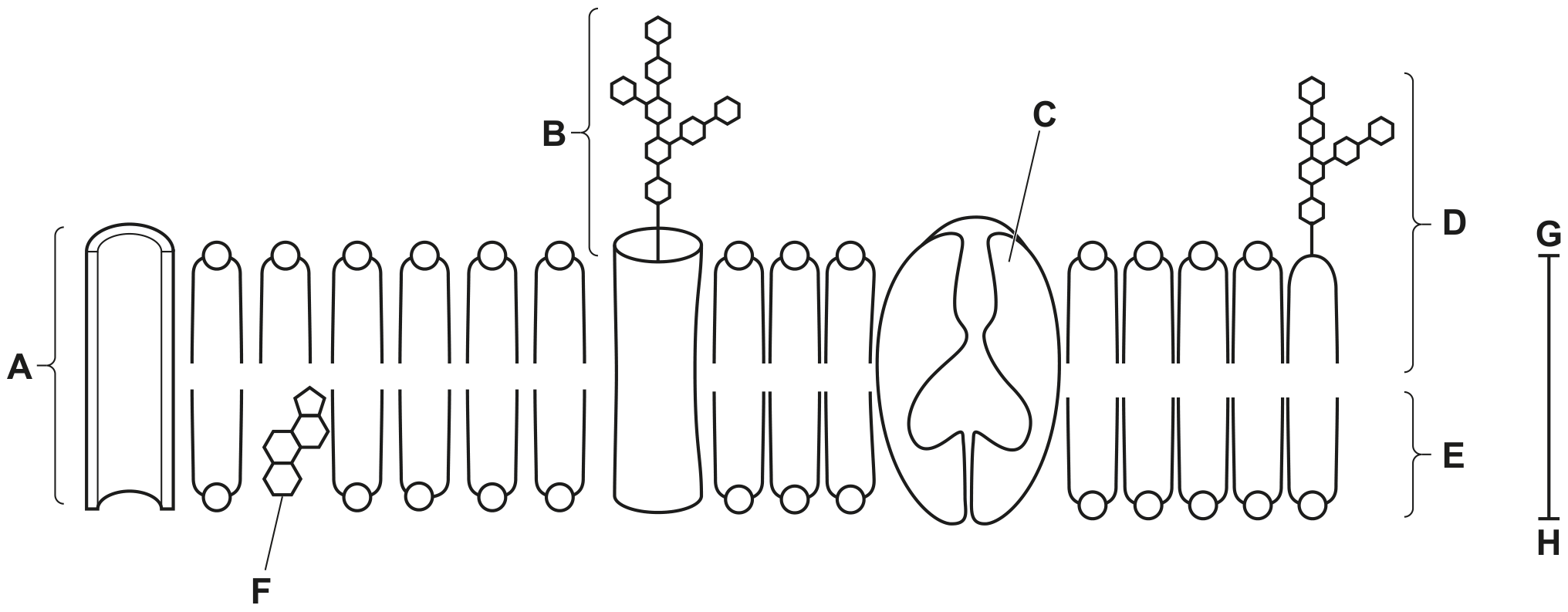
Fig. 1.1

Fig. 1.1

(a)
(i)

Complete Table 1.1 to show:
- the names and functions of the components of the cell surface membrane
- the letters of the labels in Fig. 1.1 that identify each component.
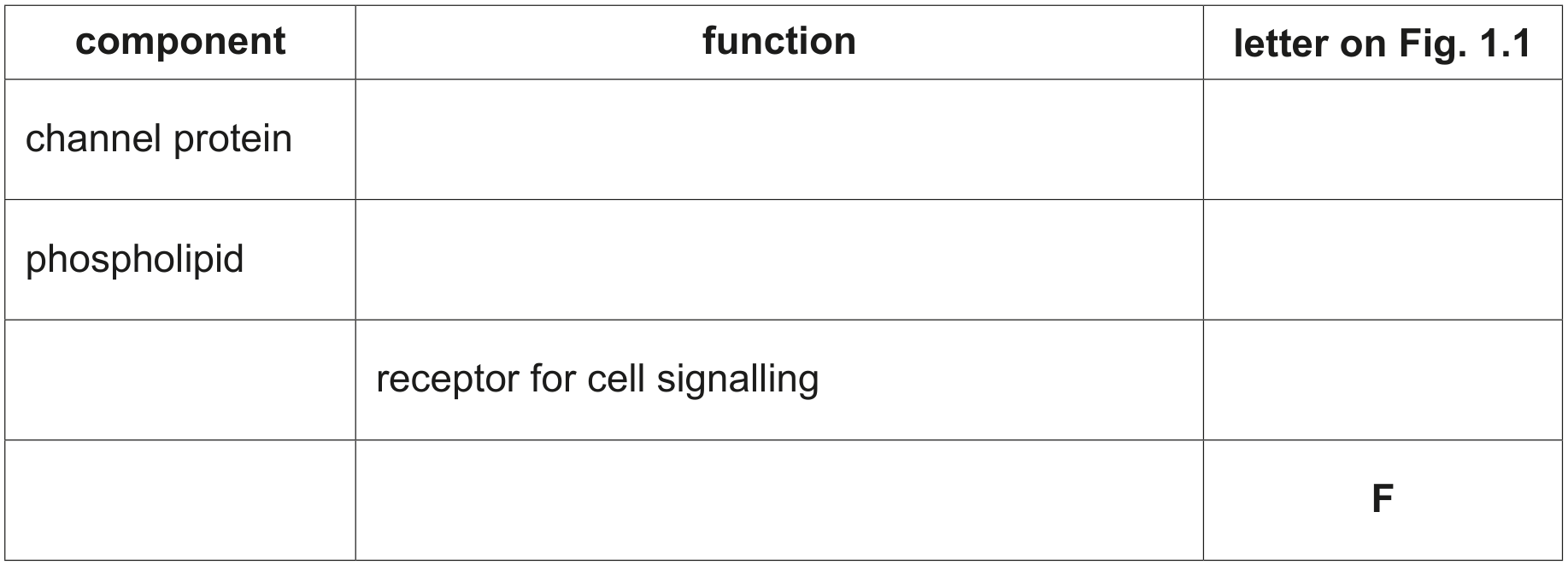
Table 1.1

Table 1.1

[ 4 ]
(a)

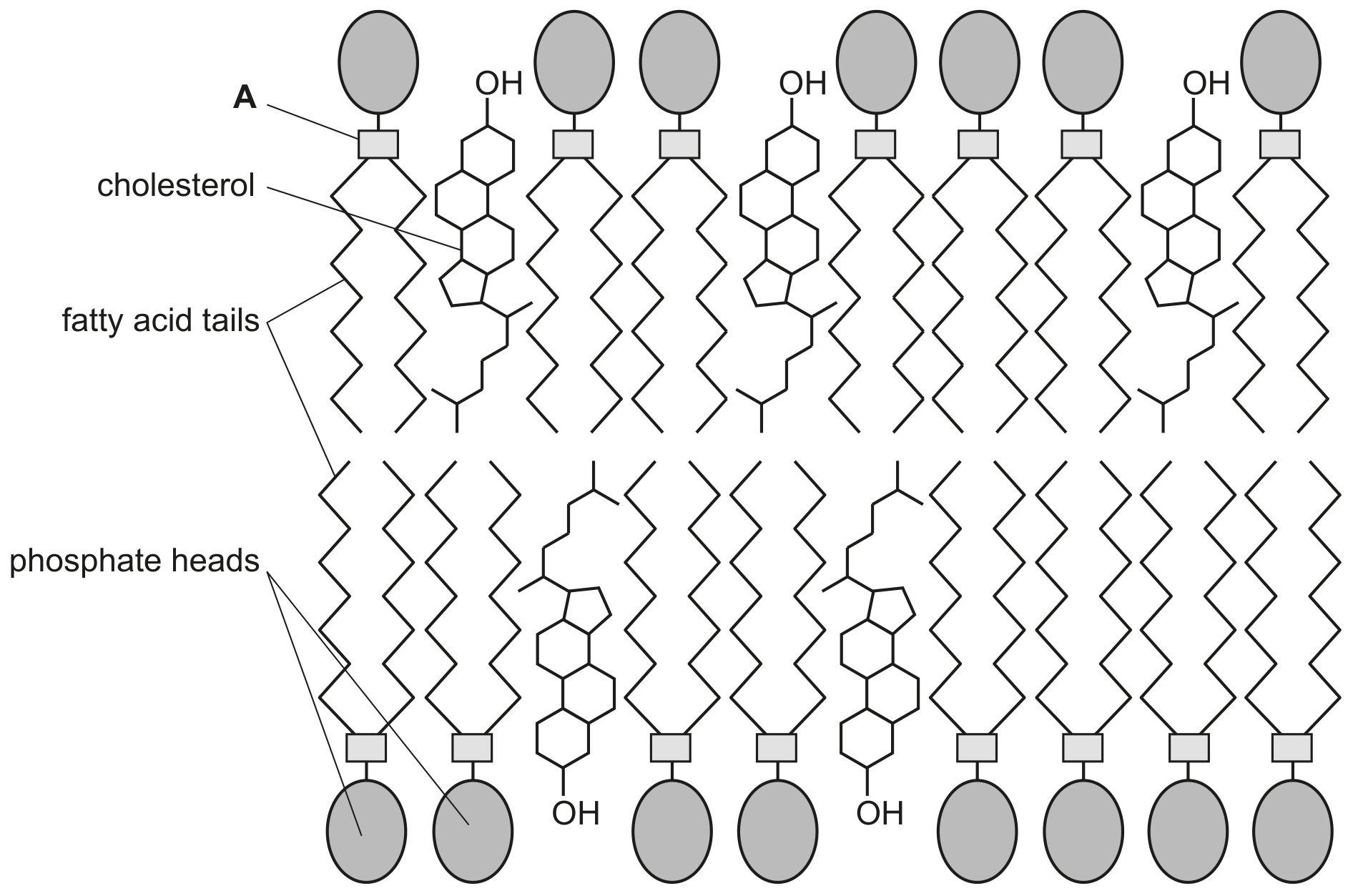
Fig. 1.1 is a diagram representing part of the phospholipid bilayer of a cell surface membrane.

Fig. 1.1

Fig. 1.1

[ 1 ]
(i)

State one role of cholesterol in phospholipid bilayers.

[ 1 ]
(a)

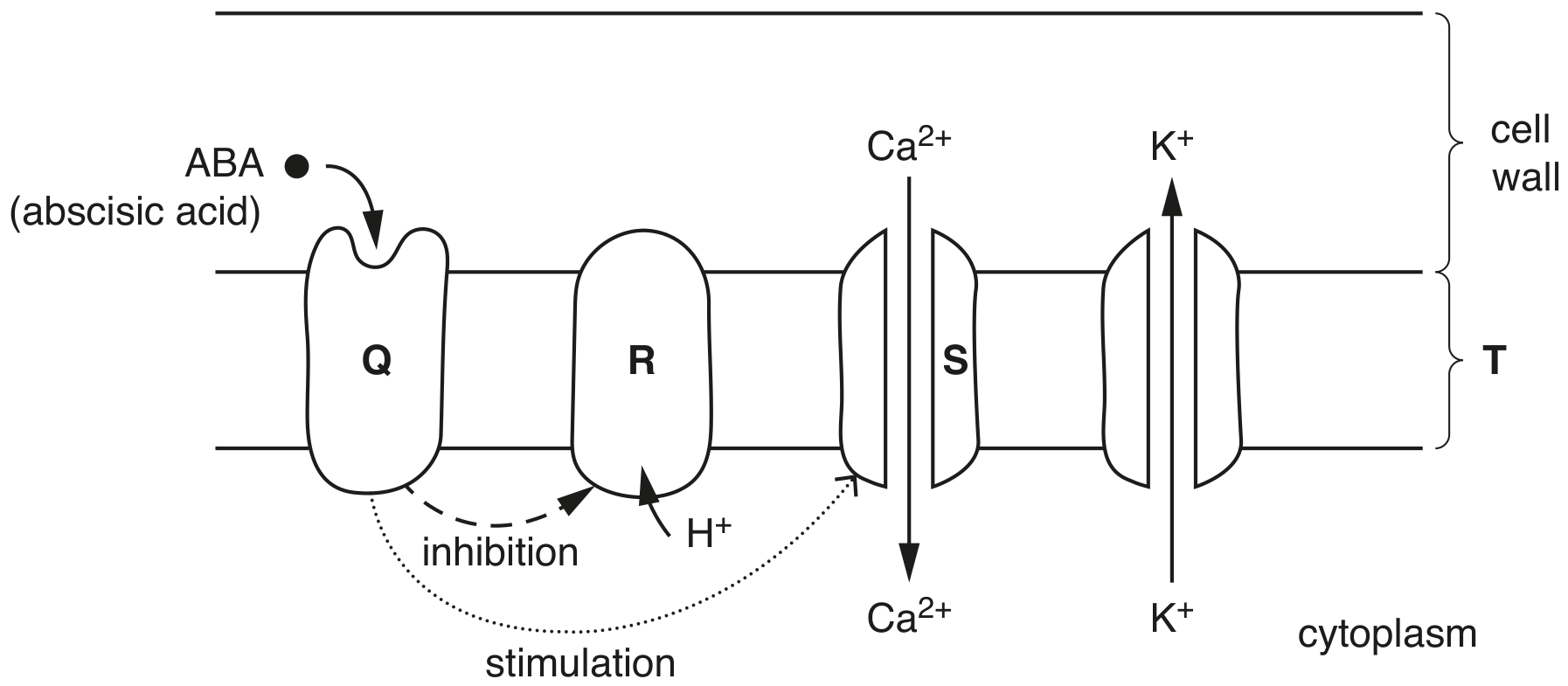
Fig. 1.1 shows part of a guard cell.

Fig. 1.1

Fig. 1.1

[ 2 ]
(i)

Proteins R and S are transport proteins.

Identify R and S.
R

S

[ 2 ]
[Maximum number: 2]

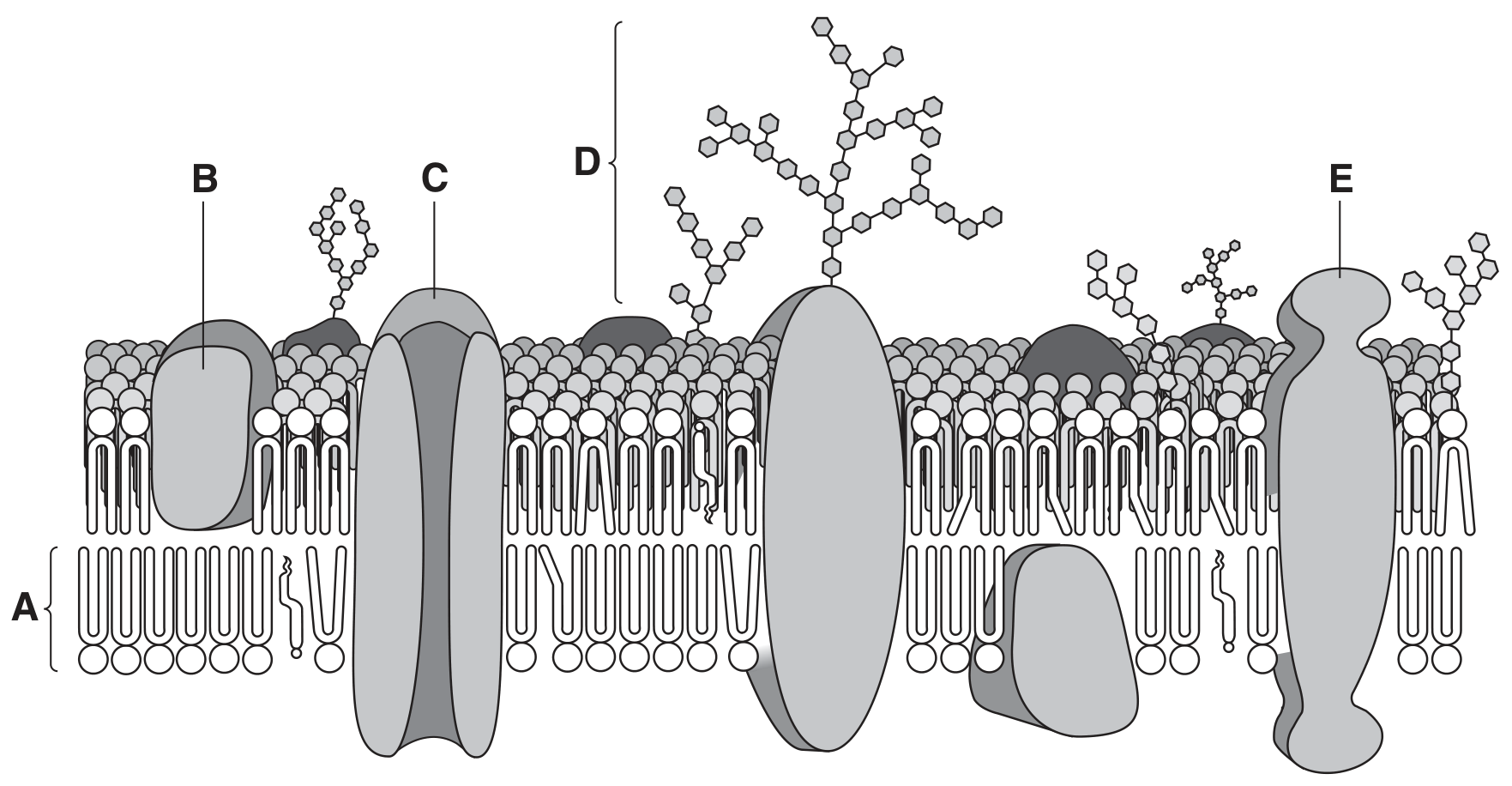
Fig. 1.1 shows a diagram of part of a cell surface membrane.

Fig. 1.1

Fig. 1.1

(a)

State the functions of C and D.

C

D

[ 2 ]
(a)

Use a label line and the appropriate letter to label each of the following on Fig. 1.1.

P protein for active uptake of potassium ions
Q protein for facilitated diffusion of polar molecules
R receptor site for a hormone
S hydrophilic heads of phospholipids on the internal surface of the membrane
T molecule that modifies the fluidity of the membrane

[ 5 ]
(a)

State two components of a cell surface membrane other than phospholipid molecules and describe their function.
component 1
function
component 2
function

[ 4 ]
[Maximum number: 1]

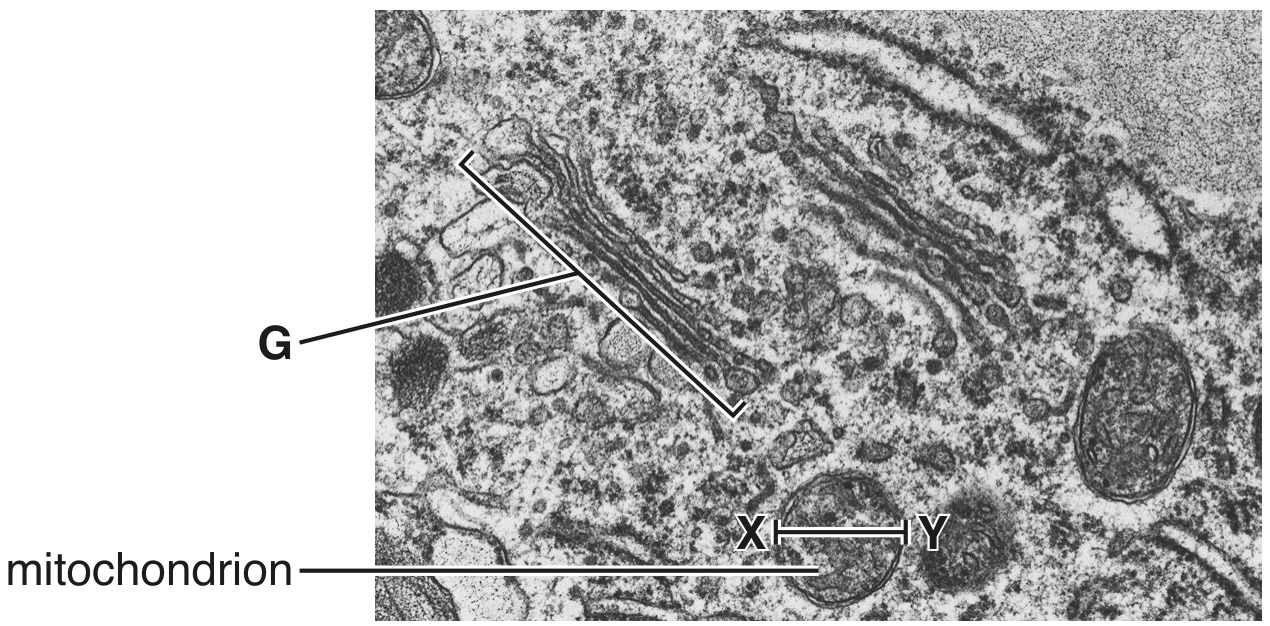
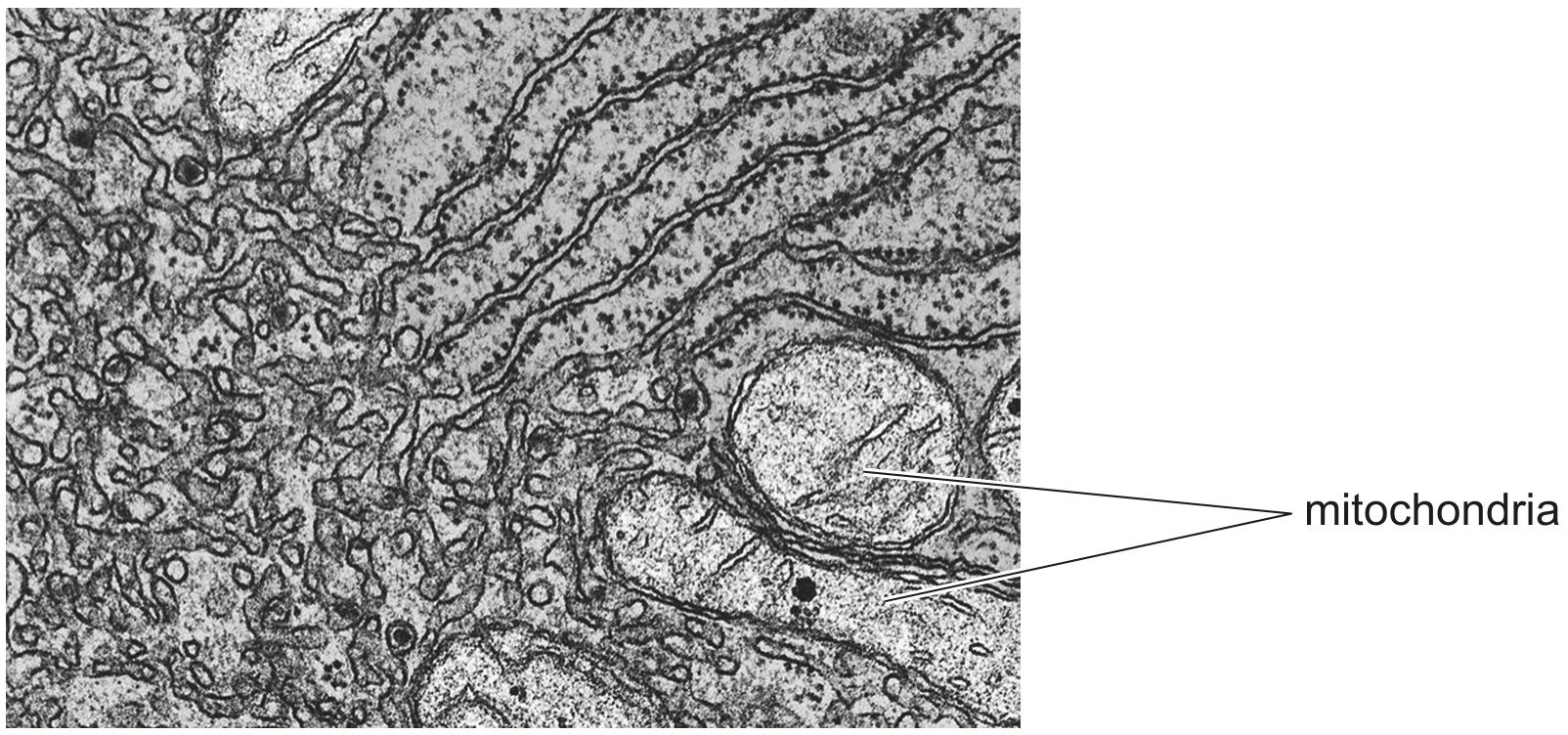
Fig. 1.1 is an electron micrograph of part of a eukaryotic cell.

Fig. 1.1

Fig. 1.1

×47000\times 47000

(a)

The inner and outer membranes of the mitochondrion have a fluid mosaic structure similar to other cell membranes. They are both approximately 6 to 7 nanometres ( nm ) thick.

[ 1 ]
(i)

The inner and outer membranes of the mitochondrion differ in the detail of their membrane components. The inner membrane is also much less permeable than the outer membrane.

Suggest one way in which the structure of the inner membrane may differ from that of the outer membrane to produce a less permeable inner membrane.

[ 1 ]
[Maximum number: 1]

The Golgi body, rough endoplasmic reticulum (RER) and smooth endoplasmic reticulum (SER) form part of the internal membrane system of a cell. The membranes have a fluid mosaic structure.

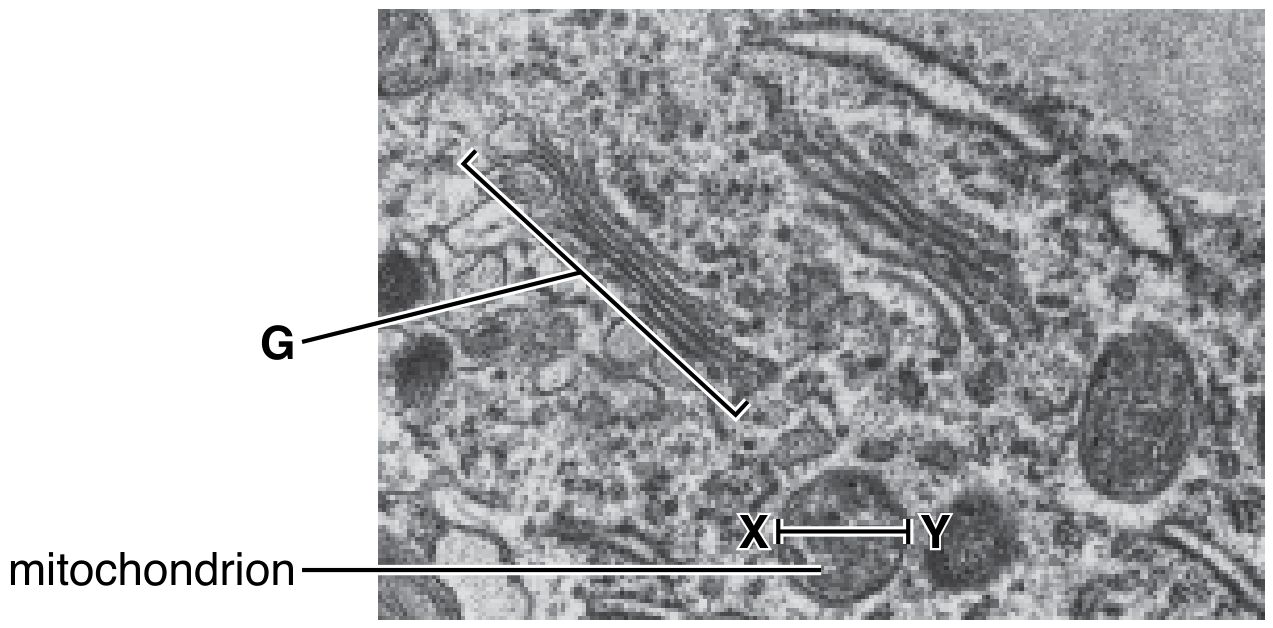
Fig. 1.1 is a transmission electron micrograph of one area of a liver cell showing a region with RER and a region with SER. Mitochondria are also visible in the image.

Fig. 1.1

Fig. 1.1

(a)

One function of a Golgi body is to package molecules into Golgi vesicles.

[ 1 ]
(i)

Some Golgi vesicles contain glycoproteins or glycolipids to be added to the cell surface membrane.

Outline the role of glycolipids in the cell surface membrane.

[ 1 ]
[Maximum number: 1]

Fig. 1.1 is an electron micrograph of part of a eukaryotic cell.

Fig. 1.1

Fig. 1.1

×47000

(a)

Many of the cell structures in Fig. 1.1 are surrounded by membranes.

Membranes are approximately 6 nm to 7 nm wide.

[ 1 ]
(i)

The inner membrane of the mitochondrial envelope is much less permeable than the outer membrane.

Suggest one way in which the structure of the inner membrane of the mitochondrion may differ from that of the outer membrane to produce a less permeable inner membrane.

[ 1 ]
[Maximum number: 1]

Which adaptation would increase active transport of carbohydrates from a plant cell?

A

areas where the cell wall is thin

B

increased permeability of the cell wall

C

large surface area of the cell surface membrane

D

selective permeability of the vacuole membrane

0