EduNinja
(a)

Prostaglandins are small lipids produced in many tissues of the body. One role of prostaglandins is to cause inflammation at the site of an injury or infection. Inflammation is the normal first response of the immune system to injury or infection.

Cyclooxygenase (COX) is an enzyme that catalyses one of the steps in the reaction pathway for the formation of prostaglandins from phospholipids. The reaction pathway occurs in the smooth endoplasmic reticulum (SER) of cells. Part of the reaction pathway is shown in Fig. 1.3.
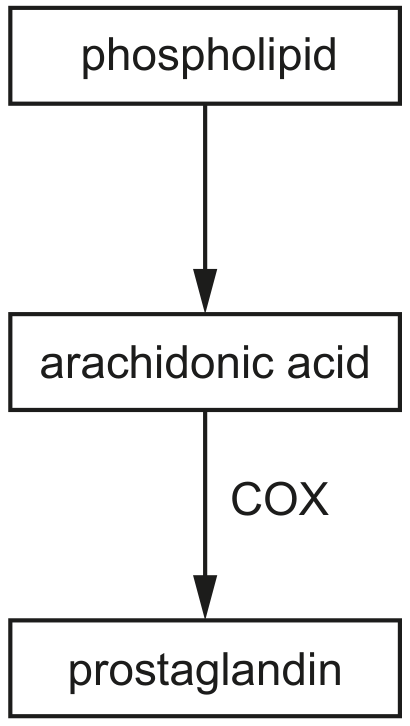
Fig. 1.3

Fig. 1.3

[ 3 ]
(i)

Sometimes inflammation can have side-effects, such as pain. Aspirin is a drug that can be used to reduce these side-effects.

Aspirin reduces the catalytic activity of the COX enzyme by modifying the R-group of one of the amino acids.

Suggest how modifying the R-group of an amino acid in the COX enzyme can reduce the catalytic activity of the enzyme.
[ 3 ]
(a)

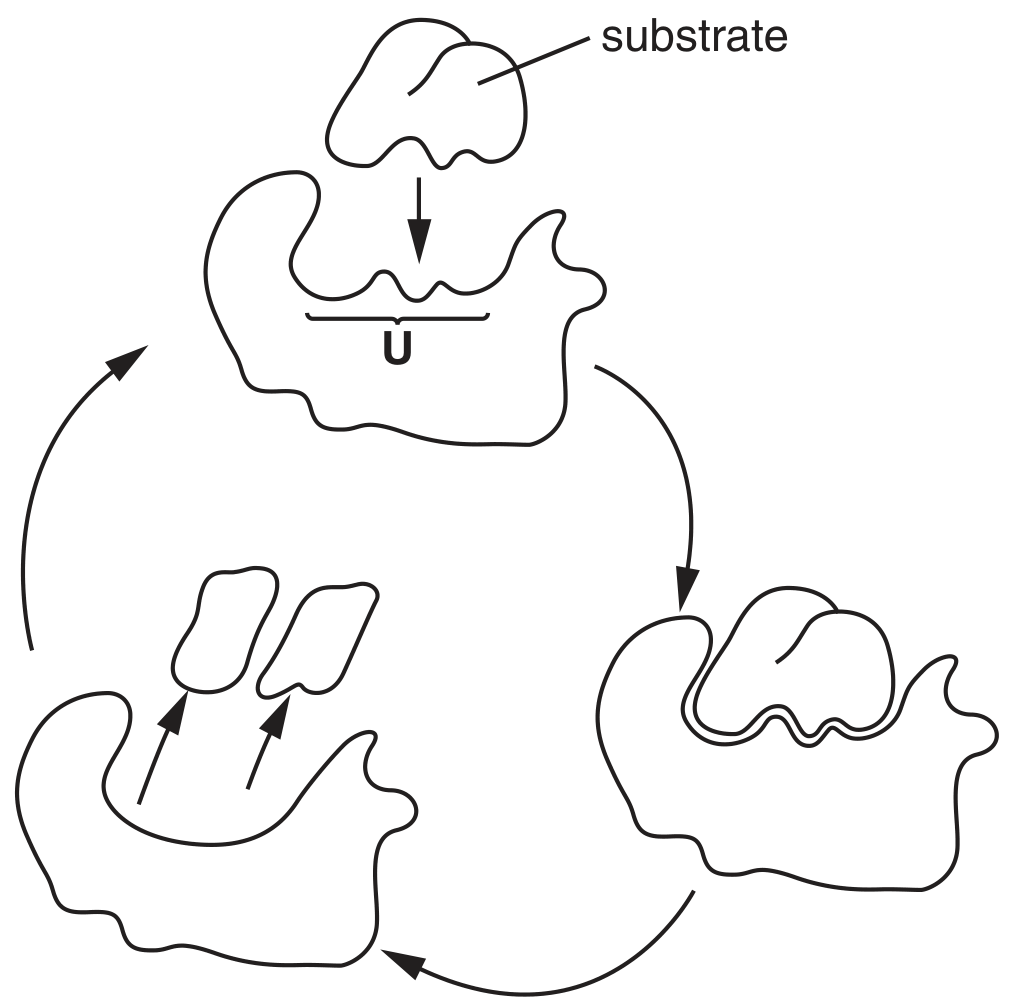
The reaction shown in Fig. 1.1 is catalysed by the enzyme sucrase. Fig. 1.2 shows an enzyme-catalysed reaction.

Fig. 1.2

Fig. 1.2

[ 5 ]
(i)

Name the part of the enzyme labelled U.

[ 1 ]
(ii)

With reference to Fig. 1.2, explain the mode of action of enzymes.

[ 4 ]
[Maximum number: 2]

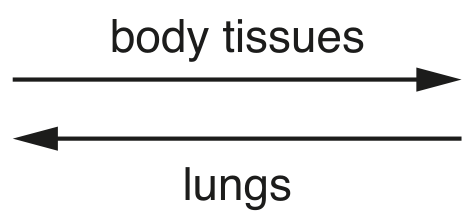
In mammalian red blood cells, carbonic anhydrase has an important role in the transport of carbon dioxide.

Carbonic anhydrase is an enzyme.

(a)

Complete Fig. 2.1 to show the reversible reaction involving carbonic anhydrase that takes place within red blood cells.

Fig. 2.1

Fig. 2.1

[ 2 ]
(a)

Explain how enzymes lower the activation energy needed to allow reactions to proceed.

[ 2 ]
[Maximum number: 1]

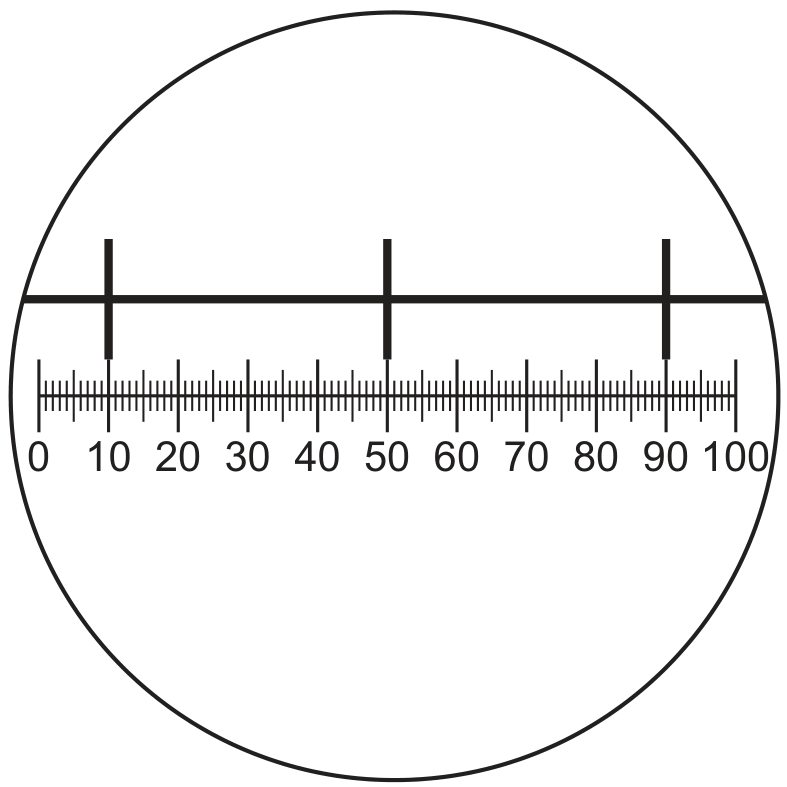
The diagram shows a stage micrometer, with divisions 0.1 mm apart, viewed through an eyepiece containing a graticule.

Question image

The same eyepiece is now used to examine a blood smear.
How many graticule divisions will cover the diameter of a white cell of 10μ m10 \mu \mathrm{~m} ?

A

1

B

4

C

10

D

20

(a)

One of the two enzymes immobilised in the cellulose pad on the test strip is glucose oxidase, which catalyses the following reaction:

 glucose + oxygen  glucose oxidase  gluconic acid + hydrogen peroxide \text { glucose }+ \text { oxygen } \xrightarrow{\text { glucose oxidase }} \text { gluconic acid }+ \text { hydrogen peroxide }

This reaction does not result in the development of colour by the chromogen. This is achieved by the activity of the second immobilised enzyme in the pad.

[ 2 ]
(i)

Explain how the reaction catalysed by this enzyme results in the chromogen changing colour.

[ 2 ]
[Maximum number: 1]

Proteases are a group of enzymes that digest proteins.
Which statement about proteases is correct?

A

A bacterial protease that is secreted from a disease-causing bacterium could act as an antigen and cause the production of an antibody.

B

Bacterial proteases are important in the nitrogen cycle as they are able to catalyse the breakdown of the organic nitrogen molecules nucleotides and urea.

C

Non-competitive inhibition of a protease that has an optimum pH of pH 2 can be overcome by increasing the substrate concentration and increasing the pH .

D

Water molecules are required when peptide bonds that link the monomers together are broken by the action of proteases in condensation reactions.

[Maximum number: 1]

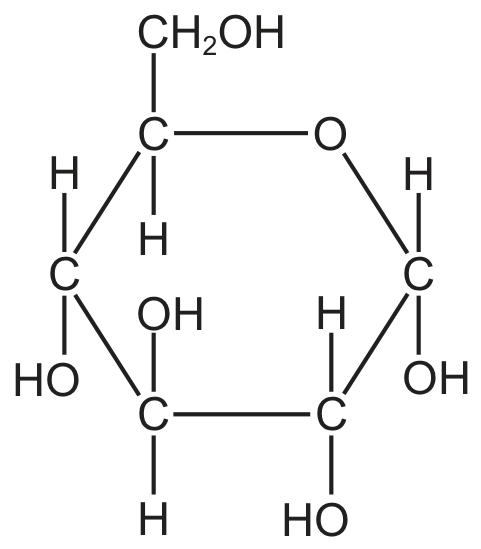
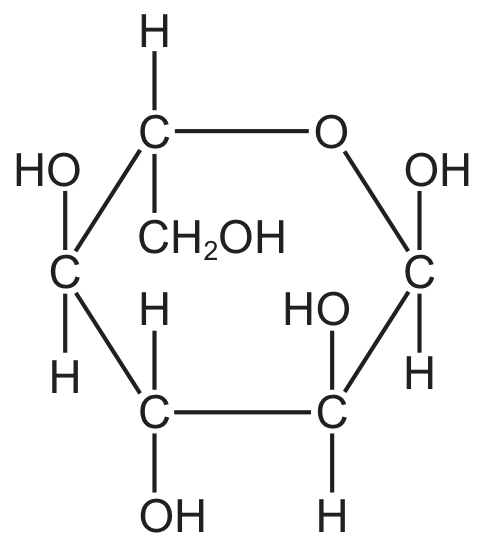
The diagram shows naturally occurring D-glucose and a form of glucose that can be synthesised in the laboratory, known as L-glucose.

D-glucose

D-glucose

L-glucose

L-glucose

The enzyme glucose oxidase catalyses the oxidation of D-glucose. The enzyme cannot catalyse the oxidation of L-glucose.

Which statement about L-glucose explains this?

A

L-glucose does not fit into the active site of glucose oxidase.

B

L-glucose has a different structural formula to D-glucose.

C

L-glucose is a synthetic sugar.

D

L-glucose is the mirror image of D-glucose.

[Maximum number: 1]

Which of the bonds will be last to break as the temperature of an enzyme is increased?

A

covalent

B

hydrogen

C

hydrophobic interactions

D

ionic

[Maximum number: 1]

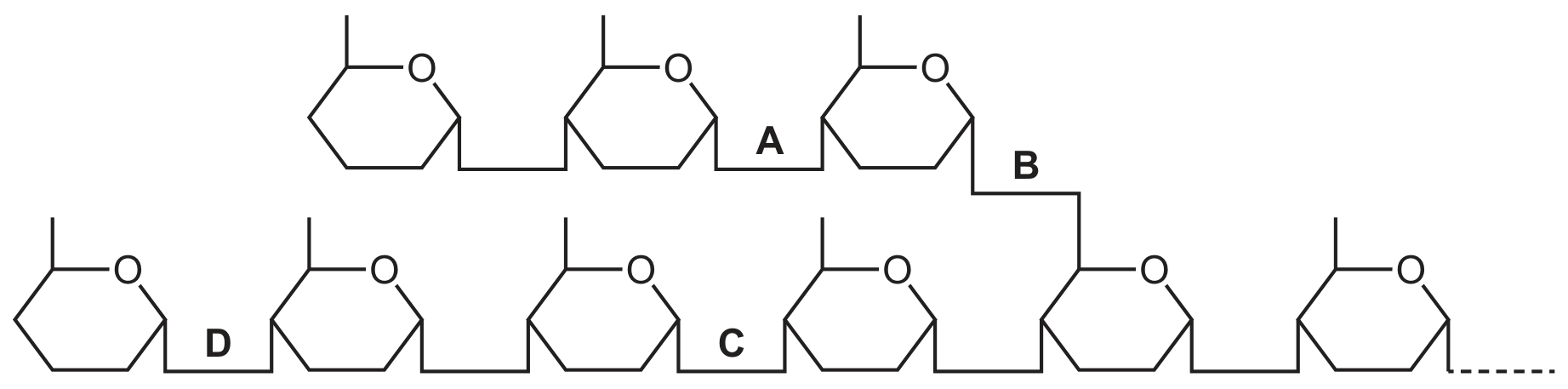
The enzyme α\alpha-amylase hydrolyses amylopectin but it is not able to hydrolyse some of its glycosidic bonds.
- It only hydrolyses 1,4 glycosidic bonds.
- It is not able to hydrolyse the last bond of a chain.
- It is not able to hydrolyse the bonds in a chain of three units attached by a 1,6 glycosidic bond to another chain.

Which glycosidic bond can be hydrolysed by α\alpha-amylase?

Question image
0