[Maximum number: 4]
In mammalian red blood cells, carbonic anhydrase has an important role in the transport of carbon dioxide.
Carbonic anhydrase is an enzyme.
(a)
Outline the features of an enzyme.
[ 4 ]
 EduNinja
In mammalian red blood cells, carbonic anhydrase has an important role in the transport of carbon dioxide.
Carbonic anhydrase is an enzyme.
Outline the features of an enzyme.
Starch molecules are the main storage molecules in many types of cereal grain, such as the grain of the barley plant.
Suggest one other advantage of using enzymes obtained from microorganisms, rather than enzymes extracted from barley seeds, in the production of sugar syrups.
Fig. 2.1 is a photomicrograph of a longitudinal section (LS) through a root tip. Two different regions are visible:
- the root apical meristem
- the root cap.
Cells in the root cap synthesise a gel-like, sticky secretion known as mucilage, which is important in reducing friction between soil and the growing root. It is composed mainly of polysaccharides and also contains some amino acids and enzymes.
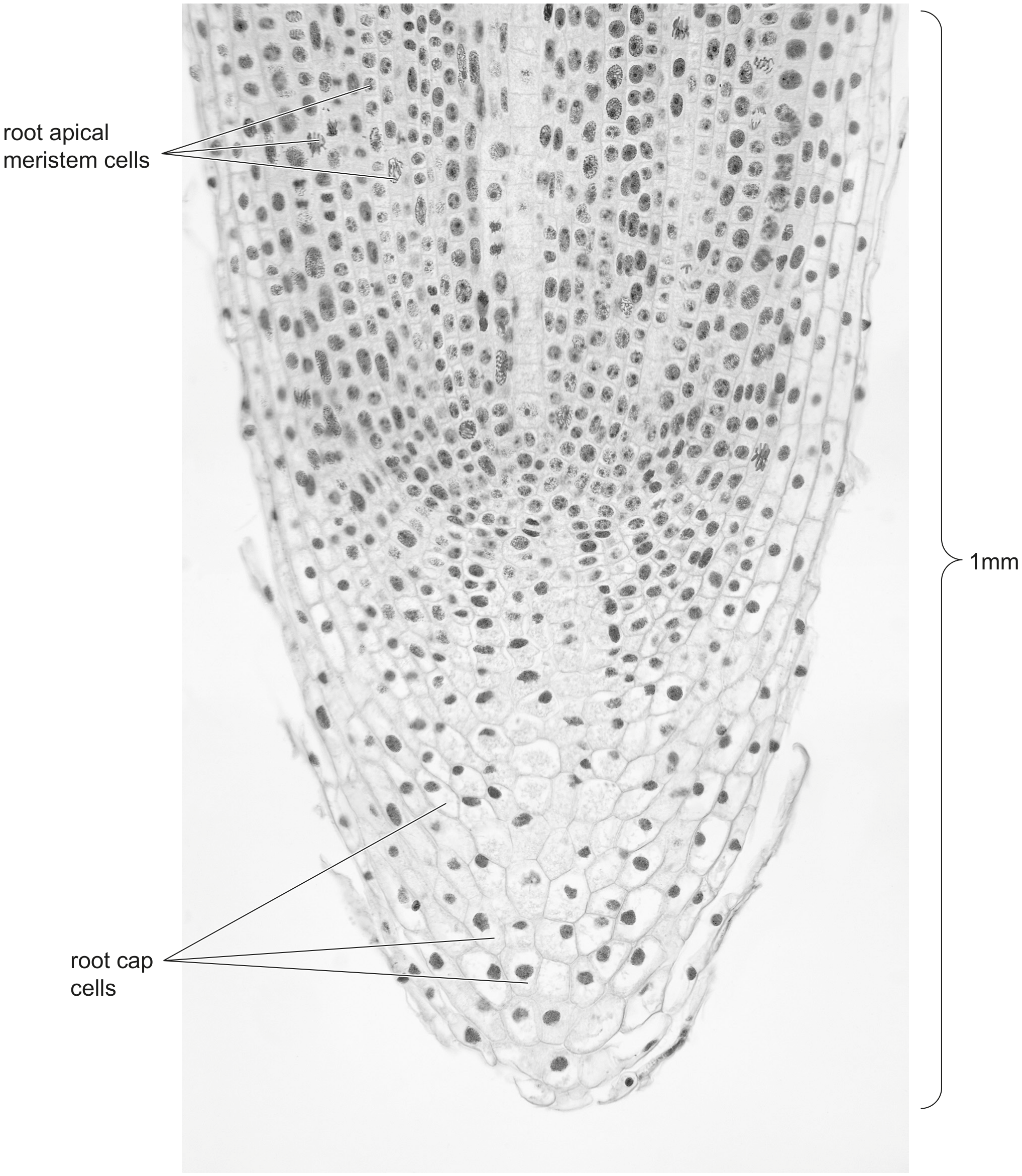
Fig. 2.1
Enzymes present in mucilage catalyse the breakdown of organic compounds in the soil. This increases the presence of mineral ions in the soil.
State the term used to describe enzymes that act outside the cells that synthesise them.
Lipases are enzymes that digest triglycerides in the lumen of the human intestine. These enzymes are released by exocytosis from intestinal epithelial cells.
Underline all the terms from the list that are used to describe these lipases.
macromolecule
extracellular enzyme
fibrous protein
polysaccharide
Scientists have found that treating milk with lipase can improve its taste.
The scientists carried out an experiment to determine the effect of lipase activity on the triglycerides found in milk.
- Lipase was immobilised in alginate beads.
- The pH of a known volume of milk was adjusted to pH 8 by adding an alkali.
- The beads were then mixed with this milk in a beaker.
- The pH of the reaction mixture was recorded over a period of 24 hours.
The results are shown in Fig. 2.2.
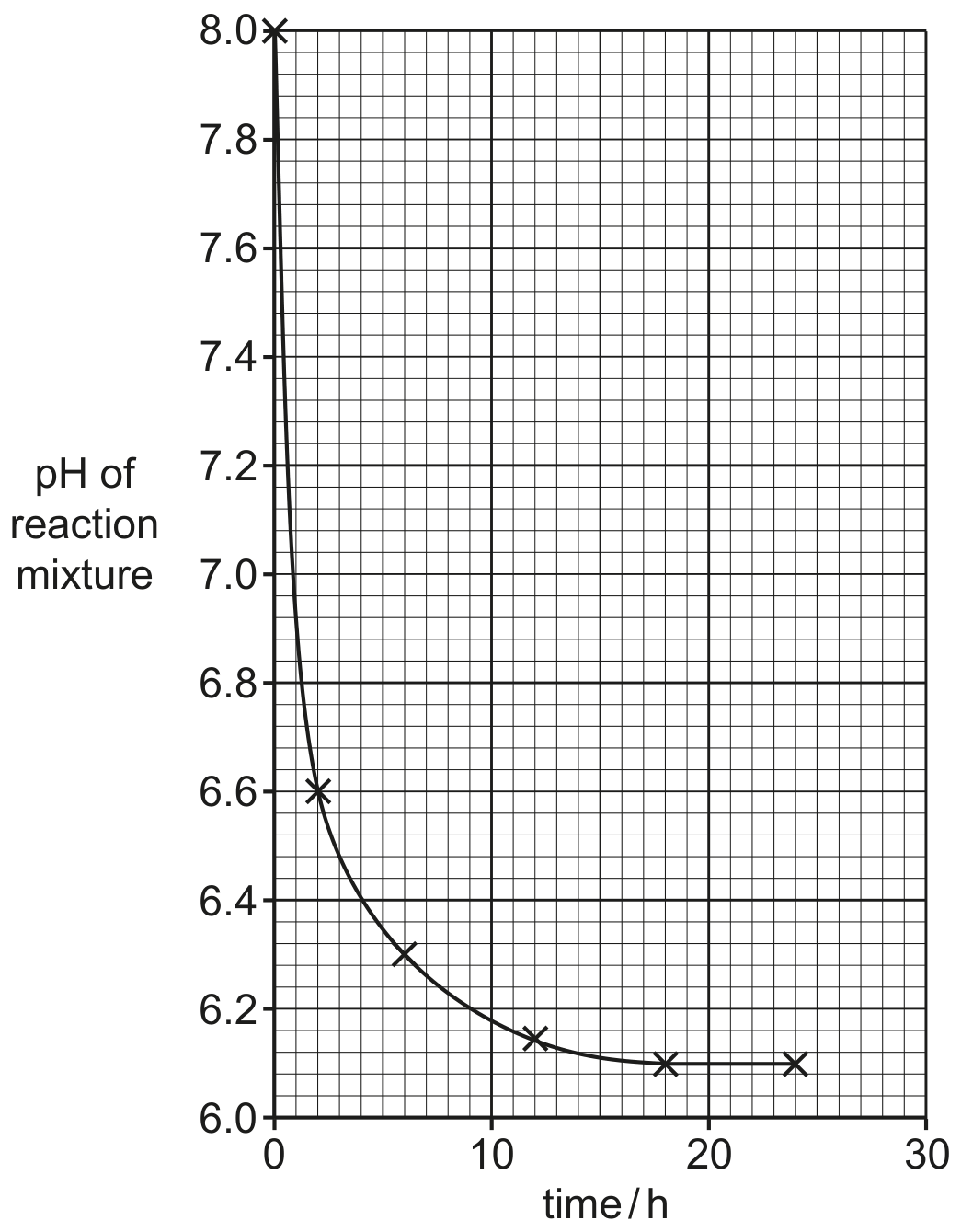
Fig. 2.2
Fig. 2.2 shows that the pH decreases steeply and then, after 18 hours, remains constant.
Hydrolytic enzymes can function within the cell or can be secreted by the cell, where they are able to catalyse reactions.
State the term used to describe an enzyme that functions within the cell.
Name the vesicles in the cell that contain hydrolytic enzymes.
The diagram shows the amino acids in a polypeptide.
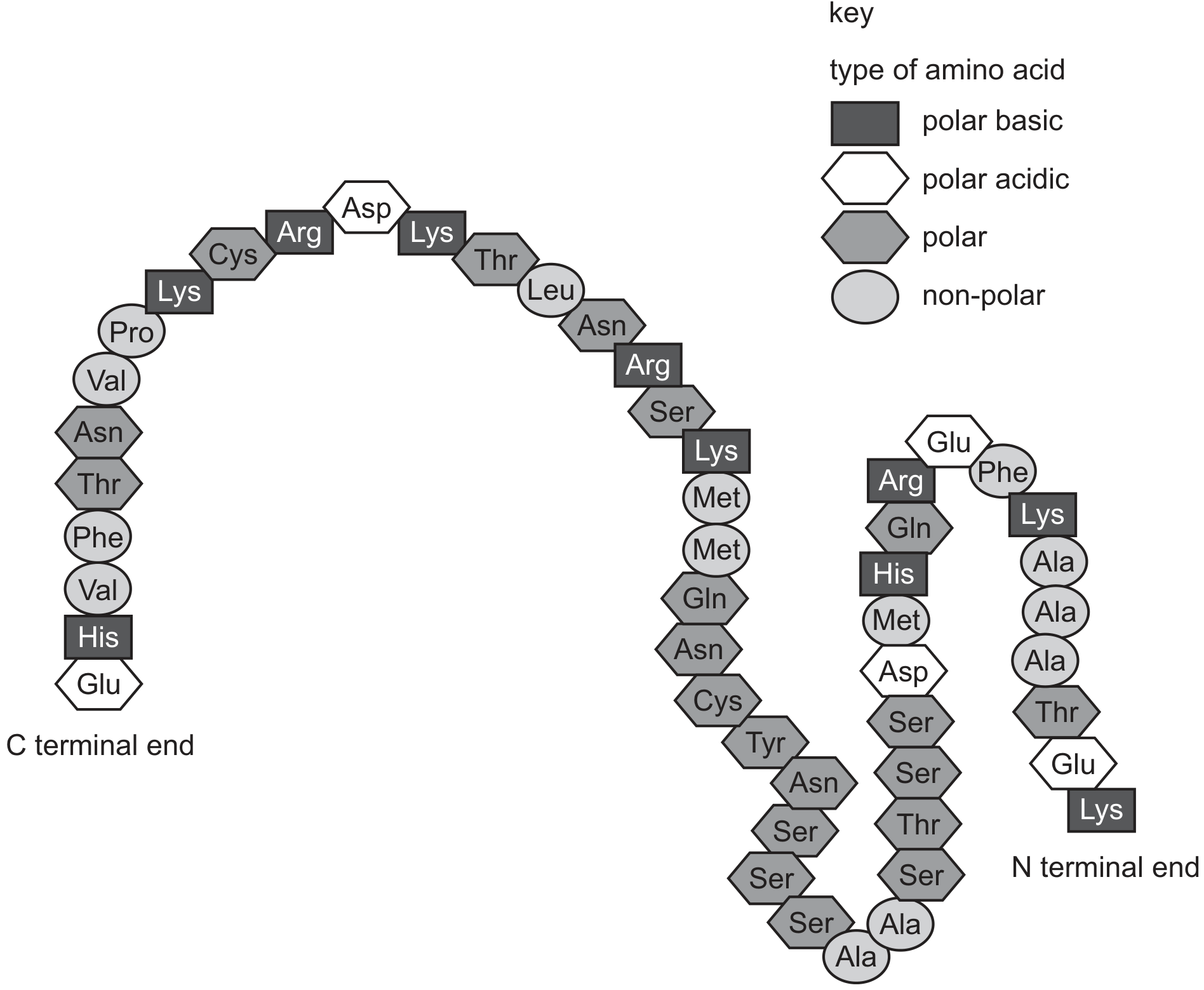
An enzyme catalyses the hydrolysis of any peptide bond between a non-polar amino acid and any polar amino acid.
How many small peptides and single amino acids will be formed by the action of this enzyme?
small
peptides
single
amino acids
6
1
8
1
12
3
13
4
Fig. 3.1 shows the structure of the enzyme lysozyme.
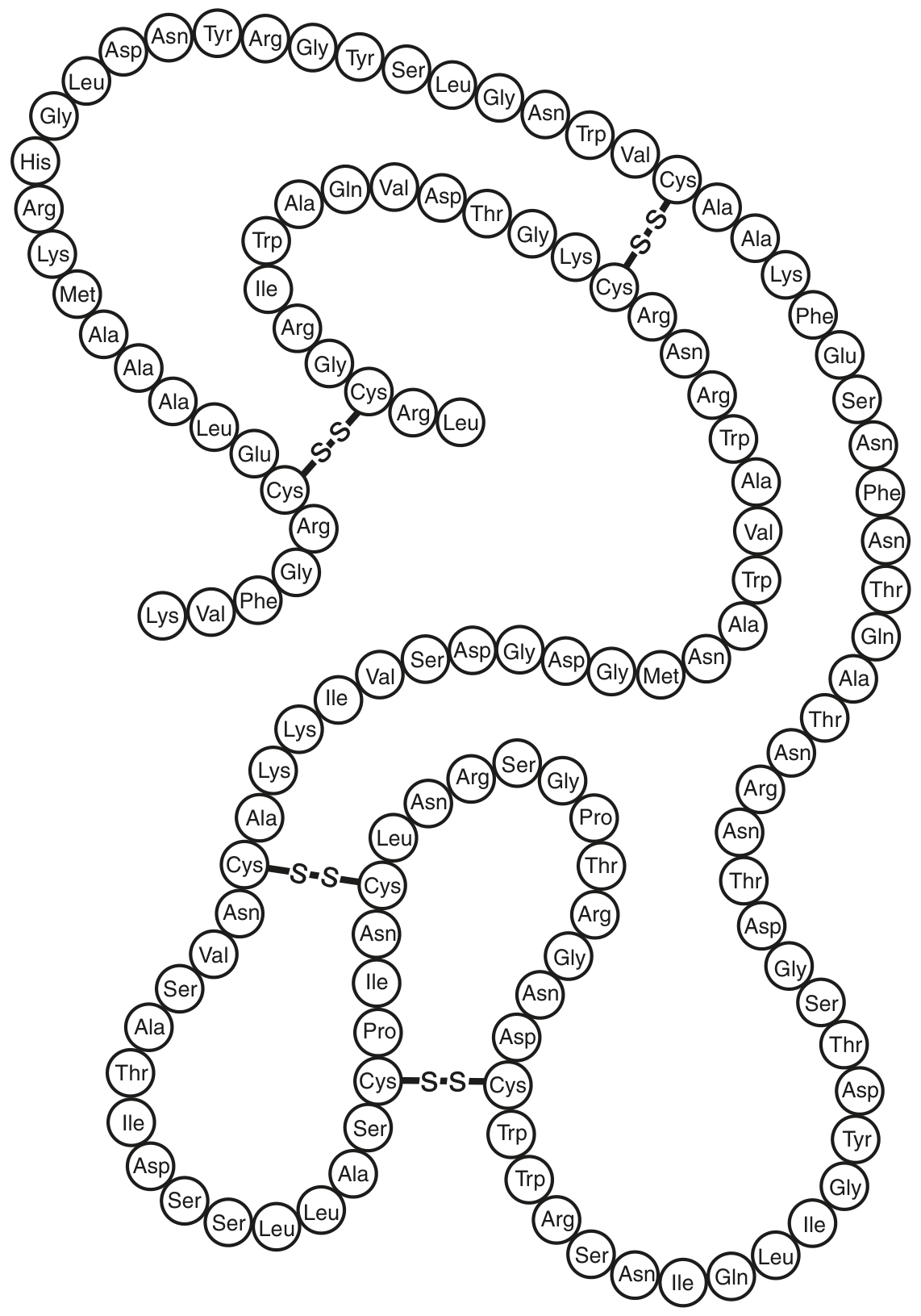
Fig. 3.1
In human tears and saliva, lysozyme acts as an extracellular enzyme.
State what is meant by the term extracellular.
The statements are about enzymes.
1 They are globular proteins.
2 They are formed in the smooth endoplasmic reticulum.
3 They are only found attached to plasma membranes in the cell.
4 They can be inhibited by competitive inhibitors.
Which statements are correct for all enzymes?
1 and 4 only
2 and 4 only
1, 2 and 3 only
1, 2, 3 and 4
The enzyme lysozyme secreted from tear glands forms deposits on contact lenses.
Which ingredient would be effective in a contact lens cleaner for removing these deposits?
ethanol
lysosomes
pH buffers
proteases