EduNinja
[Maximum number: 5]

Steelhead trout, Oncorhynchus mykiss, are fish that live in streams in North America.
To increase the number of steelhead trout, captive breeding has occurred since 1992. Fish eggs and sperm are mixed and the young fish grow in large tanks of aerated water for the first year of their lives. Most are then released into the wild, however a few male and female fish are kept to become the parents of the next generation of captive-bred fish.

Each tank may hold up to 50000 fish. The young captive fish are fed processed food. Some young fish are unable to survive these conditions and a proportion die. Death is usually the result of poor wound-healing after accidents due to overcrowding and due to the spread of diseases.

(a)
(i)

Describe how microarray analysis can detect differences in the expression of many genes when comparing two samples, such as the offspring of wild and captive-bred fish.
[ 5 ]
[Maximum number: 5]

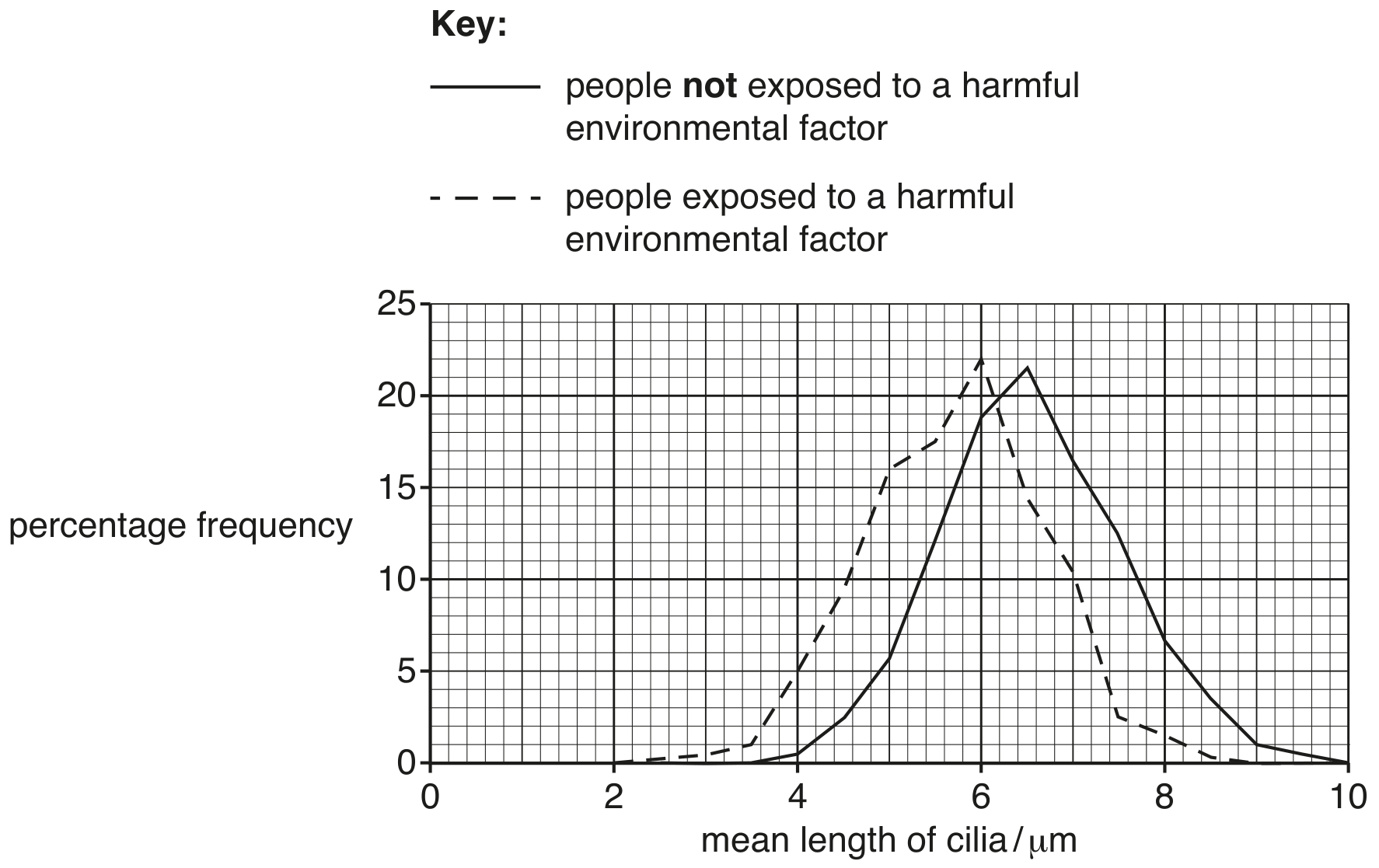
The cilia of ciliated epithelial cells show variation in length, within an individual and between different individuals.

Samples of ciliated epithelial tissue were removed from the airways of healthy people and the mean cilia length for each individual was calculated.

The people in the study formed two groups:
- people who were exposed to a harmful environmental factor
- people who were not exposed to a harmful environmental factor.

The results are shown in Fig. 3.1.

Fig. 3.1

Fig. 3.1

(a)

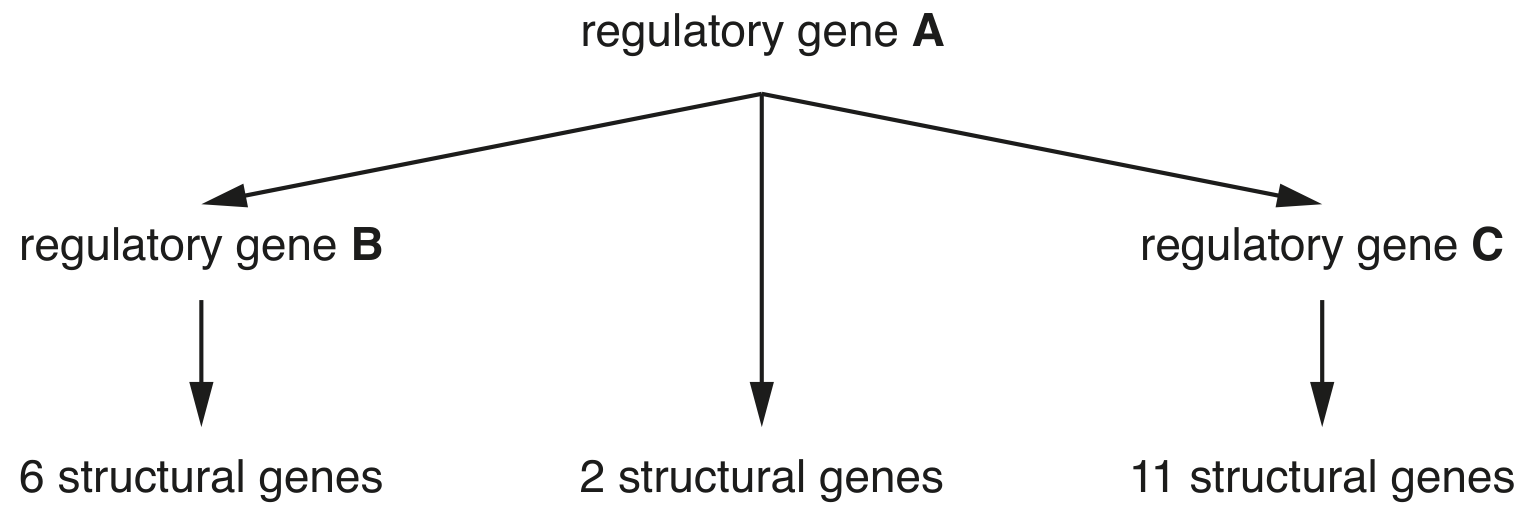
The development and final length of cilia of epithelial cells is controlled by many genes.

Fig. 3.2 summarises the interactions of some of these genes. The arrows represent the genes being switched on.

Fig. 3.2

Fig. 3.2

[ 5 ]
(i)

Describe how microarray analysis can be used to identify the genes switched on by the product of gene C.

[ 5 ]
(a)

DNA microarray analysis is a technique used in genetic technology that involves fluorescence. A DNA microarray has single-stranded probes attached to its surface. These probes hybridise to the fluorescently tagged single-stranded DNA that is added.

[ 3 ]
(i)

A DNA microarray analysis can be used to identify the level of expression of some genes.

Describe and explain how the level of expression of some genes can be identified using the DNA microarray analysis technique.

[ 3 ]
[Maximum number: 5]

Malaria is a serious and often fatal infectious disease caused by Plasmodium. Drugs such as chloroquine are widely used to decrease the risk of getting malaria and also to treat people who have become infected. However, in many parts of the world, Plasmodium populations have become resistant to chloroquine.

Sequencing the genome of Plasmodium and the application of bioinformatics has provided several new targets for the development of anti-malarial drugs.

(a)
(i)

Define the term bioinformatics.

[ 2 ]
(ii)

Outline how sequencing the genome of Plasmodium and the use of bioinformatics can suggest new targets for anti-malarial drugs.

[ 3 ]
(a)

GEDmatch is described as 'an open data personal genomics website'. It can be used by people who want to upload their DNA data to trace their ancestors and other relatives.

In 2018, police in the USA solved a large number of serious crimes. Some of these crimes had been unsolved for over thirty years. The police used GEDmatch to profile DNA taken from crime scenes and to look for matching DNA profiles. In many cases the police found partial matches to the relatives of criminals. This allowed the criminals to be identified and then charged on the basis of a complete DNA profile match.

[ 4 ]
(i)

Suggest why the police strategy of comparing crime scene DNA with the GEDmatch database was so successful.

[ 2 ]
(ii)

Explain why GEDmatch is an example of bioinformatics.

[ 2 ]
[Maximum number: 6]

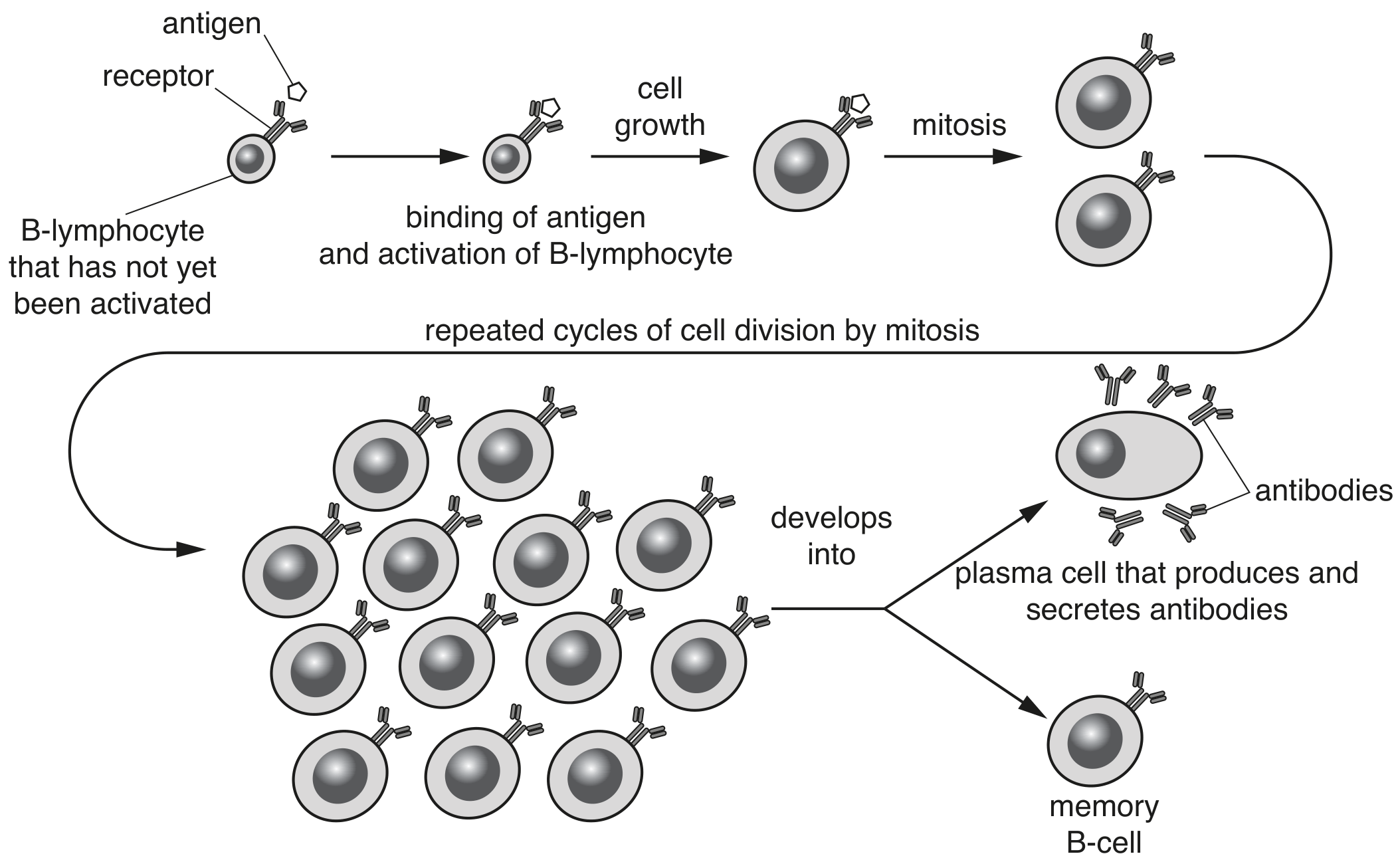
During an immune response, only B-lymphocytes with receptors that are specific to the antigens present are activated. Activation occurs when an antigen binds to a receptor of a B-lymphocyte.

Activated B-lymphocytes grow in size and then divide by mitosis. Many further mitotic cell divisions occur, increasing the number of B-lymphocytes with receptors specific to the antigen. Eventually, cells produced in this process will develop into either plasma cells that secrete antibodies or memory B-cells.

Fig. 3.1 is a summary of B-lymphocyte activation and the events that follow.

Fig. 3.1 is a summary of B-lymphocyte activation and the events that follow.

The development of plasma cells and memory B-cells in this process depends on transcription factors.

(a)

Microarrays can be used to analyse the effect of transcription factors, such as BLIMP-1, on gene expression.

[ 6 ]
(i)

Describe how a microarray is used in the study of gene expression.

[ 4 ]
(ii)

BCL6 is another transcription factor found in B-lymphocytes. The effect of BCL6 on gene expression was compared in two samples of B-lymphocytes.
- Sample 1 consisted of B-lymphocytes that were producing BCL6.
- Sample 2 consisted of B-lymphocytes that were not producing BCL6.

Suggest why a microarray is suitable for identifying the function of the transcription factor BCL6 in these two samples.

Question 4 starts on page 14

[ 2 ]
[Maximum number: 4]

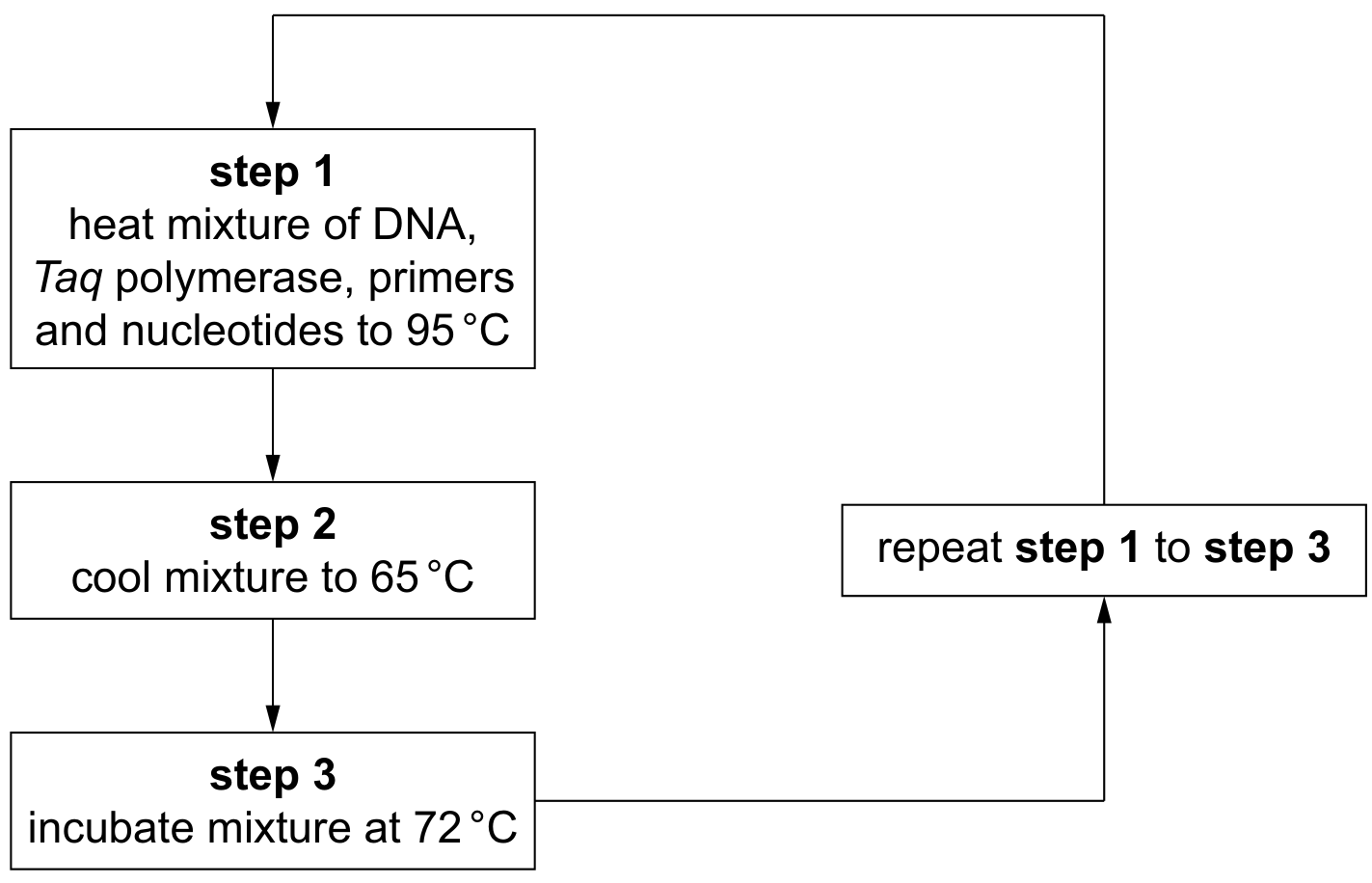
The polymerase chain reaction (PCR) is used to produce large quantities of DNA from a very small original sample. The main steps of one PCR method are shown in Fig. 4.1.

Fig. 4.1

Fig. 4.1

(a)

The presence of a faulty allele of the gene B R C A 2 can lead to an increased chance of developing breast cancer. There are many different faulty alleles of the gene BRCA2.

People who are considered to be at risk of breast cancer may choose to be tested for the presence of these alleles in their genomes.

A microarray can be used to test blood samples for the presence of these alleles. The microarray contains DNA probes for different faulty alleles of the BRCA2 gene.

[ 4 ]
(i)

Outline how faulty alleles of the BRCA2 gene can be detected using the microarray.

[ 4 ]
[Maximum number: 3]

Array comparative genome hybridisation (aCGH) is a technique involving the use of a microarray to analyse a genome or sections of a genome.

(a)

DiGeorge syndrome is a dominant inherited disease in humans. DiGeorge syndrome is caused by deletion of a large number of nucleotides from chromosome 22.

The number of nucleotides deleted varies between individuals in a range from 800000 to 3100000 . The largest deletions can cause the removal of up to 46 protein-coding genes from the chromosome.

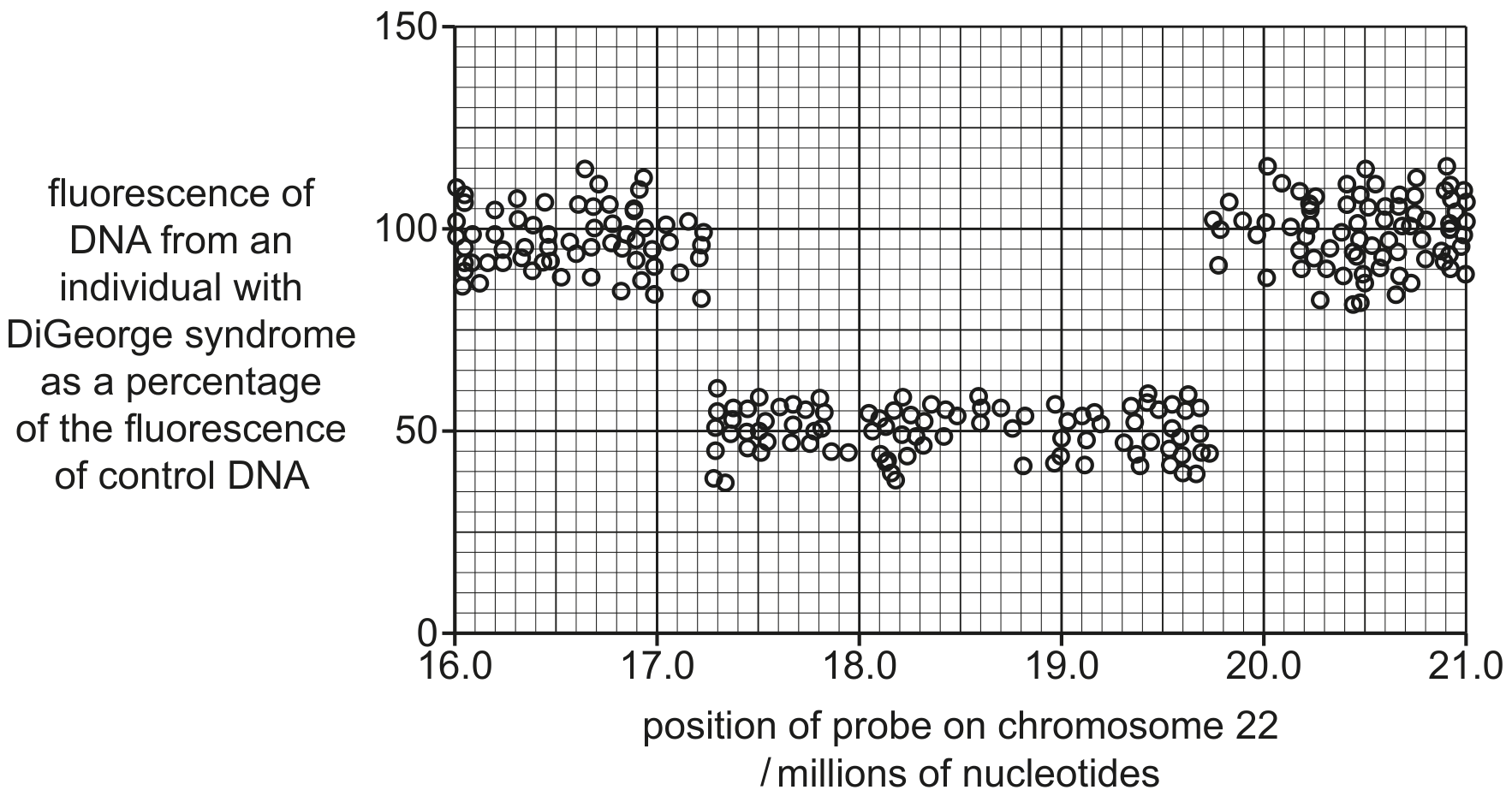
Fig. 4.1 shows the results of aCGH using a microarray specific for the section of chromosome 22 within which the DiGeorge syndrome deletion occurs. The microarray analysed DNA from two individuals:
- one with DiGeorge syndrome
- one who did not have DiGeorge syndrome (control DNA for comparison).

In the aCGH results shown in Fig. 4.1:
- Each small circle represents the results from a single probe on the microarray.
- The x-axis shows the position of each probe on chromosome 22. The position is shown as distance along the chromosome in millions of nucleotides.
- A result close to 100 % fluorescence on the y-axis means that the DNA from the individual with DiGeorge syndrome fluoresces at the same intensity as the control DNA for that probe.
- A result close to 50 % fluorescence on the y-axis means that the DNA from the individual with DiGeorge syndrome fluoresces half as much as the control DNA for that probe.

Fig. 4.1

Fig. 4.1

[ 3 ]
(i)

Explain how the microarray technique works to give the results shown in Fig. 4.1.

[ 3 ]
(a)

Genome-wide association studies find links between single nucleotide polymorphisms (SNPs) and phenotypic features such as human diseases. SNPs are points on the DNA that vary in the population because of DNA base substitutions.

A genome-wide association study investigates the effect of genetic variation on a disease. A large number of people with the disease and a large number of healthy control individuals provide DNA. Microarray chips are used to identify the genotype of each individual at many SNPs.

The Wellcome Trust Case Control Consortium (WTCCC) study was an important genome

wide association study.
- The study used a microarray chip that identified each person's genotype at 500000 different SNPs.
- The study looked for links between SNPs and 7 different diseases.
- For each disease, 2000 people with the disease were tested.
- Their results were compared with the results of 3000 healthy control individuals.

[ 4 ]
(i)

Outline how microarrays are used in the analysis of genomes.

[ 4 ]
(b)

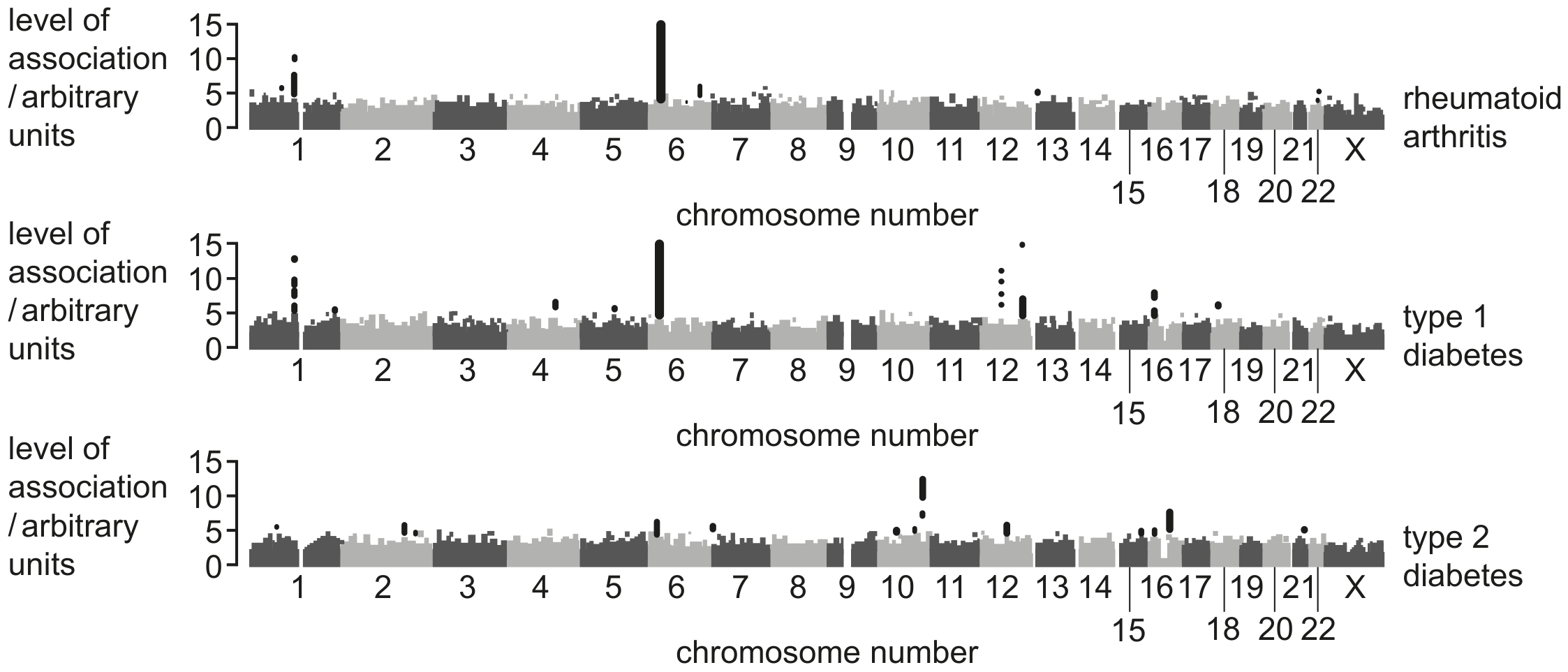
Fig. 4.1 summarises results for three diseases in the WTCCC study. The 22 human autosomes and the X chromosome (chromosome 23 ) are shown.

Chromosome locations with SNPs that are associated with a disease at a statistically significant level (greater than 5 arbitrary units) are shown in black.

Fig. 4.1

Fig. 4.1

[ 1 ]
(i)

Identify the chromosomes that contain SNPs that have a high level of association with both rheumatoid arthritis and Type 1 diabetes.

[ 1 ]
(a)

Researchers wanted to know if changes in gene expression were important in the inability of the AD mice to learn.

Groups of normal mice and AD mice either received training to allow them to learn how to swim a water maze, or they received no training. The mice in the four groups then had mRNA extracted from the memory-forming areas of their brains.

Reverse transcription of the mRNA of individuals in each group was carried out and the resulting cDNA was labelled with fluorescent nucleotides. This was then used for DNA microarray analysis using slides containing DNA sequences from 3 3 6 9 6 mouse genes.

Explain the principles of this type of DNA microarray analysis.

[ 4 ]
(b)

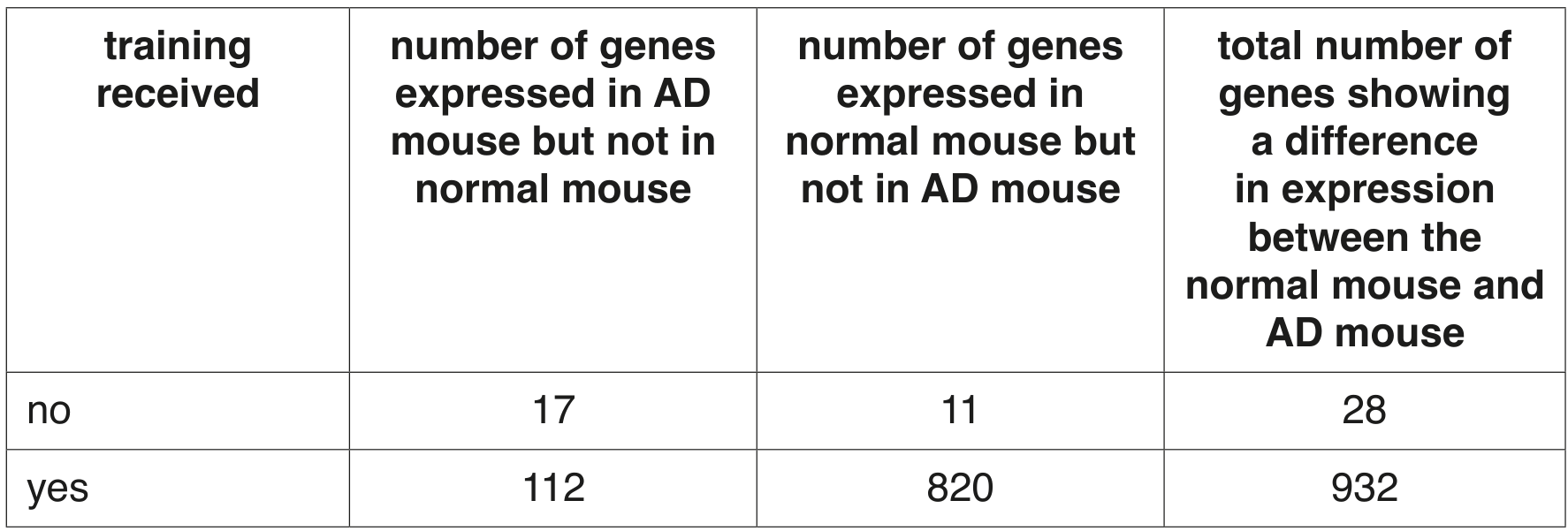
Table 5.1 summarises the microarray analysis of differences in gene expression for:
- an untrained AD mouse compared to an untrained normal mouse
- a trained AD mouse compared to a trained normal mouse.

Table 5.1

Table 5.1

[ 4 ]
(i)

Calculate the percentage of mouse genes whose expression has been shown to be affected by training.

Show your working.

percentage =% [2]
[ 2 ]
(ii)

State what the results in Table 5.1 show about the effect of training and learning on gene expression in brain cells.

[ 2 ]
0