In preparation for ICSI, infertile women are injected at daily intervals with human follicle stimulating hormone (hFSH) to stimulate the growth and maturation of a number of ovarian follicles. Women may be treated with hFSH extracted from urine (u-hFSH) or with recombinant hFSH ( r -hFSH) produced by genetically modified mammalian cells.
Each molecule of hFSH consists of two different polypeptide chains, and .
The genes for the and chains of hFSH, together with their promoters, have been inserted into mammalian ovary cells.
Explain why promoters need to be transferred with desired genes when producing a genetically modified cell.
A number of diseases, such as dengue fever, are spread by mosquitoes. The incidence of this disease has increased dramatically in recent years and this has been linked with the spread of the mosquito, Aedes aegypti.
In an attempt to reduce the numbers of A. aegypti, genetically modified (GM) male mosquitoes were produced. One of the genes added to these mosquitoes, when switched on, results in the production of a protein which is toxic to mosquitoes.
In 2010, in the Cayman Islands and in Malaysia, GM male mosquitoes were released into the wild to mate with females. All the resulting offspring died in the larval stage.
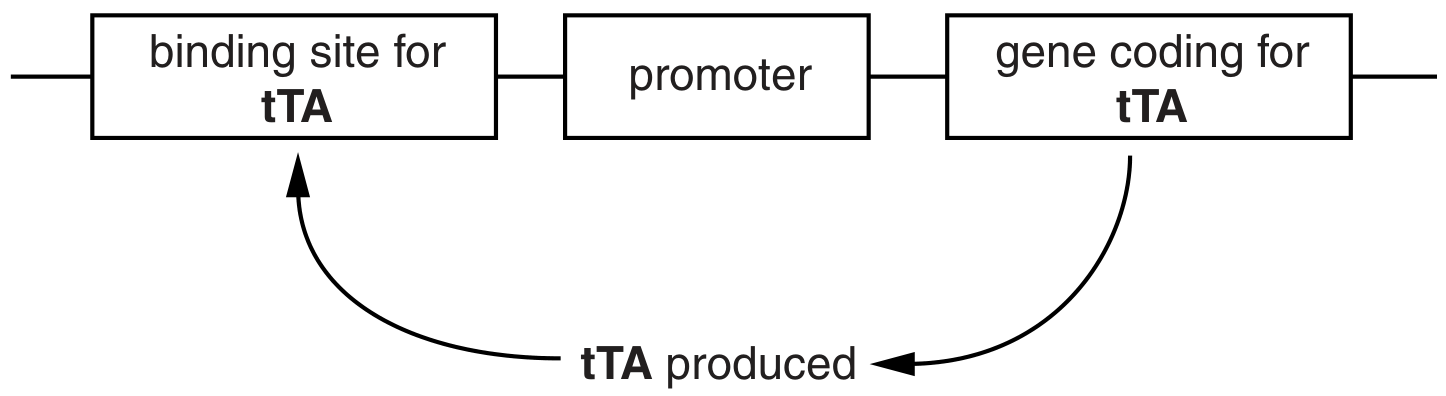
In addition to the gene for GFP, the DNA that has been added to the GM mosquitoes consists of
- a promoter
- a gene coding for a toxic protein, tTA
- a binding site for tTA.
When a GM mosquito larva hatches from an egg, the promoter induces the production of only a small amount of tTA, so that the larva does not die immediately. In a process of positive feedback, the tTA produced binds to the DNA as shown in Fig. 2.1. This increases the expression of the gene until the increased concentration of tTA kills the larva.

Fig. 2.1
Explain why, in gene technology, a promoter needs to be transferred along with the desired gene.
Oil seed rape (canola), Brassica napus, has been genetically modified to be resistant to herbicides containing glufosinate ammonium. The genetically modified (GM) oil seed rape contains the bar gene, obtained from a soil bacterium. This gene codes for an enzyme that converts glufosinate ammonium into a non-toxic compound.
The bar gene was introduced into the oil seed rape using plasmids. The plasmids also contained a promoter taken from thale cress, Arabidopsis thaliana.
Describe the role of a promoter in gene expression.
Vitamin A deficiency is a major health problem in parts of the world where children have a limited diet. Rice enhanced with pro-vitamin A has been produced through genetic engineering. This new rice, called Golden Rice, contains large amounts of β-carotene, which is used in the human body to synthesise vitamin A. From this Golden Rice, newer varieties of Golden Rice have been developed by selective breeding.

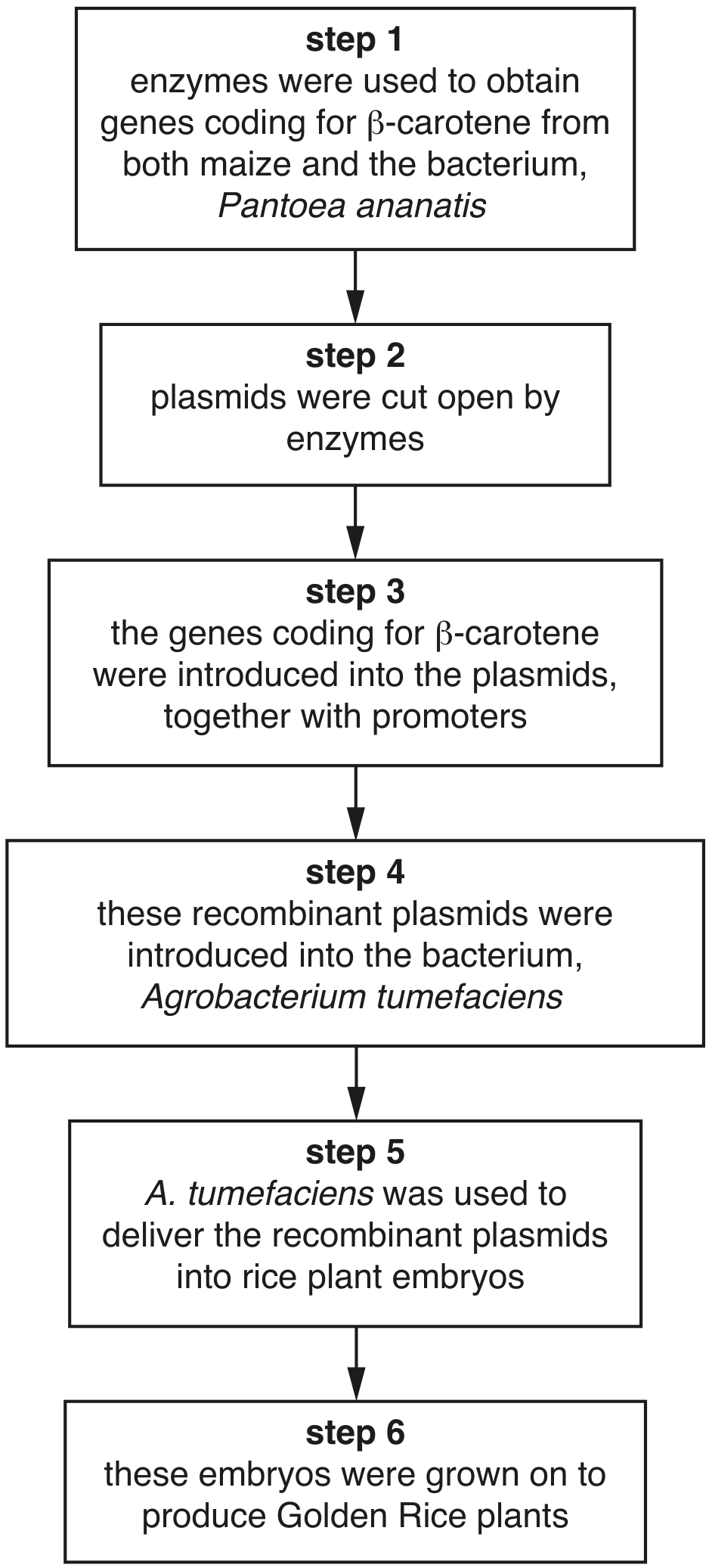
Fig. 3.1 shows how Golden Rice was originally produced by genetic engineering.
Explain why promoters were introduced along with the genes for β-carotene in step 3.
Genetic engineering is a technique used to modify the genetic material of a specific organism to change a characteristic.
Explain why a promoter, as well as the desired gene, is often transferred into an organism.
Adenosine deaminase (ADA) deficiency is an immune system disorder caused by a recessive autosomal mutation.
Severe combined immunodeficiency caused by a lack of ADA is called ADA-SCID.
In 2016 gene therapy to cure ADA-SCID was approved in Europe. The gene therapy involves three main steps.
- Blood (haematopoietic) stem cells are taken from the bone marrow of the person with ADA-SCID.
- The functional gene and its promoter are inserted into the blood stem cells.
- A single infusion (injection) of the gene-corrected cells is given to the patient.
Explain why a promoter has to be transferred as well as the desired gene.
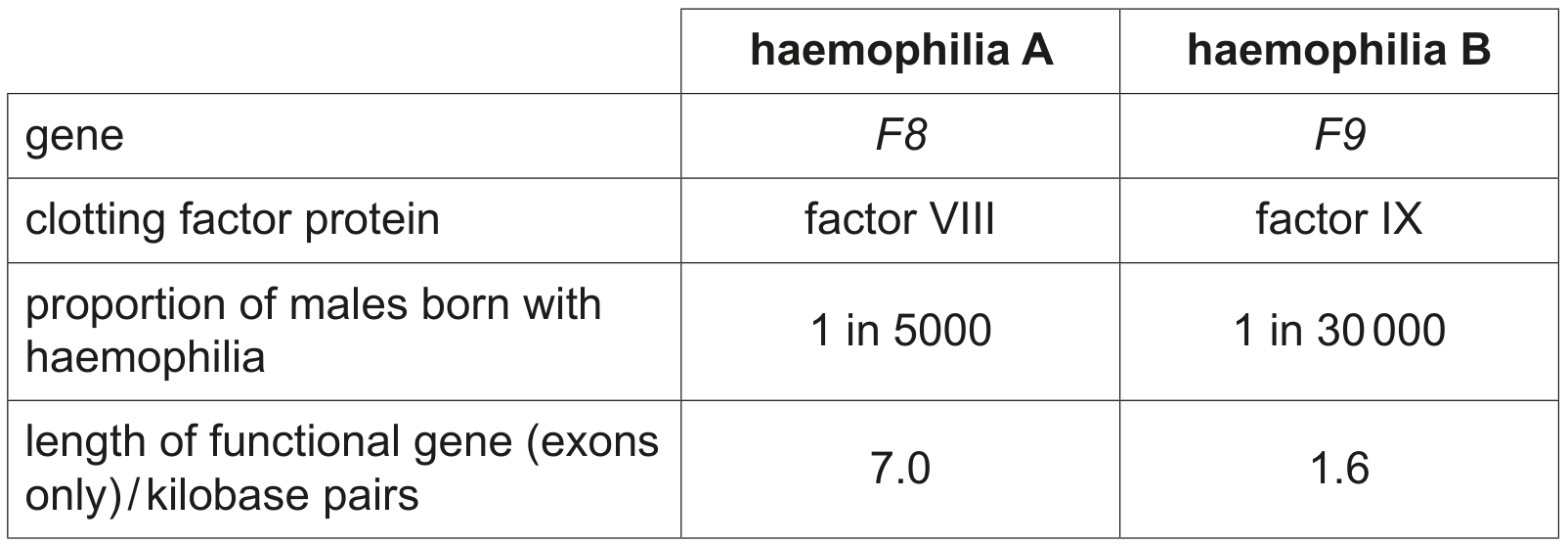
Haemophilia is a blood clotting disorder in humans caused by a mutant allele on the X chromosome.

Table 4.1
Scientists are working towards a goal of treating haemophilia by gene therapy. They plan to use a common, harmless virus to introduce the functional gene. The virus has a genome that is 4.7 kilobase pairs long.
In gene therapy trials to treat haemophilia, the gene coding for the clotting factor needs to be introduced together with a promoter.
Explain why a promoter has to be introduced as well as the desired gene.
Golden Rice TM is a genetically modified form of rice that produces relatively large amounts of β carotene in the endosperm. β carotene is metabolised in the human body to produce vitamin A.
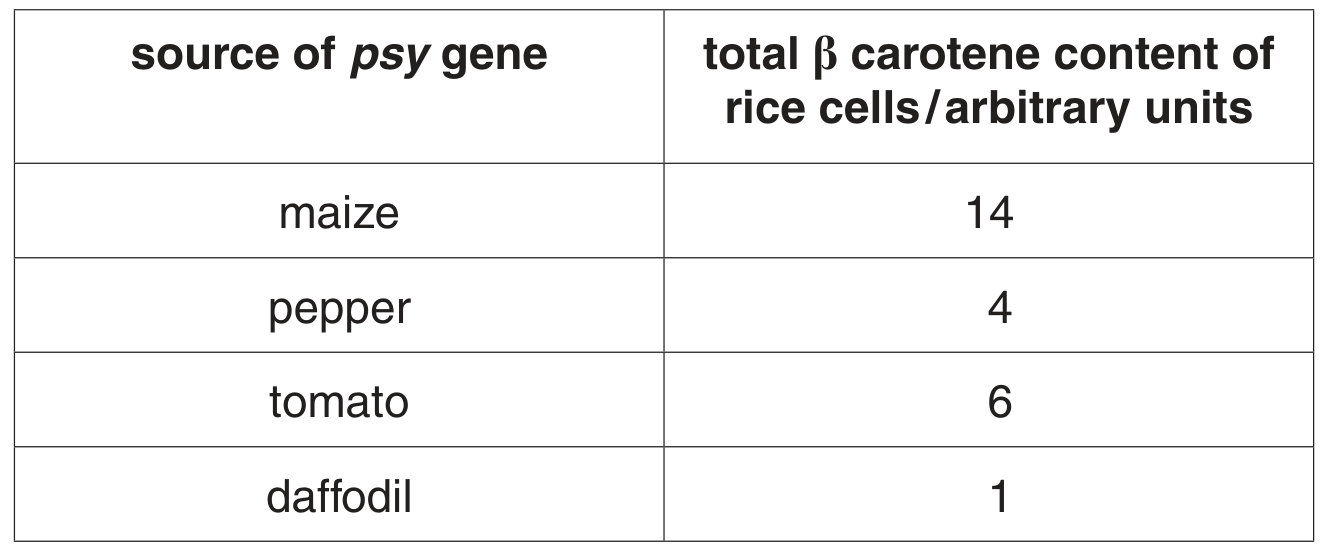
Investigations were carried out to see if psy genes taken from species other than daffodils would enable rice endosperm to produce greater quantities of β carotene than the first types of Golden Rice TM.
- Psy genes were isolated from the DNA of maize, tomatoes, peppers and daffodils. The genes were inserted into different plasmids.
- The promoter Ubi1, and crtl genes from E. uredovora, were also inserted into all of the plasmids.
- The four types of genetically modified plasmids were then inserted into different cultures of rice cells.
- The quantity of β carotene produced by these rice cells was measured.
The results are shown in Table 4.1.

Table 4.1
Explain why a promoter was inserted into the plasmids.
There are many different strains of the soil bacterium Bacillus thuringiensis. Each produces slightly different types of Cry-proteins, which are toxic to insects. Some types of cotton, known as Bt cotton, have been genetically modified to produce one of these proteins, Cry1Ac. This protein acts specifically to kill the larvae of butterflies and moths, including the cotton bollworm, Helicoverpa zea, a serious pest of cotton crops.
The genetically modified cotton contains a 'genetic package' that includes:
- the gene coding for Cry1Ac, the Bt protein
- a promoter
- a herbicide resistance gene that is used as a marker.
Explain why a promoter is included in the genetic package.