
EduNinja
(a)

All modern breeds of dog belong to the same species and are thought to have originated from 14 ancient breeds by the process of artificial selection. The golden retriever is a modern breed that is often used as a guide dog for people who are blind or visually impaired.

Fig. 1.1 shows a golden retriever.
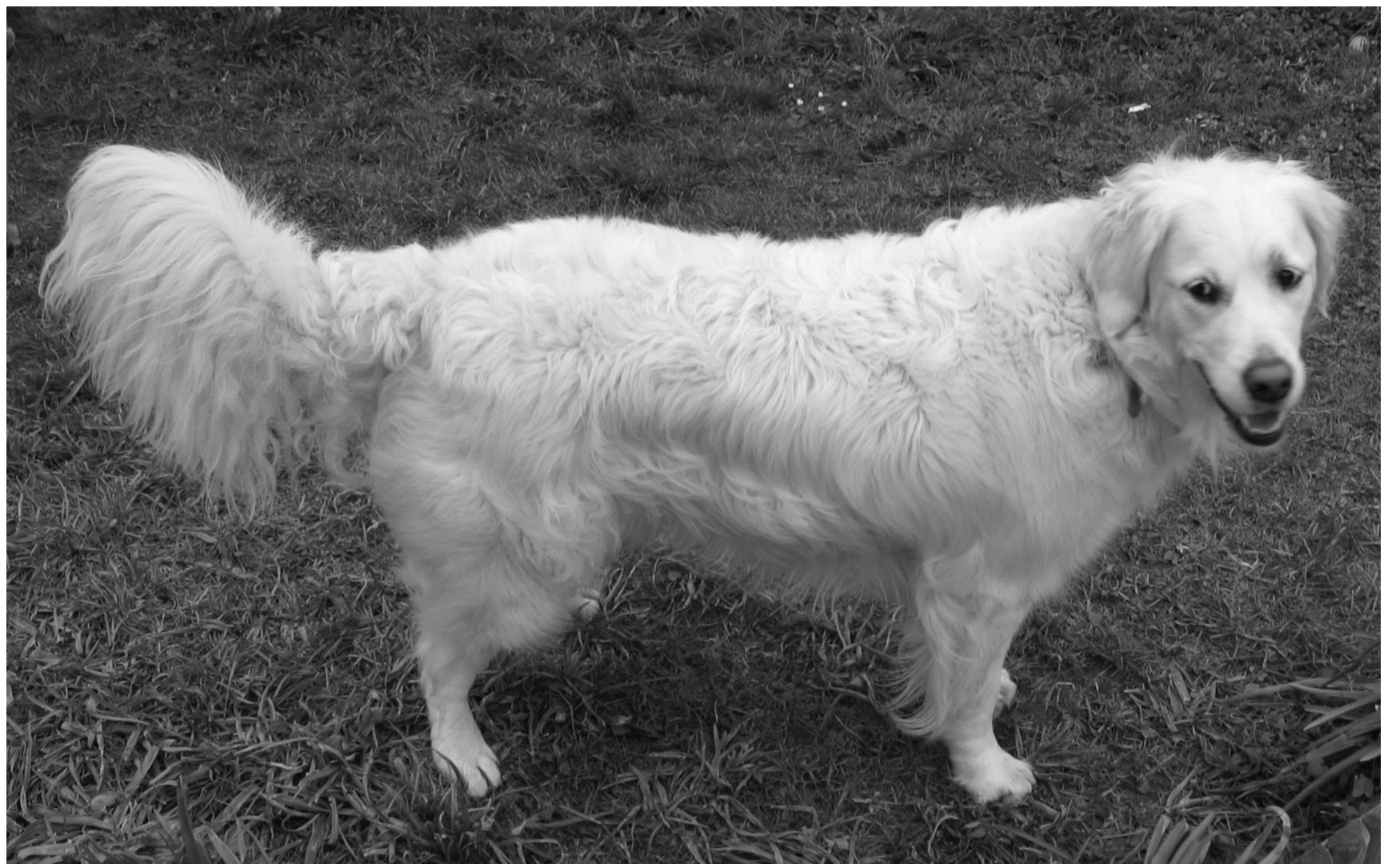
Fig. 1.1

Fig. 1.1

Explain how the principles of artificial selection would have been used to produce golden retrievers with the characteristics required for a guide dog.

[ 4 ]
[Maximum number: 1]

Steelhead trout, Oncorhynchus mykiss, are fish that live in streams in North America.
To increase the number of steelhead trout, captive breeding has occurred since 1992. Fish eggs and sperm are mixed and the young fish grow in large tanks of aerated water for the first year of their lives. Most are then released into the wild, however a few male and female fish are kept to become the parents of the next generation of captive-bred fish.

Each tank may hold up to 50000 fish. The young captive fish are fed processed food. Some young fish are unable to survive these conditions and a proportion die. Death is usually the result of poor wound-healing after accidents due to overcrowding and due to the spread of diseases.

(a)
(i)

Name the process that results in improved survival of captive fish in second, third and subsequent generations of captive-bred fish.

[ 1 ]
[Maximum number: 4]

Myostatin is a protein that is produced in mammalian skeletal muscle cells. It circulates in the blood and acts on muscle tissue to slow down further differentiation and growth.

In thoroughbred racehorses, a mutation involving the substitution of a single nucleotide has been identified in the MSTN gene which codes for myostatin. At the site of this mutation, the DNA nucleotide has either a cytosine (C) base or a thymine (T) base, giving race horses three possible genotypes for this mutation: CC, CT or TT.

(a)

Modern thoroughbred racehorses are the result of many years of artificial selection.

Explain:

[ 4 ]
(i)

what is meant by artificial selection

[ 2 ]
(ii)

how genetic tests for the MSTN genotype can help in the selective breeding of racehorses.

[ 2 ]
(a)
(i)

Farmers can send in a sample of leaves of water hemp from their fields to a laboratory to be tested for resistance to mesotrione or other herbicides.

Suggest the benefit of this to a farmer.

[ 1 ]
[Maximum number: 5]

Research suggests that selective breeding began about 10000 years ago. Selective breeding has been important in satisfying the global demand for food.

(a)

The introduction of disease resistance to varieties of wheat is an example of selective breeding.

Outline the steps involved in the introduction of disease resistance to varieties of wheat.

[ 5 ]
[Maximum number: 1]

Mammals such as sheep, Ovis aries, and goats, Capra hircus, are important agricultural animals that are sometimes kept together in mixed flocks. Very occasionally, live offspring are born from a mating between a male sheep and a female goat.

In sheep 2 n=54 and in goats 2 n=60.

(a)

Horns on agricultural animals such as goats and cattle can be dangerous to the farmer and to other animals. Horns are often prevented from growing in 5-day-old animals by a stressful procedure called disbudding.

Genetic modification can cause a deletion in the allele h coding for horns in cattle embryos, so that the allele no longer codes for a functional protein and the embryos grow into cattle that are hornless.

[ 1 ]
(i)

Suggest why genetic modification that causes a deletion in the horned allele, in established breeds of dairy cattle, is preferable to selective breeding for hornless animals.

[ 1 ]
[Maximum number: 3]

Maize, Zea mays, is a major cereal food crop. Unlike most crop plants, maize seed is produced by hybridisation between two different inbred parental strains.

(a)
(i)

Explain why this is done.

[ 3 ]
[Maximum number: 3]

Maize, Zea mays, is a major cereal food crop. Unlike most crop plants, maize seed is produced by hybridisation between two different inbred parental strains.

(a)
(i)

Explain why this is done.

[ 3 ]
0