EduNinja
[Maximum number: 3]

The European hedgehog, Erinaceus europaeus, is a small omnivorous mammal. Its body is covered in spines, which are usually brown. A rare variant, which lacks the brown pigment, has blonde (pale yellow) spines. This characteristic is coded for by a recessive allele.

Fig. 1.1 shows a European hedgehog with blonde spines.
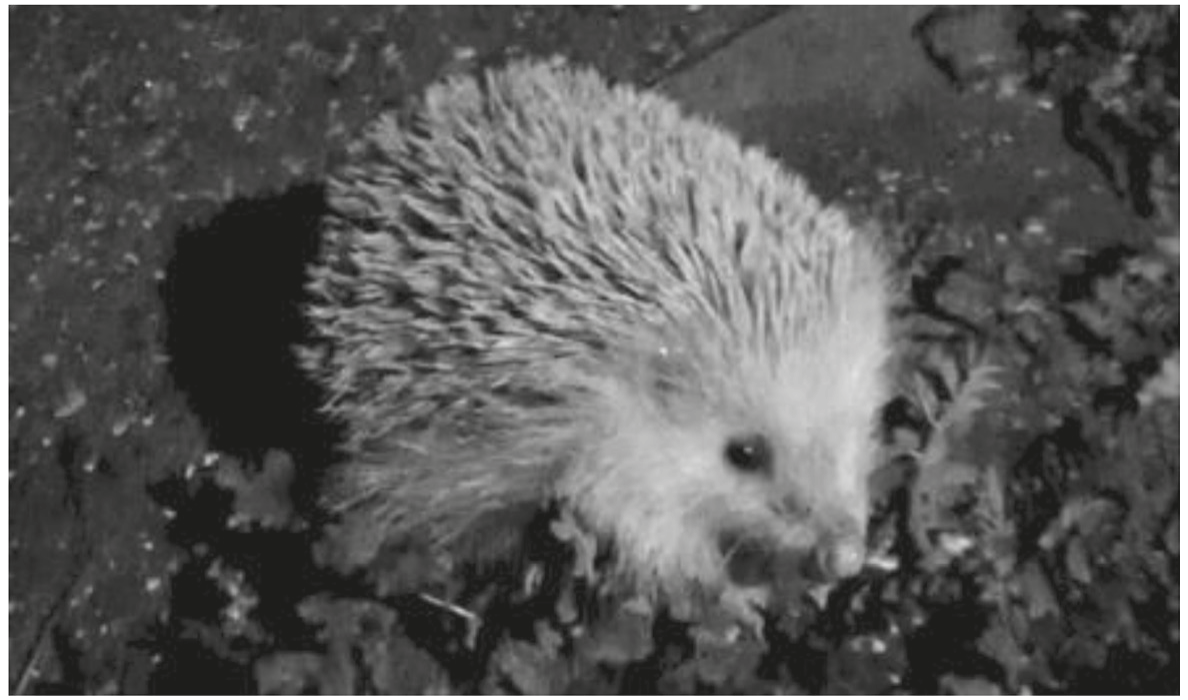
Fig. 1.1

Fig. 1.1

(a)

Alderney is a small island between the UK and France. Hedgehogs were not found on Alderney until the 1960s, when three pairs of hedgehogs were introduced to the island. The hedgehogs started to breed and some of the offspring had blonde spines.

By 2017, the population of hedgehogs, including individuals with brown spines and individuals with blonde spines, had increased to approximately 600.

[ 3 ]
(i)

A survey taken in 2017 showed that 60 % of the hedgehogs on Alderney had blonde spines.

Suggest and explain reasons why the proportion of hedgehogs with blonde spines was so high.
[ 3 ]
[Maximum number: 4]

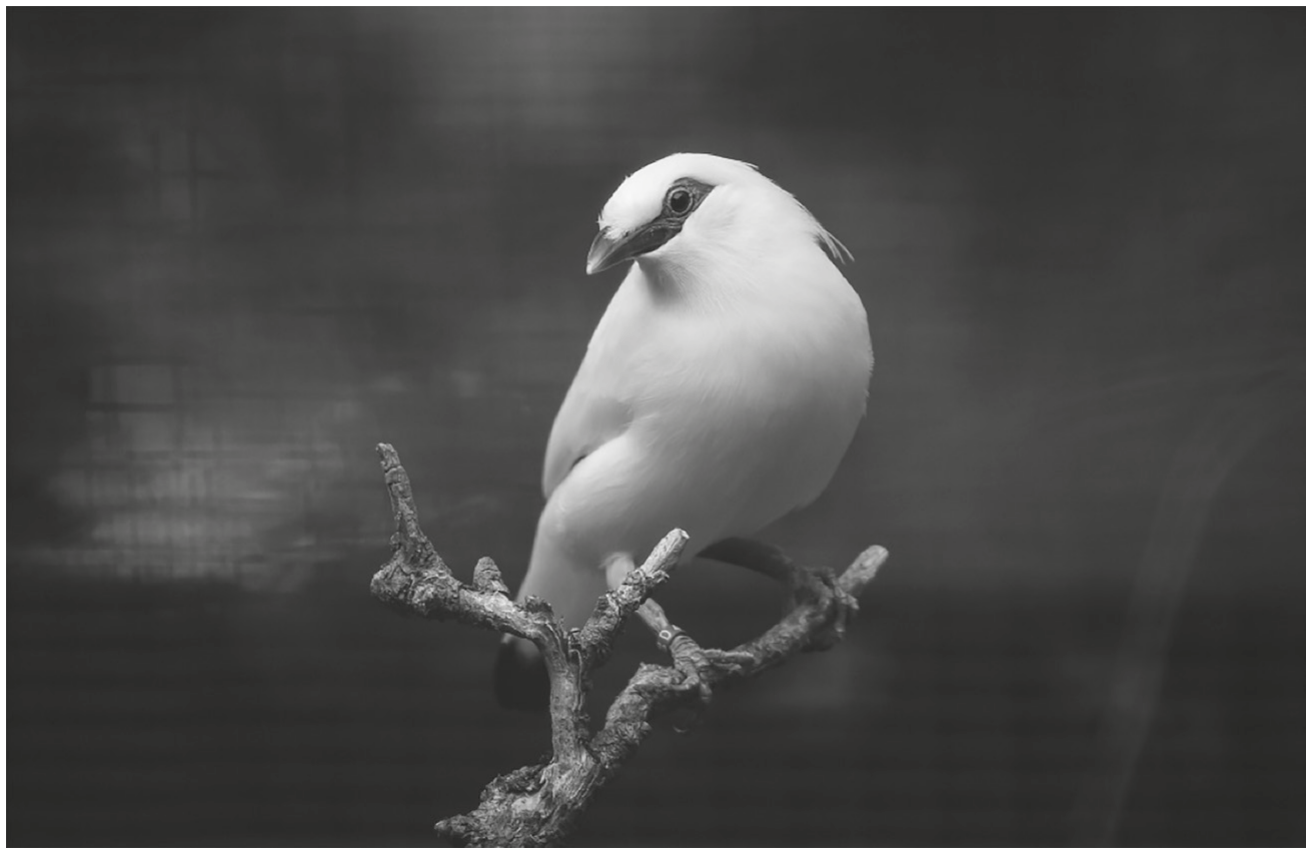
The Bali starling, Leucopsar rothschildi, is found on the island of Bali, Indonesia.
Fig. 1.1 shows a Bali starling.

Fig. 1.1

Fig. 1.1

(a)

Explain the consequences on genetic biodiversity of having a wild population of just six birds.

[ 4 ]
(a)

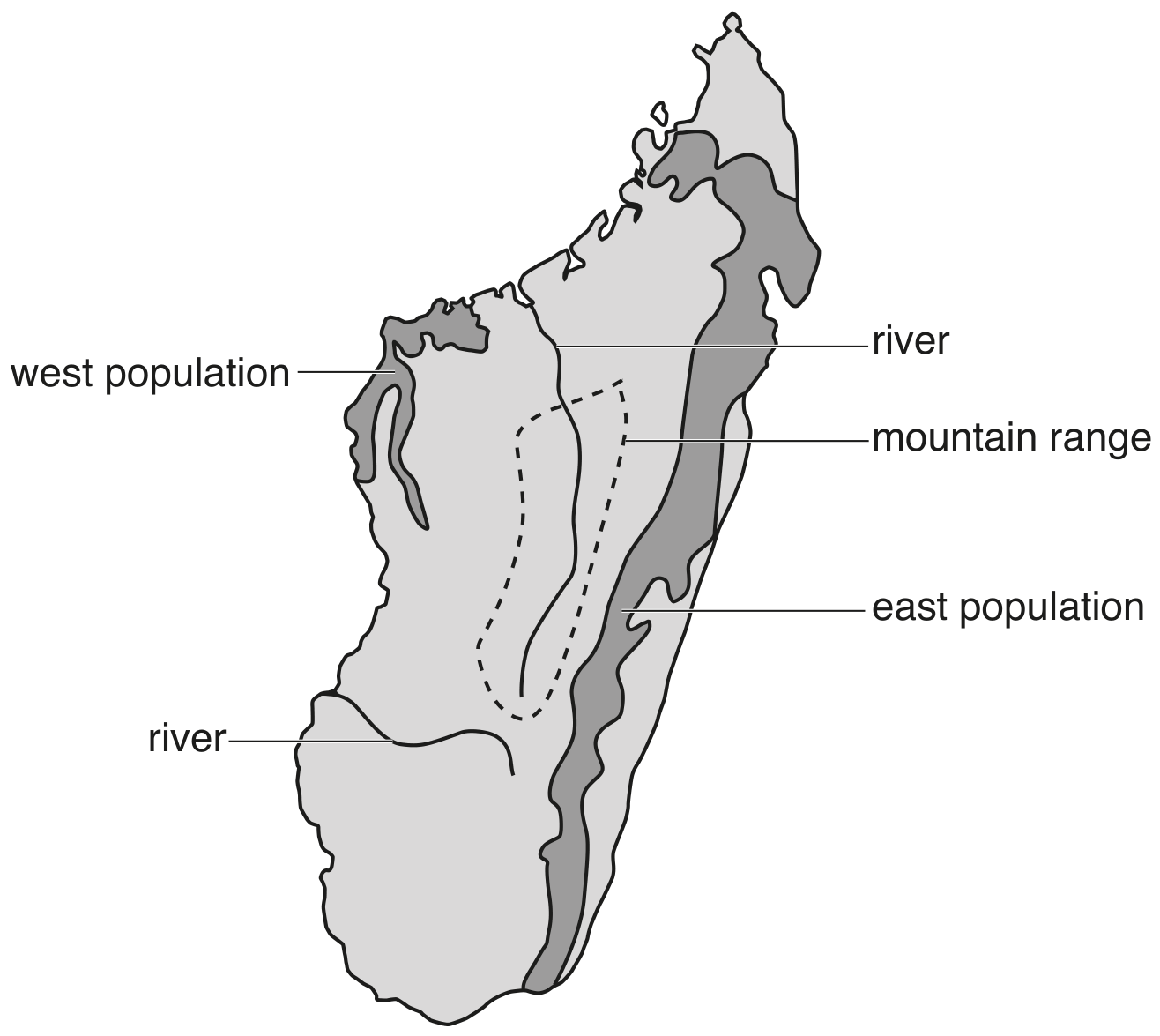
There are two main aye-aye populations on the island of Madagascar, one in the west and one in the east.

Fig. 1.2 is a map of Madagascar showing the location of the two main populations.

Fig. 1.2

Fig. 1.2

A study into the variation in the DNA nucleotide sequence of aye-ayes showed that there is a large genetic difference between the west and east populations. The two populations of aye-ayes may be evolving into separate species.

[ 4 ]
(i)

With reference to Fig. 1.2, suggest why there is a large genetic difference between the two populations.

[ 4 ]
[Maximum number: 2]

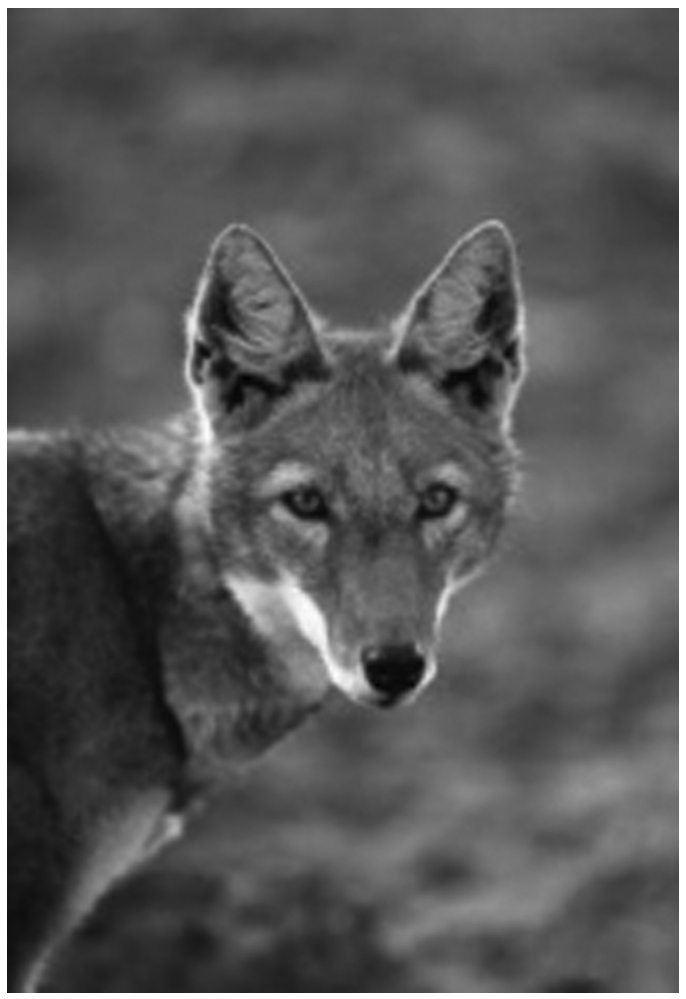
The Ethiopian wolf, Canis simensis, is a member of the Canidae family of carnivores.
Fig. 1.1 shows an Ethiopian wolf.

Fig. 1.1

Fig. 1.1

(a)

A population of Ethiopian wolves is called a pack.

Heterozygosity has been found to be low in all of the packs of Ethiopian wolves that have been studied.

Suggest why the heterozygosity may be low in Ethiopian wolf packs.

[ 2 ]
[Maximum number: 3]

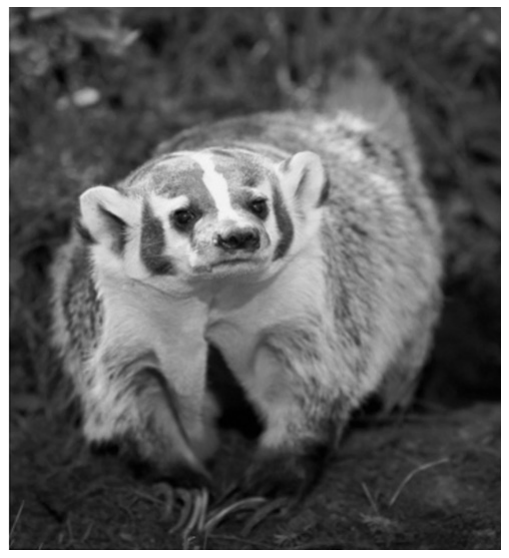
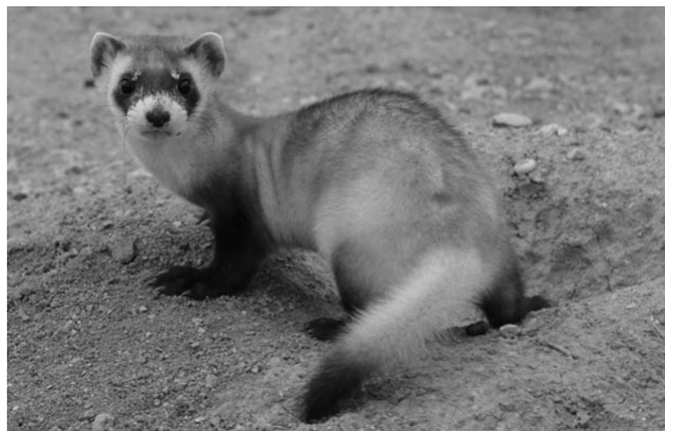
The IUCN Red List provides information about the conservation status of species throughout the world, including the American badger, Taxidea taxus, and the black-footed ferret, Mustela nigripes.

Fig. 2.1 shows an American badger and Fig. 2.2 shows a black-footed ferret.

Fig. 2.1

Fig. 2.1

Fig. 2.2

Fig. 2.2

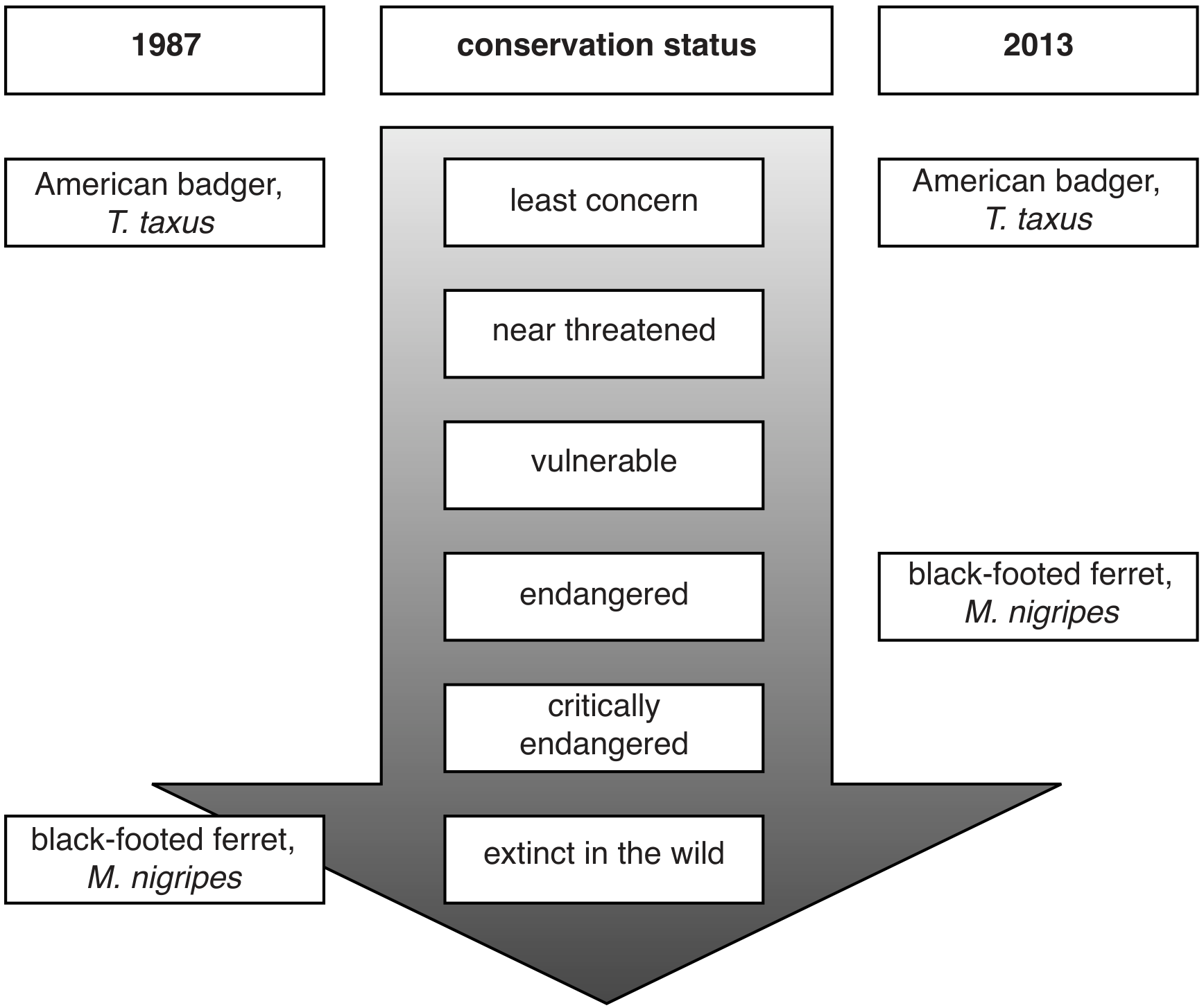
Fig. 2.3 shows the IUCN conservation status of the American badger and the black-footed ferret in 1987 and in 2013.

Fig. 2.3

Fig. 2.3

(a)

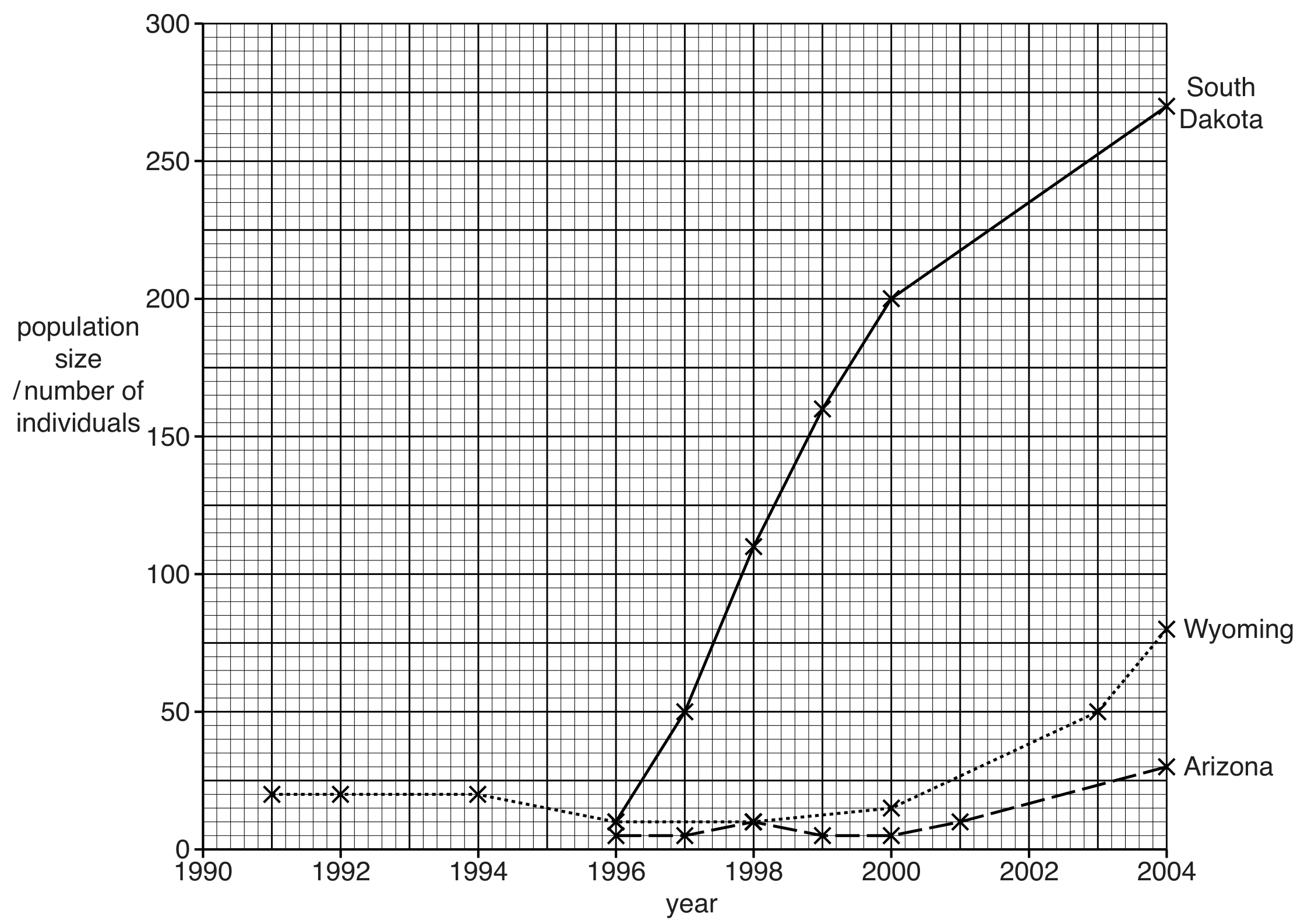
Black-footed ferrets were released at three different locations in the wild at different times. Each population was established from captive-bred animals.

Fig. 2.4 shows the population sizes of black-footed ferrets at the three release locations.

Fig. 2.4 shows the population sizes of black-footed ferrets at the three release locations.

[ 3 ]
(i)

With reference to Fig. 2.4, suggest reasons for the changes you have described in (ii).

[ 3 ]
[Maximum number: 1]

Biodiversity can be assessed at three different levels. One of these is the genetic variation within each species.

(a)

Genetic variation is considered important in the conservation of species. Low genetic variation is assumed to decrease the chance of the long-term survival of a species.

[ 1 ]
(i)

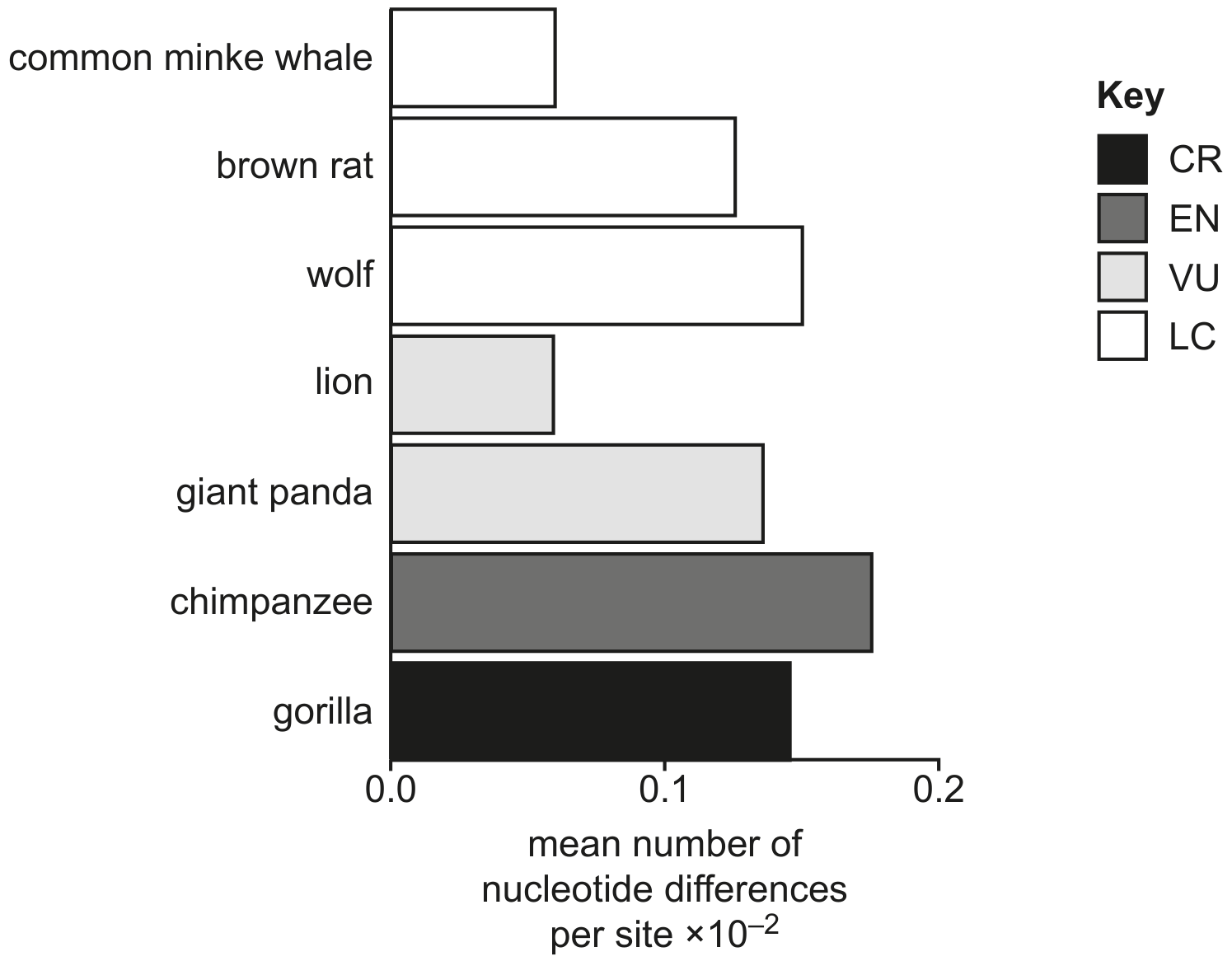
Question 2(d) states that 'low genetic variation is assumed to decrease the chance of the long-term survival of a species'.

Predict the relationship between genetic variation and conservation status if this assumption is true.

Fig. 2.2 shows the mean number of nucleotide differences per site of some species and sub-species of mammal and their conservation status.

Fig. 2.2 shows the mean number of nucleotide differences per site of some species and sub-species of mammal and their conservation status.

[ 1 ]
[Maximum number: 2]

Oculocutaneous albinism (OCA) is a type of albinism. There are many different forms of OCA.
OCA1A is one form of OCA, caused by a recessive mutation in the autosomal gene, TYR, coding for the enzyme tyrosinase. This enzyme is involved in the biosynthetic pathway that results in the production of melanin, the pigment responsible for the colour of hair, skin and eyes.

A person with OCA1A has white hair, very pale skin and pink eye colour.

(a)

Worldwide, 1 in 17000 people are born with OCA. This compares with 1 in 165 people among the Guna people of Panama. The Guna people of Panama have a small population and mostly live on many small islands off the coast of Panama.

Suggest reasons why the Guna population of Panama has a relatively high number of cases of OCA.

[ 2 ]
(a)

The same trends in results were recorded in all of the non-sprayed populations.

Explain how this supports the researchers' conclusion that natural selection caused the trends and not genetic drift.

[ 2 ]
0