EduNinja
[Maximum number: 5]

Interferon-alpha (IFN- α\alpha ) can be produced as a recombinant human protein to treat some types of cancer. The gene IFNA2 codes for IFN- α\alpha.

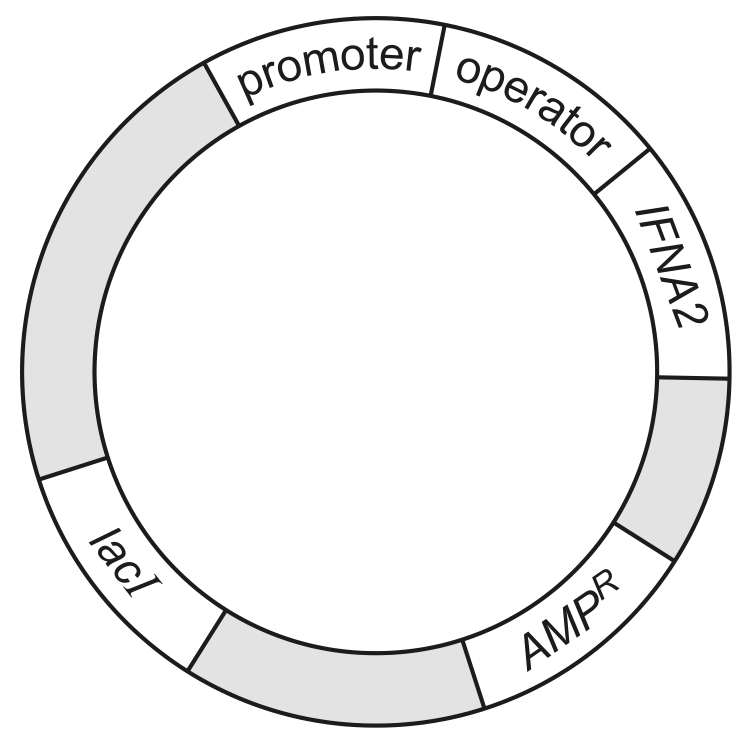
One method of producing recombinant IFN- α\alpha uses genetically engineered Escherichia coli bacteria that contain recombinant plasmids. Each recombinant plasmid contains:
- the gene IFNA2
- three regulatory sequences of the lac operon (promoter, operator and lacl)
- a gene for antibiotic resistance, AMPRA M P^{R}.

Each of the sequences for the lacI gene and AMPRA M P^{R} gene contains its own promoter. As a result, these genes are always expressed in E. coli bacteria that contain this recombinant plasmid.

Fig. 2.1 is a diagram of the recombinant plasmid. The promoter regions of the lacI gene and AMPRA M P^{R} gene are not shown.

Fig. 2.1

Fig. 2.1

(a)

Bacteria can evolve antibiotic resistance through natural processes.
Outline how bacteria can evolve to become resistant to antibiotics.

Question 3 starts on page 10.
[ 5 ]
(a)
(i)

Explain how the results in Table 3.1 show that the two populations differ in their resistance to mesotrione.

[ 2 ]
(a)
(i)

Explain how the results in Table 3.1 show that the two populations differ in their resistance to mesotrione.

[ 2 ]
(ii)

Farmers can send in a sample of leaves of water hemp from their fields to a laboratory to be tested for resistance to mesotrione or other herbicides.

Suggest the benefit of this to a farmer.

[ 1 ]
[Maximum number: 5]

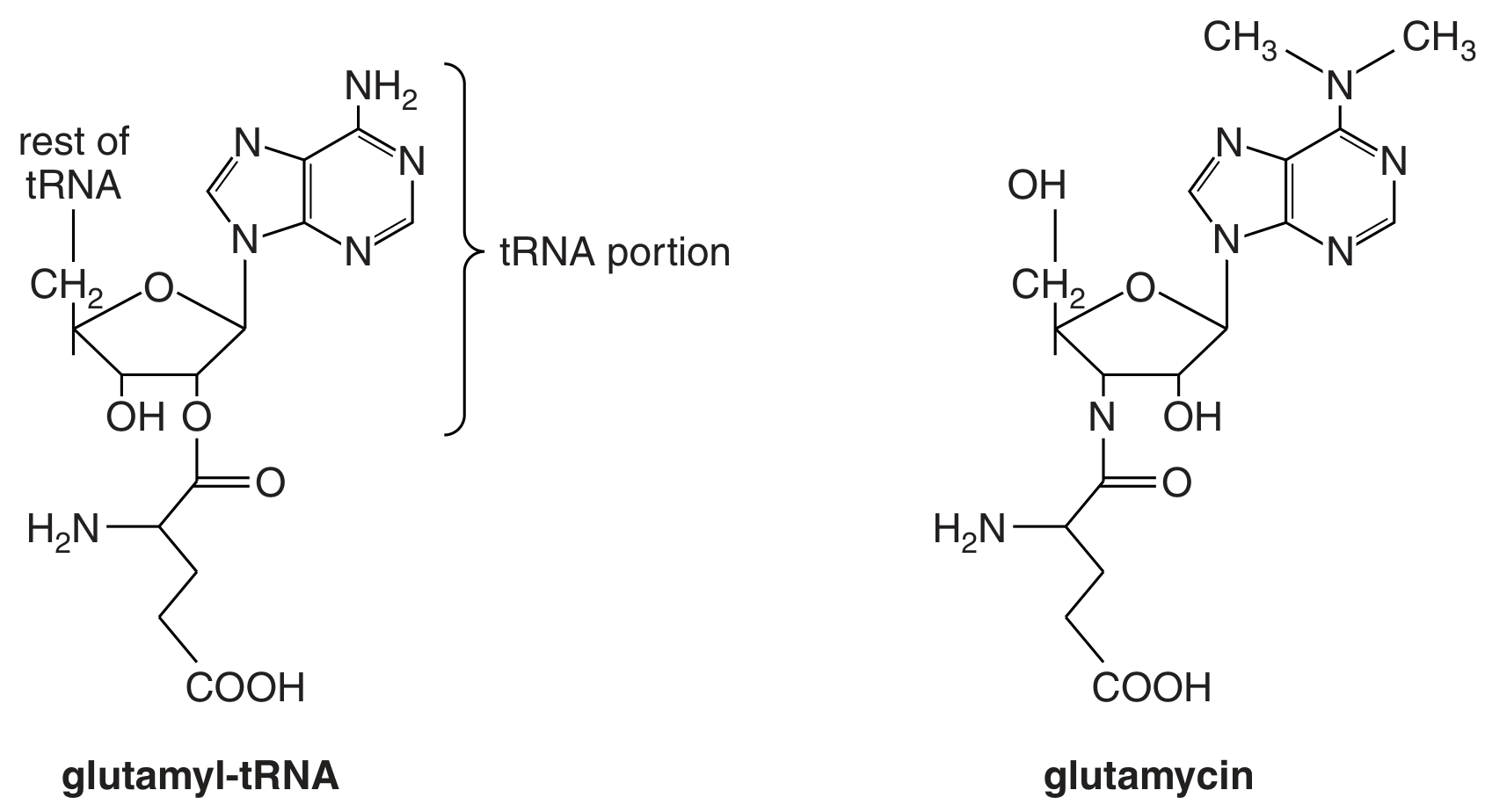
The enzyme glutamyl-tRNA reductase (GluTR) is present in many bacteria to make a product which is essential to their survival.

GluTR acts on the substrate glutamyl-tRNA, which is composed of the amino acid glutamic acid attached to a tRNA.

Fig. 3.1 shows the structure of glutamyl-tRNA and another compound called glutamycin.

Fig. 3.1

Fig. 3.1

(a)

In leguminous plants, glutamic acid is also essential for the formation of root nodules containing the bacterium Rhizobium.

[ 5 ]
(i)

Name the stage in the nitrogen cycle carried out by Rhizobium.

[ 1 ]
(ii)

Suggest advantages of Rhizobium living in root nodules of leguminous plants.

[ 2 ]
(iii)

Explain the role of Rhizobium in the growth of leguminous plants.

[ 2 ]
[Maximum number: 3]

Azotobacter vinelandii is a bacterium found in the soil that is able to fix atmospheric nitrogen. One feature of nitrogen-fixing bacteria is the ability to synthesise the enzyme nitrogenase, a molybdenum- and iron-containing, protein complex.

(a)

Describe and explain the benefits to humans of the presence of nitrogen-fixing bacteria, such as A. vinelandii, in agricultural land.

[ 3 ]
[Maximum number: 4]

Sickle cell anaemia is a non-infectious chronic disease. If not treated, sickle cell anaemia can be painful and life-threatening.

Sickle cell anaemia is caused by a base substitution mutation in the gene coding for the β\beta-globin polypeptide of haemoglobin. This leads to a change in the primary structure of the polypeptide, as valine is present instead of glutamine. This results in abnormal sickle-shaped red blood cells, which stick together in blood vessels.

Symptoms of sickle cell anaemia include painful attacks when red blood cells block capillaries in tissues and organs.

(a)

The number of cases of sickle cell anaemia is highest in sub-Saharan Africa, the Middle East and India. These areas also have a high incidence of malaria.

People with SCT (heterozygotes) are either unaffected or may have mild symptoms of sickle cell anaemia. One advantage of SCT is an increased resistance to malaria.

[ 4 ]
(i)

Explain how natural selection operates to maintain the presence of the sickle cell allele in populations in areas with malaria.

[ 4 ]
[Maximum number: 2]

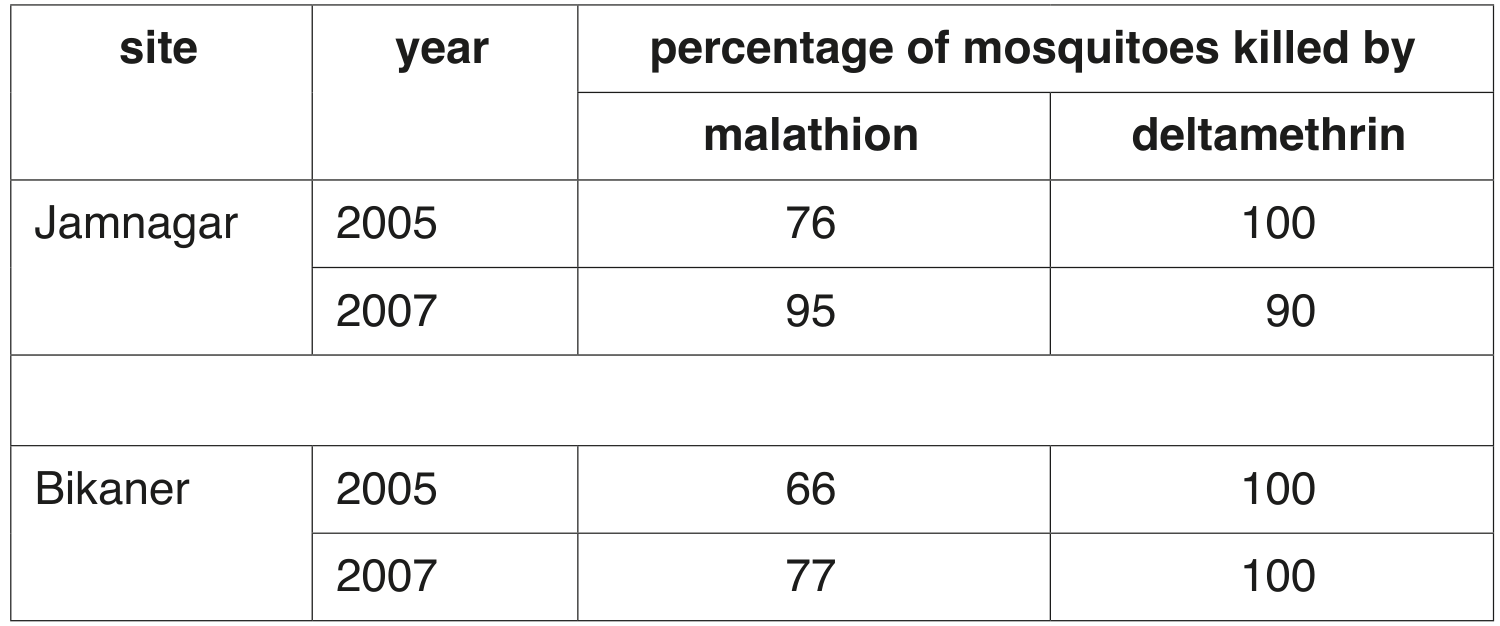
Spraying insecticide on the walls inside houses is the main method of controlling a species of Anopheles mosquito in rural India. A number of different insecticides have been used.

Malathion was the main insecticide used for many years. In 2005 the newer insecticide, deltamethrin, was used instead and the use of malathion was discontinued.

A laboratory study was carried out using mosquitoes collected from two sites in India. The percentage of mosquitoes killed by malathion and deltamethrin was estimated.

The results of the study are shown in Table 4.1

Table 4.1

Table 4.1

(a)

Explain how the data in Table 4.1 show evidence that the use of malathion was discontinued after 2005.

[ 2 ]
[Maximum number: 4]

Maize is an important food crop that has been improved both by selective breeding and by genetic modification.

(a)

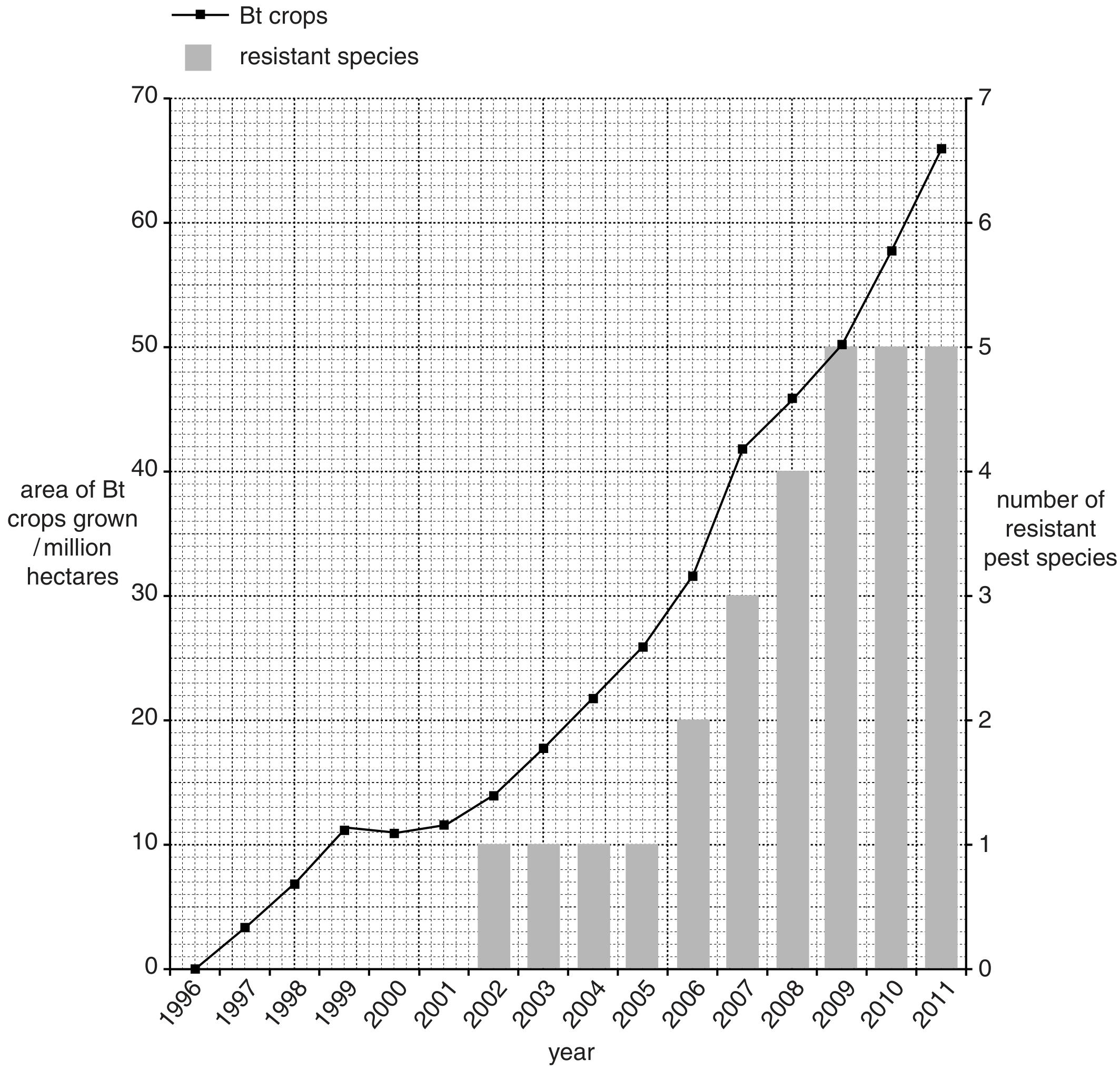
Maize and other crops have been genetically modified since 1996 to produce the Bt toxin to kill insect pests.

Fig. 4.2 shows the area of Bt crops grown (plotted points) and the number of insect pest species in which resistance to Bt has been reported (bars).

Fig. 4.2 shows the area of Bt crops grown (plotted points) and the number of insect pest species in which resistance to Bt has been reported (bars).

[ 4 ]
(i)

Describe and suggest an explanation for the relationship between the area of Bt crops grown and the number of resistant pest species.

[ 4 ]
[Maximum number: 4]

Food crops like wheat may be improved by selective breeding and genetic modification.

(a)

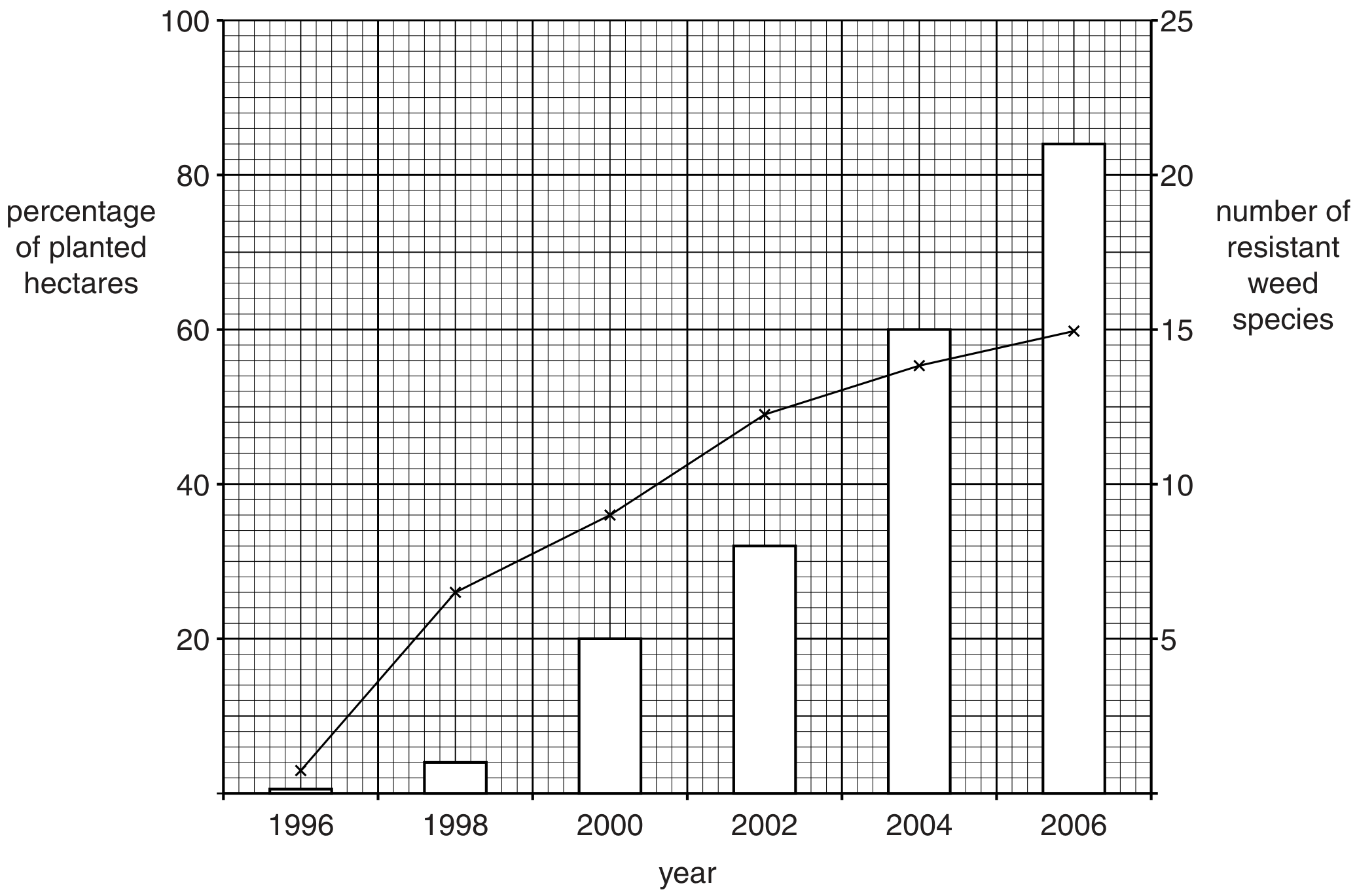
Wheat and other crops have been genetically modified to be resistant to the herbicide glyphosate since 1996.

Fig. 4.1 shows the area of glyphosate-resistant crops grown as a percentage of the total planted hectares (plotted points) and the number of weed species with resistance to glyphosate (bars). area resistant species

Fig. 4.1

Fig. 4.1

Describe and explain the relationship between the area of glyphosate-resistant crops grown and the number of resistant weed species.

[ 4 ]
0