(a)
When a mammal dies, aerobic respiration stops. The striated muscles contract and remain contracted for a few hours after death.
Suggest why the muscles remain contracted for a few hours.
[ 2 ]
 EduNinja
When a mammal dies, aerobic respiration stops. The striated muscles contract and remain contracted for a few hours after death.
Suggest why the muscles remain contracted for a few hours.
Explain how processes such as ethanol fermentation and lactate fermentation allow cells to continue to function in the absence of oxygen.
Explain why a person continues to breathe deeply and at a higher rate for some time after the person has stopped exercising.
Yeast cells can respire in anaerobic conditions.
Outline how yeast carries out respiration in anaerobic conditions.
Sometimes an athlete will need to carry out respiration in anaerobic conditions to produce ATP.
Explain why the respiration of glucose in anaerobic conditions produces less ATP than in aerobic conditions.
For a short time after exercise, a person continues to breathe more heavily than at rest to take in more oxygen than normal.
Explain the use of this extra oxygen.
Some factory workers in the early 20th century were exposed to chemical X and experienced serious side-effects.
Some of the effects of exposure to chemical X are:
- decreased production of ATP
- increased lipid metabolism, with weight loss
- increased production of pyruvate and lactate
- excess heat energy release, causing an increase in body temperature, which can be fatal.
Chemical X increases the permeability of the inner mitochondrial membrane to protons (hydrogen ions), causing some protons to leak out into the matrix.
Suggest and explain why chemical X causes increased production of pyruvate and lactate.
Glucose is a respiratory substrate. Table 3.1 shows the yield of ATP from some other substrates.
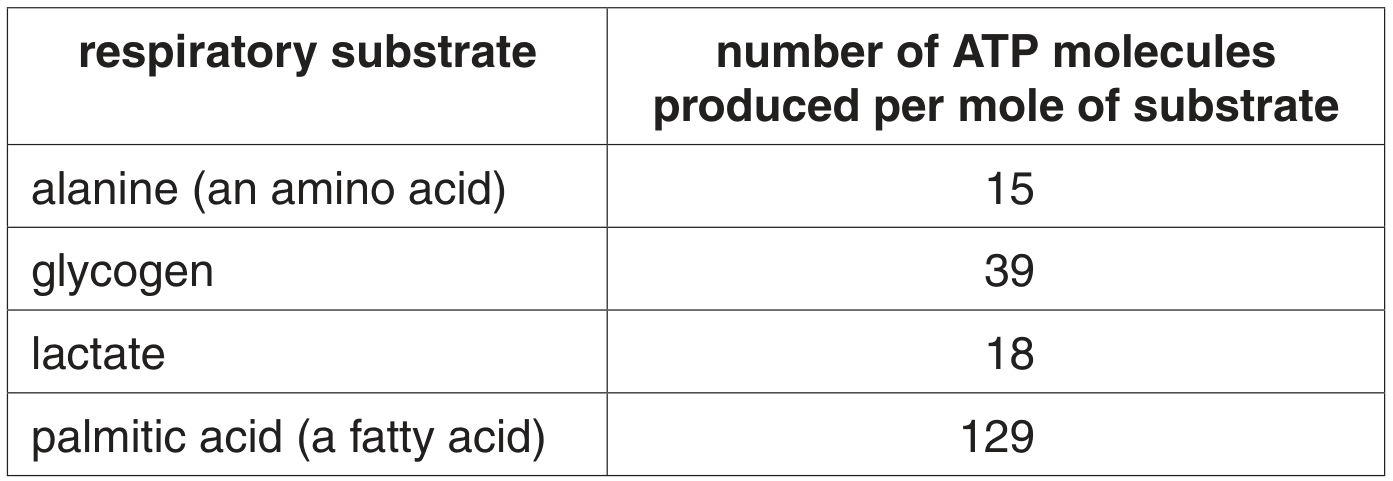
Table 3.1
Describe the circumstances in which alanine and lactate are used as respiratory substrates.
alanine
lactate
The enzyme catalase is found in many plant and animal tissues.
The enzyme catalyses the decomposition of hydrogen peroxide, which is a toxic product of metabolism. The reaction is:
A research team investigated the activity of two forms of catalase, P and Q, extracted from Anopheles gambiae, an important vector of malaria. The team investigated the effect of increasing concentrations of hydrogen peroxide on the activity of these two forms of catalase.
The results are shown in Fig. 3.1.
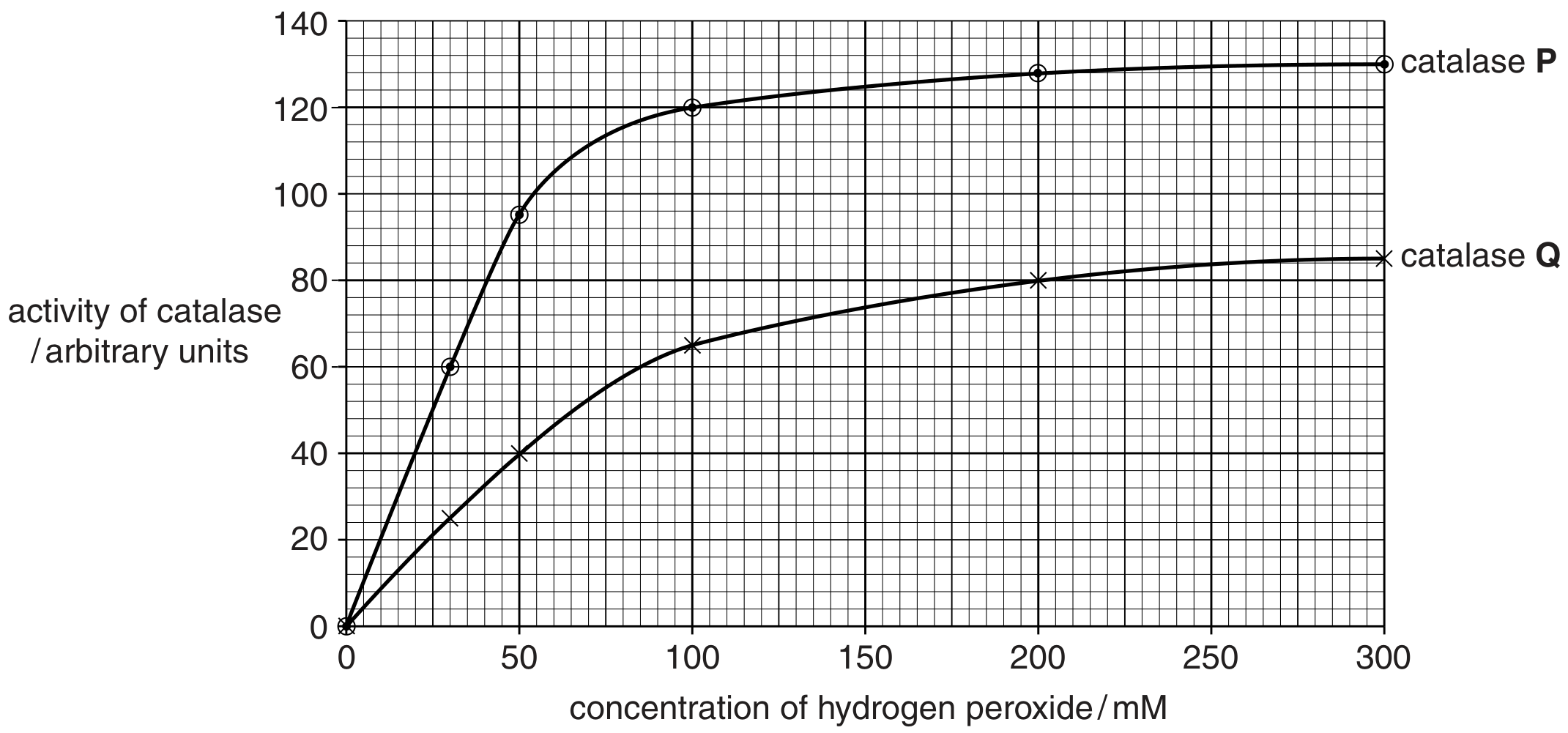
Fig. 3.1
Female mosquitoes feed on blood in order to produce their eggs. After feeding, the metabolic rate increases for egg production.
The researchers allowed female mosquitoes to feed on blood. They found that female mosquitoes with only catalase P produced more eggs than those with only catalase Q.
Suggest why there is a difference in egg production between the two types of A. gambiae.
Thermus thermophilus is a bacterium found in geothermal environments, such as hot springs. The bacterium respires aerobically, even though at high temperatures the solubility of oxygen in water is low.
One strain of T. thermophilus, HB8, has an enzyme, nitrate reductase, which allows nitrate to be used as the final electron acceptor in the electron transport chain (ETC).
Suggest an advantage to the bacterium of this adaptation.
Azotobacter vinelandii is a bacterium found in the soil that is able to fix atmospheric nitrogen. One feature of nitrogen-fixing bacteria is the ability to synthesise the enzyme nitrogenase, a molybdenum- and iron-containing, protein complex.
Table 3.1 shows the various types of nitrogen fixation that occur throughout the world and gives estimates of the mass of atmospheric nitrogen fixed in a year.
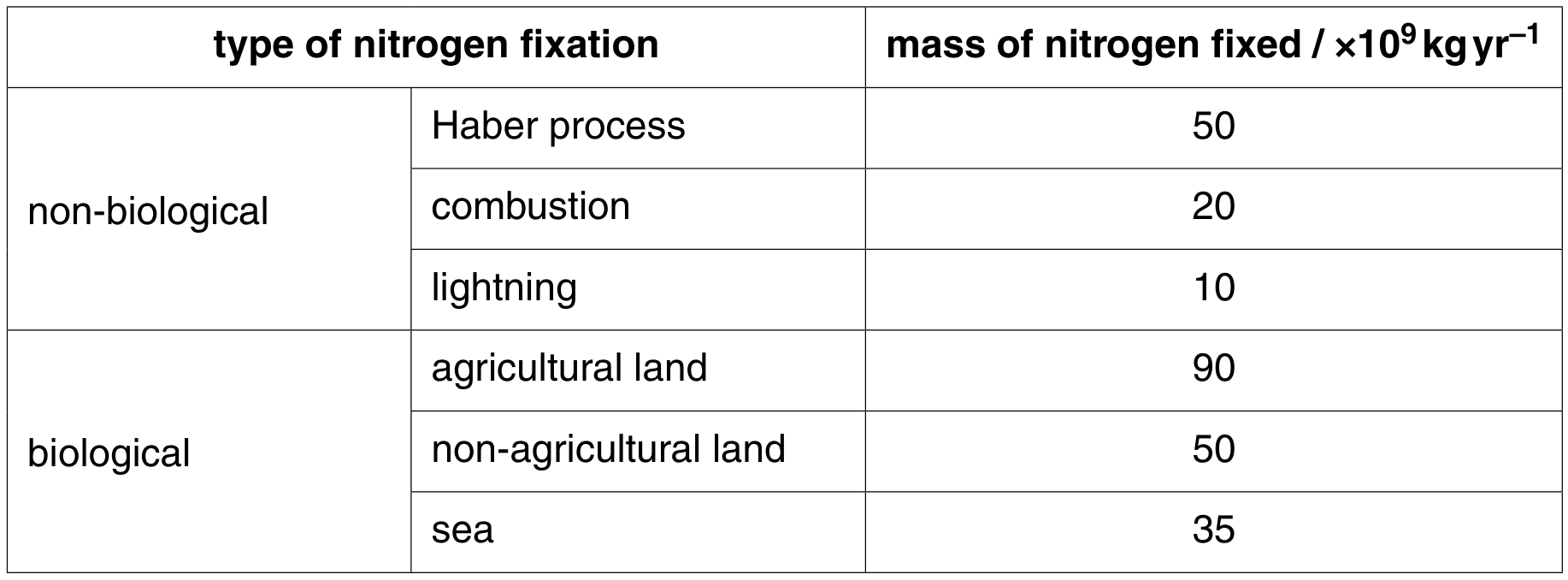
Table 3.1
Explain why the proportion of nitrogen gas in the atmosphere remains stable at 78 %, even though nitrogen fixation removes nitrogen gas from the atmosphere.