(a)
Describe how ATP is produced from ADP in the Krebs cycle.
[ 2 ]
 EduNinja
Describe how ATP is produced from ADP in the Krebs cycle.
The Krebs cycle occurs in the matrix of the mitochondrion.
Fig. 6.1 outlines the steps of the Krebs cycle.
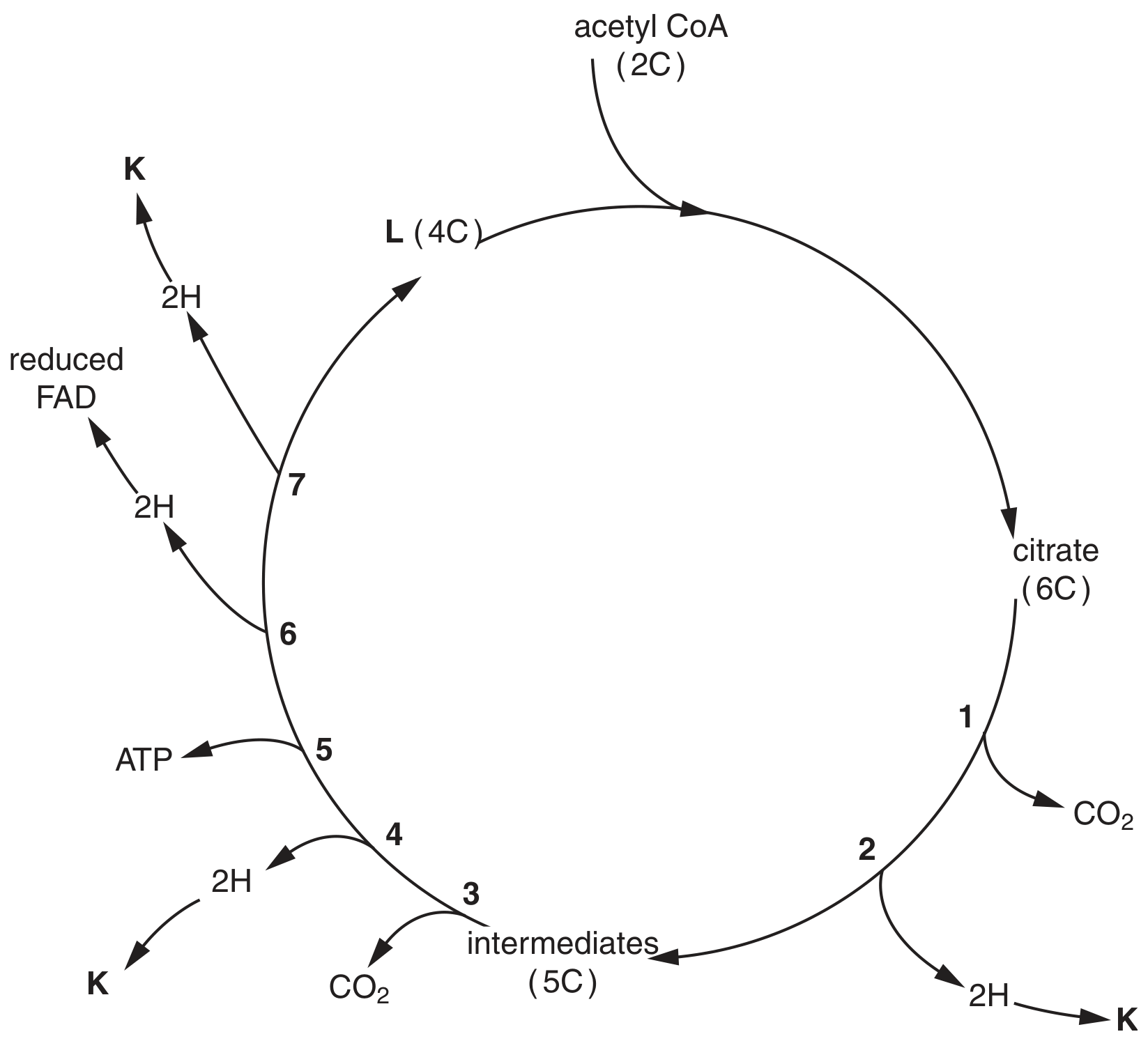
Fig. 6.1
With reference to Fig. 6.1 name the process occurring at:
2, 4, 6 and 7
The Krebs cycle occurs in the matrix of the mitochondrion.
Fig. 6.1 outlines the steps of the Krebs cycle.
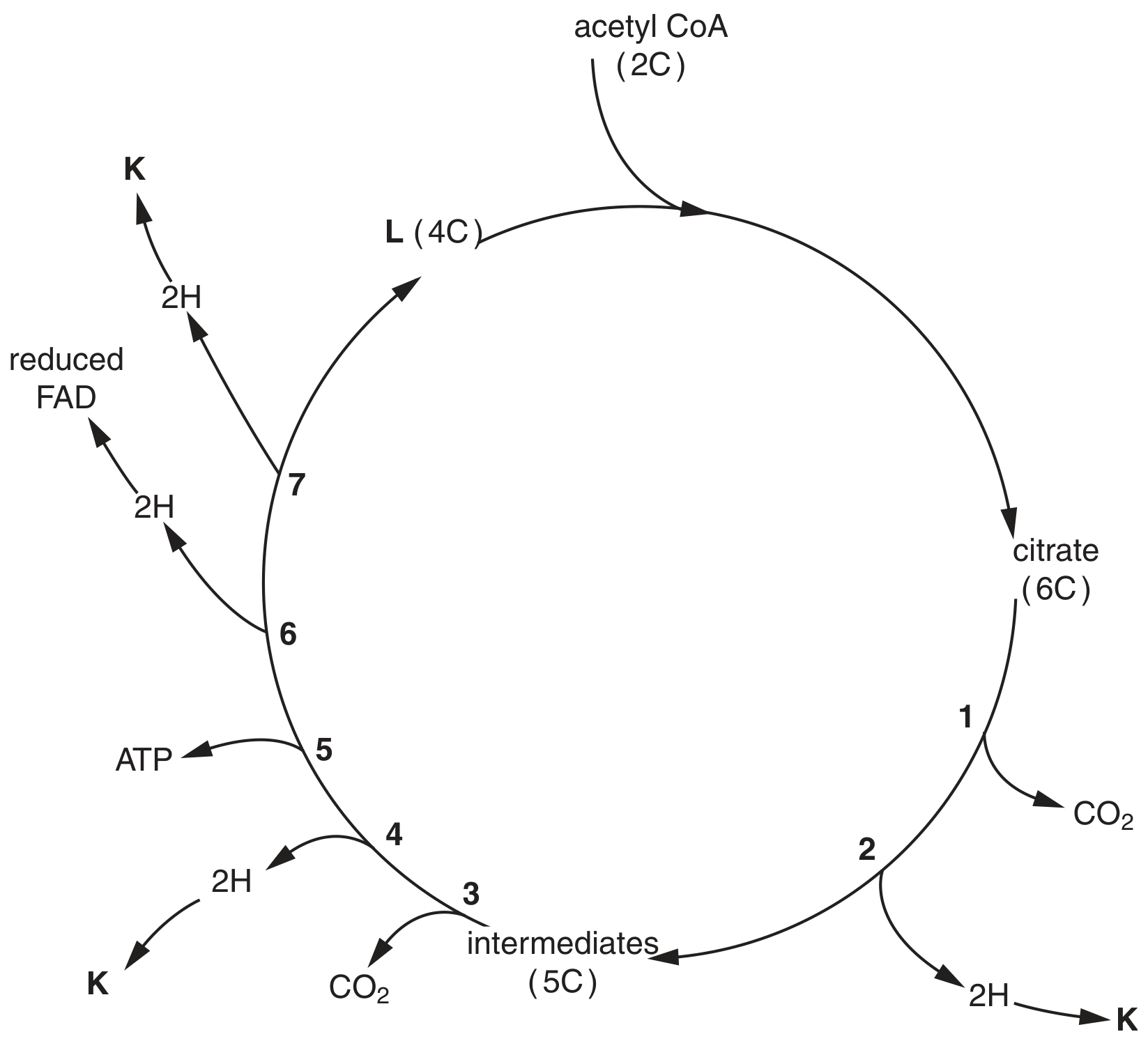
Fig. 6.1
With reference to Fig. 6.1 name the process occurring at:
2, 4, 6 and 7
Fig. 7.1 is an outline diagram of the Krebs cycle. A two carbon acetyl group enters the cycle by combining with a molecule of oxaloacetate. A molecule of citrate is formed which is decarboxylated and dehydrogenated to regenerate the oxaloacetate. The letters P to V are steps in the cycle.
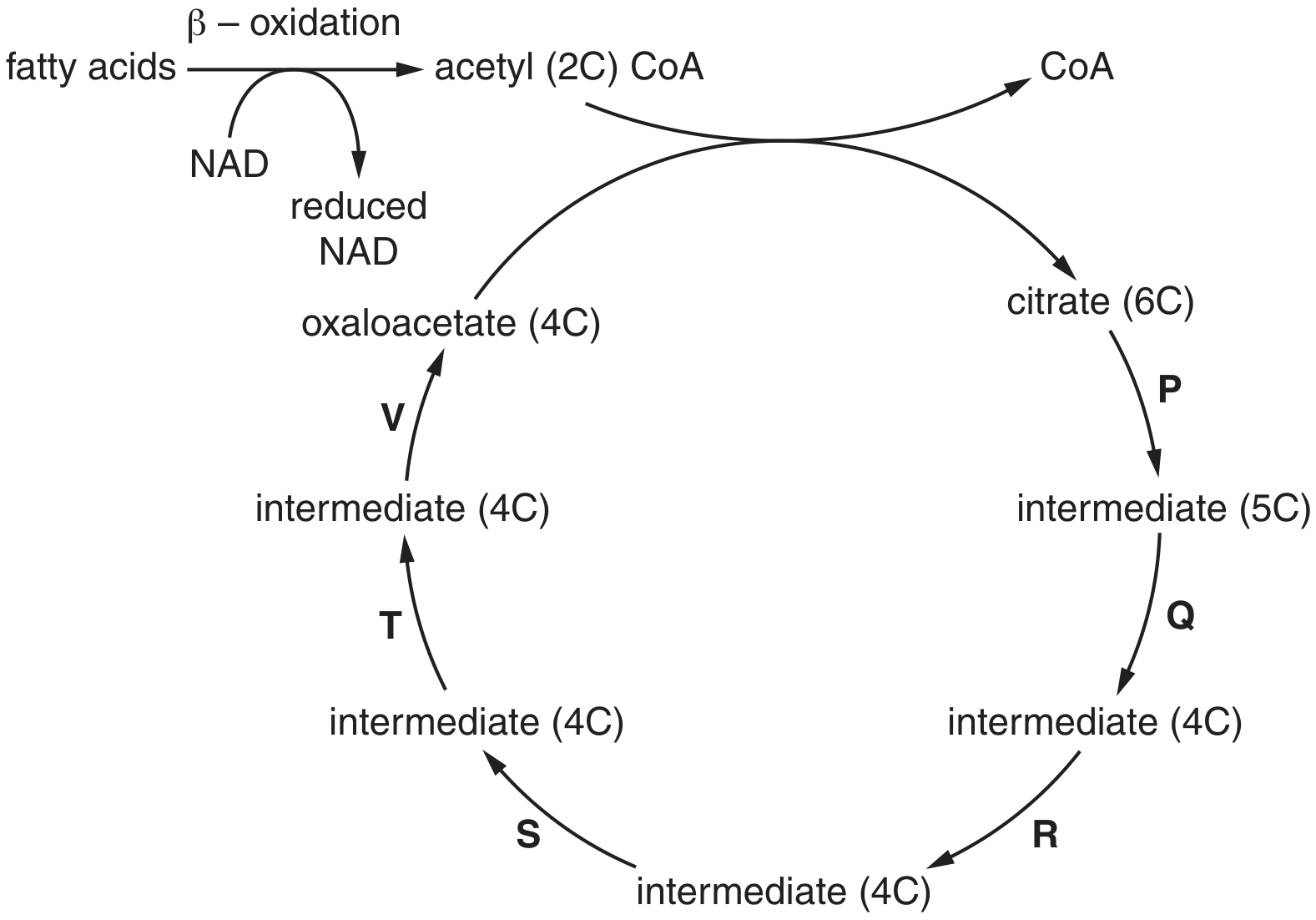
Fig. 7.1
Fig. 7.1 shows that fatty acids can be converted into acetyl coenzyme A (acetyl CoA) by a process known as oxidation. Both this process and the Krebs cycle require NAD. The hydrogen atoms released reduce the NAD molecules.
State the number of reduced NAD molecules that are formed in the Krebs cycle from one acetyl group that enters the cycle from acetyl CoA.
Many factors affect the rate of cellular respiration.
Coenzymes are important in aerobic respiration.
Outline the roles of named coenzymes in aerobic respiration.