(a)
ATP and coenzyme A both play important roles in respiration.
Fig. 1.1 represents the molecular structure of coenzyme A.
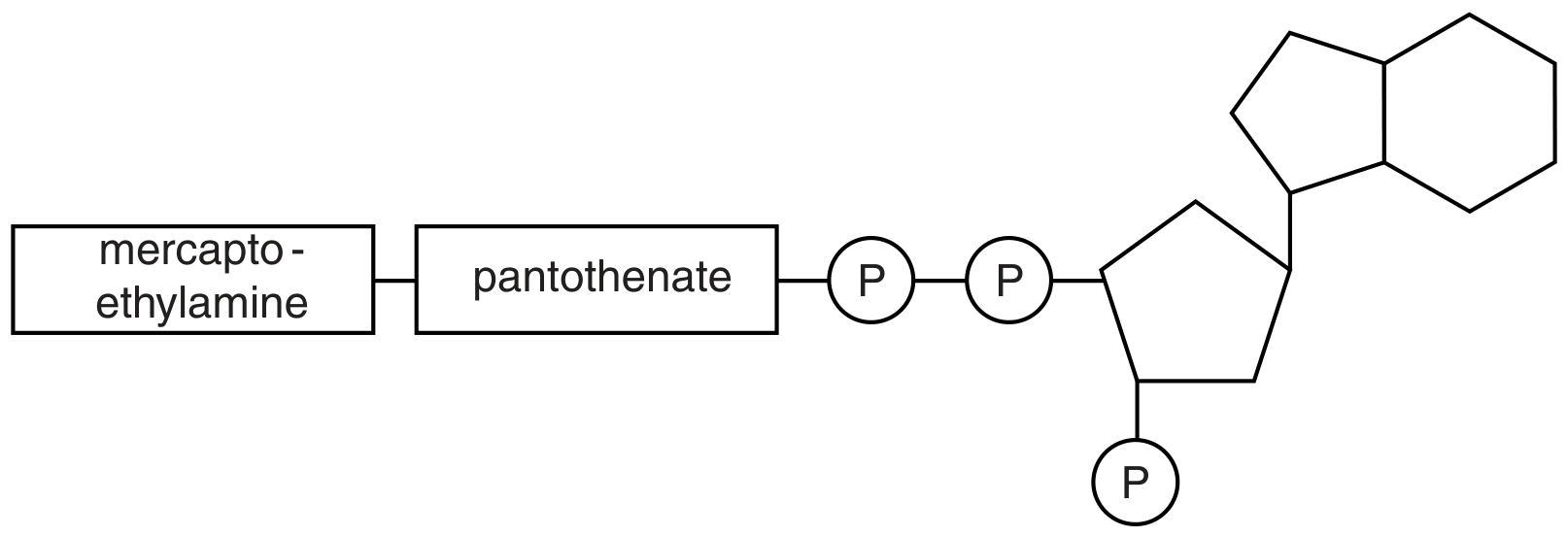
Fig. 1.1
[ 3 ]
(i)
Describe the role of coenzyme A in respiration.
[ 3 ]
 EduNinja
ATP and coenzyme A both play important roles in respiration.
Fig. 1.1 represents the molecular structure of coenzyme A.
Fig. 1.1
Describe the role of coenzyme A in respiration.
Respiration is a process that results in the synthesis of ATP. The ATP can be used within the cell for energy-requiring reactions and processes.
There are four stages in aerobic respiration: glycolysis, the link reaction, the Krebs cycle and oxidative phosphorylation.
Explain what happens to pyruvate in the link reaction in aerobic respiration.
The enzyme pyruvate dehydrogenase catalyses the link reaction. Pyruvate dehydrogenase is inhibited when the ratio of acetyl coenzyme A to coenzyme A increases.
Suggest the importance of this inhibition to the functioning of the cell.
Carbon dioxide is removed from compounds in the link reaction and Krebs cycle by decarboxylation.
State the total number of molecules of carbon dioxide removed in the link reaction and Krebs cycle for each molecule of glucose respired.
The Krebs cycle occurs in the matrix of the mitochondrion.
Fig. 6.1 outlines the steps of the Krebs cycle.
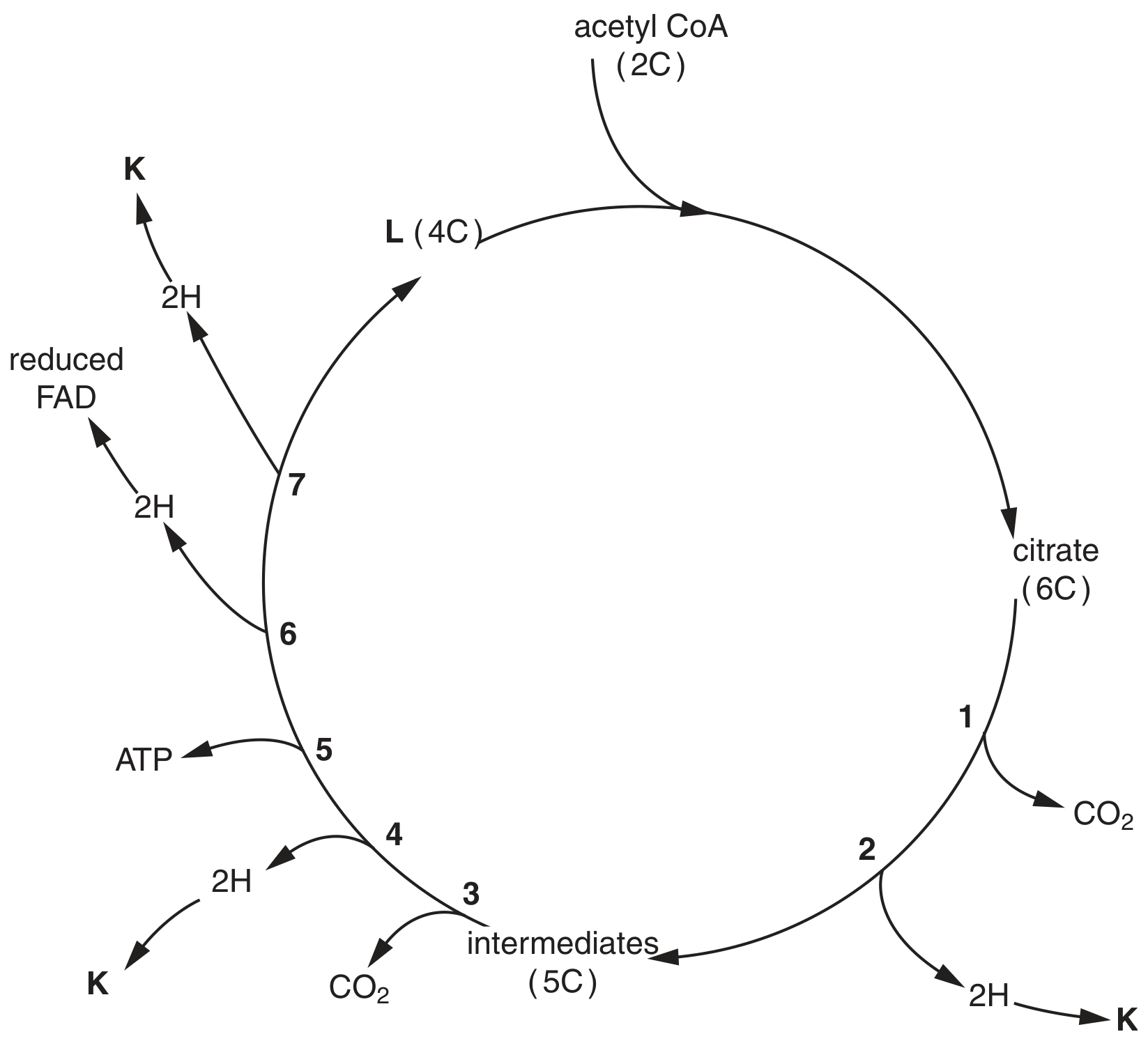
Fig. 6.1
With reference to Fig. 6.1 name the process occurring at:
5
Lipids can be metabolised to provide ATP.
- The enzyme lipase hydrolyses lipids to glycerol and fatty acids.
- The hydrocarbon chain of the fatty acid breaks down into smaller, 2C compounds.
- Each 2 C compound reacts with coenzyme A to form acetyl coenzyme A.
State the role of acetyl coenzyme A in respiration.