(a)
The Krebs cycle was named after the biochemist Sir Hans Krebs, who worked out the sequence in 1937.
Fig. 1.1 is an outline of the Krebs cycle.
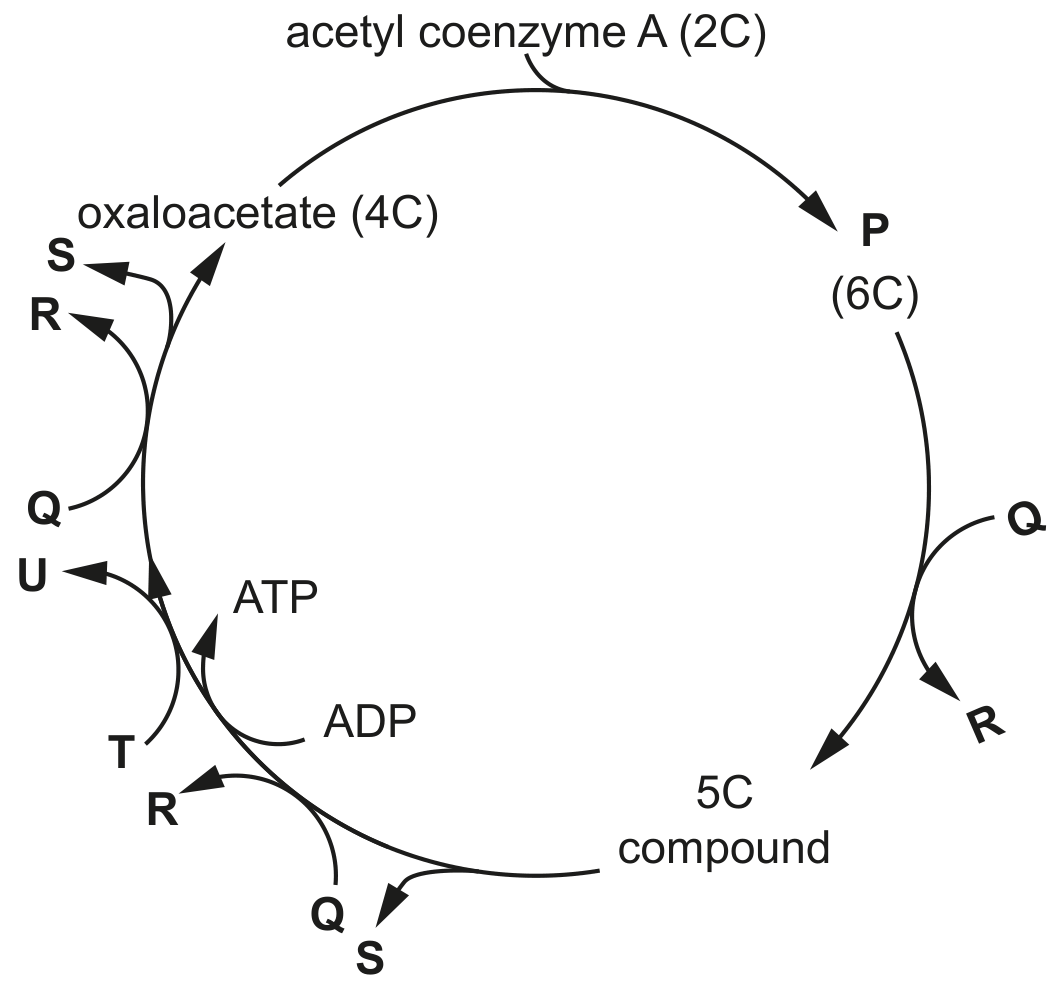
Fig. 1.1
Identify substances P-U.
P
Q
R
S
T
U
[ 3 ]
 EduNinja
The Krebs cycle was named after the biochemist Sir Hans Krebs, who worked out the sequence in 1937.
Fig. 1.1 is an outline of the Krebs cycle.
Fig. 1.1
Identify substances P-U.
P
Q
R
S
T
U
During respiration, respiratory substrates such as glucose are used as a source of energy to produce ATP molecules.
State the term used to describe the reaction that results in the production of ATP during the Krebs cycle.
The Krebs cycle occurs in the matrix of the mitochondrion.
Fig. 6.1 outlines the steps of the Krebs cycle.
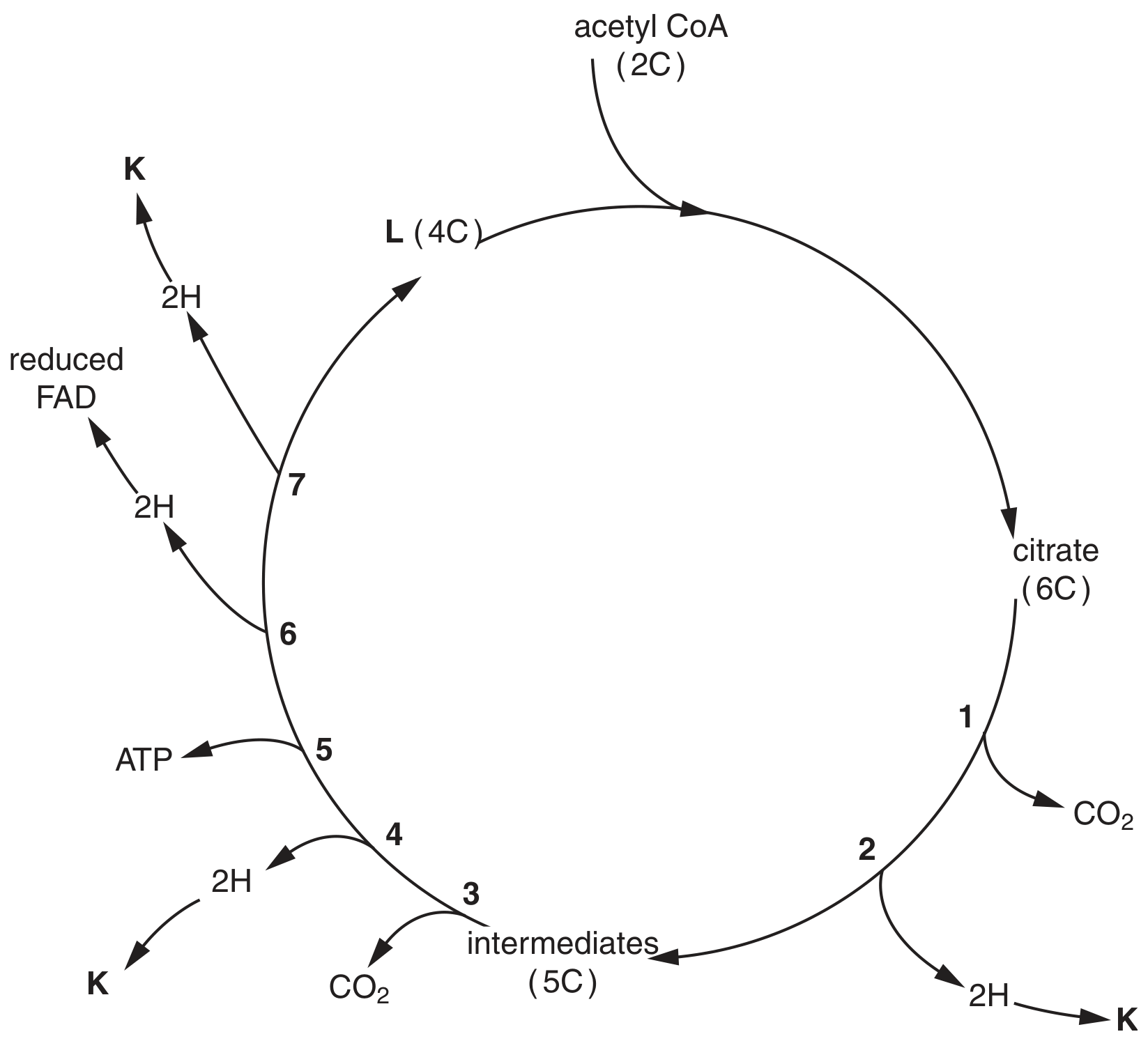
Fig. 6.1
With reference to Fig. 6.1 name the process occurring at:
1 and 3
5
Name the compounds K and L.
K
L
The Krebs cycle occurs in the matrix of the mitochondrion.
Fig. 6.1 outlines the steps of the Krebs cycle.
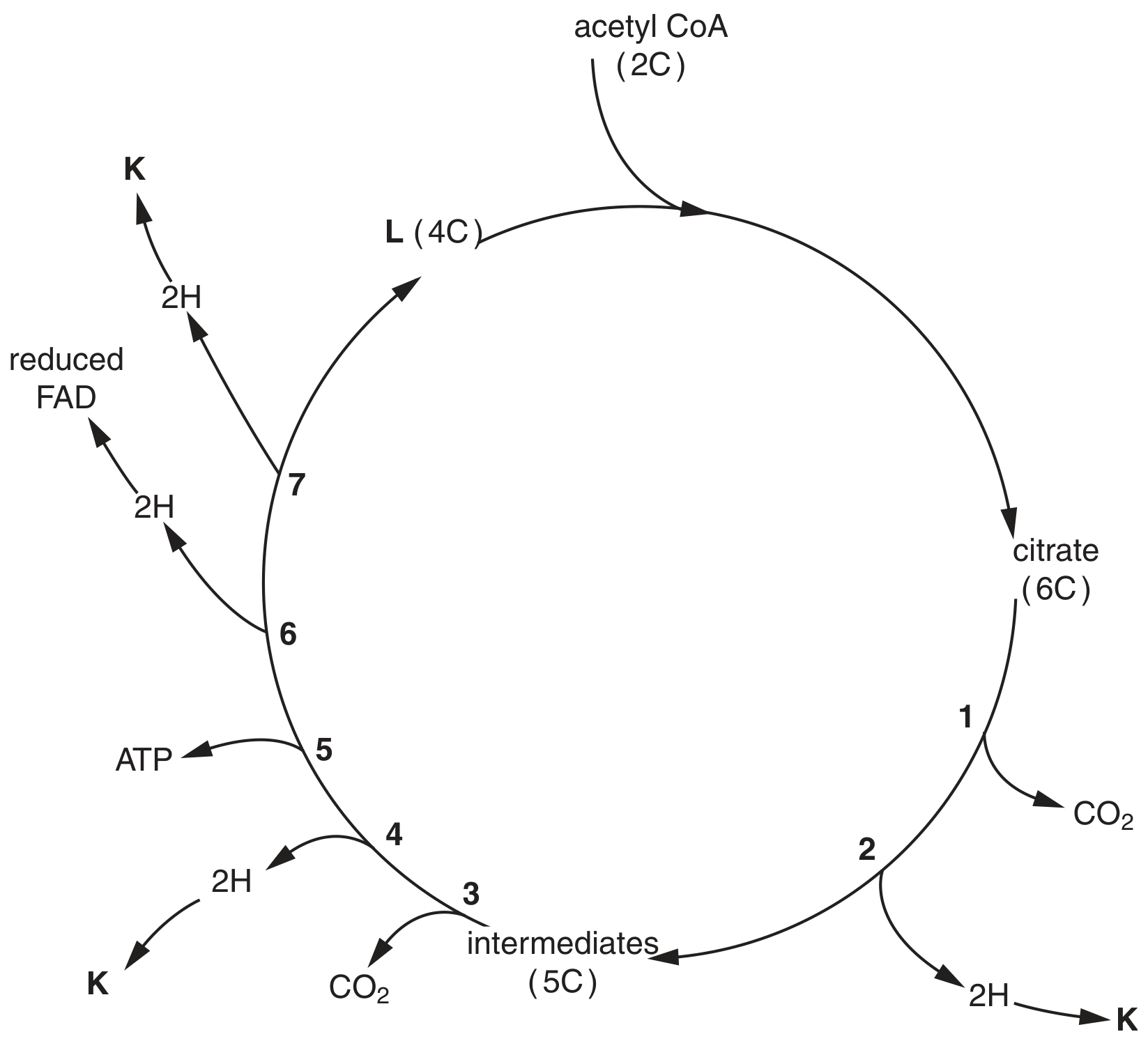
Fig. 6.1
With reference to Fig. 6.1 name the process occurring at:
1 and 3
Name the compounds K and L.
K
L
Fig. 7.1 is an outline diagram of the Krebs cycle. A two carbon acetyl group enters the cycle by combining with a molecule of oxaloacetate. A molecule of citrate is formed which is decarboxylated and dehydrogenated to regenerate the oxaloacetate. The letters P to V are steps in the cycle.
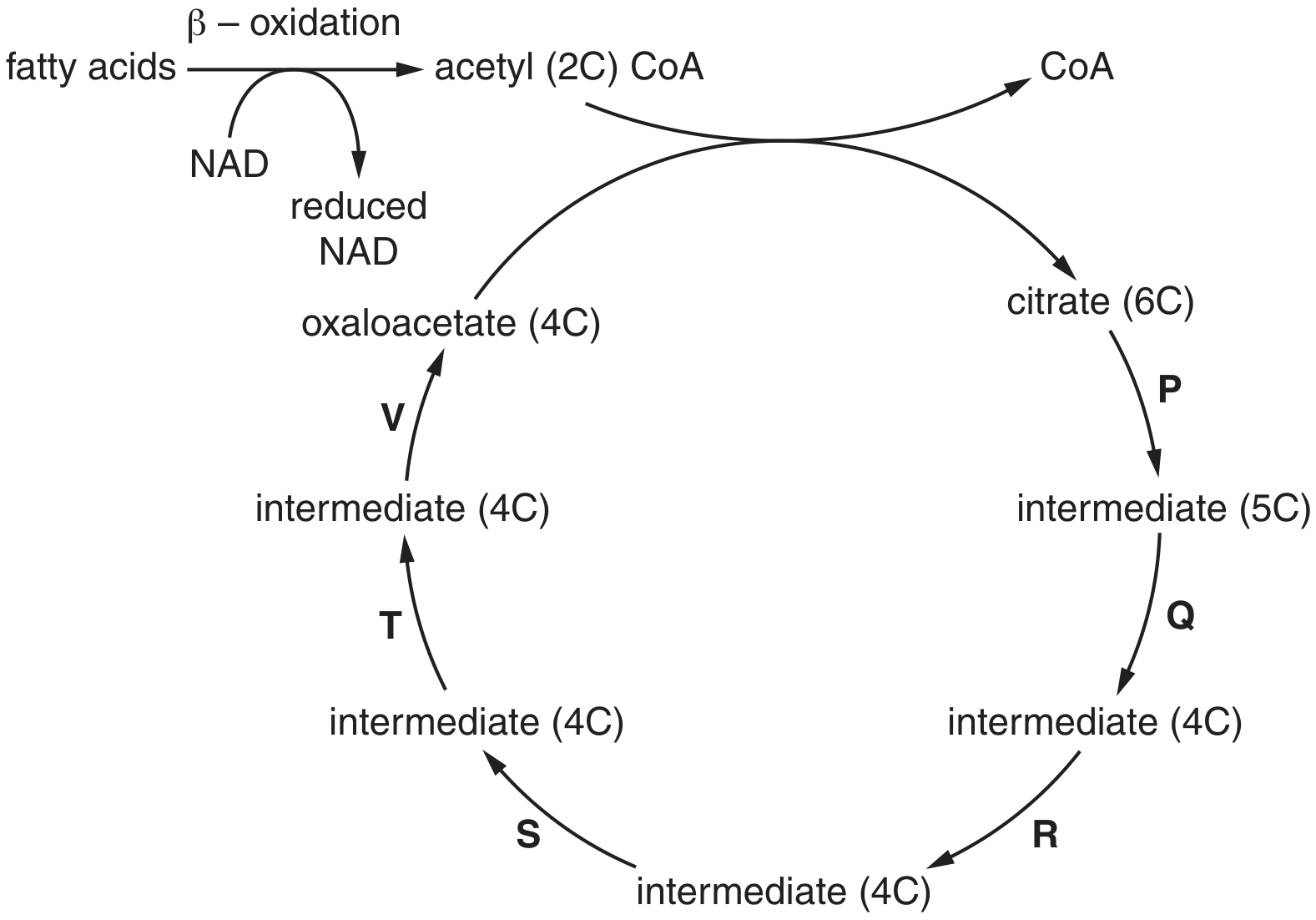
Fig. 7.1
Using the letters in the cycle, state where decarboxylation is taking place.
Describe the series of reactions that make up the Krebs cycle.