EduNinja
(a)

The results of investigations carried out on mitochondria show how the structure of a mitochondrion is related to its role in aerobic respiration.
- Intact mitochondria (not damaged) were removed from cells.
- A technique was used to remove the outer mitochondrial membrane, leaving the inner membrane intact.
- The inner mitochondrial membrane was separated from the contents of the matrix so that both could be analysed.

[ 3 ]
(i)

The removal of the outer membranes of mitochondria involves placing the organelles in pure water. This results in the rupture (bursting) of the outer membrane. The inner mitochondrial membrane does not rupture and remains intact.

Suggest and explain why the inner membrane of a mitochondrion remains intact when the organelle is placed in pure water.

[ 2 ]
(ii)

The inner membrane contains a very high proportion of the molecule cardiolipin. Cardiolipin makes the membrane impermeable to some ions.

Suggest why the inner membrane contains a very high proportion of cardiolipin.
[ 1 ]
[Maximum number: 3]

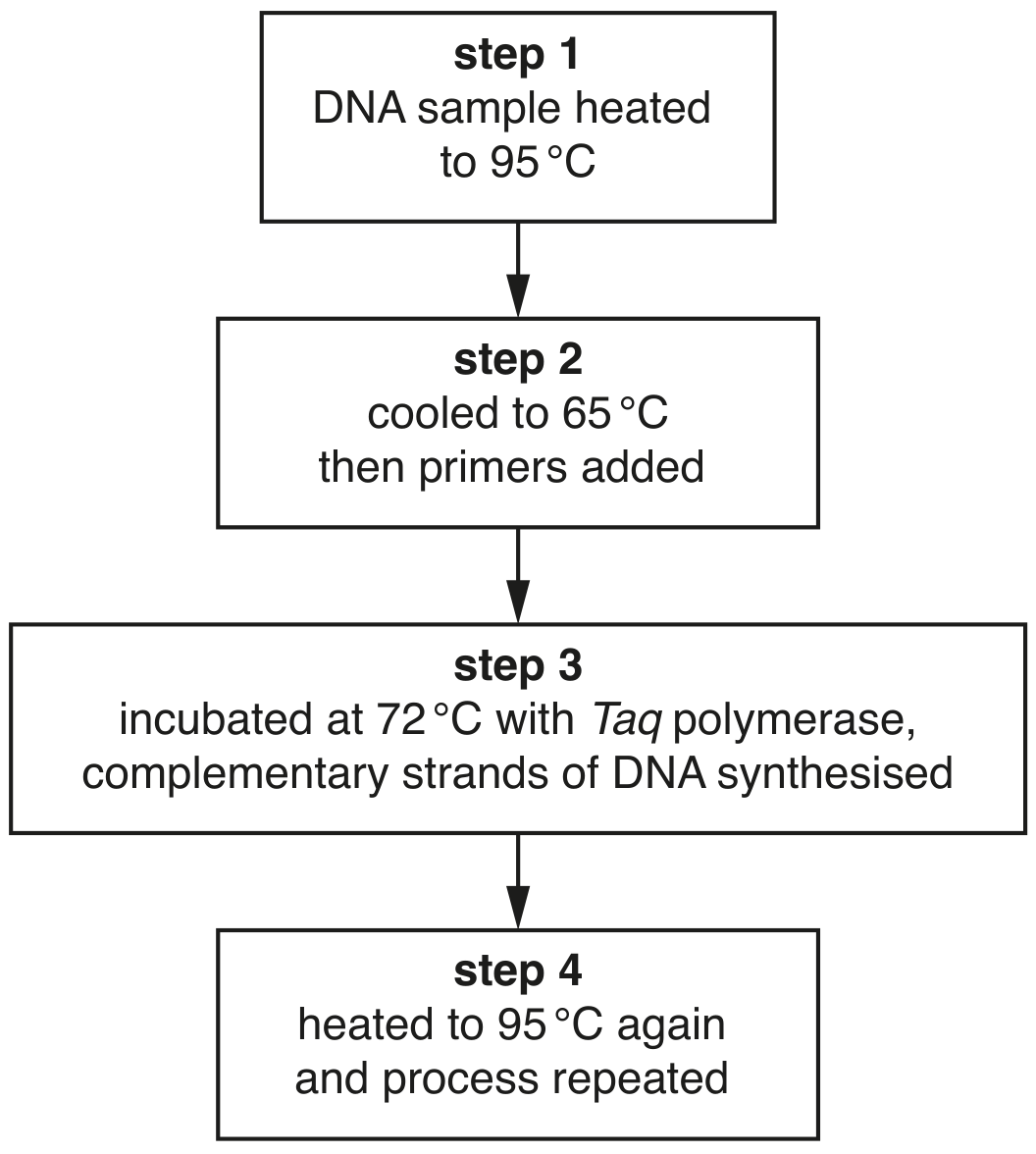
The polymerase chain reaction (PCR) is used to produce large amounts of DNA from a very small original sample. The main stages of a PCR are shown in Fig. 3.1.

Fig. 3.1

Fig. 3.1

(a)

After an organism dies, its DNA gradually breaks down. However, cells in bones that were buried hundreds of years ago may still yield small amounts of DNA that can be extracted, amplified using PCR and then analysed. Mitochondrial DNA (mtDNA) is often used because there are usually more than 100 copies of it in one cell, compared with only two copies of nuclear DNA.

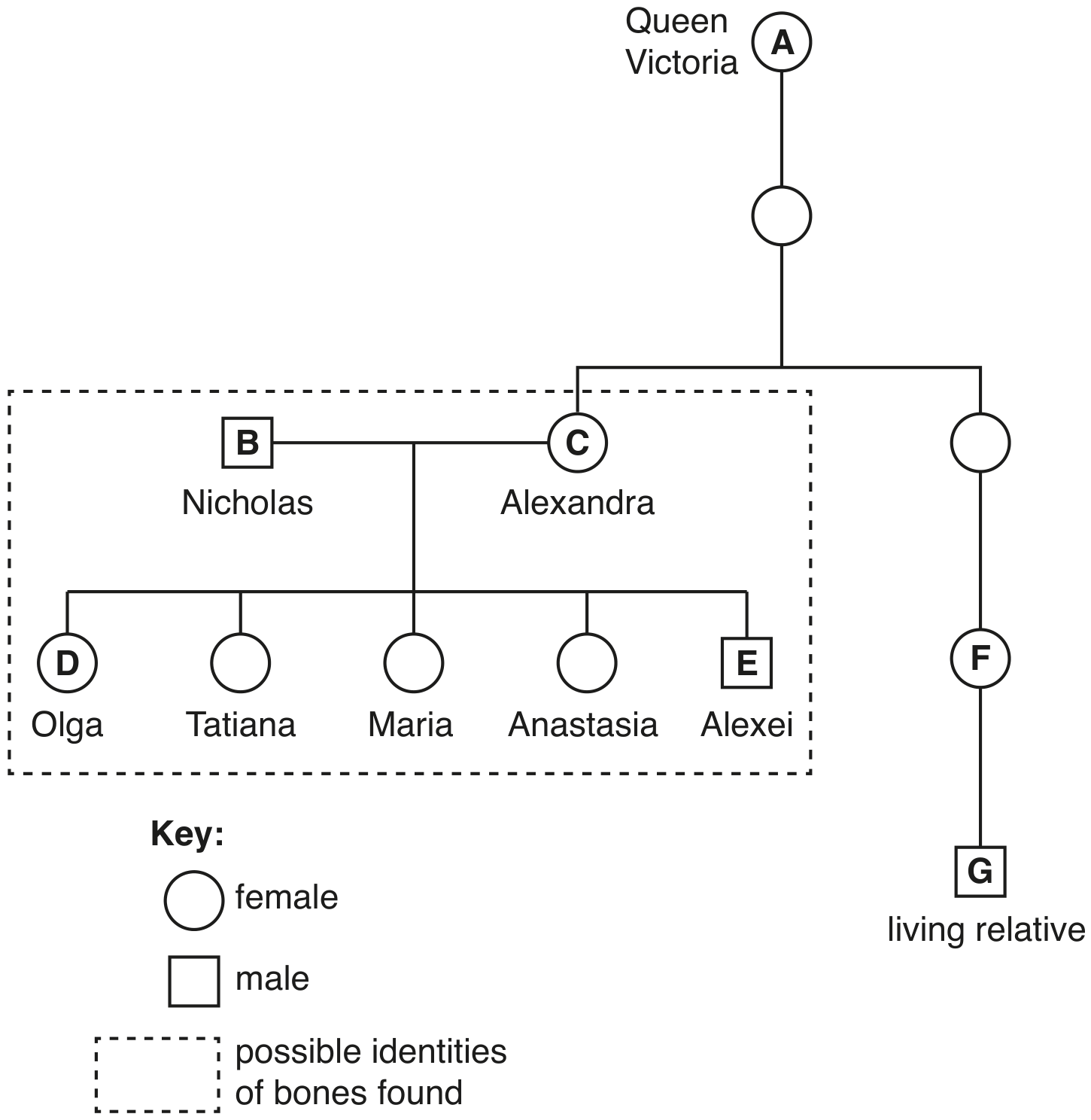
For example, in 1994, mtDNA from bones that had been found in a grave in Russia was analysed to confirm that these were the remains of the royal family, who were known to have been killed in 1918. The mtDNA extracted from the bones was compared with the mtDNA from a living relative of the family.

The family tree of the Russian royal family and some of their relatives is shown in Fig. 3.2.

Fig. 3.2

Fig. 3.2

[ 3 ]
(i)

Explain why there are usually more than 100 copies of mtDNA in a cell, but only two copies of nuclear DNA.

[ 2 ]
(ii)

All of the mitochondria in a zygote come from the egg, not the sperm.

List the letters of the people in the family tree in Fig. 3.2 who would be expected to have mtDNA identical to the mtDNA of the living relative, G.

[ 1 ]

Maize, Zea mays, is a cereal crop that is adapted for growth at high temperatures. However, it does not cope with drought as well as some other crops, such as sorghum.

An investigation was carried out into the effect of low water availability on the activity of mitochondria taken from maize seedlings.

Young seedlings were uprooted and left in dry air for varying periods of time to reduce the water potential of their tissues.

(a)

In a further experiment, it was found that mitochondrial membranes lost their normal structure when the water potential was low.

(i)

Suggest how this could explain the results shown in Fig. 4.1.

(a)

An experiment was carried out to investigate the effect of epicatechin on mitochondrial respiration in mice. Epicatechin is a naturally occurring compound in cocoa beans and so is present in chocolate.

Two groups of mice, group A and group B, were used in this experiment.
- Group A was given water containing epicatechin, twice a day for 15 days.
- Group B was given water without epicatechin, twice a day for 15 days.

After 15 days, the structure of mitochondria from striated muscle cells in both groups of mice was examined.

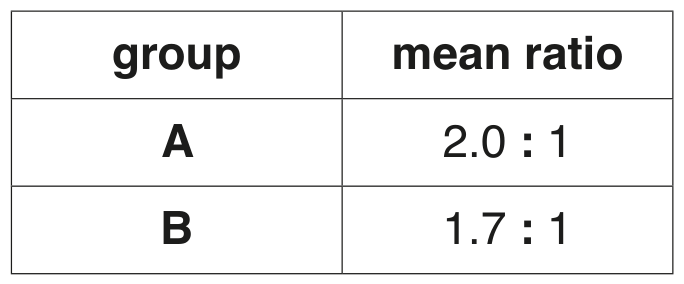
The surface area of the inner membrane of the mitochondria was divided by the surface area of the outer membrane to obtain a ratio for each mouse.

Table 4.1 shows the mean ratios for the two groups of mice.

Table 4.1

Table 4.1

The mice in group A were able to exercise longer than the mice in group B.

With reference to Table 4.1, explain why the mice in group A were able to exercise for longer than the mice in group B.

[ 5 ]
(a)

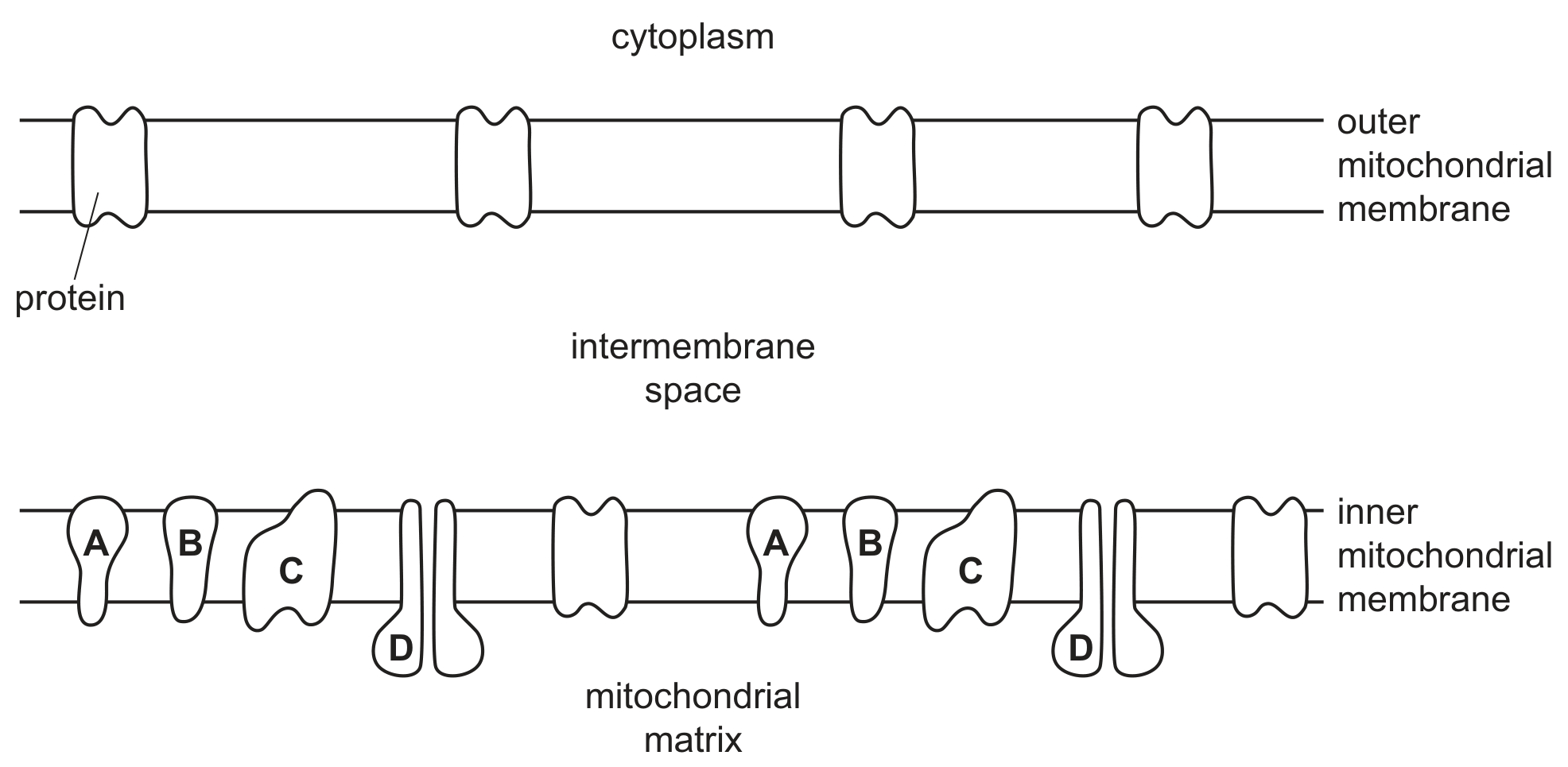
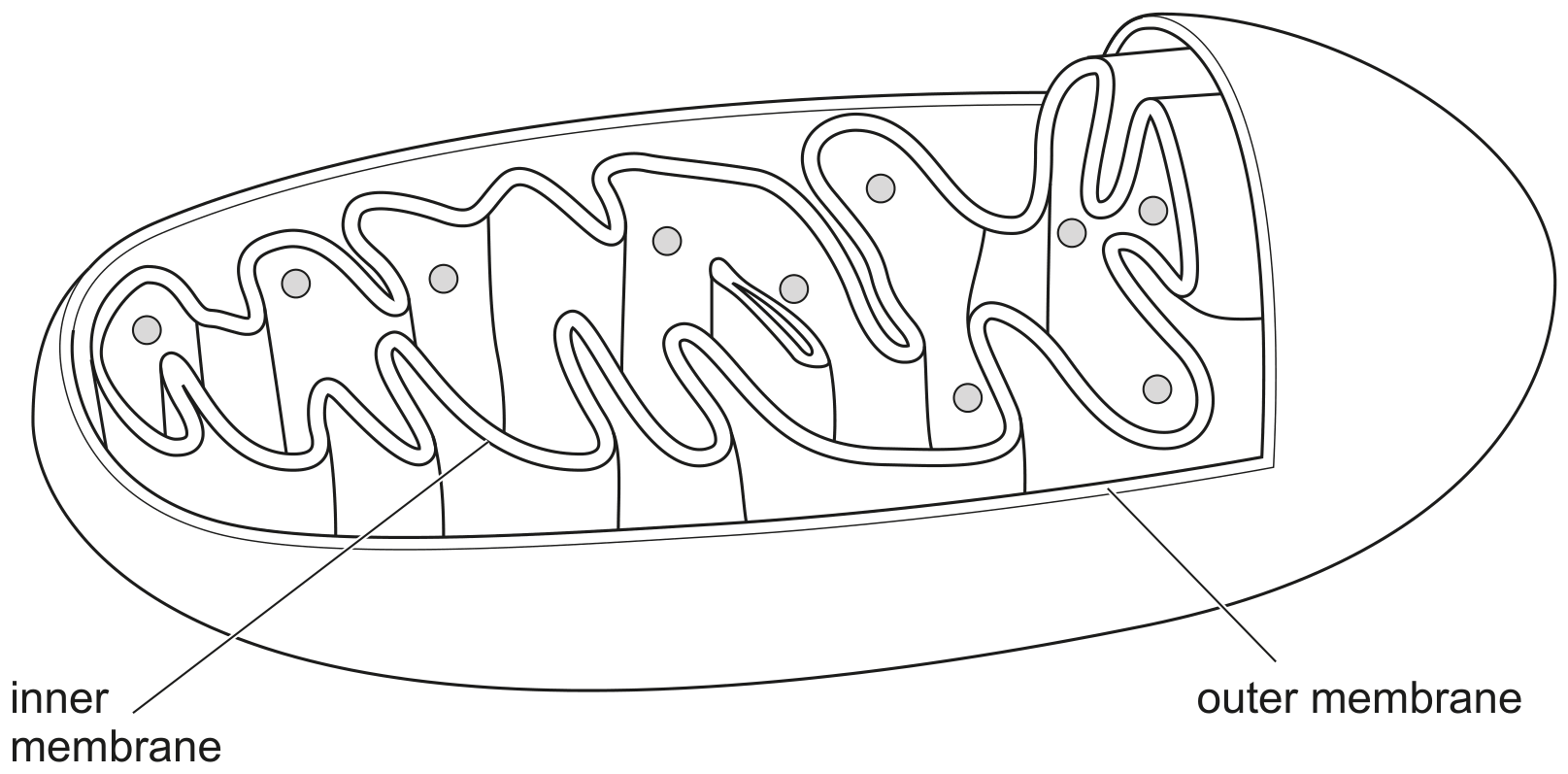
Fig. 6.1 is a diagram of part of a mitochondrion.

Fig. 6.1

Fig. 6.1

On Fig. 6.1, use arrows to show the route taken by oxygen from the cytoplasm into the mitochondrial matrix.

[ 1 ]
(a)

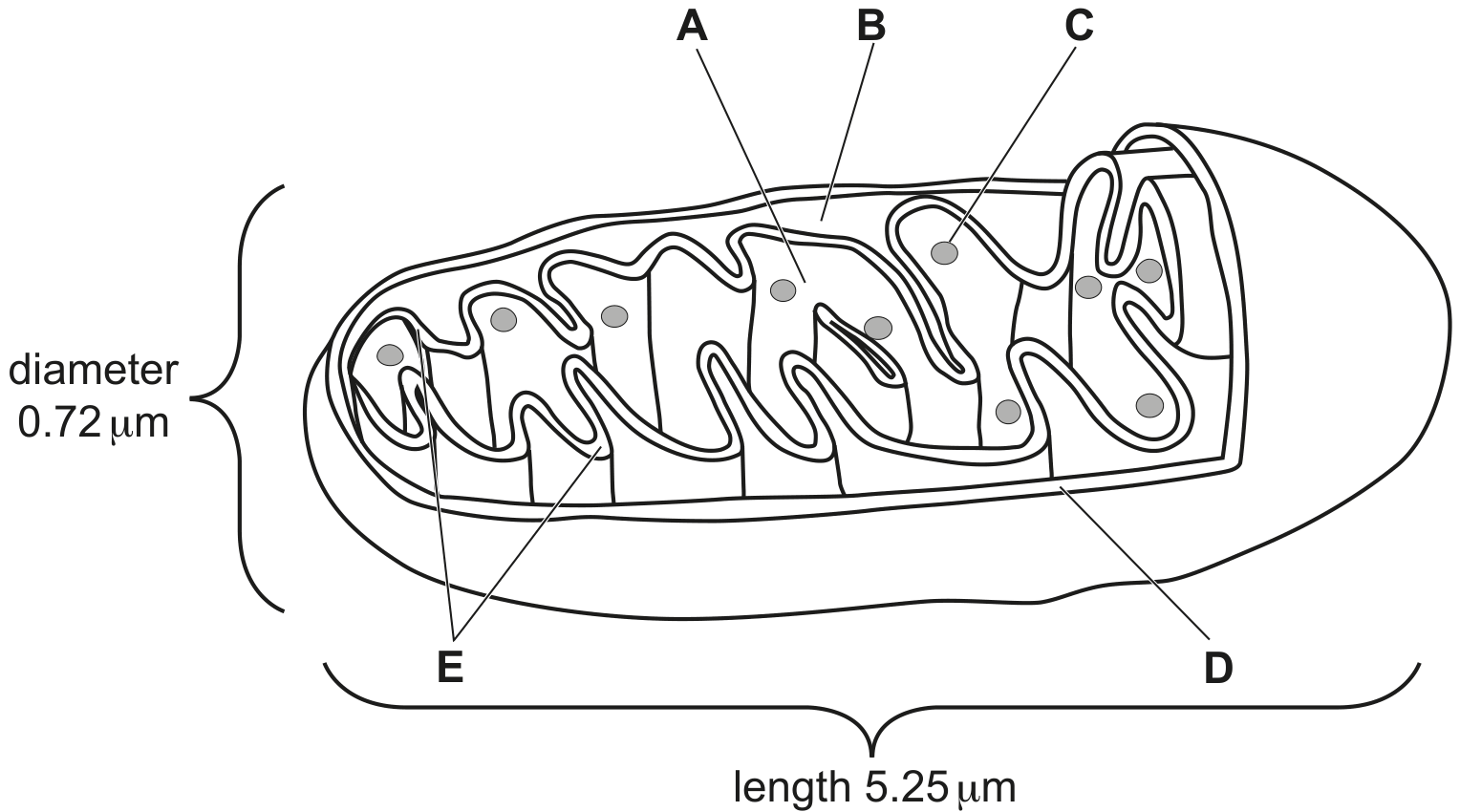
Fig. 6.1 is a diagram of mitochondrion.

Fig. 6.1

Fig. 6.1

[ 6 ]
(i)

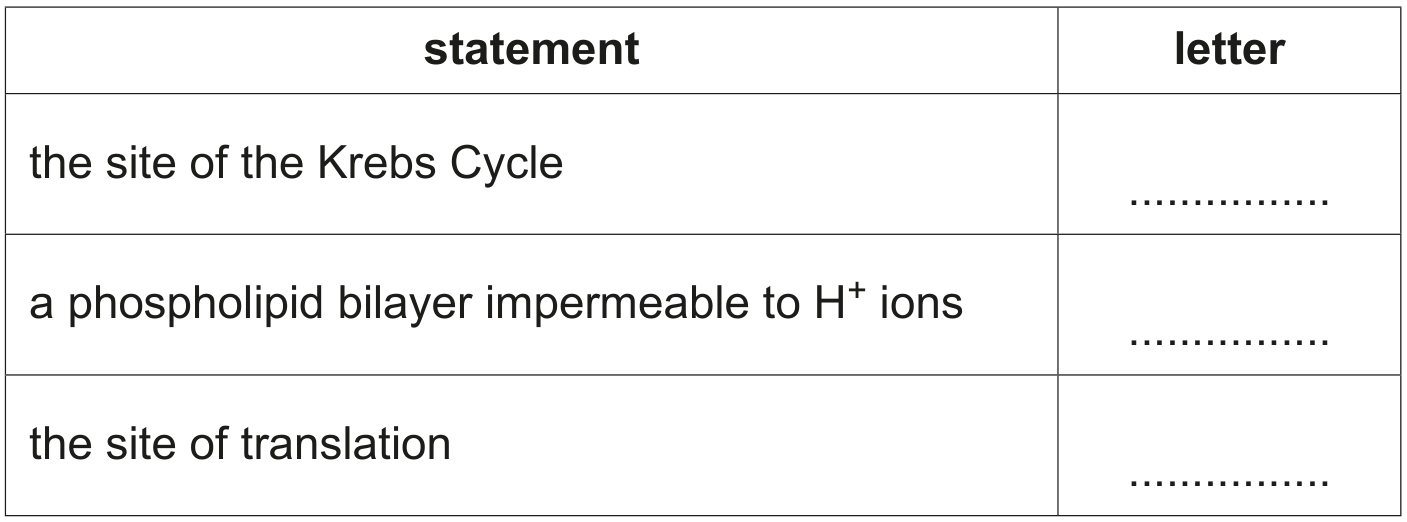
Complete Table 6.1 using the letters A to E from Fig. 6.1.

Each letter may be used once, more than once, or not at all.

Table 6.1

Table 6.1

[ 2 ]
(ii)

Assume that the mitochondrion in Fig. 6.1 is a cylinder.

Calculate the surface area of this mitochondrion.
Use the formula: Surface area of cylinder =2πr2+2πrh=2 \pi r^{2}+2 \pi r h
Show your working.

\text { surface area = \mu \mathrm{m}^{2}
[ 2 ]
(iii)

The inner membrane of the mitochondrion has a much larger surface area than the outer membrane because of the presence of cristae.

Different cell types vary in the number of cristae present per mitochondrion. Cardiac muscle cells have mitochondria with a very large number of cristae.

Suggest and explain why cardiac muscle cells have mitochondria with very large numbers of cristae.

[ 2 ]
(a)

The number of mitochondria differs from cell to cell. Cells also vary in size and volume.

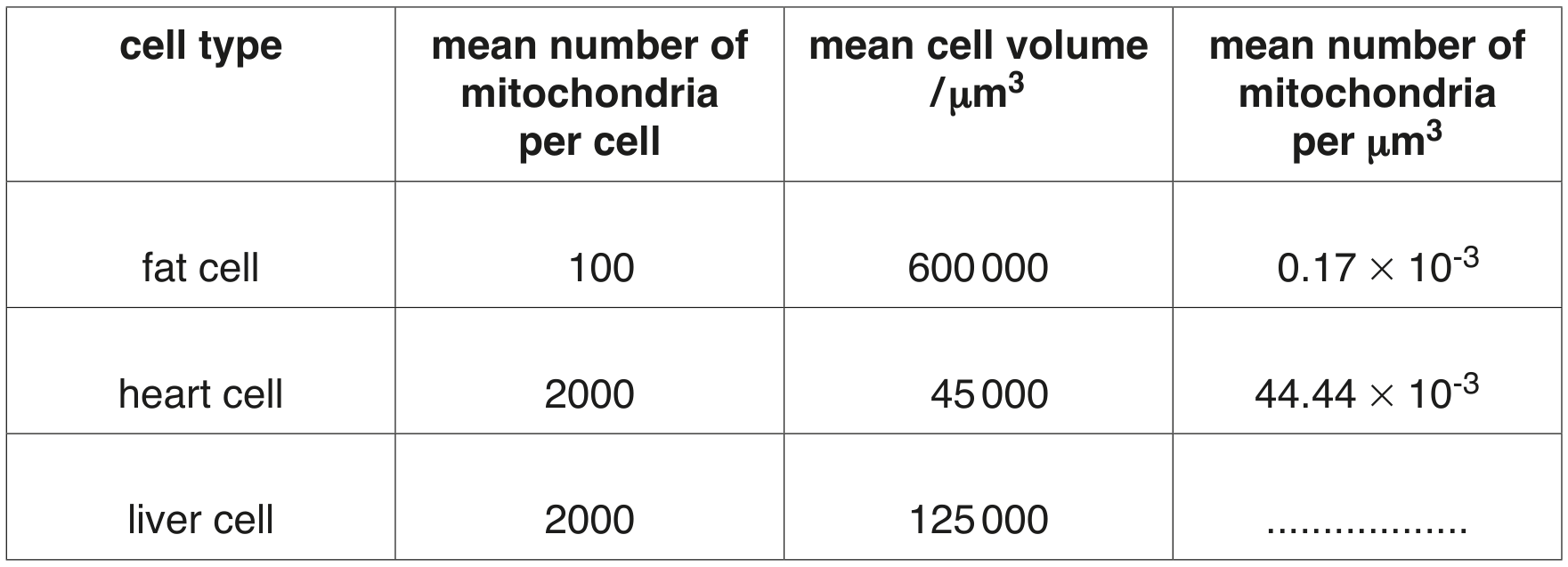
Table 6.2 shows the mean number of mitochondria per cell, the mean cell volume and the mean number of mitochondria per μm3\mu \mathrm{m}^{3} of three types of mammalian cells.

Table 6.2

Table 6.2

[ 3 ]
(i)

Suggest reasons for the difference in mean number of mitochondria per μm3\mu \mathrm{m}^{3} between the fat cell and the heart cell.

[ 2 ]
(ii)

Suggest why it is difficult to compare the ability of the three types of cell to respire aerobically, based only on the mean number of mitochondria per cell.

[ 1 ]
(a)

Explain why it is an advantage to the cell for the inner membrane of the mitochondrion to be folded.

[ 2 ]
(a)

Fig. 8.1 is a diagram of a mitochondrion.

Fig. 8.1

Fig. 8.1

Outline the roles played by the mitochondrial membranes in respiration.

[ 4 ]
(b)

The shapes and numbers of mitochondria are continually changing due to fission. Fission occurs when one mitochondrion splits to form two mitochondria.

[ 2 ]
(i)

Suggest reasons why mitochondria carry out fission.

[ 2 ]
(c)

Old or damaged mitochondria reduce the ability of a cell to carry out aerobic respiration and produce the ATP needed for the metabolic processes of the cell.

Suggest what occurs to these mitochondria to allow the cell to maintain the same overall rate of respiration and ATP production.

[ 2 ]
[Maximum number: 2]

Adipose tissue is specialised connective tissue that functions as the major storage site for fat in the form of triglycerides.
The human body contains two types of adipose tissue: white adipose tissue (WAT) and brown adipose tissue (BAT).
- WAT is more common and is found under the skin and around some internal organs.
- BAT is found in infants around the back and shoulders.
- BAT is also found in adults but in relatively smaller quantities.
- BAT cells contains more mitochondria than WAT cells.
- BAT is involved in the maintenance of a constant blood temperature when the external environment is cold.

(a)

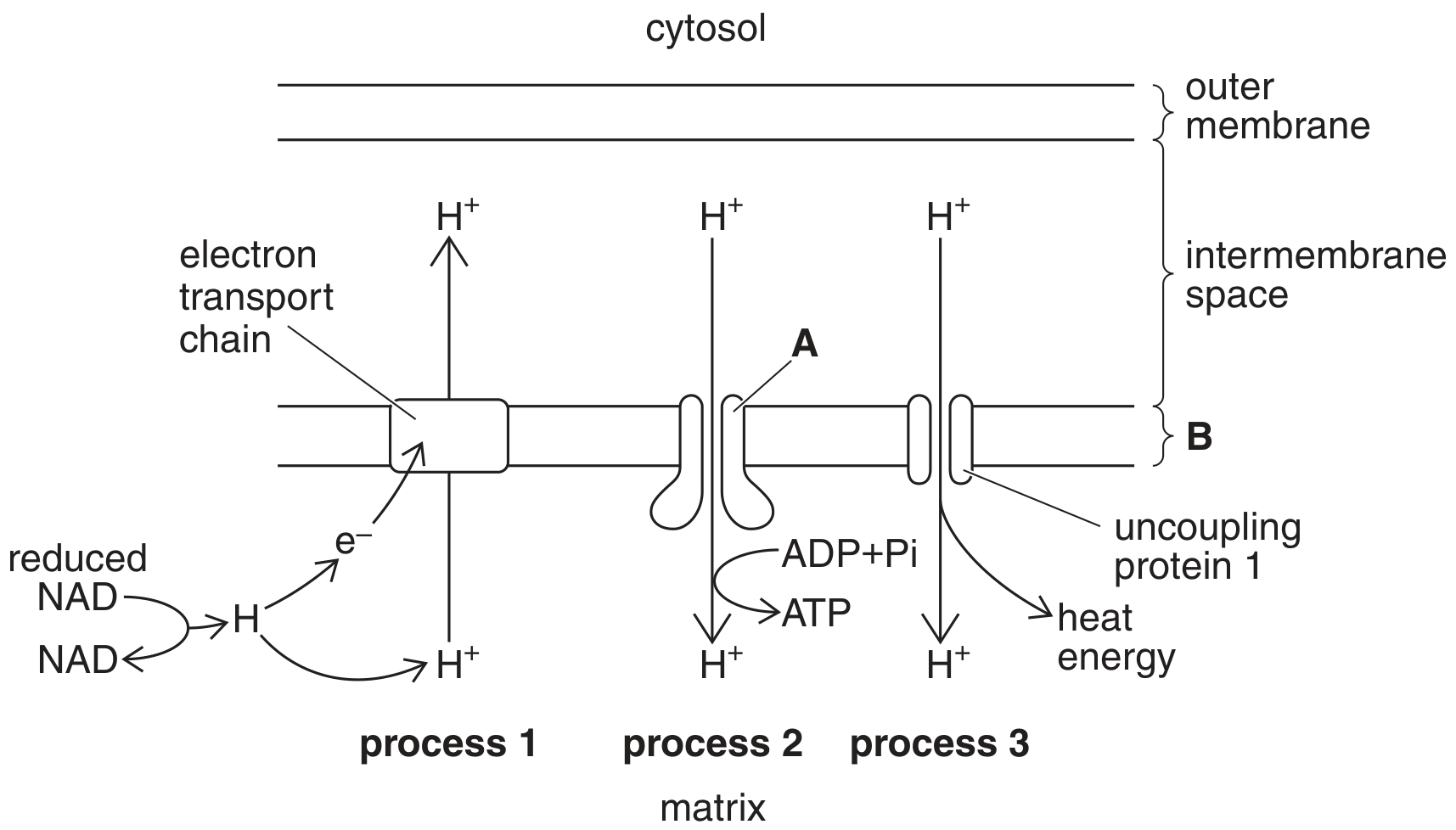
Mitochondria in BAT cells function differently from those in other cells during periods of cold environmental conditions.

Fig. 8.1 shows part of a mitochondrion in a BAT cell.

Fig. 8.1

Fig. 8.1

[ 2 ]
(i)

Name structures A and B.

A

B

[ 2 ]
0