During a sporting event, an athlete carries out respiration in aerobic conditions.
In a muscle cell, molecules of glucose are phosphorylated at the start of glycolysis. Suggest why the phosphorylated glucose molecules cannot diffuse out of the cell.
EduNinjaDuring a sporting event, an athlete carries out respiration in aerobic conditions.
In a muscle cell, molecules of glucose are phosphorylated at the start of glycolysis. Suggest why the phosphorylated glucose molecules cannot diffuse out of the cell.
All organisms respire to release energy from energy-rich molecules such as glucose.
Describe and explain the use of ATP in glycolysis.
Respiration is a process that results in the synthesis of ATP. The ATP can be used within the cell for energy-requiring reactions and processes.
There are four stages in aerobic respiration: glycolysis, the link reaction, the Krebs cycle and oxidative phosphorylation.
The first part of glycolysis uses ATP.
Explain why ATP is needed in the first part of glycolysis.
State the precise locations of substrate-linked phosphorylation reactions in aerobic respiration.
Aerobic respiration occurs when oxygen is available. A much greater energy yield is obtained from aerobic respiration than from respiration in anaerobic conditions.
Outline the stage of aerobic respiration that occurs in the cytoplasm of eukaryotic cells.
The initial stages of respiration convert one molecule of glucose into two molecules of a 3 C compound.
State
the name given to these initial stages
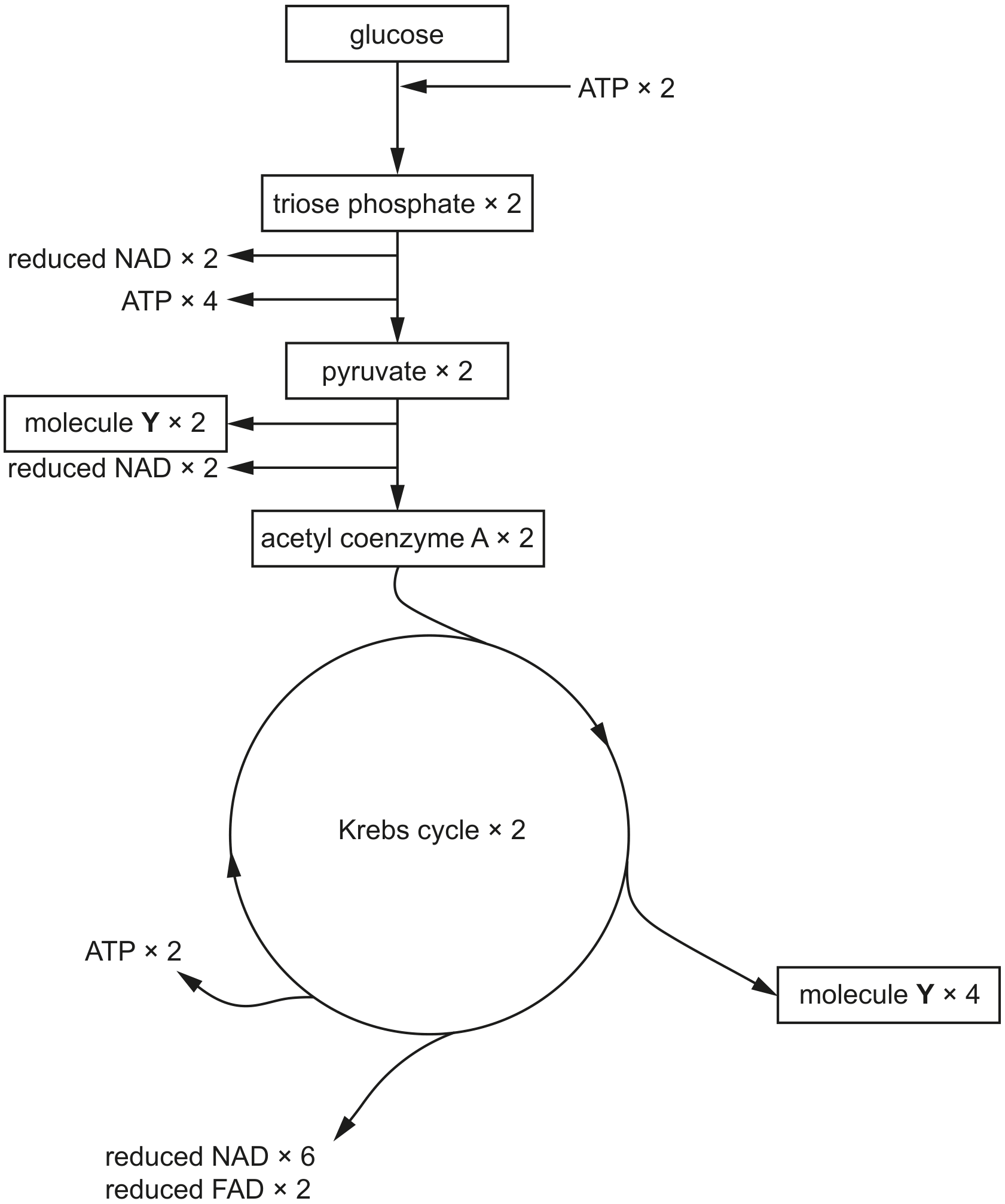
Fig. 6.1 outlines the first three stages of respiration in aerobic conditions.

Fig. 6.1
Name molecule Y in Fig. 6.1.
Explain how Fig. 6.1 shows that glycolysis involves oxidation.
At one time it was thought that the oxidative phosphorylation of:
- one molecule of reduced NAD results in the synthesis of 3 ATP molecules
- one molecule of reduced FAD results in the synthesis of 2 ATP molecules.
Using Fig. 6.1, a theoretical value for the net number of ATP molecules that are synthesised for each molecule of glucose can be calculated.
Modern research has shown that the actual net number of ATP molecules synthesised for each glucose molecule respired is much lower than this theoretical value.
Using Fig. 6.1, calculate the theoretical value for the net number of ATP molecules that are synthesised for each molecule of glucose respired in all phosphorylation reactions.
Show your working.
answer =
Suggest two reasons why the actual net number of ATP molecules synthesised is less than the theoretical number.
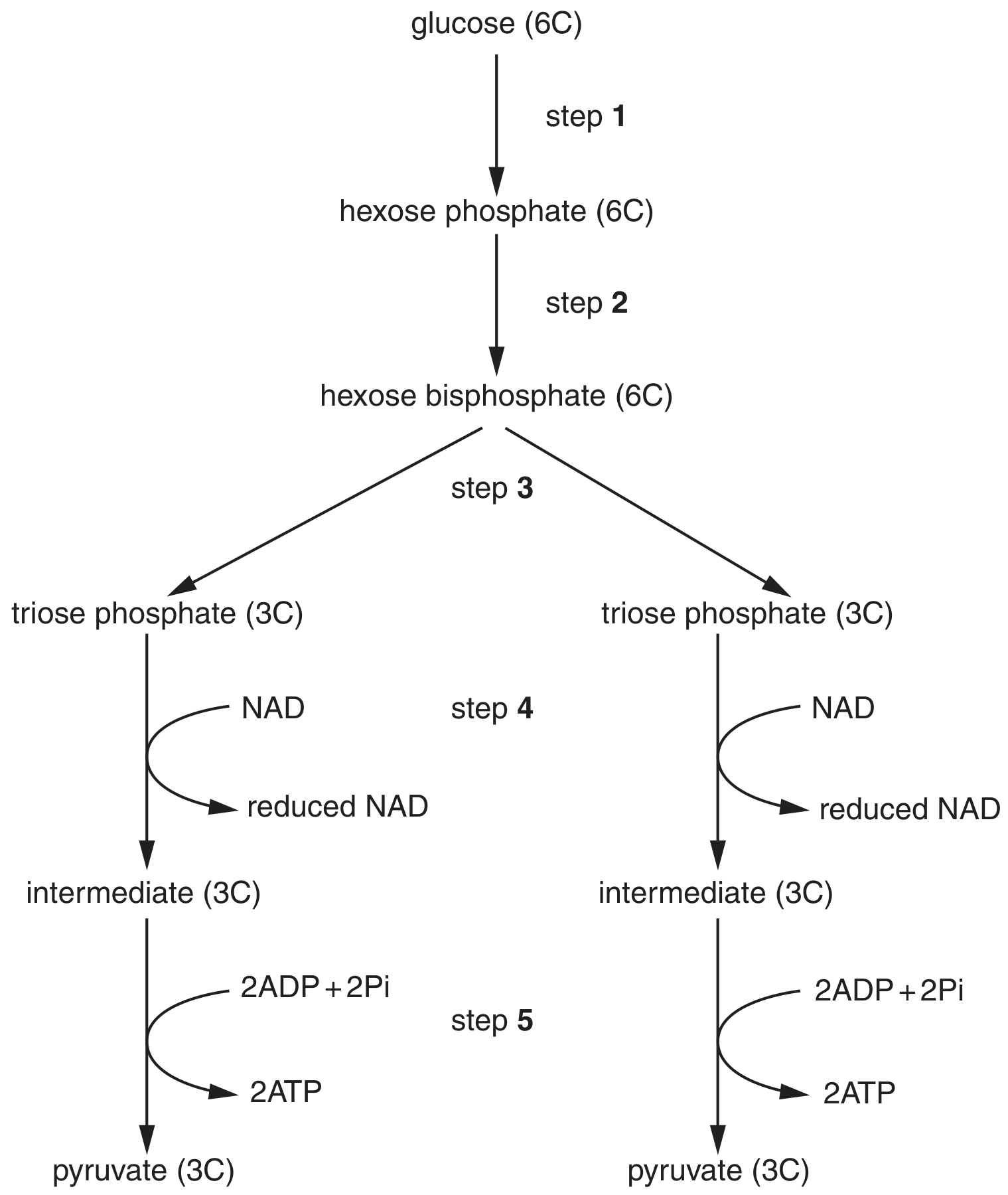
During the process of glycolysis, glucose is converted by a series of steps into two molecules of pyruvate.

Fig. 6.1 outlines glycolysis.
With reference to Fig. 6.1, state the process occurring at:
steps 1 and 2
step 3
step 4
Explain why glucose needs to be converted to hexose bisphosphate.
Outline the process of glycolysis in a mammalian cell.
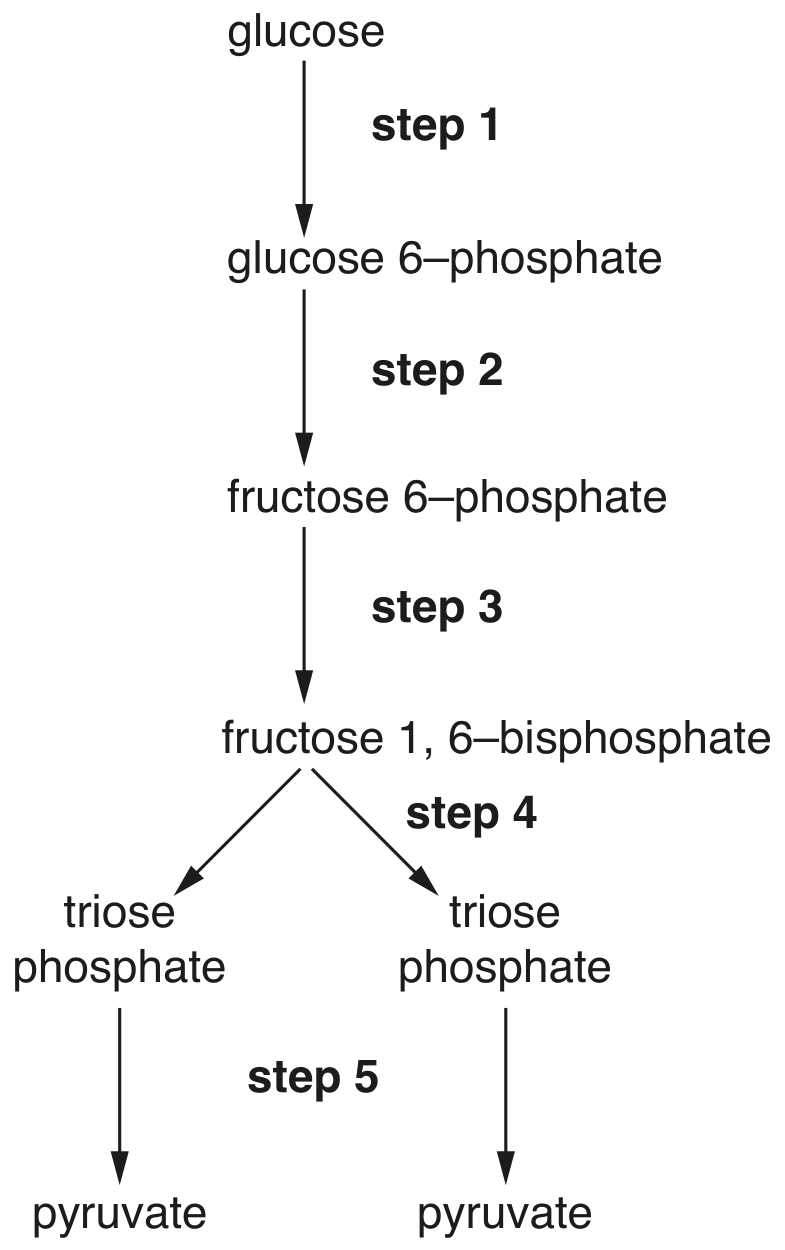
Fig. 6.1 outlines some of the steps of glycolysis.

Fig. 6.1
With reference to Fig. 6.1: state the steps where phosphorylation occurs
state the step where oxidation occurs
name the type of reaction by which ATP is made during step 5.