EduNinja
[Maximum number: 6]

The disease-causing bacterium, Pseudomonas aeruginosa, may occur in the form of a 'biofilm'. A biofilm consists of a layer of bacteria, growing on a surface and attached to one another. Such biofilms are difficult to control by antibiotics.

A mutant strain of P. aeruginosa has been found which produces biofilms that are indistinguishable from those of the wild-type bacteria. However, the mutant strain differs from the wild-type in its resistance to an antibiotic, A.

(a)

Wild-type and mutant bacteria were grown on solid culture media both with antibiotic A and without antibiotic A.

The subsequent change in numbers of living bacteria is shown in Fig. 2.1.
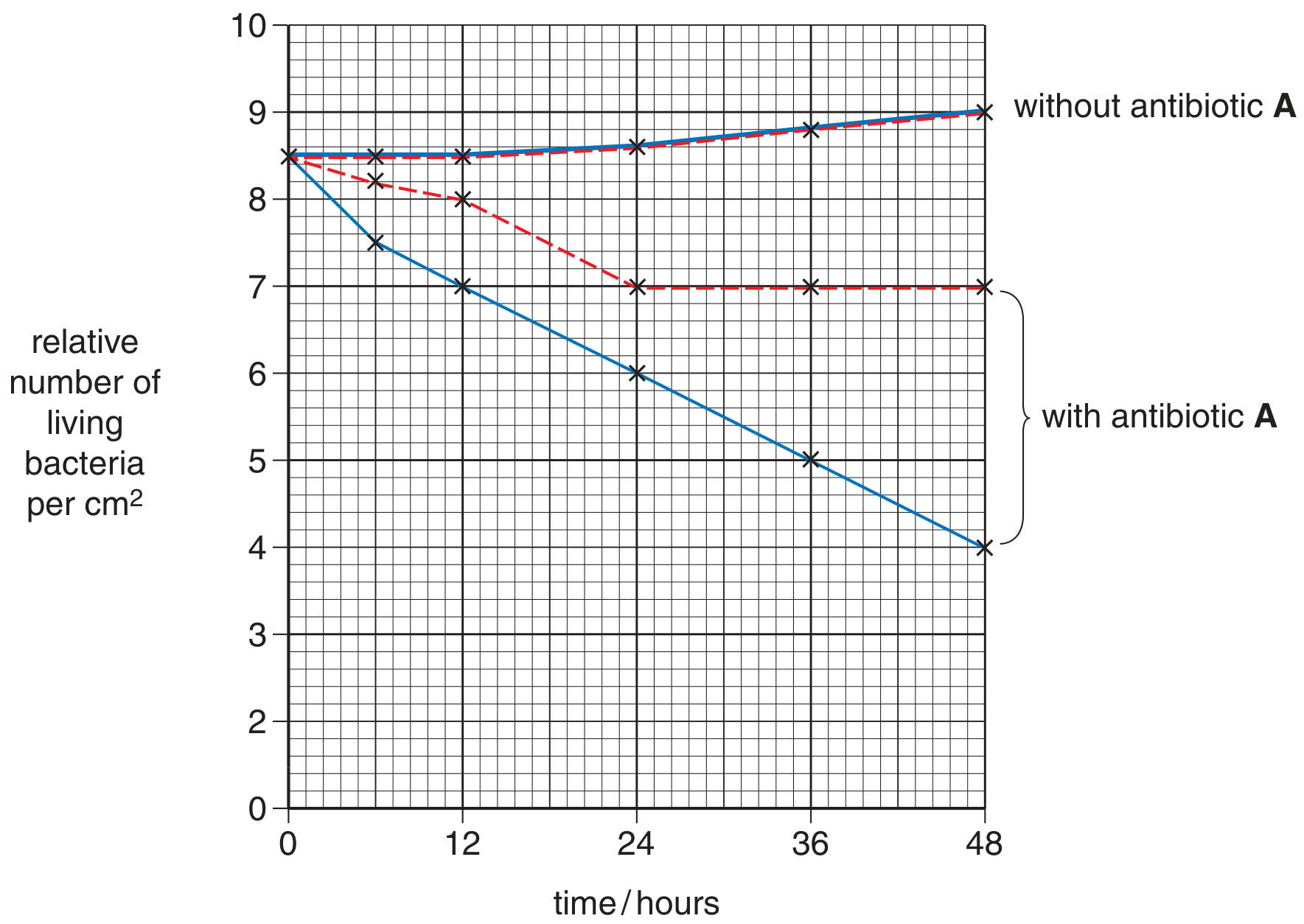
Fig. 2.1
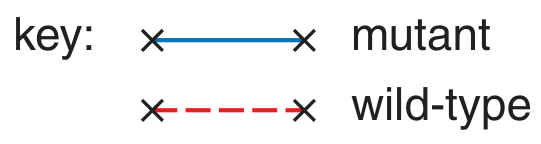
Fig. 2.1

Fig. 2.1

Fig. 2.1

With reference to Fig. 2.1, describe the changes in numbers of the wild-type and mutant bacteria on culture media with antibiotic A and without antibiotic A.

[ 4 ]
(b)

The wild-type and mutant strains of this bacterium have different DNA sequences in part of a gene coding for an enzyme which is needed to produce polymers of glucose, called glucans. Glucans are secreted by bacteria and can bind to various molecules, including those of antibiotic A.
Explain

[ 2 ]
(i)

the different effects of antibiotic A, shown in Fig. 2.1, on the wild-type and mutant strains of bacteria.
[ 2 ]
[Maximum number: 7]

Humans use antibiotics to treat bacterial infections. The increased use of antibiotics has led to an increase in the number of strains of bacteria that are resistant to antibiotics.

The evolution of antibiotic resistance in bacteria has resulted from natural selection.
Outline how bacteria become resistant to antibiotics.

(a)

The search for new antibiotics is important because there are many strains of bacteria that are resistant to antibiotics.

Suggest two ways to reduce the spread of antibiotic resistance.
1
2

[ 2 ]
(a)

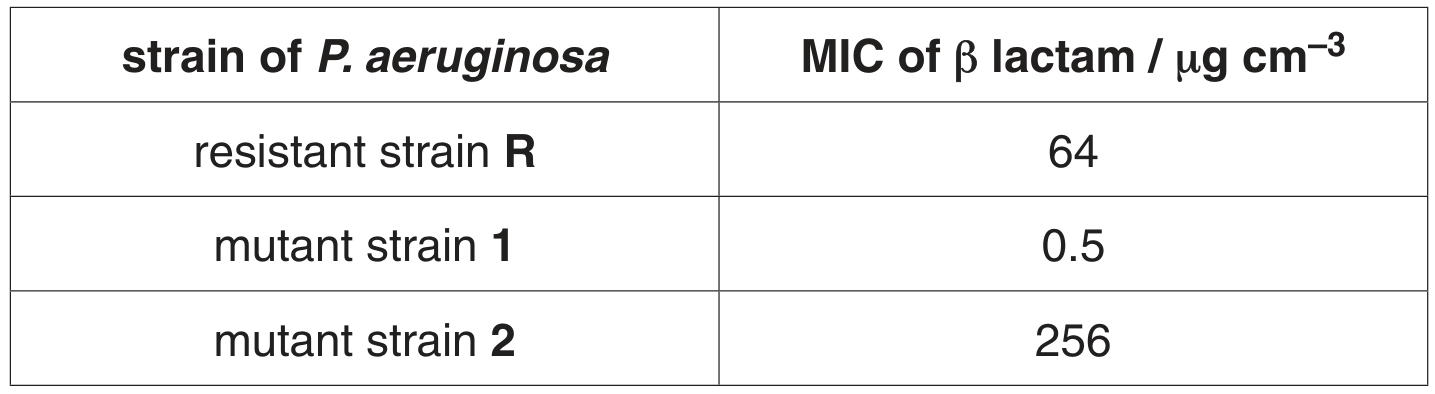
A strain of the bacterium Pseudomonas aeruginosa, strain R, has a gene coding for an efflux pump and is resistant to a β\beta lactam antibiotic.

The minimum inhibitory concentration (MIC) of the β\beta lactam for strain R was determined. The MIC is the lowest concentration of antibiotic that prevents a colony of the bacterium from growing.

The MICs were also determined for two mutant strains derived from strain R, mutant strain 1 and mutant strain 2. Each of these strains differs from strain R in the expression of the gene coding for the efflux pump.

The MICs for the three strains of P. aeruginosa are shown in Table 2.1.

Table 2.1

Table 2.1

With reference to Table 2.1, suggest:

[ 8 ]
(i)

why the MICs for mutant strains 1 and 2 differ from that for strain R mutant strain 1
mutant strain 2

[ 4 ]
(ii)

how a population of strain R of P. aeruginosa could be replaced by mutant strain 2.

[ 4 ]
[Maximum number: 2]

Fig. 2.1 shows a world map shaded by country according to the incidence of tuberculosis (TB).

TB incidence.
New cases per 100000 people per year
<10
10<25
25<50
50 < 100
100 < 300
>300

(a)

People suffering from TB are treated using antibiotics. Recently, multi-drug resistant TB (MDR-TB) has developed, making the disease more difficult to treat. Suggest how this drug resistance may have arisen.

[ 2 ]
[Maximum number: 4]

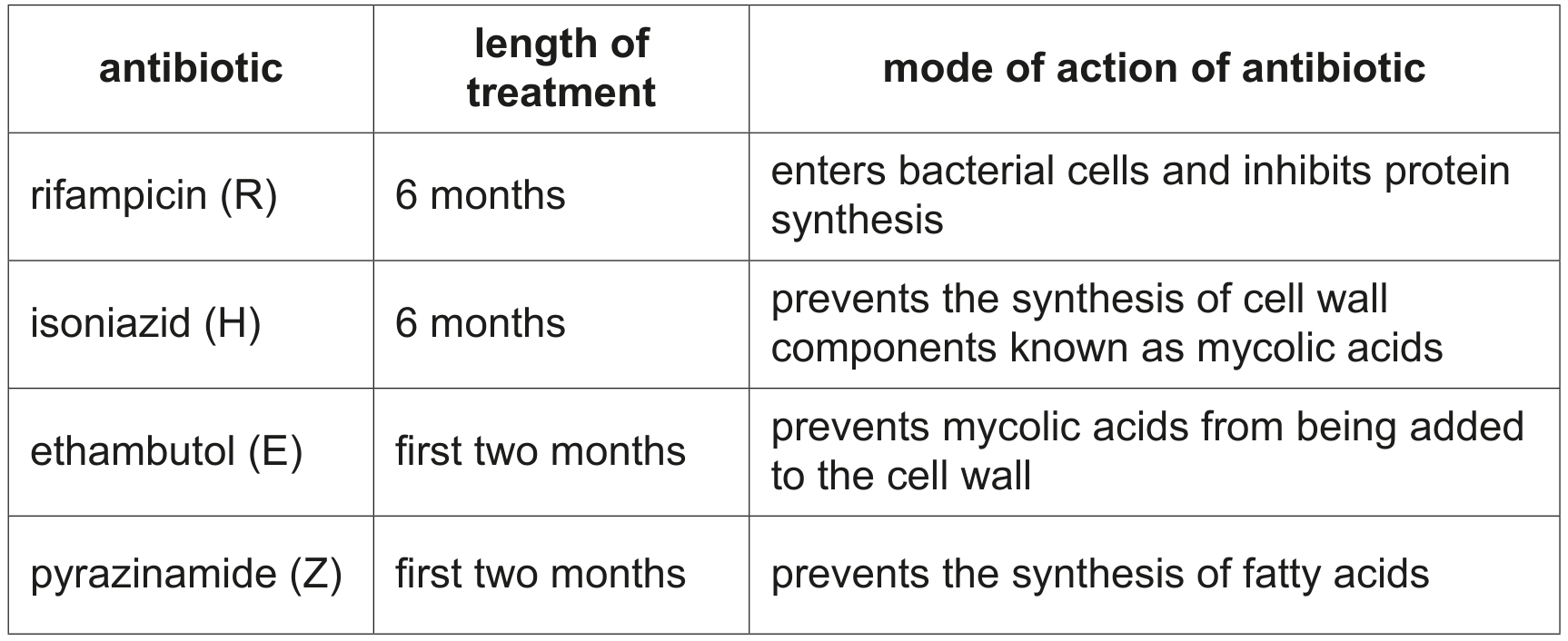
The treatment for people with active tuberculosis (TB) lasts six months and involves a combination of antibiotics. This is usually very effective if the person has a susceptible (non-resistant) strain of Mycobacterium tuberculosis, the causative organism of TB.

Table 2.1 summarises one recommended treatment strategy that involves a combination of antibiotics.

Table 2.1

Table 2.1

(a)

Susceptible strains of M. tuberculosis will be killed using any one of the antibiotics listed in Table 2.1. However, combination treatment is preferred as it is one method that can be used to reduce the impact to society of antibiotic resistance.

With reference to Table 2.1, explain how combination treatment for TB can help to reduce the impact of antibiotic resistance compared to single antibiotic treatment.

Rifampicin binds tightly to an RNA polymerase molecule close to its active site. This affects the activity of the enzyme.

[ 4 ]
[Maximum number: 2]

The main cause of tuberculosis (TB) in humans is the bacterium Mycobacterium tuberculosis. Most cases of the disease involve the lungs. The bacterium can enter cells and remain inactive in a latent (dormant) state. However, the bacterium can become active to produce symptoms of the disease.

In a person with active TB, the pathogen can be present in airborne droplets that are exhaled. Generally, a healthy person who inhales these droplets has effective defence mechanisms in the gas exchange system to prevent infection.

(a)

The standard treatment for TB continues for six months and initially involves the use of four different antibiotics.

If no antibiotic resistance is detected, the treatment is reduced to two of the four antibiotics. The two antibiotics used are rifampicin and isoniazid.

Suggest the benefits of beginning the treatment with four different antibiotics.

Multidrug-resistant TB (MDR-TB) occurs if resistance develops to rifampicin and isoniazid.
The treatment for MDR-TB can last up to 30 months and involves different antibiotics to the standard treatment.

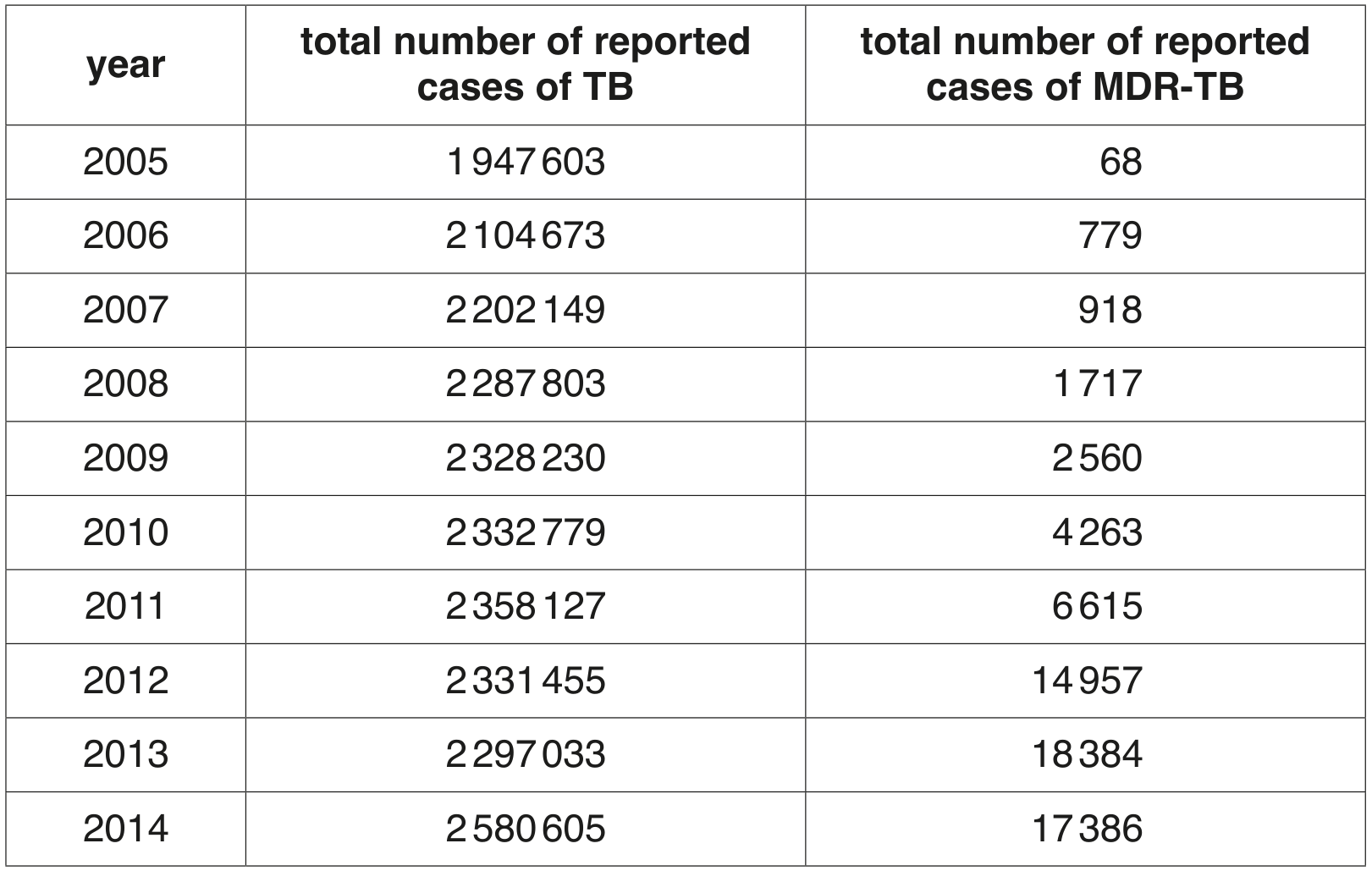
Table 2.1 shows the number of reported cases of TB and MDR-TB in the South-East Asia region between 2005 and 2014, as published by the World Health Organization (WHO).

Table 2.1

Table 2.1

[ 2 ]
[Maximum number: 2]

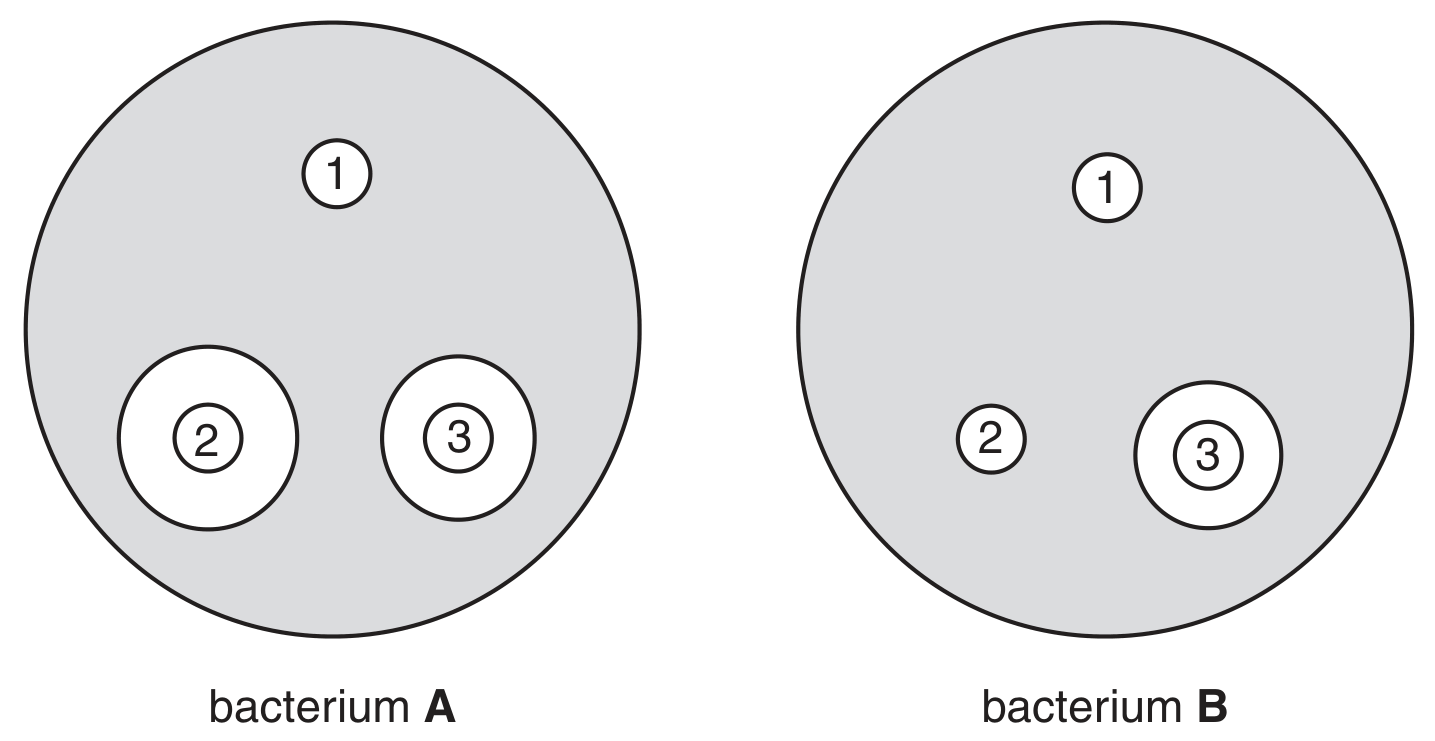
The sensitivity of bacteria to antibiotics can be tested using the disc diffusion method. An inoculum of the bacteria is spread onto agar culture plates and then filter paper discs impregnated with antibiotic are pressed onto the surface of the agar. The plates are incubated. Bacteria grow as a 'lawn' across the agar, but a circular zone (the zone of inhibition) appears around any disc where bacterial growth is inhibited.

Two species of bacteria, A and B, were grown on separate culture plates in the presence of three types of filter paper disc:

1 - no antibiotic (control)
2 - penicillin V, a natural penicillin
3 - carboxypenicillin, a synthetic penicillin.
The appearance of the incubated plates is shown in Fig. 3.1.

Fig. 3.1

Fig. 3.1

(a)

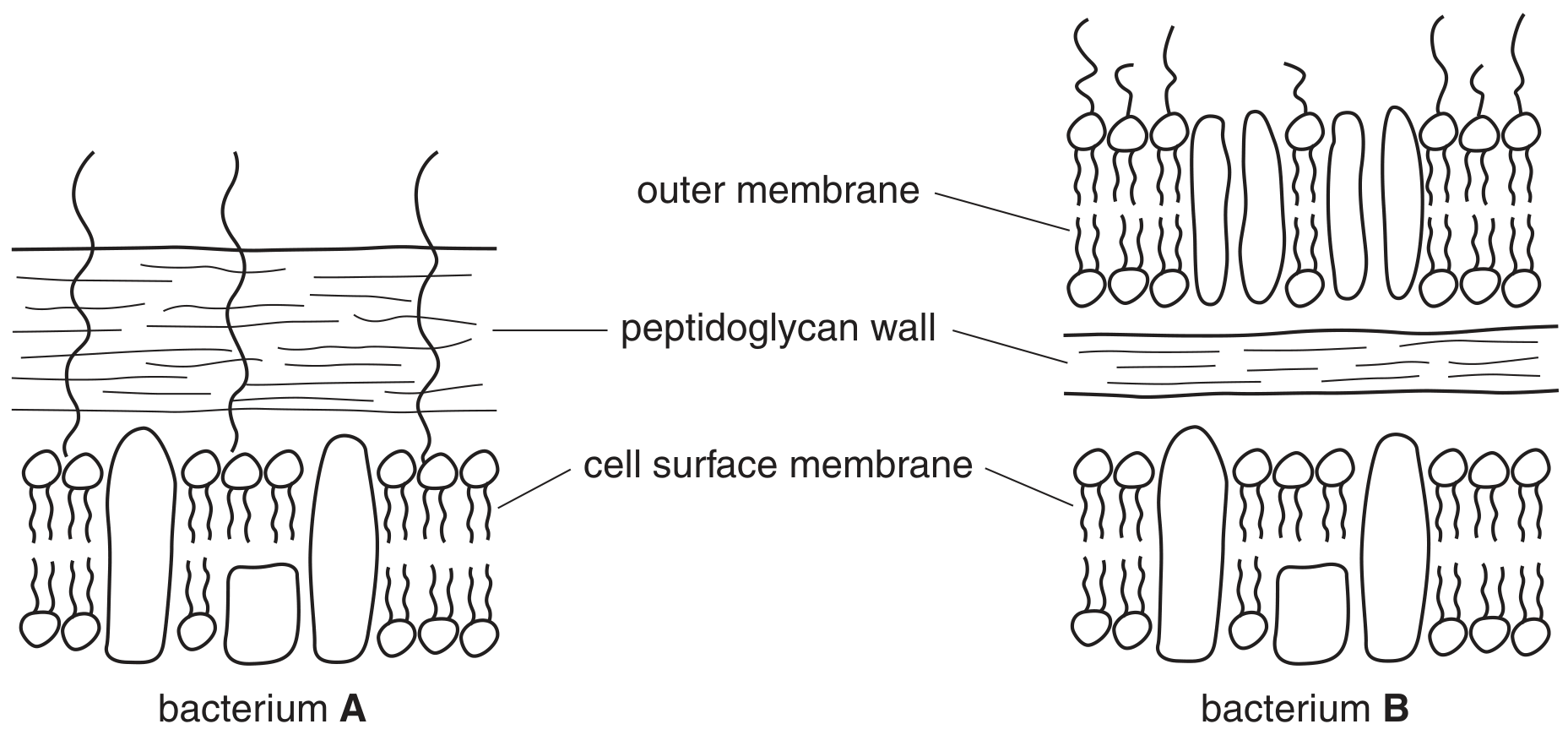
Bacteria A and B have different outer layers, as shown in Fig. 3.2.

Fig. 3.2

Fig. 3.2

With reference to Fig. 3.1 and Fig. 3.2

[ 2 ]
(i)

suggest how the synthetic penicillin, carboxypenicillin, is able to affect the growth of bacterium B.

[ 2 ]
[Maximum number: 2]

Antibiotic sensitivity tests can be carried out to choose appropriate antibiotics to use for treatment of bacterial diseases.

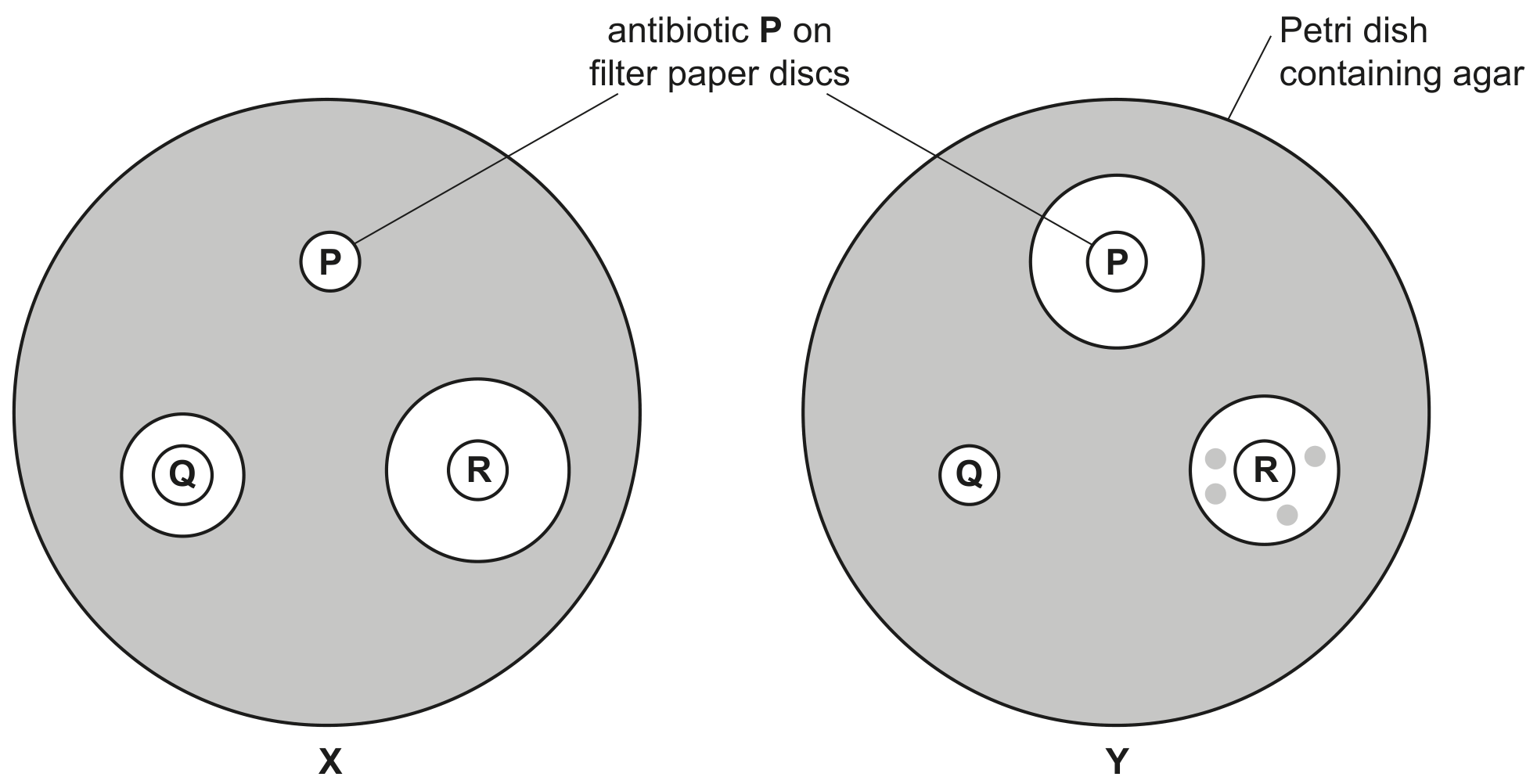
A researcher carried out an antibiotic sensitivity test using two pathogenic bacteria, X and Y.
The researcher prepared two Petri dishes containing agar.
- A culture of each bacterium was spread over the surface of the agar.
- Filter paper discs containing antibiotics were placed on the surface of the agar in each dish.
- The Petri dishes were incubated at 25C25^{\circ} \mathrm{C} for two days.

The results of the test using three antibiotics, P, Q and R, are shown in Fig. 4.1.

Fig. 4.1

Fig. 4.1

Fig. 4.1

Fig. 4.1

(a)
(i)

Suggest why bacterium Y had a different sensitivity to each of the three antibiotics.

[ 2 ]
(a)

The endocardium is a thin layer of tissue lining the chambers of the heart. A serious condition called endocarditis results if bacteria infect this tissue.

Endocarditis is treated with a combination of antibiotics. This increases the effectiveness of the treatment and reduces the risk of antibiotic resistance in bacteria.

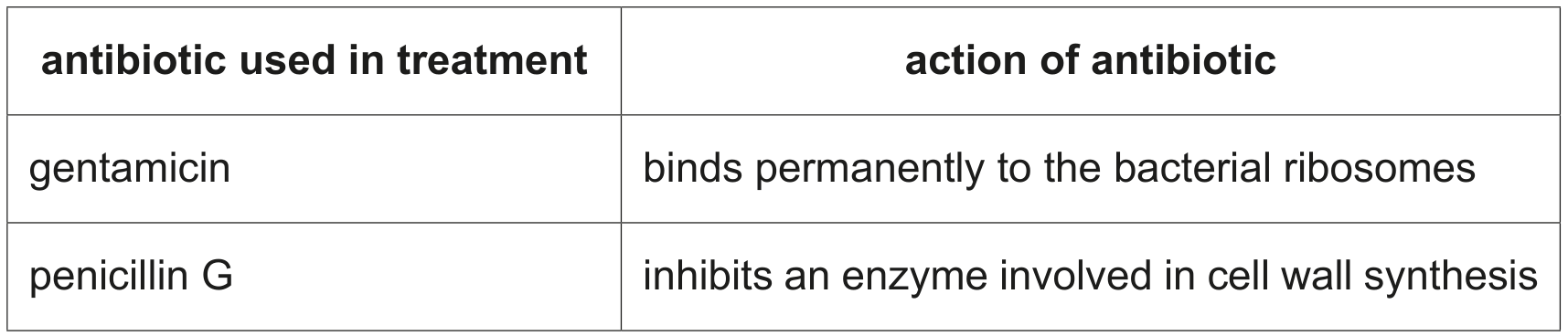
Table 3.1 shows the action of two antibiotics used together to treat endocarditis.

Table 3.1

Table 3.1

[ 5 ]
(i)

With reference to Table 3.1, explain why treating endocarditis with a combination of gentamicin and penicillin G reduces the risk of developing antibiotic resistance.

[ 2 ]
(ii)

Describe how the bacteria that cause endocarditis could become resistant to gentamicin.

[ 3 ]
0