
EduNinja
[Maximum number: 2]

The disease-causing bacterium, Pseudomonas aeruginosa, may occur in the form of a 'biofilm'. A biofilm consists of a layer of bacteria, growing on a surface and attached to one another. Such biofilms are difficult to control by antibiotics.

A mutant strain of P. aeruginosa has been found which produces biofilms that are indistinguishable from those of the wild-type bacteria. However, the mutant strain differs from the wild-type in its resistance to an antibiotic, A.

(a)

Antibiotic A belongs to a group of antibiotics known as anti-pseudomonal penicillins.

[ 2 ]
(i)

Explain why penicillin does not affect viruses.

[ 2 ]
(a)

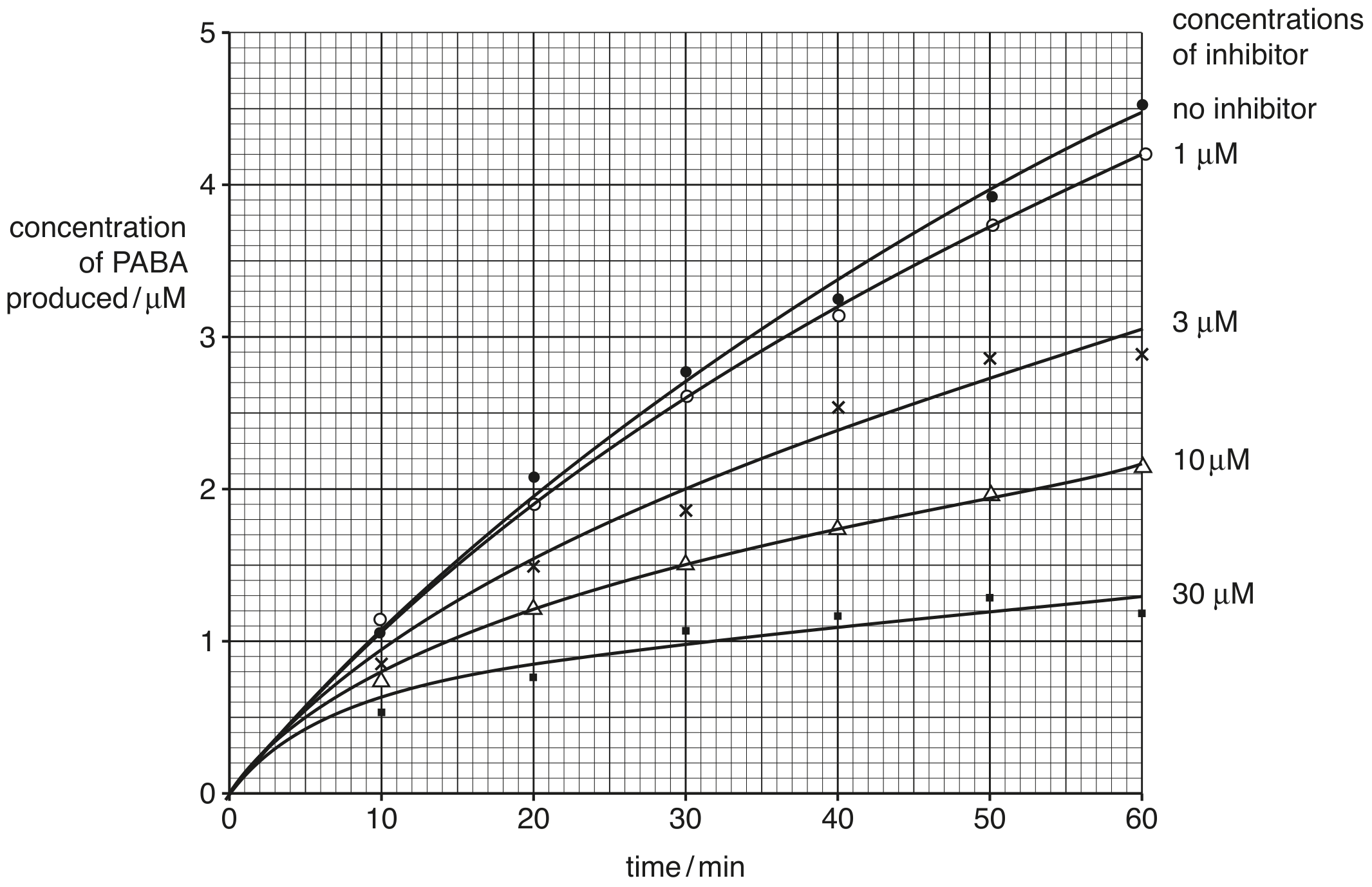
Folic acid is a molecule used by all cells for growth. Bacteria cannot absorb folic acid from their surroundings. Bacteria use an enzyme to make a molecule called PABA. PABA is used to make folic acid.

An investigation was carried out to determine the effect on the production of PABA when the concentration of an enzyme inhibitor is increased. Four different concentrations ( 1μM1 \mu \mathrm{M} to 30μM)30 \mu \mathrm{M}) of the inhibitor were used, together with a control with no inhibitor.

The concentration of PABA produced in each reaction mixture was determined at 10 minute intervals.

The results are shown in Fig. 2.1.

Fig. 2.1

Fig. 2.1

[ 2 ]
(i)

Suggest why there are few drugs that have any effect on viruses.

[ 2 ]
[Maximum number: 2]

Smallpox, measles and HIV/AIDS are infectious diseases caused by different viruses. These different viruses share some structural features.

(a)

Explain why antibiotics, such as penicillin, cannot be used to treat measles.

[ 2 ]
[Maximum number: 1]

Cells of the immune system function to protect the body against infectious diseases.

(a)

Viruses that infect bacteria are called bacteriophages. Some bacteriophages that infect the cholera pathogen cause lysis of the bacterium.

[ 1 ]
(i)

Antibiotics can be used to treat people with cholera.

State why antibiotics are not effective against measles.

[ 1 ]
[Maximum number: 2]

Penicillin-binding proteins (PBPs) are proteins found in the cell surface membranes of bacteria. PBPs catalyse the final steps in the production of a peptidoglycan cell wall.

(a)

Explain why penicillin does not affect viruses.

[ 2 ]
[Maximum number: 2]

Morbillivirus, which causes measles, and the human immunodeficiency virus (HIV) share these common features:
- outer envelope surrounding the protein coat
- RNA as the genetic material
- infect cells of the immune system.

(a)

Antibiotics are not used to treat viral infections.

Explain why antibiotics do not affect viruses.

[ 2 ]
[Maximum number: 1]

Tuberculosis (TB) is an infectious disease that kills about three million people worldwide each year.

(a)

Streptomycin was the first antibiotic to be discovered that was effective against the pathogen that causes tuberculosis. Streptomycin causes the death of the pathogen by binding to ribosomes and inhibiting protein synthesis.

[ 1 ]
(i)

Streptomycin does not harm mammalian cells.

Suggest an explanation for this.

[ 1 ]
[Maximum number: 2]

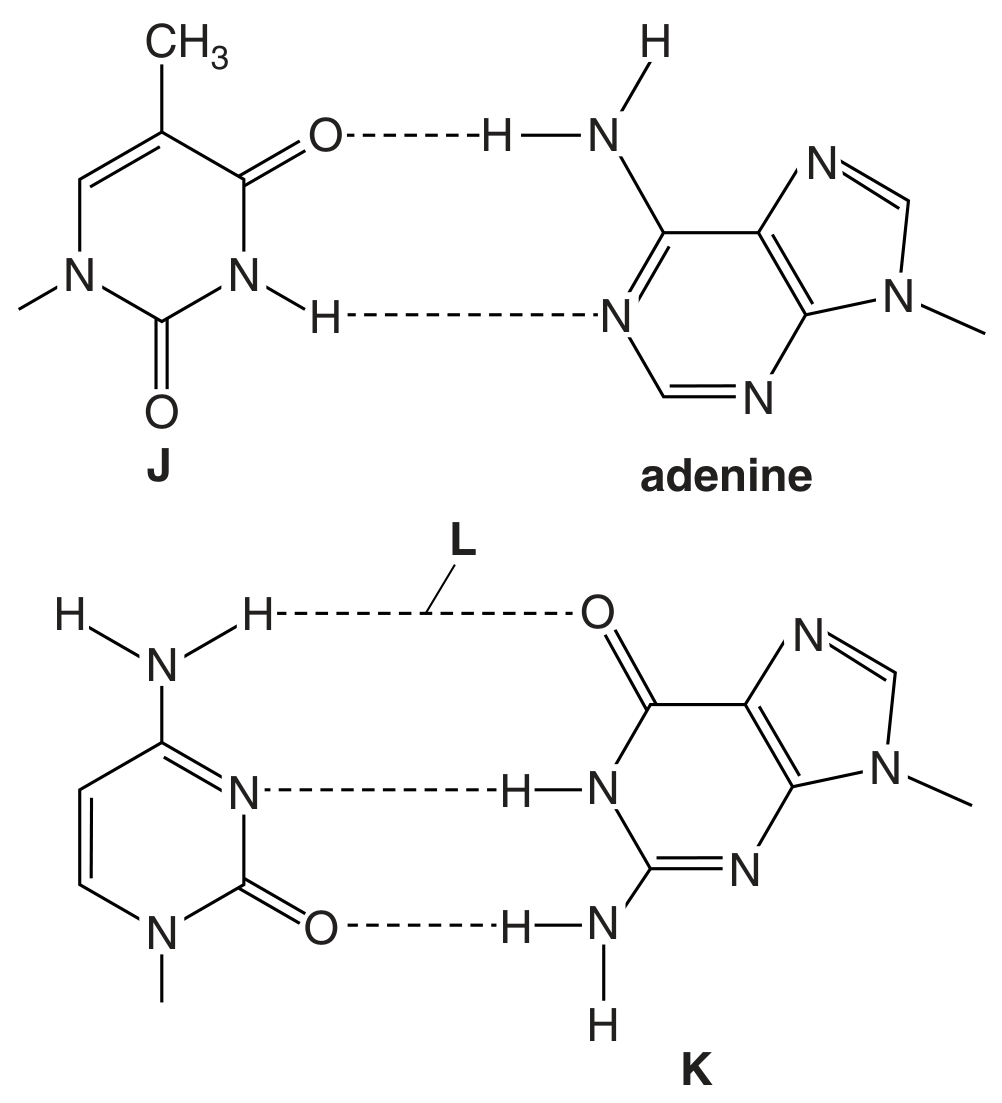
Fig. 4.1 shows the two base pairs in a DNA molecule.

Fig. 4.1

Fig. 4.1

(a)

Antibiotics are prescribed to people who have HIV/AIDS for the treatment of secondary infections, but not to treat the HIV infection.

Explain why this is so.

[ 2 ]
[Maximum number: 1]

Tuberculosis (TB), influenza and polio are examples of infectious diseases.

(a)

Polio is a serious viral disease affecting young children. In 1996, polio caused paralysis in more than 75000 children across Africa. A long-term vaccination programme allowed the World Health Organization (WHO) to declare that Africa was largely free of polio in 2020.

[ 1 ]
(i)

Antibiotics, such as penicillin, do not help to prevent the spread of viral diseases, such as polio.

Explain why penicillin is not effective against viruses.

[ 1 ]
0