EduNinja
[Maximum number: 5]

The sinoatrial node (SAN) and the atrioventricular node (AVN) have an important role in the control of the cardiac cycle. The timing of atrial and ventricular systole and diastole must be controlled so that blood passes through the heart efficiently.

(a)

Fig. 1.1 is a summary of blood flow through the right side of the heart during one cardiac cycle. Three boxes in Fig. 1.1 are not complete.

Complete boxes 3, 5 and 7 in Fig. 1.1 using only the terms systole and diastole.

1 blood arrives at the heart in the superior vena cava and inferior vena cava
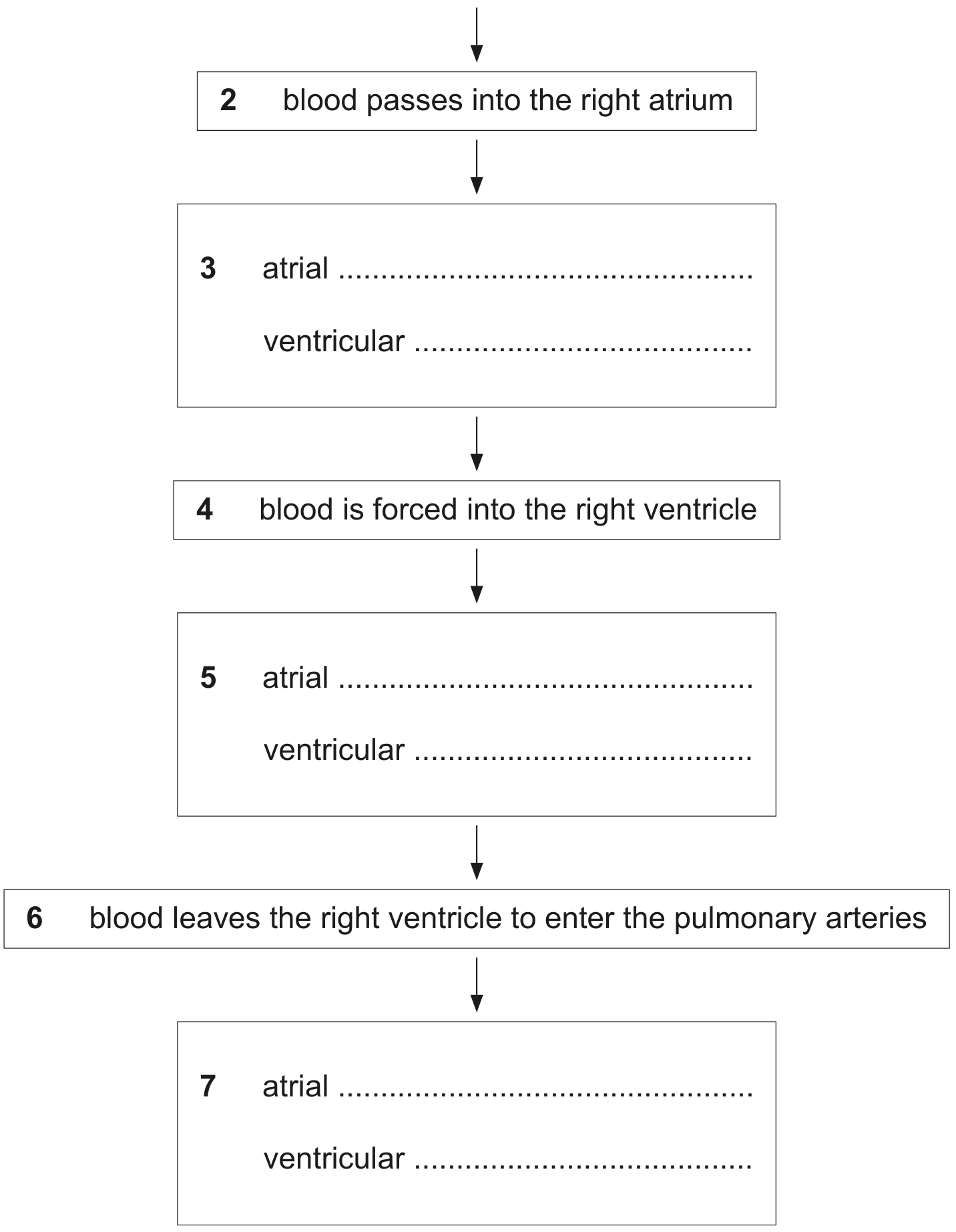
Fig. 1.1

Fig. 1.1

[ 2 ]
(b)

Changes in blood pressure occur in the heart during the cardiac cycle. These changes cause the opening and closing of the bicuspid and tricuspid (atrioventricular) valves and the aortic and pulmonary (semilunar) valves.

Explain how blood pressure changes:
- cause the opening of the tricuspid valve
- cause the opening of the pulmonary valve
- help the flow of blood through the heart.
[ 3 ]
[Maximum number: 3]

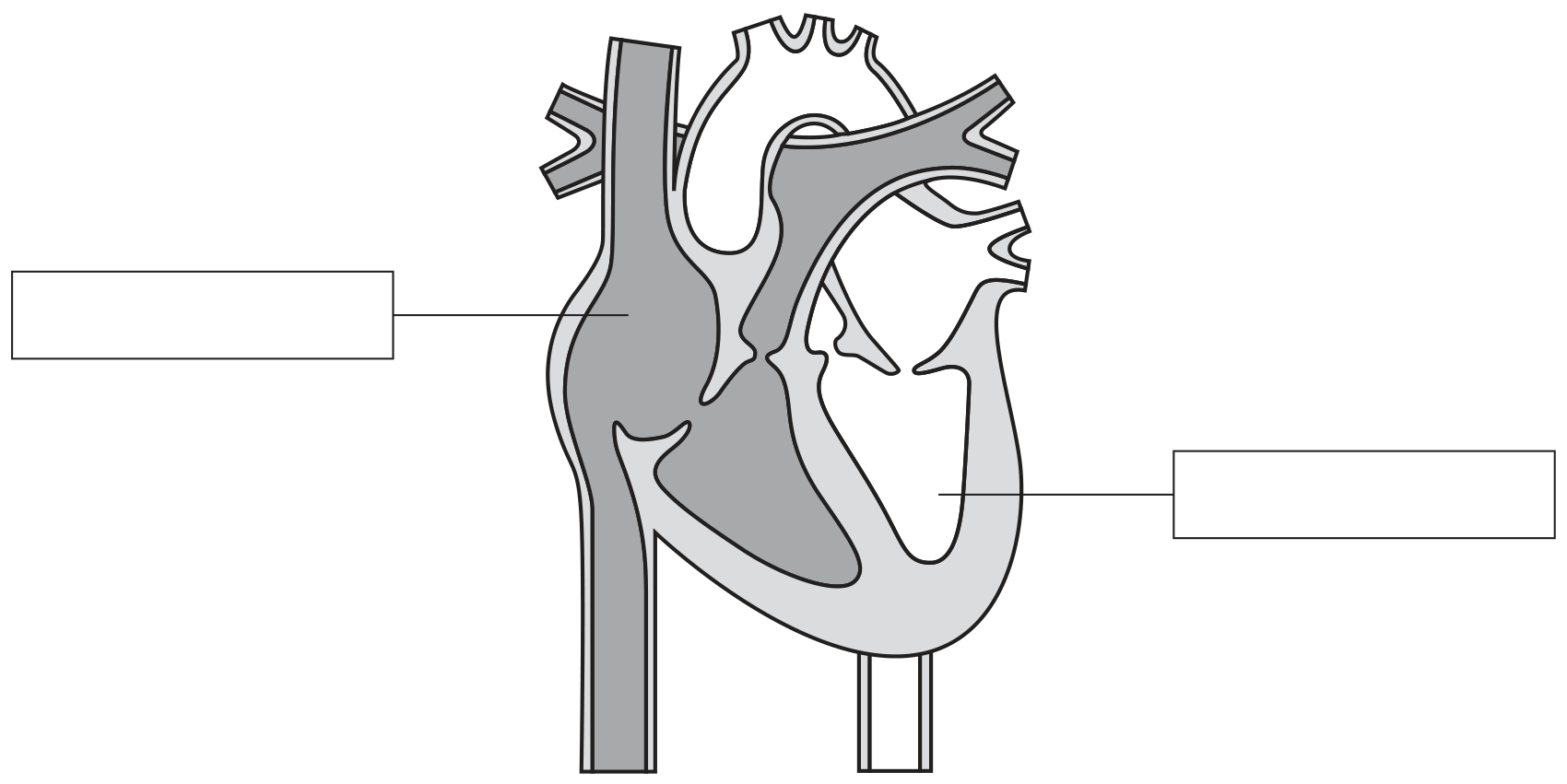
Fig. 2.1 is a diagram of a vertical section through a healthy mammalian heart.

Fig. 2.1

Fig. 2.1

(a)

Suggest and explain how the flow of blood in a person with patent ductus arteriosus differs from that of a person with a healthy heart.

[ 3 ]
[Maximum number: 5]

In a healthy mammalian heart, contraction of the four chambers is coordinated by the action of the sinoatrial node (SAN) and atrioventricular node (AVN).

(a)

After the atria fill with blood, atrial systole (contraction) occurs.

State the events that occur to initiate and cause atrial systole.

[ 2 ]
(b)

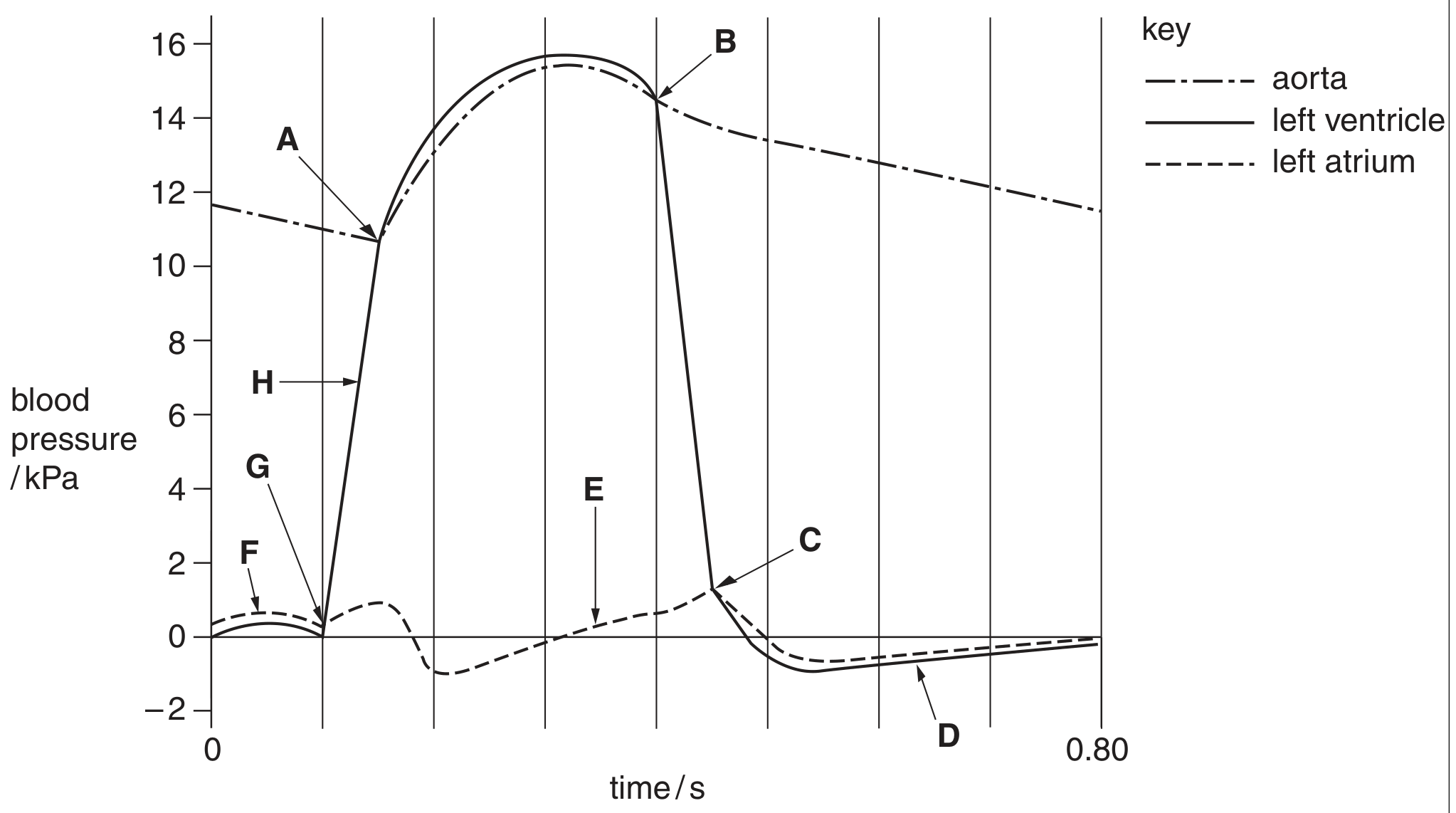
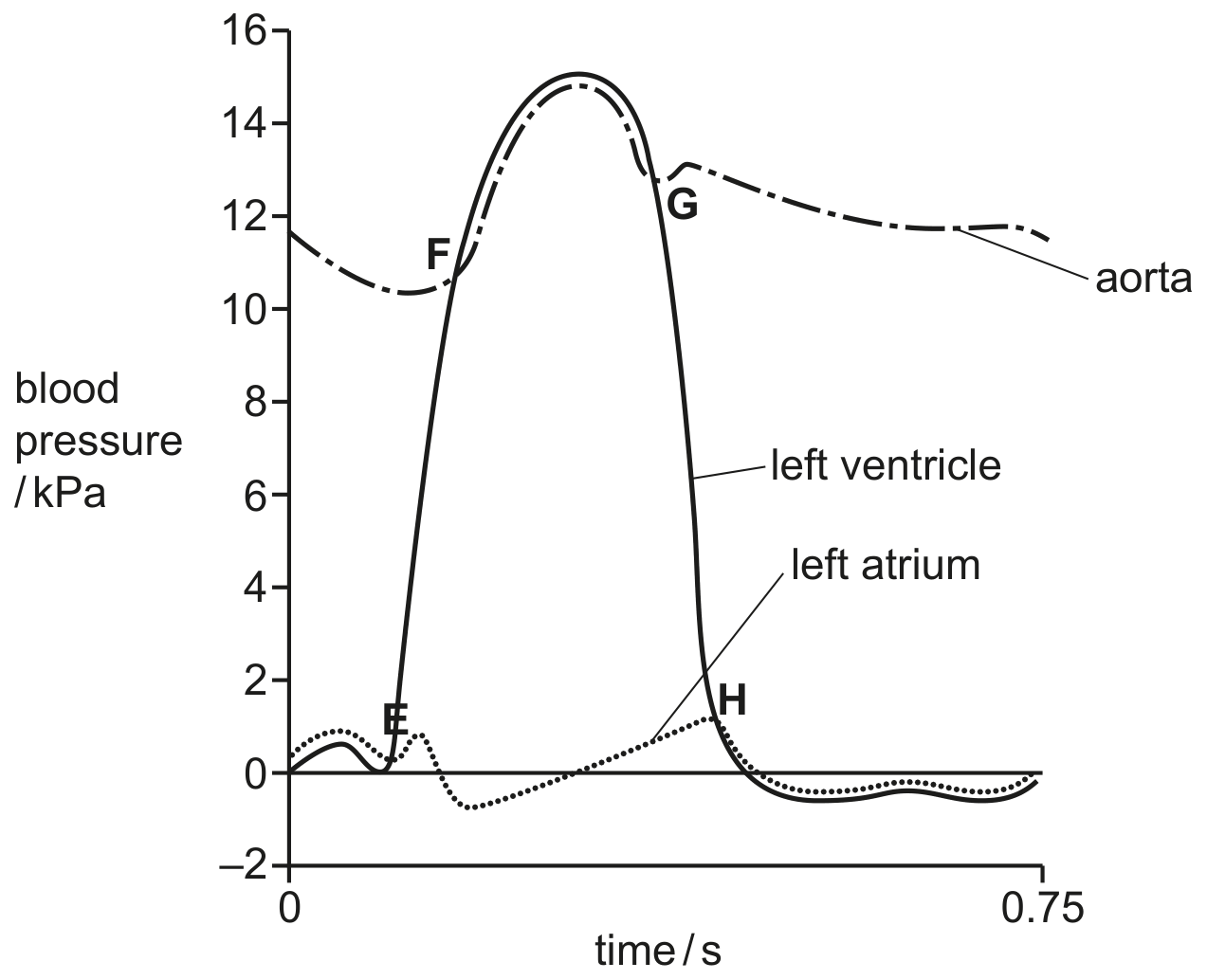
Fig. 2.1 shows blood pressure changes that occur in the left ventricle, left atrium and aorta during one cardiac cycle.
E, F, G and H are the points at which a valve opens or closes as a result of blood pressure changes.

Fig. 2.1

Fig. 2.1

[ 3 ]
(i)

For each of the points E, F, G and H on Fig. 2.1, name the valve concerned and state whether the valve opens or closes.

E
F
G
H

[ 3 ]
[Maximum number: 4]

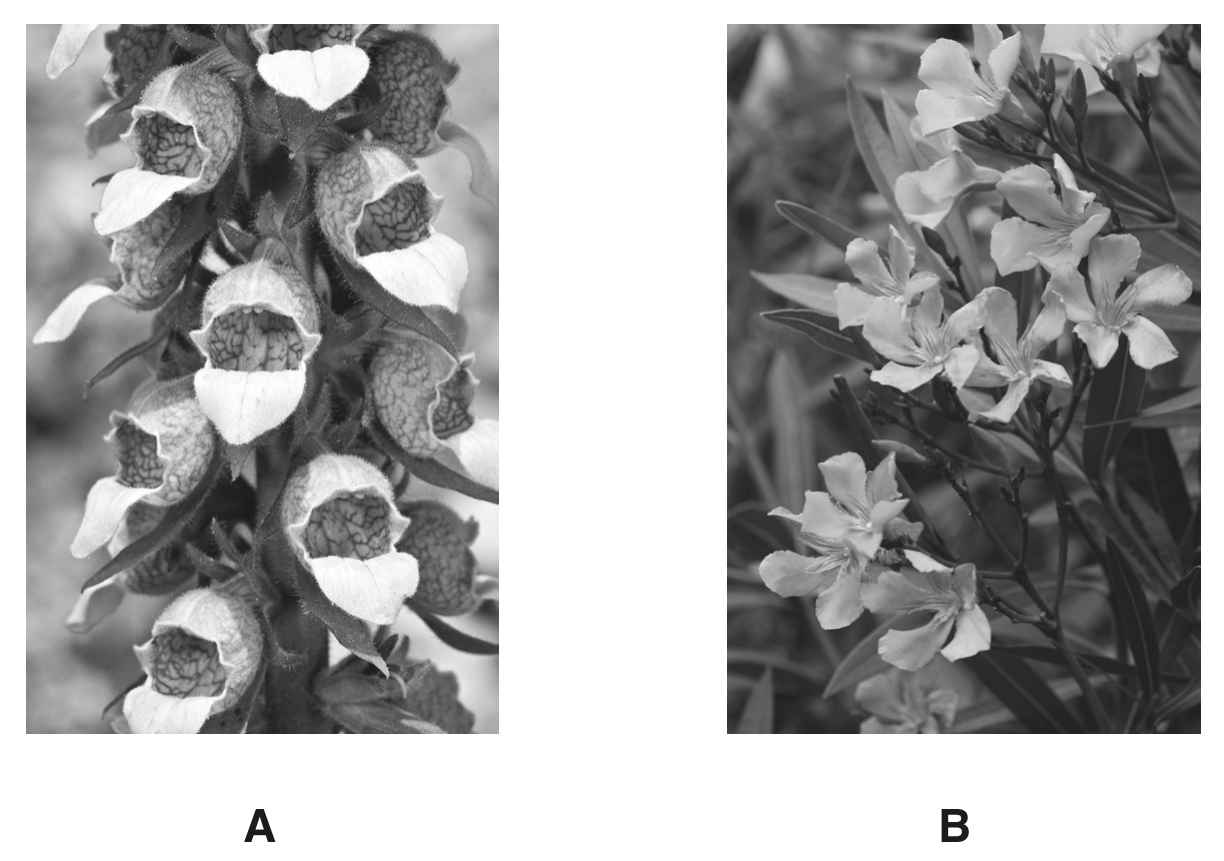
Woolly foxglove, Digitalis lanata, shown in Fig. 2.1A, and common oleander, Nerium oleander, shown in Fig. 2.1B, are plants grown for the attractive flowers that they produce.

Both plants are poisonous, as their leaves produce toxic organic compounds known as cardiac glycosides. Cardiac glycosides have a powerful effect on the action of cardiac muscle.

Fig. 2.1

Fig. 2.1

(a)

Digoxin, a cardiac glycoside extracted from D. lanata leaves, can be purified and used as a drug to treat some heart disorders.

Examples of these heart disorders are:
- atrial fibrillation, where the normal rhythmic cardiac cycle is disrupted
- heart failure, where cardiac muscle is contracting weakly.

[ 4 ]
(i)

Describe the sequence of events occurring in the left side of the heart during one normal cardiac cycle. Include reference to blood pressure changes.

The first event in the sequence is described for you.
The left atrium fills with blood during relaxation of the left atrium and left ventricle.

[ 4 ]
[Maximum number: 6]

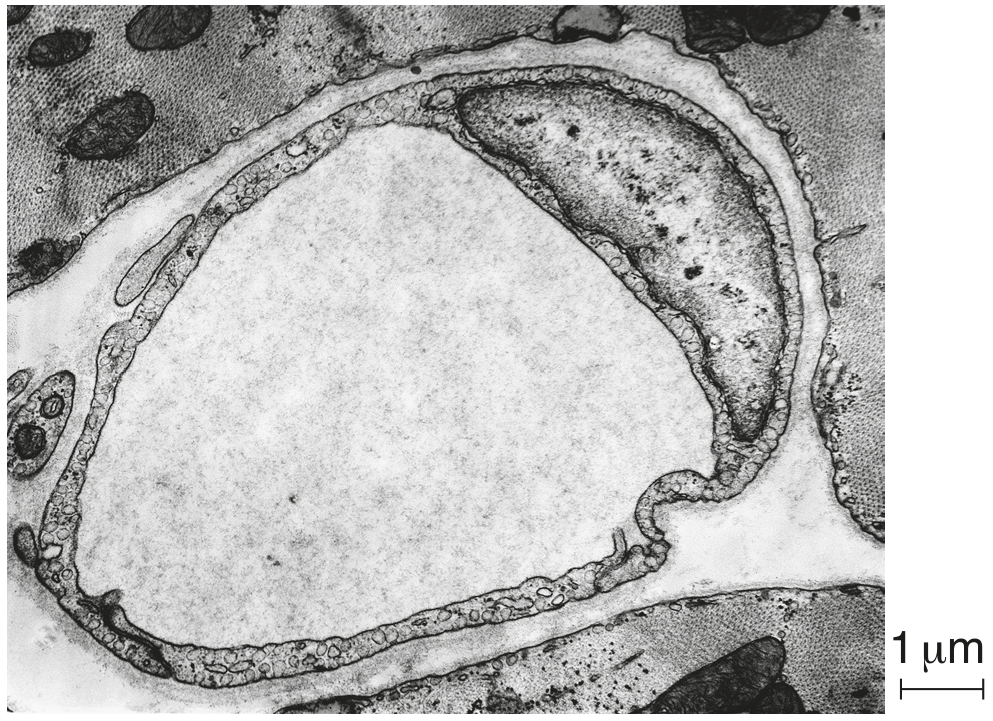
Fig. 2.1 is a transmission electron micrograph of a section through a blood vessel.

Fig. 2.1

Fig. 2.1

(a)

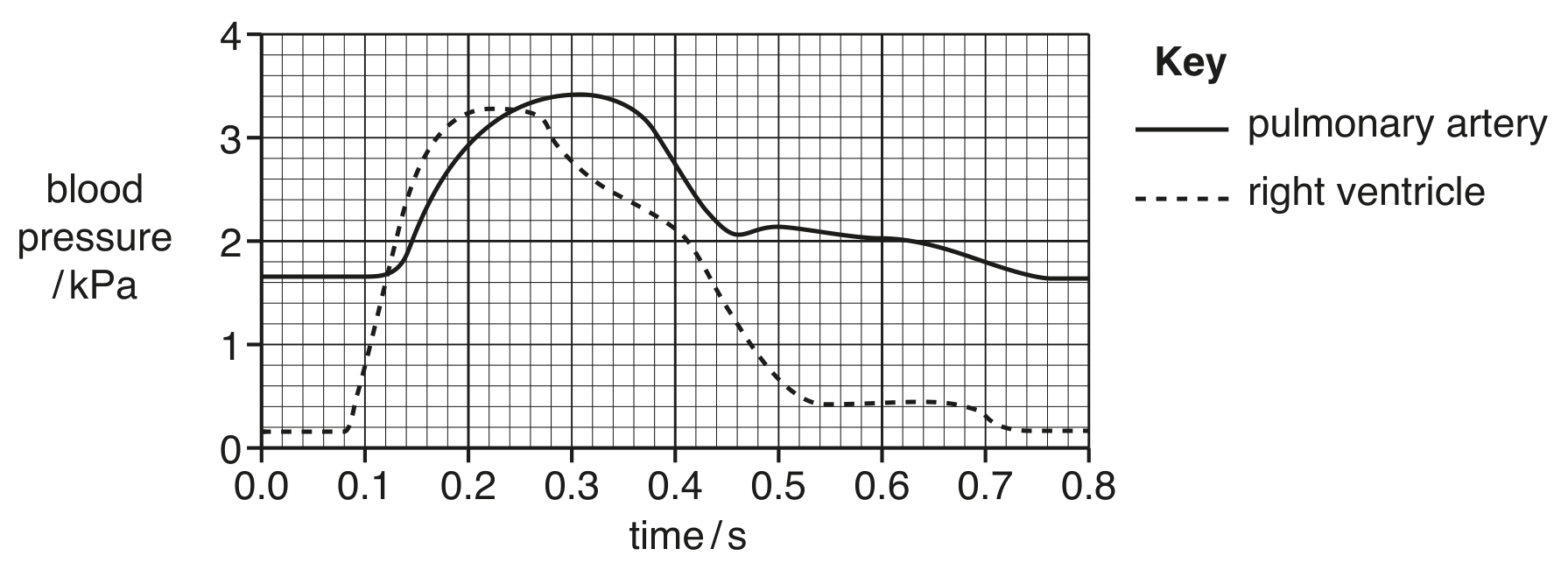
Fig. 2.2 is a graph showing how the blood pressure in the pulmonary artery and in the right ventricle changes during one cardiac cycle.

Fig. 2.2

Fig. 2.2

Use Fig. 2.2 to state the time at which:

[ 6 ]
(i)

the valve between the right ventricle and the pulmonary artery closes

[ 1 ]
(ii)

the ventricle begins to contract.

[ 1 ]
(iii)

State and explain the similarities and differences between Fig. 2.2 and a graph showing how the blood pressure for the left ventricle changes during the same cardiac cycle.

[ 4 ]
[Maximum number: 1]

Which row correctly describes the events during the cardiac cycle?

nerve impulses from atrio-ventricular node (AVN) to

nerve impulses from Purkyne tissue (PT) to

nerve impulses from sino-atrial node (SAN) to

SAN

the ventricles

AVN

PT

the atria

PT

PT

the ventricles

AVN

SAN

the atria

PT

(a)
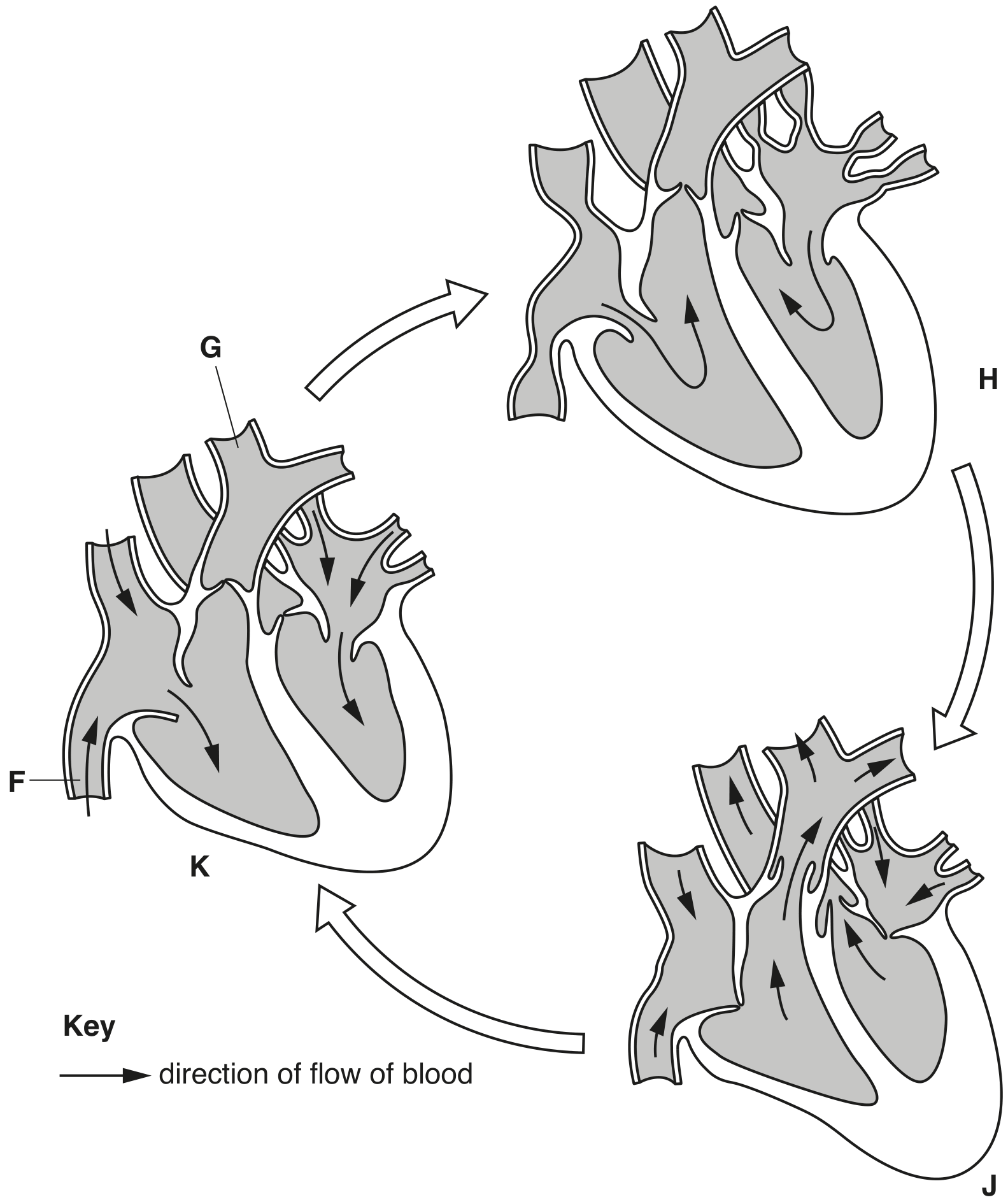
Fig. 2.1 shows the heart and blood vessels at three stages of the cardiac cycle.

Fig. 2.1 shows the heart and blood vessels at three stages of the cardiac cycle.

[ 1 ]
(i)

Name the stage of the cardiac cycle at K.

[ 1 ]
(b)

Describe what happens in the heart between stages H and J as shown in Fig. 2.1.

[ 5 ]
[Maximum number: 1]

What happens during ventricular diastole?

A

All semilunar valves open.

B

The atrio-ventricular valves open.

C

The pressure in the atria rises above the pressure in the ventricles.

D

The pressure in the left atrium rises more than the pressure in the right atrium.

[Maximum number: 6]


3.

(a)

Describe the function of each of the following structures in the human heart:

[ 2 ]
(i)

left atrioventricular (bicuspid) valve.

[ 2 ]
(b)

Fig. 2.1 shows the changes in blood pressure in the left atrium, left ventricle and aorta during one complete cardiac cycle.

Fig. 2.1

Fig. 2.1

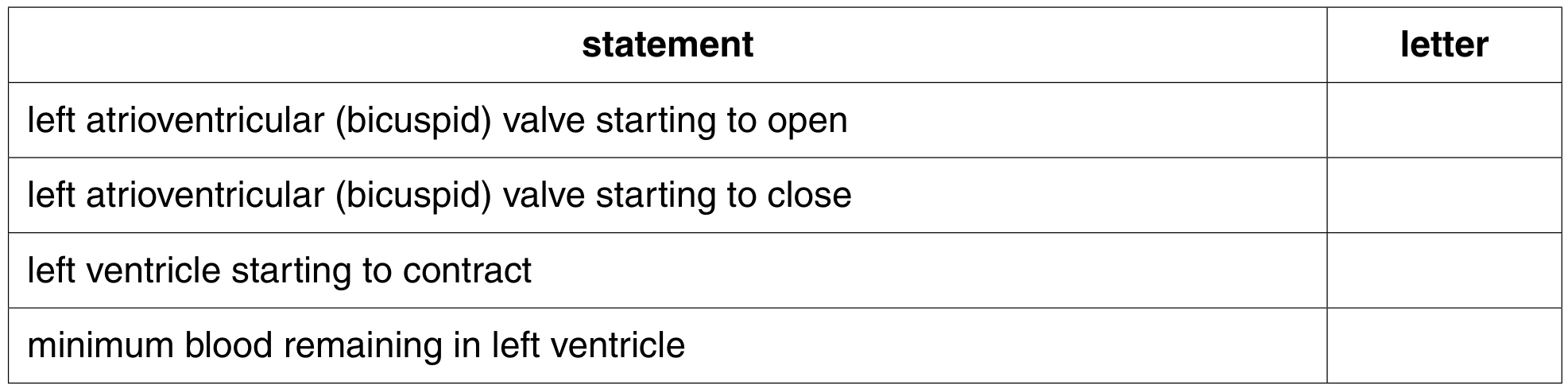
Complete the table below using the appropriate letter, A to H, to match the points from the graph to the correct statement.

You must only put one letter in each box. You may use each letter once, more than once or not at all.

Fig. 2.1

Fig. 2.1

[ 4 ]
0