EduNinja
[Maximum number: 1]

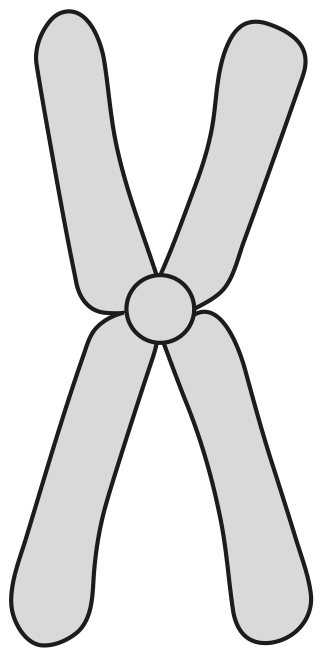
A diagram of a chromosome from a dividing cell is shown in Fig. 1.1.

Fig. 1.1

Fig. 1.1

(a)

A dividing cell is at risk of losing genetic material each time DNA replication occurs.

On Fig. 1.1, add a label line and the letter G to show the location on the chromosome of an area that helps to prevent the loss of genes.

[ 1 ]
[Maximum number: 3]

The root apical meristem is a region of undifferentiated cells in the root tips of plants. Mitosis occurs in this region.

(a)
(i)

Draw a labelled diagram to show the structure of a chromosome at late prophase of mitosis.

[ 3 ]
(a)

Fig. 1.1 is a diagram of a human chromosome at a stage in mitosis.

Fig. 1.1

Fig. 1.1

[ 3 ]
(i)

The paragraph describes the structure of the chromosome shown in Fig. 1.1.

Complete the paragraph using the most appropriate term in each space provided.
The chromosome shown in Fig. 1.1 has two genetically identical joined at a The chromosome is composed of two DNA molecules, each wrapped around proteins known as proteins.

[ 3 ]
[Maximum number: 1]

How many of the listed structures typically contain genetic material that has telomeres?
- bacterial cell
- chloroplast
- mitochondrion
- nucleus

A

1

B

2

C

3

D

4

[Maximum number: 5]

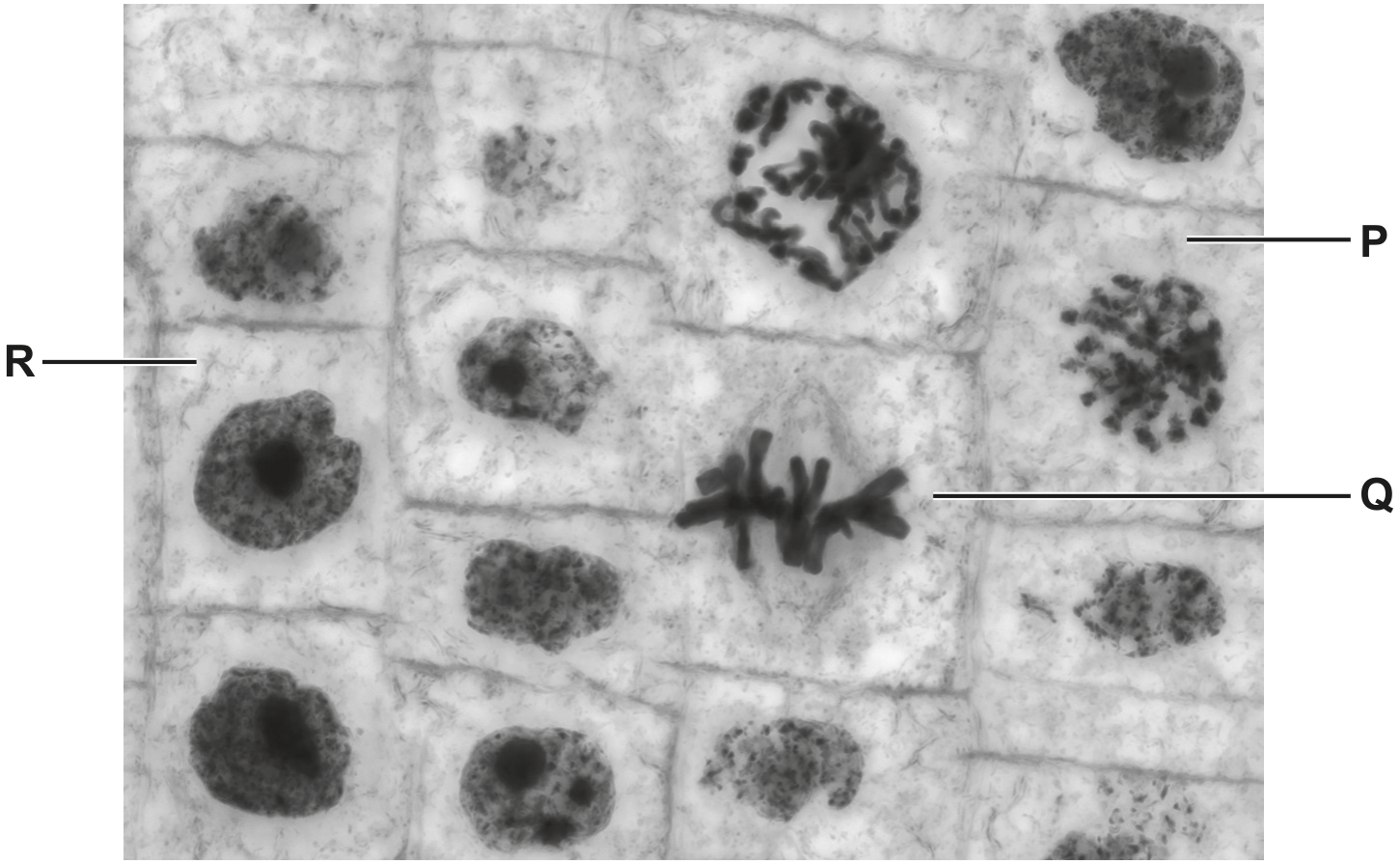
Fig. 2.1 shows some stages of the cell cycle in the meristematic tissue in the root tip of a plant. Three of these stages, P, Q and R, are identified in Table 2.1.

Fig. 2.1

Fig. 2.1

(a)
(i)

Draw a labelled diagram to show one chromosome at metaphase of mitosis.

On the chromosome you have drawn add labels to show:
- the position of a telomere
- a chromatid
- the centromere.

[ 4 ]
(ii)

State the type of protein that is associated with DNA in chromosomes.

[ 1 ]
[Maximum number: 1]

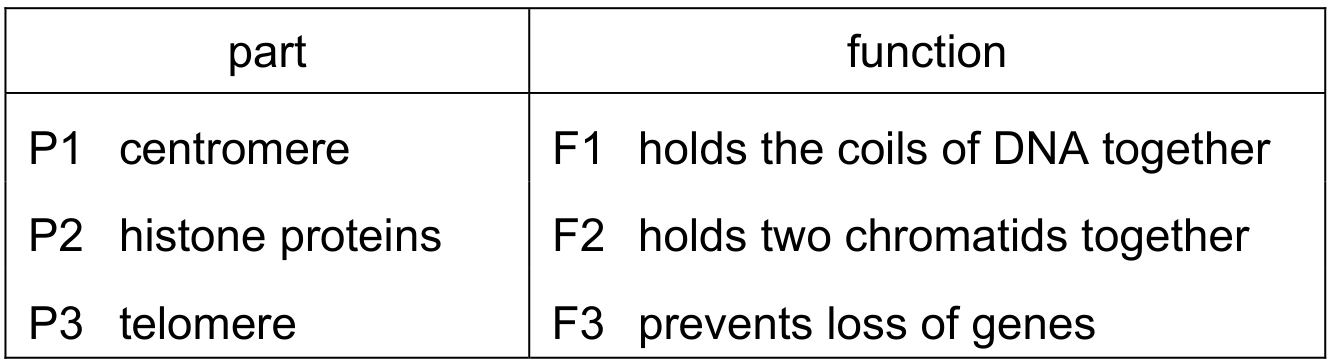
Three parts of a chromosome and their functions are listed.

Table

Which part is matched with its correct function?

A

P 1 and F 1

B

P 2 and F1

C

P2 and F3

D

P3 and F2

(a)

Telomeres are repeating sequences of bases located at the ends of DNA molecules. These repeating sequences do not code for proteins.

The enzyme telomerase ensures that telomeres do not shorten each time DNA is replicated.
Fig. 3.2A shows the end of a DNA molecule during replication. DNA polymerase cannot attach to the region labelled X, so it cannot complete the synthesis of the new strand without the action of telomerase.

Telomerase synthesises additional lengths of DNA that are added to the telomere. These additional lengths are used by DNA polymerase to complete the process of replication.

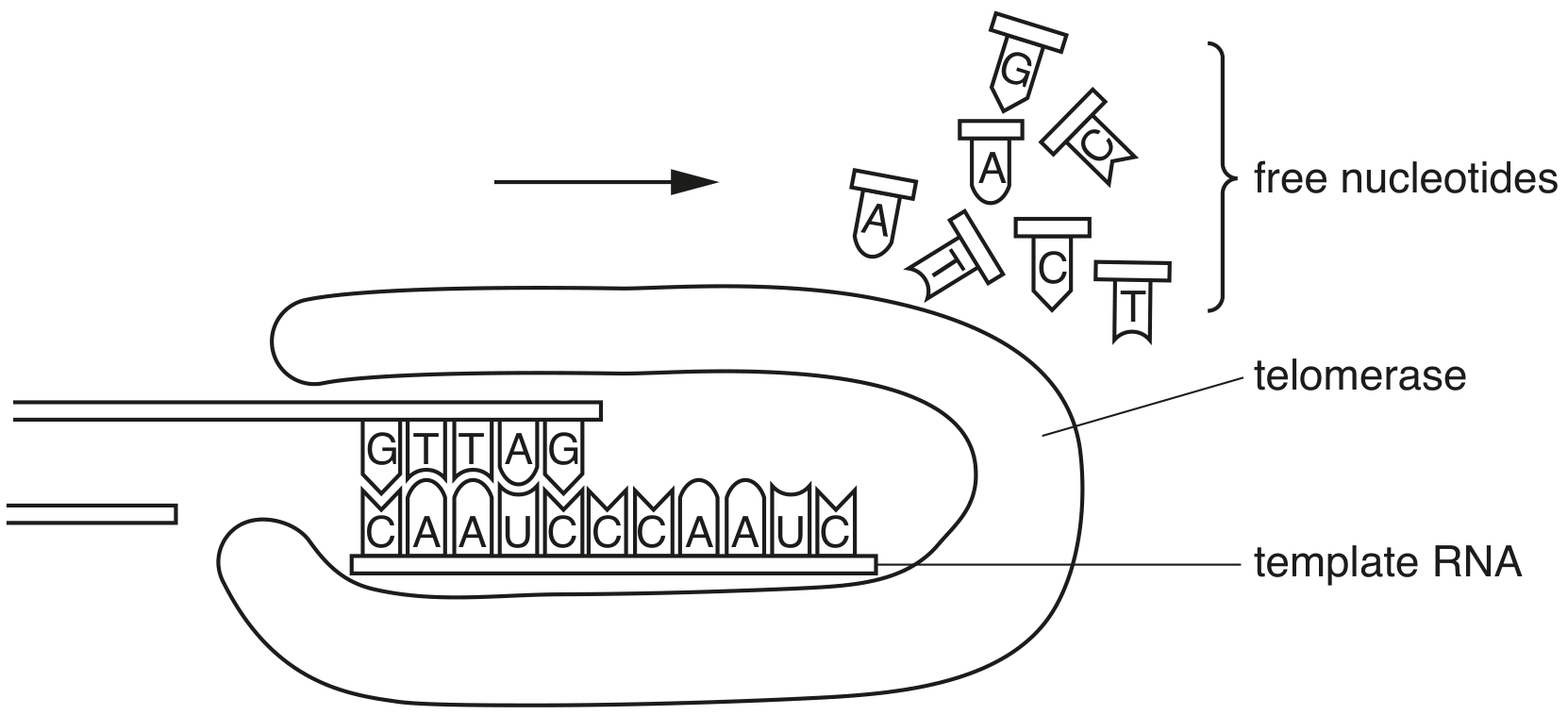
Fig. 3.2 B is an enlarged view of region X to show the action of the enzyme telomerase.
A

Question image

B

Fig. 3.2

Fig. 3.2

Telomerase contains a short length of RNA that acts as a template for the synthesis of DNA as shown in Fig. 3.2B.

Explain how a molecule of telomerase synthesises additional lengths of DNA.

[ 4 ]
(b)

Telomerase is not present in prokaryotic cells.

Suggest why prokaryotes do not have telomerase.

[ 1 ]
(a)

Telomeres are parts of chromosomes. Describe the function of telomeres.

[ 2 ]
[Maximum number: 1]

Which row correctly describes parts of chromosome structure present during mitosis?

centromere

chromatid

telomere

region of a chromosome with no DNA

single DNA polynucleotide with histone proteins

region of DNA with many cytosine and guanine bases

region of non-coding DNA holding two chromatids together

double-stranded DNA molecule with histone proteins

region of DNA with many short repeated sequences of bases

region of DNA with no histone proteins that allows separation of chromatids during anaphase

DNA molecule coiled round histone proteins to form a chain of nucleosomes

region of DNA with no proteins that protects the end of a chromatid

region that attaches to spindle microtubules and divides during prophase

one of two identical DNA molecules that was replicated during interphase

region of non-coding DNA holding the ends of the chromatids together

0