(a)
(i)
Explain why secretory cells have large numbers of mitochondria.
[ 2 ]
 EduNinja
Explain why secretory cells have large numbers of mitochondria.
Fig. 1.1 is a transmission electron micrograph of a cell from the root of thale cress, Arabidopsis thaliana.
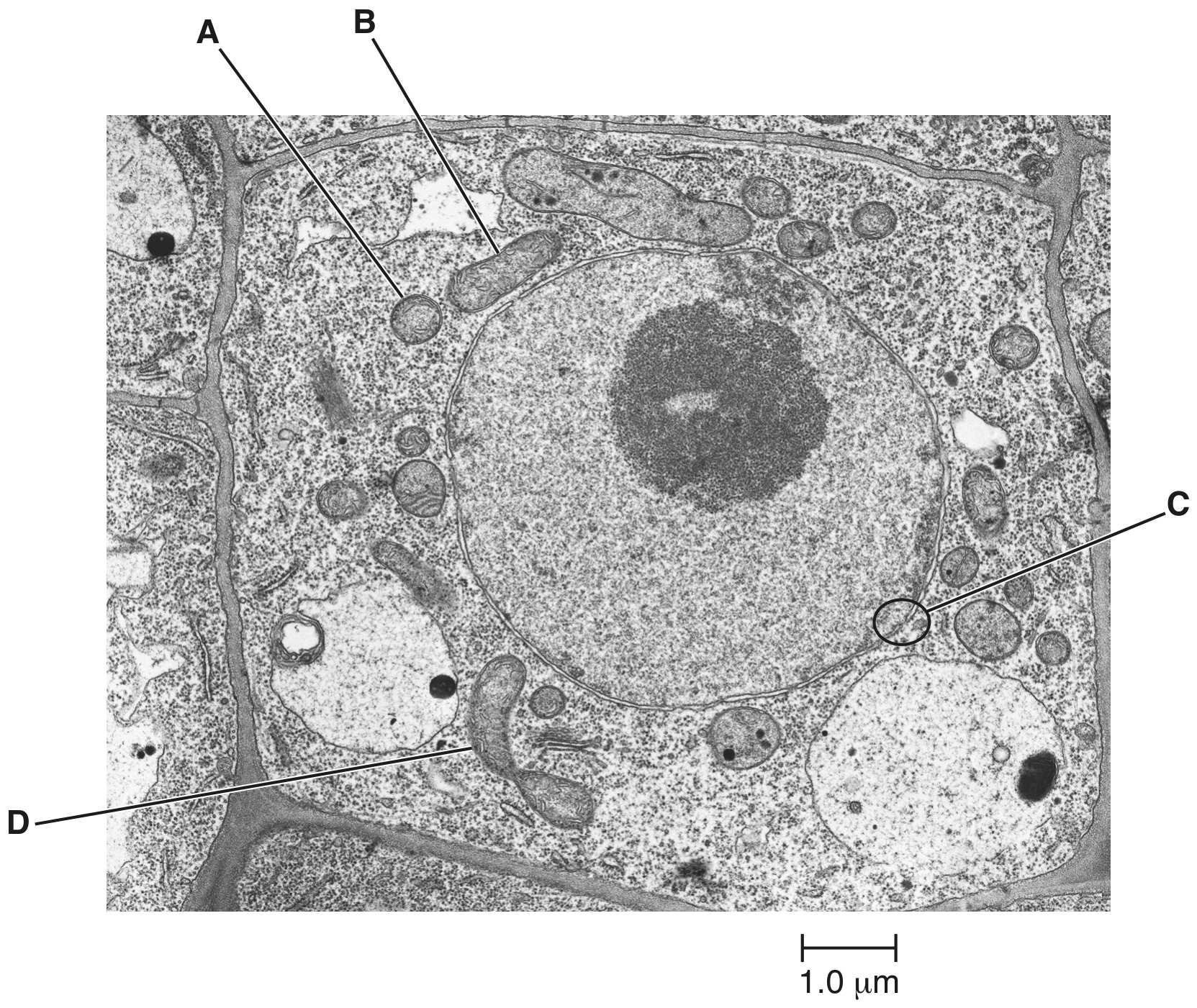
Fig. 1.1
The structure labelled D on Fig. 1.1 is a mitochondrion about to divide.
Explain the importance of the division of mitochondria for the cell shown in Fig. 1.1 and for cells in the root tips of thale cress.
Fig. 1.1 is an electron micrograph of cells from the lining of the small intestine.
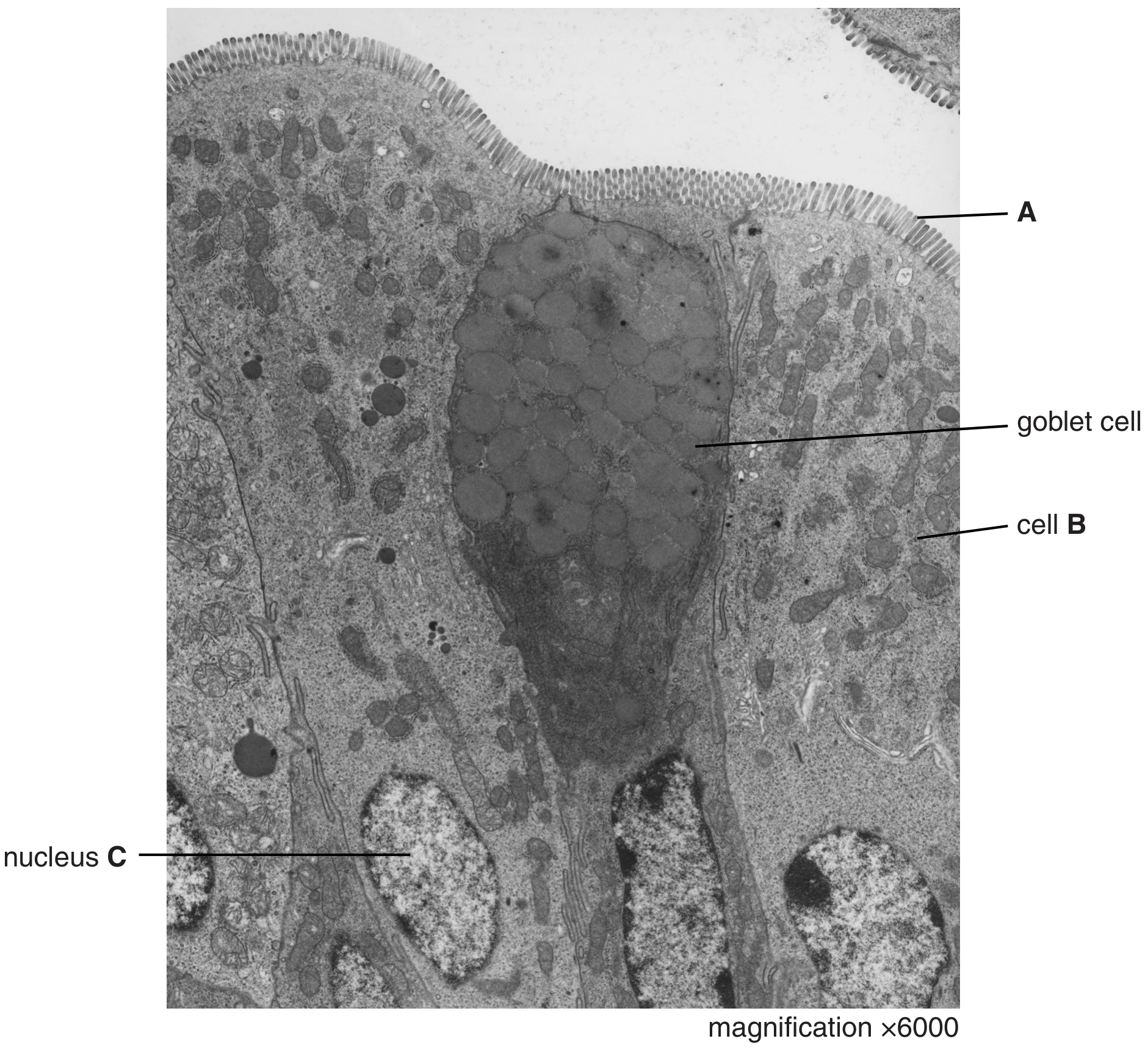
Fig. 1.1
There are many mitochondria in cell B.
Suggest why cell B contains a large number of mitochondria.
Fig. 1.1 is a diagram of part of a neurone membrane at resting potential.
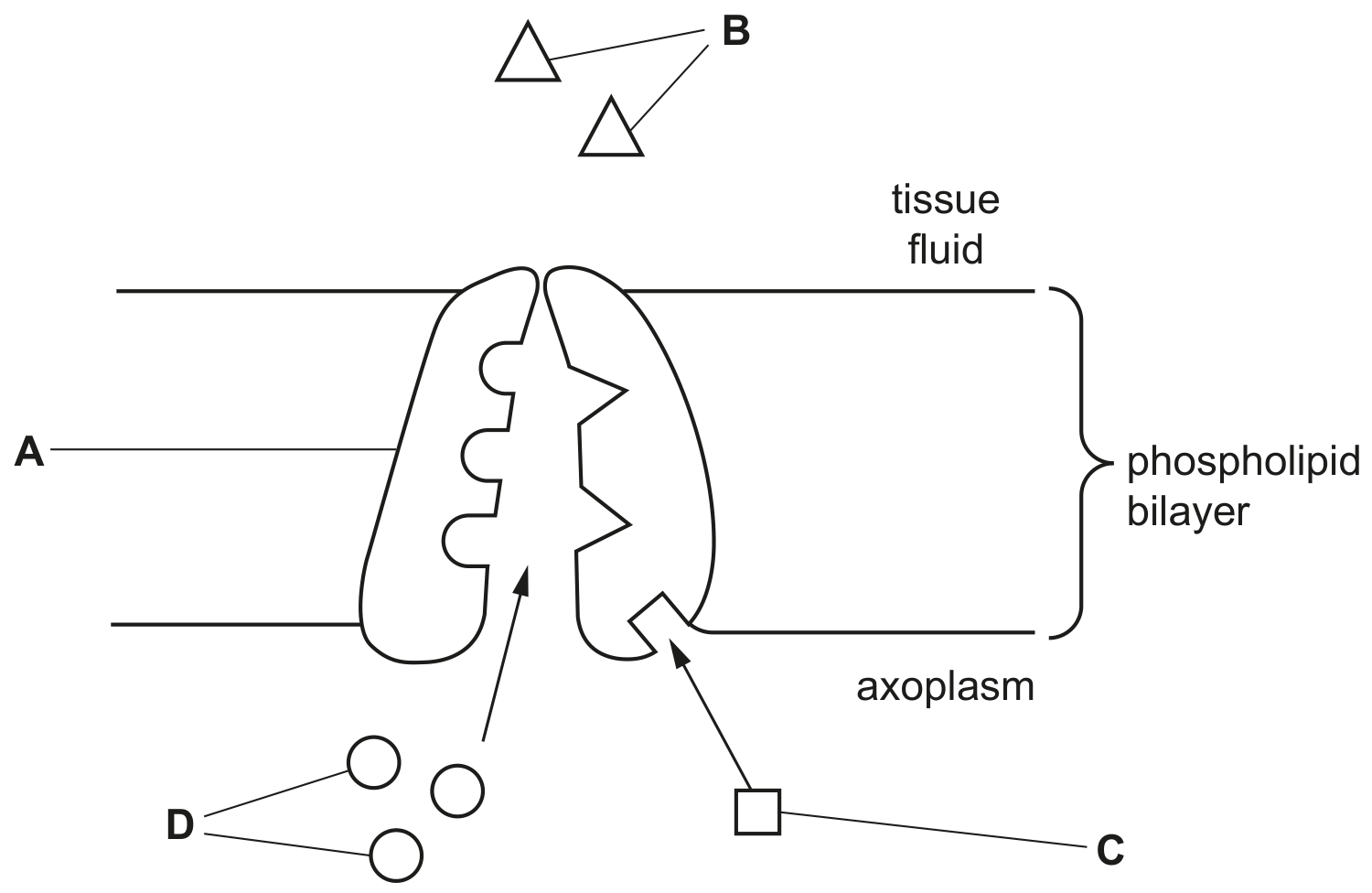
Fig. 1.1
Substance C is required to make structure A function.
Name substance C.
Some stains can be used to identify cell structures in living cells.
A dilute solution of one stain causes the whole cell to appear blue.
The blue colour rapidly disappears from most cell structures. Those cell structures that release energy stay blue.
Which type of cell structure is likely to stay blue?
endoplasmic reticulum
Golgi body
lysosome
mitochondrion
Which cell structures produce ATP?
1 chloroplasts
2 mitochondria
3 nucleus
1, 2 and 3
1 and 2 only
1 and 3 only
2 and 3 only
Which statements about ATP are correct?
1 It is produced in chloroplasts.
2 It is used during protein synthesis.
3 It contains deoxyribose.
4 It is used in facilitated diffusion.
5 It is used to load sucrose into companion cells.
1, 2 and 5
1, 3 and 5
2, 3, 4 and 5
2 and 4 only
Which statements are correct for a green plant?
1 ATP is produced by mitochondria.
2 ATP is produced by chloroplasts.
3 ATP forms part of the DNA.
1, 2 and 3
1 and 2 only
1 and 3 only
2 and 3 only