EduNinja
[Maximum number: 3]

Picornaviruses are small viruses that are 30 nm in diameter. Picornaviruses are able to enter the cells of mammals and birds and can replicate within these cells.
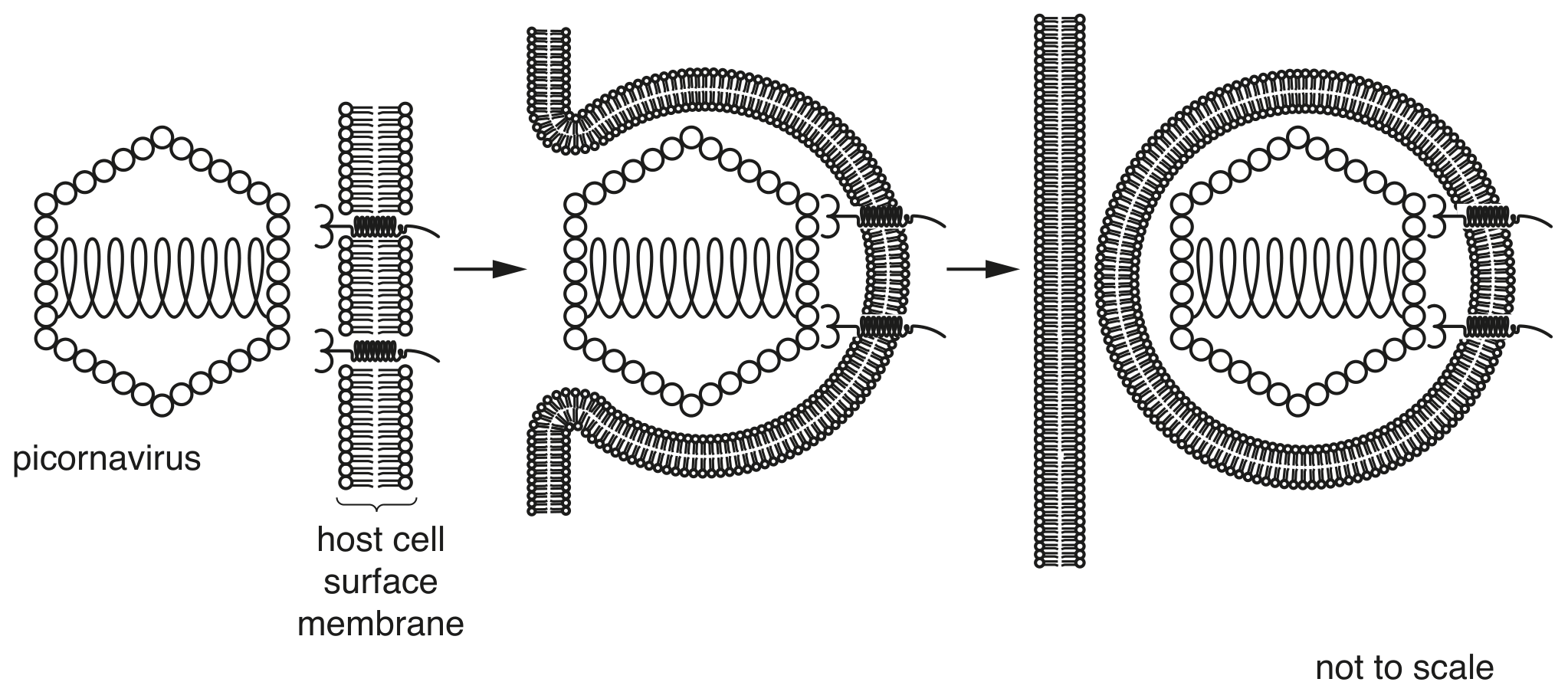
Fig. 1.1 shows the entry of a picornavirus into its host cell.

Fig. 1.1 shows the entry of a picornavirus into its host cell.

(a)

State, with reasons, whether a picornavirus can be seen using the light microscope.

[ 3 ]
[Maximum number: 1]

An electron microscope has a higher resolution than a light microscope.
Which is a result of the higher resolution?

A

the ability to produce larger images of cells

B

the ability to see cristae in mitochondria

C

the ability to see mRNA in all cells

D

the ability to see the nucleus in eukaryotes

[Maximum number: 1]

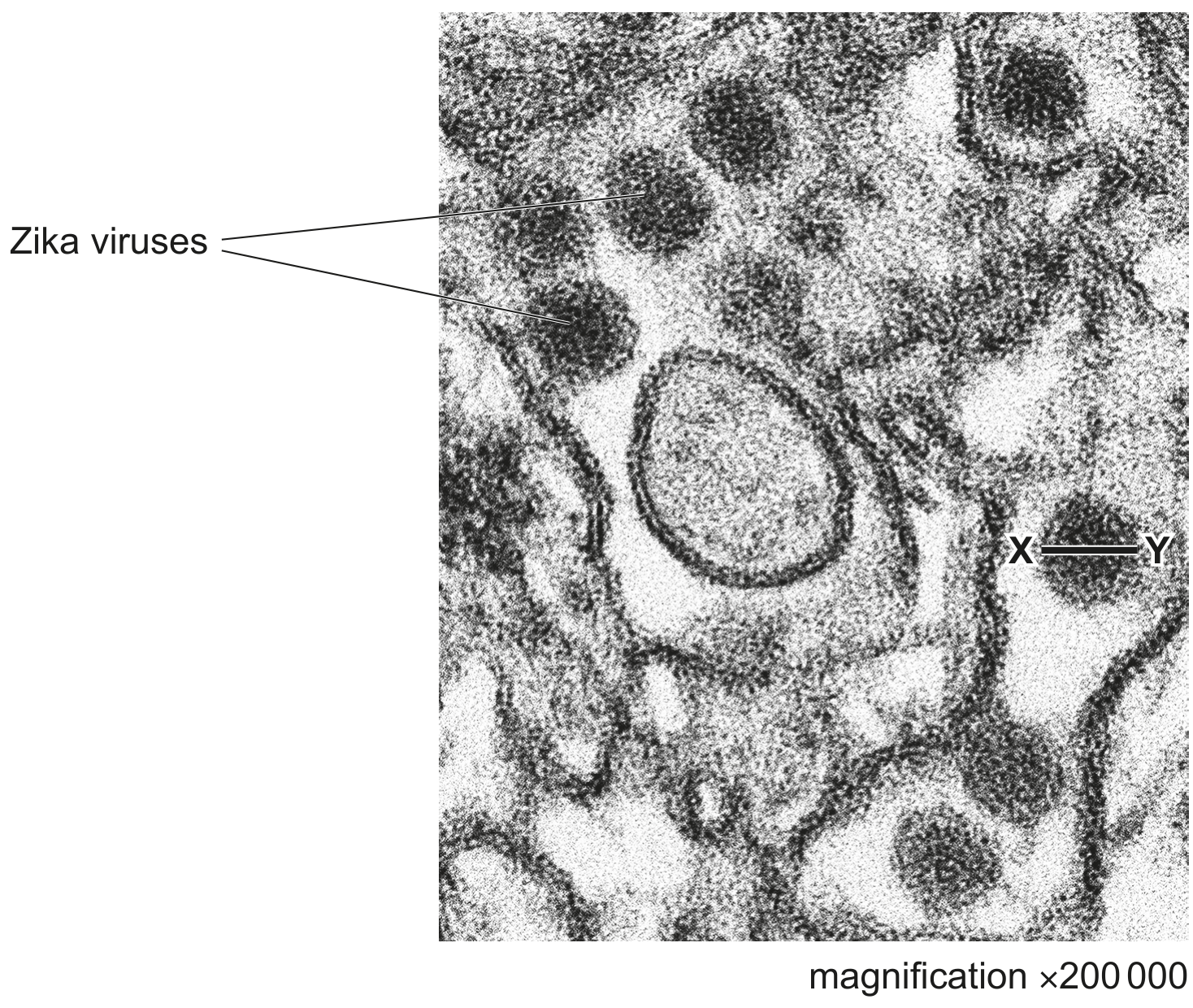
The Zika virus is a pathogen that can infect human cells.

(a)

Fig. 1.2 is a transmission electron micrograph of human kidney cells infected with Zika viruses.

Fig. 1.2

Fig. 1.2

[ 1 ]
(i)

A magnification of ×200000\times 200000 cannot be achieved by a light microscope. The resolution of a transmission electron microscope is also higher than a light microscope.

Describe what is meant by the resolution of a microscope.

[ 1 ]
[Maximum number: 1]

What best describes an electron microscope in comparison with a light microscope?

magnification

resolution

higher

higher

higher

lower

lower

higher

lower

lower

[Maximum number: 1]

At approximately which magnification is light microscopy not suitable because the resolution becomes too low?

A

×100\times 100

B

×200\times 200

C

×400\times 400

D

×1500\times 1500

(a)

Explain the advantages of using a transmission electron microscope compared with a light microscope when viewing a liver cell.

[ 3 ]
[Maximum number: 1]

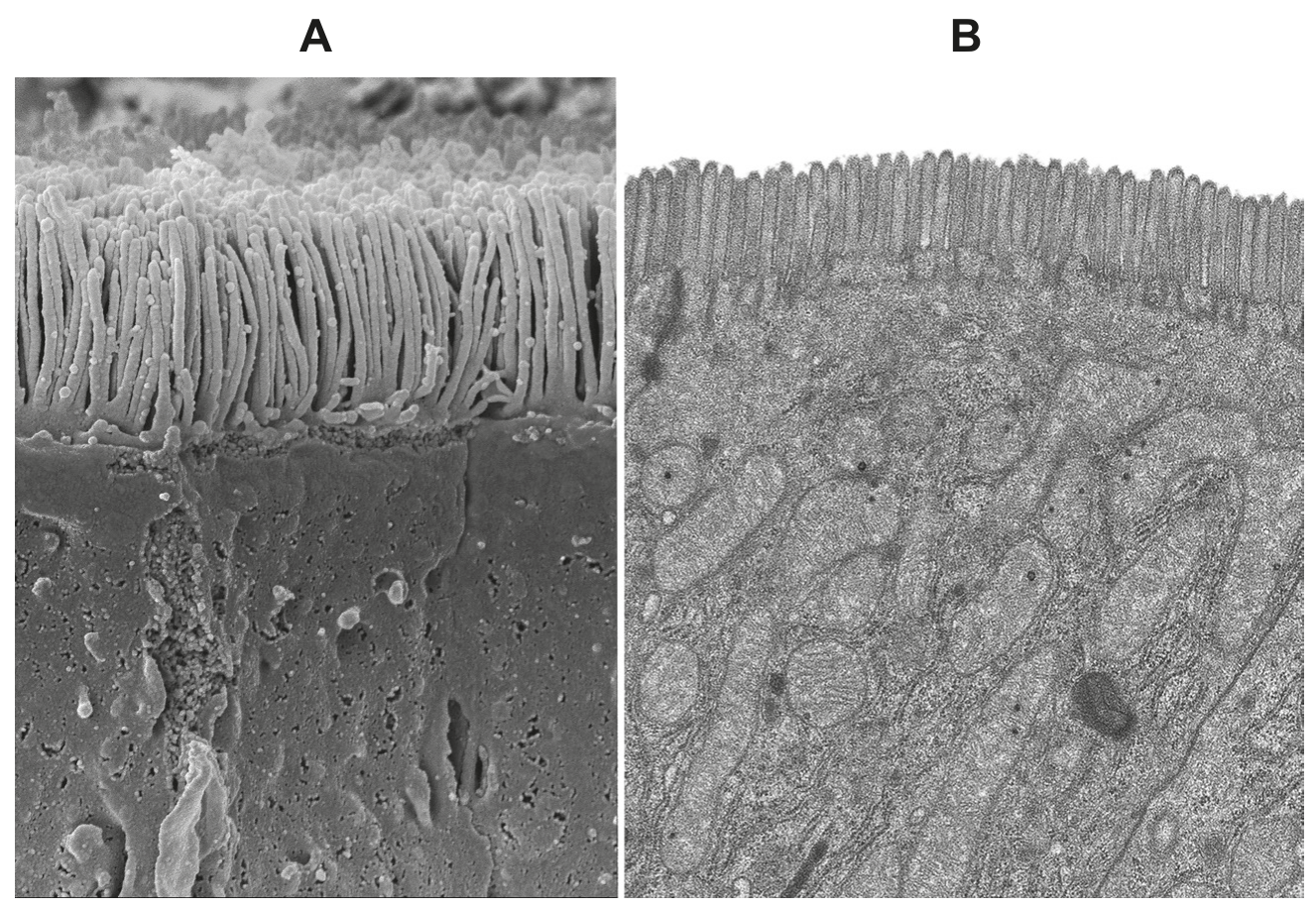
Epithelial cells in the small intestine have cell structures known as microvilli. The microvilli of these cells are found only on the surface that borders the gut lumen.

Fig. 1.1 shows images of microvilli of intestinal epithelial cells. These images have been obtained using a scanning electron microscope and a transmission electron microscope.

Fig. 1.1 A is at a different magnification to Fig. 1.1B.

Fig. 1.1

Fig. 1.1

(a)

With reference to Fig. 1.1, state how it is possible to distinguish between a scanning electron micrograph and a transmission electron micrograph.

[ 1 ]
[Maximum number: 1]

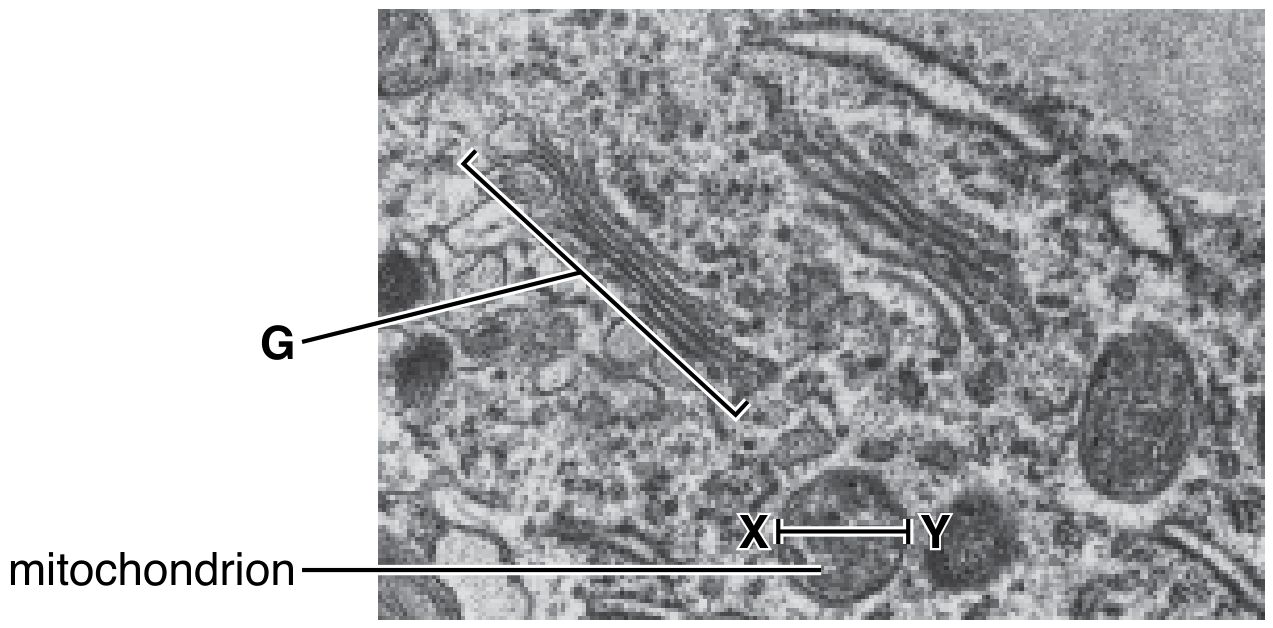
Fig. 1.1 is an electron micrograph of part of a eukaryotic cell.

Fig. 1.1

Fig. 1.1

×47000

(a)

State how it is possible to deduce that Fig. 1.1 is a transmission electron micrograph and not a scanning electron micrograph.

[ 1 ]
[Maximum number: 1]

Which statements about resolution and magnification are correct?

resolution

magnification

the ability to distinguish between two separate objects that are very close together

the number of times larger an image is compared with the real size of the object

the clarity of the image formed by the microscope

the power of the microscope to focus on very small objects

the number of times larger an image is compared with the real size of the object

the ability to distinguish between two separate objects that are very close together

the power of the microscope to focus on very small objects

the clarity of the image formed by the microscope

0