C2.1.11 (HL)—Tyrosine kinase receptors

Tyrosine kinase receptors activate intracellular kinase domains after ligand binding, often triggering phosphorylation cascades and changes in cell behaviour, linking signal detection to a specific target-cell response.

Syllabus
First assessment 2025
Objective
C2.1.11
Level
HL

Tyrosine Kinase Receptors Build Phosphorylation Cascades

HL only

The insulin receptor is a transmembrane receptor with tyrosine kinase activity; insulin binding outside the cell causes phosphorylation of tyrosine residues inside the cell.

The phosphorylated receptor initiates a sequence of intracellular reactions. The syllabus endpoint is movement of vesicles containing glucose transporters to the plasma membrane.
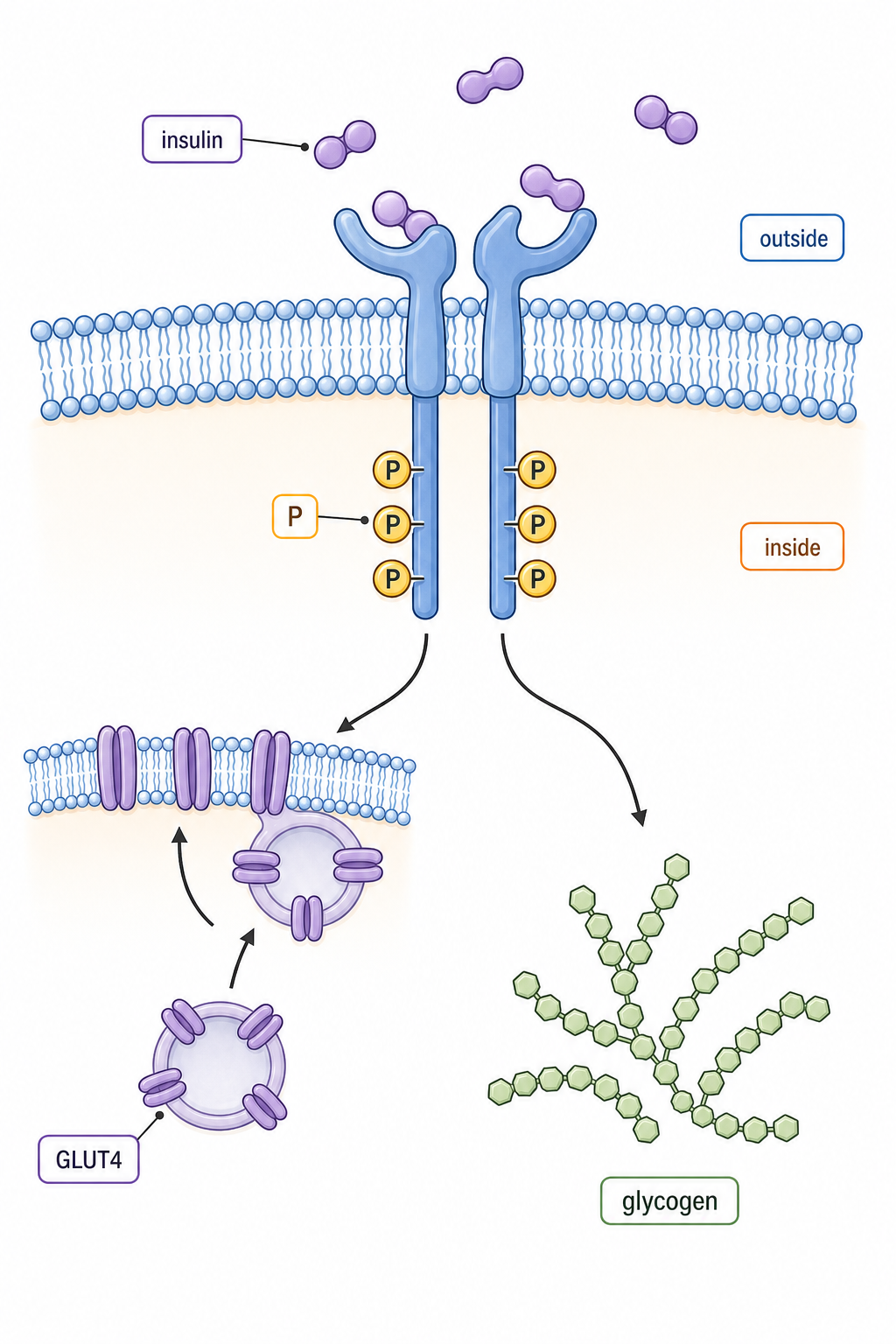
Sequence: insulin binds receptor → intracellular tyrosines are phosphorylated → signalling reactions are activated → glucose-transporter vesicles move to and fuse with the plasma membrane → glucose uptake capacity increases.

In an insulin-responsive muscle or adipose cell, insertion of additional GLUT4 transporters increases facilitated diffusion of glucose from blood into the cell.

Insulin does not enter the cell or act as a glucose transporter. Keep this objective to receptor binding, tyrosine phosphorylation and transporter-vesicle movement; a Ras–MAP kinase growth-factor pathway is not the required example.

Chemical Signalling

HL only

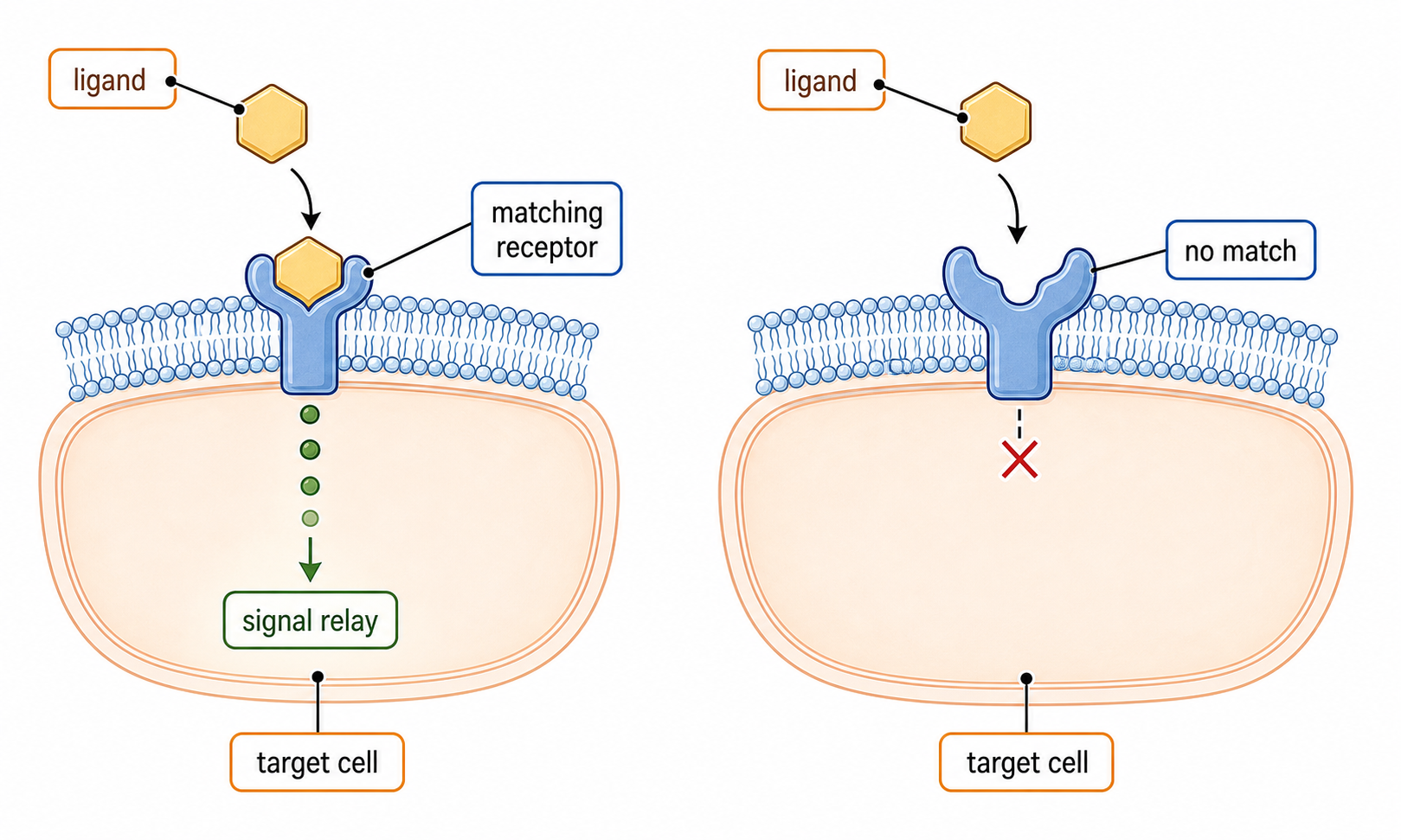
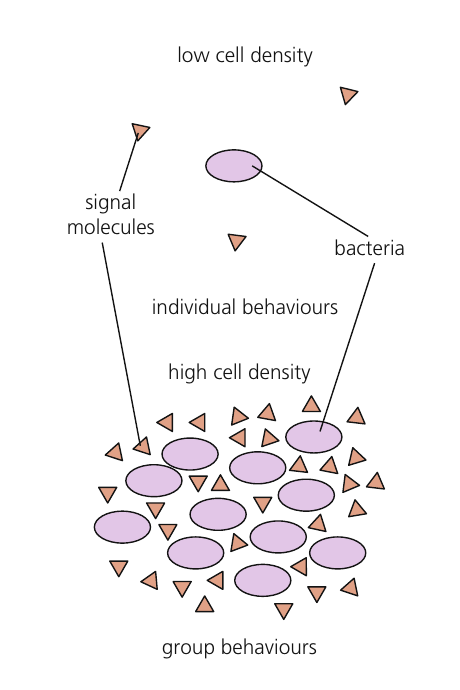
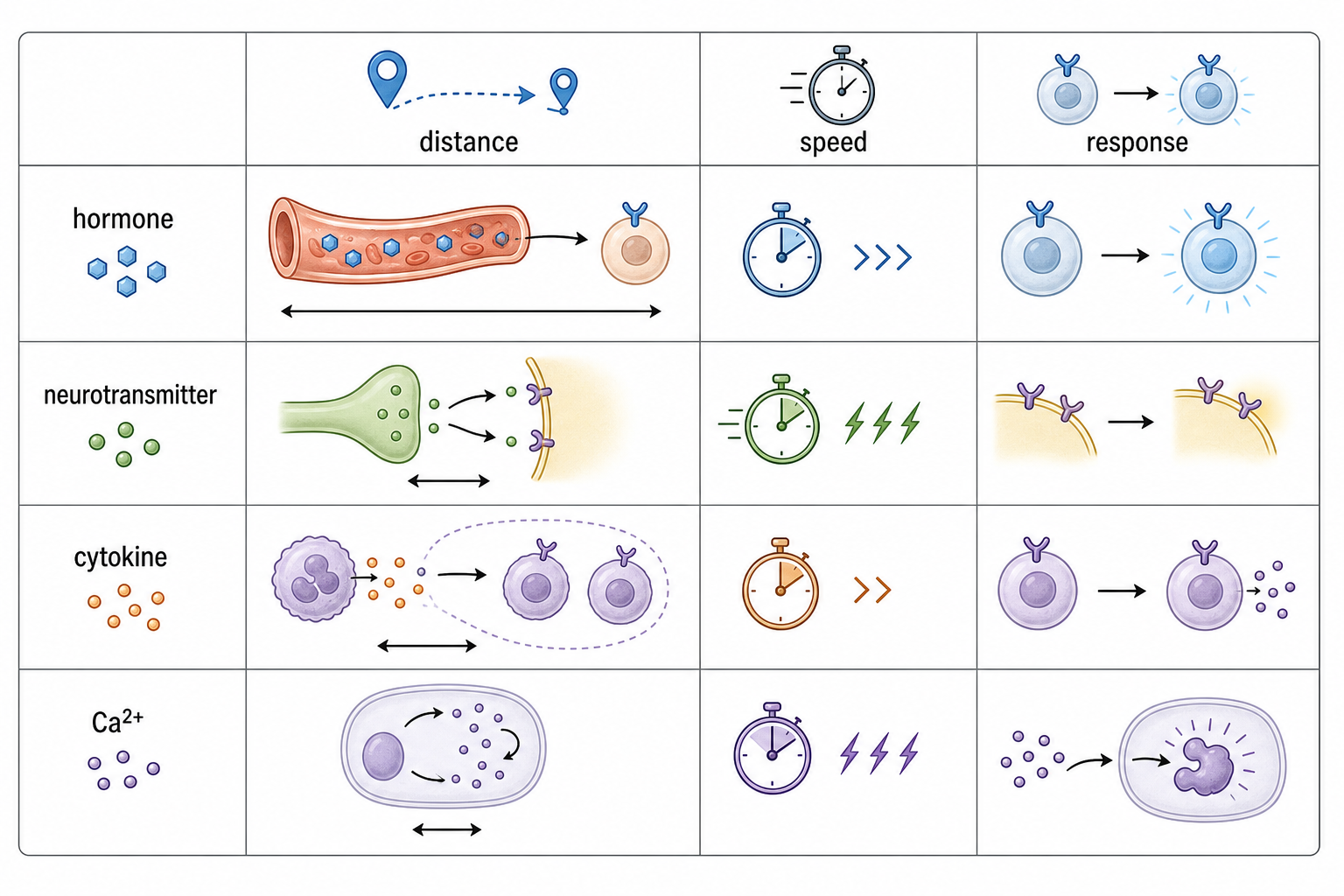
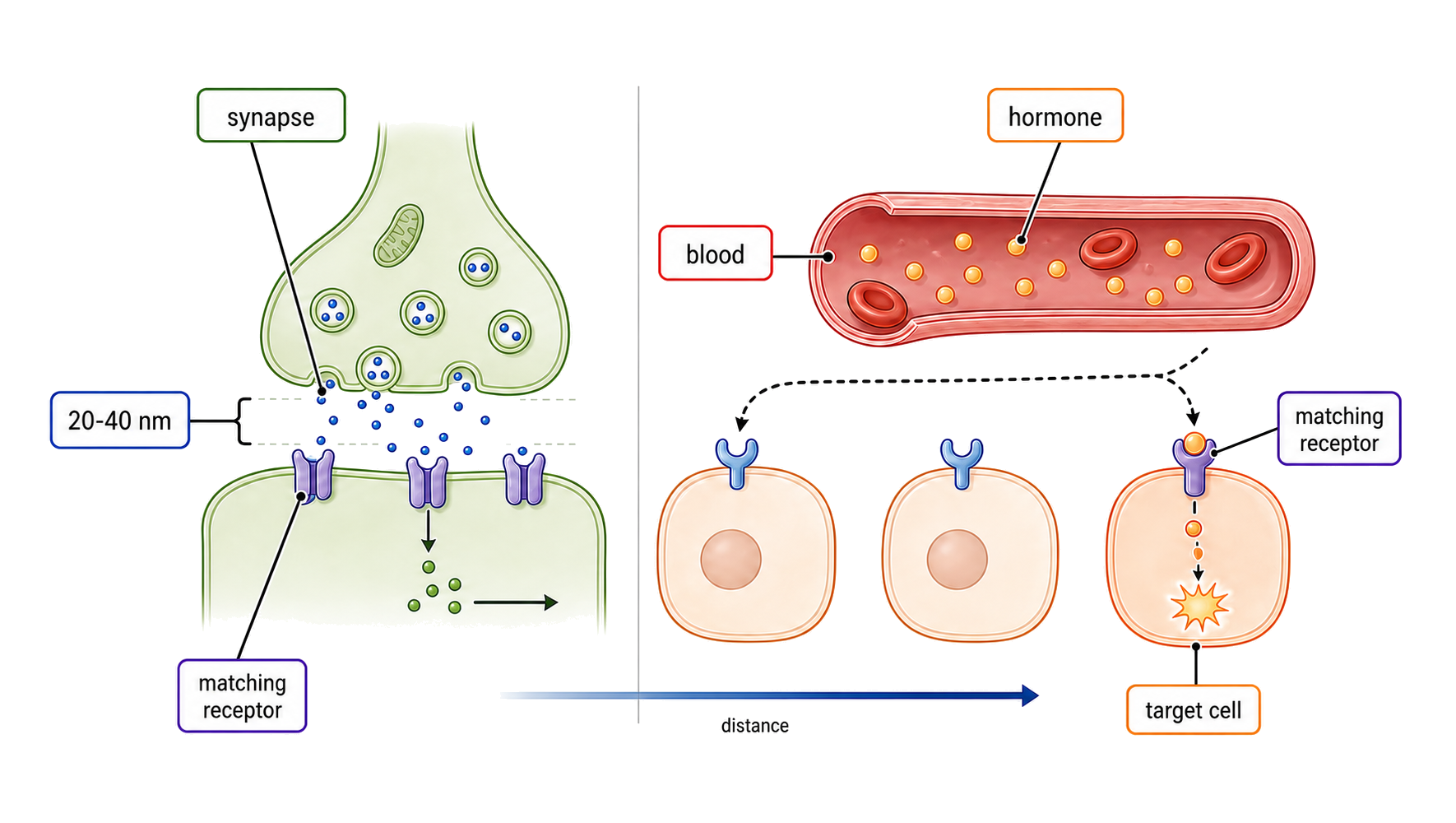
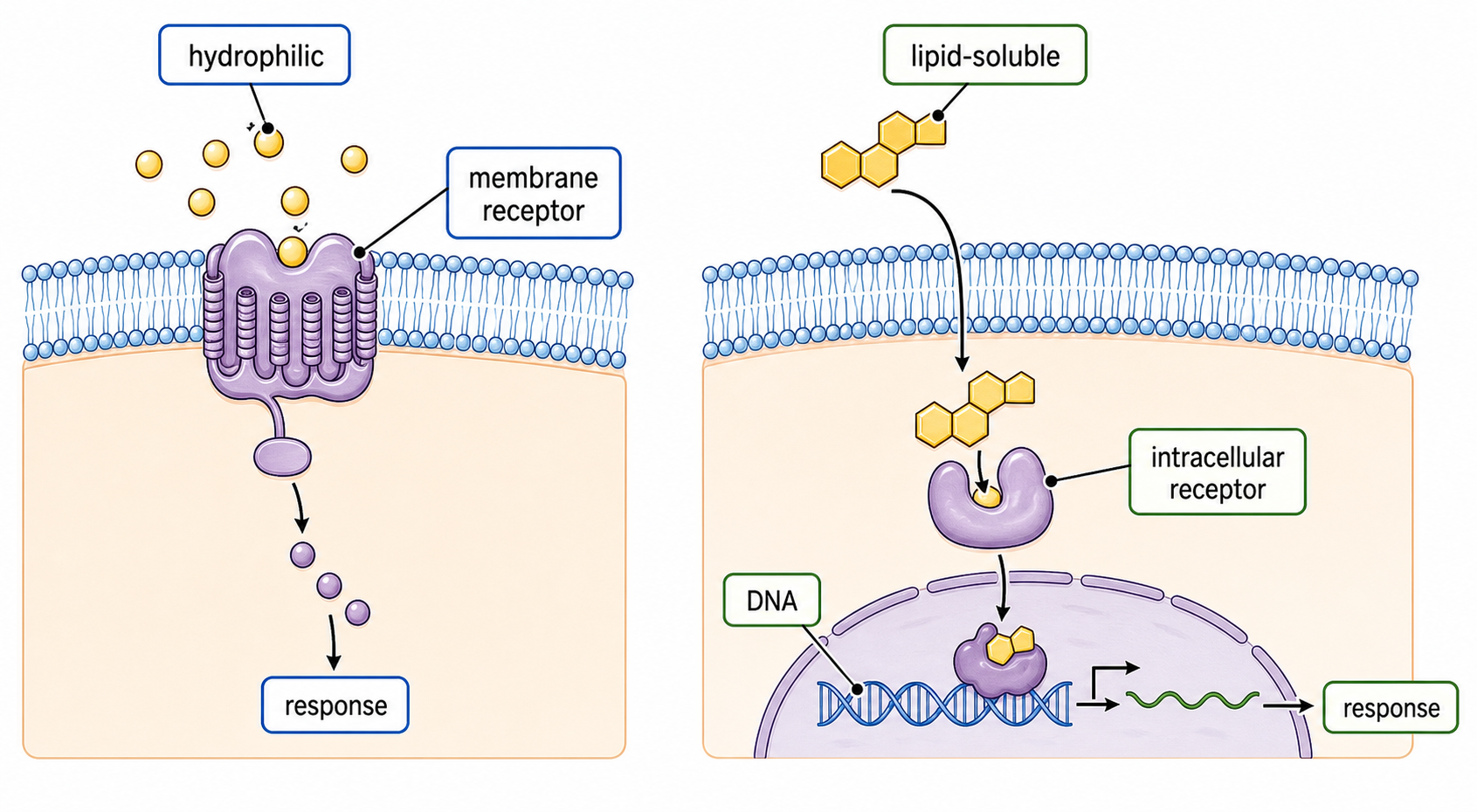
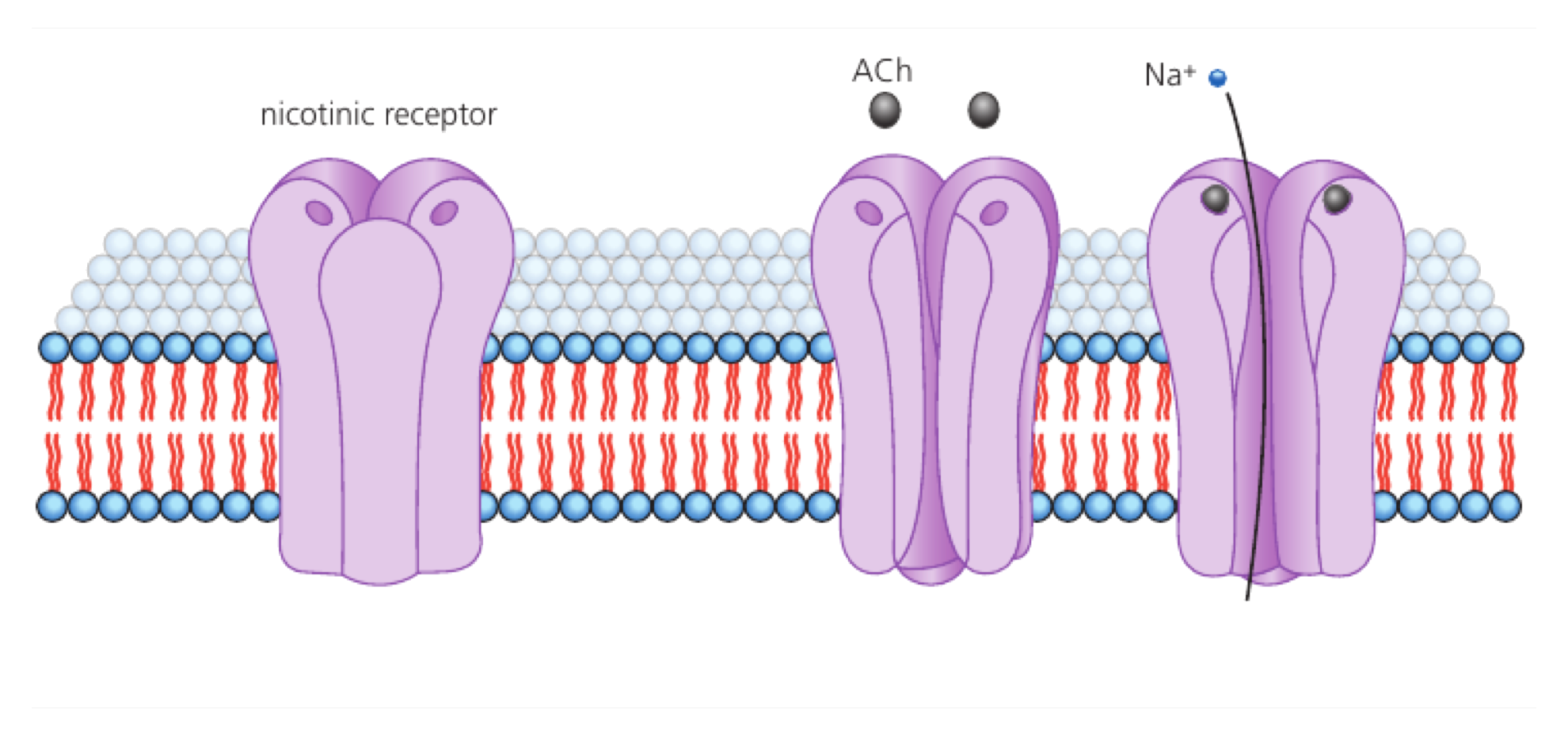
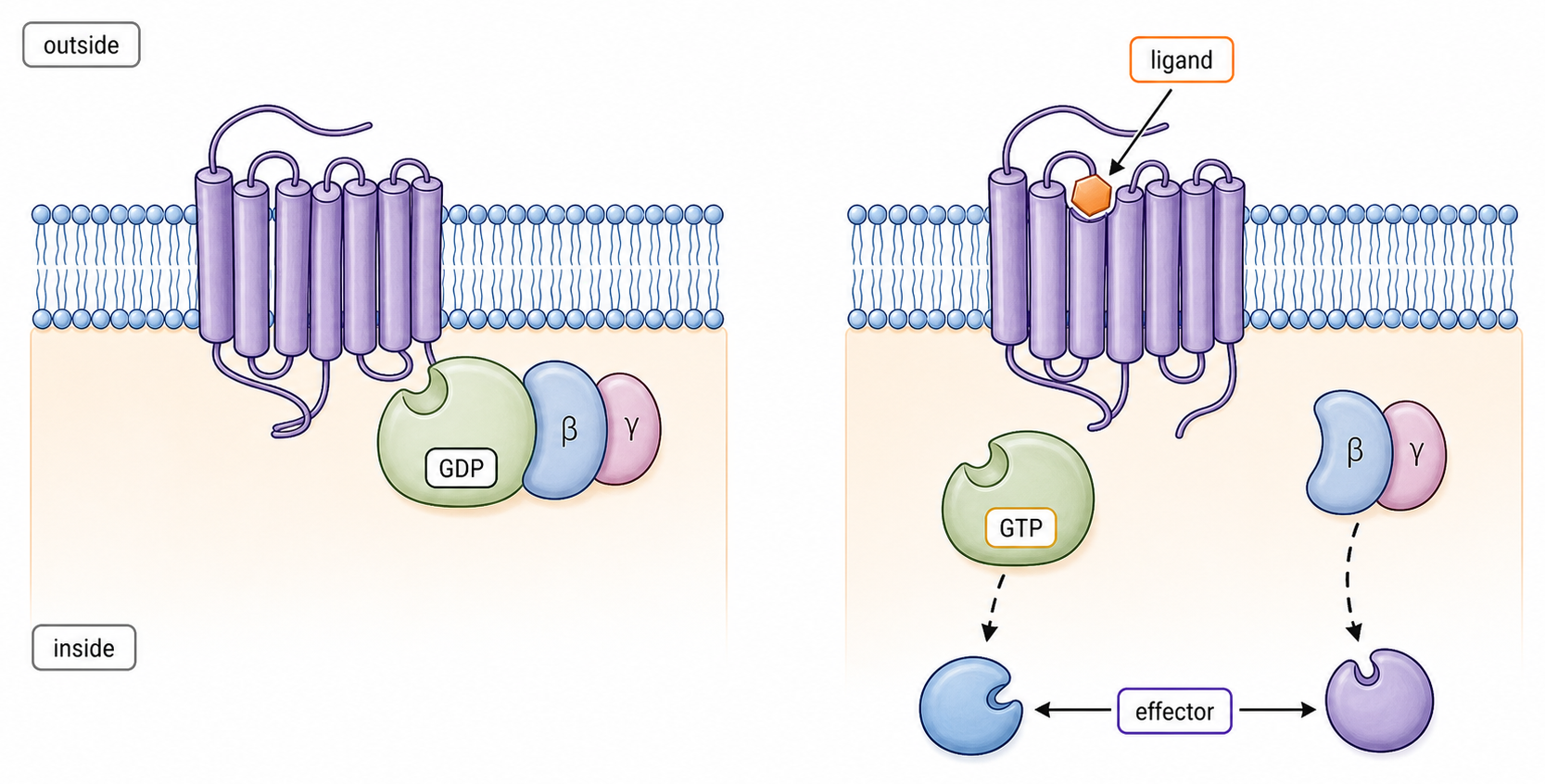
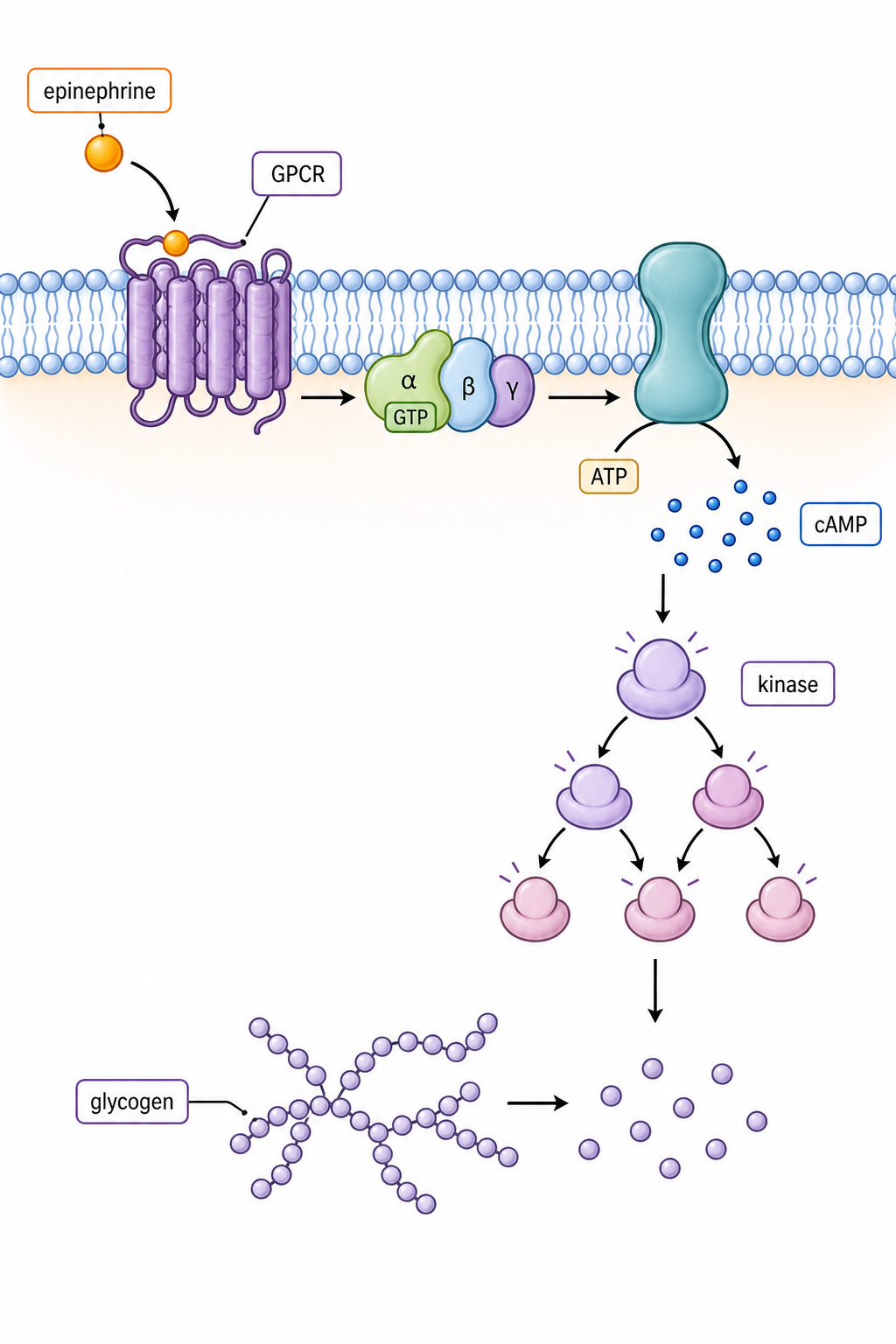
A ligand only affects target cells with the matching receptor. Quorum sensing uses autoinducers and thresholds for group behaviour. Animal signals differ by source, distance, speed, target-cell response, and chemical class. Hydrophilic ligands use transmembrane receptors and relays; steroid and thyroid hormones use intracellular receptors that affect transcription. Named pathways then show the logic: acetylcholine opens sodium channels, GPCRs switch G proteins through GDP-GTP exchange, epinephrine uses cAMP and kinase cascades, insulin RTKs use dimerisation/autophosphorylation to move GLUT4 and promote glycogenesis, steroid hormones change gene expression, and feedback either amplifies or restores stability.

  • Start every signalling answer with ligand specificity and target-cell receptor matching.
  • Then choose the route: local synapse, blood-borne hormone, transmembrane receptor, or intracellular receptor.
  • For named mechanisms, give the sequence, not just the pathway name.
  • Finish feedback comparisons with amplification versus stability.

Concept essentials

  • Tyrosine kinase receptors are transmembrane receptors with intracellular kinase activity.
  • Ligand binding activates phosphorylation on tyrosine residues.
  • Phosphorylation can recruit or activate downstream signalling proteins.
  • RTK pathways often regulate growth, differentiation and gene expression.