C2.1.13 (HL)—Effects of oestradiol and progesterone

Oestradiol and progesterone act through intracellular receptors to regulate gene expression and coordinate reproductive tissue changes, linking signal detection to a specific target-cell response.

Syllabus
First assessment 2025
Objective
C2.1.13
Level
HL

Oestradiol and Progesterone Coordinate Reproductive Tissues

HL only

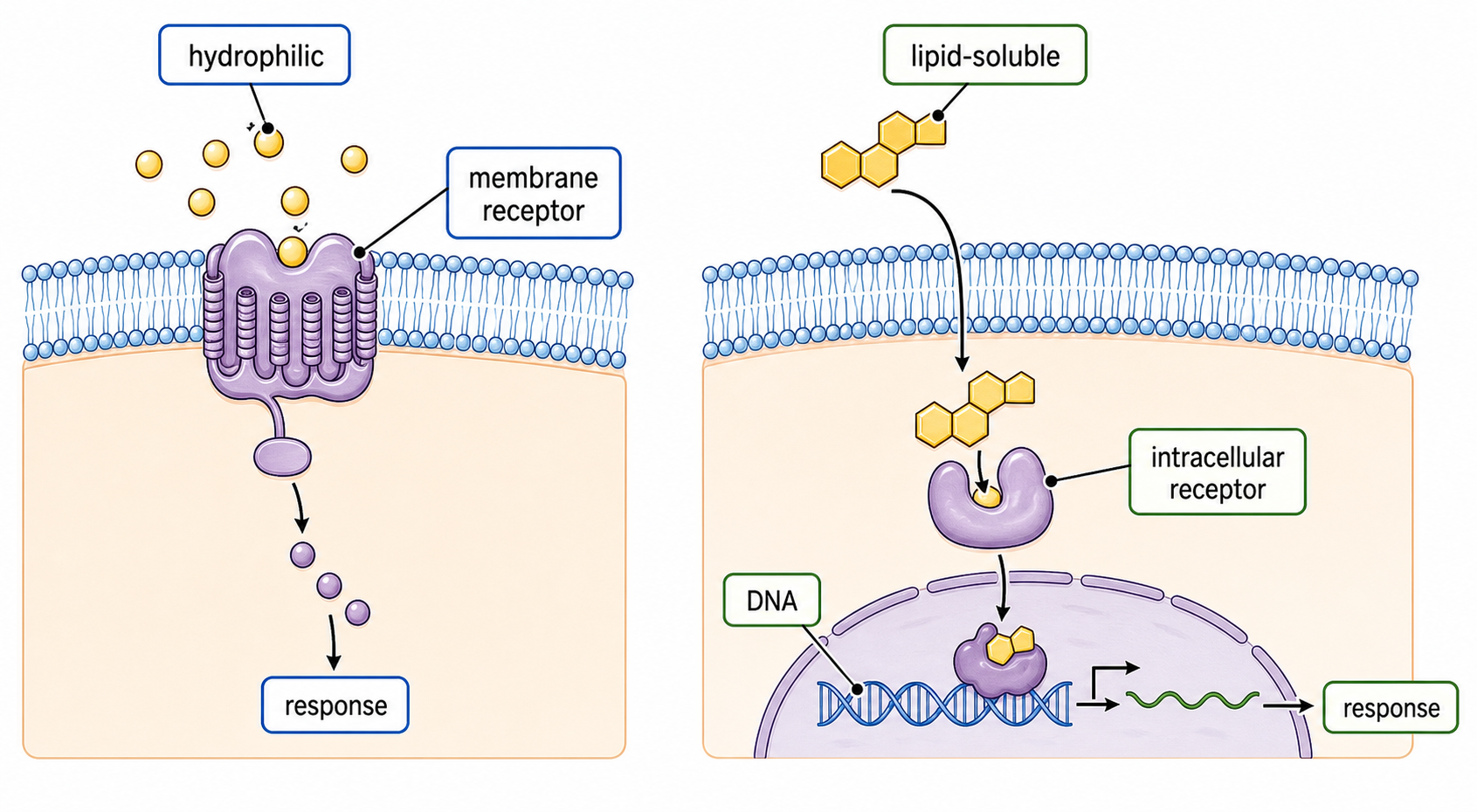
Oestradiol and progesterone are steroid hormones whose effects depend on intracellular receptors in specific target cells.
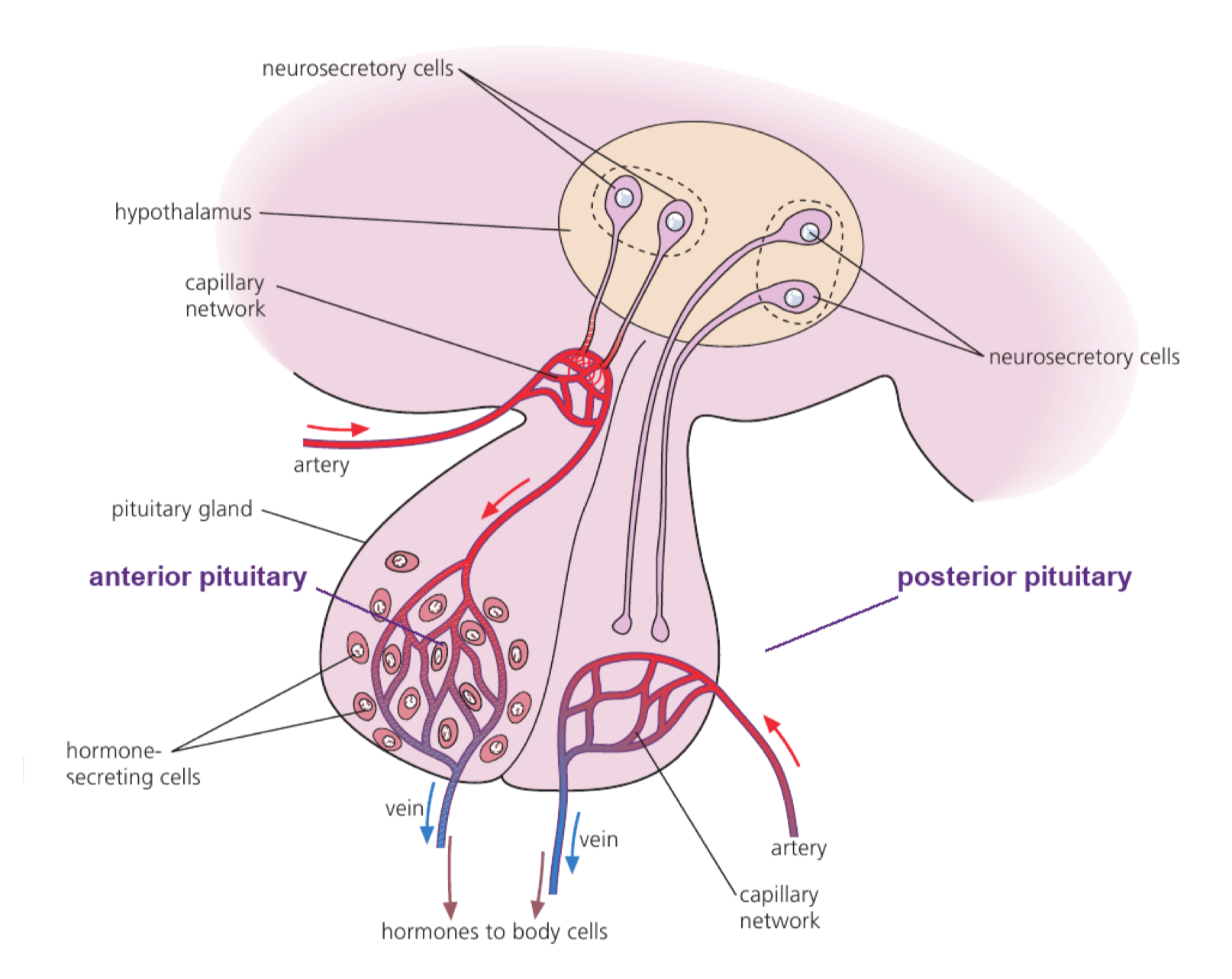
For oestradiol, the required target is receptor-containing cells in the hypothalamus that secrete gonadotropin-releasing hormone (GnRH). Oestradiol changes gene expression and thereby influences GnRH secretion.

For progesterone, the required target is receptor-containing cells in the endometrium. Progesterone-dependent gene expression maintains the endometrium in a state that can support pregnancy.

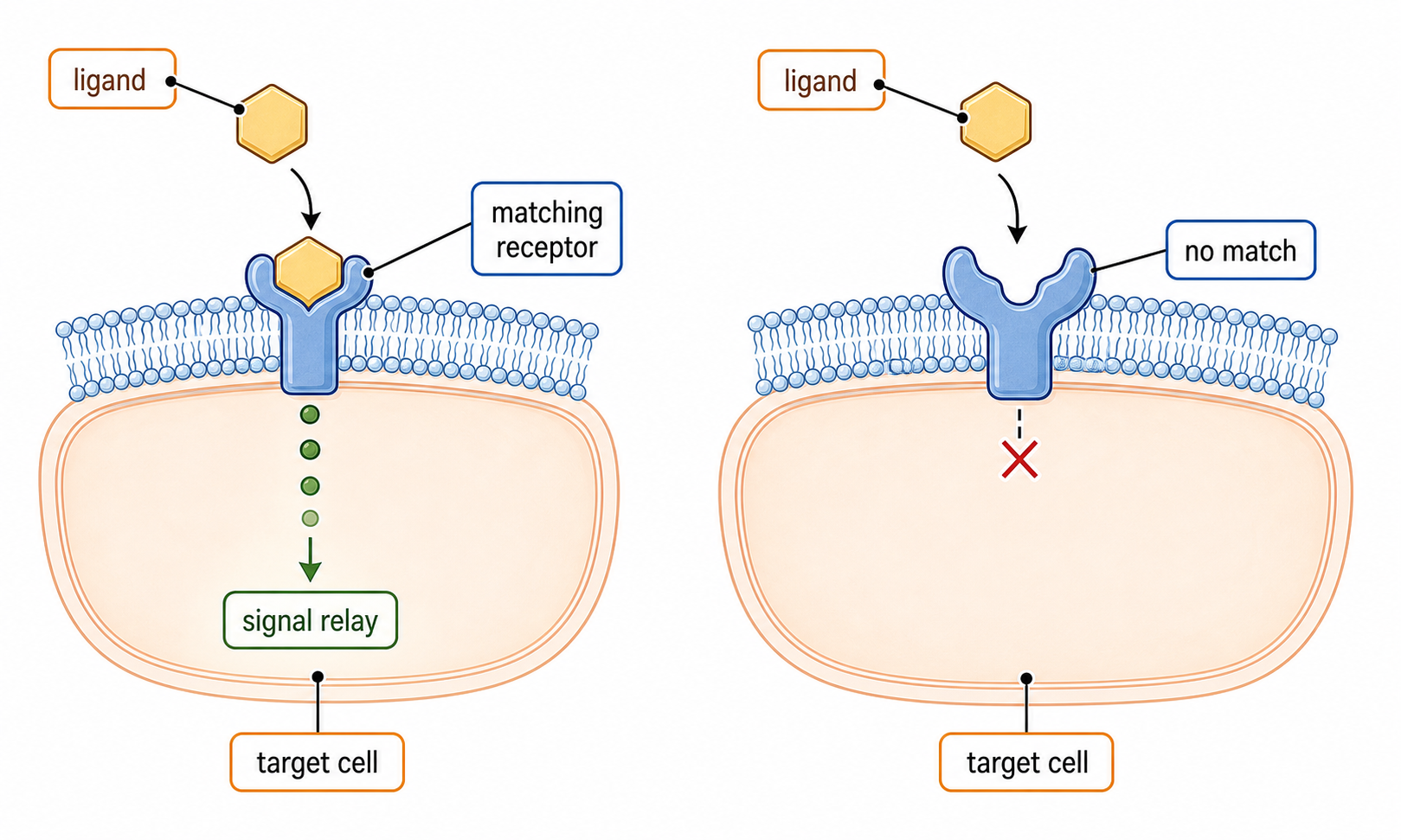
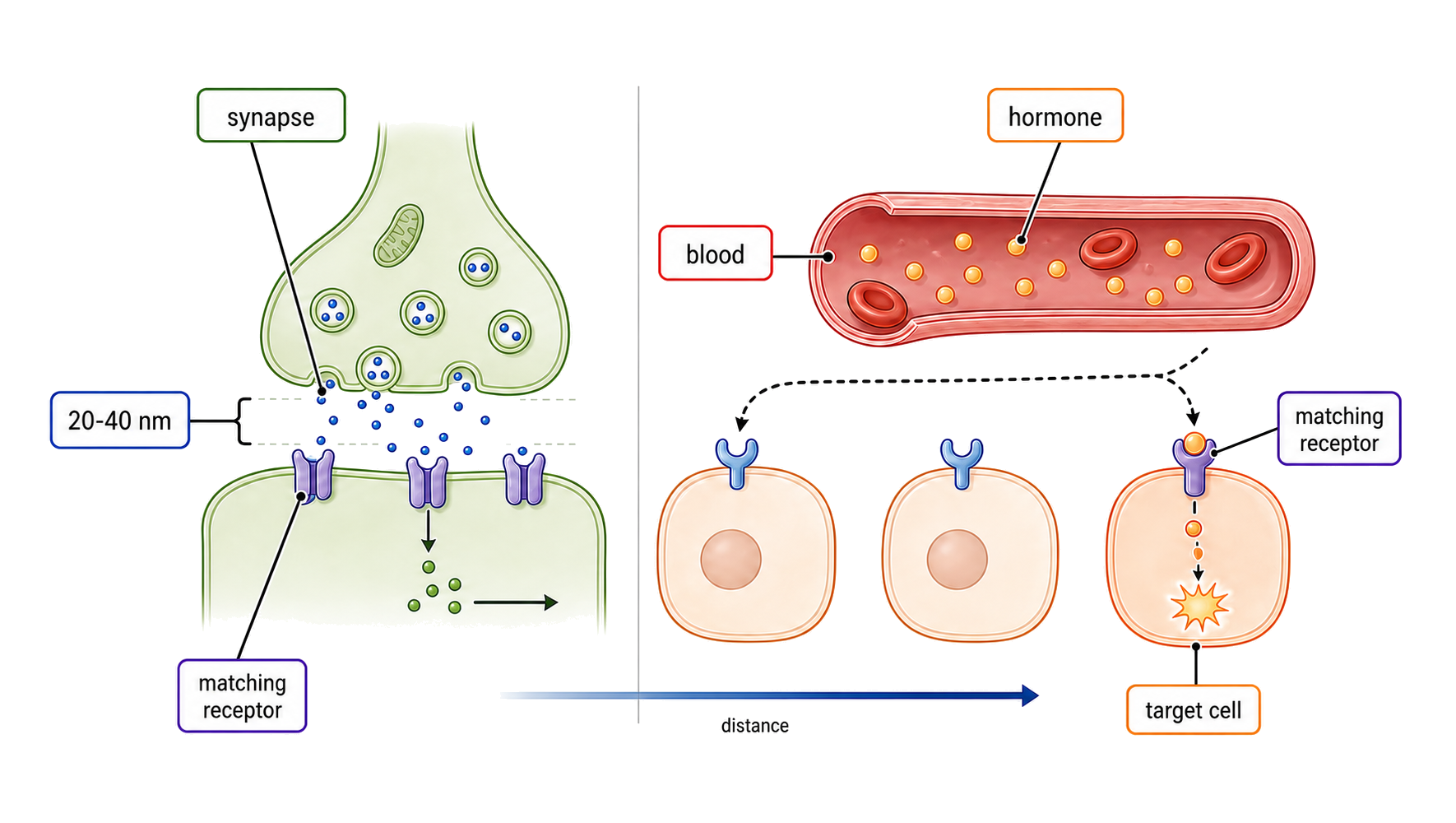
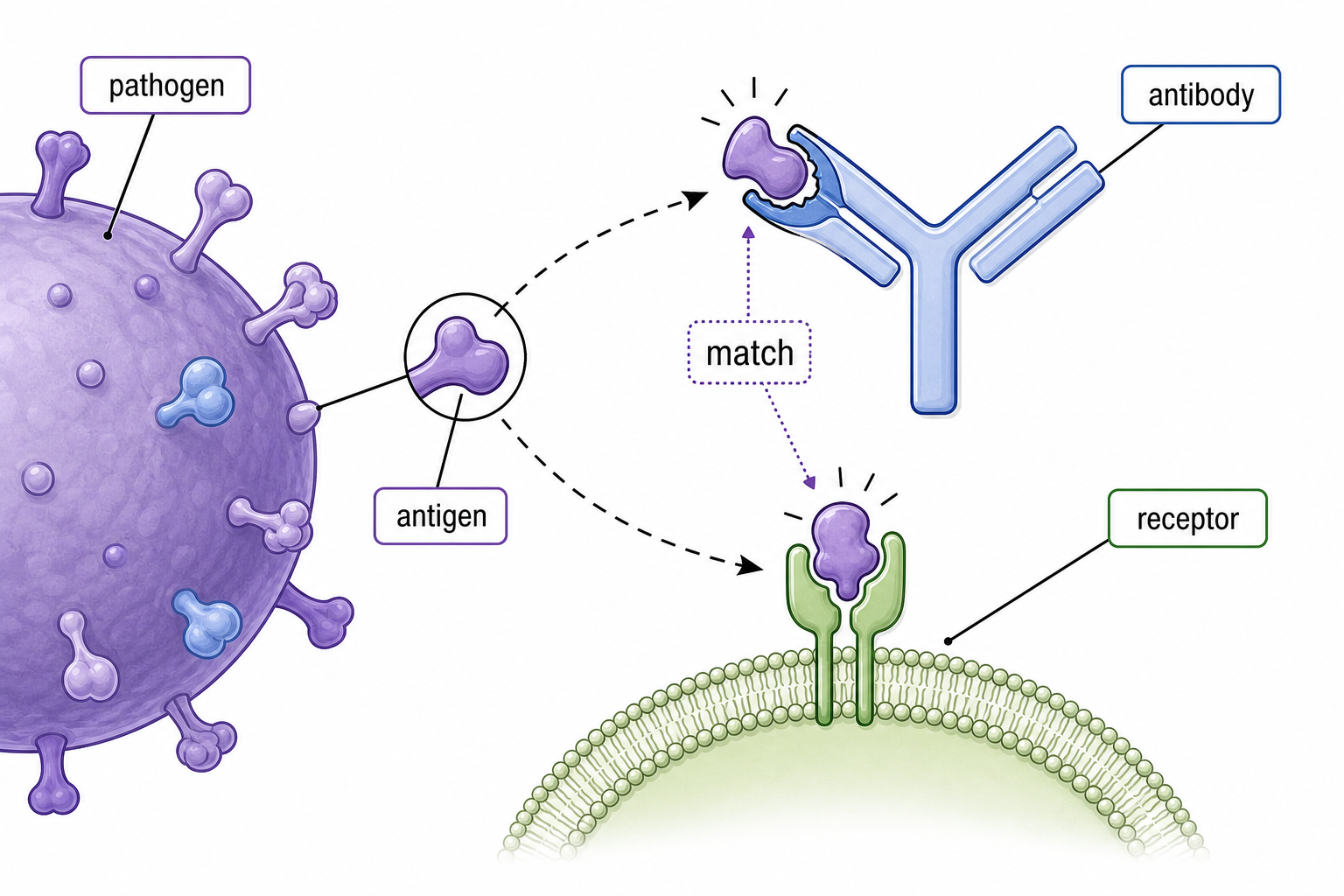
The same circulating hormone affects only cells with the matching receptor: hypothalamic GnRH-secreting cells respond to oestradiol, whereas endometrial cells are a specified target of progesterone.

Do not generalize these objectives to every reproductive effect of the hormones. The assessed target-cell examples are oestradiol in GnRH-secreting hypothalamic cells and progesterone in endometrium.
Chemical Signalling

HL only

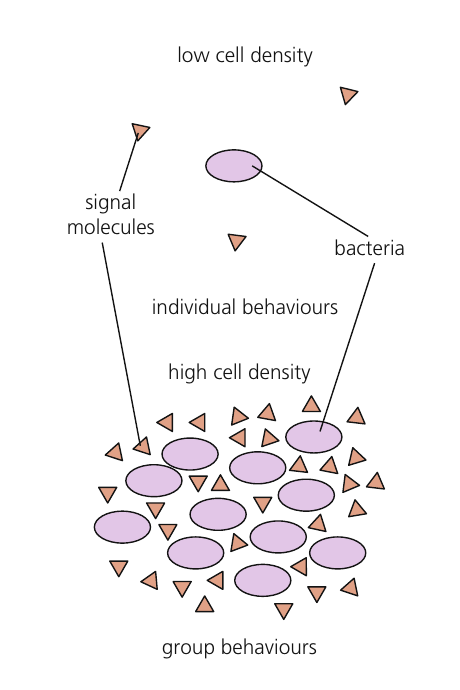
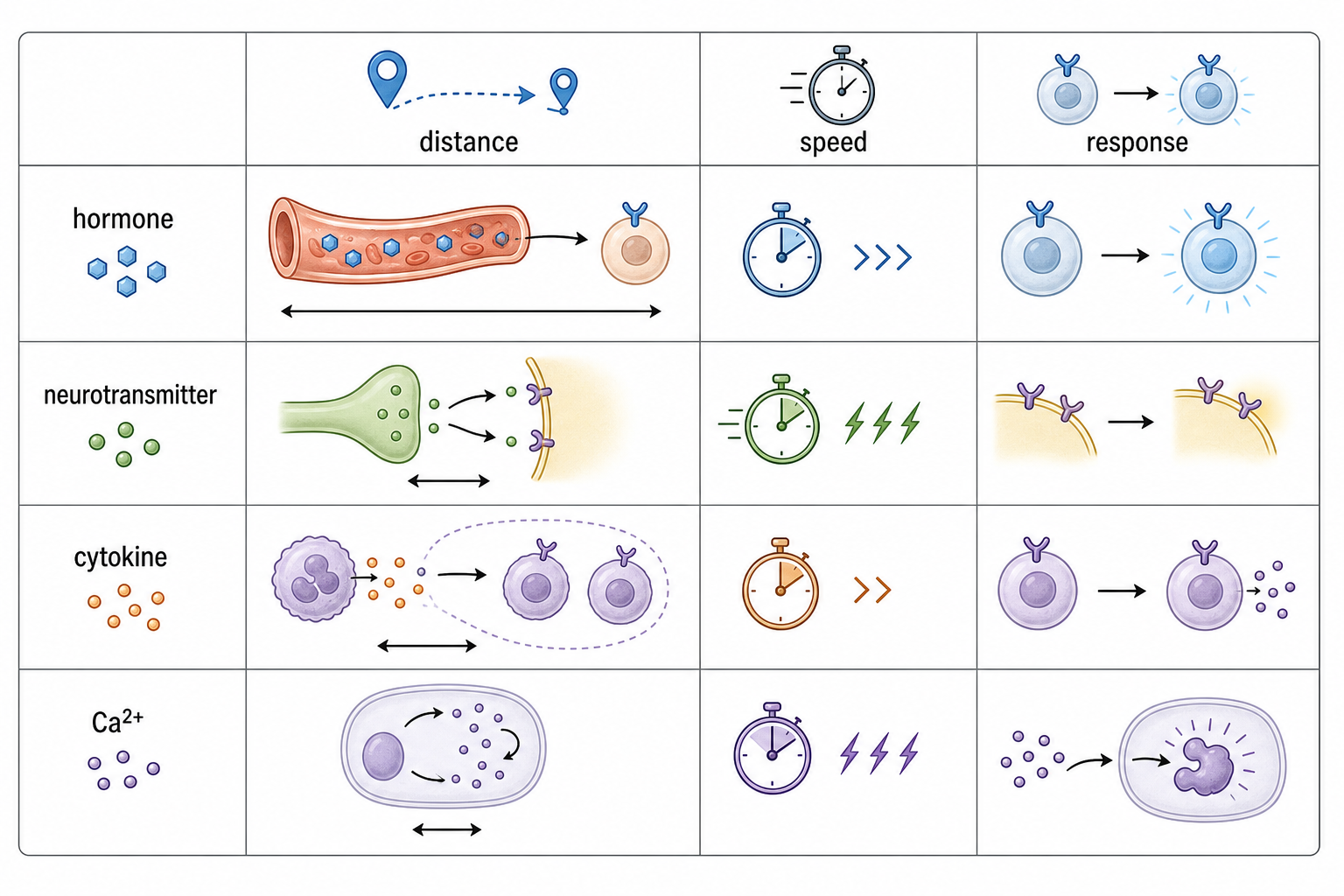
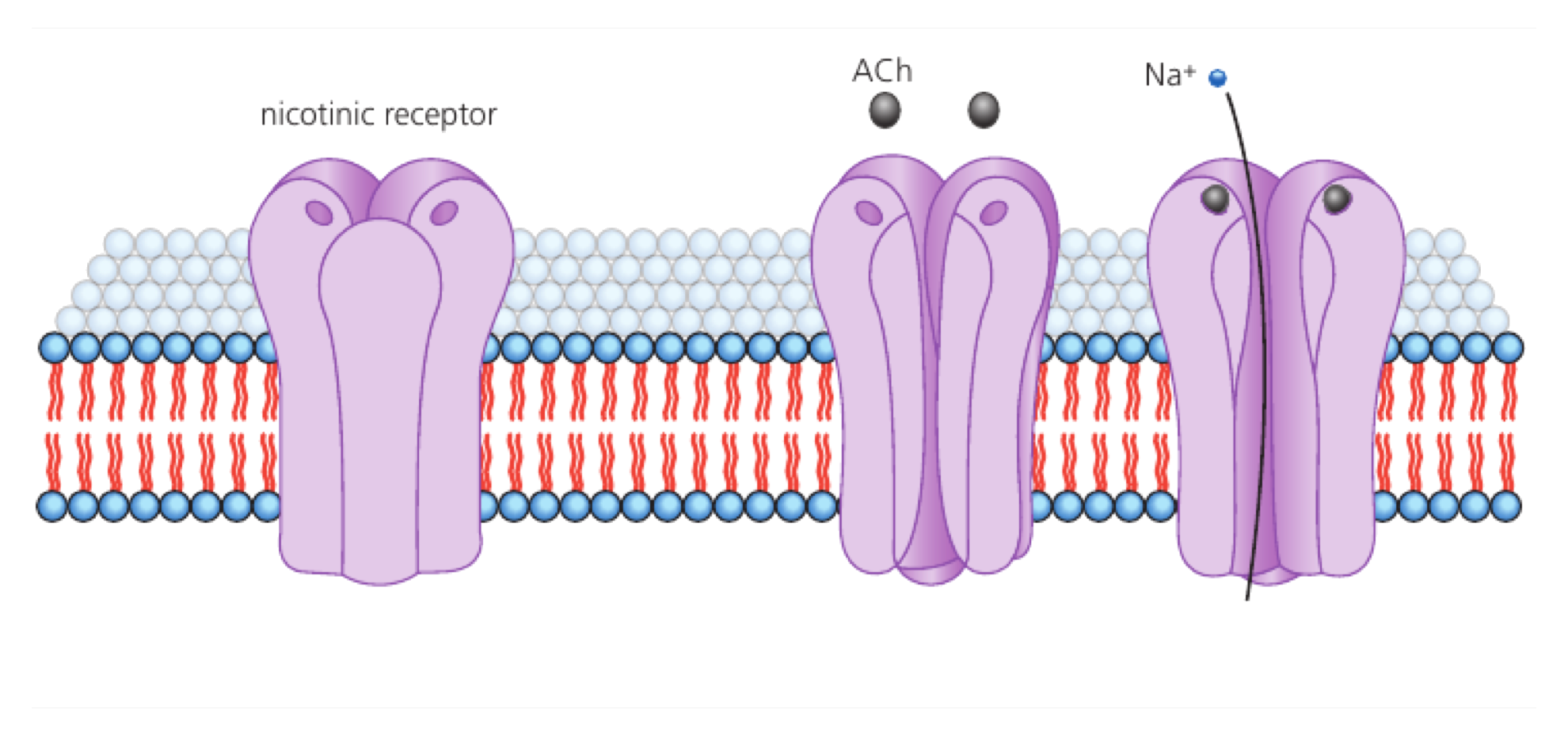
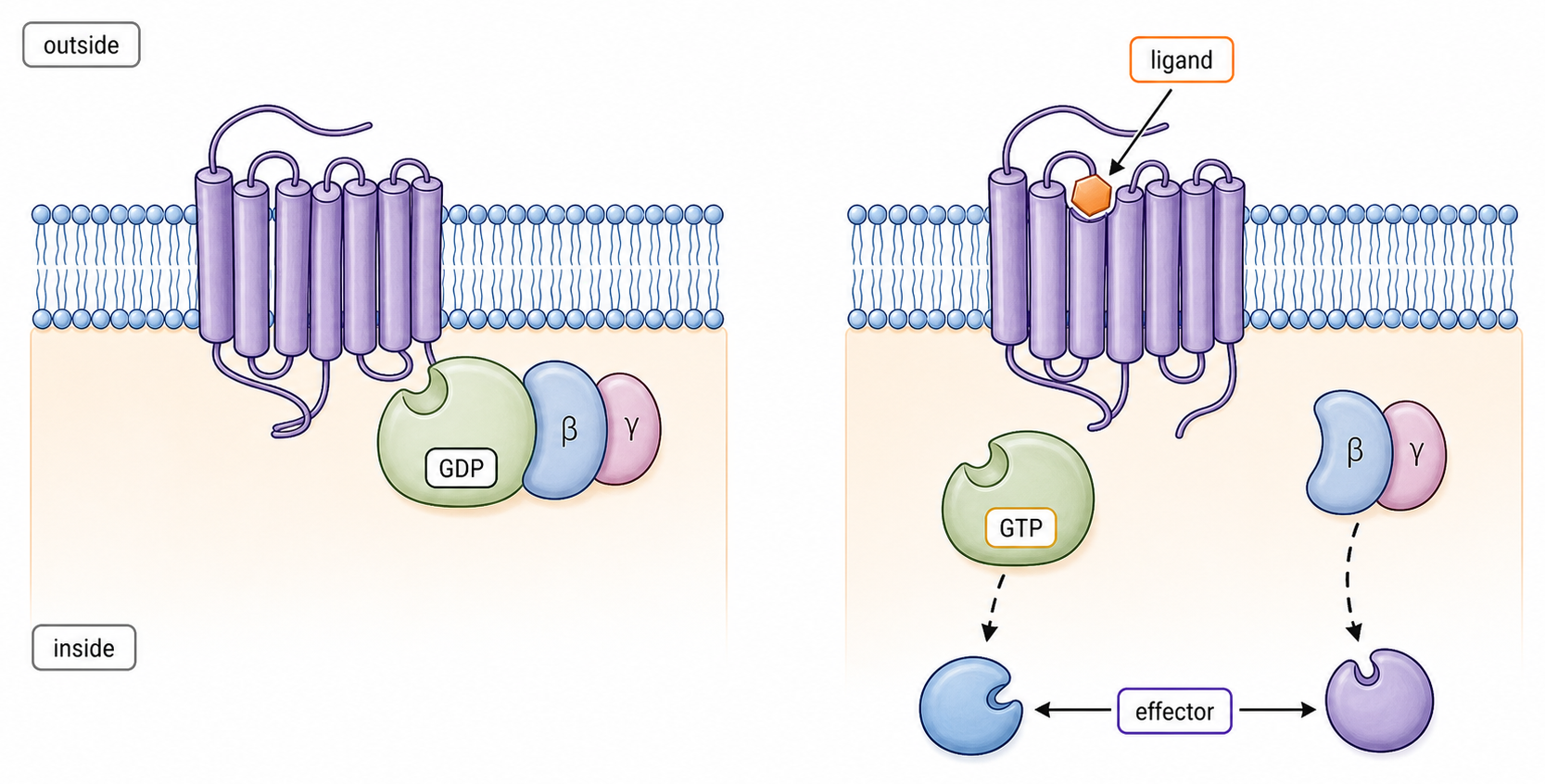
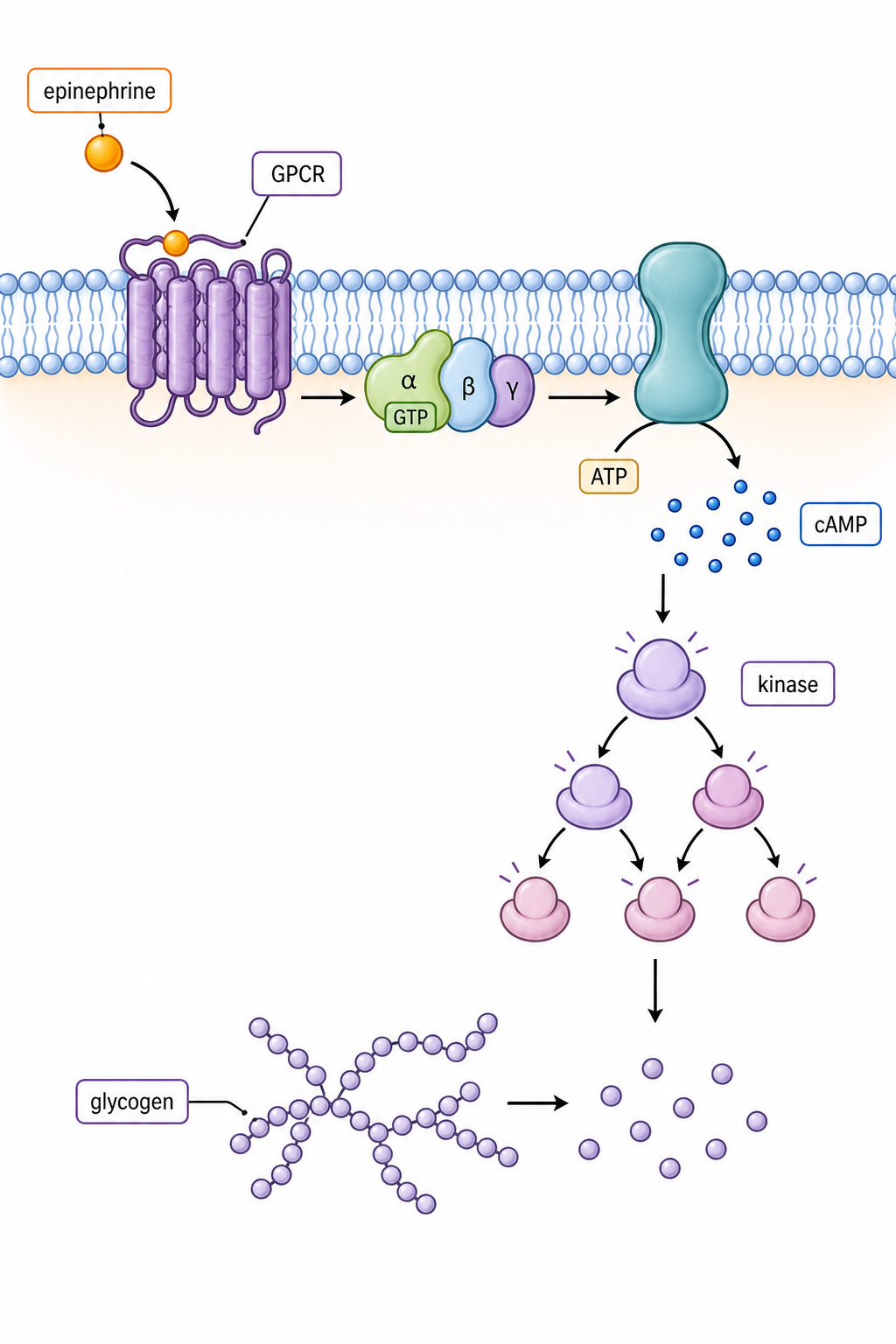
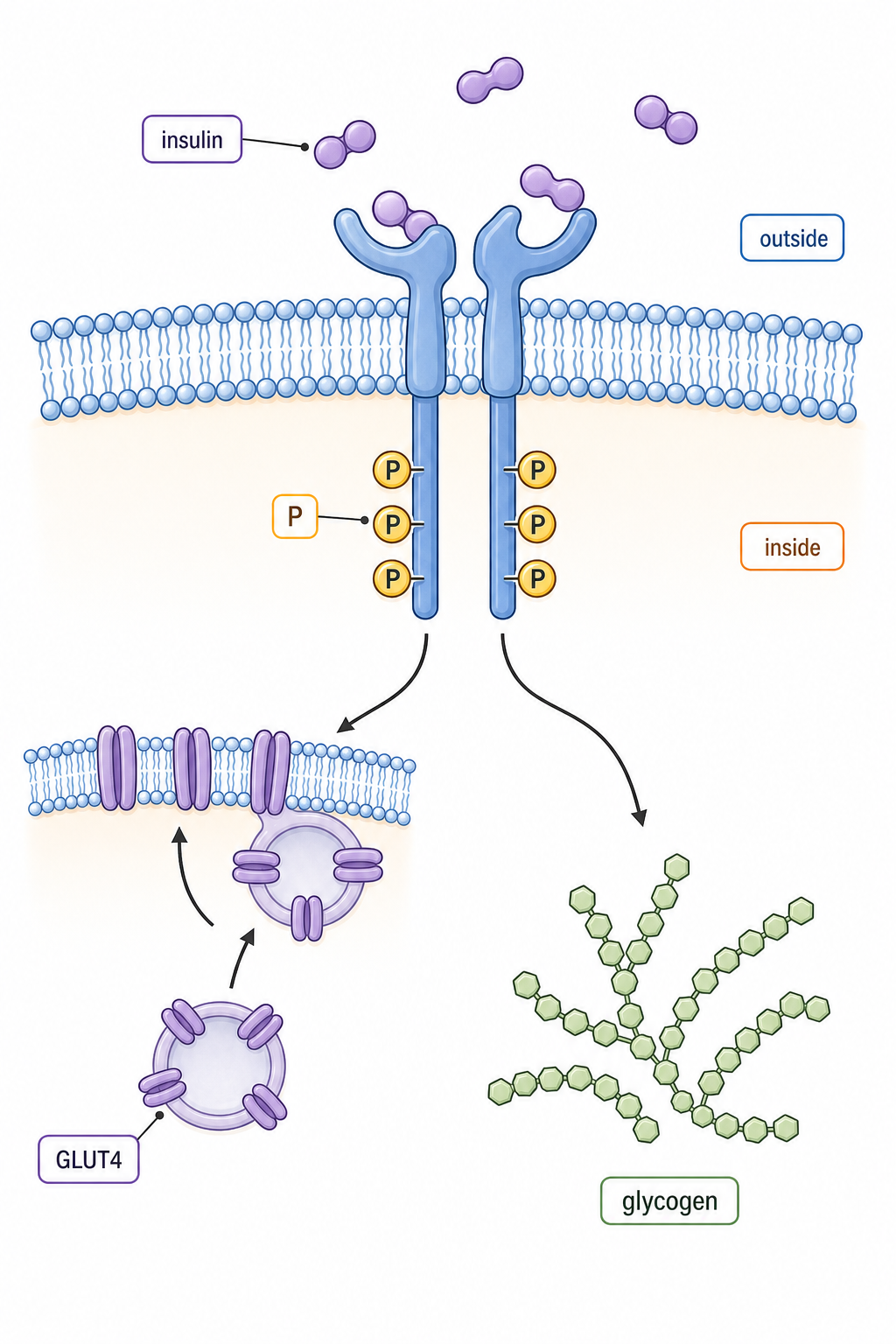
A ligand only affects target cells with the matching receptor. Quorum sensing uses autoinducers and thresholds for group behaviour. Animal signals differ by source, distance, speed, target-cell response, and chemical class. Hydrophilic ligands use transmembrane receptors and relays; steroid and thyroid hormones use intracellular receptors that affect transcription. Named pathways then show the logic: acetylcholine opens sodium channels, GPCRs switch G proteins through GDP-GTP exchange, epinephrine uses cAMP and kinase cascades, insulin RTKs use dimerisation/autophosphorylation to move GLUT4 and promote glycogenesis, steroid hormones change gene expression, and feedback either amplifies or restores stability.

  • Start every signalling answer with ligand specificity and target-cell receptor matching.
  • Then choose the route: local synapse, blood-borne hormone, transmembrane receptor, or intracellular receptor.
  • For named mechanisms, give the sequence, not just the pathway name.
  • Finish feedback comparisons with amplification versus stability.

Concept essentials

  • Oestradiol and progesterone are steroid hormones.
  • They bind intracellular receptors in target cells.
  • Their receptor complexes regulate transcription of selected genes.
  • These hormones coordinate reproductive tissue changes and feedback control.