C2.1.8 (HL)—Neurotransmitter receptors and membrane potential

Neurotransmitter receptors on postsynaptic membranes control whether transmitter binding changes membrane potential or is blocked by antagonists, linking signal detection to a specific target-cell response.

Syllabus
First assessment 2025
Objective
C2.1.8
Level
HL

Exam analysis

Chance of appearing1%of analysed past papers
Latest appearanceNovember 2022
Most common paperPaper1
Typical marks1

Recent exam appearances

November 2022Paper1 ["HL"] · TZ024[ 1 ]C2.1.8 (HL)—Neurotransmitter receptors and membrane potential
Practice this objective

Coverage 2022–2022 · Updated 15 Jul 2026

Neurotransmitter Receptors Change Membrane Potential

HL only

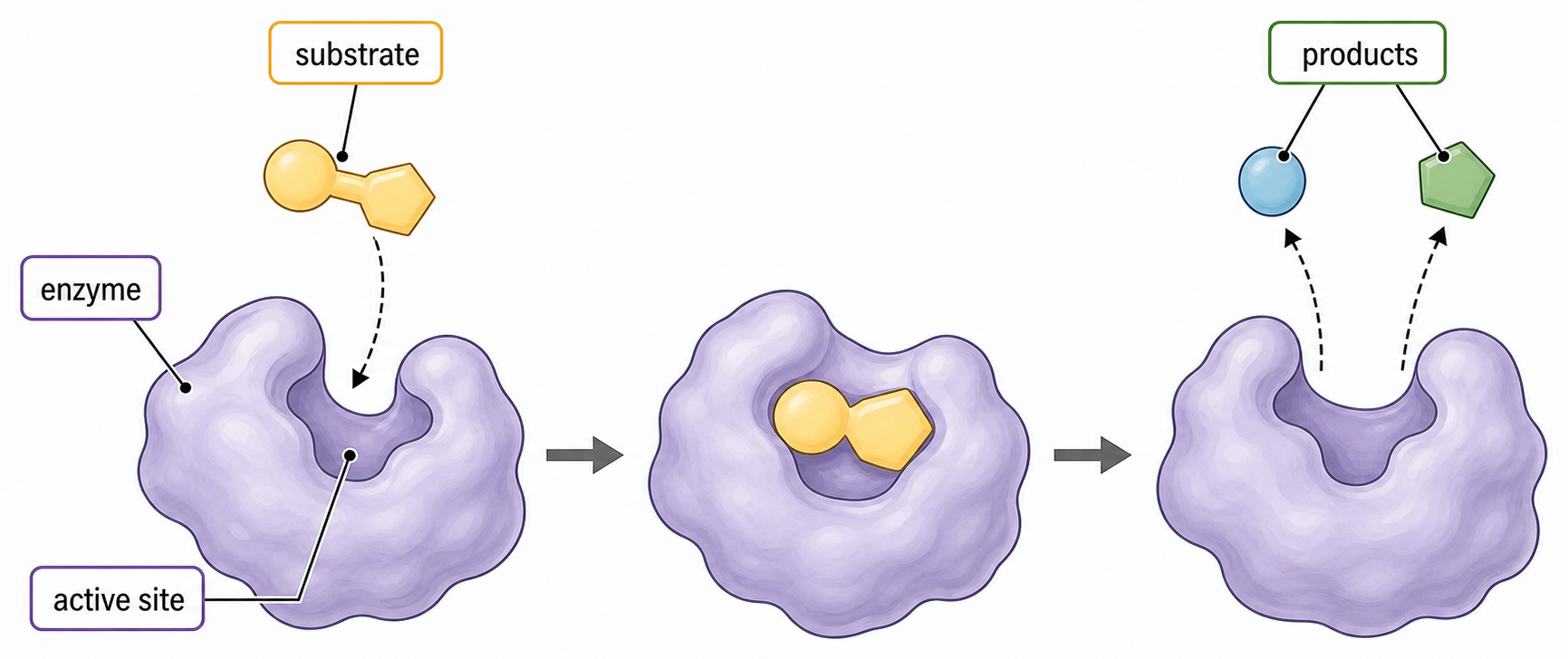
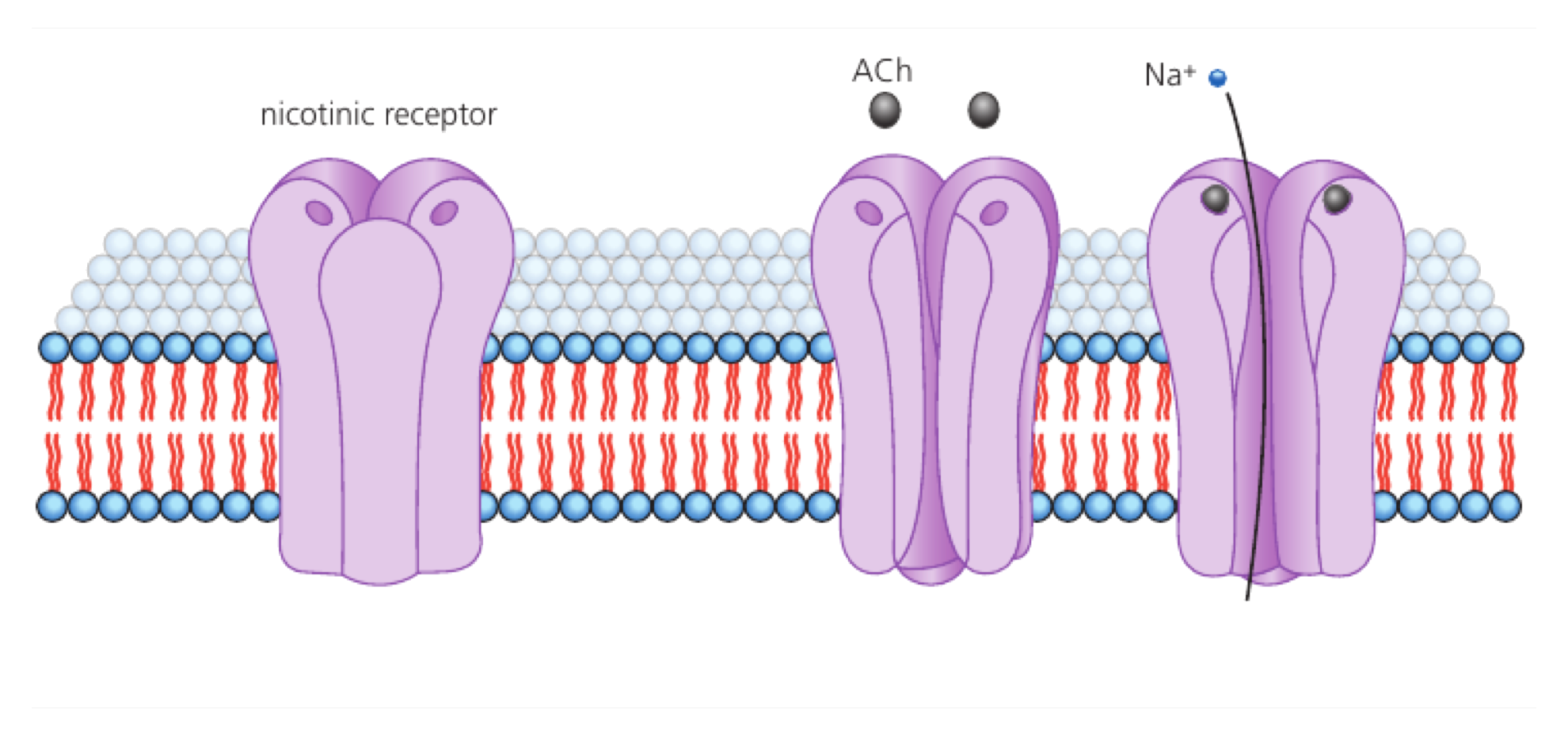
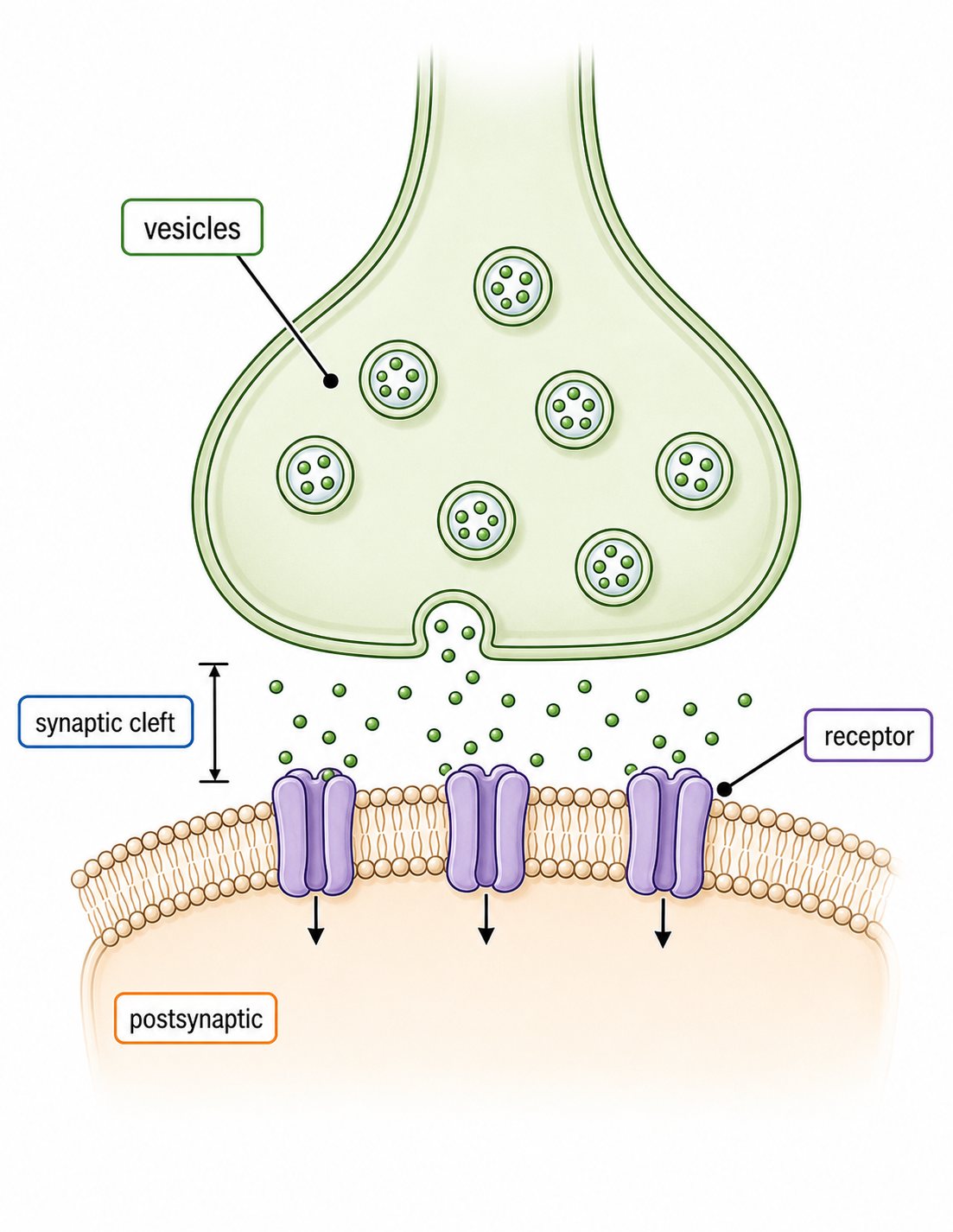
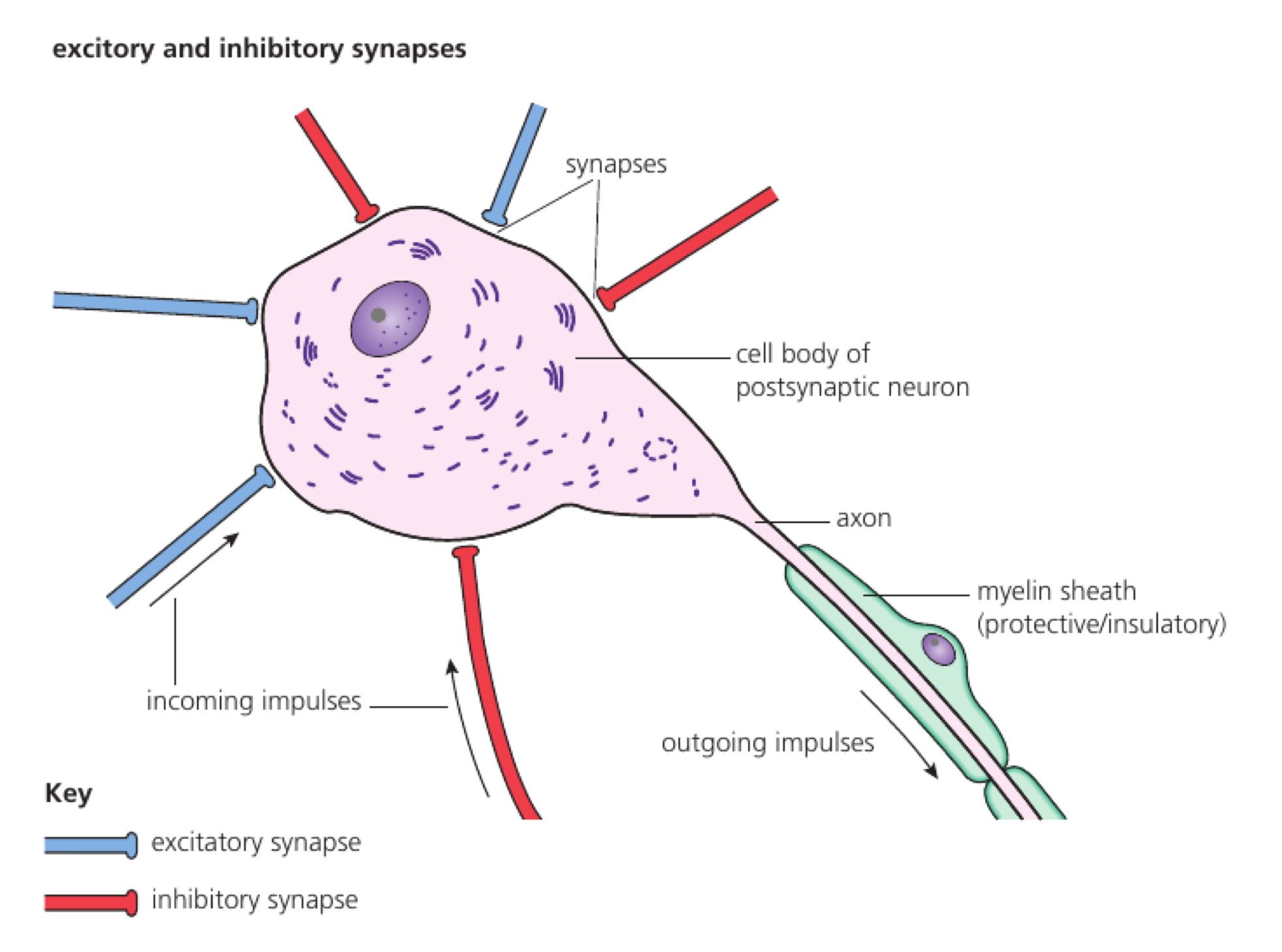
Acetylcholine binds a transmembrane receptor that is also a ligand-gated ion channel in the postsynaptic membrane.

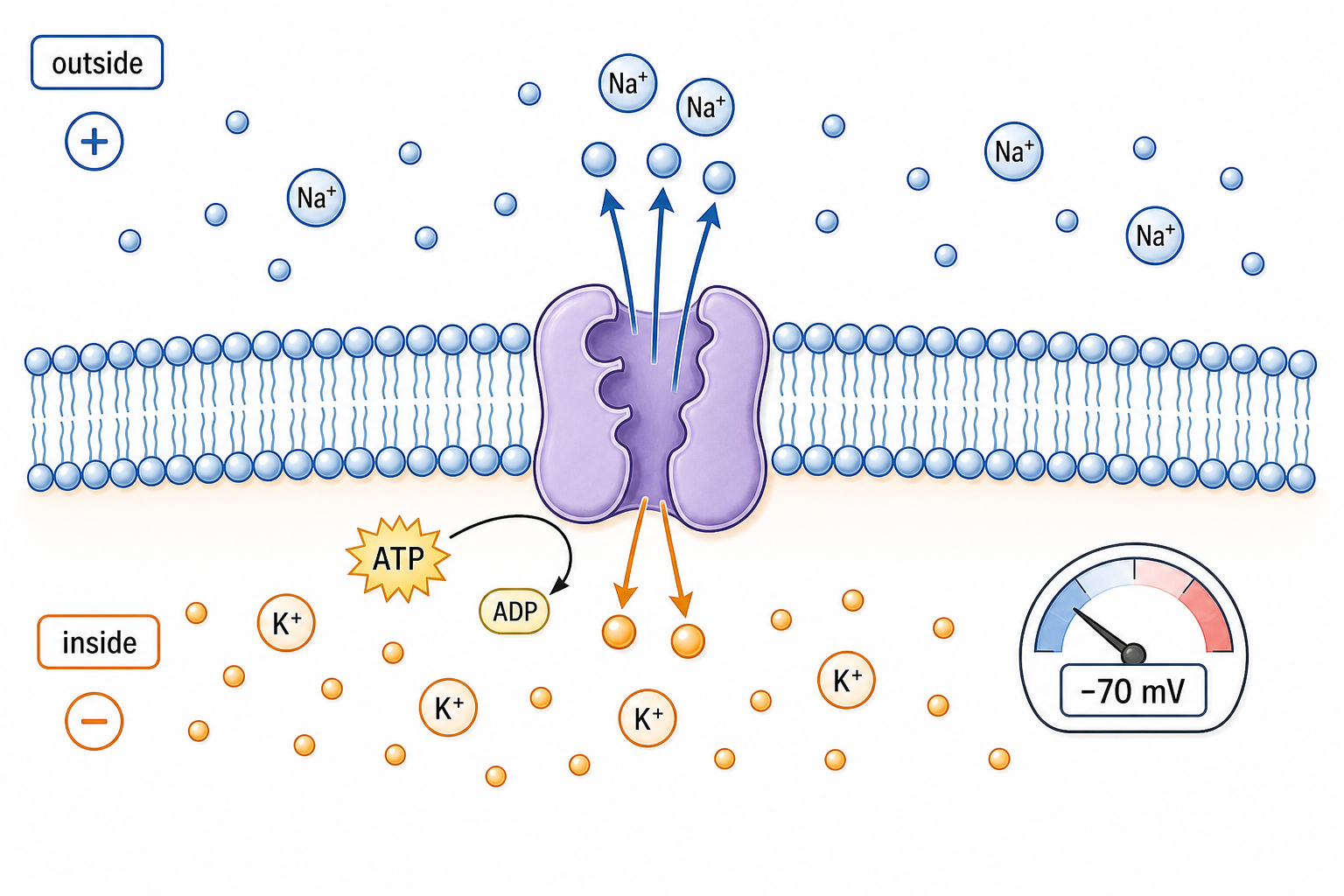
Ligand binding changes the receptor's conformation and opens the channel. Positively charged ions diffuse into the postsynaptic cell down their electrochemical gradient, making the inside less negative and changing membrane potential.

Sequence: acetylcholine binds → receptor channel opens → positive ions enter → postsynaptic membrane depolarizes → the voltage change may trigger further events.
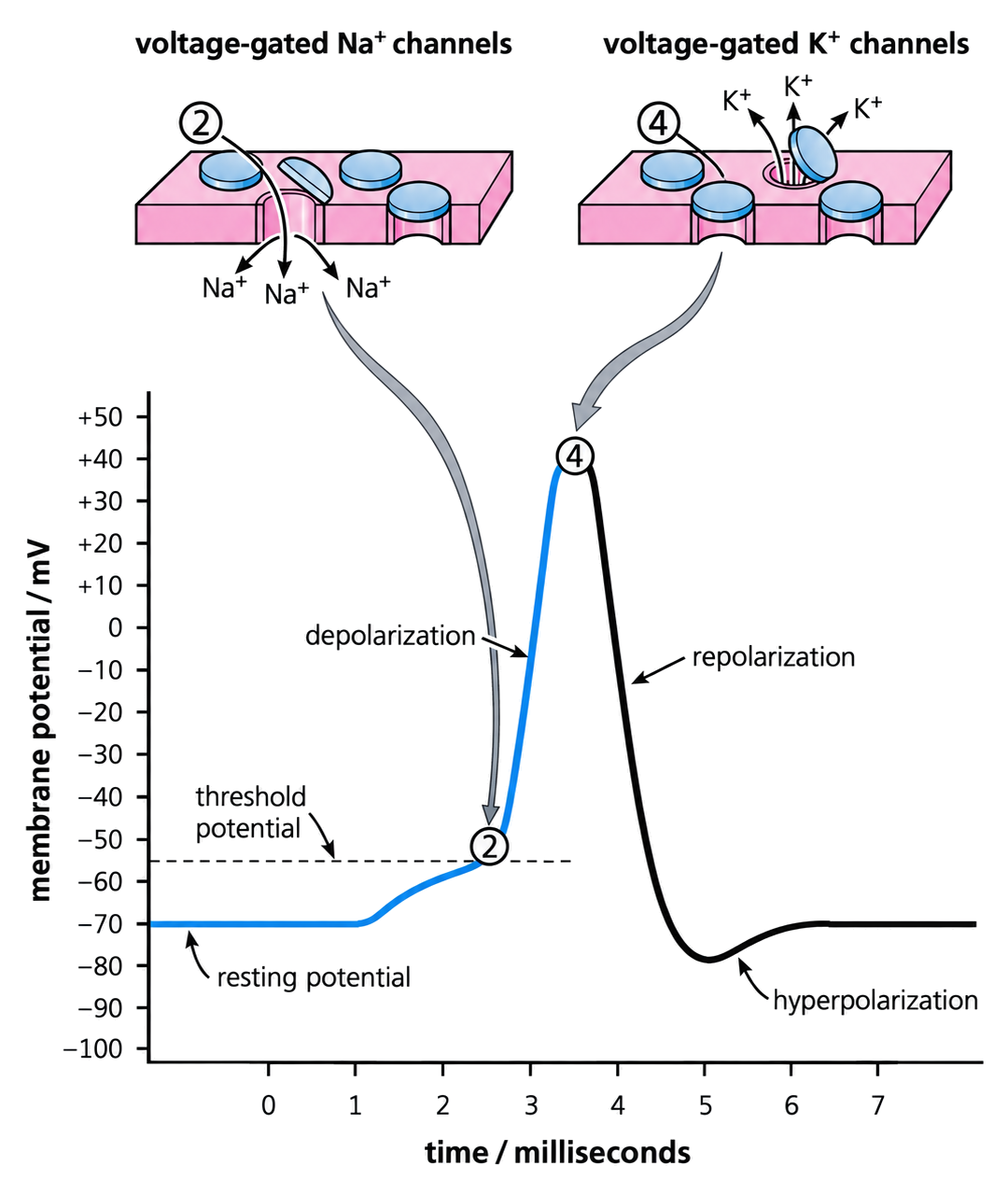
At a cholinergic synapse, opening acetylcholine-receptor channels produces a local depolarization; if combined depolarization reaches threshold, a postsynaptic action potential can follow.
Acetylcholine does not itself cross the membrane or carry charge into the cell. It opens a receptor channel; ion diffusion causes the voltage change.

Neurotransmitter receptors and membrane potential

HL only

Assessment in practice

1 marks
How it is assessed

This objective is assessed through multiple choice.

What earns marks

Build the answer around this relationship: Neurotransmitters bind receptors on the postsynaptic membrane.

Representative question

Question 1

[Maximum number: 1]

Atropine drops are used by opticians to dilate the pupil, so that a thorough examination of the retina can be performed. Atropine binds to acetylcholine receptors in synapses.

What is the effect of atropine binding in synapses?

A

Inhibits the binding of acetylcholine at the presynaptic membrane

B

Inhibits the release of acetylcholine from the presynaptic neuron

C

Prevents binding of acetylcholine at the postsynaptic membrane

D

Prevents transport of acetylcholine through the postsynaptic membrane

Chemical Signalling

HL only

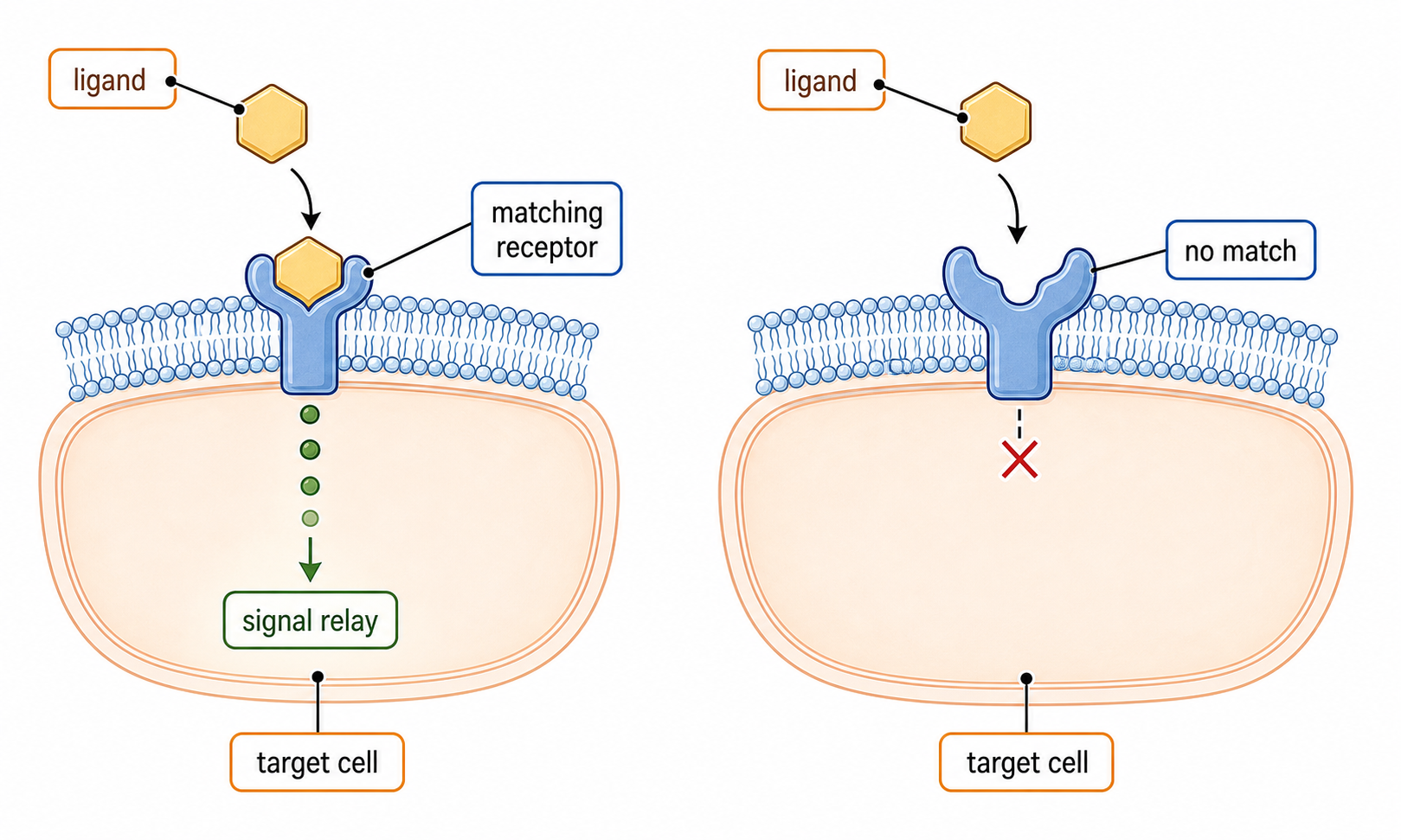
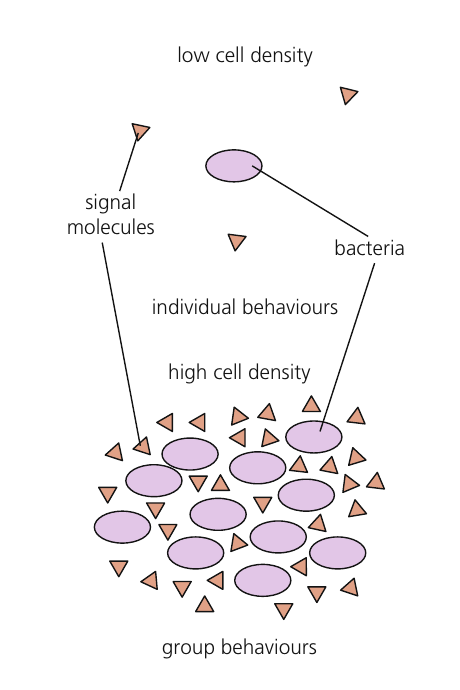
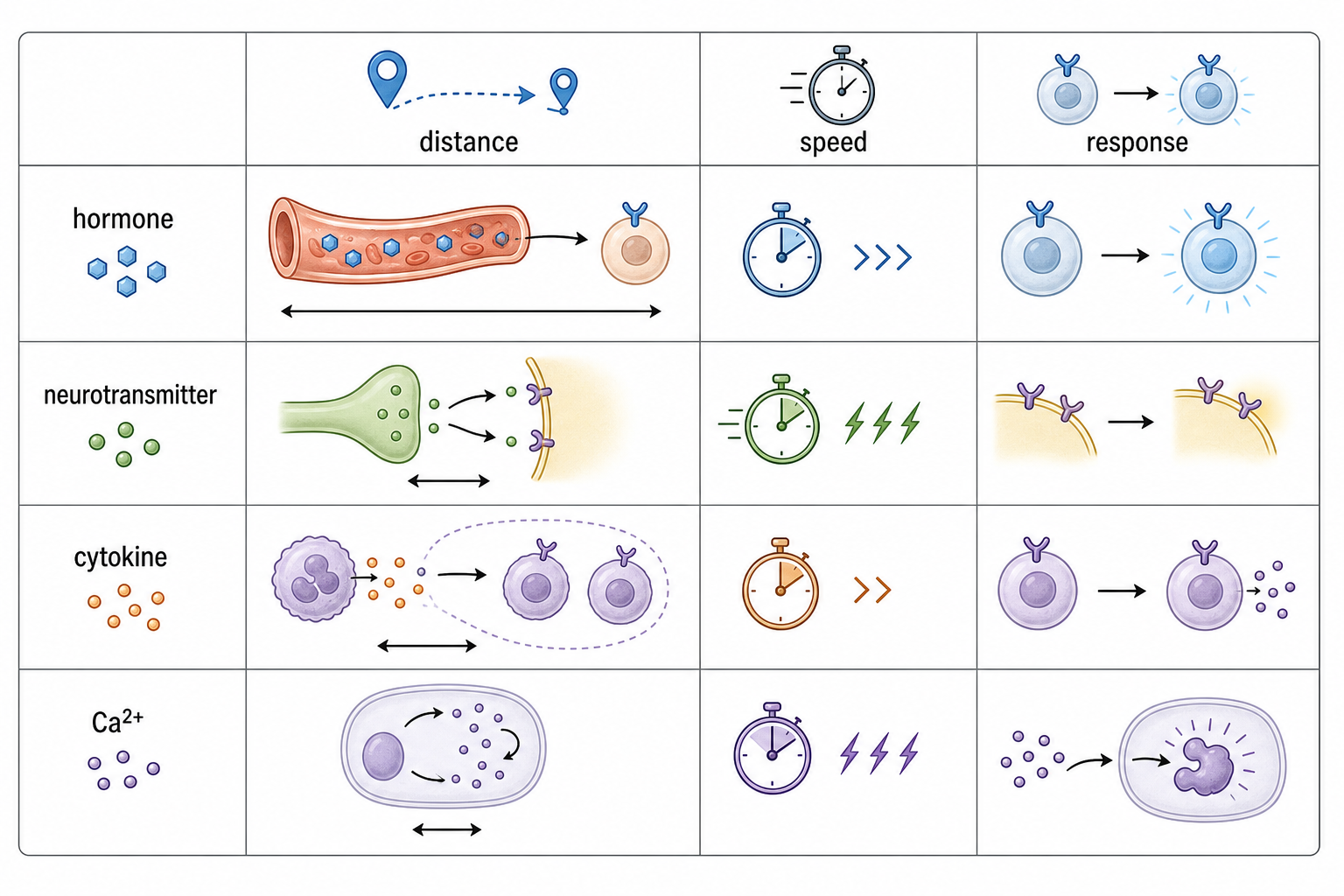
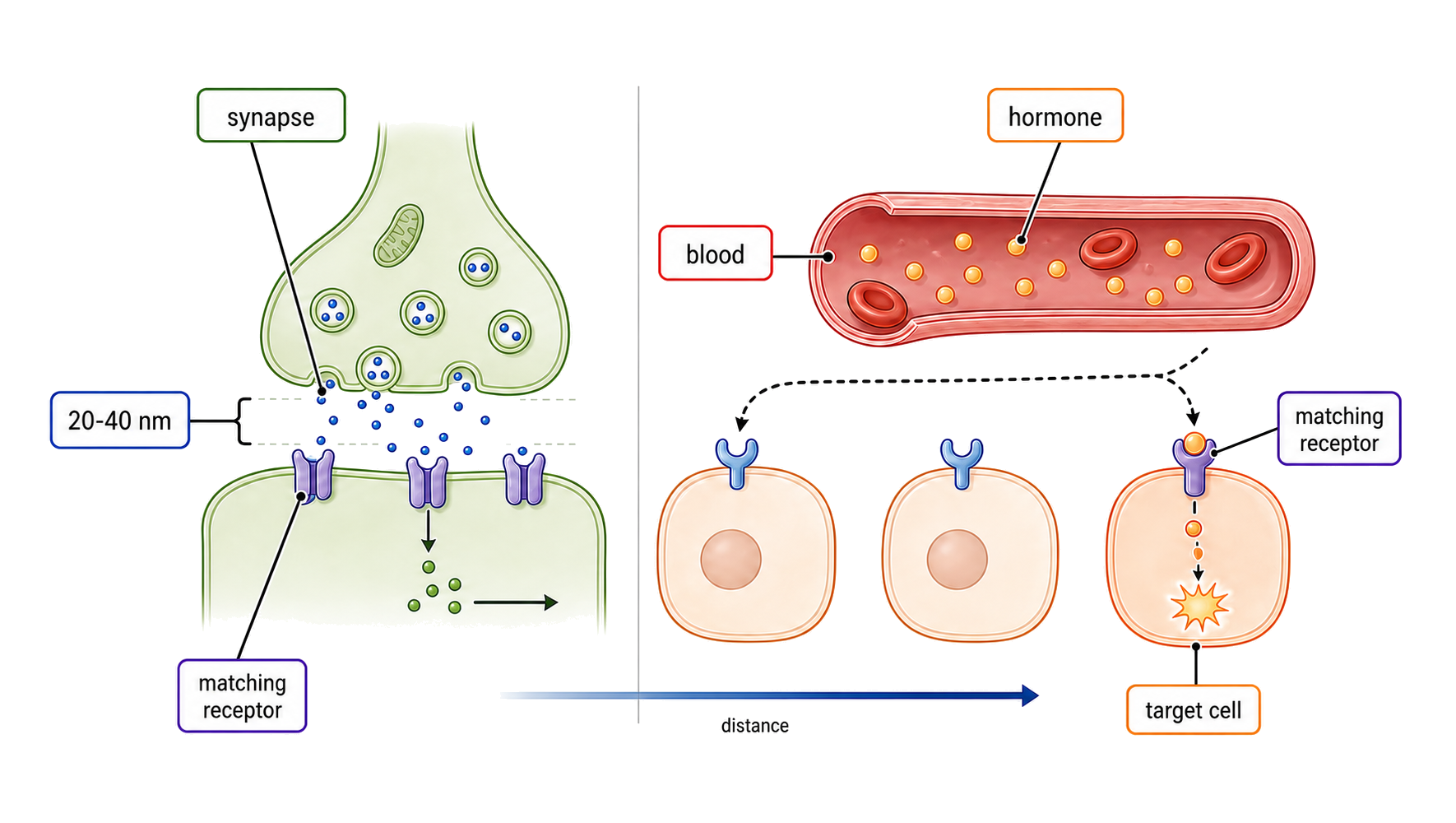
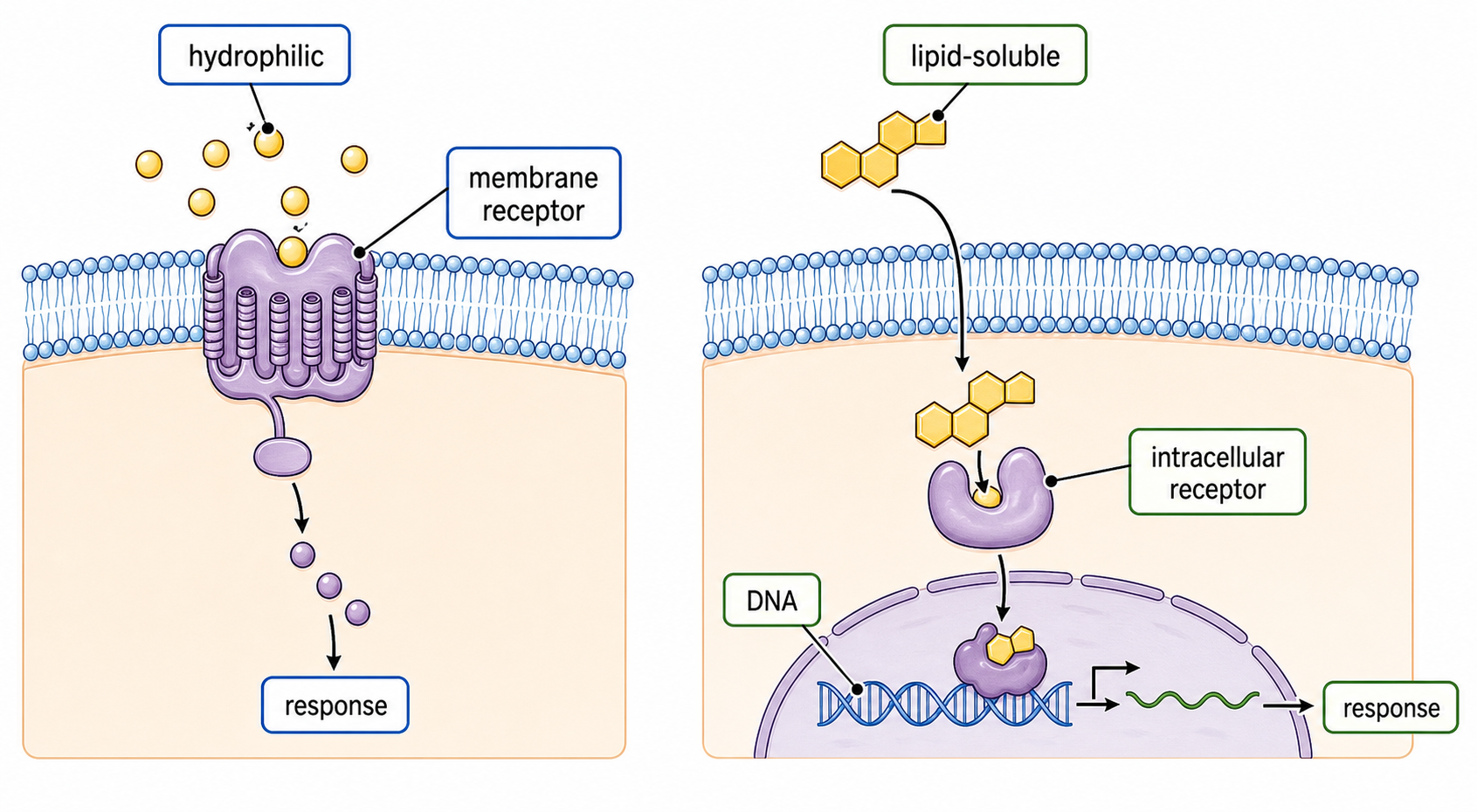
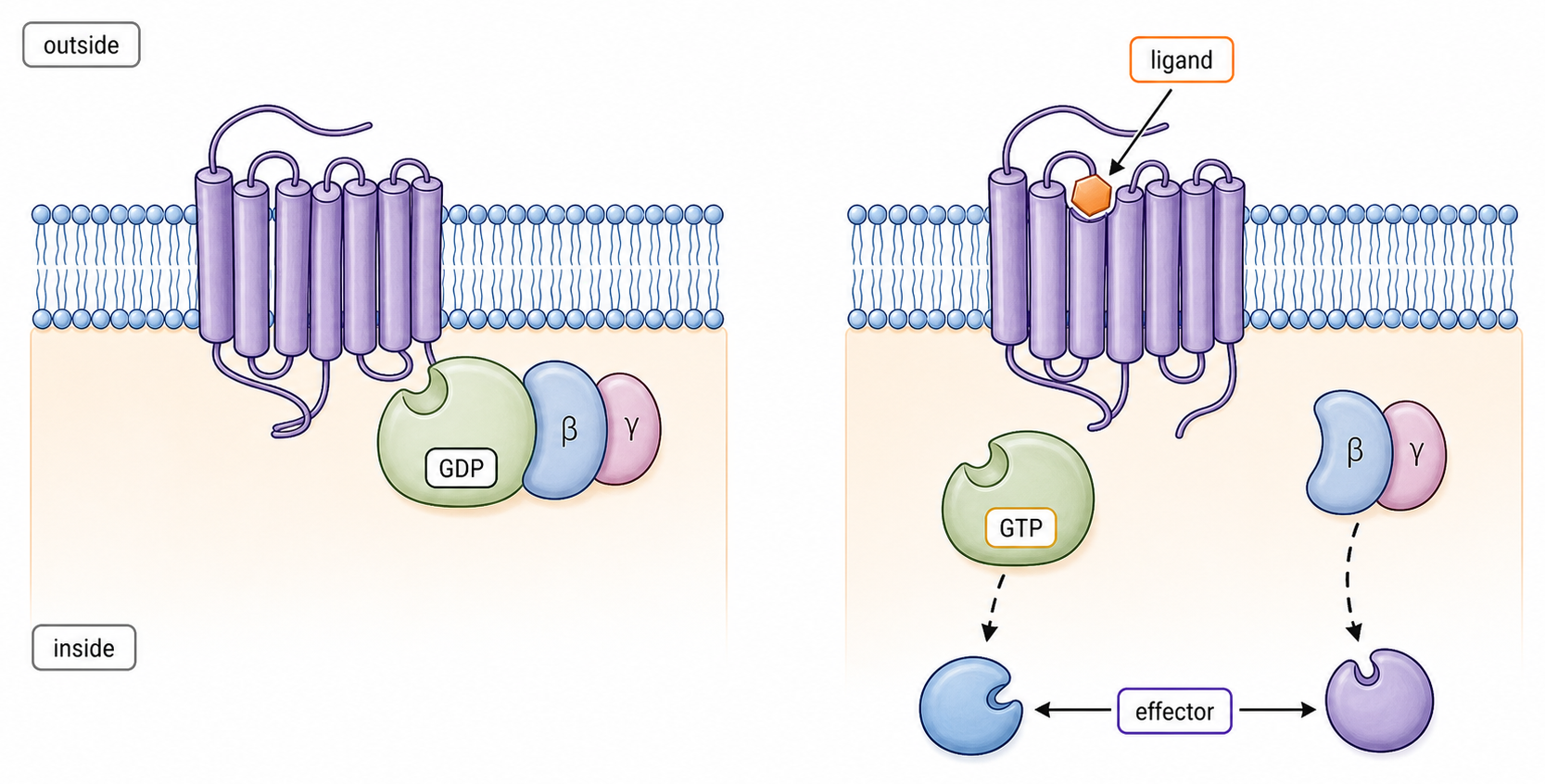
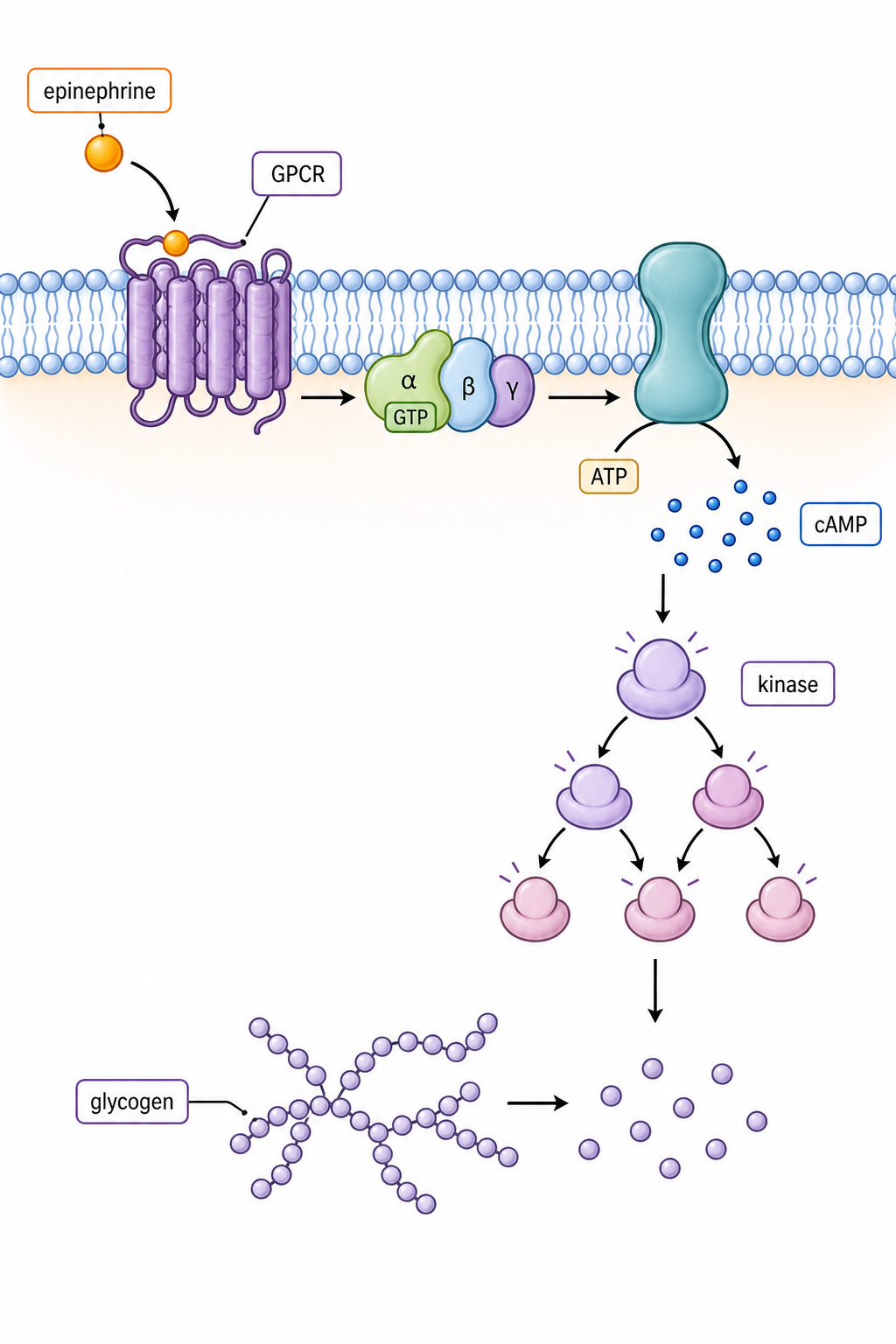
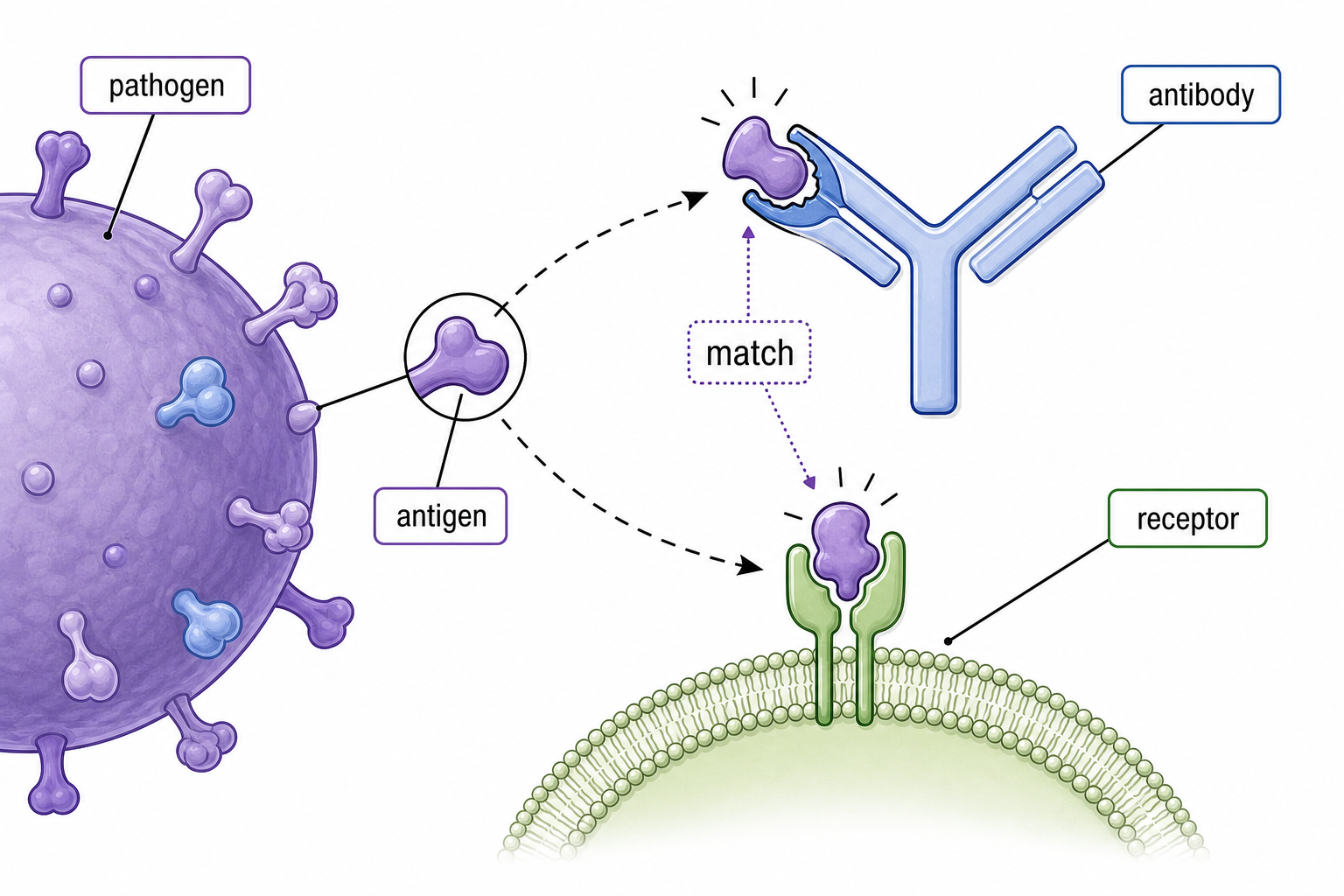
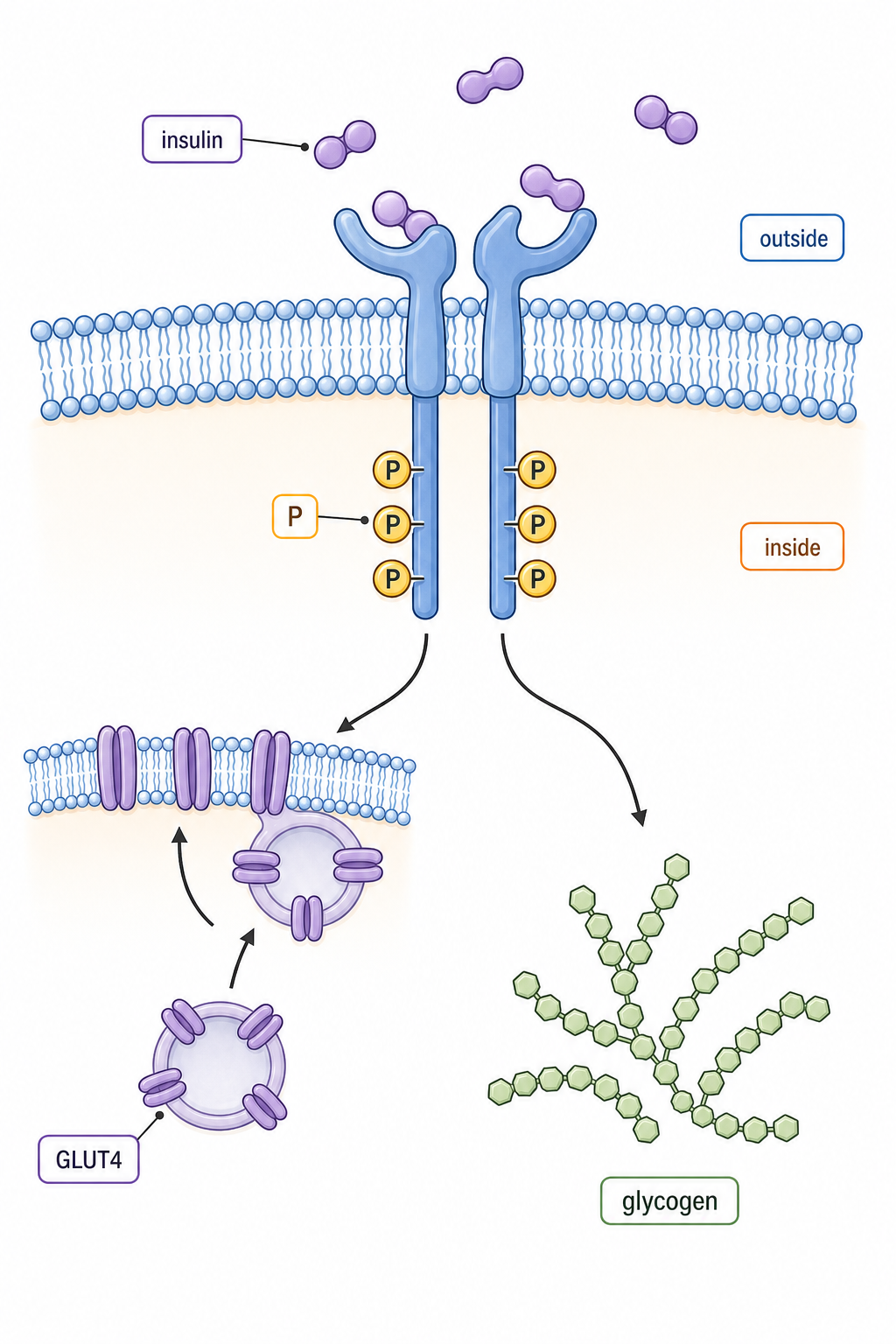
A ligand only affects target cells with the matching receptor. Quorum sensing uses autoinducers and thresholds for group behaviour. Animal signals differ by source, distance, speed, target-cell response, and chemical class. Hydrophilic ligands use transmembrane receptors and relays; steroid and thyroid hormones use intracellular receptors that affect transcription. Named pathways then show the logic: acetylcholine opens sodium channels, GPCRs switch G proteins through GDP-GTP exchange, epinephrine uses cAMP and kinase cascades, insulin RTKs use dimerisation/autophosphorylation to move GLUT4 and promote glycogenesis, steroid hormones change gene expression, and feedback either amplifies or restores stability.

  • Start every signalling answer with ligand specificity and target-cell receptor matching.
  • Then choose the route: local synapse, blood-borne hormone, transmembrane receptor, or intracellular receptor.
  • For named mechanisms, give the sequence, not just the pathway name.
  • Finish feedback comparisons with amplification versus stability.

Concept essentials

  • Neurotransmitters bind receptors on the postsynaptic membrane.
  • Receptor activation can alter ion movement and membrane potential.
  • Atropine blocks acetylcholine binding at postsynaptic receptors.
  • Blocking a receptor can interrupt synaptic signalling without stopping neurotransmitter release.