C2.1.9 (HL)—G protein-coupled receptors

G protein-coupled receptors activate G proteins after ligand binding, linking membrane reception to intracellular second-messenger pathways, linking signal detection to a specific target-cell response.

Syllabus
First assessment 2025
Objective
C2.1.9
Level
HL

G Protein-coupled Receptors Relay through G Proteins

HL only

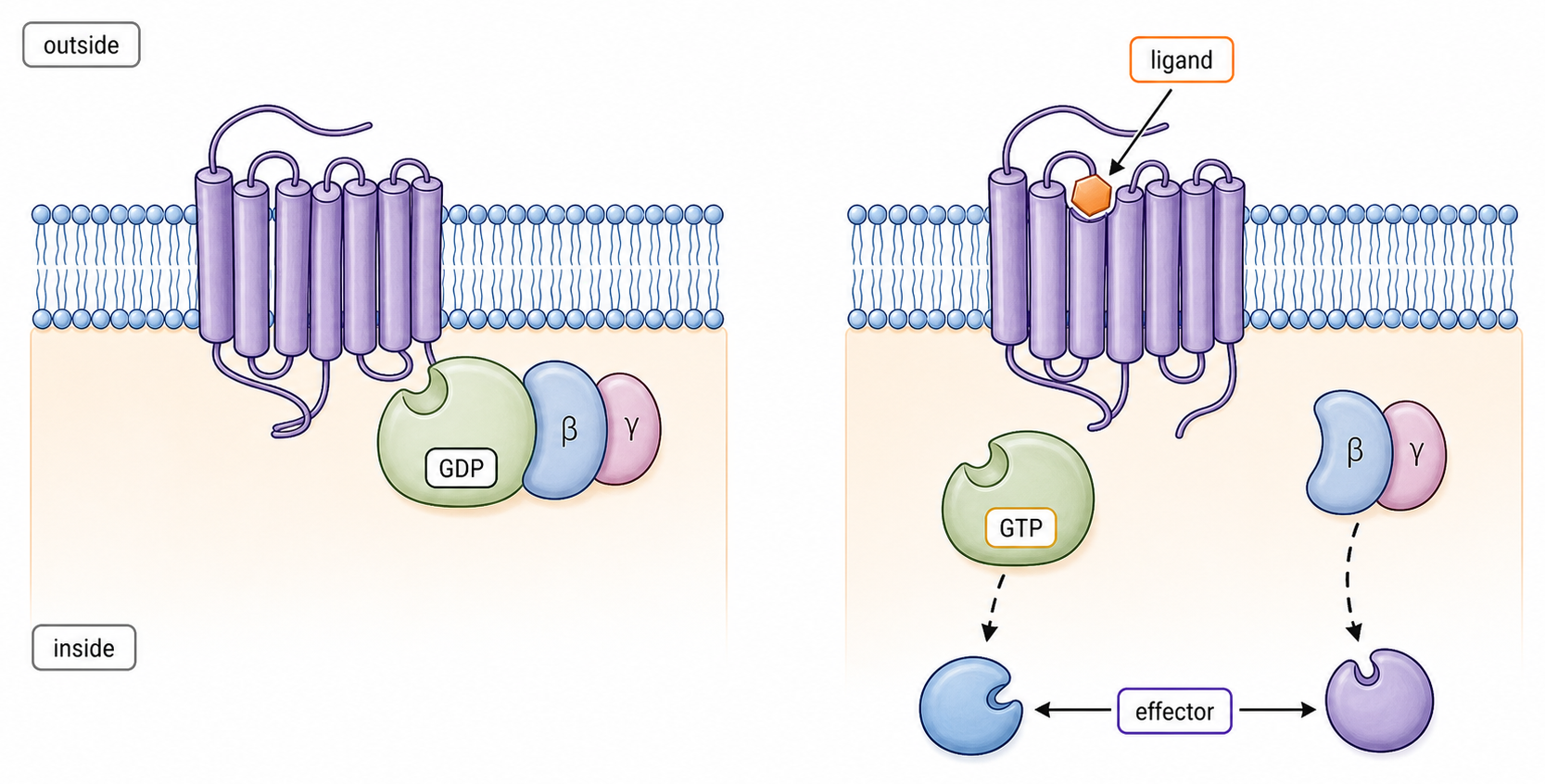
A G protein-coupled receptor (GPCR) is a transmembrane receptor that conveys ligand binding into the cell by activating a membrane-associated G protein.

Ligand binding changes the receptor's conformation. The activated receptor promotes exchange of GDP for GTP on the G protein; an activated G-protein subunit then regulates an effector protein such as an enzyme or ion channel.

Many human receptors use this mechanism. Sequence: ligand binds GPCR → GDP is replaced by GTP on G protein → active subunit changes an effector → intracellular response follows.
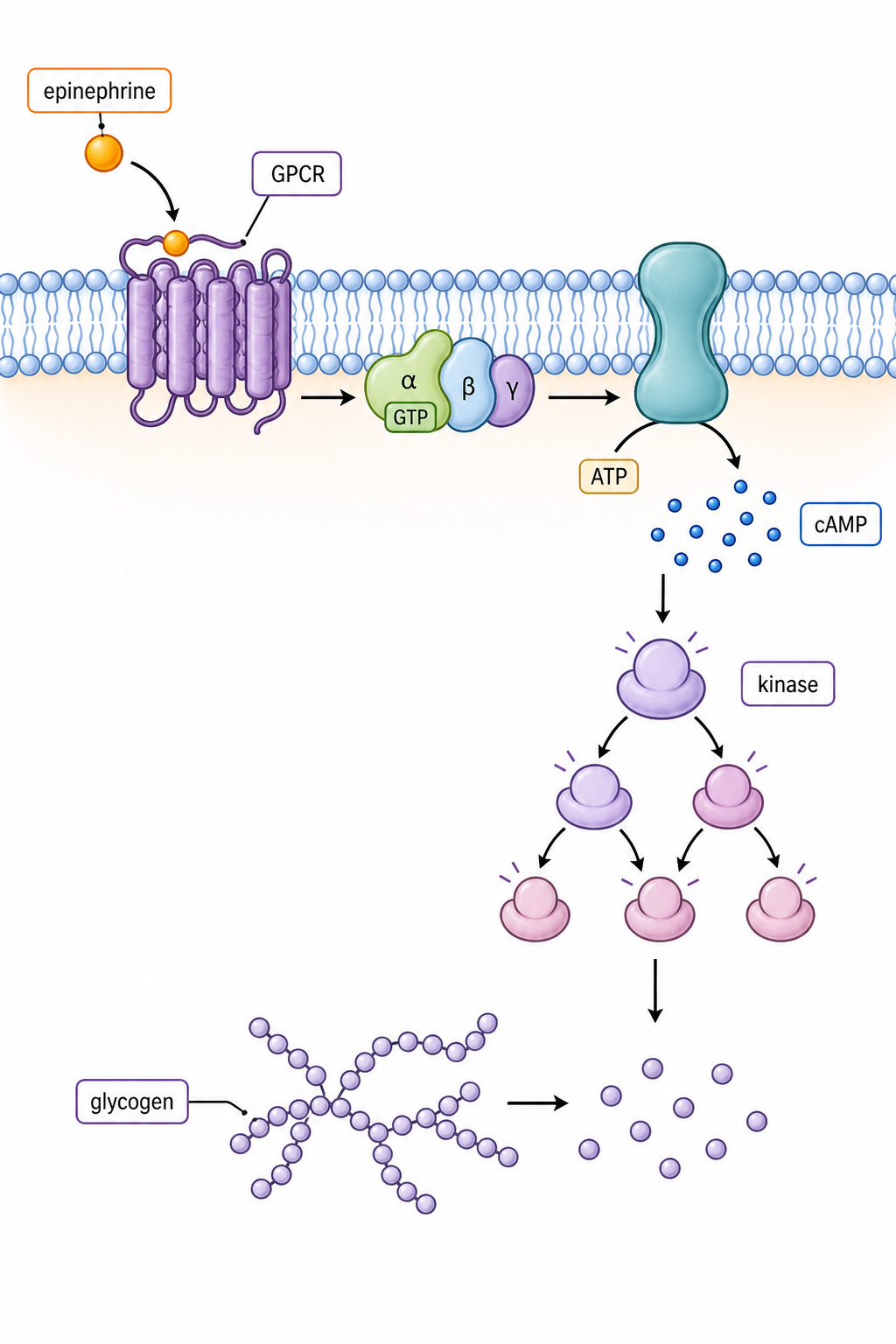
A G-protein subunit can activate adenylyl cyclase, which generates the second messenger cAMP and thereby relays the external signal to intracellular targets.
The GPCR relays the signal without entering the cell. GTP is a switch on the G protein; it is not the extracellular ligand or the second messenger cAMP.

Chemical Signalling

HL only

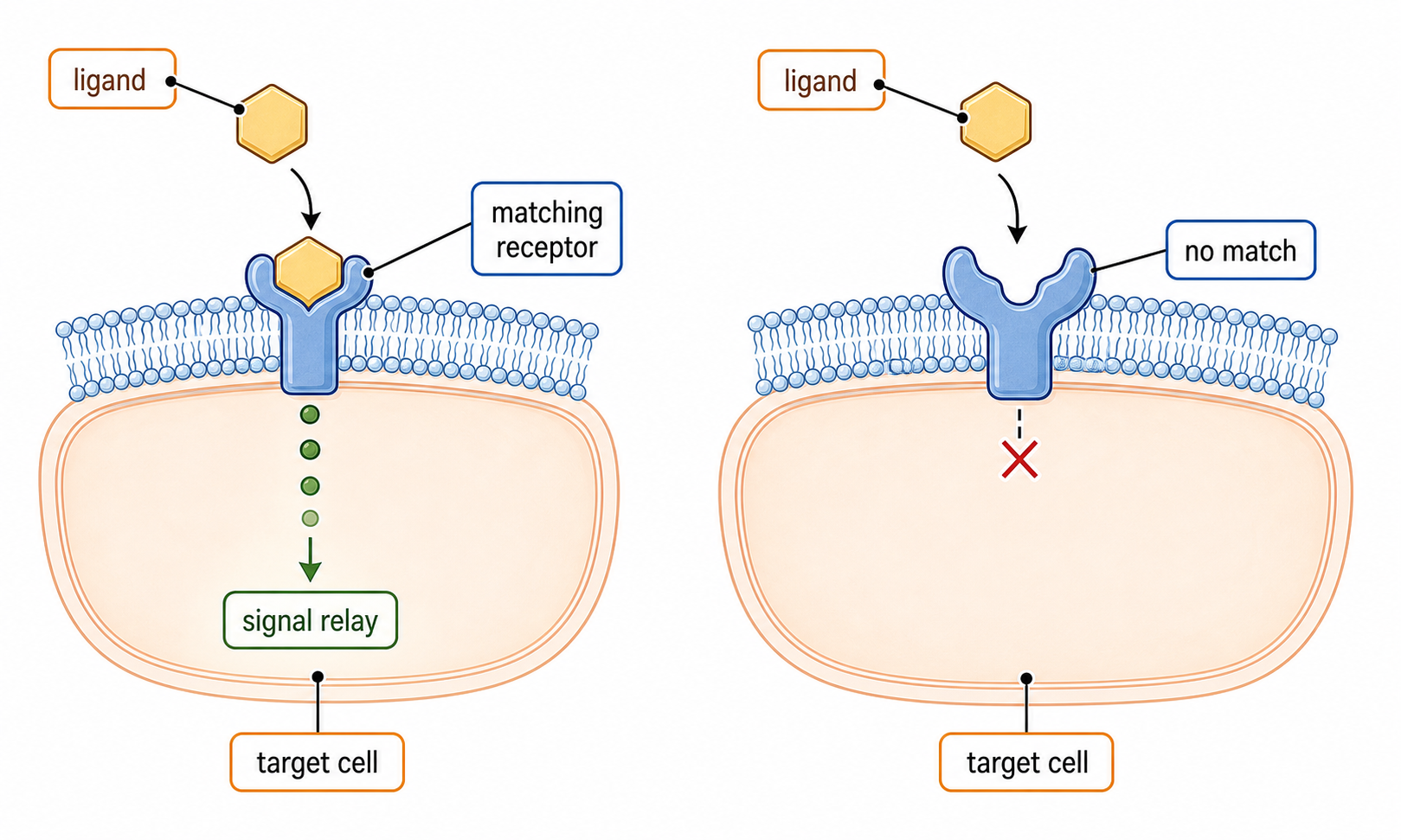
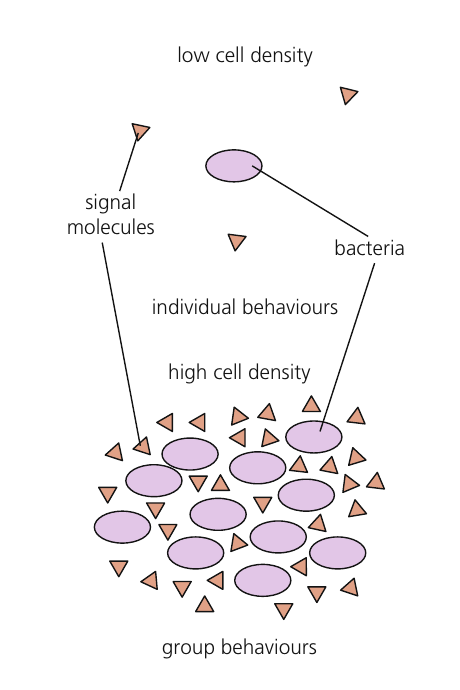
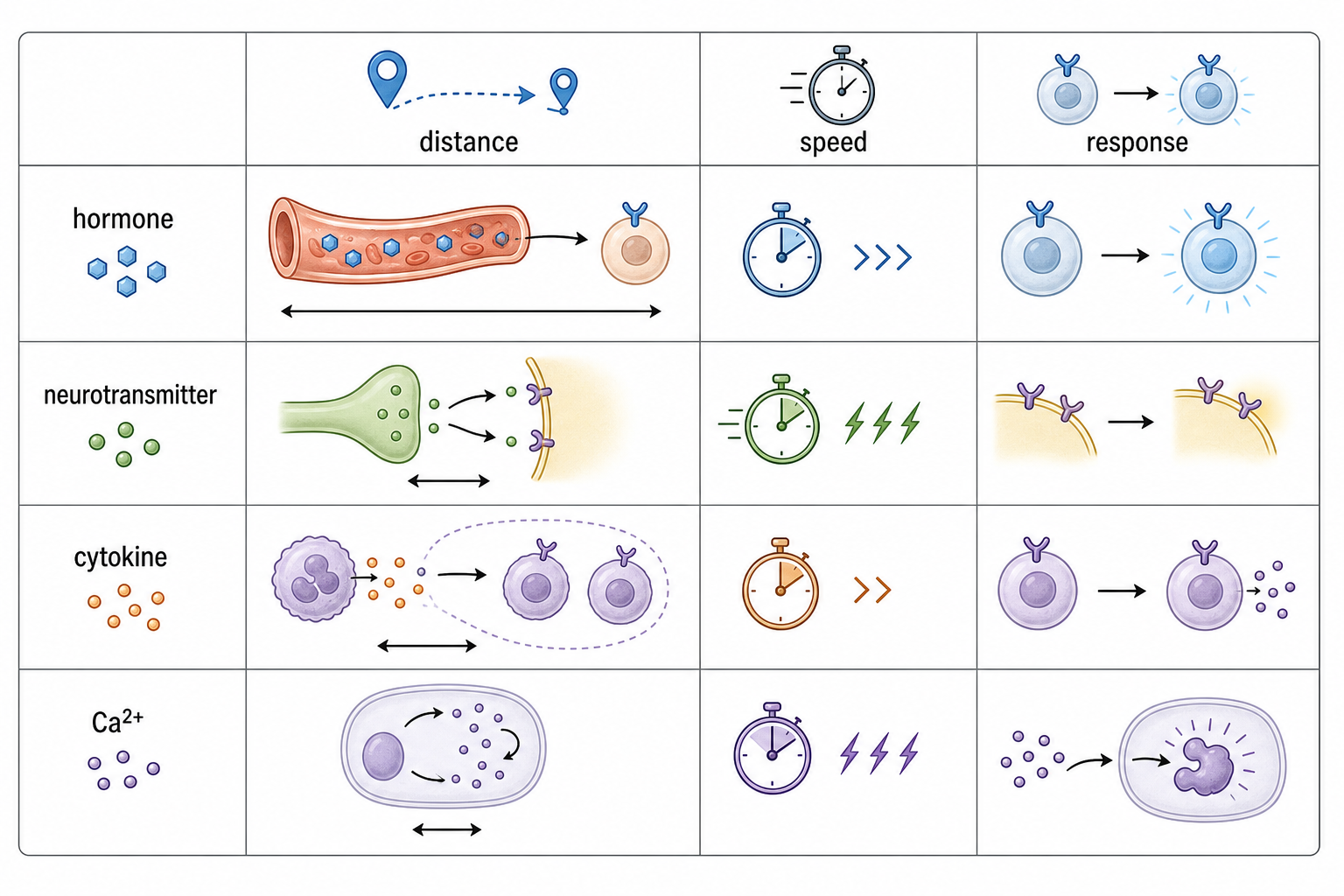
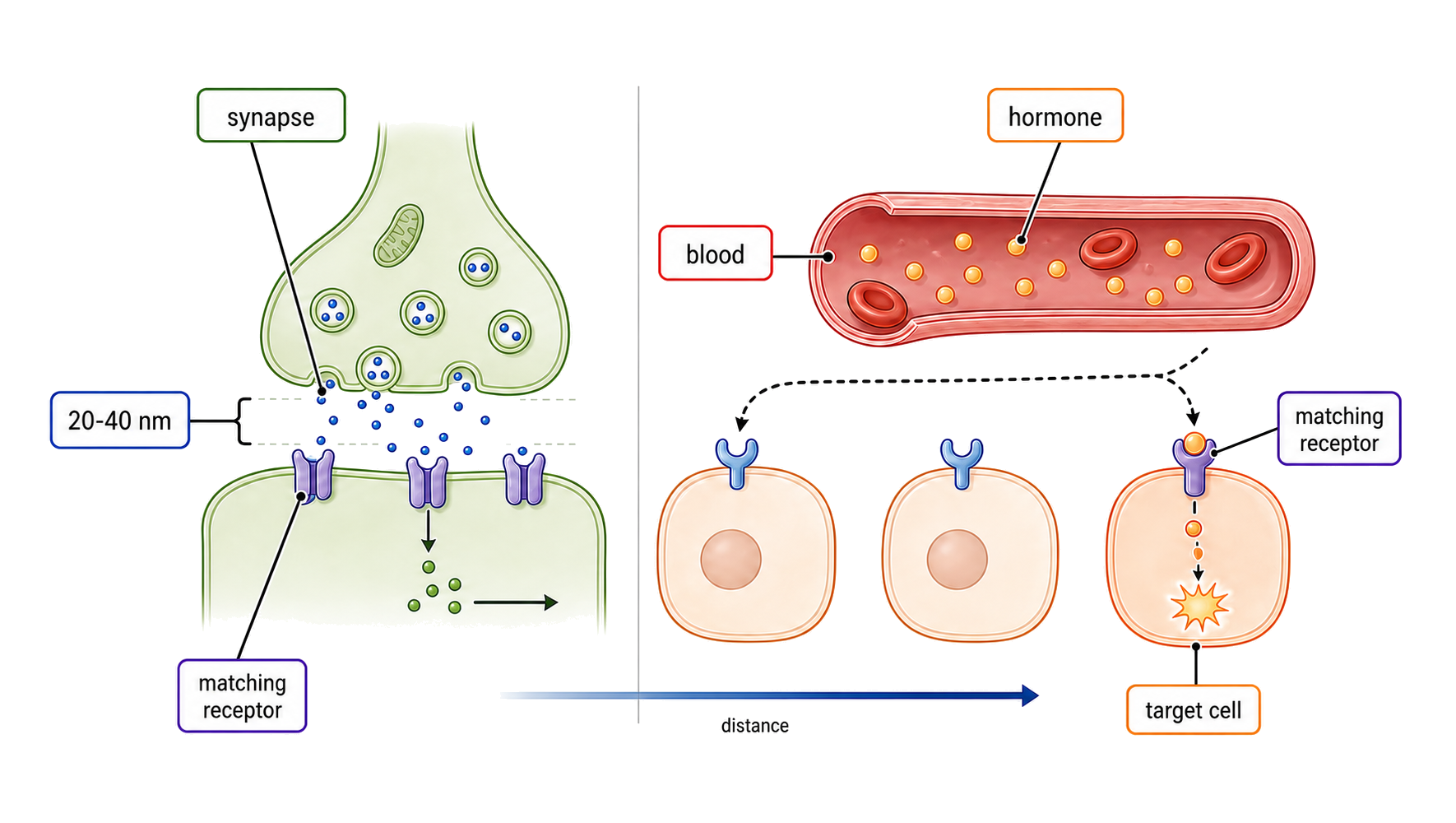
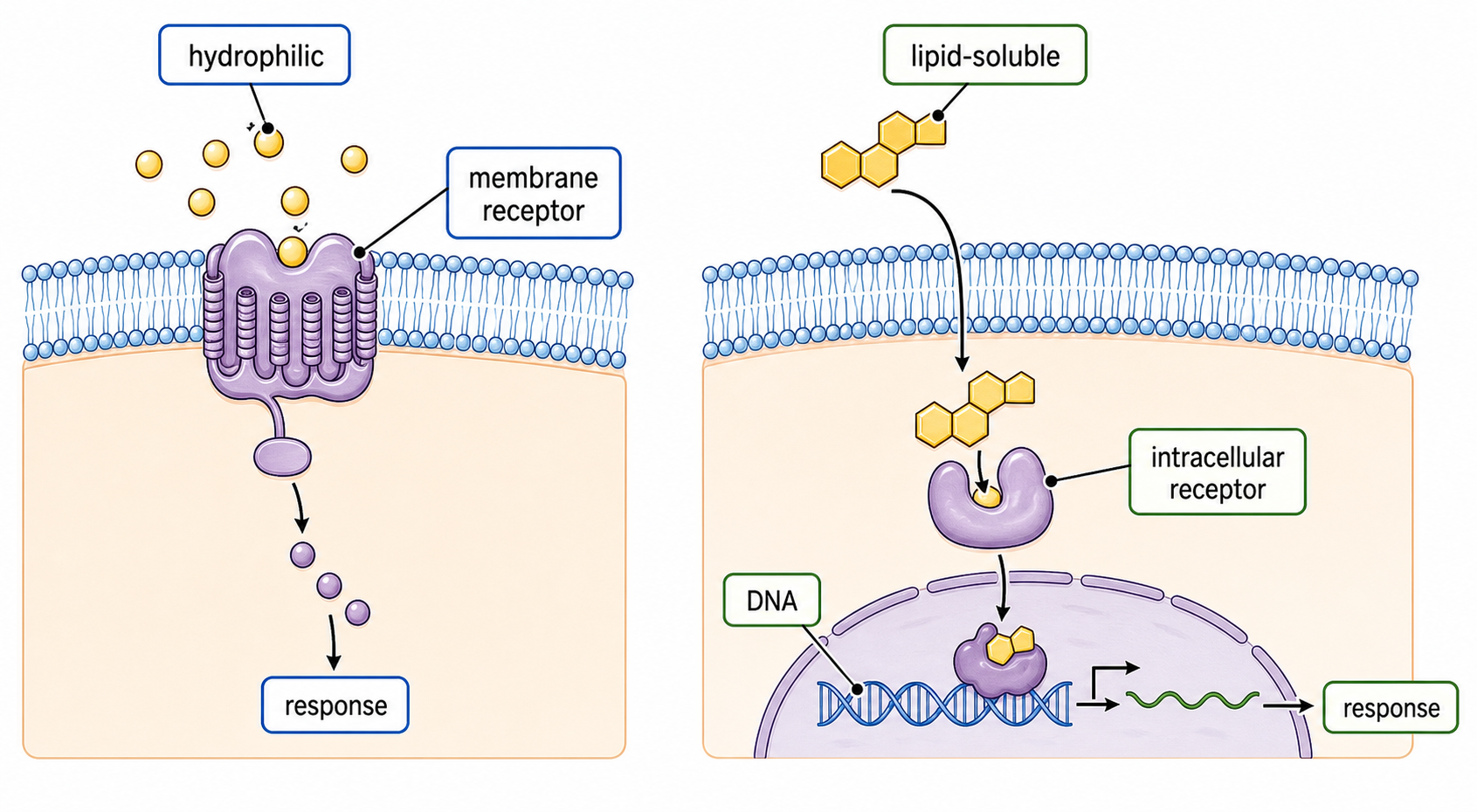
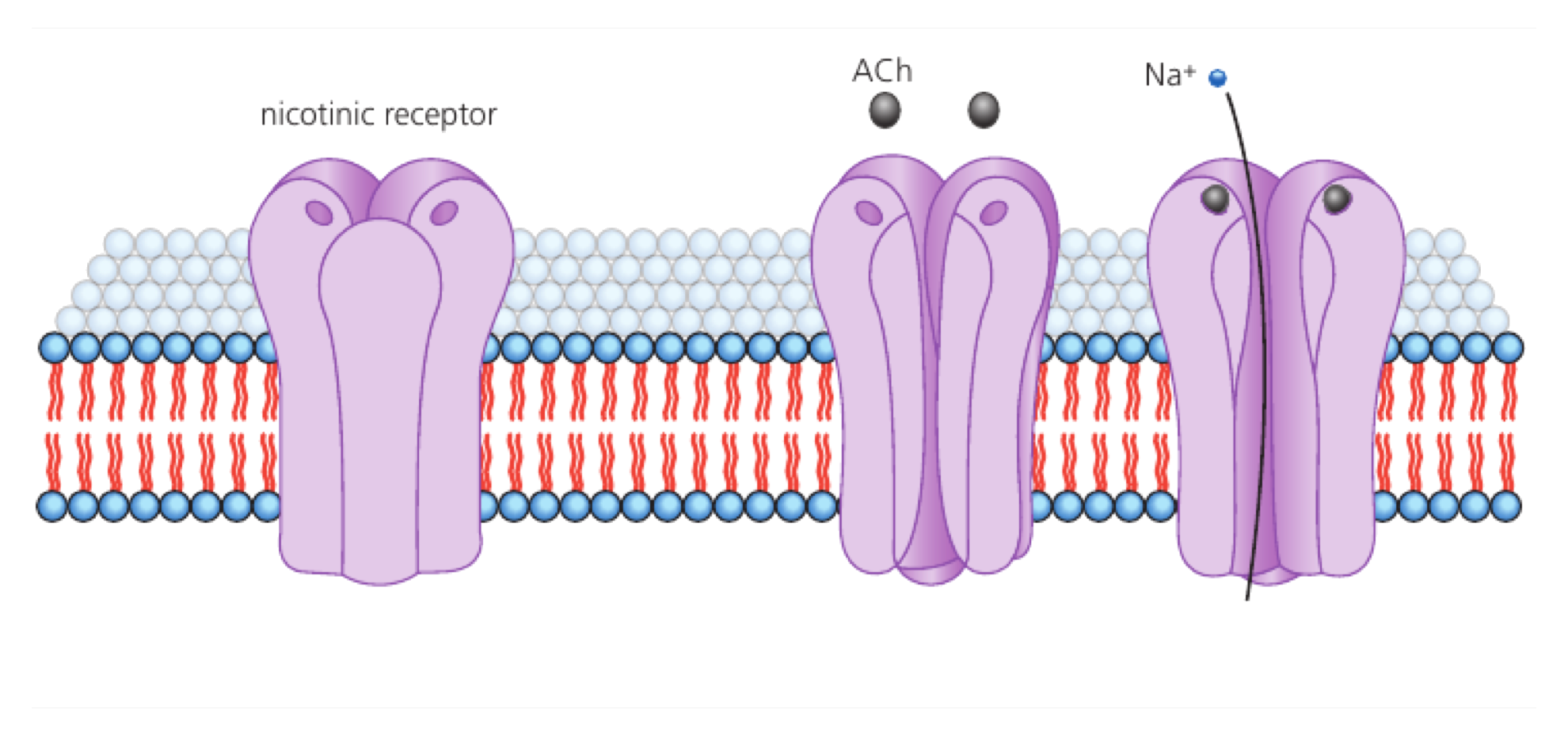
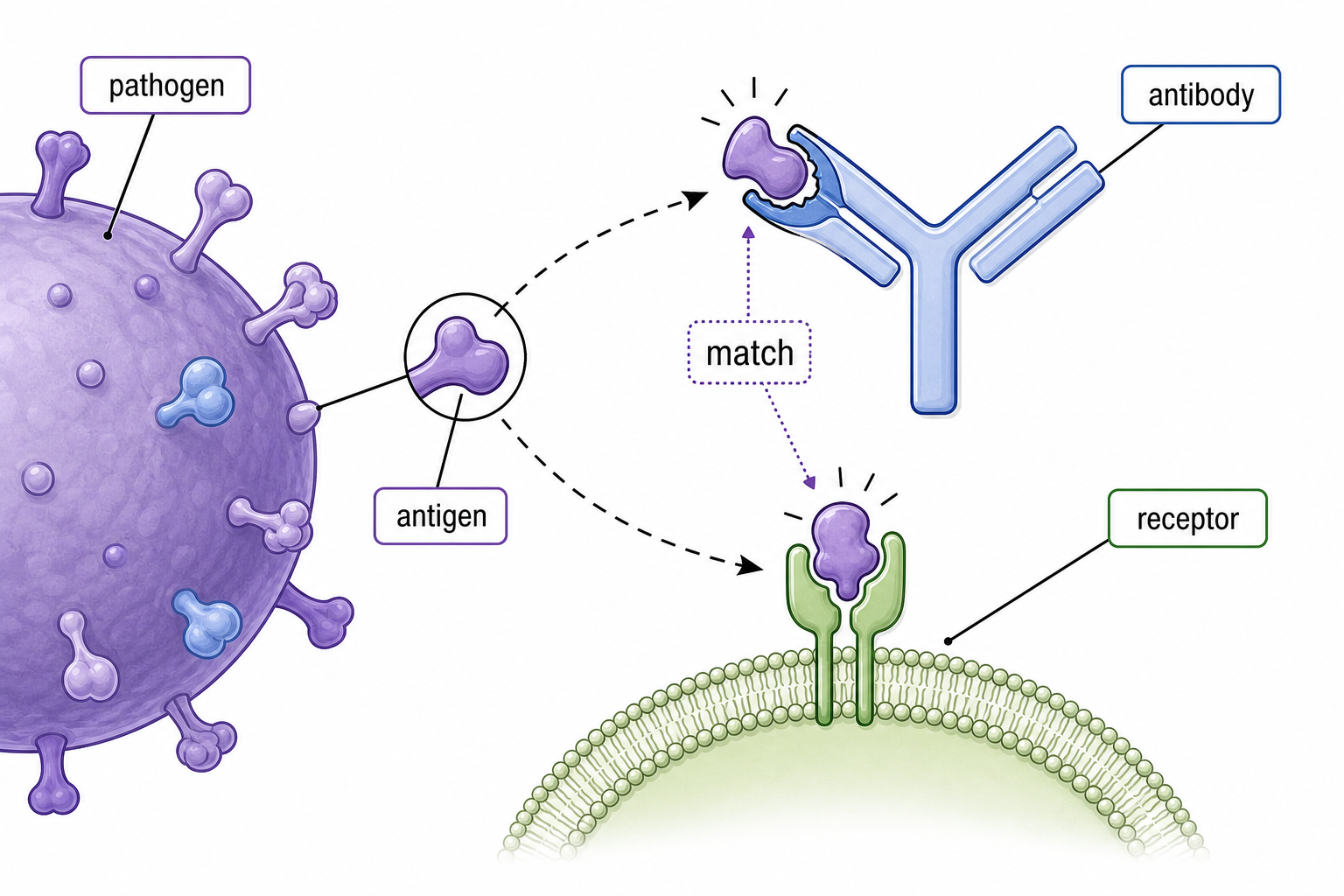
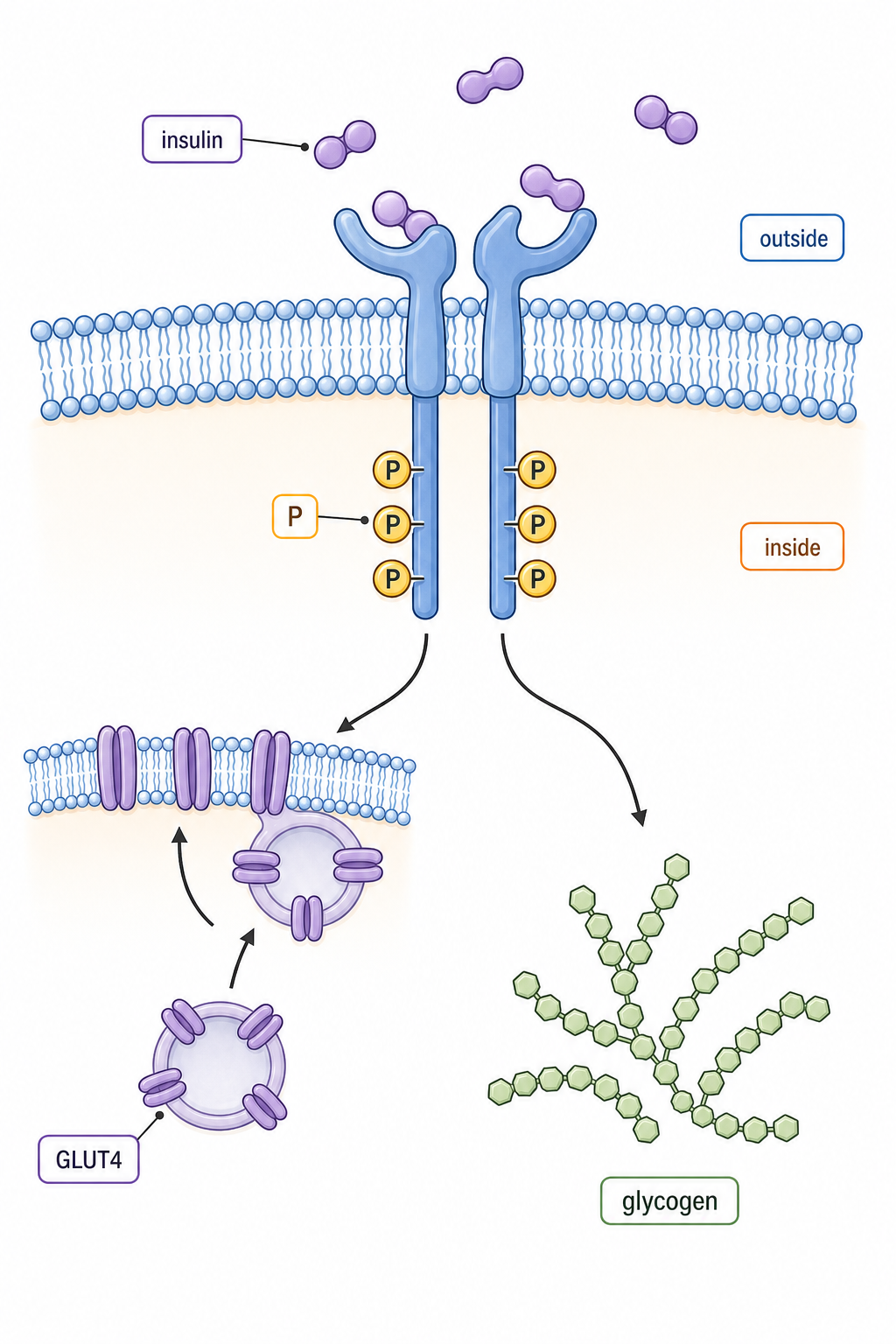
A ligand only affects target cells with the matching receptor. Quorum sensing uses autoinducers and thresholds for group behaviour. Animal signals differ by source, distance, speed, target-cell response, and chemical class. Hydrophilic ligands use transmembrane receptors and relays; steroid and thyroid hormones use intracellular receptors that affect transcription. Named pathways then show the logic: acetylcholine opens sodium channels, GPCRs switch G proteins through GDP-GTP exchange, epinephrine uses cAMP and kinase cascades, insulin RTKs use dimerisation/autophosphorylation to move GLUT4 and promote glycogenesis, steroid hormones change gene expression, and feedback either amplifies or restores stability.

  • Start every signalling answer with ligand specificity and target-cell receptor matching.
  • Then choose the route: local synapse, blood-borne hormone, transmembrane receptor, or intracellular receptor.
  • For named mechanisms, give the sequence, not just the pathway name.
  • Finish feedback comparisons with amplification versus stability.

Concept essentials

  • GPCRs are membrane receptors linked to intracellular G proteins.
  • Ligand binding changes receptor shape and activates a G protein.
  • Activated G proteins can stimulate production of second messengers such as cAMP.
  • GPCR pathways amplify extracellular signals into intracellular responses.