C2.1.1 (HL)—Receptors as proteins
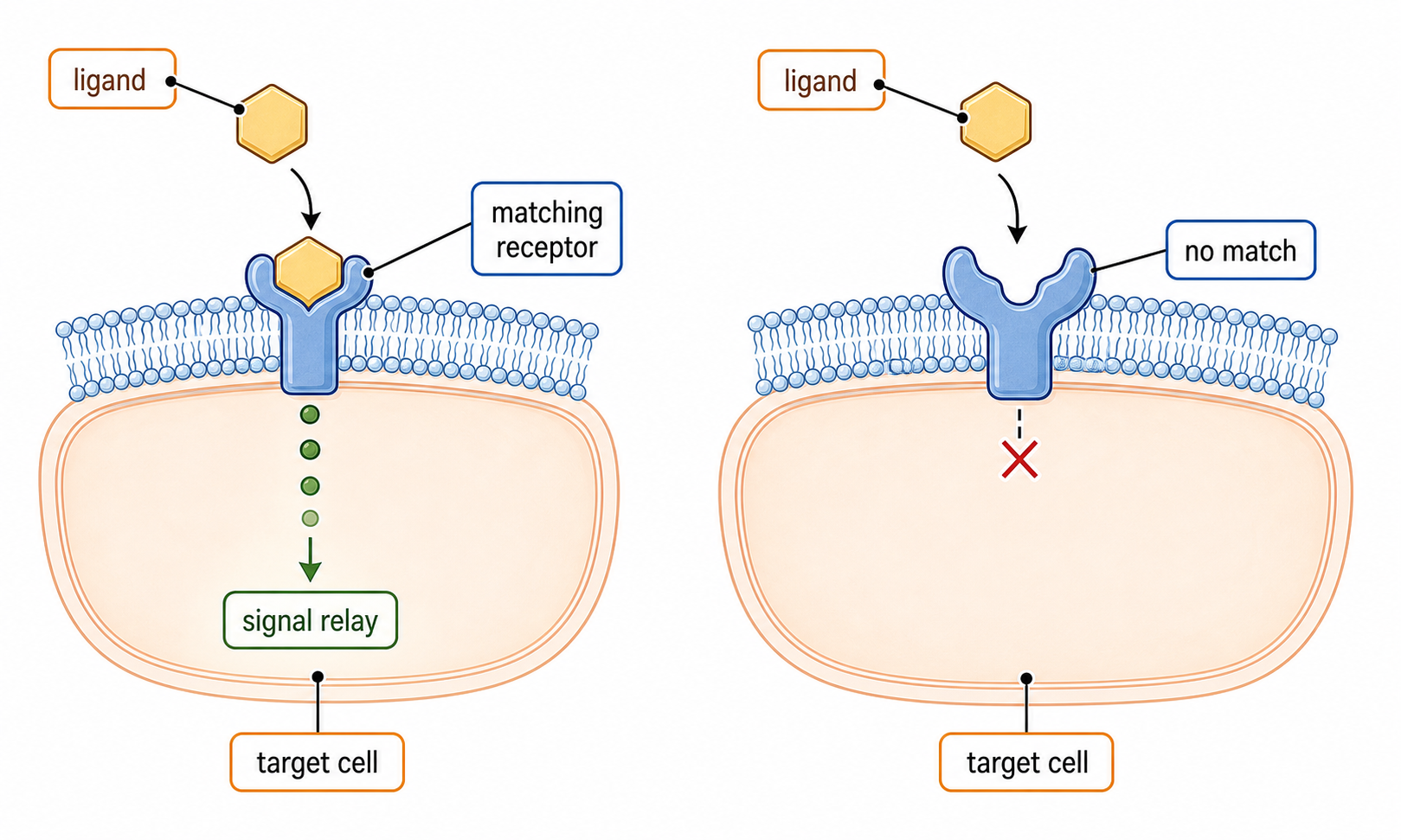
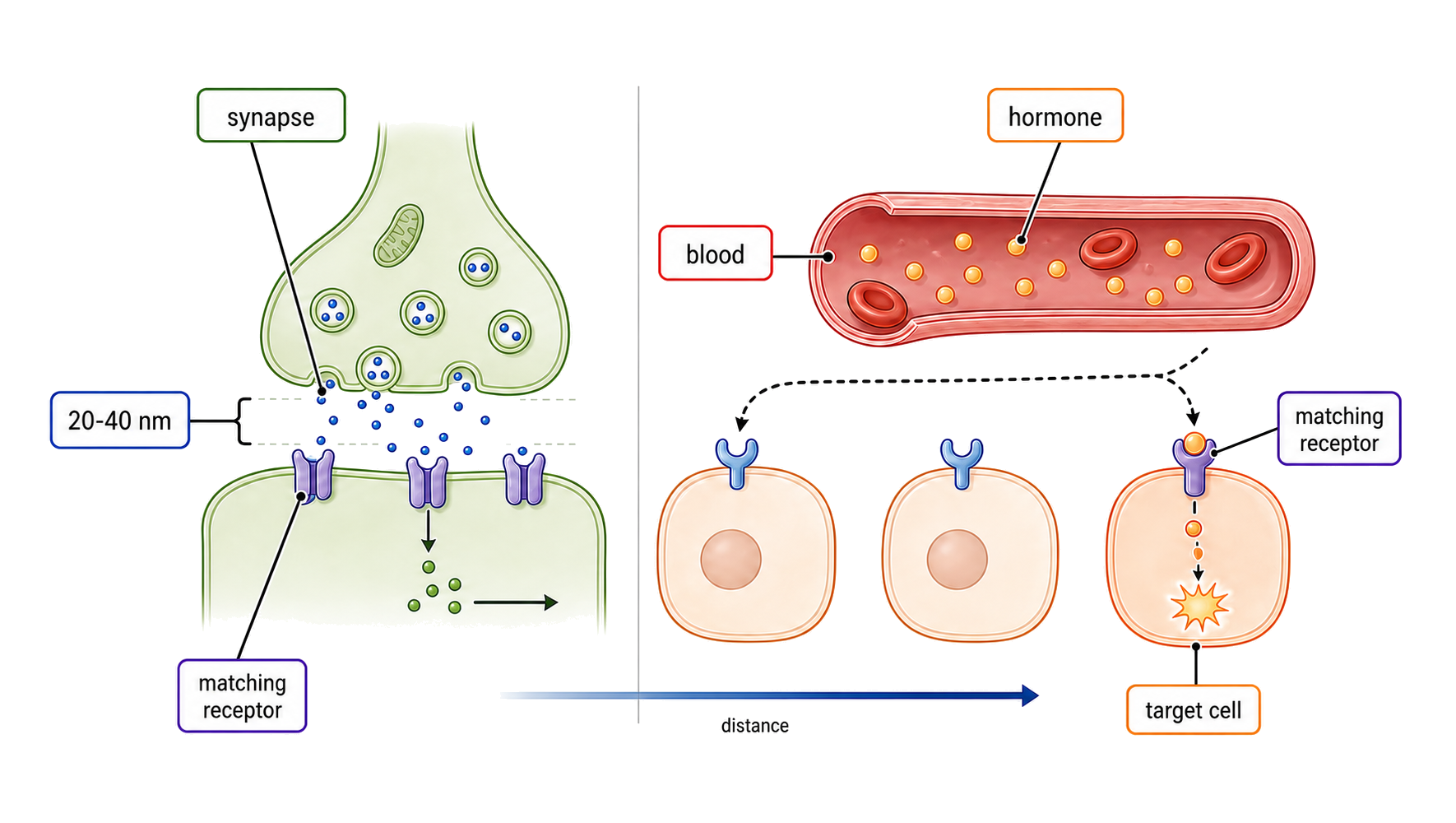
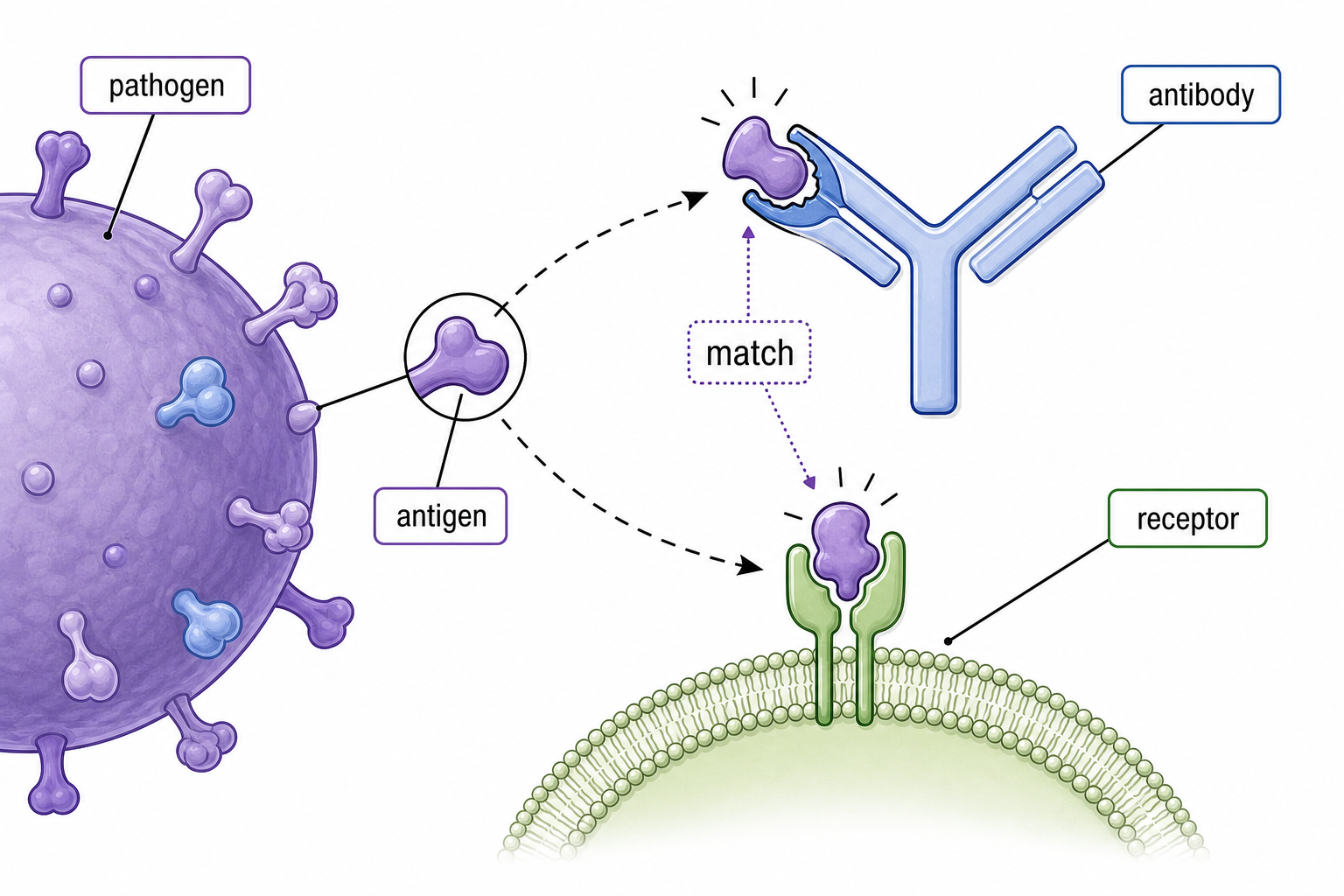
Receptors are proteins with complementary binding sites that allow only target cells carrying the matching receptor to respond to chemical signals.
- Syllabus
- First assessment 2025
- Objective
- C2.1.1
- Level
- HL
Receptors are proteins with complementary binding sites that allow only target cells carrying the matching receptor to respond to chemical signals.
Coverage 2022–2025 · Updated 15 Jul 2026
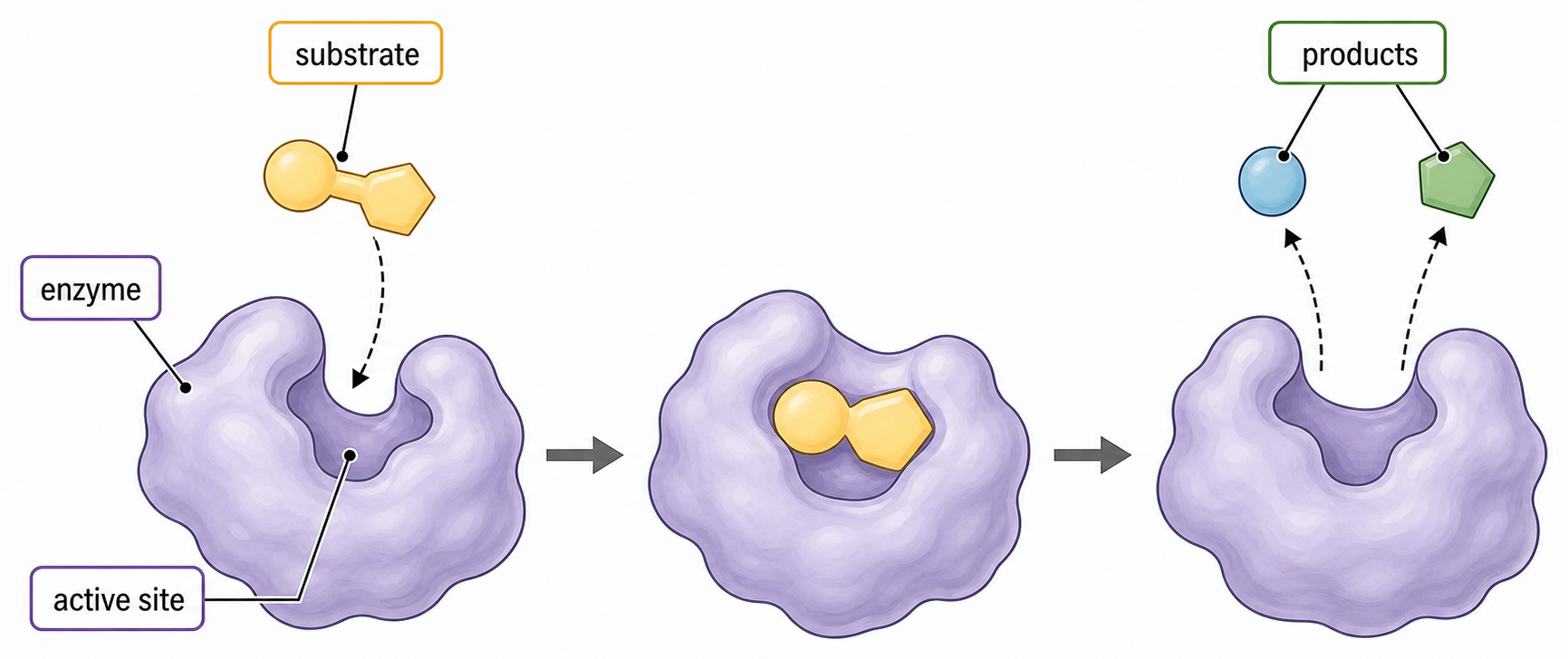
A receptor is a protein with a binding site specific to a signalling chemical, called a ligand.
Complementary shape and chemical interactions allow a ligand to bind selectively. Binding changes the receptor's state or conformation and initiates a sequence of responses inside the target cell.
Identify four linked parts: ligand → specific receptor binding site → receptor activation → intracellular response. A cell is a target only if it has the appropriate receptor.
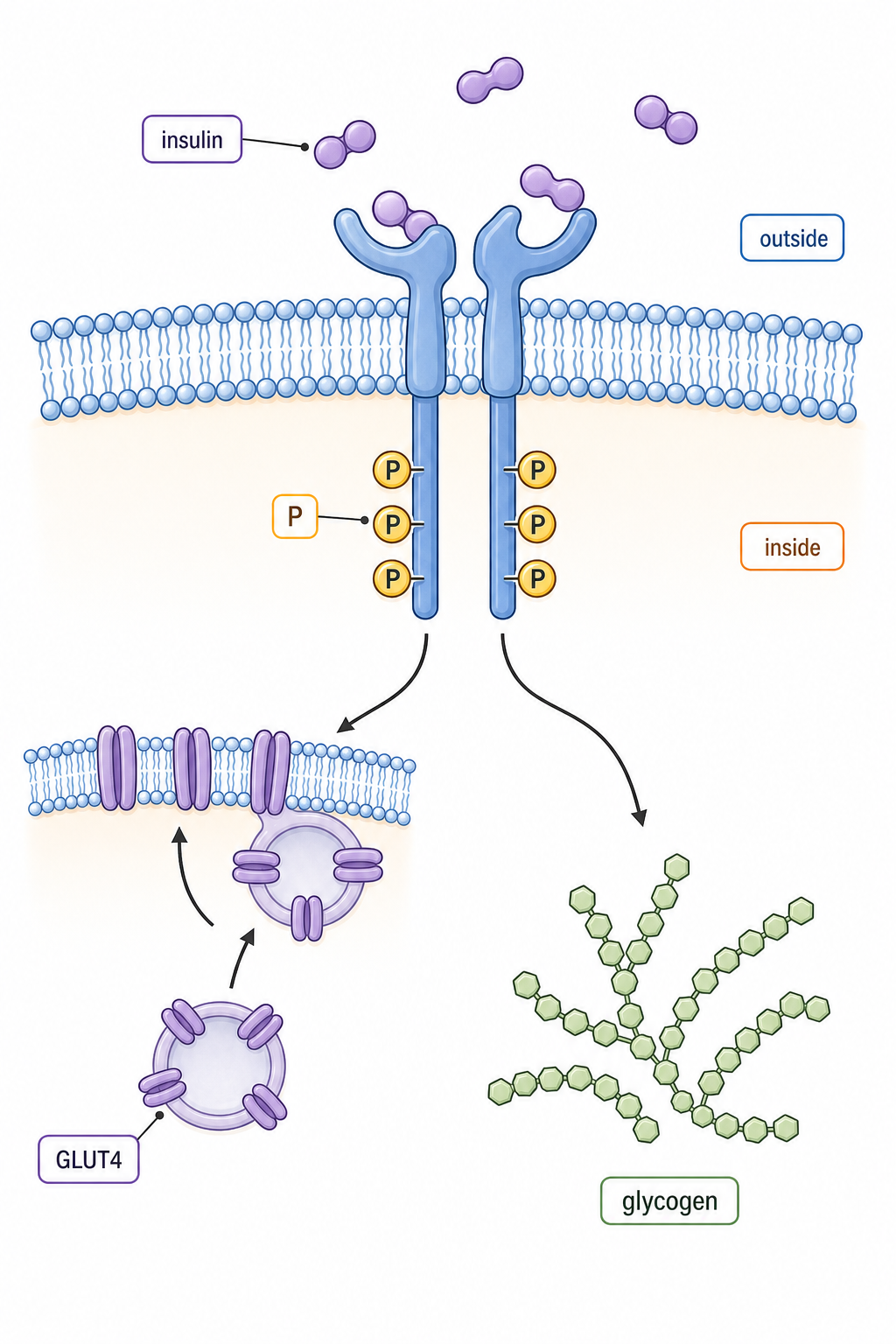
Insulin can circulate past many cells, but only cells expressing an insulin receptor bind it and initiate the corresponding signal-transduction pathway.
Specific does not mean that a receptor completes the response by itself. It detects its ligand and starts a pathway; downstream cell machinery produces the response.
This objective is assessed through structured response, commonly using Describe / Explain.
Describe / Explain
Build the answer around this relationship: Receptors are proteins with specific ligand-binding sites.
Representative question
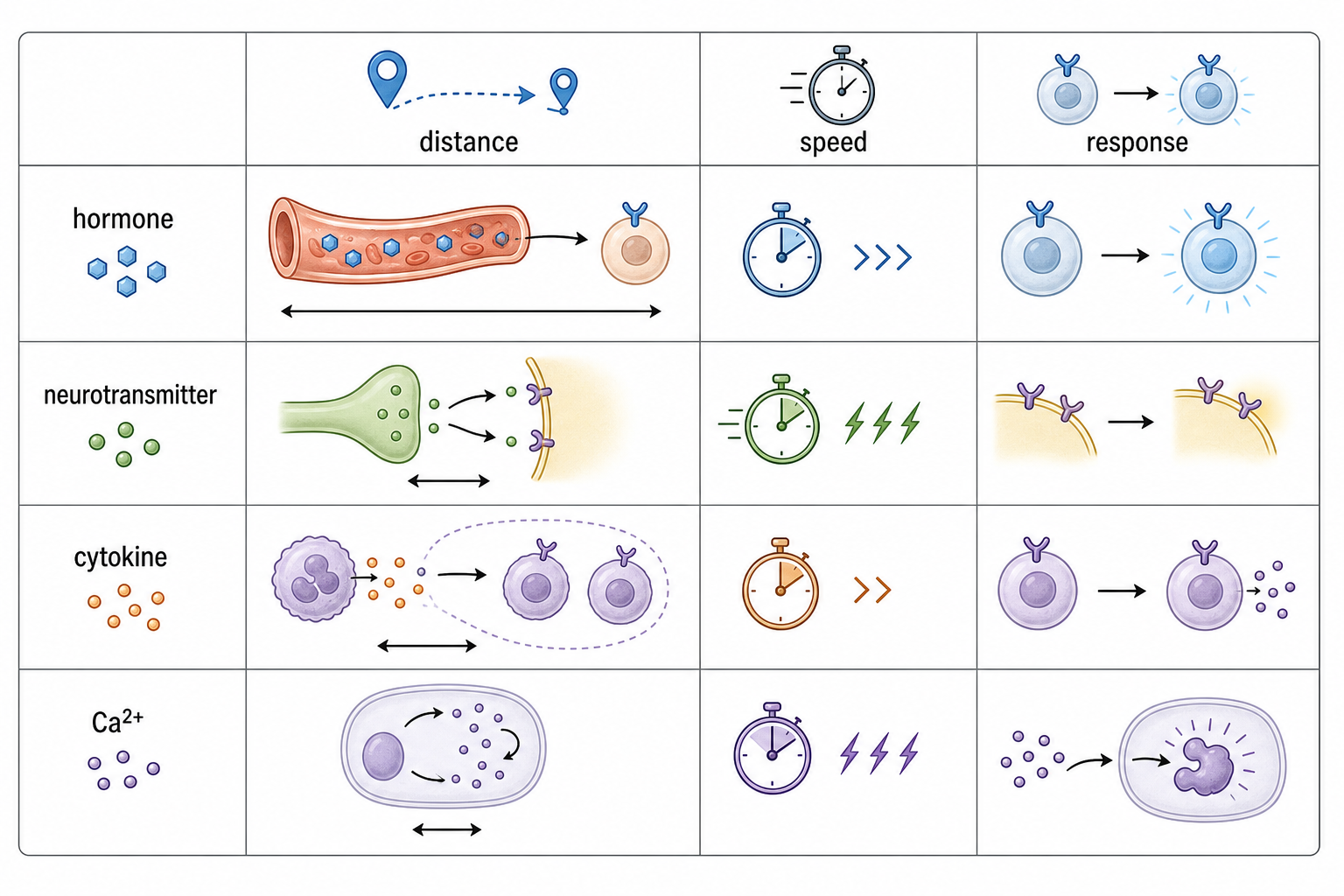
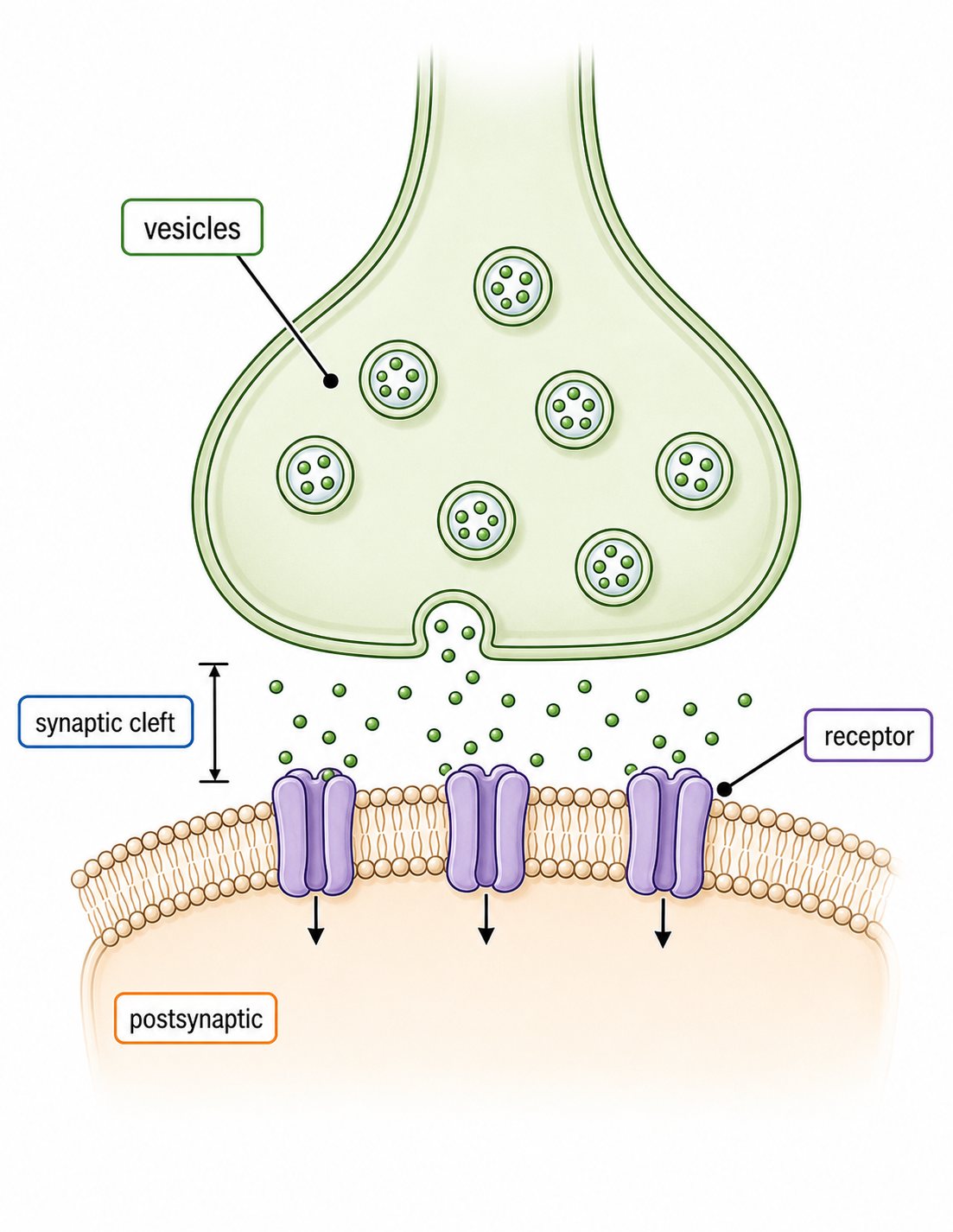
Describe, with examples, the types of molecule within cell-to-cell signalling systems that are complementary to each other.
a. signalling chemicals/ligands bind to receptors;
b. reference to specificity / the shape (and chemical properties) of the ligand-binding site match those of the ligand;
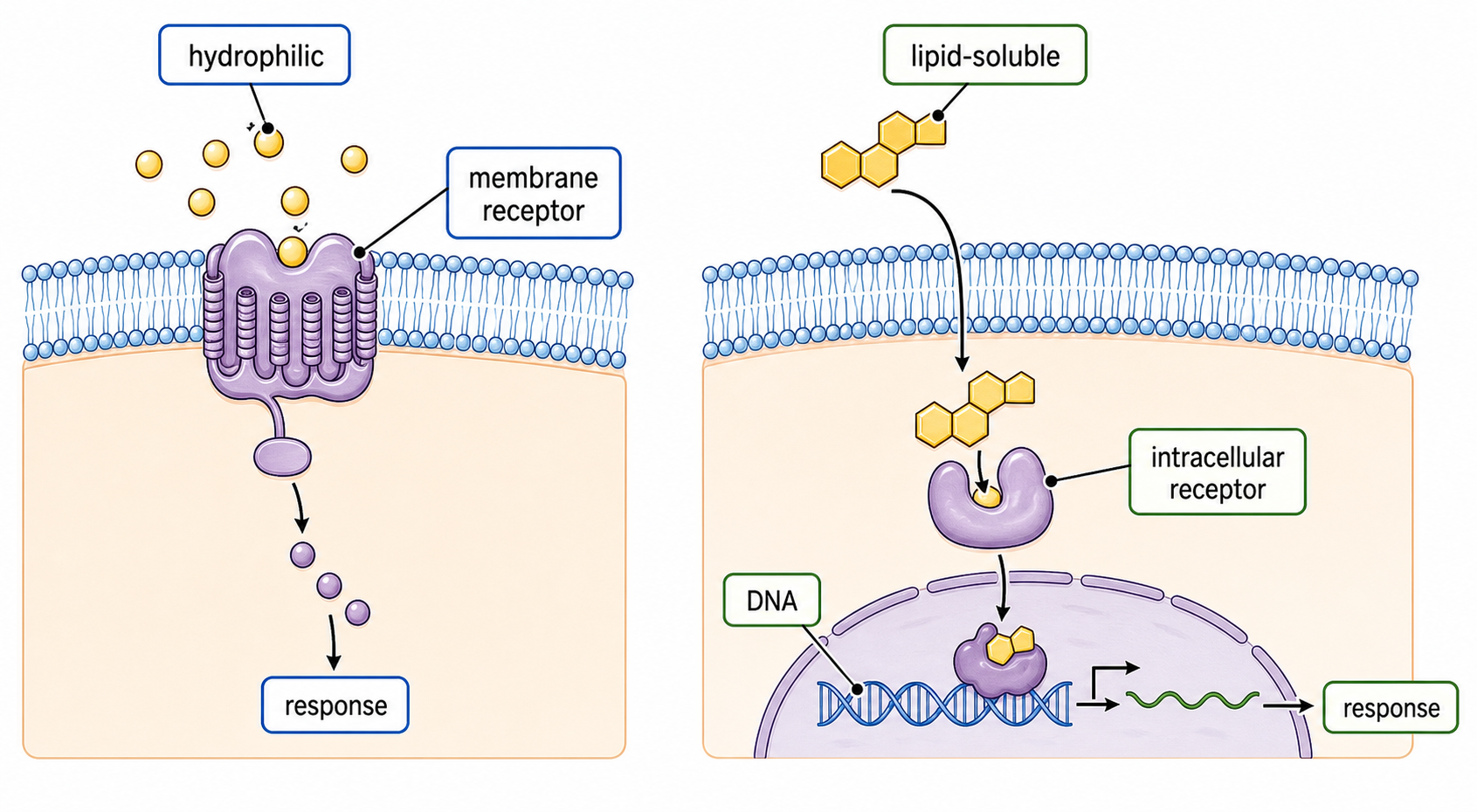
c. receptors can be in (either) the plasma membrane / intracellular / in the cytoplasm / or nucleus
OR
ligand can bind to transmembrane receptors/receptors in the plasma membrane or intracellular receptors;
d. only cells with a receptor to a signalling chemical will respond;
e. reference to signal transduction (initiated by signalling chemical-receptor binding);
f. example of signalling chemical;
Marking guidance:
Do not accept the role of glycoproteins in cell-cell recognition or ABO glycoproteins.
For b: do not accept "complementary" as this is part of the stem question.
For e. OWTTE
For e. the reference may include the pathway followed by a given example of a signalling chemical.
Appropriate example for (f):
- Neurotransmitters/named neurotransmitter
- any named hormone
- Cytokine
- Calcium ions
4
max
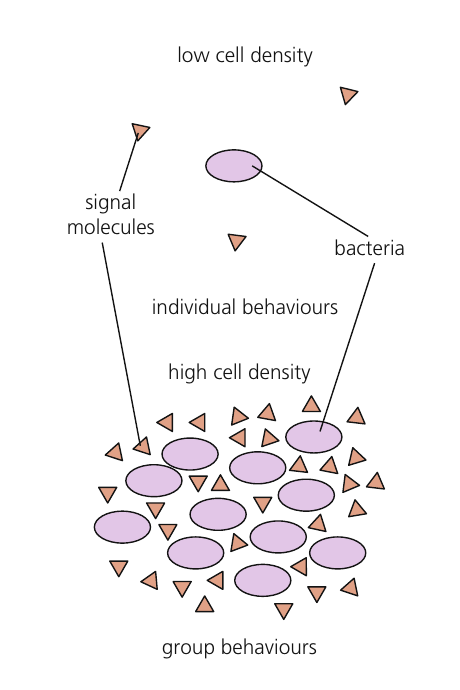
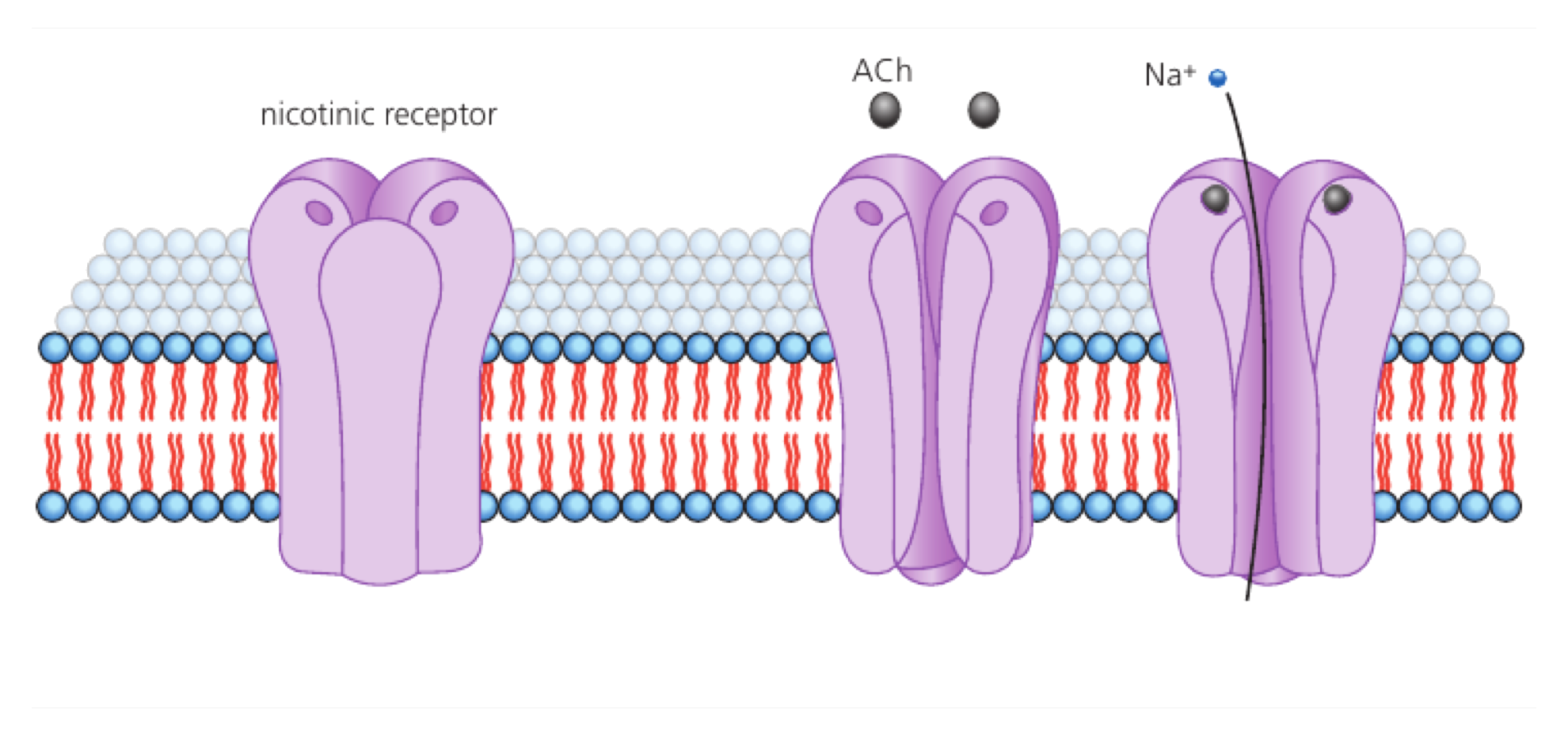
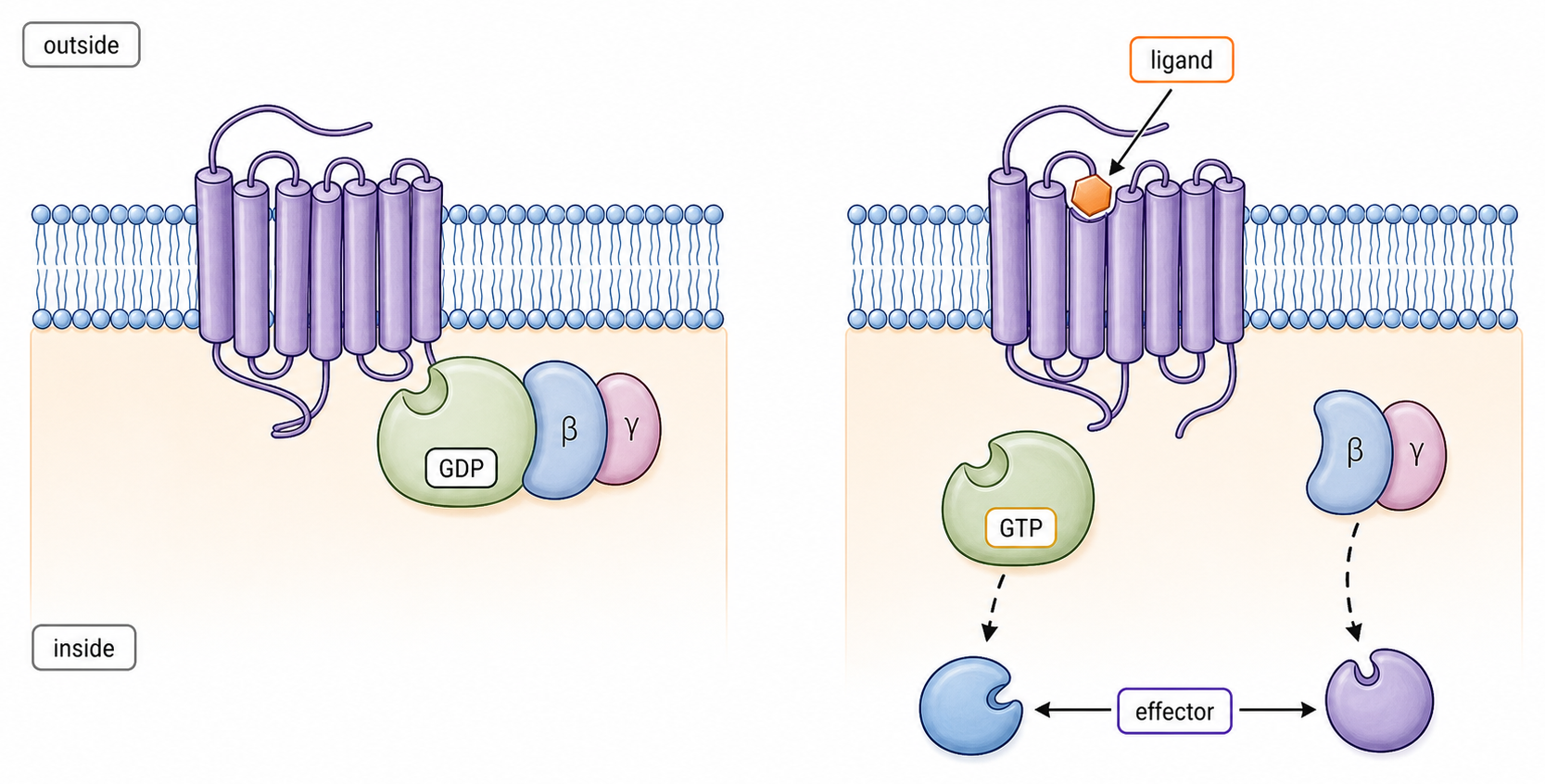
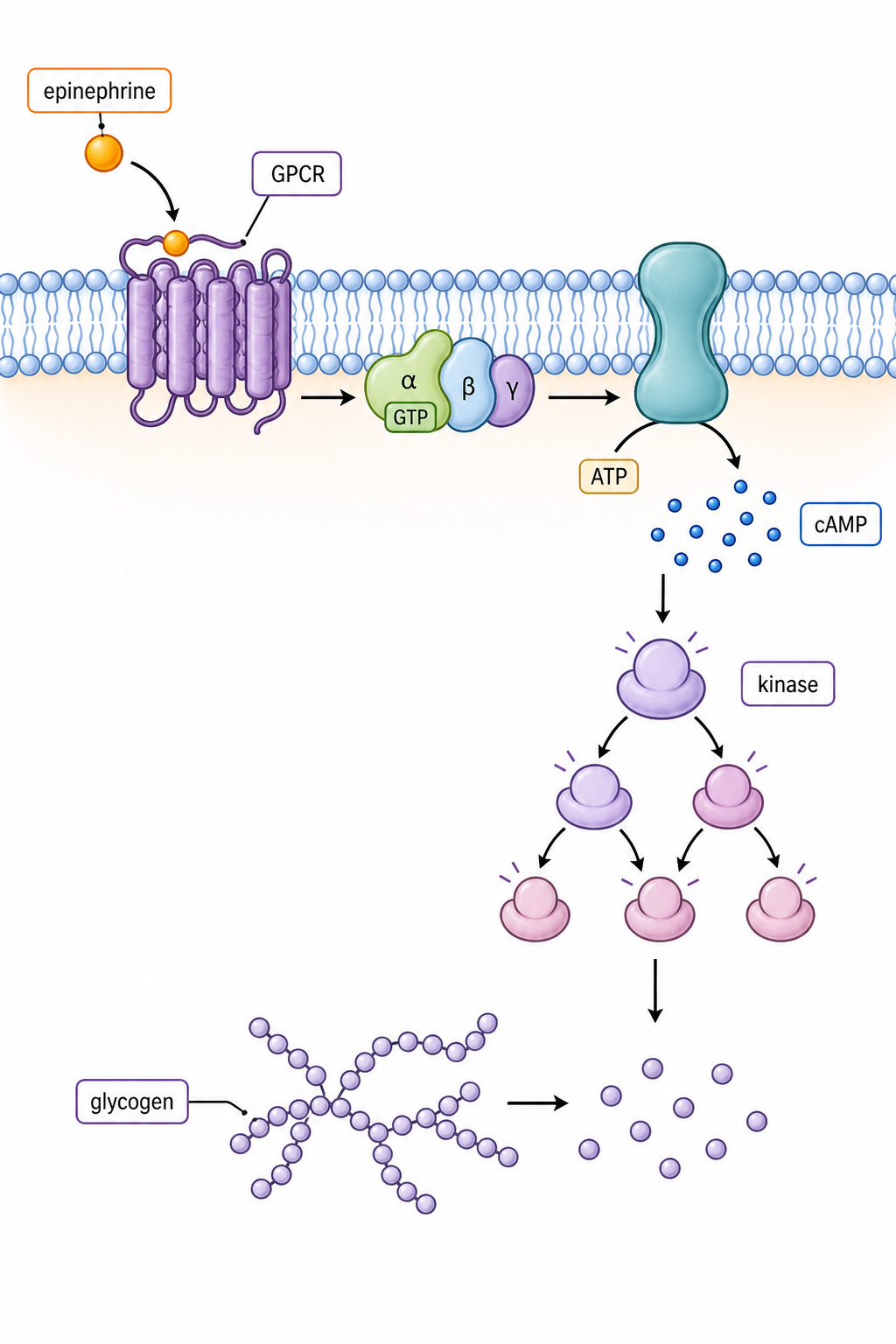
A ligand only affects target cells with the matching receptor. Quorum sensing uses autoinducers and thresholds for group behaviour. Animal signals differ by source, distance, speed, target-cell response, and chemical class. Hydrophilic ligands use transmembrane receptors and relays; steroid and thyroid hormones use intracellular receptors that affect transcription. Named pathways then show the logic: acetylcholine opens sodium channels, GPCRs switch G proteins through GDP-GTP exchange, epinephrine uses cAMP and kinase cascades, insulin RTKs use dimerisation/autophosphorylation to move GLUT4 and promote glycogenesis, steroid hormones change gene expression, and feedback either amplifies or restores stability.