Q BankQuestion BankDocsDocuments

C2.1.5 (HL)—Localized vs. distant effects

Some signalling chemicals act locally, while hormones can be produced in one body region and affect distant target tissues, linking signal detection to a specific target-cell response.

Syllabus
First assessment 2025
Objective
C2.1.5
Level
HL

Exam analysis

Chance of appearing1%of analysed past papers
Latest appearanceMay 2017
Most common paperPaper3
Typical marks1

Common command terms

  • State

Recent exam appearances

May 2017Paper3 ["HL"] · TZ22(c)(ii)[ 1 ]C2.1.5 (HL)—Localized vs. distant effects
Practice this objective

Coverage 2017–2017 · Updated 15 Jul 2026

Local and Distant Signals Use Different Routes

HL only

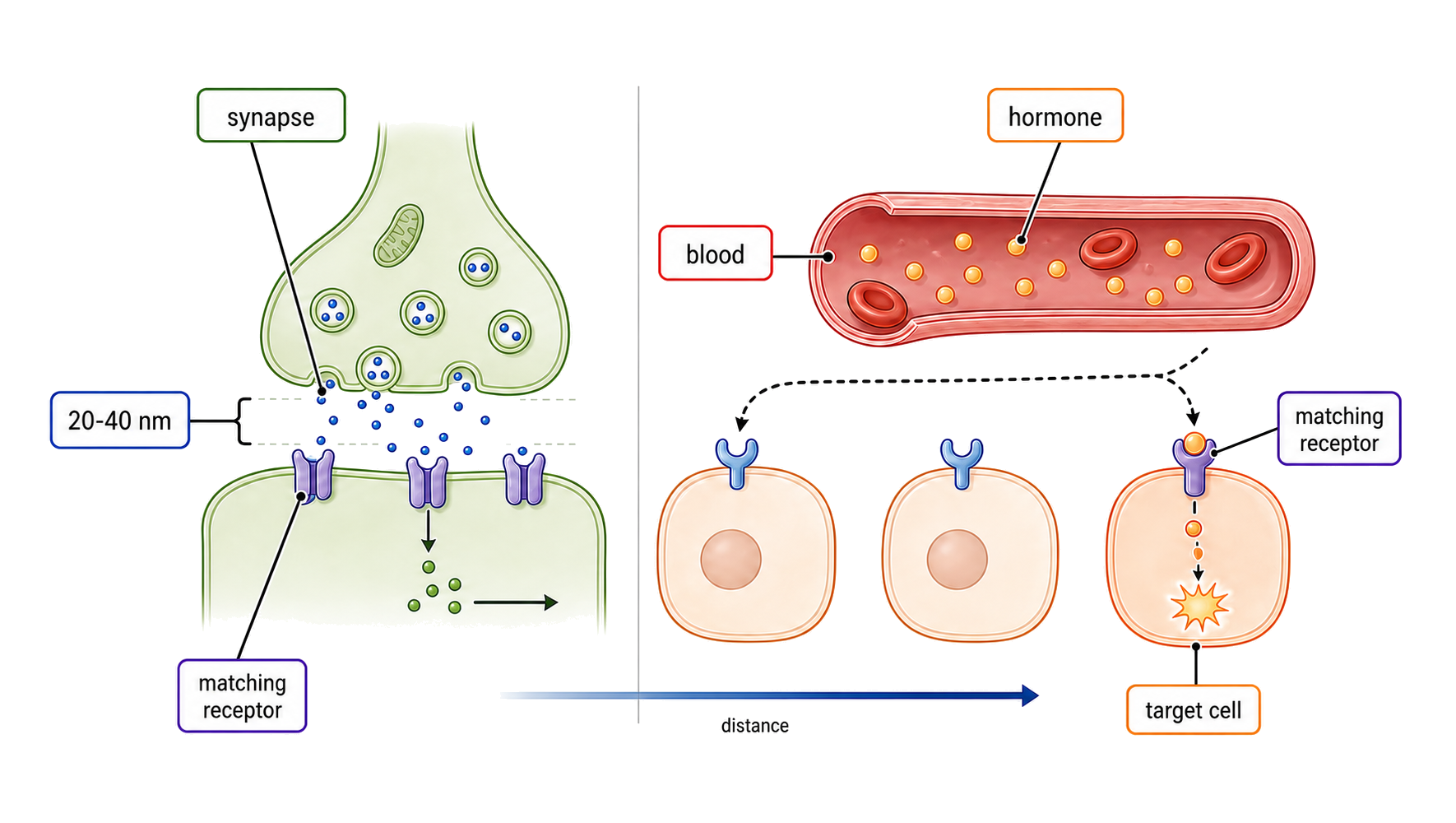
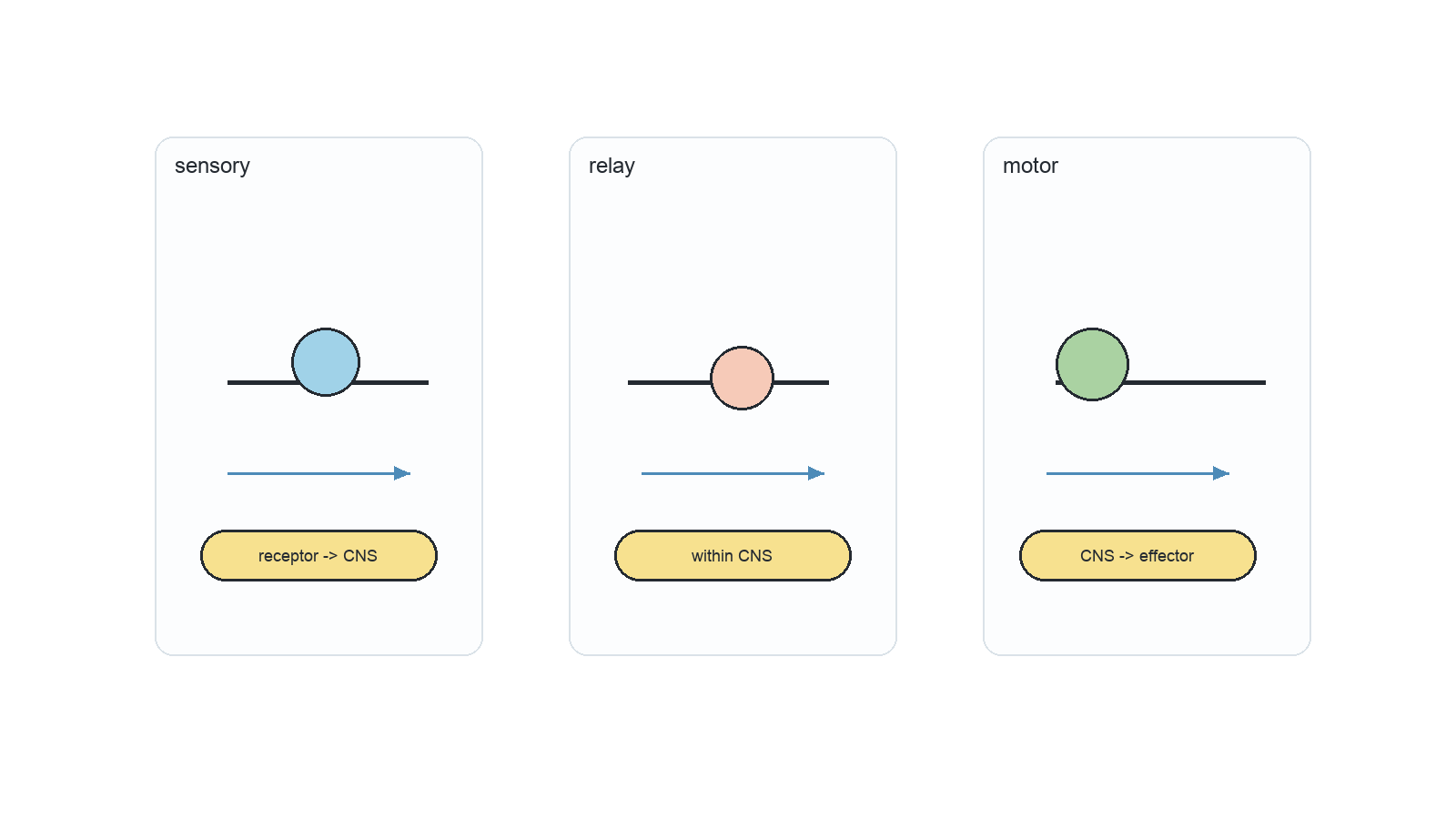
A localized signal acts near its source, whereas an endocrine signal travels through circulation to distant target cells.
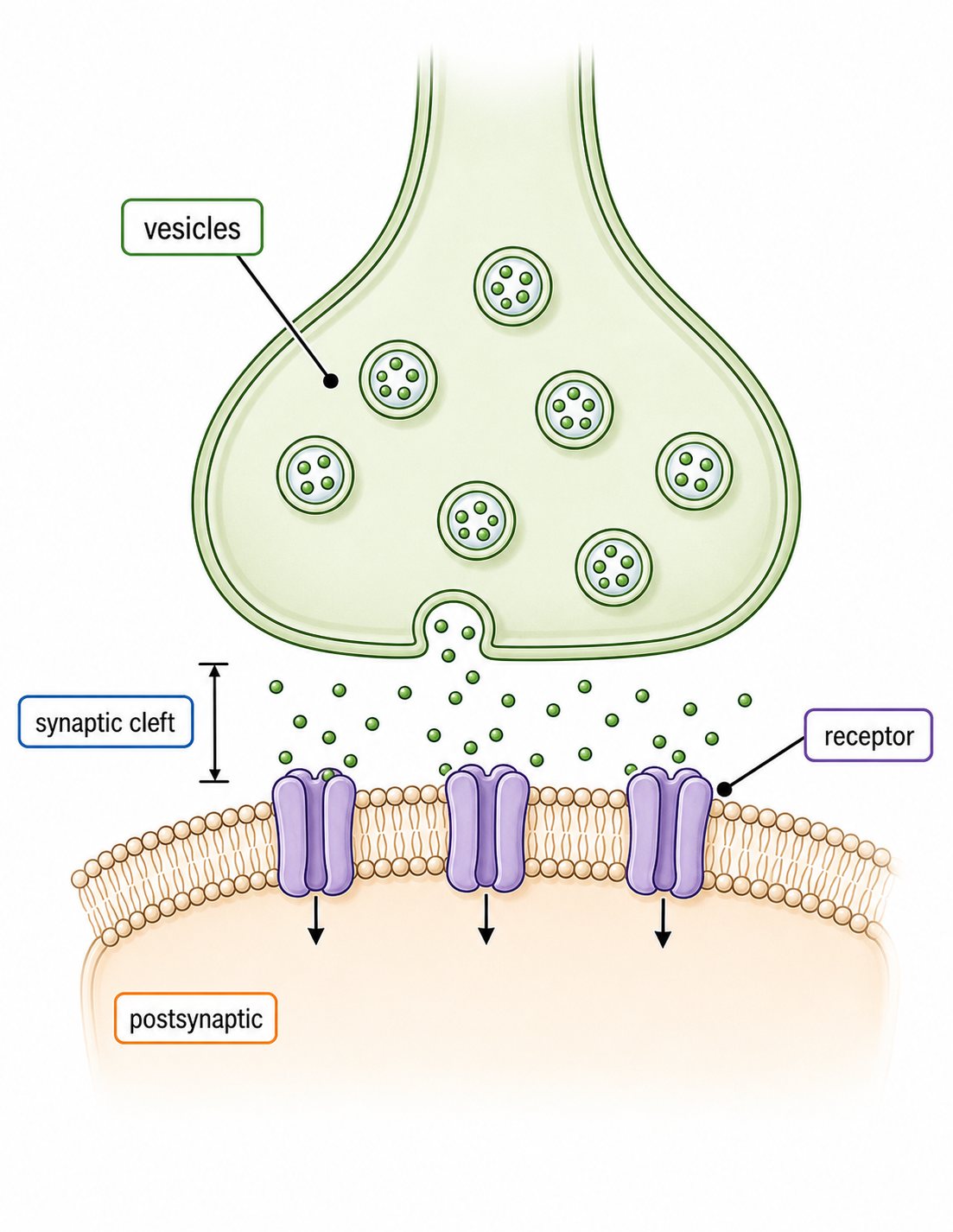
Paracrine and synaptic signals reach nearby cells with short delays and limited dilution. Endocrine hormones can reach the whole body but only cells with the correct receptor respond.

Locate the signal’s range:

  • autocrine: same cell
  • paracrine: nearby cells
  • synaptic: across a synapse
  • endocrine: distant through blood

A neurotransmitter acts across a tiny synaptic gap, while thyroxine circulates and affects distant tissues with thyroid-hormone receptors.
Circulation makes a signal widespread, not automatically effective in every tissue.
Localized vs. distant effects

HL only

Assessment in practice

1 marks
How it is assessed

This objective is assessed through structured response, commonly using State.

Command terms

State

What earns marks

Build the answer around this relationship: Local signals act near their release site.

Representative question

Question 1

[Maximum number: 1]

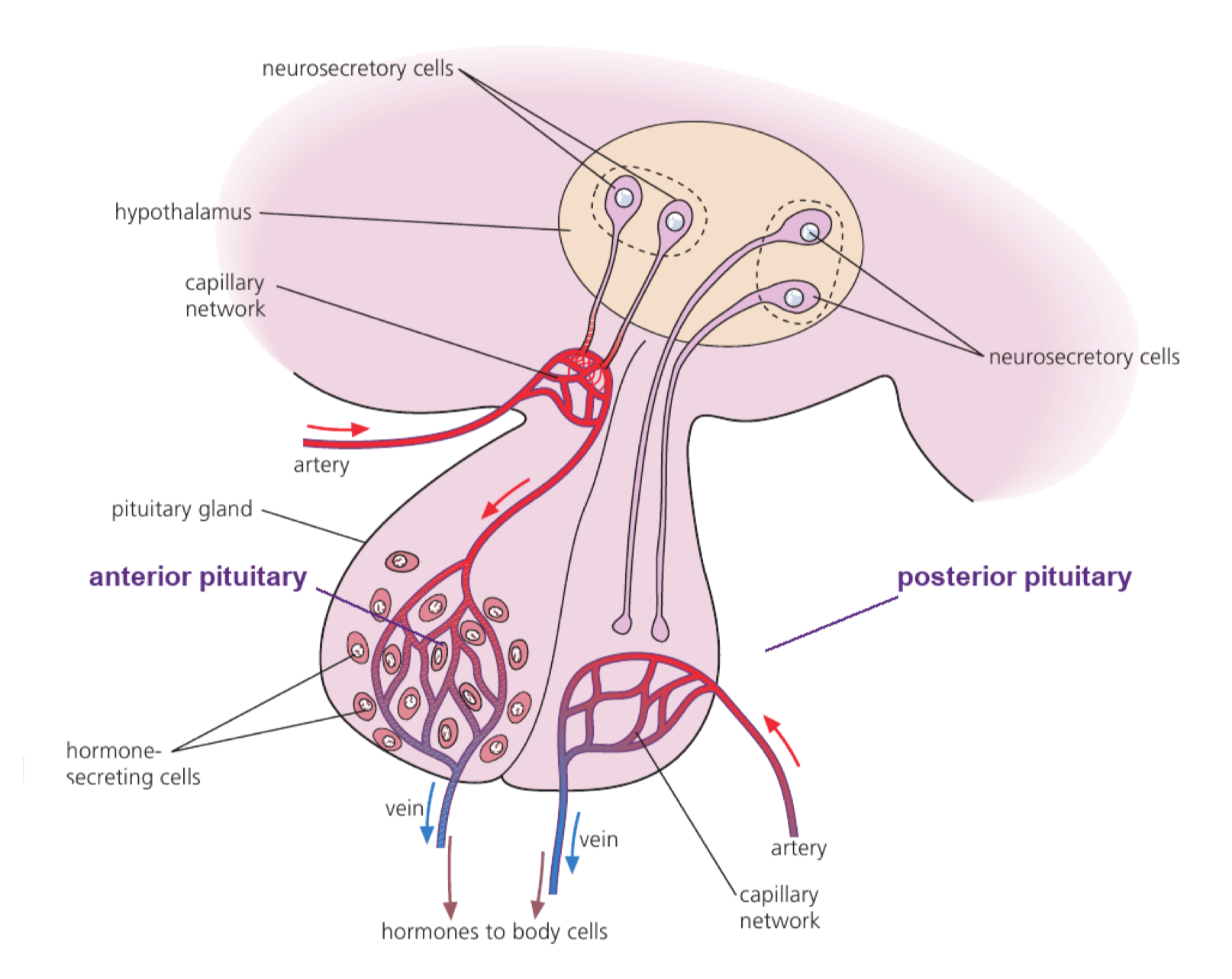
Leptin is a hormone. Hormones are chemicals produced in one part of the body that have an effect in another part of the body. State the target that leptin normally acts on.

Chemical Signalling

HL only

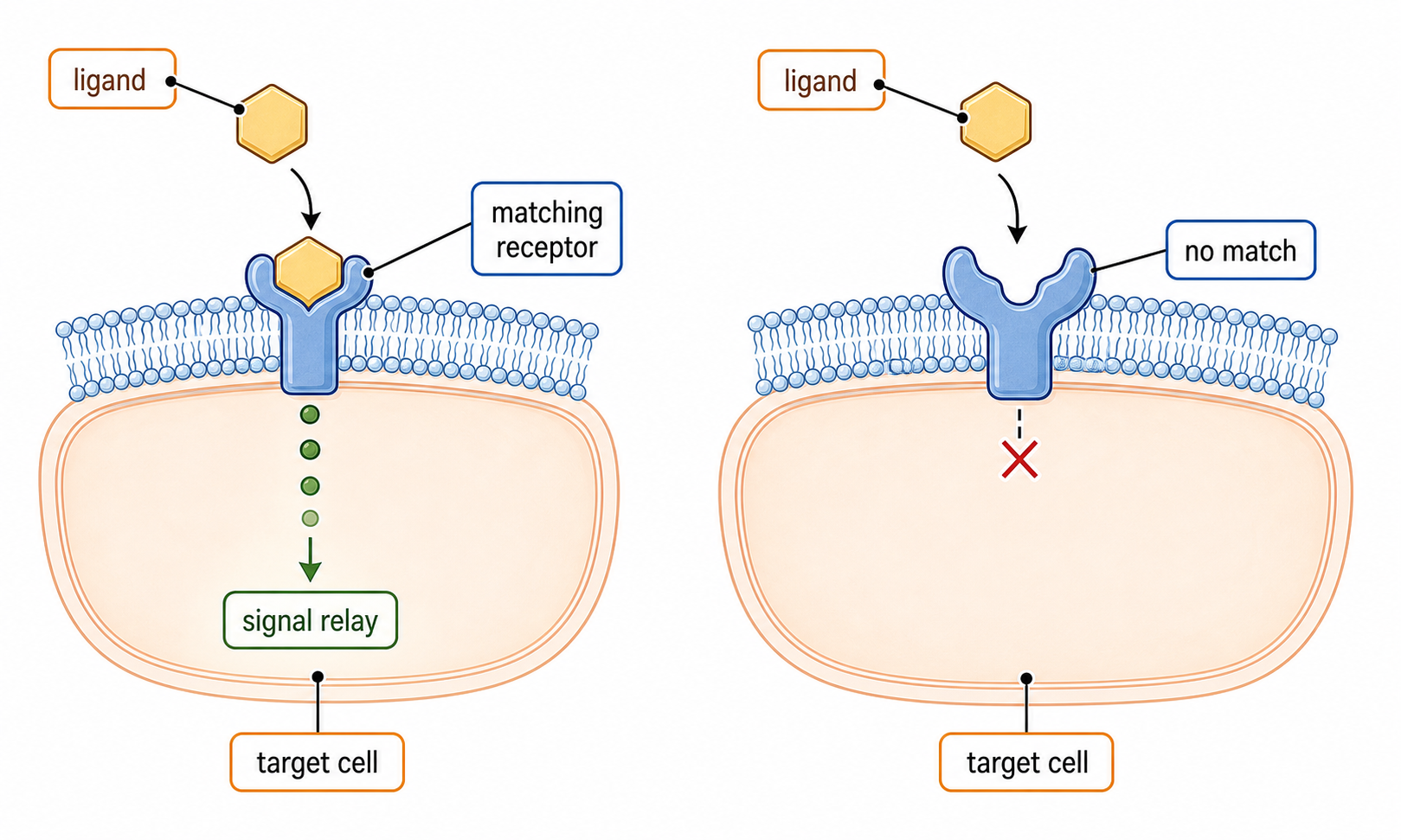
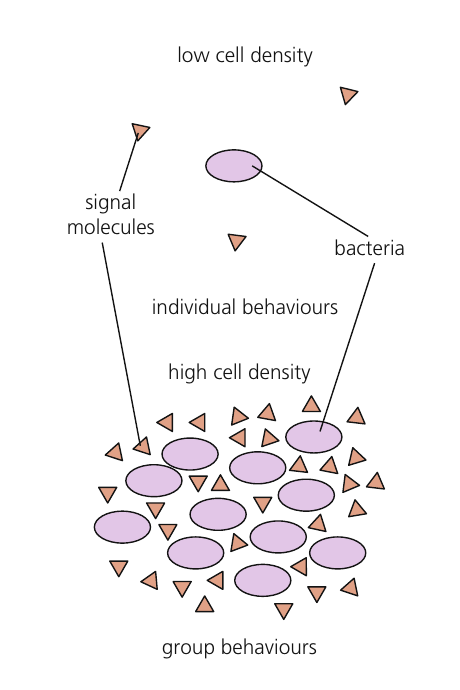
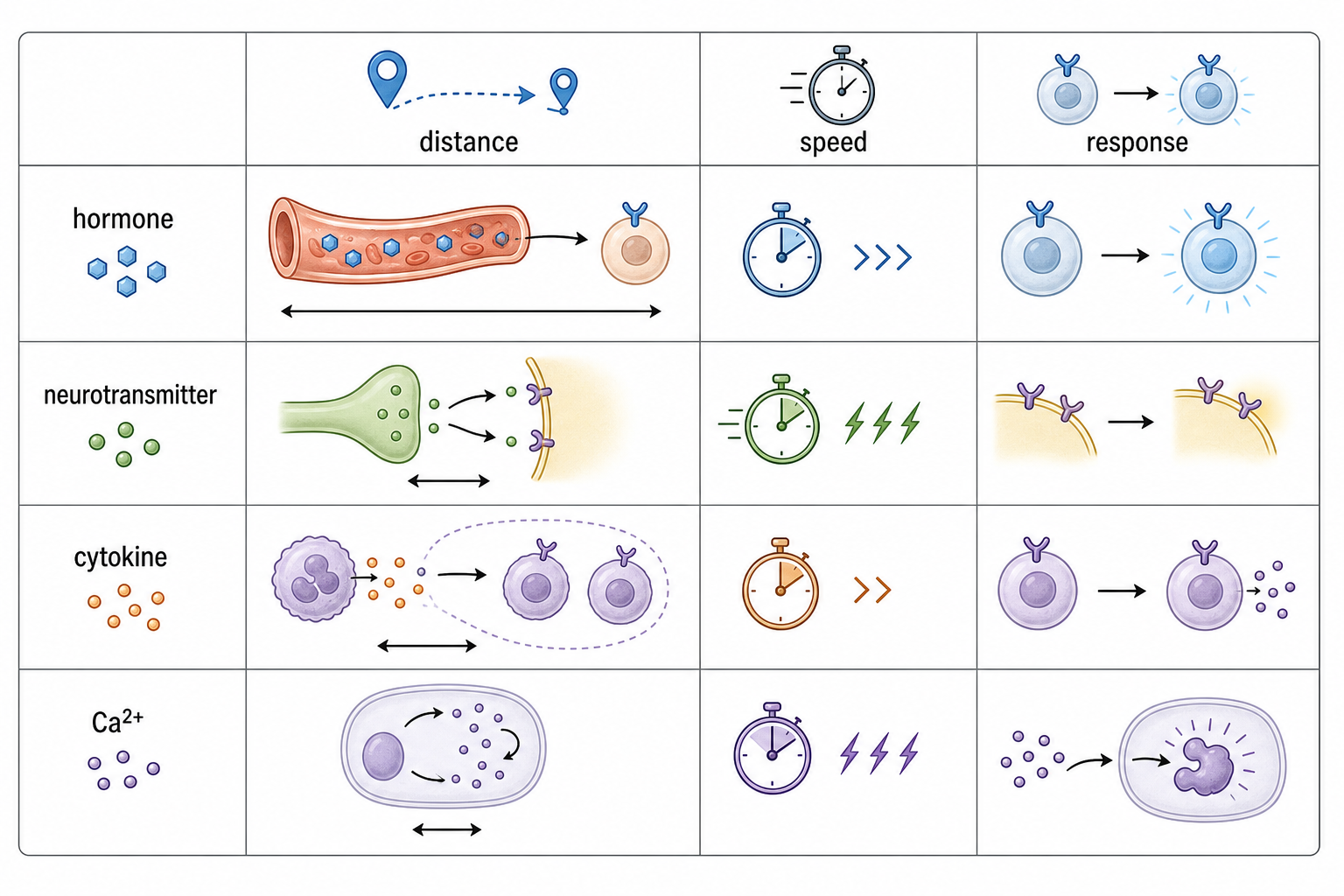
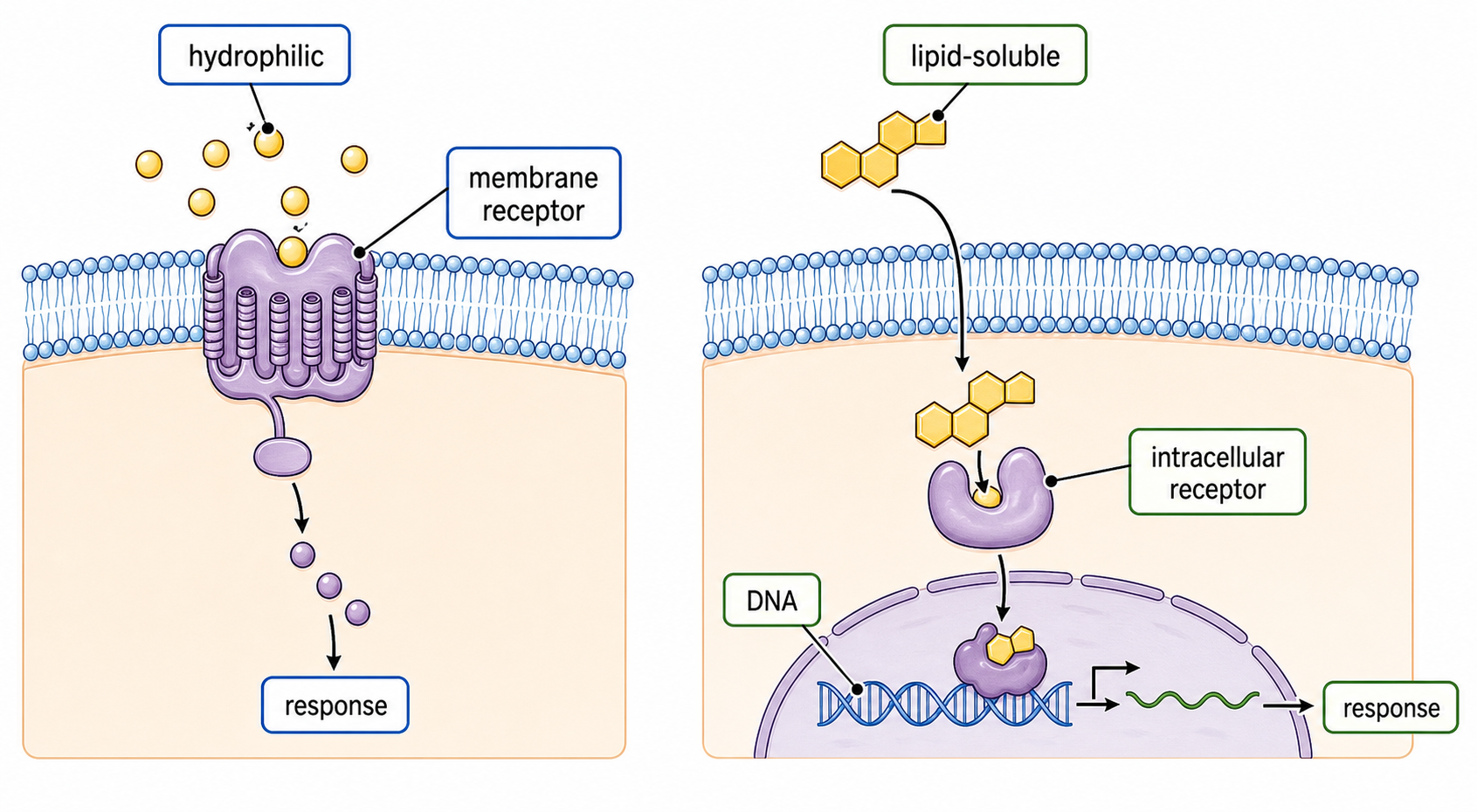
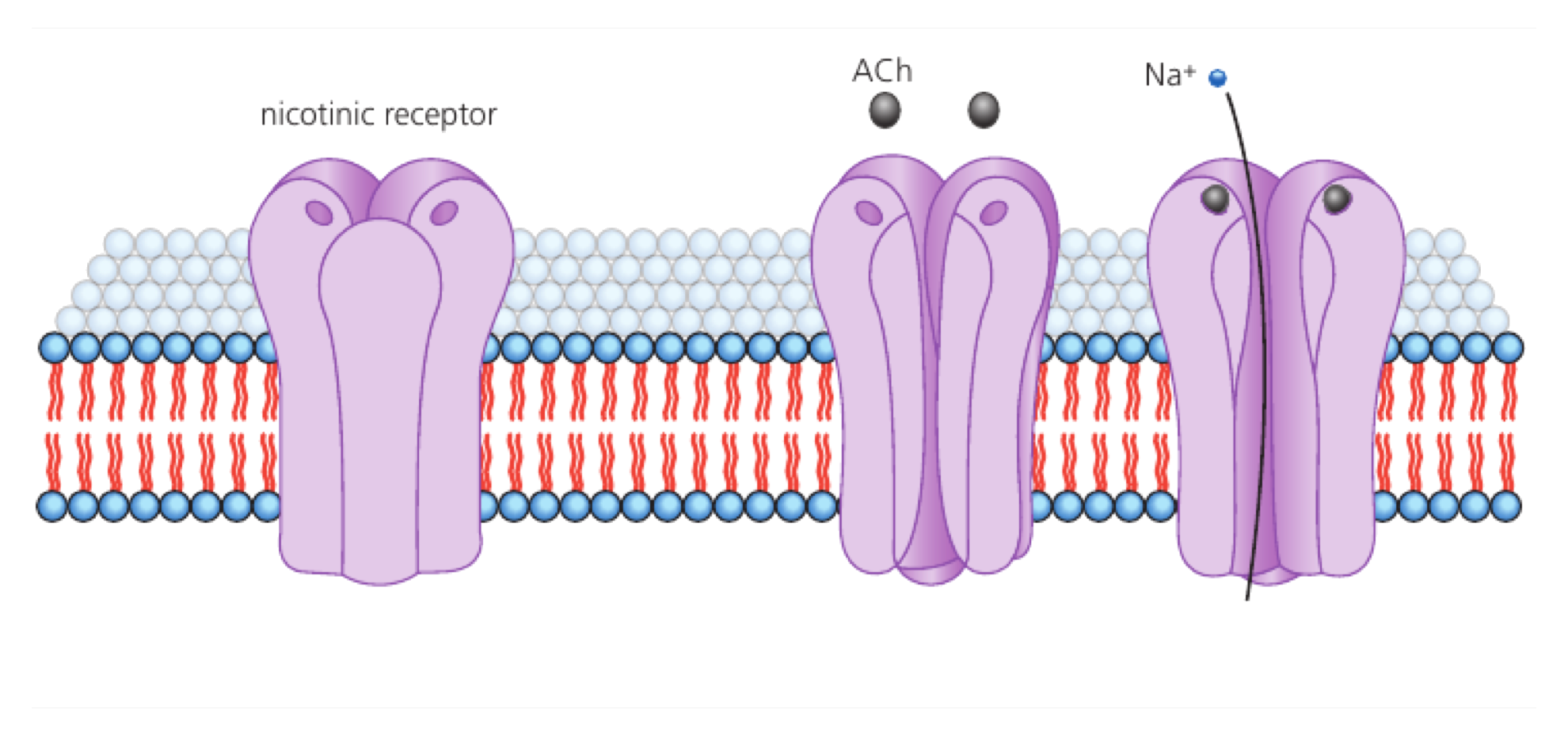
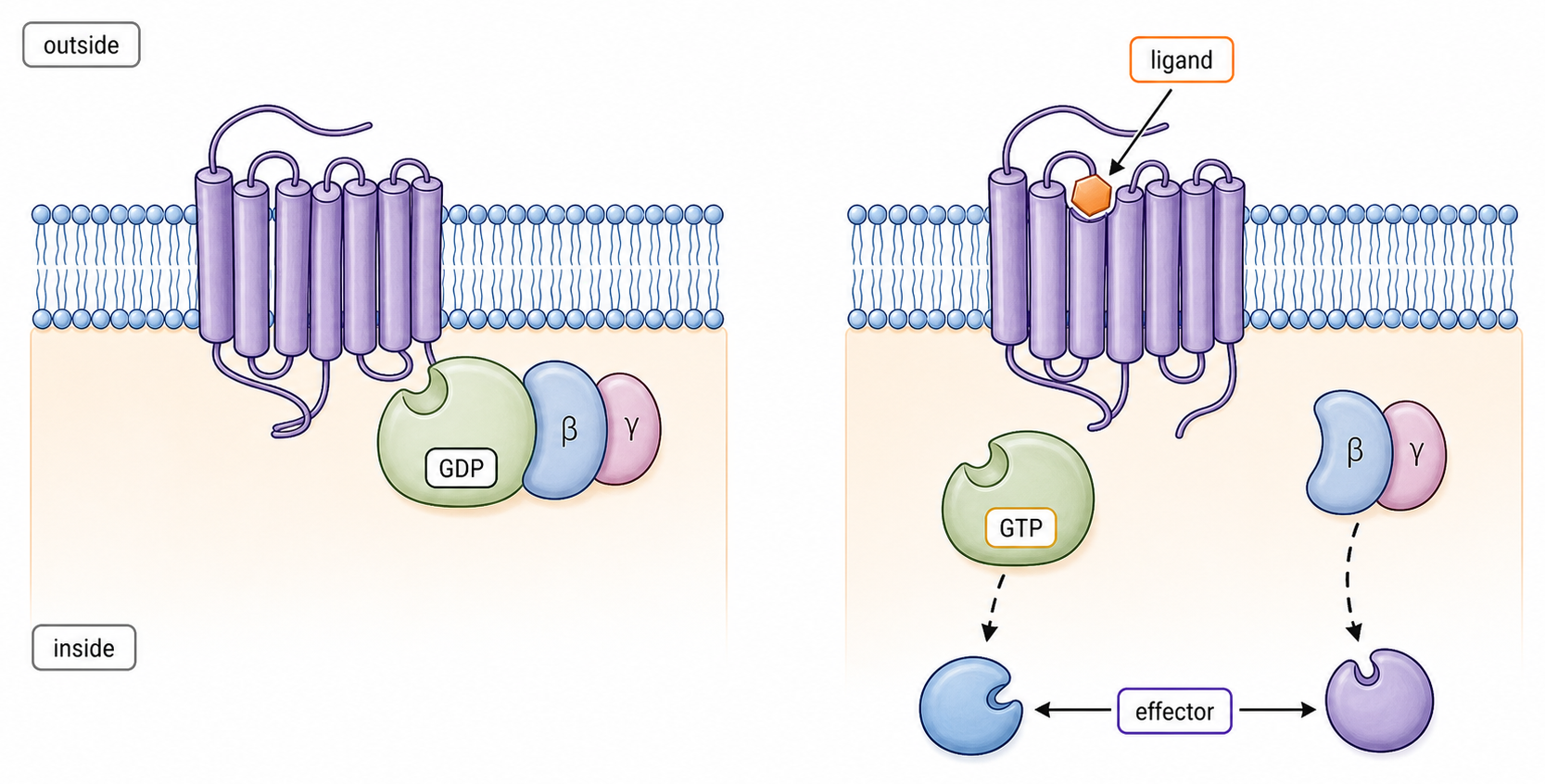
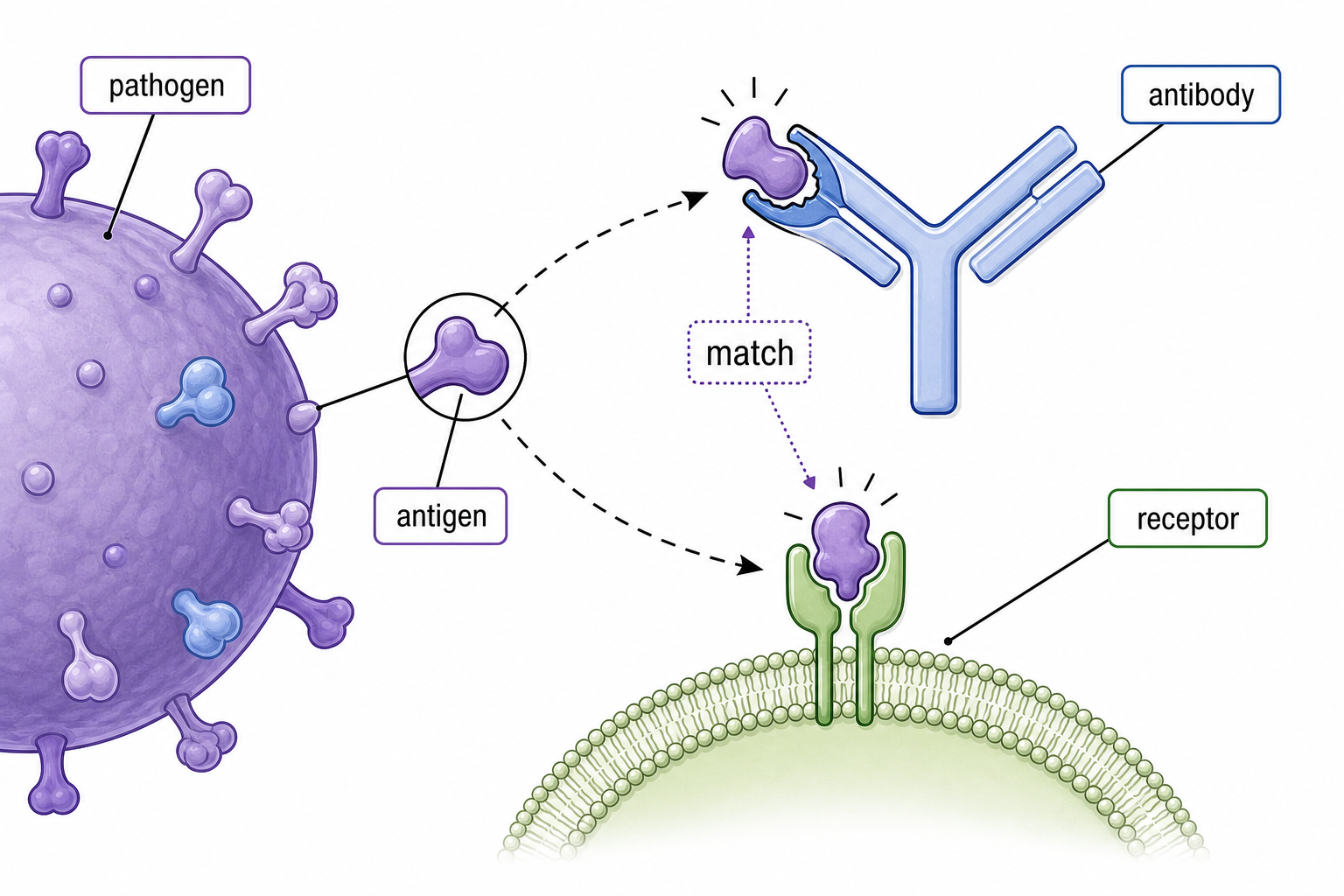
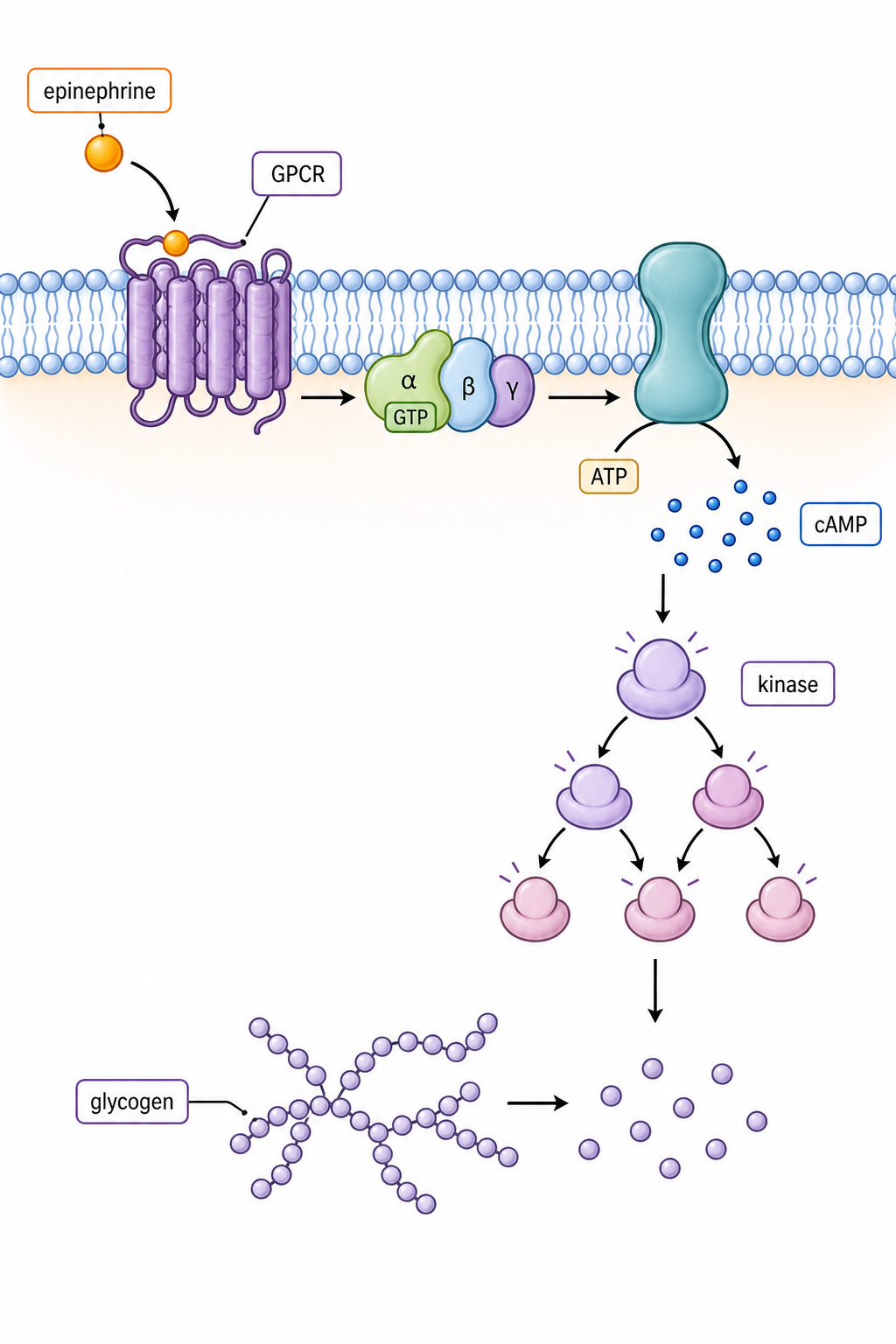
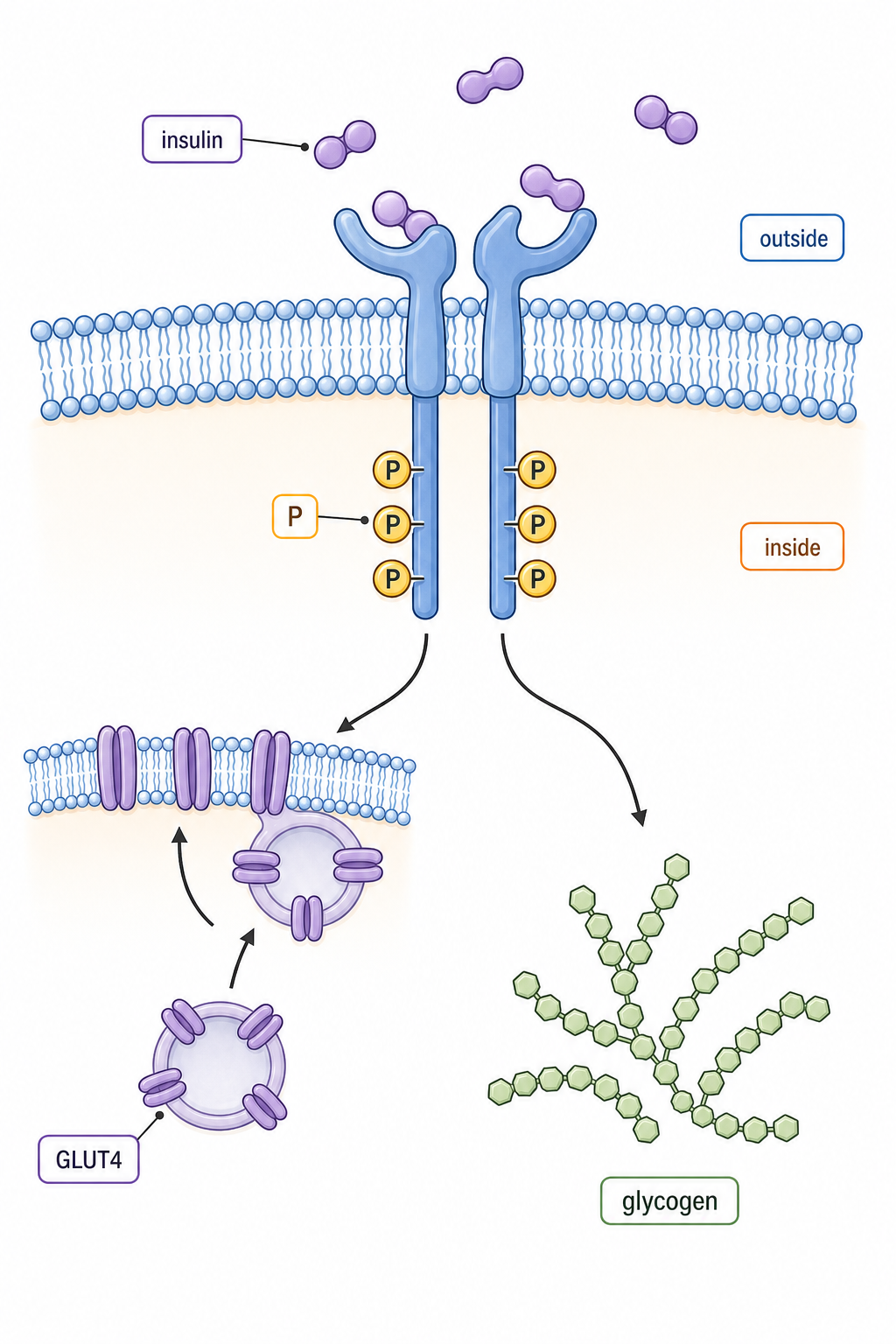
A ligand only affects target cells with the matching receptor. Quorum sensing uses autoinducers and thresholds for group behaviour. Animal signals differ by source, distance, speed, target-cell response, and chemical class. Hydrophilic ligands use transmembrane receptors and relays; steroid and thyroid hormones use intracellular receptors that affect transcription. Named pathways then show the logic: acetylcholine opens sodium channels, GPCRs switch G proteins through GDP-GTP exchange, epinephrine uses cAMP and kinase cascades, insulin RTKs use dimerisation/autophosphorylation to move GLUT4 and promote glycogenesis, steroid hormones change gene expression, and feedback either amplifies or restores stability.

  • Start every signalling answer with ligand specificity and target-cell receptor matching.
  • Then choose the route: local synapse, blood-borne hormone, transmembrane receptor, or intracellular receptor.
  • For named mechanisms, give the sequence, not just the pathway name.
  • Finish feedback comparisons with amplification versus stability.

Concept essentials

  • Local signals act near their release site.
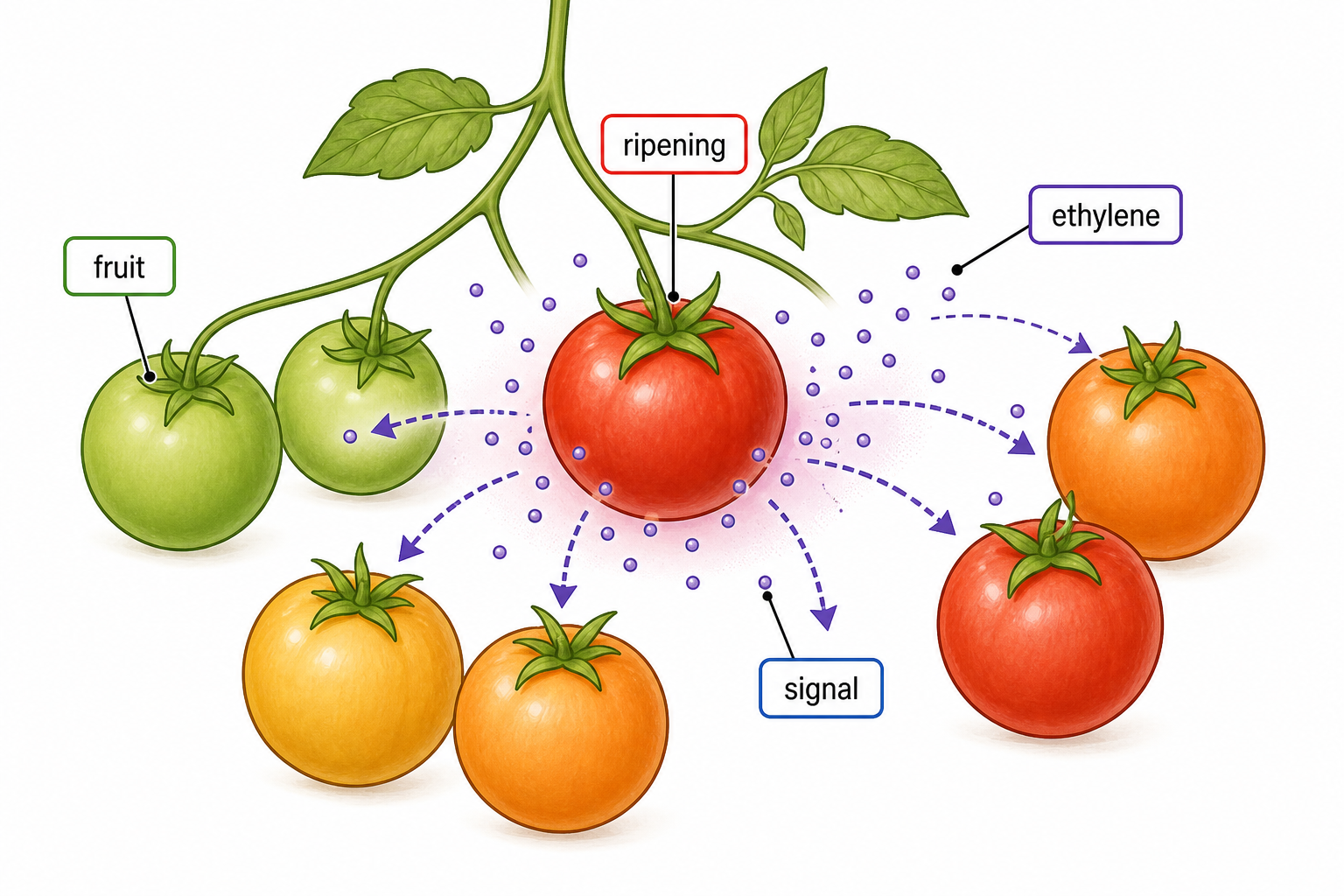
  • Hormones can act on distant target organs or tissues.
  • Leptin acts on the hypothalamus during appetite regulation.
  • Distant signalling still depends on receptor-bearing target cells.
ConceptIB Biology HL