EduNinja
[Maximum number: 3]

The courgette plant, Cucurbita pepo, produces edible fruits that vary in colour and shape.
Fruit colour in courgettes is controlled by the gene A / a.
Fruit shape in courgettes is controlled by the gene B/b.
- A yellow fruit is produced when the dominant allele A is present.
- A round fruit is produced when the dominant allele B is present.

Genes A / a and B/b occur on different chromosomes.
Table 1.1 shows the genotypes and phenotypes of four different varieties of courgette with respect to their fruit colour and shape.
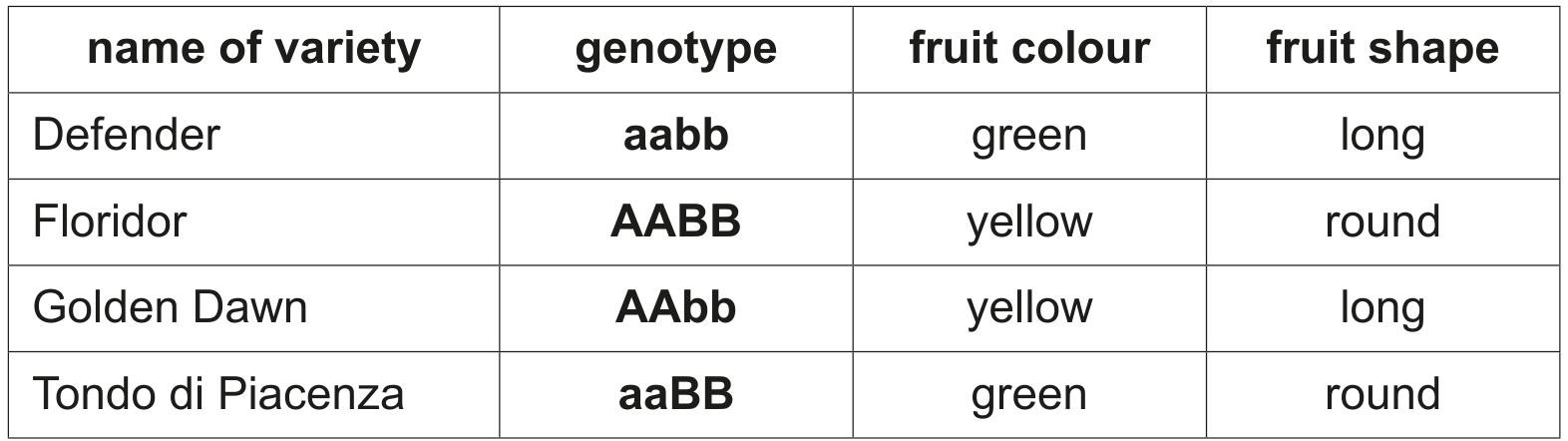
Table 1.1

Table 1.1

(a)

Watermelons, Citrullus lanatus, are plants in the same family as courgettes. They produce large round edible fruits that usually contain many hard seeds. Seeds are the structures formed when the male and female gametes fuse at fertilisation.

In the 1990s a triploid (3 n) watermelon plant was developed. To produce the triploid watermelon plant, a normal diploid parent plant ( 2 n=22 ) was crossed with an artificially created tetraploid plant (4 n=44).

Triploid watermelon plants develop edible fruits but these are sterile and do not contain seeds, making them more enjoyable to eat.

Explain why the fruits of the triploid plants are sterile and do not contain seeds.
[ 3 ]
(a)

M. musculus produces gametes by meiosis. These gametes are genetically different.

There is random fusion of gametes at fertilisation.

[ 2 ]
(i)

Explain why meiosis is important in the life cycle of M. musculus, apart from producing genetically different gametes.

[ 2 ]
(a)

Meiosis is described as reduction division.
Explain why meiosis is necessary in the life cycle of a sexually reproducing organism.

[ 3 ]
[Maximum number: 3]

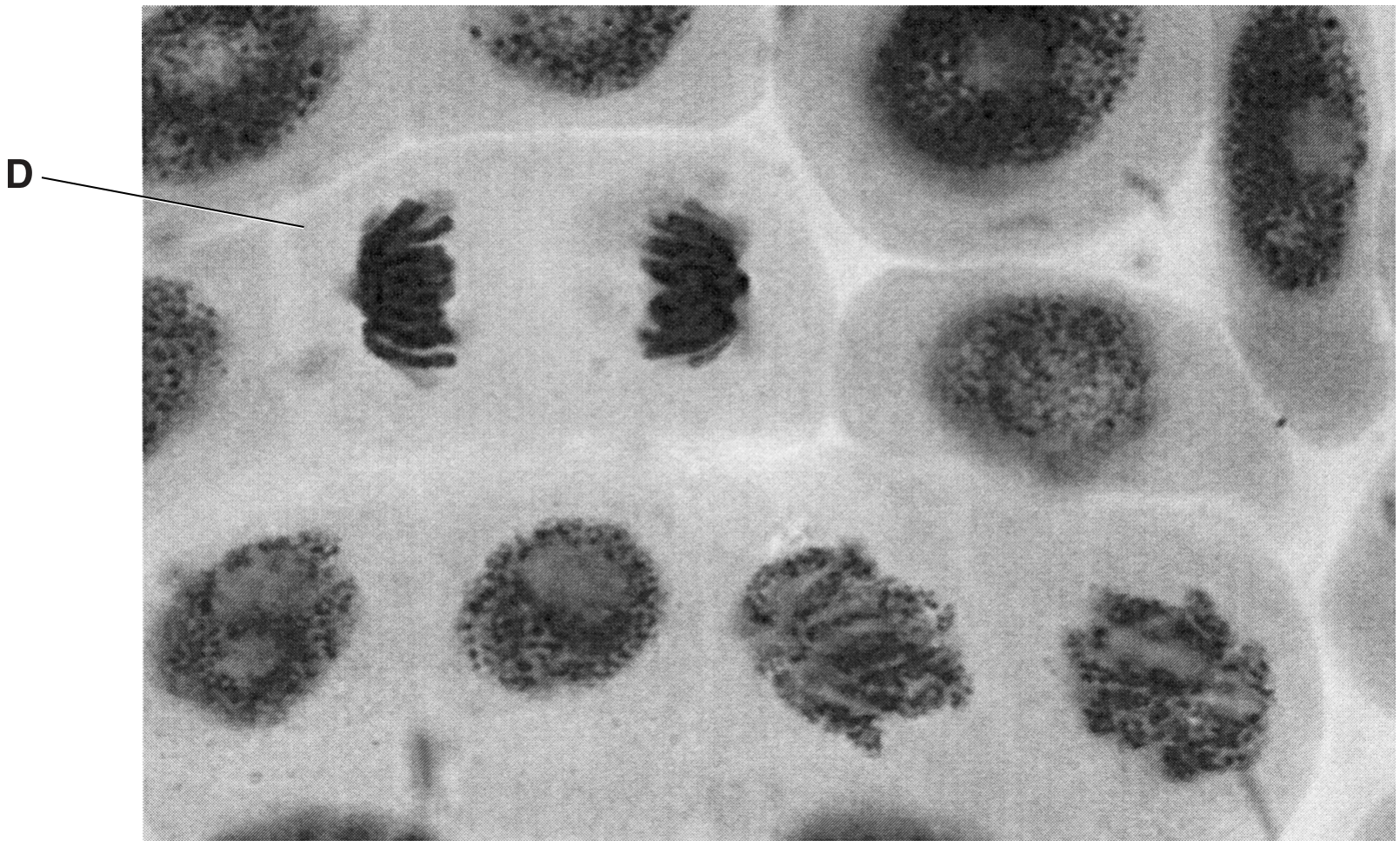
Fig. 3.1 is a light micrograph of cells in the root tip of the garlic plant Allium sativum. It has a diploid number (2 n) of 16.

Fig. 3.1

Fig. 3.1

(a)
(i)

Explain why a plant such as A. sativum produces haploid cells.

[ 3 ]
[Maximum number: 1]

Diploid (2 n) organisms that reproduce sexually produce haploid (n) gametes.
Some plants, such as wheat, can produce diploid or haploid gametes. These gametes can fertilise other diploid or haploid gametes.

Which statements are correct for plants like these?
1 Diploid gametes may be produced by a fault in the reduction division (meiosis).
2 The offspring will always show an increased chromosome number.
3 The offspring could be either 2 n, 3 n or 4 n.
4 The chromosome number could, in theory, increase with each generation.

A

1, 2 and 3

B

1, 2 and 4

C

1, 3 and 4

D

2, 3 and 4

[Maximum number: 1]

2 For organisms undergoing sexual reproduction, a reduction division occurs before fertilisation.
Which reasons explain why this is necessary?
1 increase genetic variation
2 prevent doubling of the chromosome number
3 reduce the chances of mutation

A

1 only

B

2 only

C

2 and 3 only

D

1, 2 and 3

[Maximum number: 4]

Meiosis is described as a reduction division because the number of chromosomes in the daughter cells is reduced by half.

(a)

Explain the need for a reduction division during meiosis.

[ 4 ]
[Maximum number: 2]

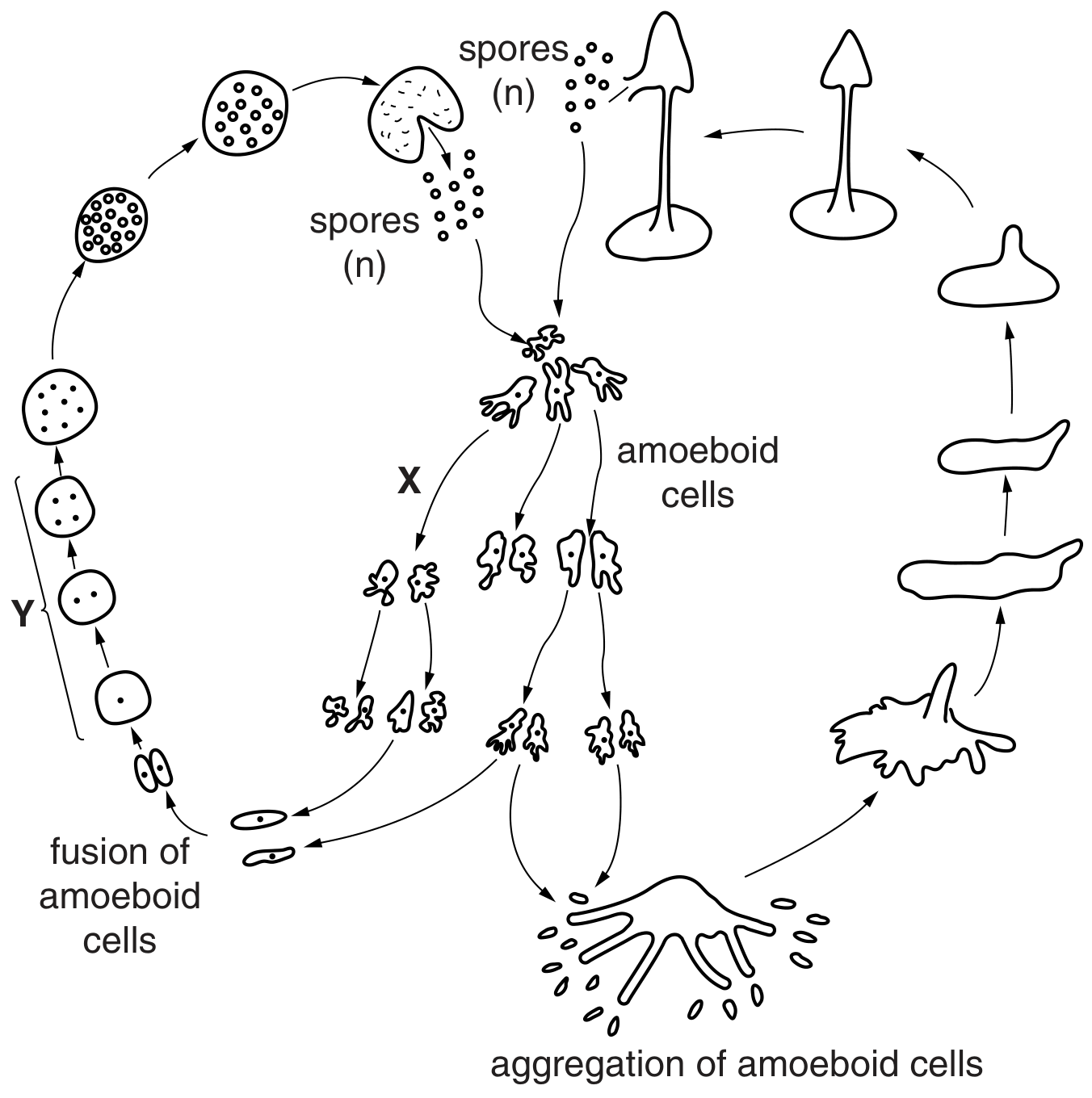
The slime mould, Dictyostelium discoideum, is a eukaryote and a decomposer of protein-rich material.

Fig. 5.1 shows the life cycle of D. discoideum.

Fig. 5.1

Fig. 5.1

(a)

State what is meant by the term reduction division and explain why this division is necessary in a life cycle, such as that shown in Fig. 5.1.

[ 2 ]
0