EduNinja
(a)

In mammals, the hormone ACTH is released from the anterior pituitary gland. ACTH stimulates the cells of the adrenal glands to synthesise the hormone cortisol. This is an example of cell signalling.

The main stages of cell signalling involving ACTH are similar to the main stages of cell signalling by adrenaline.

Describe the main stages of cell signalling involving ACTH.

[ 5 ]
[Maximum number: 1]

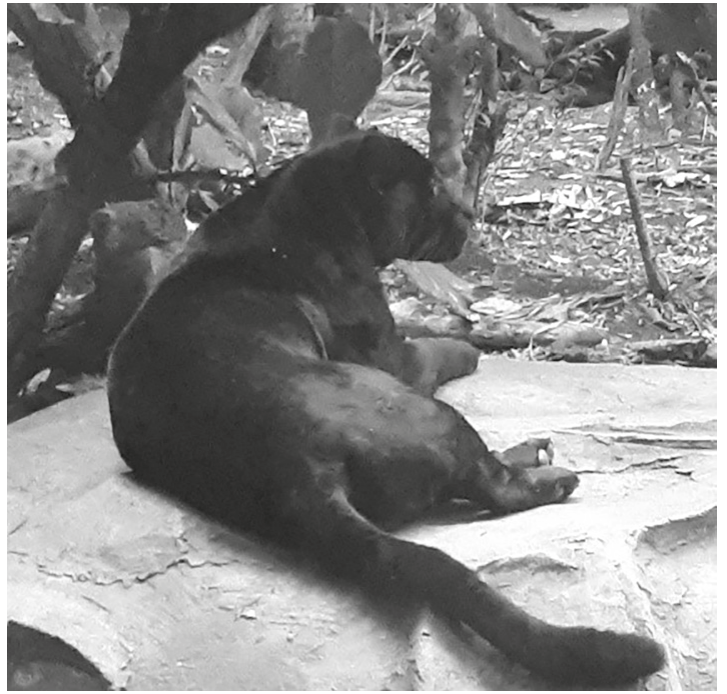
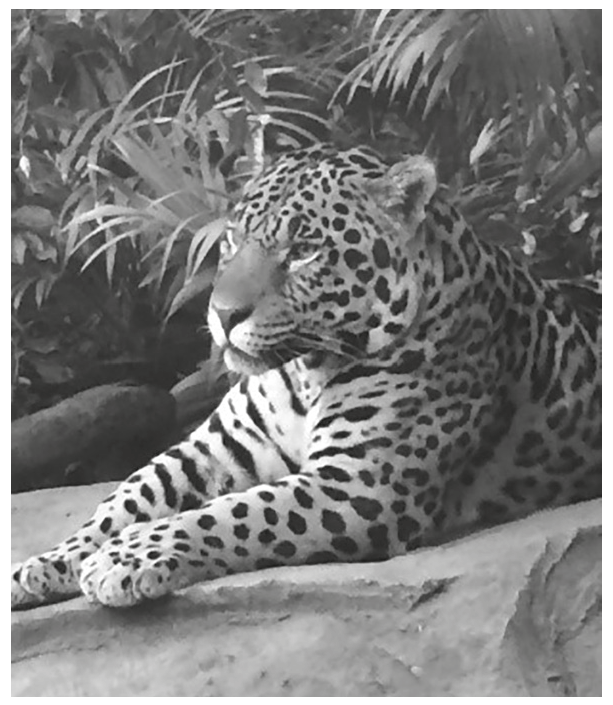
The jaguar, Panthera onca, is a large cat that lives mainly in South America. The majority of jaguars have light brown fur with black spots, as shown in Fig. 1.1. Some jaguars have completely black fur, as shown in Fig. 1.2.

Fig. 1.1

Fig. 1.1

Fig. 1.2

Fig. 1.2

(a)

The pigments involved in fur colour are produced as a result of biochemical pathways that take place in cells called melanocytes. These pathways are similar to those that occur in human melanocytes.

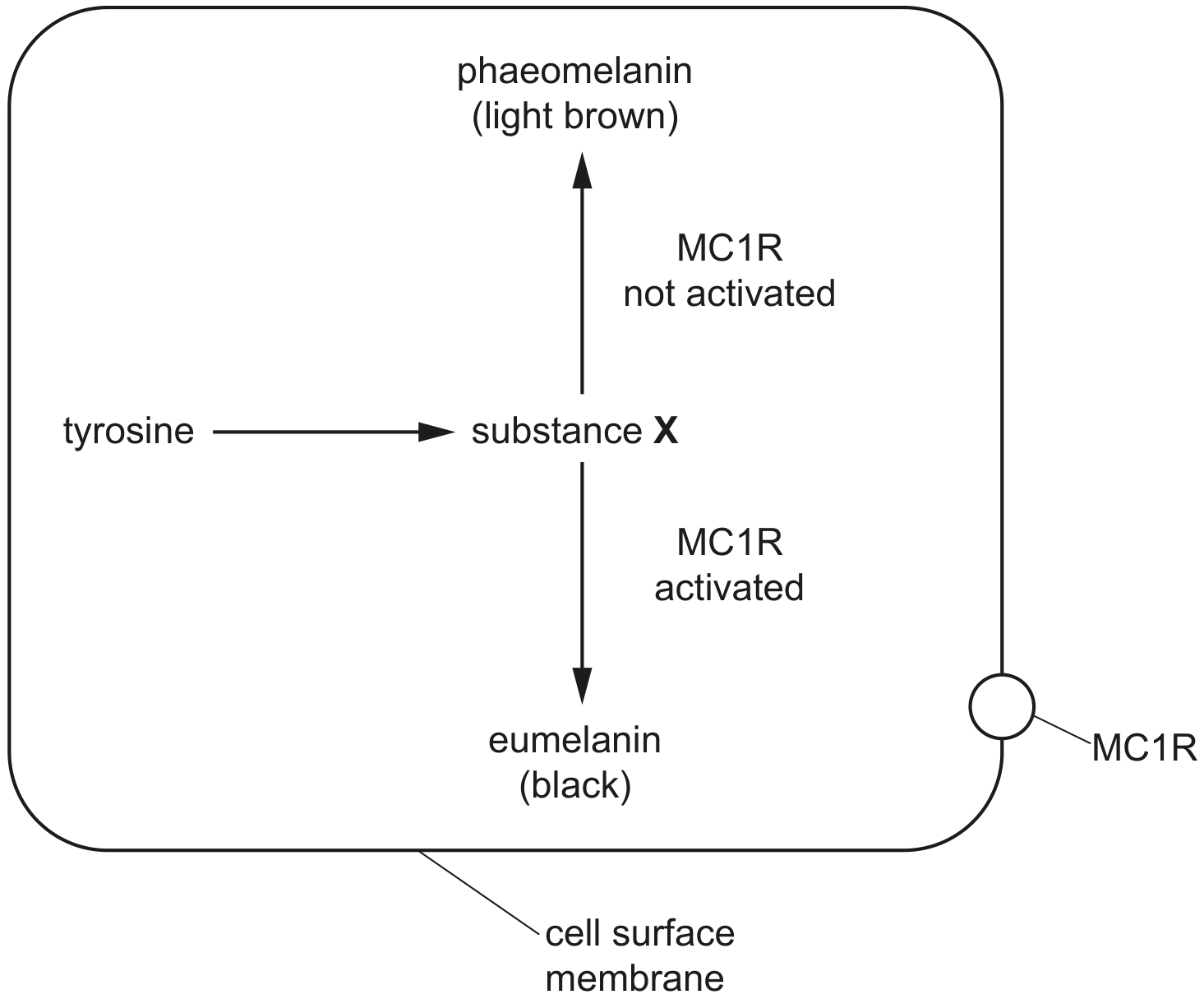
The melanocortin 1 receptor (MC1R) is located on the cell surface membrane of melanocytes and is coded for by the MC1R gene.

Fig. 1.3 outlines the processes that occur in jaguar melanocytes.

Fig. 1.3

Fig. 1.3

[ 1 ]
(i)

When MC1R is activated a second messenger is produced in the cell.

Give an example of a second messenger.

[ 1 ]
(a)

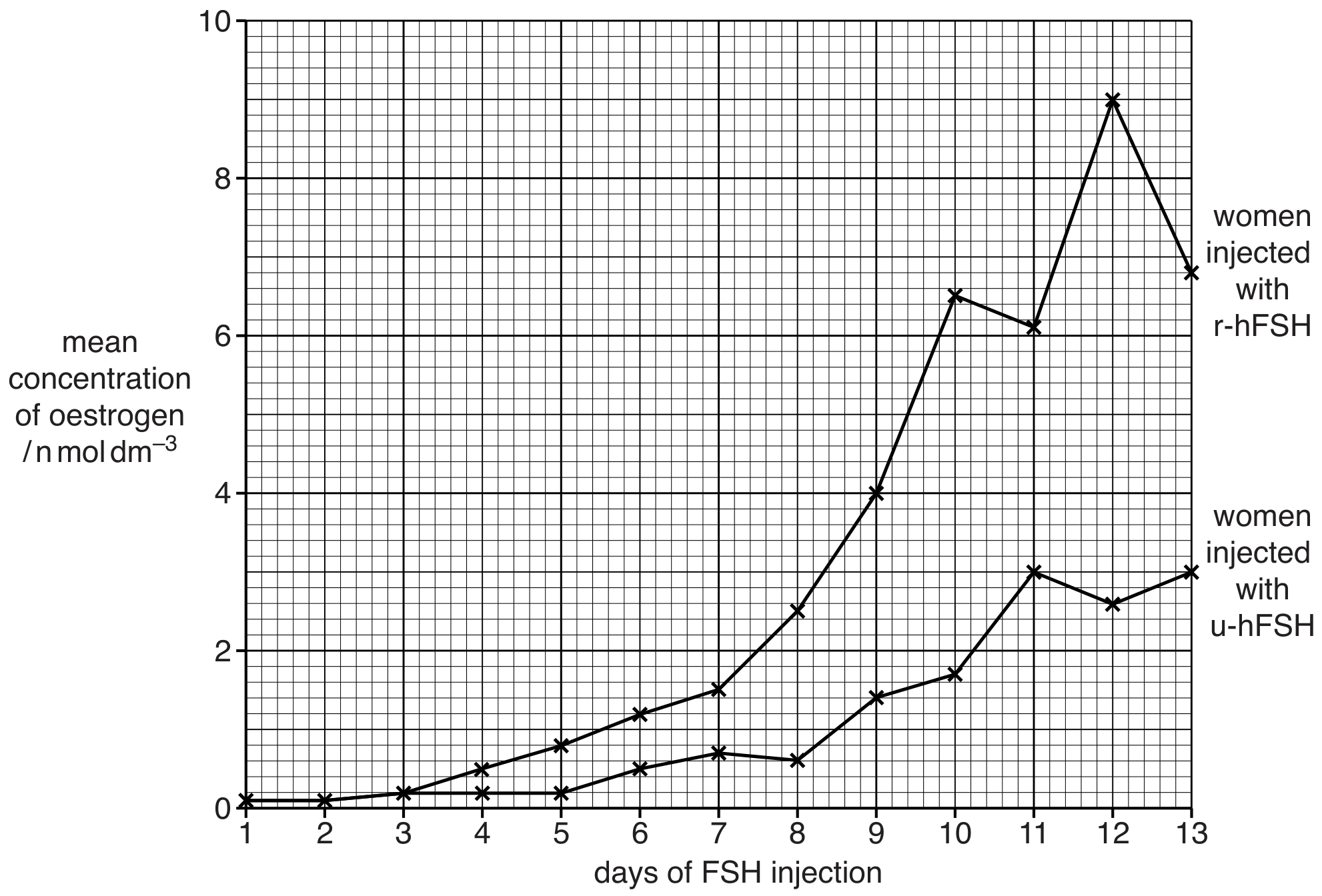
Whilst the two groups of women described in (d) were being injected at daily intervals with FSH, the concentrations of oestrogen in their blood were measured.

The results are shown in Fig. 2.1.

Fig. 2.1

Fig. 2.1

[ 2 ]
(i)

Describe the role of oestrogen in the preparation of these women to receive an embryo.

3 Spartina alterniflora is a grass that grows in salt marshes. It spreads by means of seeds and by underground stems. On its native east coast of North America it prevents salt marshes from being eroded by the sea and provides a food source for a large number of different species of animals.

Some time after its introduction to the west coast of North America in 1973, S. alterniflora hybridised with Californian cord grass, S. foliosa. The hybrid now outcompetes the native species.

The hybrid differs from its parent species in a number of ways:
- it is taller
- it produces very large numbers of pollen grains which are dispersed by wind to the other species, producing yet more hybrid plants
- it produces larger numbers of seeds capable of germination
- it can self-pollinate.

[ 2 ]
(a)

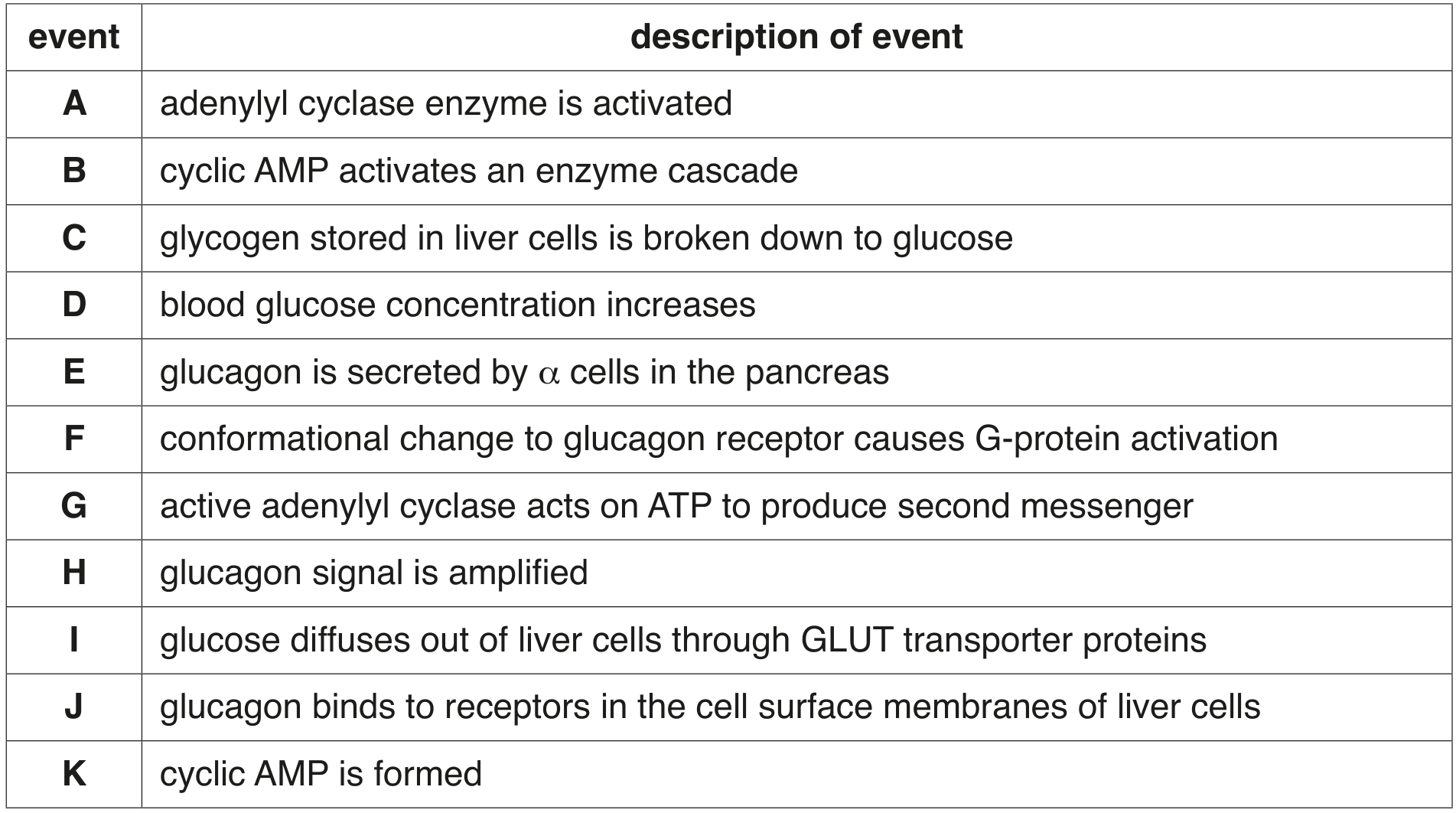
The hormone glucagon is an example of a cell signalling molecule. Table 2.1 lists the main events that occur when the blood glucose concentration decreases below the set point.

The events are not listed in the correct order.

Table 2.1

Table 2.1

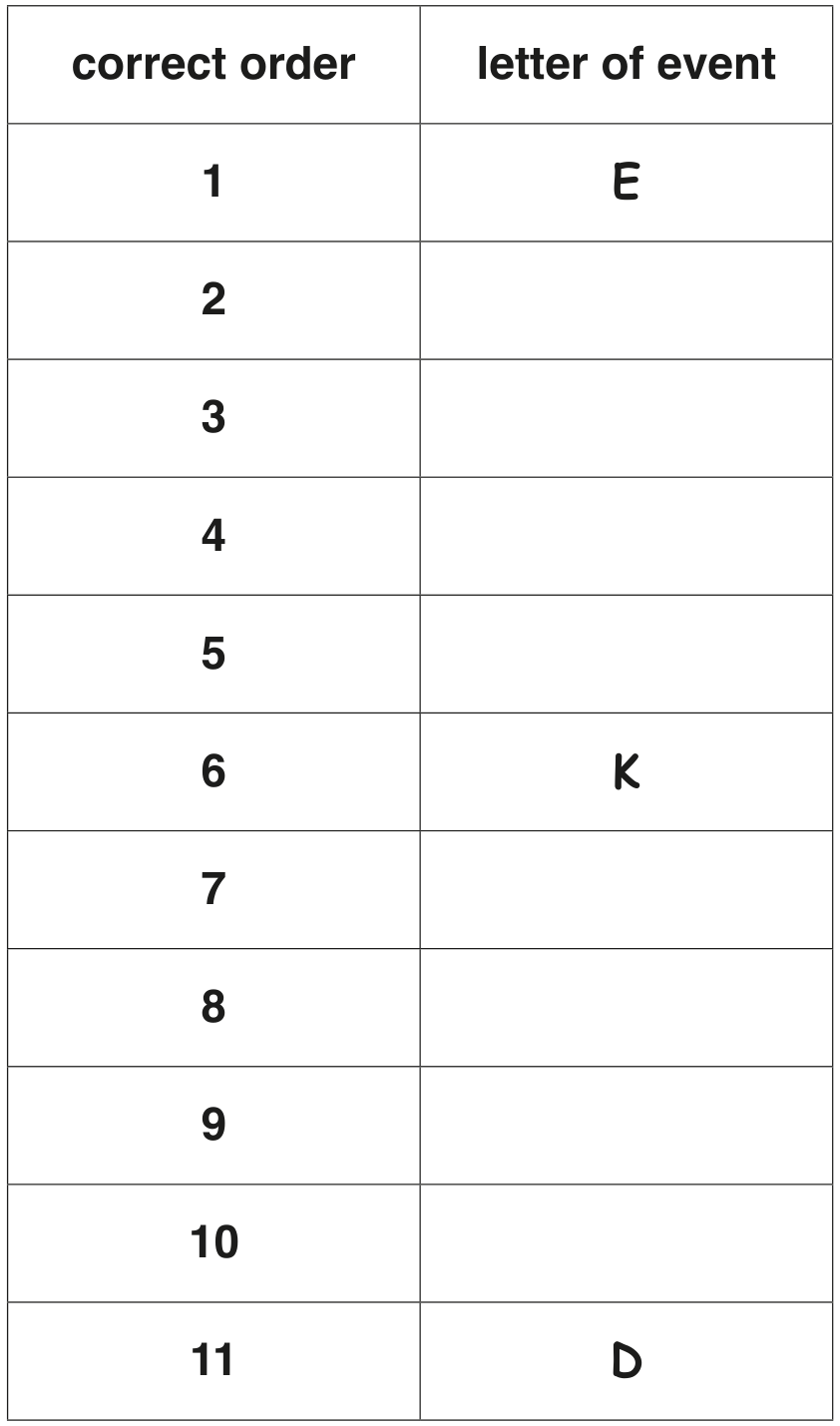
Complete Table 2.2 to show the correct order in which these events occur.
Three of the events have already been placed in their correct order.

Table 2.2

Table 2.2

[ 4 ]
[Maximum number: 1]

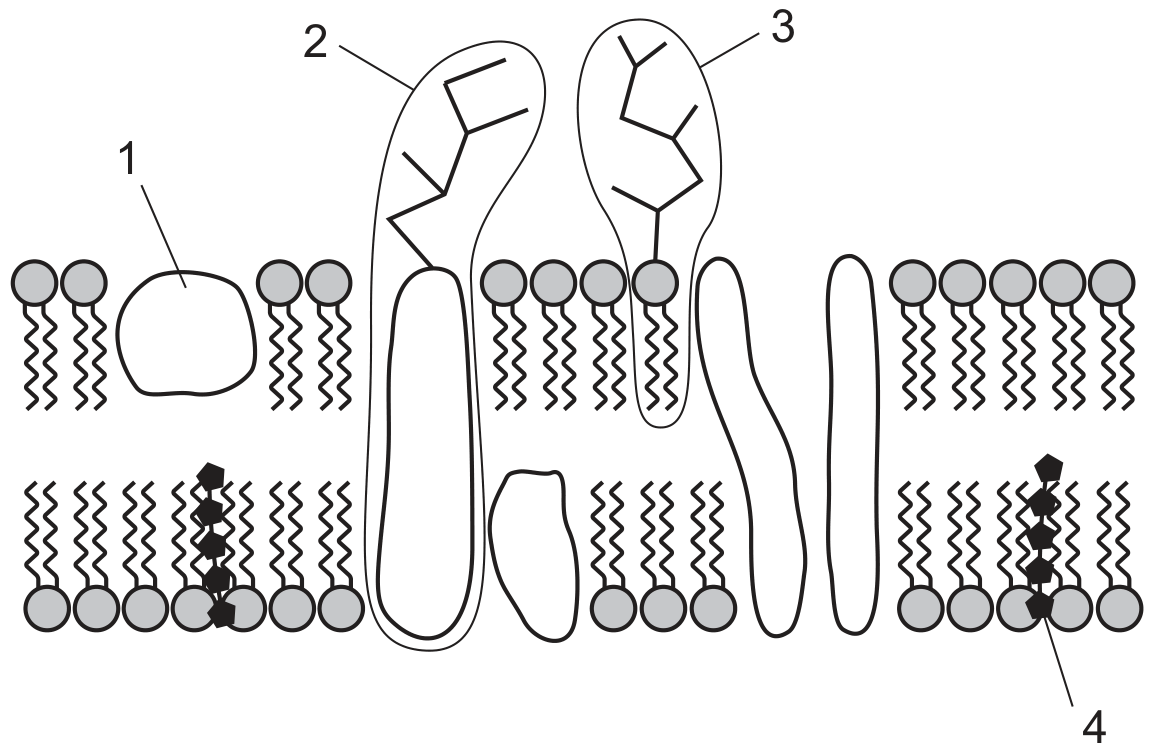
The diagram shows the fluid mosaic model of membrane structure.
Structures 1, 2, 3 and 4 are types of molecule.

Question image

Which types of molecules are always identical?

A

1, 2 and 3

B

1 and 4

C

2 and 3 only

D

4 only

[Maximum number: 1]

What is the role of G protein in cell signalling?

A

to act as a membrane-bound enzyme

B

to act as a switch releasing a second messenger

C

to amplify the original signal

D

to change the shape of the protein receptor

[Maximum number: 1]

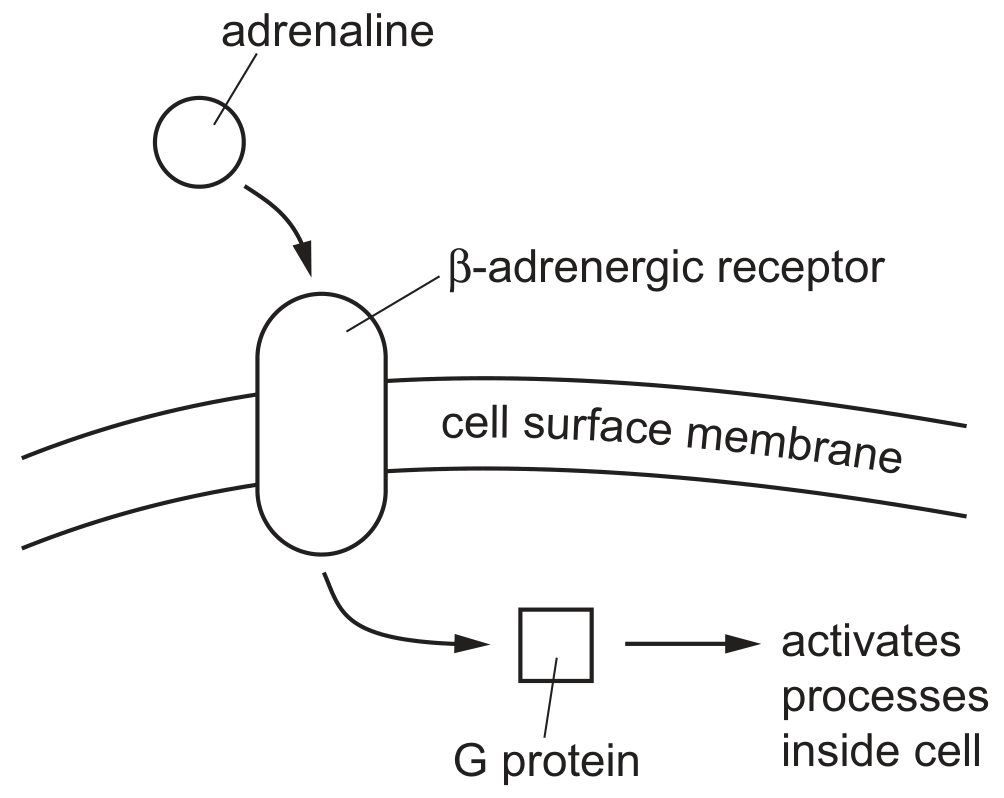
The diagram shows how adrenaline activates processes inside a cell.

Question image

Which row is correct?

type of receptor molecule

result of ligand binding to the receptor

phospholipid

receptor leaves membrane

protein

receptor changes shape

phospholipid

receptor changes shape

protein

receptor leaves membrane

(a)

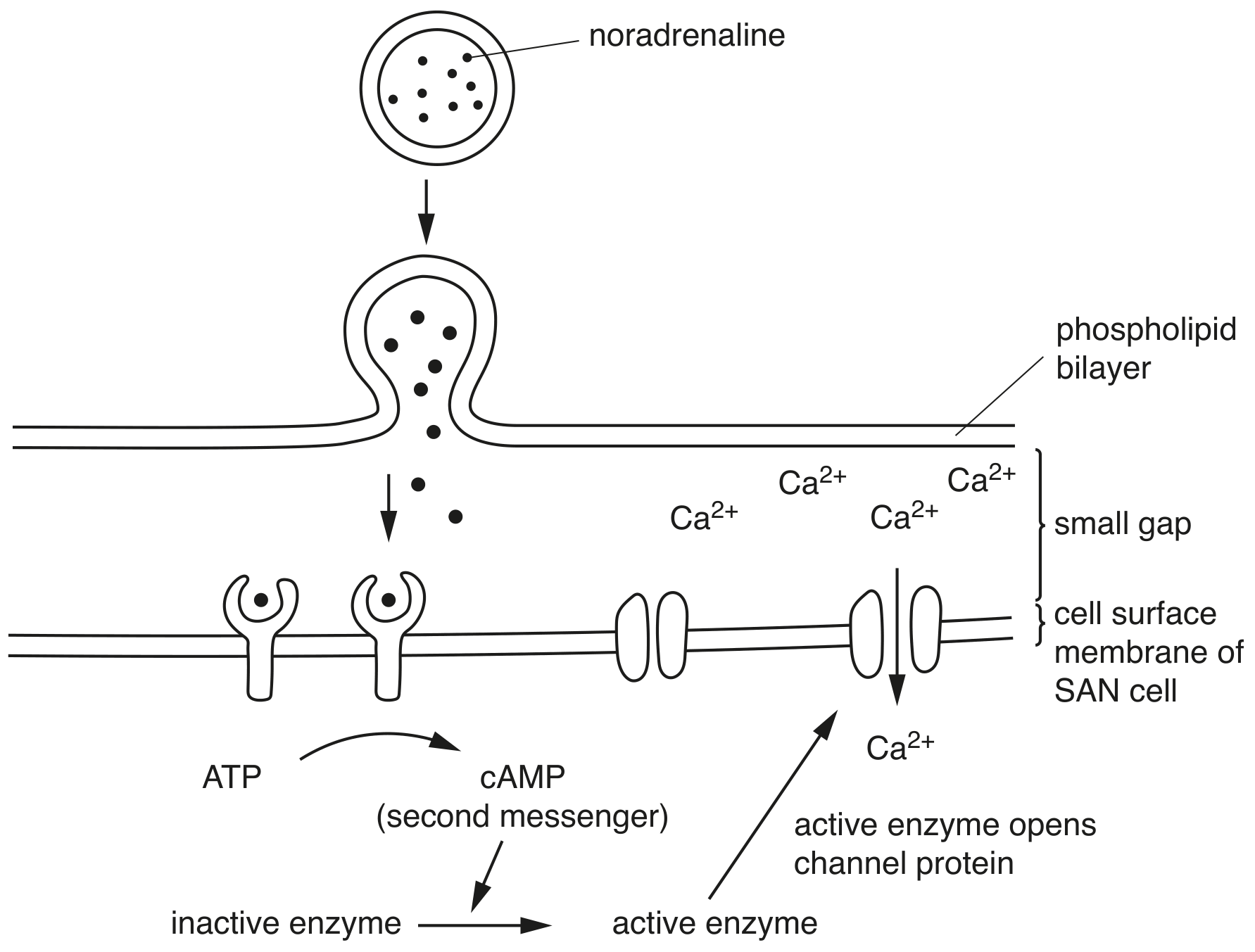
The activity of the SAN is controlled by the nervous system. Noradrenaline is released by nerve cells in the SAN.

Fig. 4.1 shows the role of noradrenaline in causing calcium ions (Ca2+)\left(\mathrm{Ca}^{2+}\right) to enter a cell in the SAN.

Fig. 4.1

Fig. 4.1

With reference to Fig. 4.1, outline the process of cell signalling.

[ 4 ]
(a)
(i)

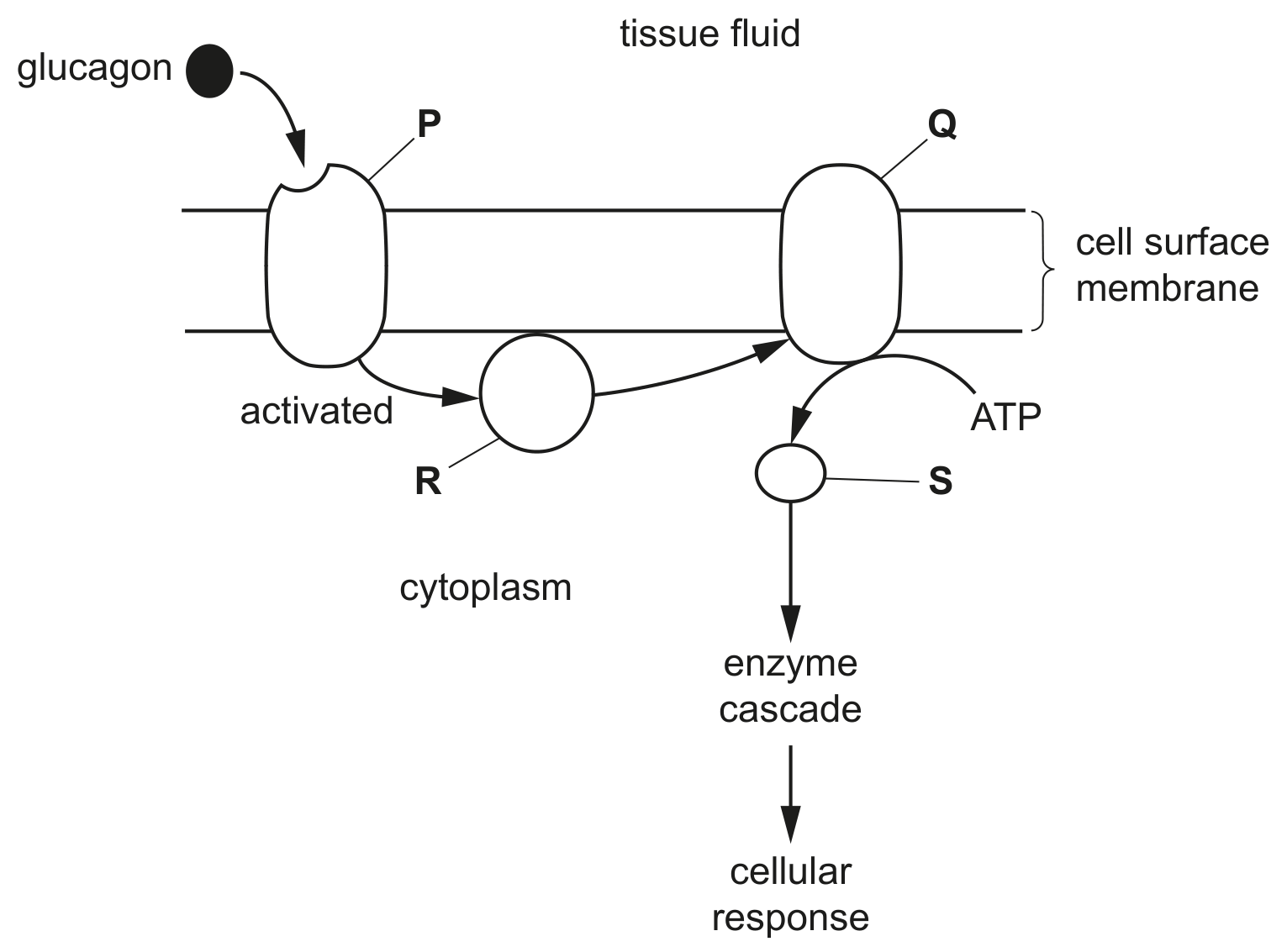
When blood glucose concentration decreases, glucagon is released by the pancreas into the blood and is transported to the cells.

Fig. 6.1 outlines the effect of glucagon on liver cells.

Fig. 6.1

Fig. 6.1

Identify P, Q, R and S shown in Fig. 6.1.
P
Q
R
S

[ 4 ]
0