EduNinja
(a)
(i)

Suggest the role that non-governmental organizations could play in reducing the impact of the tar (oil) sands mining industry.

Opponents say tar sands produce three times more greenhouse gas emissions than conventional fossil fuels; fossil fuels are burned to heat extraction water; underground carbon stores become available; oil produced is burned; boreal forest is cut down; wildlife is displaced or dies; only 10% of water taken from the Athabasca River is returned; toxic waste ponds may leak into river and groundwater; indigenous people may be displaced and face health impacts. Supporters say tar sands improve energy security for Canada and the USA; Canada supplied much crude oil to the USA; Keystone XL may create jobs; companies reinvest in carbon capture and storage; 7.5 million trees have been replanted.

Writer A states that mining infrastructure has cleared 30000 ha of forest and that 300000 ha more could be cleared, describing the industry as a major carbon dioxide emitter. Writer B states that surface mining has affected 0.1% of Canada’s boreal forest and that Alberta oil sands projects account for less than one-tenth of one percent of global greenhouse gas emissions.
[ 3 ]
[Maximum number: 2]

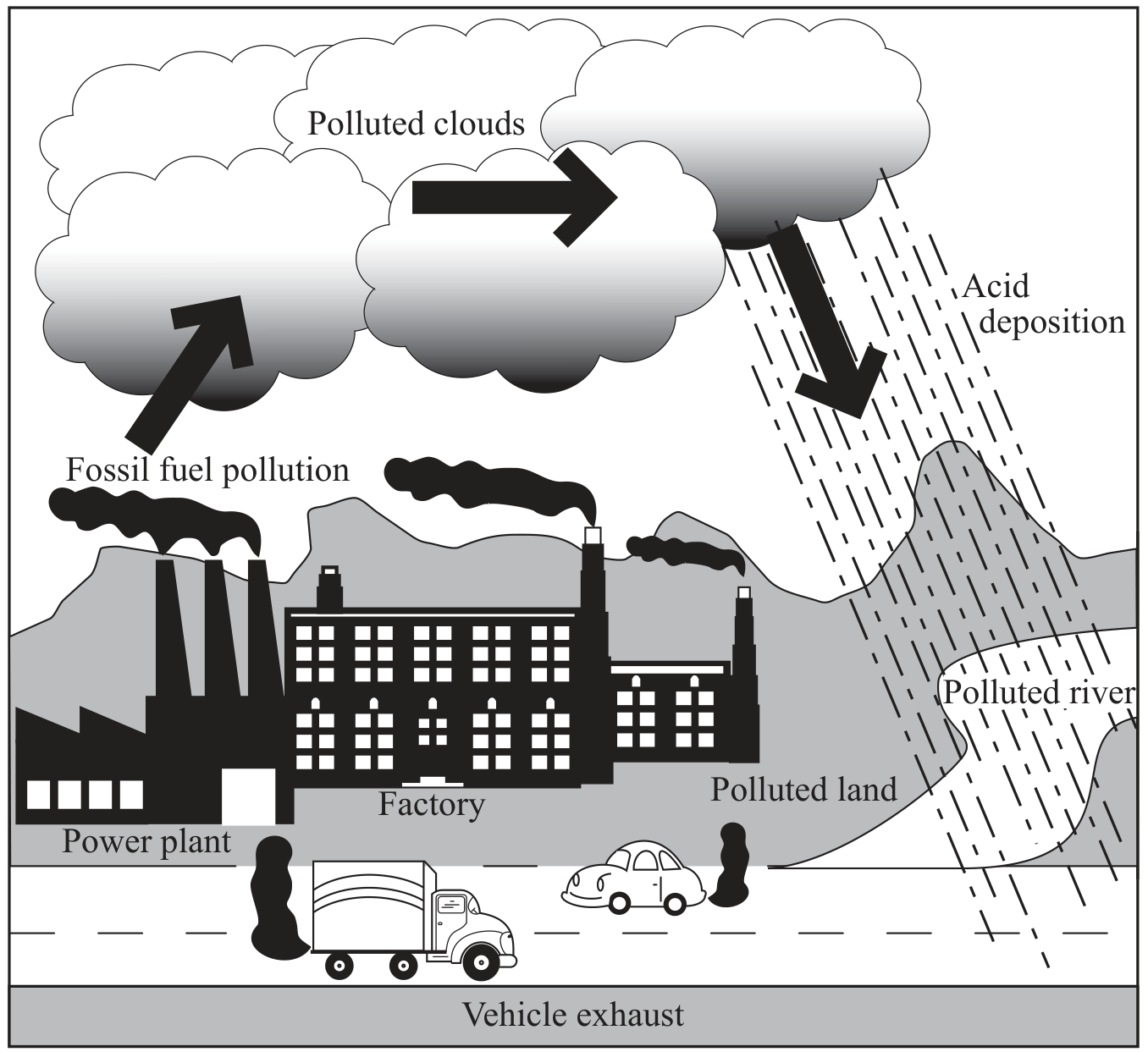
Figure 2 below shows some of the sources and processes that lead to acid deposition.

Figure 2

Figure 2

(a)
(i)

Discuss why acid deposition has been controlled mainly by regional agreements rather than by global agreements.

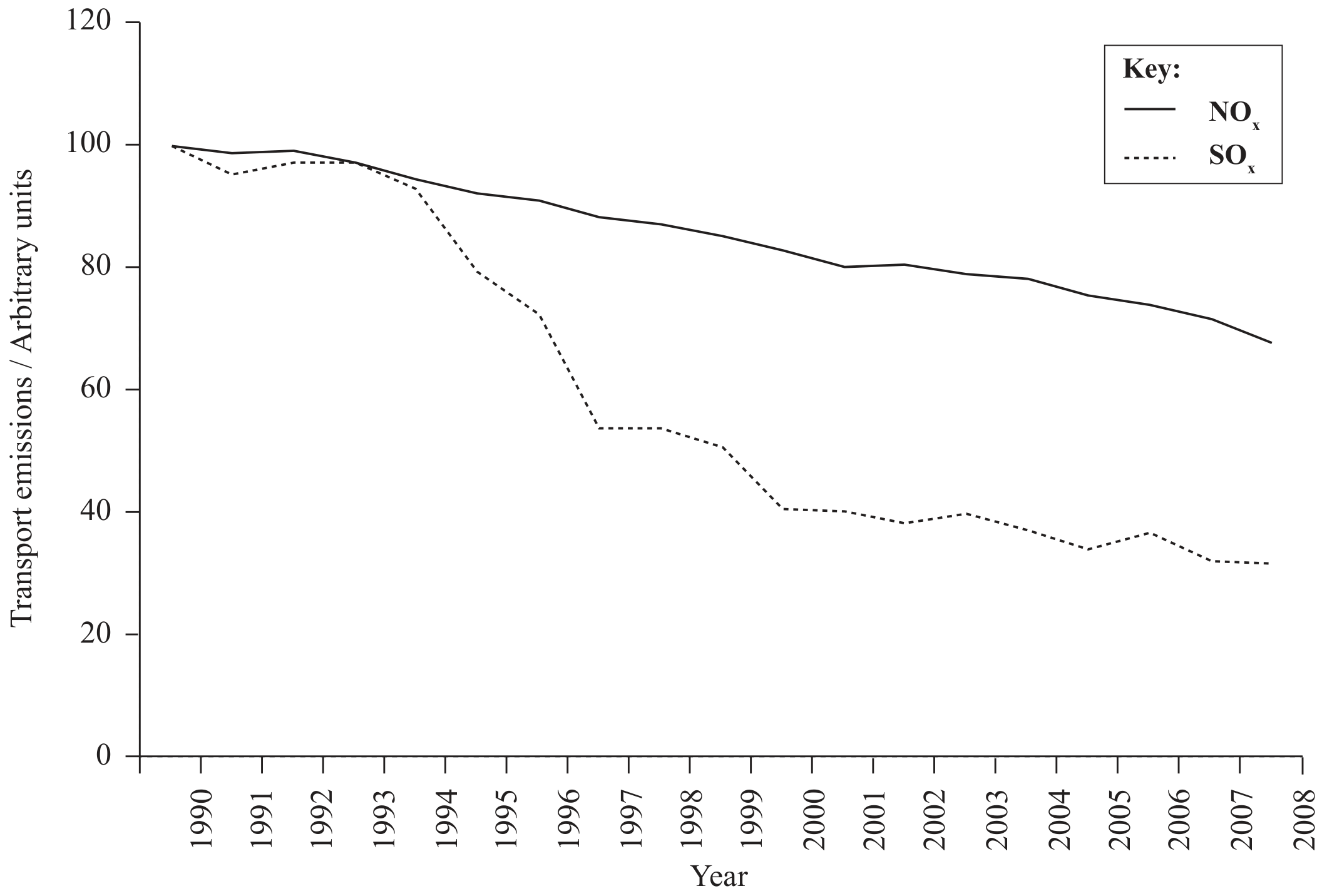
Figure 3 below shows the changes in European transport emissions of SOx\mathrm{SO}_{\mathrm{x}} and NOx\mathrm{NO}_{\mathrm{x}} between 1990 and 2007.

Figure 3

Figure 3

[ 2 ]
[Maximum number: 2]

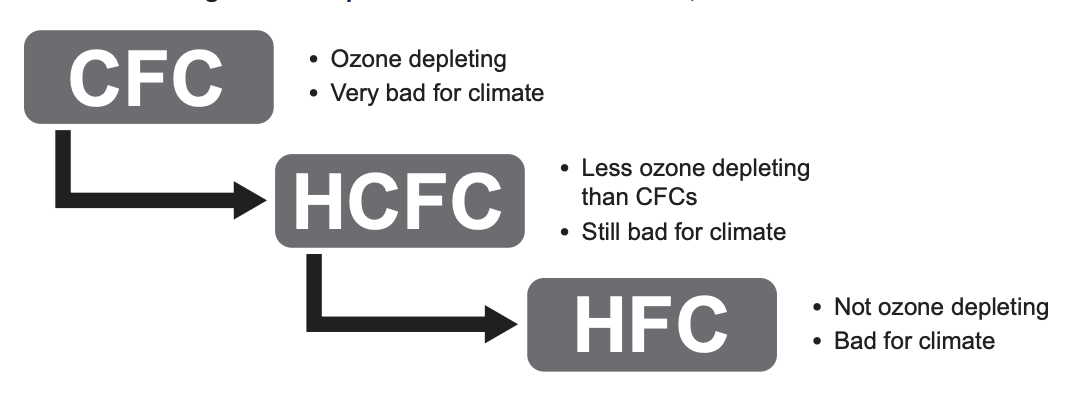
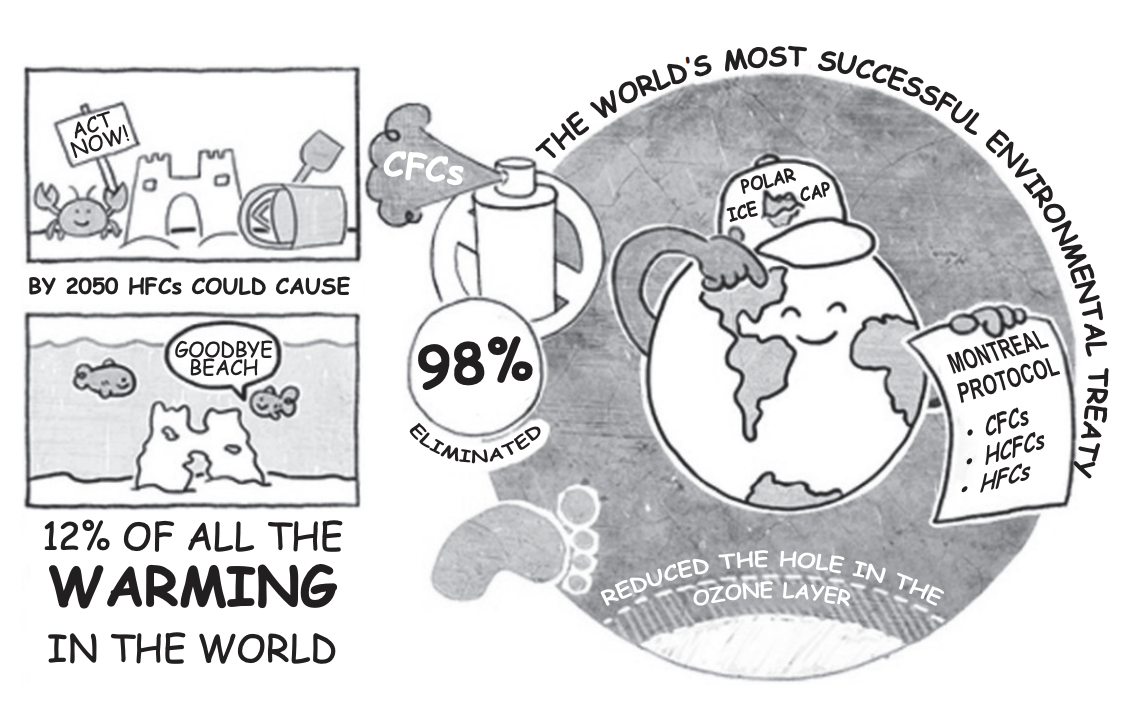
The hole in the ozone layer over Antarctica, discovered in the 1980s, was caused by chlorofluorocarbons (CFCs). The Montreal Protocol requires the use of hydrochlorofluorocarbons (HCFCs) or hydrofluorocarbons (HFCs) instead of CFCs (Figure 3). However, these two gases are also linked to environmental problems (Figure 4).

Figure 3: Comparison of the effects of CFCs, HCFCs and HFCs

Figure 3: Comparison of the effects of CFCs, HCFCs and HFCs

Figure 4: HCFCs and HFCs cause less damage than CFCs but still affect the environment

Figure 4: HCFCs and HFCs cause less damage than CFCs but still affect the environment

(a)
(i)

Identify one advantage of staggered dates for the phasing out of HFCs for countries at different levels of economic development.

[ 1 ]
(ii)

Identify one disadvantage of staggered dates for the phasing out of HFCs for countries at different levels of economic development.

[ 1 ]
(a)

Evaluate the policies or legislation or actions that exist locally, nationally and internationally that address this issue.

[ 7 ]
0