EduNinja
[Maximum number: 5]

Figure 1 below is a pie chart showing the percentages (by volume) of gases in the troposphere.
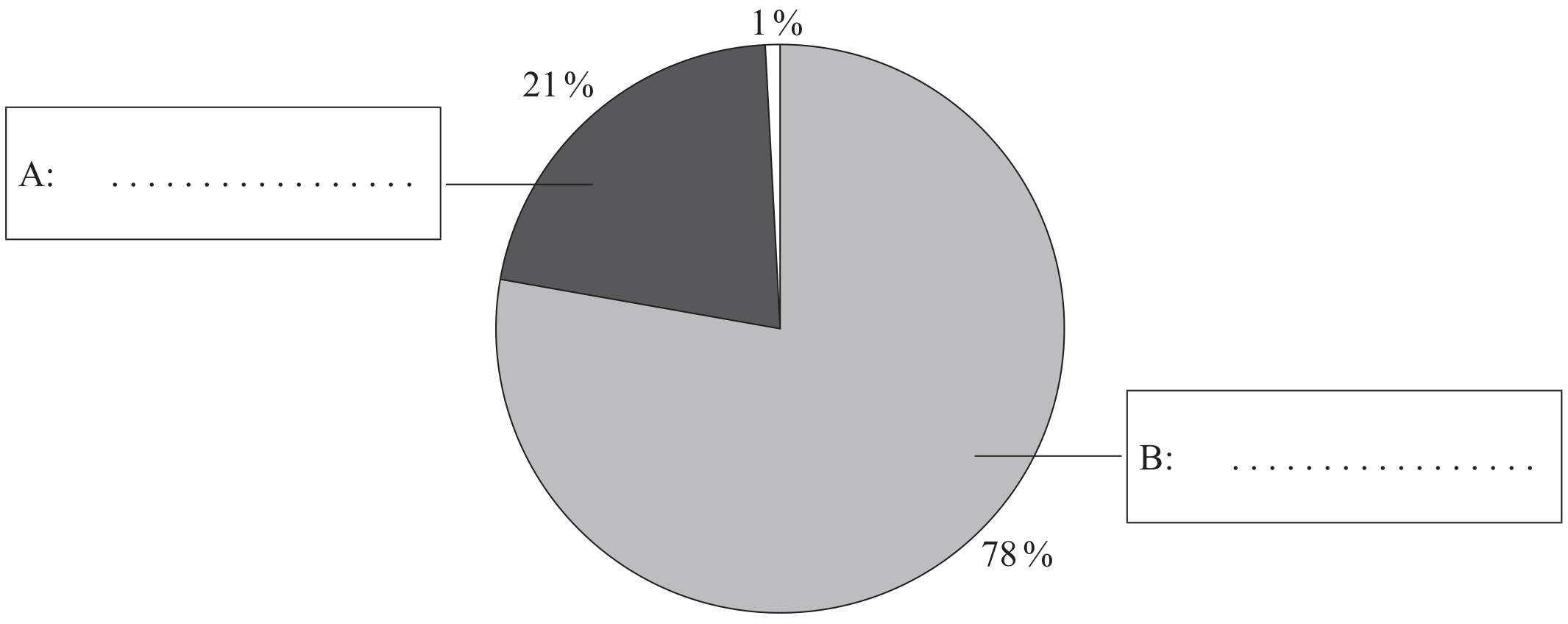
Figure 1

Figure 1

(a)

Label gases A and B on Figure 1 above.

[ 1 ]
(b)
(i)

State the name of the solar radiation absorbed by the protective layer of ozone found in the stratosphere.

[ 1 ]
(ii)

Refrigerators are sometimes a source of ozone-depleting substances. List two other sources of ozone-depleting substances (ODS).
1.
2.

[ 1 ]
(iii)

Evaluate the success of the Montreal Protocol in reducing emissions of ozone-depleting substances.

[ 2 ]
[Maximum number: 7]
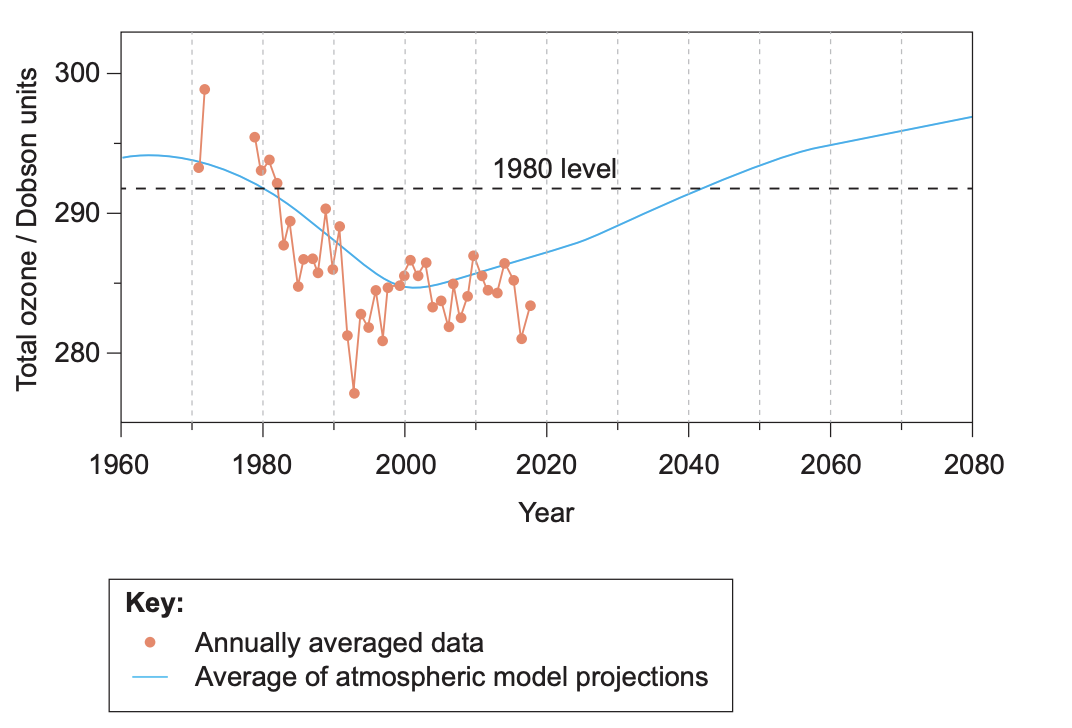
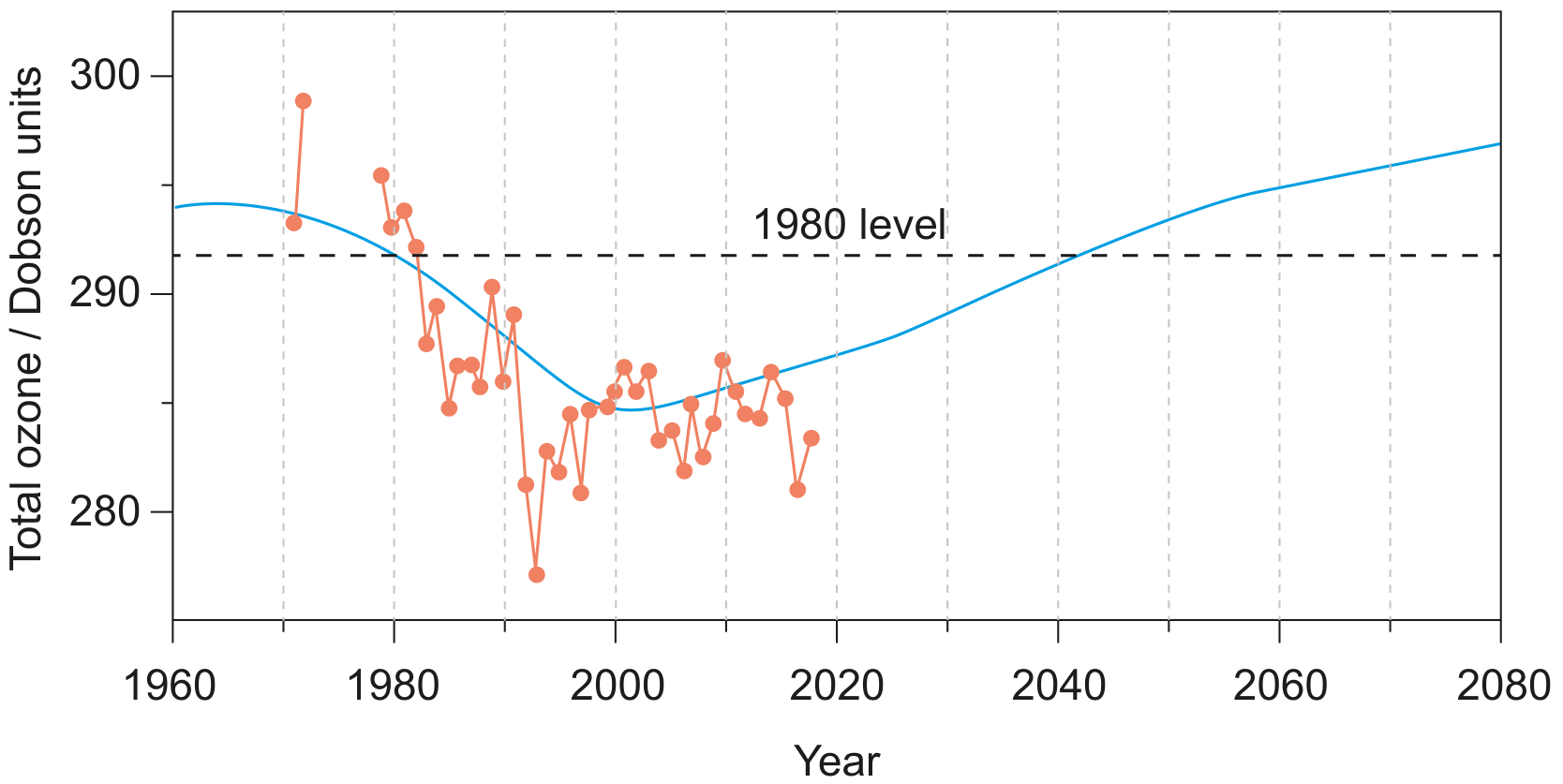
Figure 2: Observed and projected changes in global stratospheric ozone

Figure 2: Observed and projected changes in global stratospheric ozone

Key:
- Annually averaged data
- Average of atmospheric model projections

(a)

Describe the overall trend shown in the recorded annually averaged data in Figure 2.

[ 2 ]
(b)

State one chemical responsible for the trend in the recorded annually averaged data between 1980 and 1990 shown in Figure 2.

[ 1 ]
(c)

Outline one impact of low concentrations of stratospheric ozone on humans.

[ 1 ]
(d)

Identify the year that stratospheric ozone is predicted to return to 1980 levels in Figure 2.

[ 1 ]
(e)

Describe two reasons for the projected change in ozone levels after 2020 in Figure 2.

[ 2 ]
[Maximum number: 7]
Figure 2: Observed and projected changes in global stratospheric ozone

Figure 2: Observed and projected changes in global stratospheric ozone

(a)

Describe the overall trend in the recorded annually averaged data shown in Figure 2.

[ 2 ]
(b)

State one chemical responsible for the trend in the recorded annually averaged data between 1980 and 1990 shown in Figure 2.

[ 1 ]
(c)

Outline one impact of low concentrations of stratospheric ozone on plants.

[ 1 ]
(d)

Identify the year in which stratospheric ozone is predicted to return to 1980 levels in Figure 2.

[ 1 ]
(e)

Describe two reasons for the projected change in ozone levels after 2020 in Figure 2.

[ 2 ]
[Maximum number: 6]

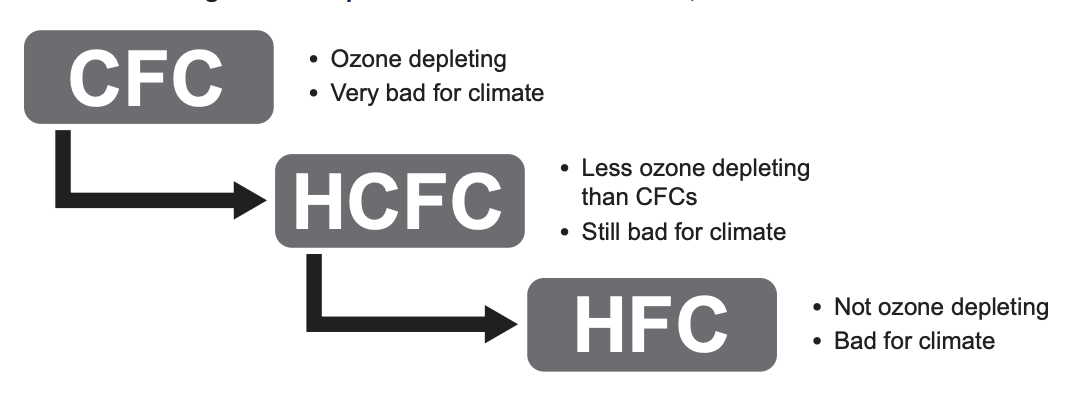
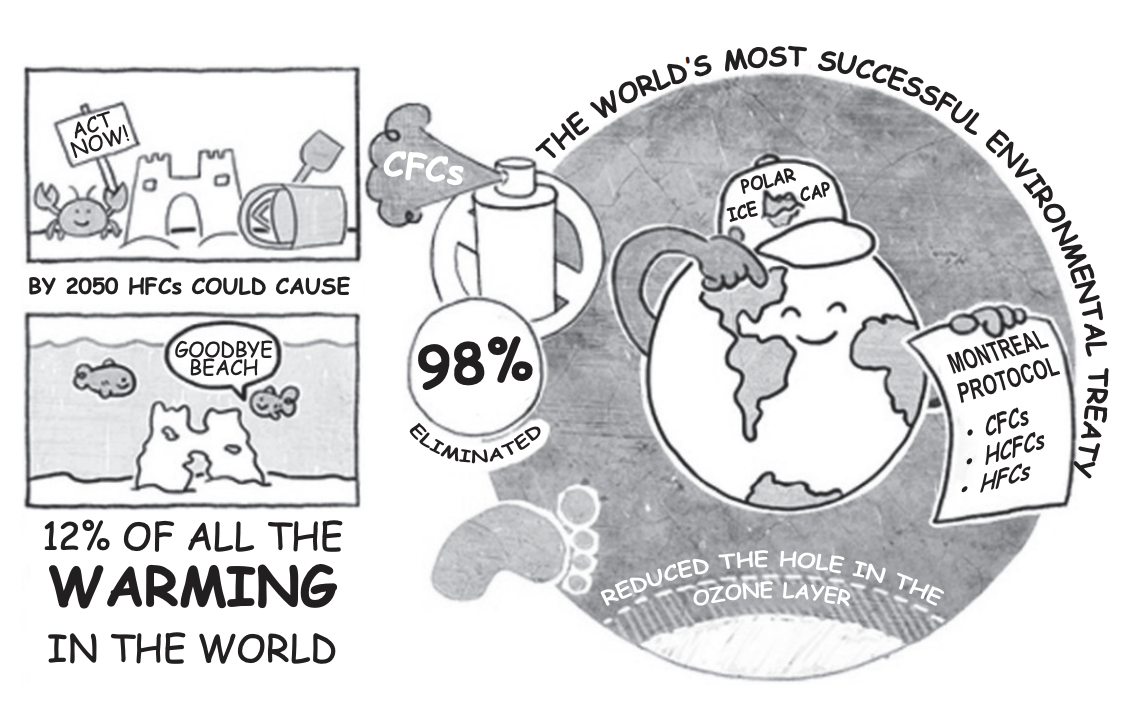
The hole in the ozone layer over Antarctica, discovered in the 1980s, was caused by chlorofluorocarbons (CFCs). The Montreal Protocol requires the use of hydrochlorofluorocarbons (HCFCs) or hydrofluorocarbons (HFCs) instead of CFCs (Figure 3). However, these two gases are also linked to environmental problems (Figure 4).

Figure 3: Comparison of the effects of CFCs, HCFCs and HFCs

Figure 3: Comparison of the effects of CFCs, HCFCs and HFCs

Figure 4: HCFCs and HFCs cause less damage than CFCs but still affect the environment

Figure 4: HCFCs and HFCs cause less damage than CFCs but still affect the environment

(a)

Identify two possible consequences for life on Earth resulting from the depletion of stratospheric ozone.

[ 2 ]
(b)

Outline why the Montreal Protocol may be considered the world's most successful environmental treaty.

[ 2 ]
(c)

Outline why governments agreed to phase out the use of HFCs from 2019 in the Kigali Amendment to the Montreal Protocol.

[ 2 ]
[Maximum number: 5]
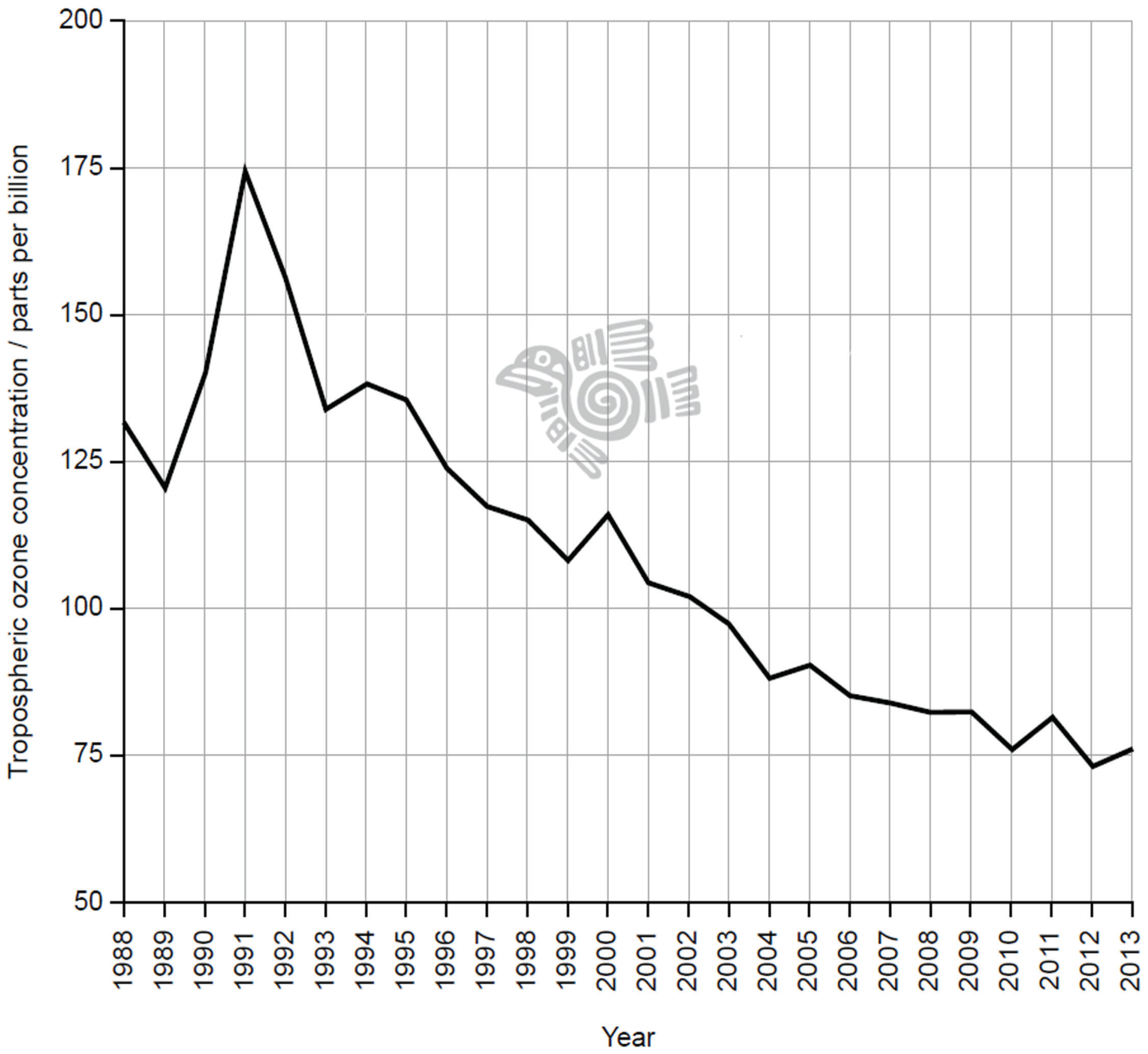
Figure 3: Tropospheric ozone levels in Mexico City

Figure 3: Tropospheric ozone levels in Mexico City

(a)

With reference to Figure 3, calculate the difference between the highest concentration and lowest concentration of tropospheric ozone.

[ 1 ]
(b)

State two factors necessary for the chemical formation of ozone in the troposphere.

[ 2 ]
(c)

Outline why a high concentration of ozone in the troposphere is a direct problem for humans, while in the stratosphere it is a benefit to humans.

[ 2 ]
[Maximum number: 8]
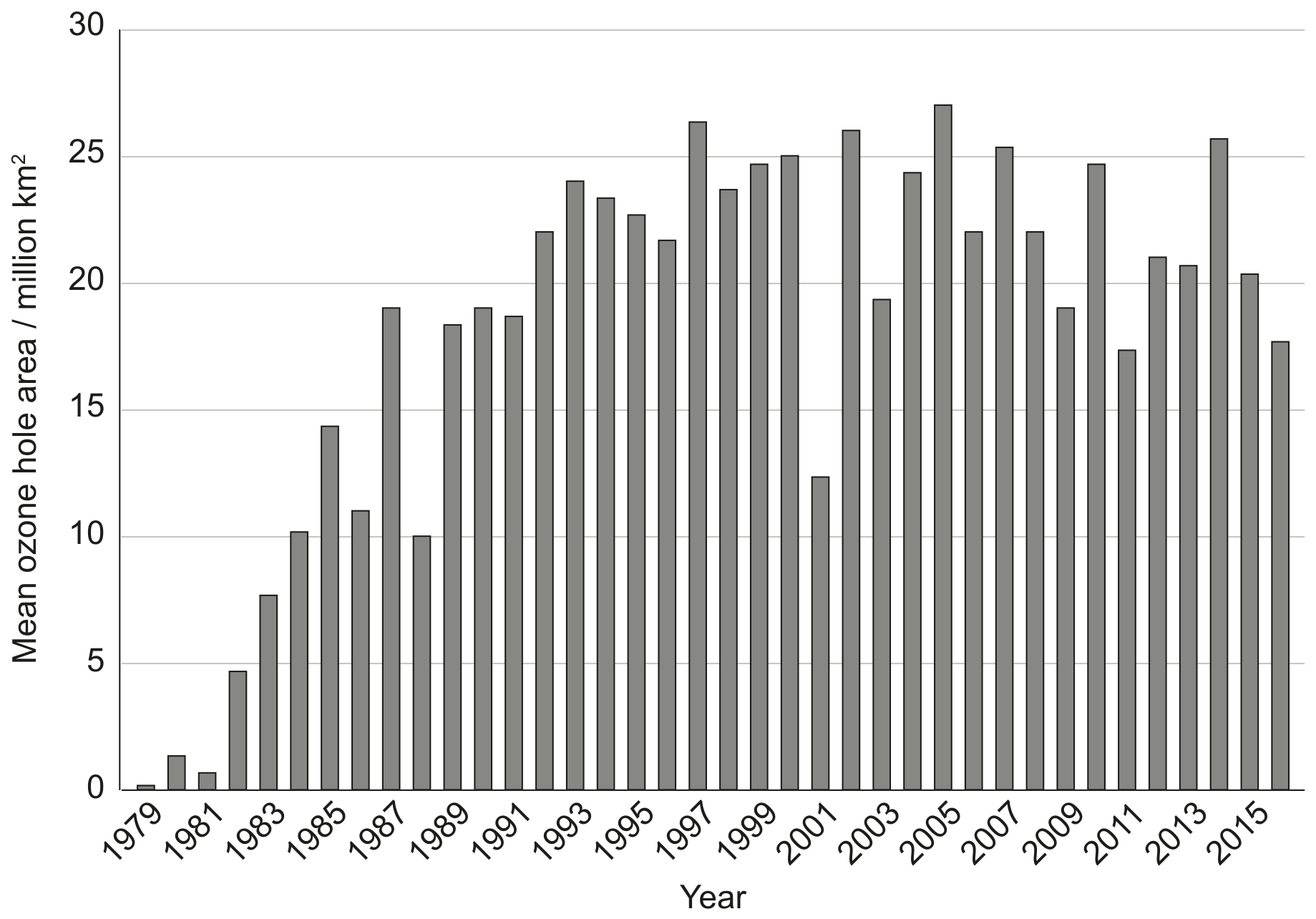
Figure 3: Mean ozone hole area between 1979 and 2016

Figure 3: Mean ozone hole area between 1979 and 2016

(a)

State where the ozone hole referred to in Figure 3 is located.

[ 1 ]
(b)

Describe the changes in mean ozone hole area between 1979 and 2016.

[ 2 ]
(c)

Identify one possible reason for the changes shown during the 1980s.

[ 1 ]
(d)

Explain how the data in Figure 3 can be used in judging the success of the Montreal Protocol in addressing ozone depletion.

[ 4 ]
(a)
(i)

Describe the role of stratospheric ozone.

[ 2 ]
(ii)

Identify one method to reduce ozone-depleting substances.

[ 1 ]
(a)

Explain how human activities continue to affect stratospheric ozone.

[ 7 ]
(a)

Distinguish between the causes of recent global warming and those of ozone depletion.

[ 4 ]
(a)

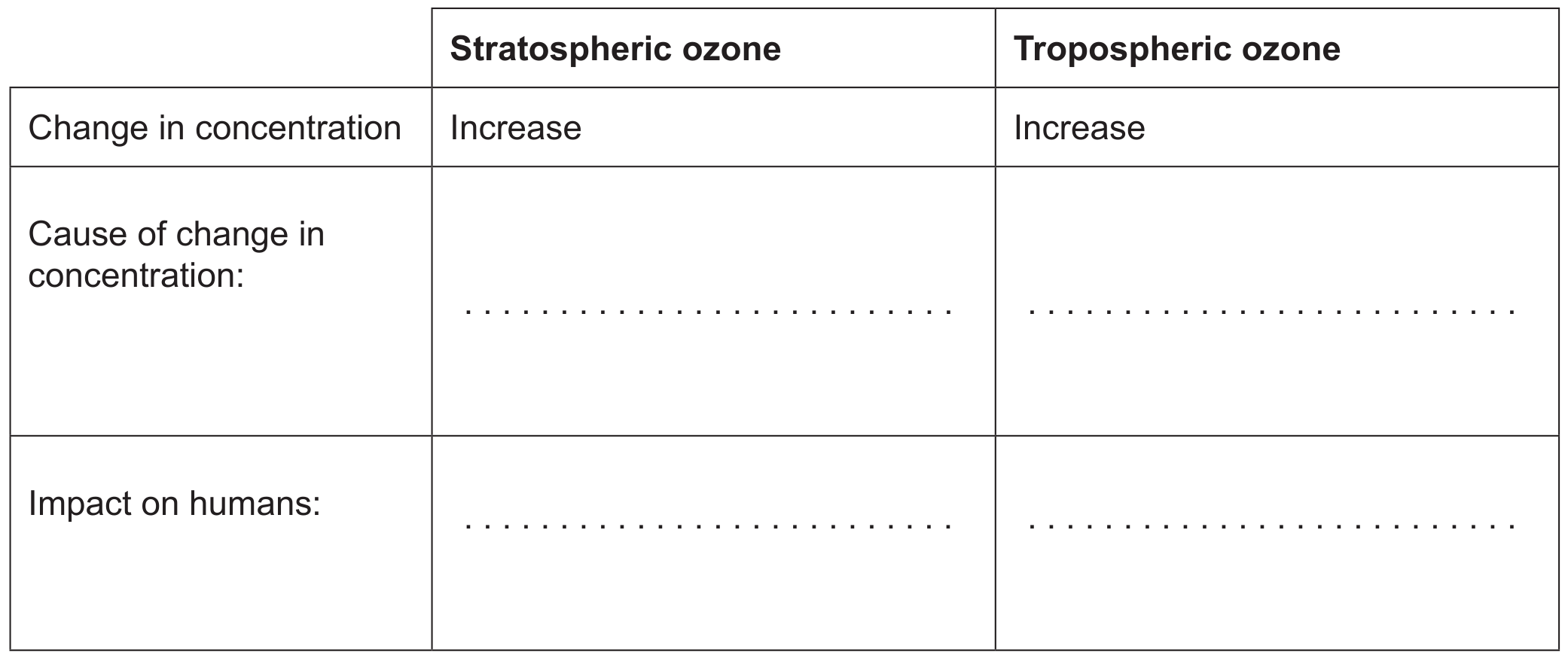
Human activities affect the concentration of both stratospheric and tropospheric ozone.

Outline the differences in these two effects by completing the following table.

Table

be marked.

[ 2 ]
(b)

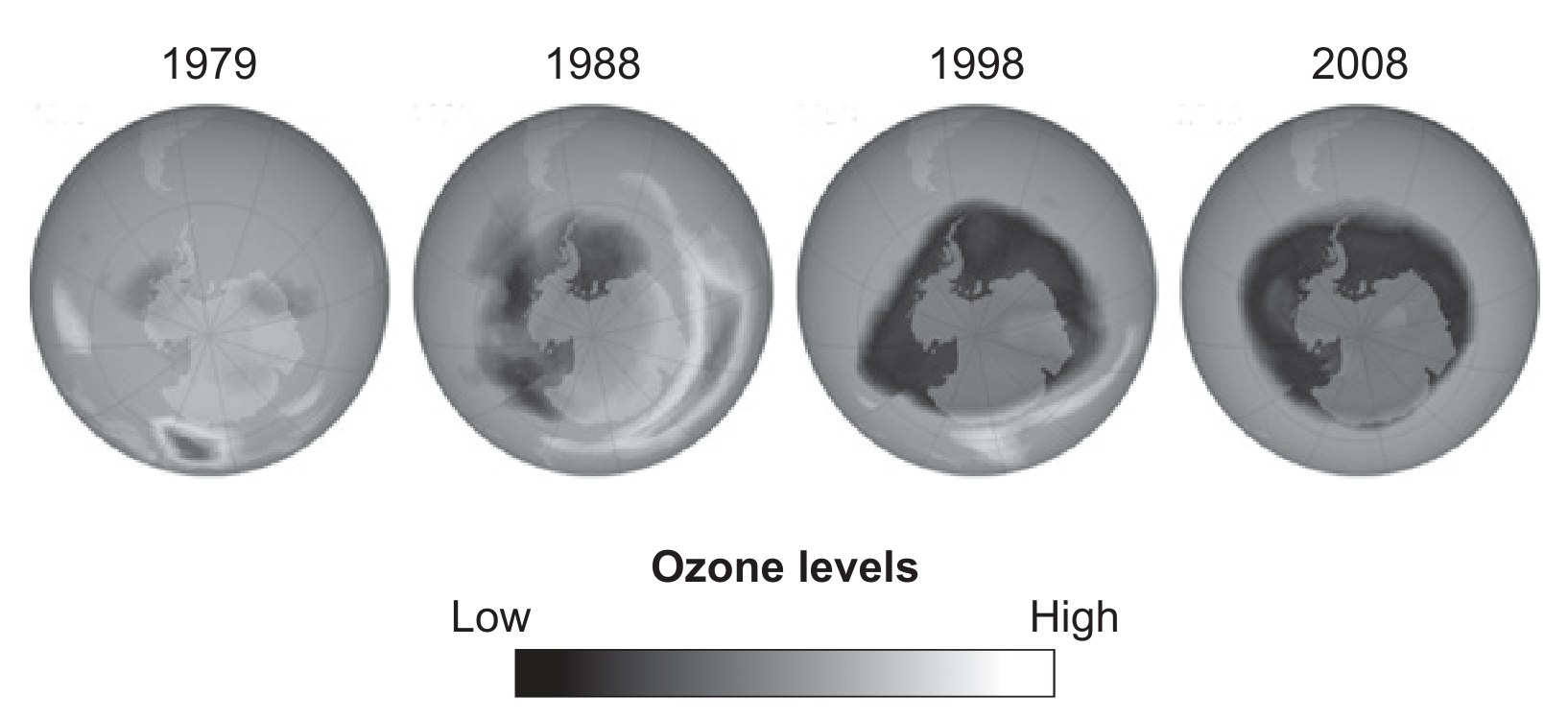
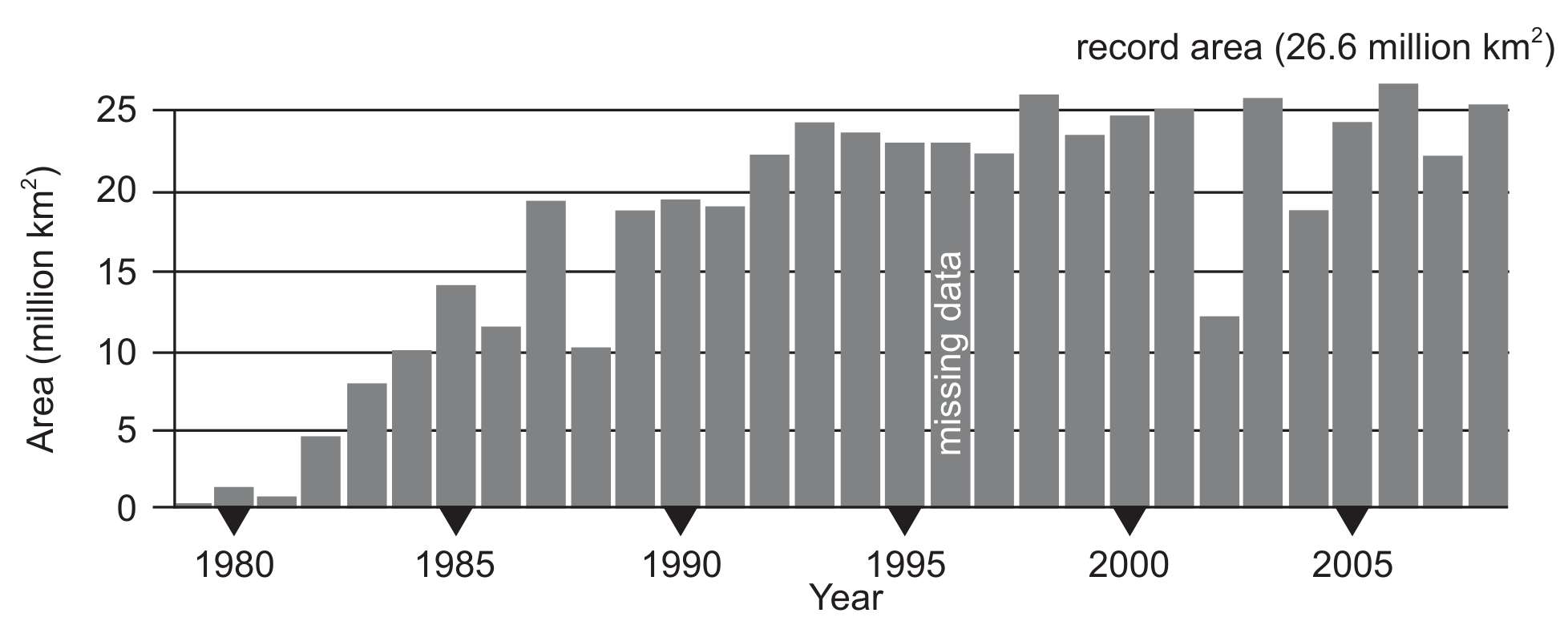
Images from space and measurements have allowed scientists to estimate changes in the ozone hole.

Figure 7: Changes in the ozone hole from 1979 to 2008.

Figure 7: Changes in the ozone hole from 1979 to 2008.

Question image

Including reference to this data, evaluate the effectiveness of the Montreal Protocol (1987) in managing ozone depletion.

[ 5 ]
0