EduNinja
(a)

With reference to Figure 4 and Figure 6, state one example of a renewable form of natural capital and one example of a replenishable form of natural capital.

Renewable:

Replenishable:
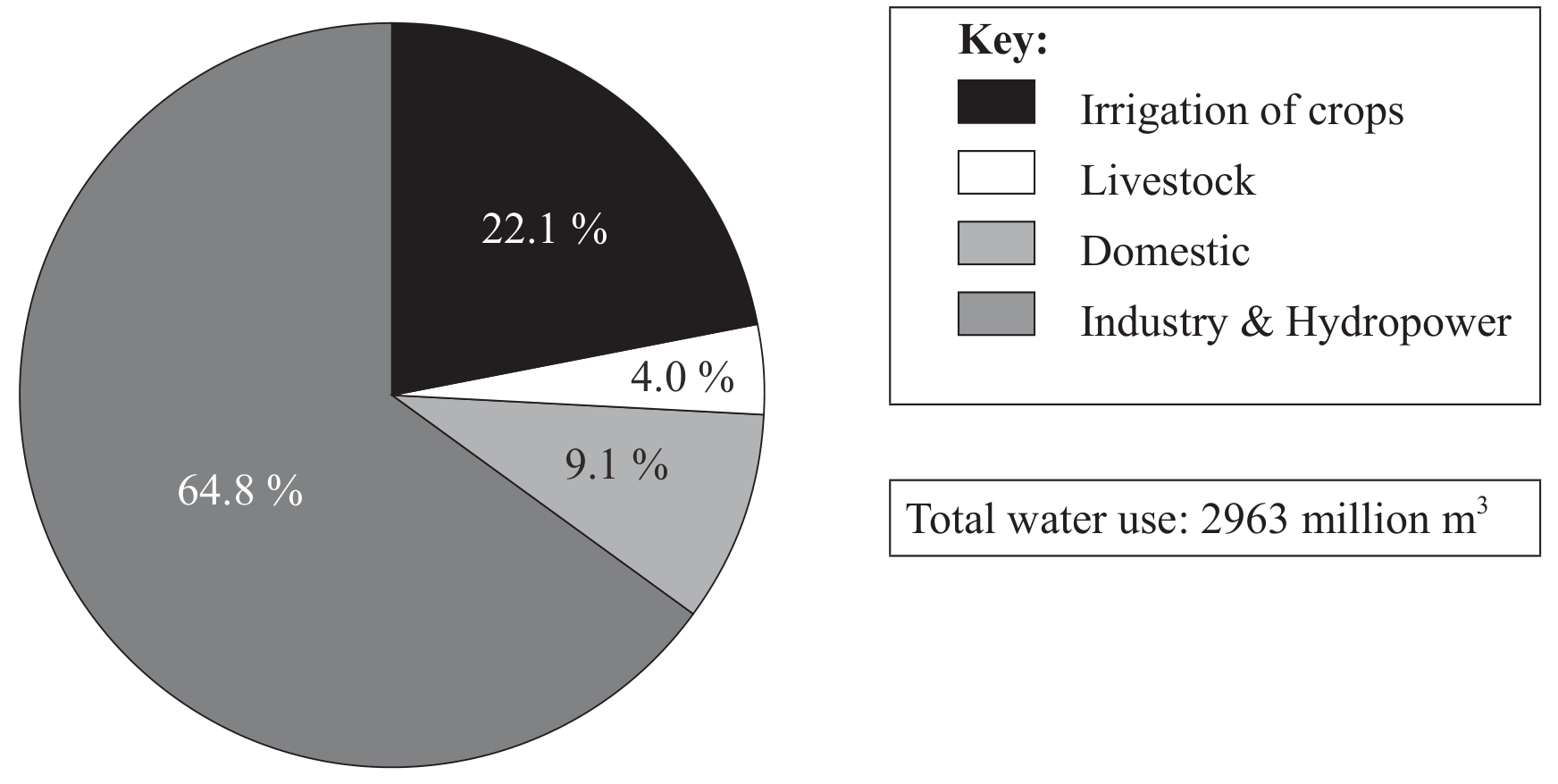
Figure 4: Water use in Moldova in 1992

Figure 4: Water use in Moldova in 1992

Figure 4 shows Moldova water use in 1992: irrigation of crops is the largest use, followed by industry/hydropower, domestic use and livestock. The total water use shown is 596.5 million m^3.
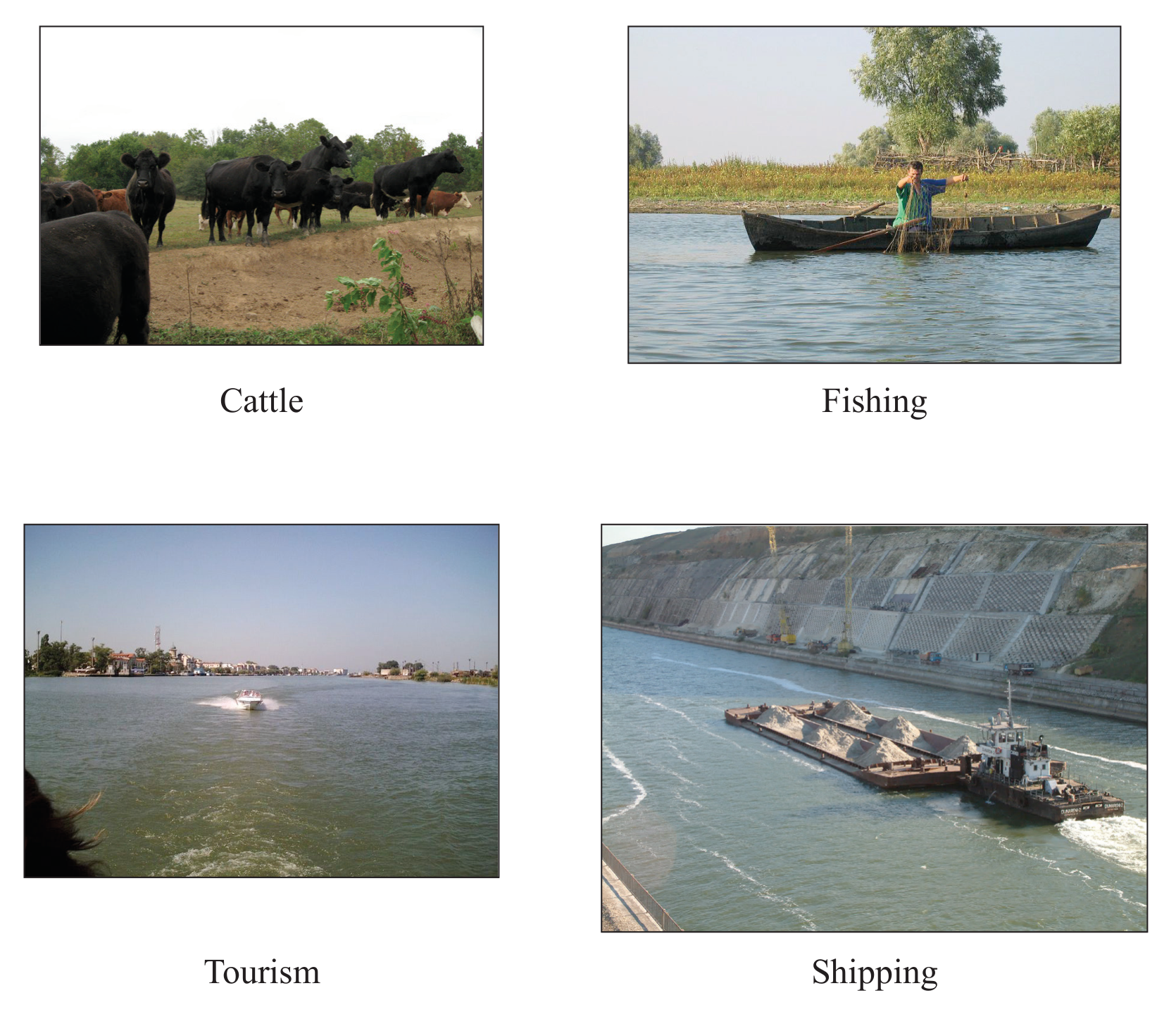
Figure 6: Natural income sources from the Danube River delta

Figure 6: Natural income sources from the Danube River delta

Figure 6 shows natural income sources from the Danube River delta, including cattle, fishing, tourism and shipping. Renewable examples include fish/reeds/birds; replenishable examples include water extraction/domestic water use and hydropower.

[ 2 ]
(b)

With reference to all of the data, discuss the relationship between natural income and the sustainability of human activities in the Danube River delta.

The Danube River delta is where the Danube flows into the Black Sea and includes UNESCO Biosphere Reserves and a World Natural Heritage site.
A delta is formed by continuous deposition of sediment carried by the river; sediment adds height and helps it extend into the sea.
The delta is a wetland ecosystem rich in plants, birds and fish, including over 1000 plant species, 300 bird species and endangered sturgeon.
Moldova takes nearly 20% of its water supply requirements from a branch of the Danube.

Figure 4: Water use in Moldova in 1992

Figure 4: Water use in Moldova in 1992

Figure 4 shows Moldova water use in 1992: irrigation of crops is the largest use, followed by industry/hydropower, domestic use and livestock. The total water use shown is 596.5 million m^3.

Figure 6: Natural income sources from the Danube River delta

Figure 6: Natural income sources from the Danube River delta

Figure 6 shows natural income sources from the Danube River delta, including cattle, fishing, tourism and shipping. Renewable examples include fish/reeds/birds; replenishable examples include water extraction/domestic water use and hydropower.

YearsAverage sediment flow / tons yr^{-1}
1921-196067.5
1971-198041.3
1981-199029.2

Figure 7: Changes to sediment flow into the delta

Figure 8: dredging is carried out so sediment carried by the river does not interfere with navigation.
Dredging involves scooping out sediment using heavy machinery and has also been used to straighten channels.
[ 4 ]
(a)
(i)

Outline two forms of natural income that are obtained from the marshes.

The Iraq/Iran marshlands once covered about 15000 km^2.
The marshes receive only about 100 mm of rainfall each year while more than 2500 mm evaporates, leaving salty water.
Spring snowmelt formerly flowed down from Iran and Turkey, bringing sediment and washing away salty water.
The wetlands developed many endemic species and filtered pollutants; local food systems used fishing and water buffalo, and reeds were used for construction.

Species examples from Iraq marshesConservation status examples
Abu mulletNot evaluated
BunniLeast concern
Smooth-coated otterVulnerable
Basrah reed warblerEndangered
Marbled tealVulnerable

Figure 4: Species found in the Iraq marshes

[ 2 ]
(b)

Plans are being discussed to restore a much larger area of the marshes by using a greater amount of water from the Tigris and Euphrates rivers.

[ 2 ]
(i)

With reference to Figure 12 (a) and Figure 12 (b) suggest two variables that might influence an individual's willingness to pay to restore the marshes.

Figure 12(a)/(b): Valuing ecosystems and willingness to pay to restore marshes

Figure 12(a)/(b): Valuing ecosystems and willingness to pay to restore marshes

Ecosystems can be valued by placing a monetary value on natural income or by surveying stakeholders about willingness to pay to preserve species or habitats.
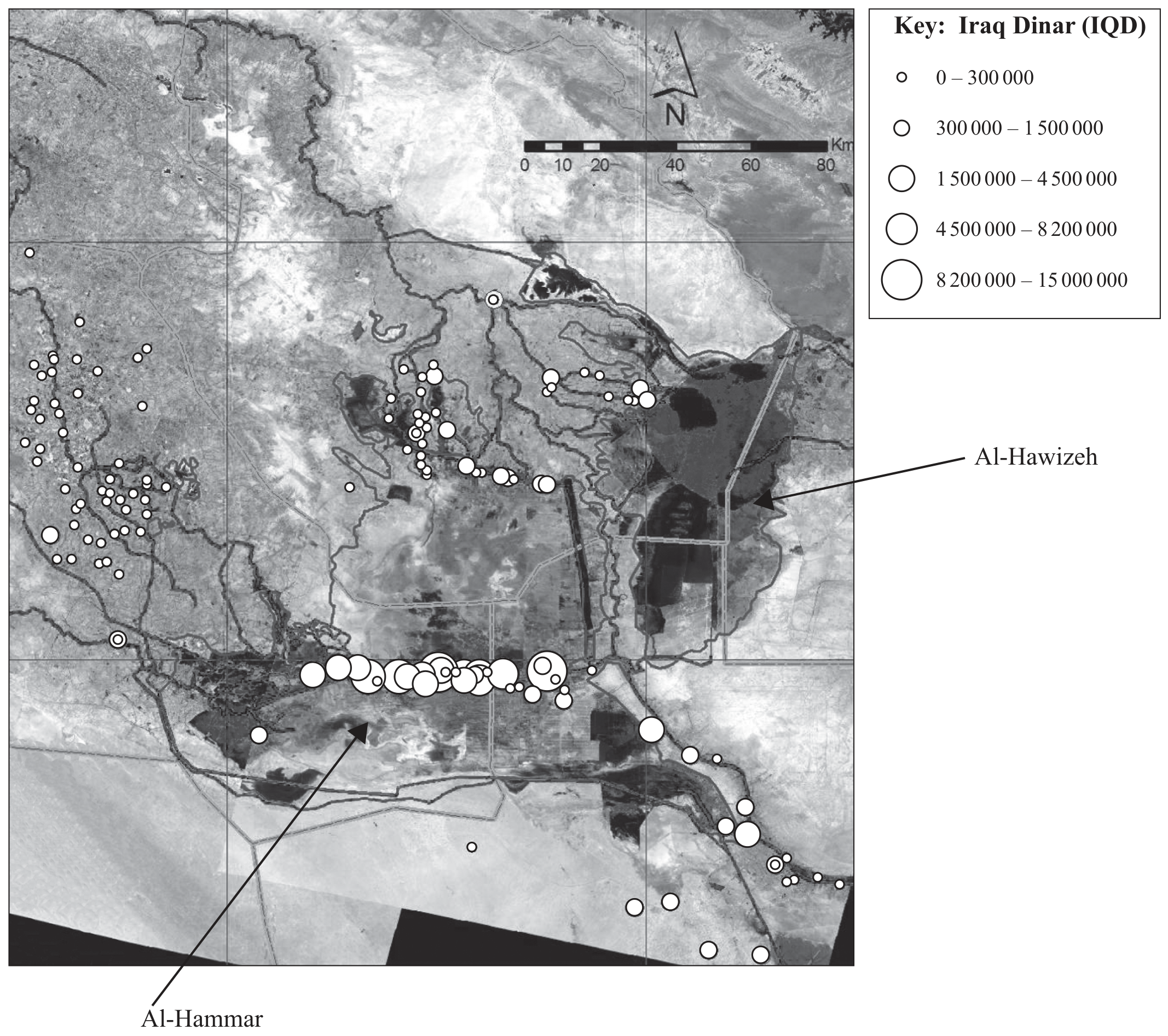
Villagers in South Eastern Iraq were asked how much they would be willing to pay to completely restore the marshes; Figure 12(b) maps the survey results.

[ 2 ]
(a)
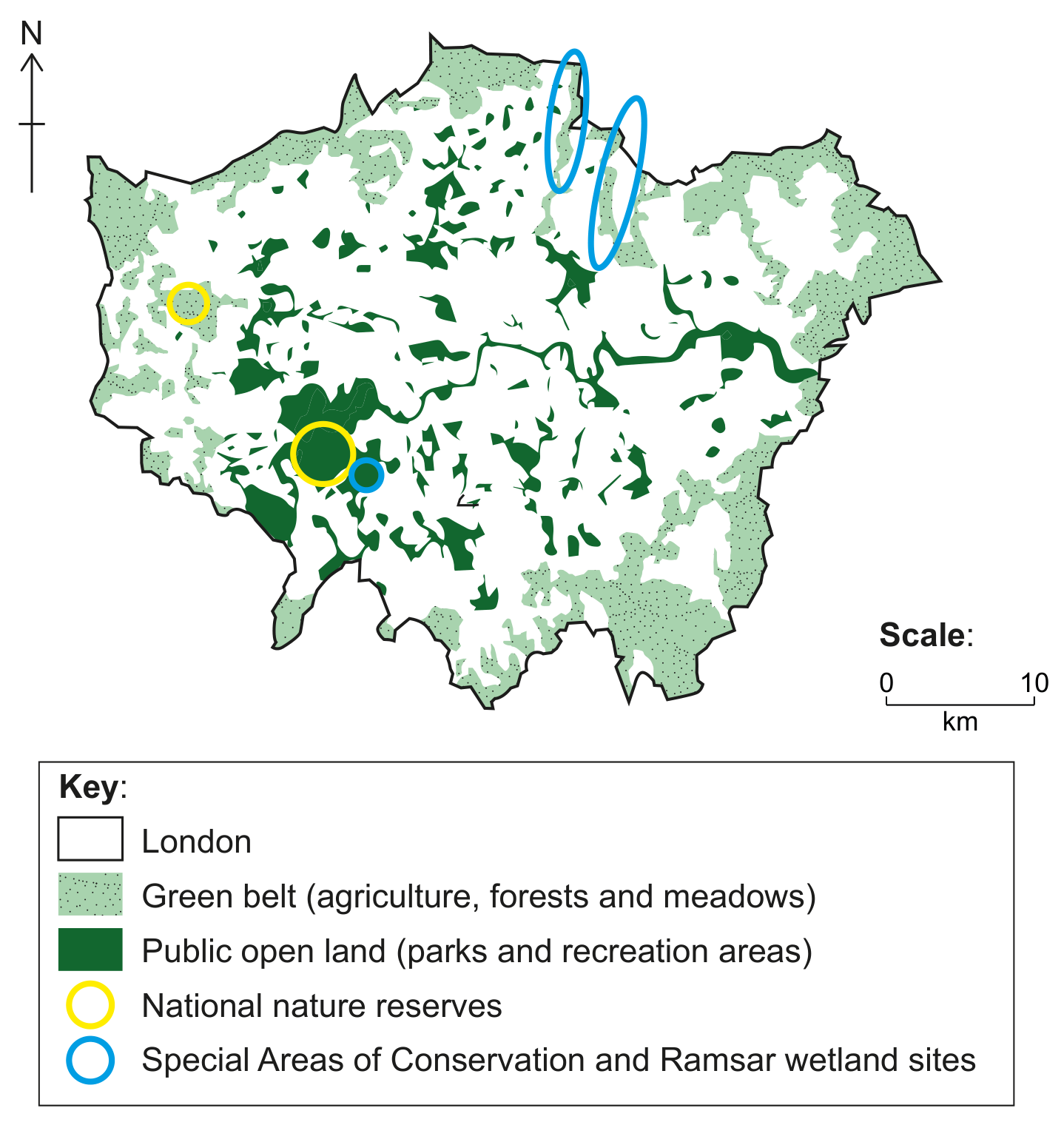
Figure 4(a): Green spaces in London

Figure 4(a): Green spaces in London

Resource booklet context: London green space
- 47% of London is classified as green space.
- London has over 8 million trees and 13,000 species.
- Green spaces can provide ecosystem services such as habitat, air cleaning, cooling and flood mitigation.

Outline three ways that London's green spaces are considered natural capital.

[ 3 ]
[Maximum number: 5]
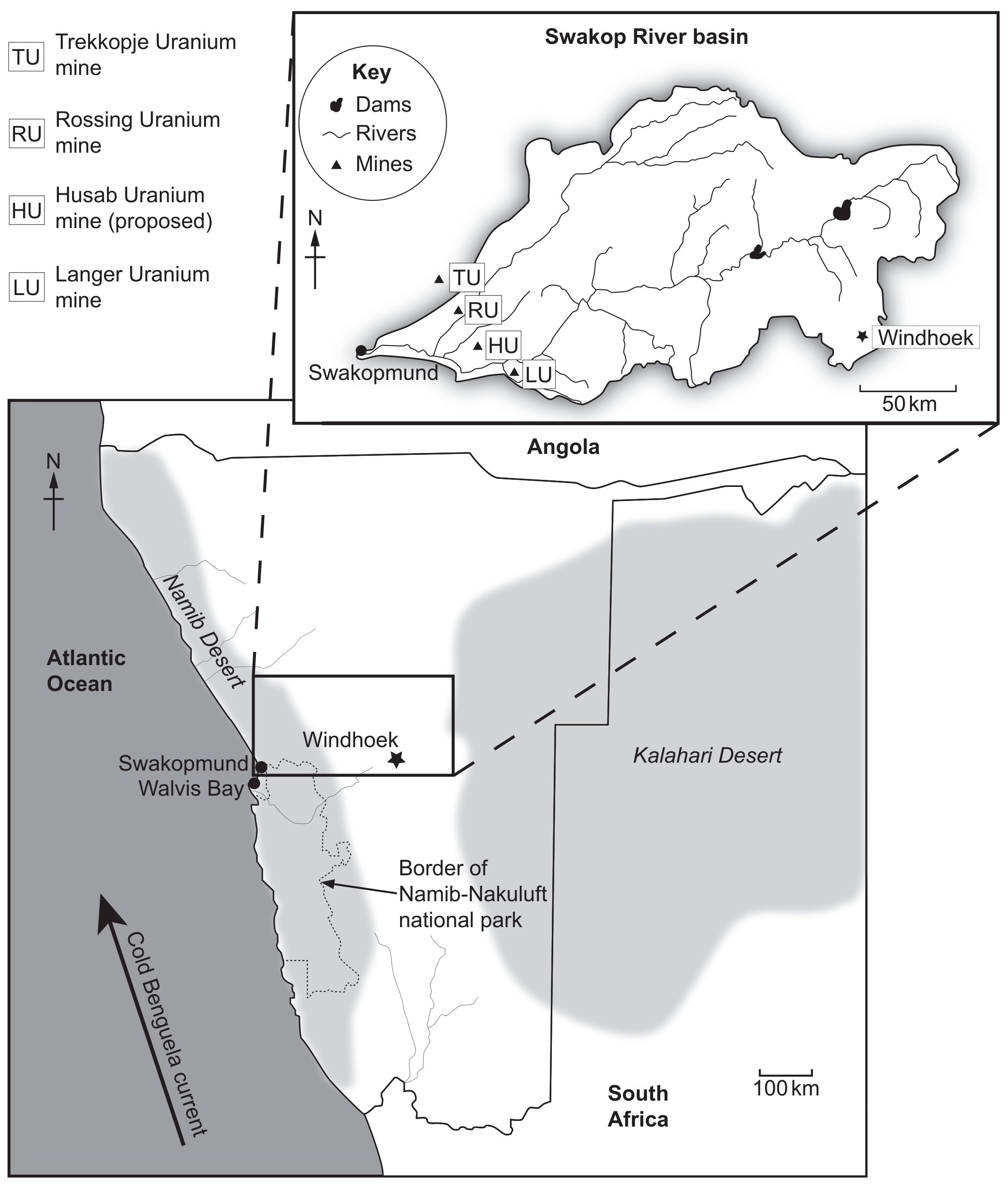
Figure 1(b): Map showing Swakop River in Namibia

Figure 1(b): Map showing Swakop River in Namibia

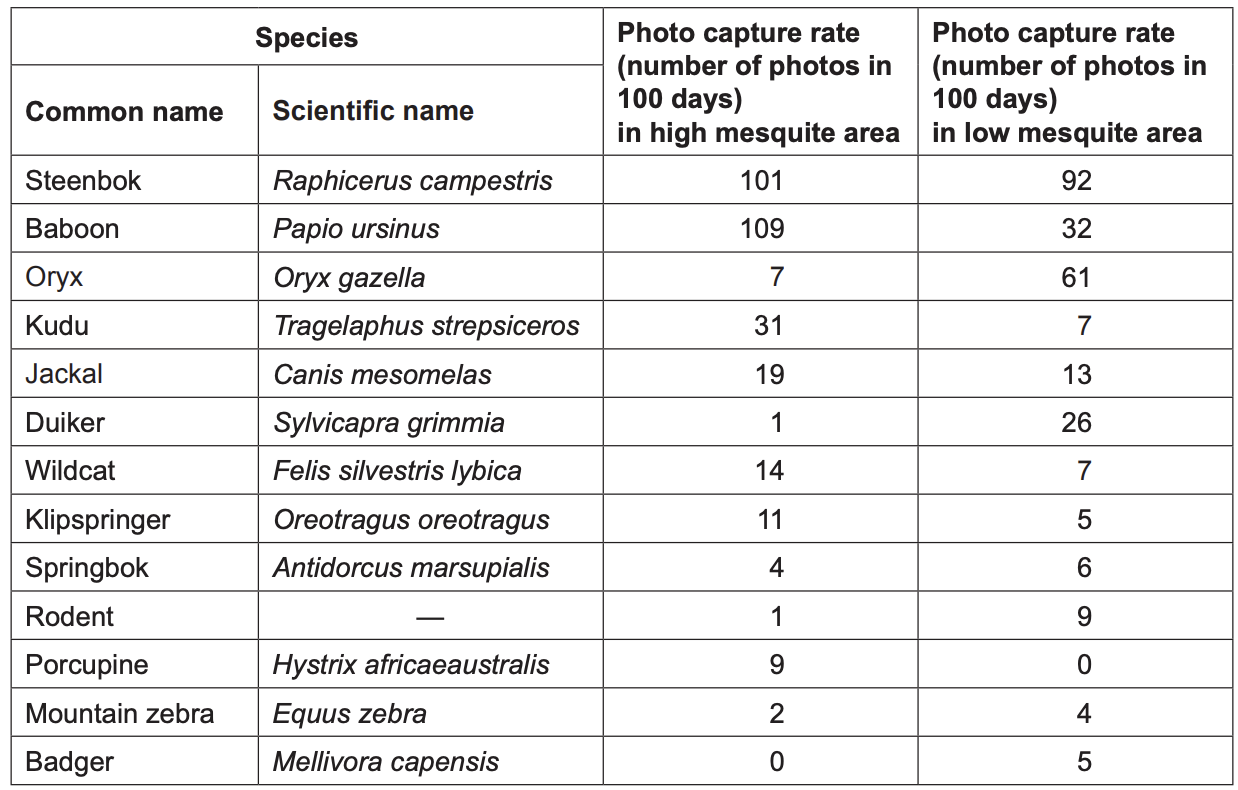
Figure 4(b): Camera trap data for high and low mesquite areas

Figure 4(b): Camera trap data for high and low mesquite areas

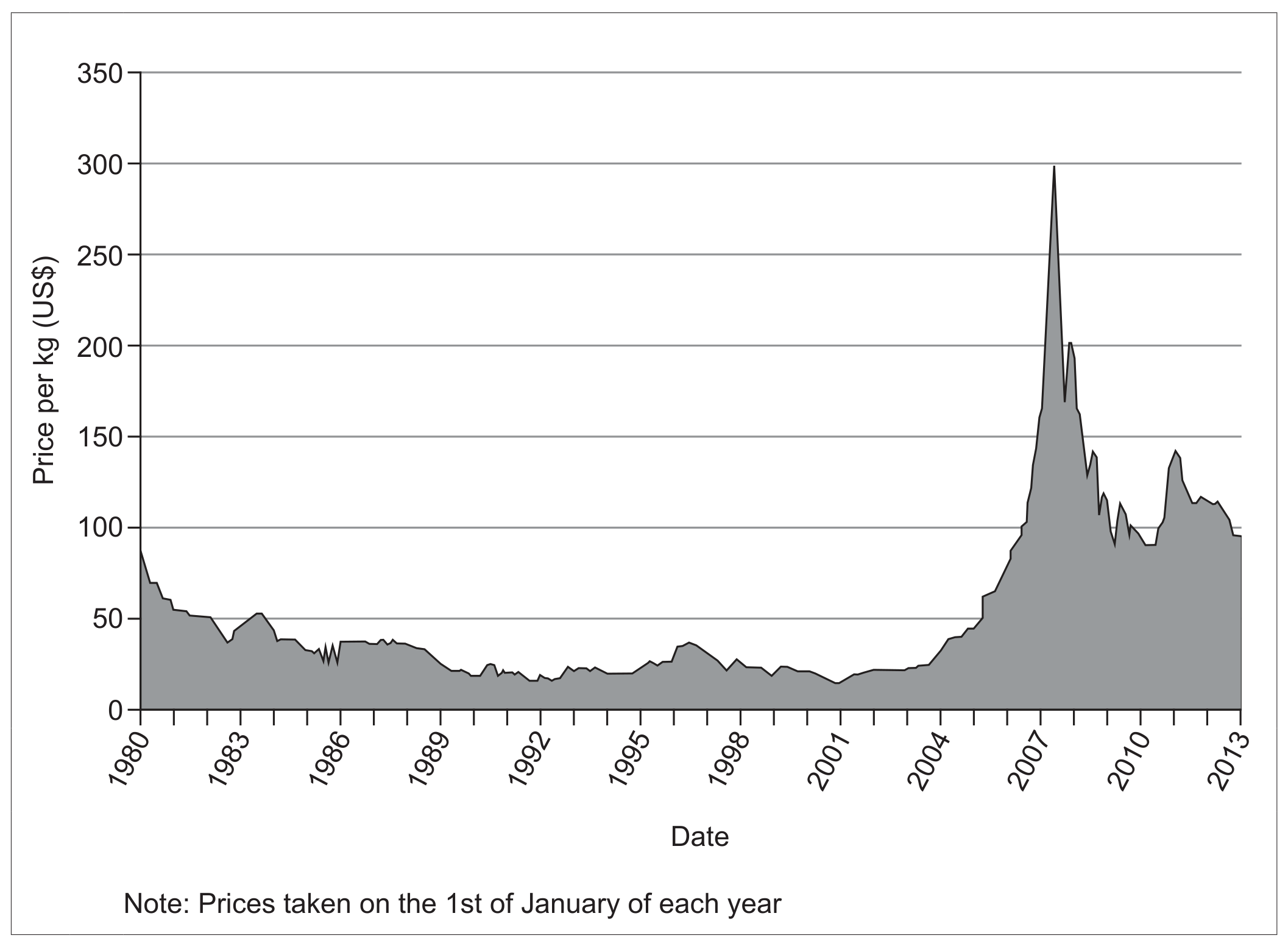
Figure 5(a): Uranium prices from 1980 to 2013

Figure 5(a): Uranium prices from 1980 to 2013

(a)

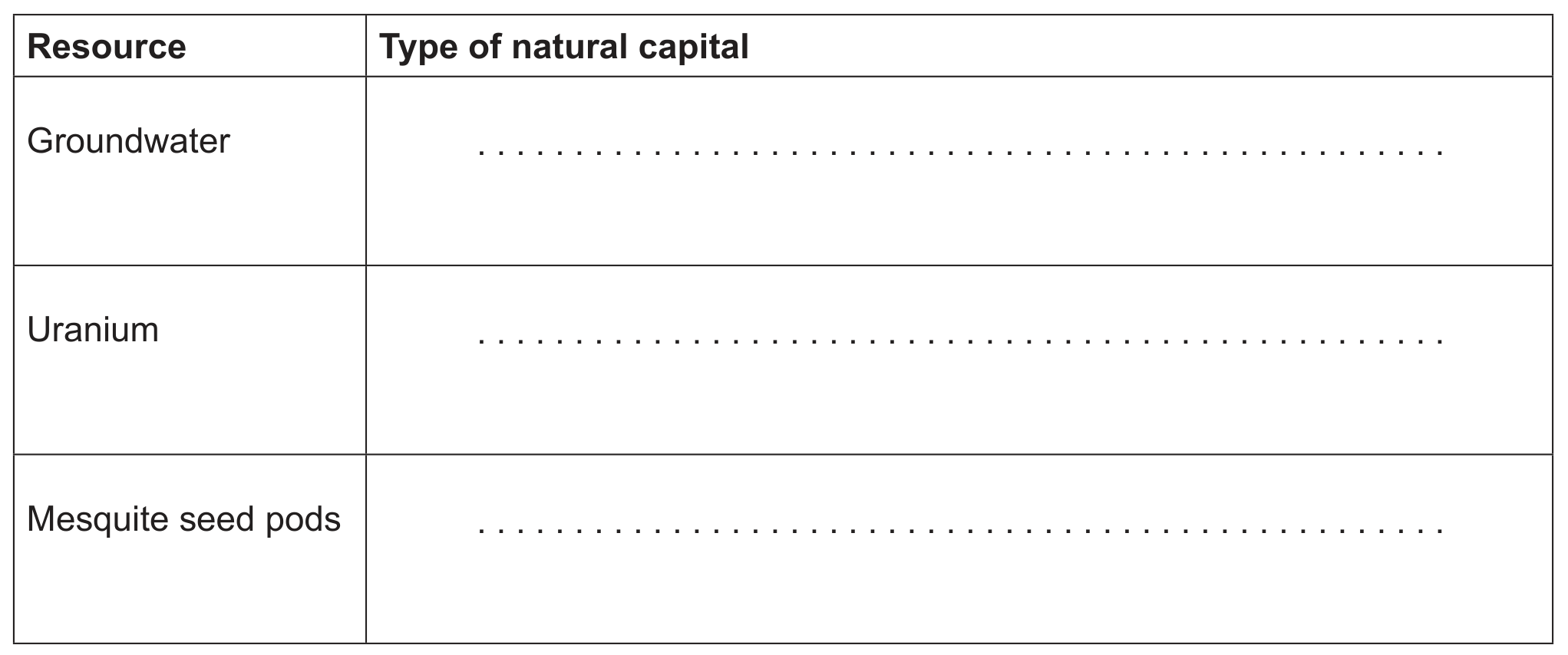
Complete the table to state what type of natural capital the following resources are: renewable, replenishable or non-renewable.

Table
[ 1 ]
(b)

With reference to Figure 5(a) describe how Uranium prices have changed over time.

[ 2 ]
(c)

Outline two reasons why the value of resources like Uranium can change over time.

Figure 5(a) context: Husab is a proposed new uranium mine using Chinese investment.
The reserves contain the highest-grade uranium deposit in Namibia.
Once in production Husab would be the second-largest uranium mine in the world, with about 280 million tonnes of ore over 20 years.

Figure 7: the Erongo desalination plant produces 20 million cubic metres of freshwater per year.
It now supplies existing uranium mines and has spare capacity for Swakop Valley communities and the proposed Husab mine.
After the Fukushima nuclear accident, demand for uranium dropped and the Trekkopje mine did not open.

[ 2 ]
(a)
(i)

With reference to (b)(i), state what will be the natural income of this water resource available for domestic supply.

[ 1 ]
(a)

State one reason why the Niger Delta tropical swamp forest biome is

[ 1 ]
(i)

economically valuable.

The biome forms on a low-lying coastal delta from sediment deposited by the Niger River. Over 80% of the delta floods seasonally and swamps remain when flood waters drain away. It has played an important role in the global economy through slave trade, palm oil and fossil fuels over 400 years. Selected organisms have critical/endangered conservation status. Flora and fauna have only been systematically surveyed since the 1980s. Endemic species include Niger Delta red colobus and Heslop’s pygmy hippopotamus. The delta may be a meeting point for chimpanzee populations. It includes 75% of Africa’s remaining mangrove forests. Swamp forests have no large-scale formal protection, although crocodiles and chimpanzees receive some protection.

Nigeria has 140 million people. Over 55% live below the poverty line. Life expectancy is 47 years. Oil makes up 90% of export earnings. Nigeria is the world’s sixth largest oil exporter, exporting mainly to the USA and Western Europe. Five transnational corporations operate 159 oilfields.

[ 1 ]
(a)
(i)

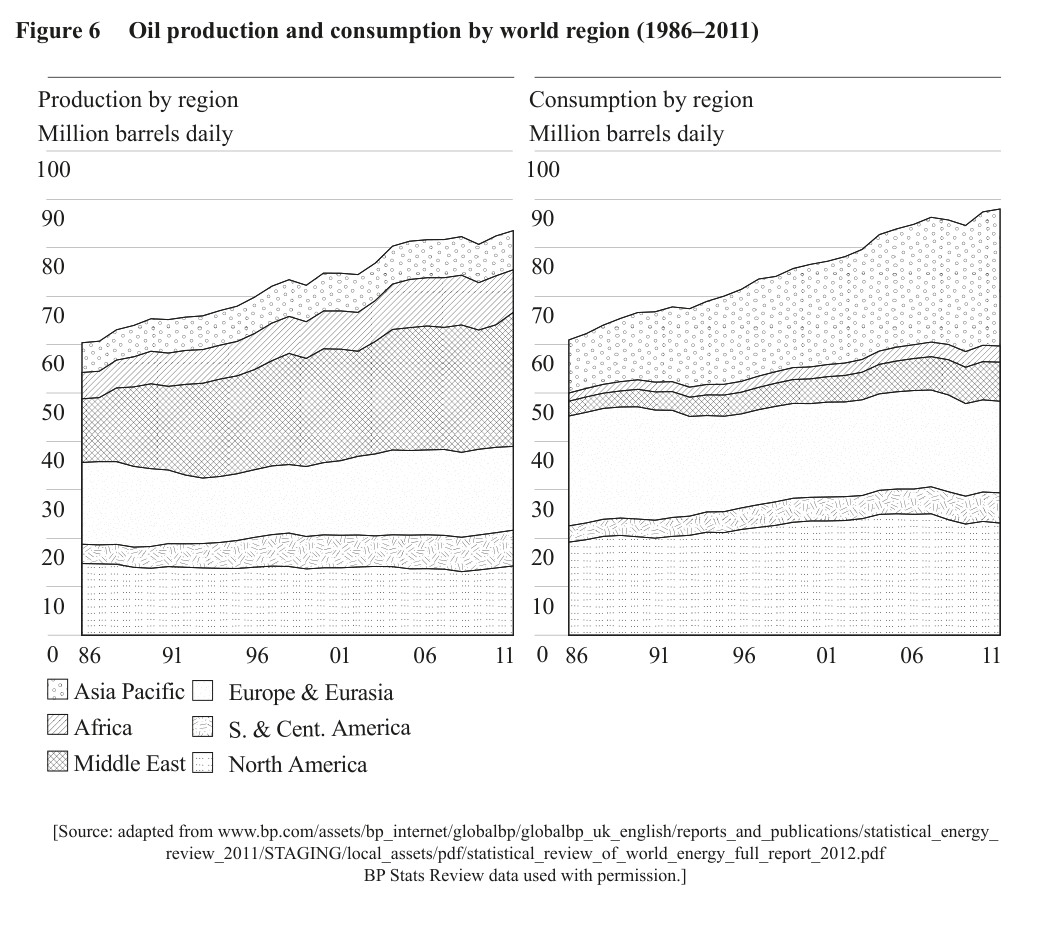
Using Figure 6, identify two regions that consumed more barrels of oil than they
produced in 2011.

Figure 6: Oil production and consumption by world region, 1986-2011

Figure 6: Oil production and consumption by world region, 1986-2011

[ 1 ]
(b)
(i)

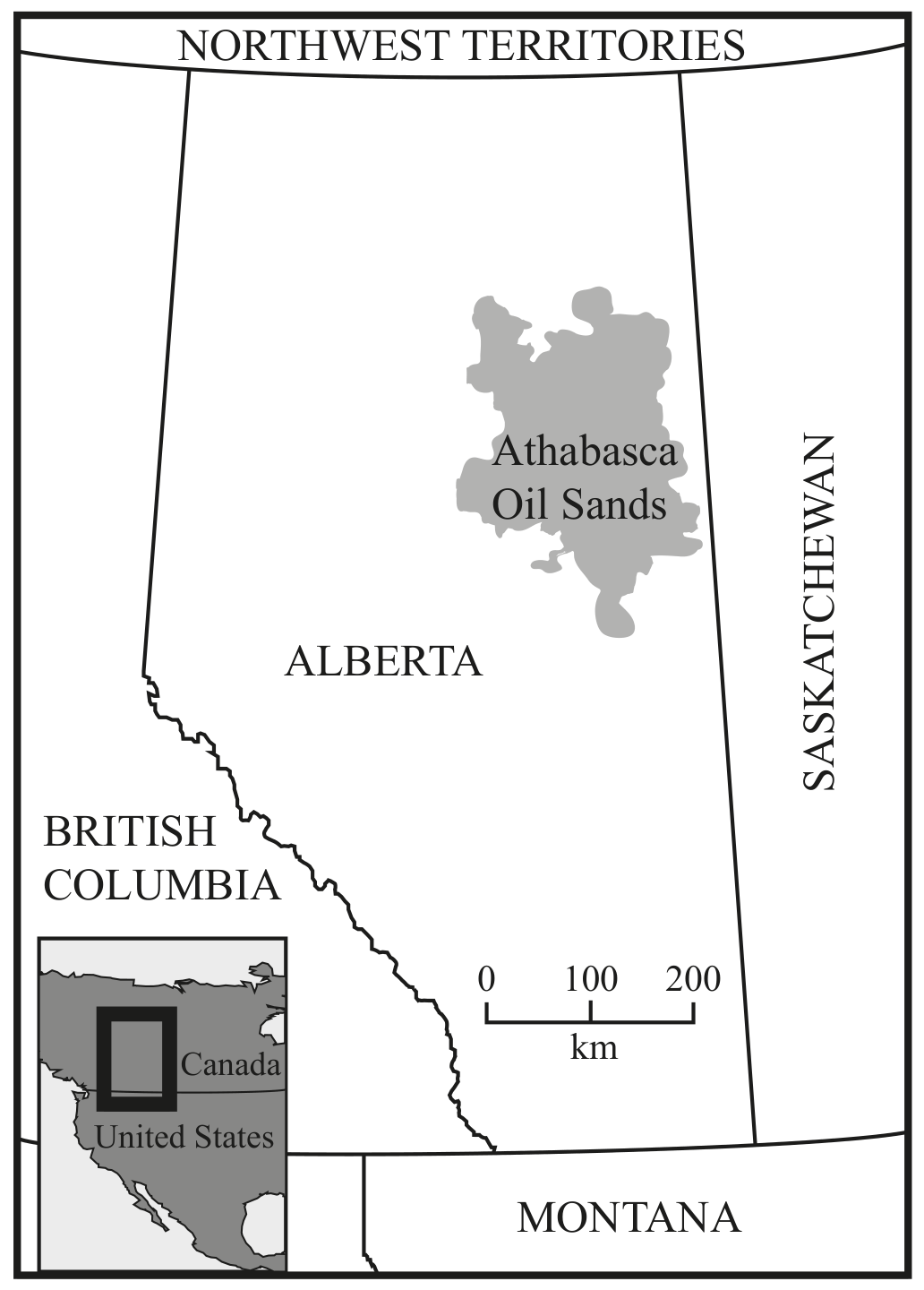
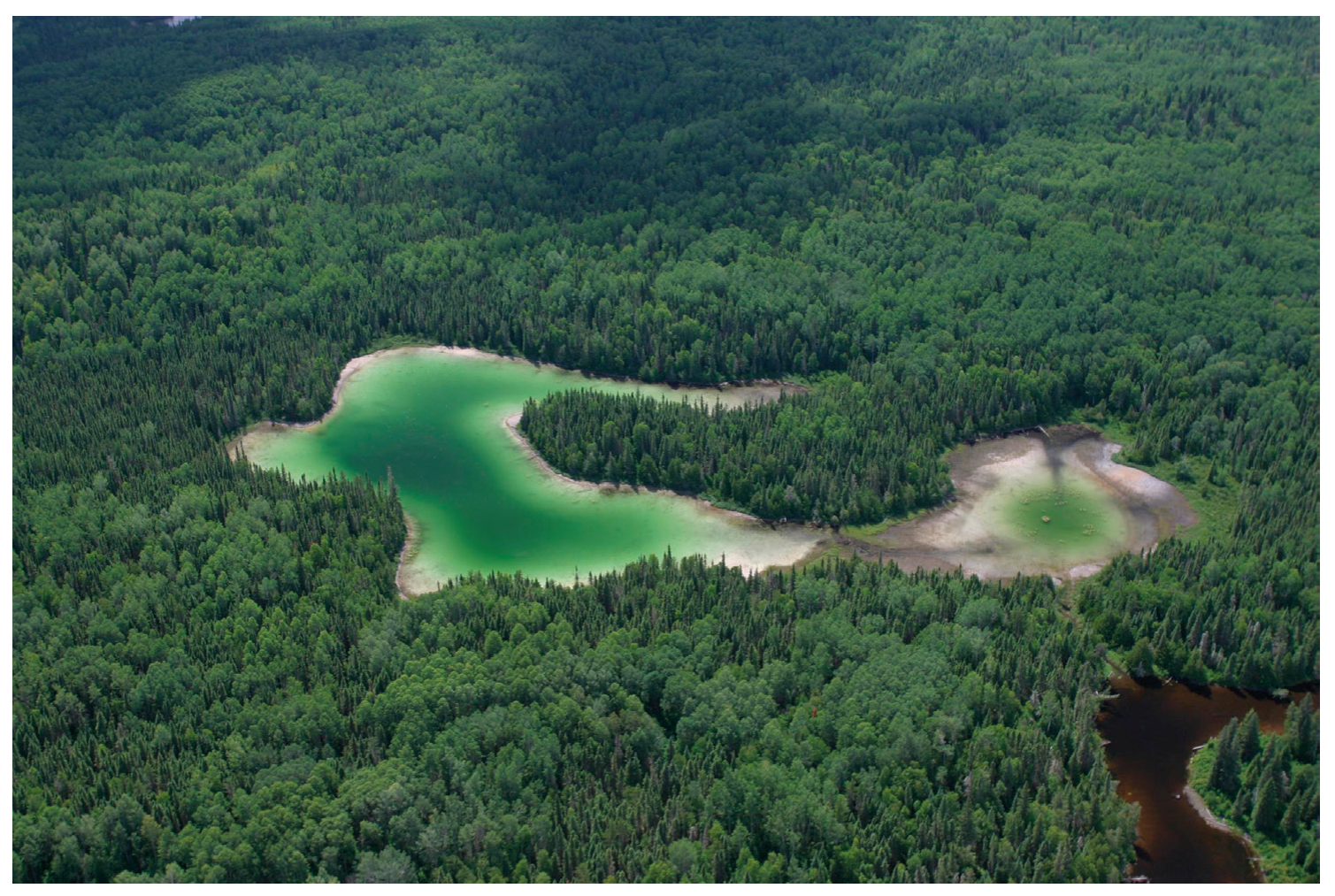
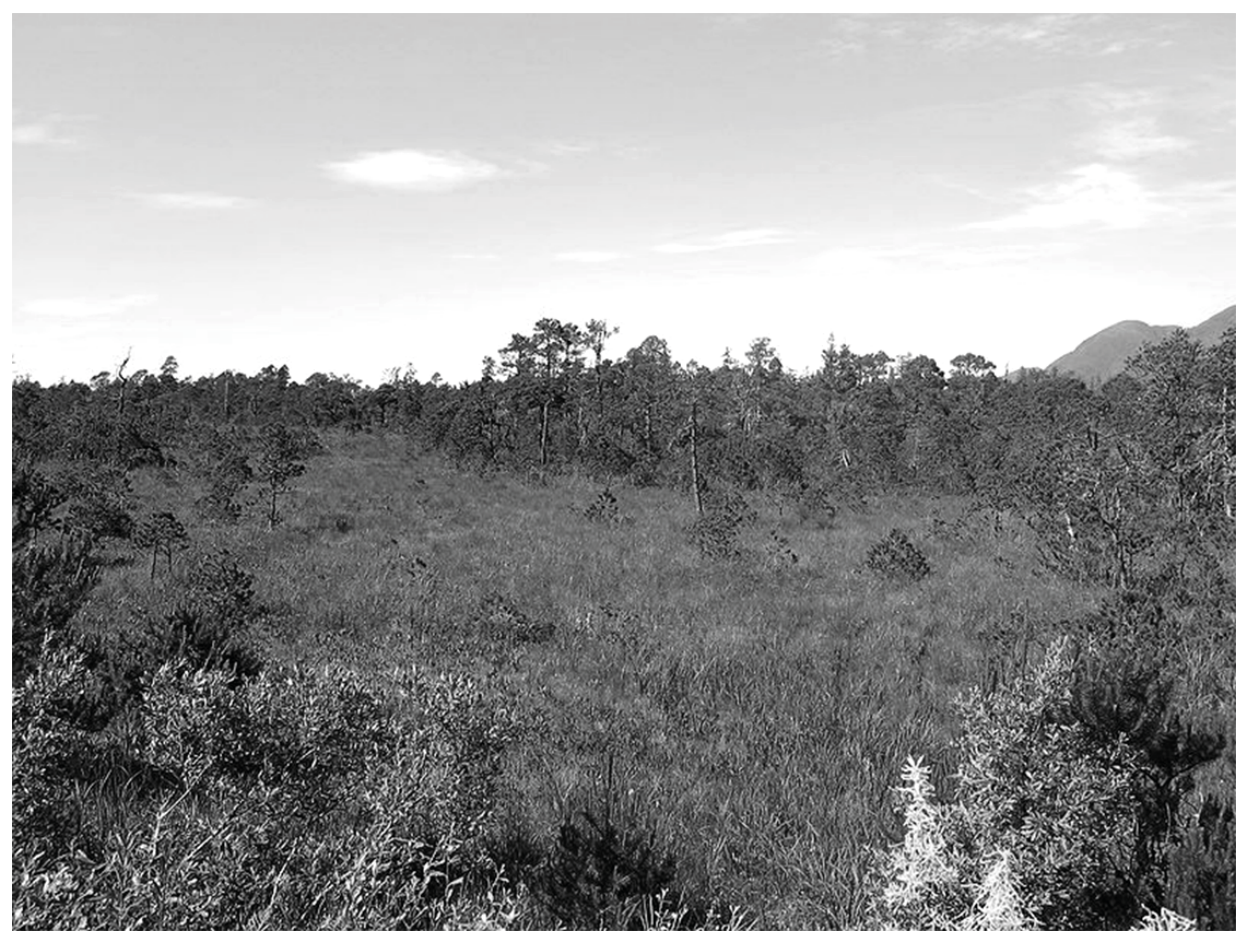
Explain how an environmental impact assessment (EIA) would be carried out to consider the impact of mining the Athabasca tar (oil) sands deposits.

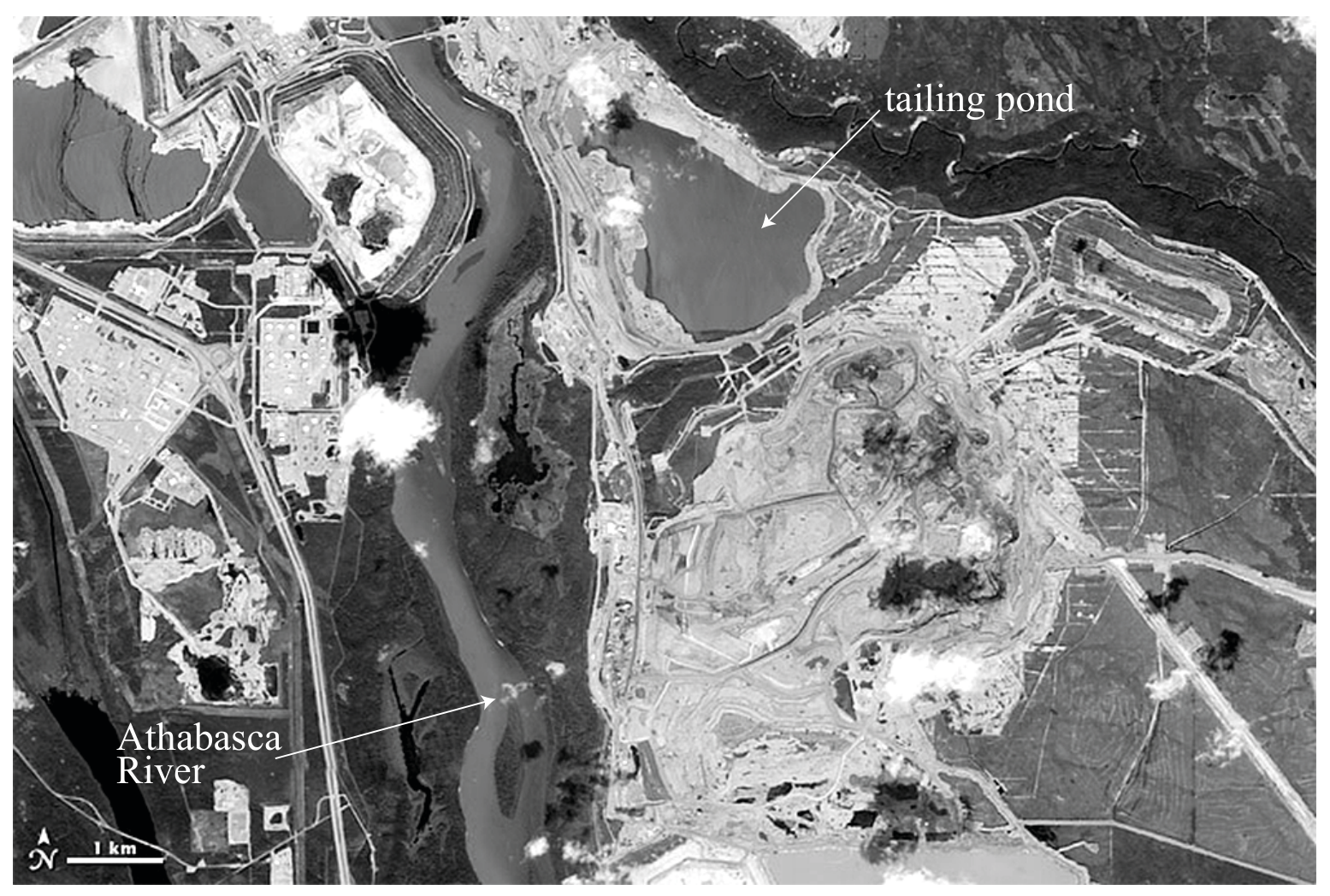
Tar sands are deposits of heavy crude oil in bitumen/tar, sand, clay and water. They are too thick to flow unless heated. Extraction becomes financially worthwhile as oil prices increase and can improve energy security for Canada and the USA. Water is pumped from local rivers, made into steam at 305°C and pumped into the tar sands so the oil can be brought to the surface. The mixture must be refined, and deposits may be mined by strip-mining or deep pit mines.

Figure 2(a): Location of Athabasca tar (oil) sands

Figure 2(a): Location of Athabasca tar (oil) sands

Figure 4(a): Boreal forest or taiga habitat in Alberta

Figure 4(a): Boreal forest or taiga habitat in Alberta

Figure 4(b): Muskeg habitat in Alberta

Figure 4(b): Muskeg habitat in Alberta

Figure 4(c): Mining of tar (oil) sands

Figure 4(c): Mining of tar (oil) sands

[ 3 ]
(c)
(i)

Explain how the exploitation of tar (oil) sands demonstrates the dynamic nature of a resource.

Tar sands are deposits of heavy crude oil in bitumen/tar, sand, clay and water. They are too thick to flow unless heated. Extraction becomes financially worthwhile as oil prices increase and can improve energy security for Canada and the USA. Water is pumped from local rivers, made into steam at 305°C and pumped into the tar sands so the oil can be brought to the surface. The mixture must be refined, and deposits may be mined by strip-mining or deep pit mines.

About 80% of global tar sands deposits are in Alberta, Canada, mostly in the Athabasca field. There may be 1350 billion barrels of oil, with about 10% extractable. Extraction is described as the largest capital project on Earth. The Keystone XL pipeline would carry crude oil south to US refineries and an extension may cross the Ogallala Aquifer, a major freshwater reserve providing drinking water to 2 million people.

Opponents say tar sands produce three times more greenhouse gas emissions than conventional fossil fuels; fossil fuels are burned to heat extraction water; underground carbon stores become available; oil produced is burned; boreal forest is cut down; wildlife is displaced or dies; only 10% of water taken from the Athabasca River is returned; toxic waste ponds may leak into river and groundwater; indigenous people may be displaced and face health impacts. Supporters say tar sands improve energy security for Canada and the USA; Canada supplied much crude oil to the USA; Keystone XL may create jobs; companies reinvest in carbon capture and storage; 7.5 million trees have been replanted.

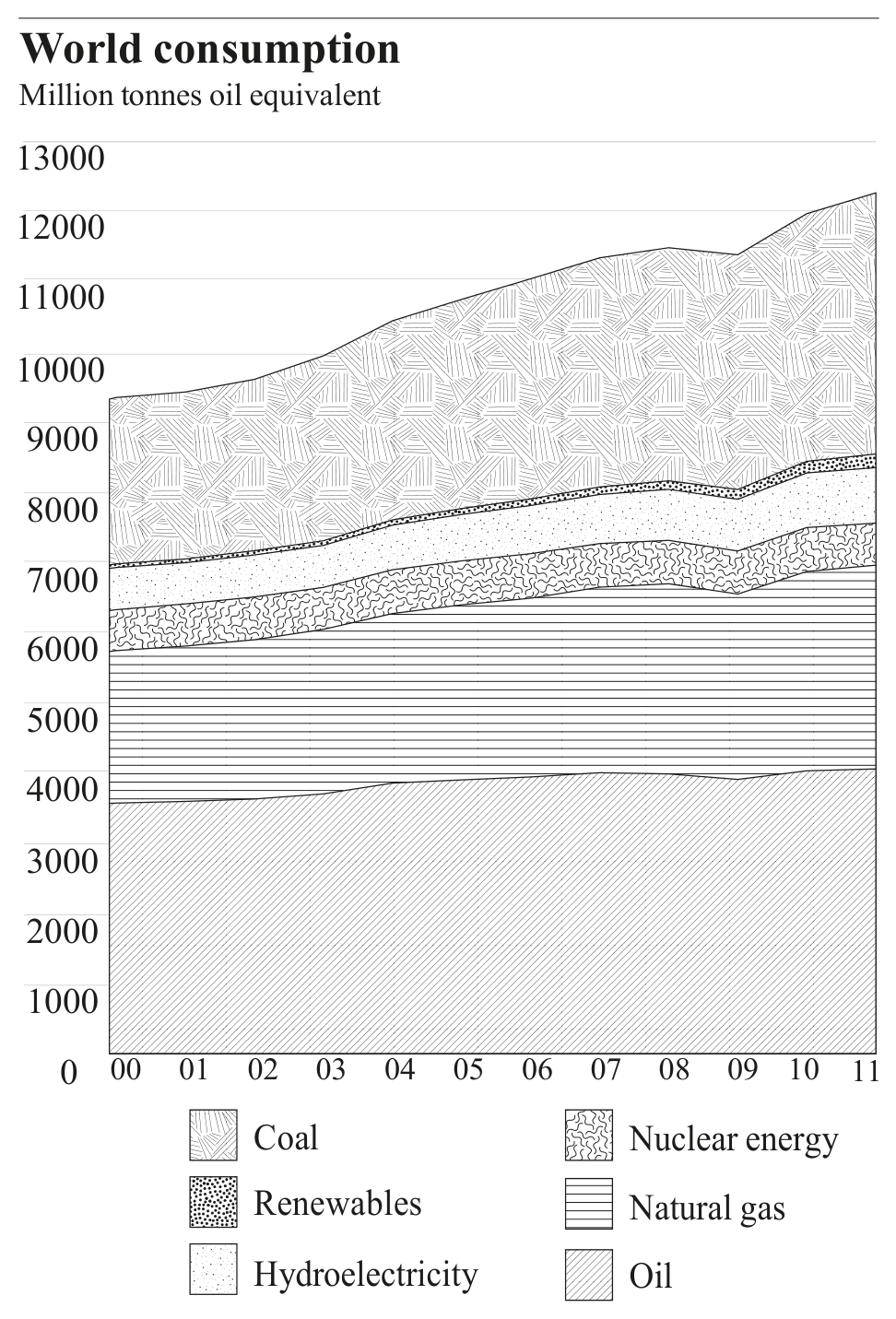
Figure 8: World consumption of oil equivalent by fuel type, 2000-2011

Figure 8: World consumption of oil equivalent by fuel type, 2000-2011

[ 3 ]
[Maximum number: 3]

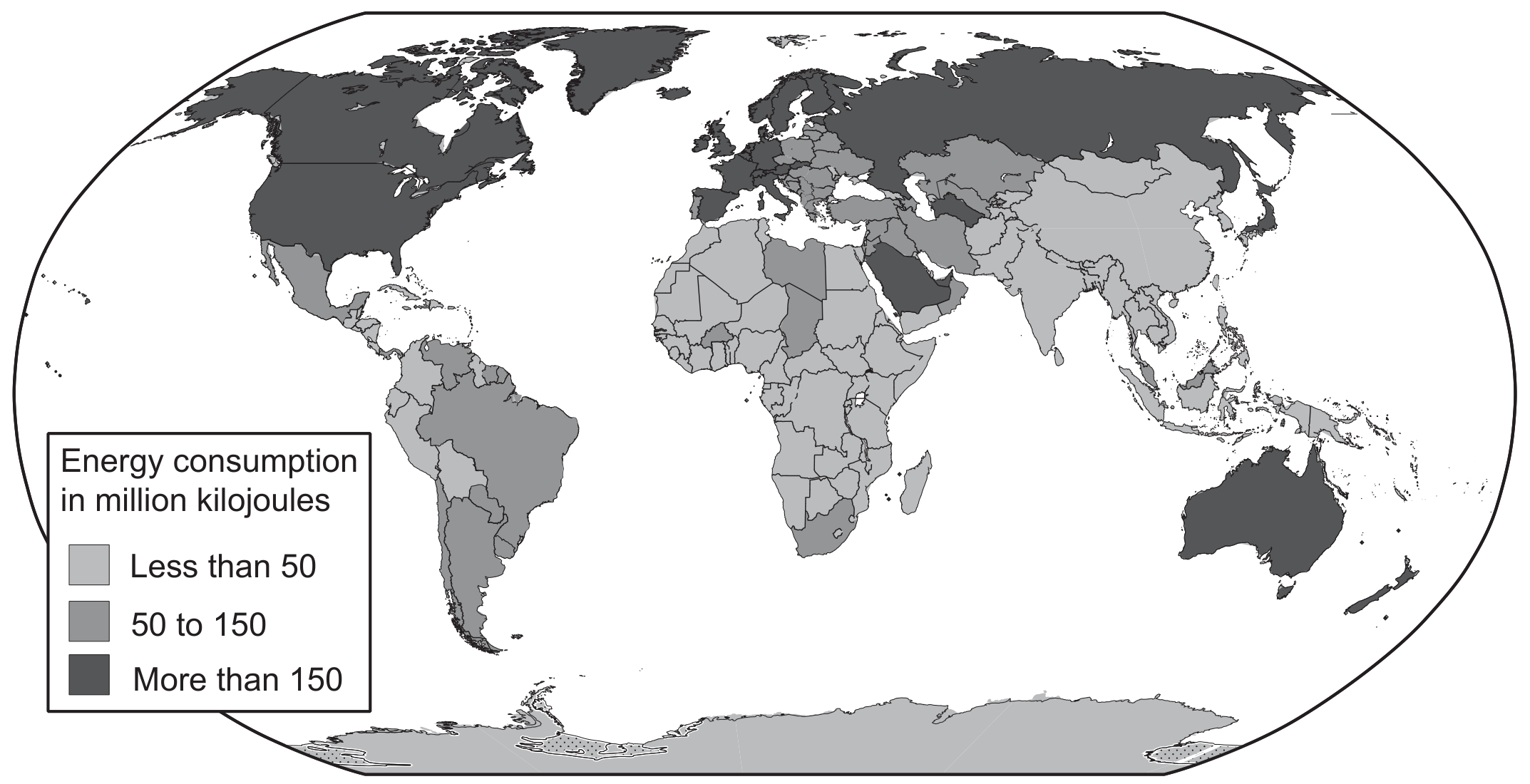
Figure 2: Energy consumption per capita in 2004.

Figure 2

Figure 2

(a)

Explain how the projected change in demand for nuclear energy over the period shown in Figure 3 demonstrates the change in the value of a resource over time.

[ 3 ]
(a)

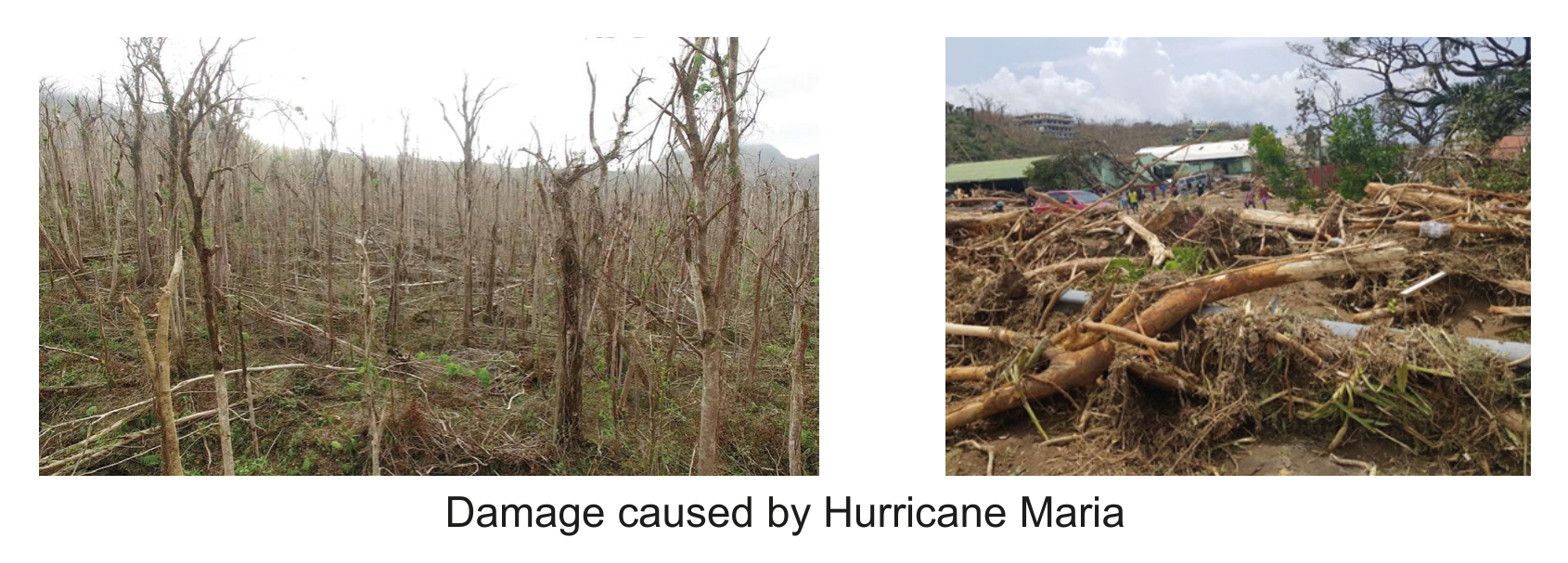
Figure 3(c): Impacts of Hurricane Maria
- 100% of food crops were destroyed.
- 90% of housing was damaged.
- Almost 10000 landslides occurred.
- Extreme damage to tropical rainforest: leaves removed and many trees knocked down.
- Major damage to coral reefs caused by waves and soil erosion.
- Freshwater was contaminated by oil spills and chemicals.

Figure 3(c): Impacts of Hurricane Maria illustration

Figure 3(c): Impacts of Hurricane Maria illustration

With reference to Figure 3(c), explain three ways in which Hurricane Maria has affected ecosystem services provided by Dominica's forests.

[ 3 ]
[Maximum number: 2]

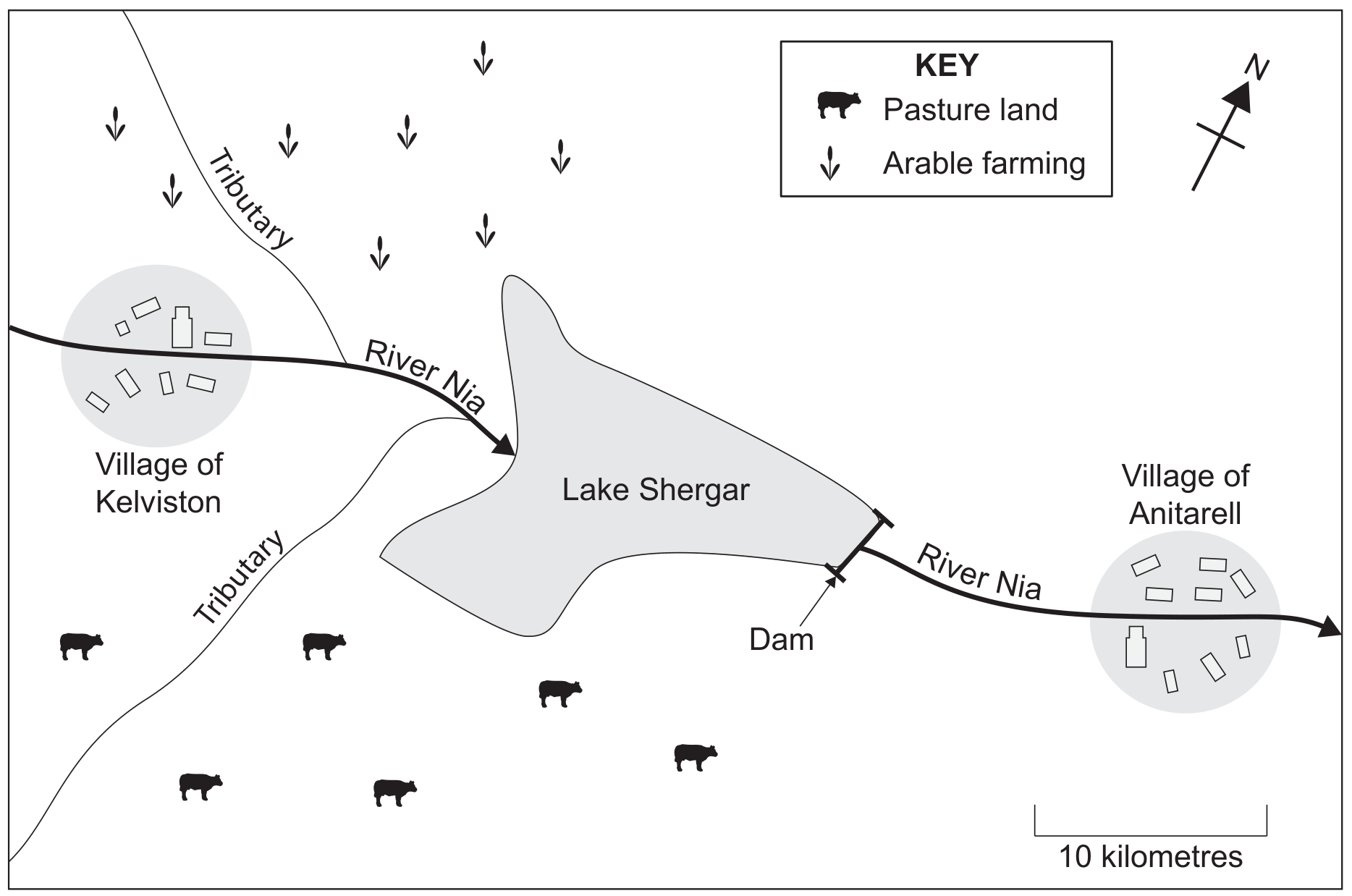
Figure 3: A simplified diagram of the Lake Shergar area.

Figure 3

Figure 3

(a)

The lake provides a water supply for the local population.

[ 2 ]
(i)

With reference to Lake Shergar, explain what is meant by natural income.

[ 2 ]
0