EduNinja
[Maximum number: 5]
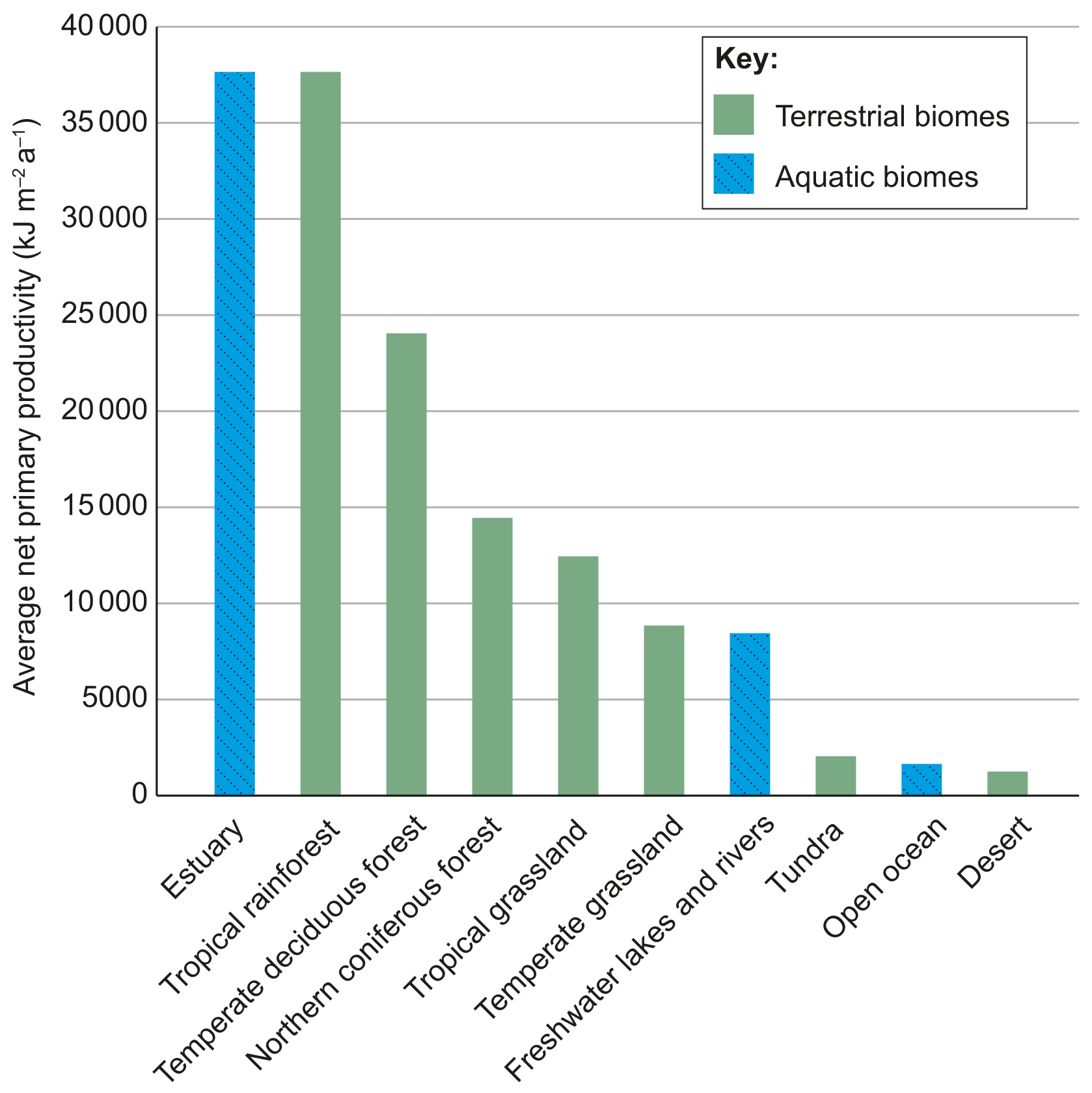
Figure 4(a): Average net primary productivity of ecosystems

Figure 4(a): Average net primary productivity of ecosystems

(a)

Using Figure 4(a), identify an ecosystem that has an average net primary productivity above 30000 kJ m2a130000 \mathrm{~kJ} \mathrm{~m}^{-2} \mathrm{a}^{-1}.

[ 1 ]
(b)

Estuaries are one of the most productive ecosystems in the world, but only account for 3 % of global productivity.

State one reason why this occurs.

[ 1 ]
(c)

Outline why estuaries are highly productive ecosystems.
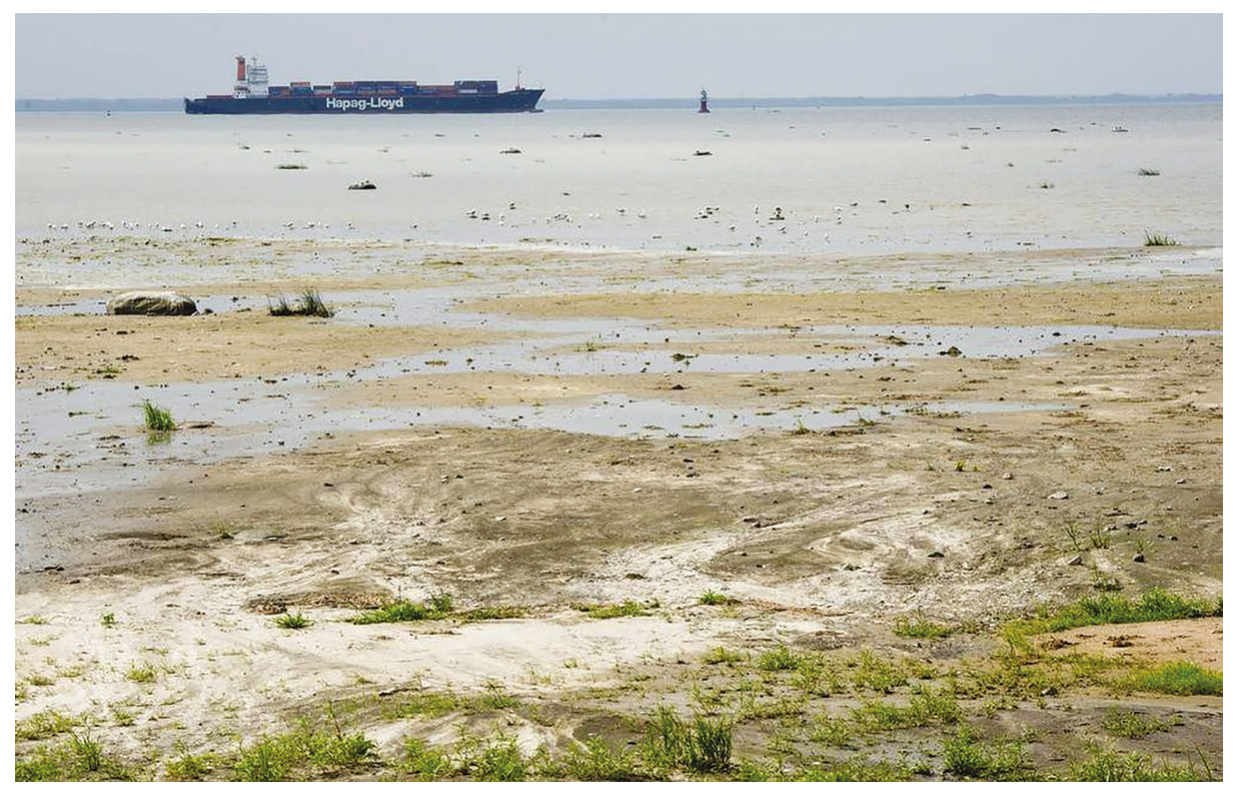
Figure 4(b): Mudflats along the St Lawrence River estuary at low tide
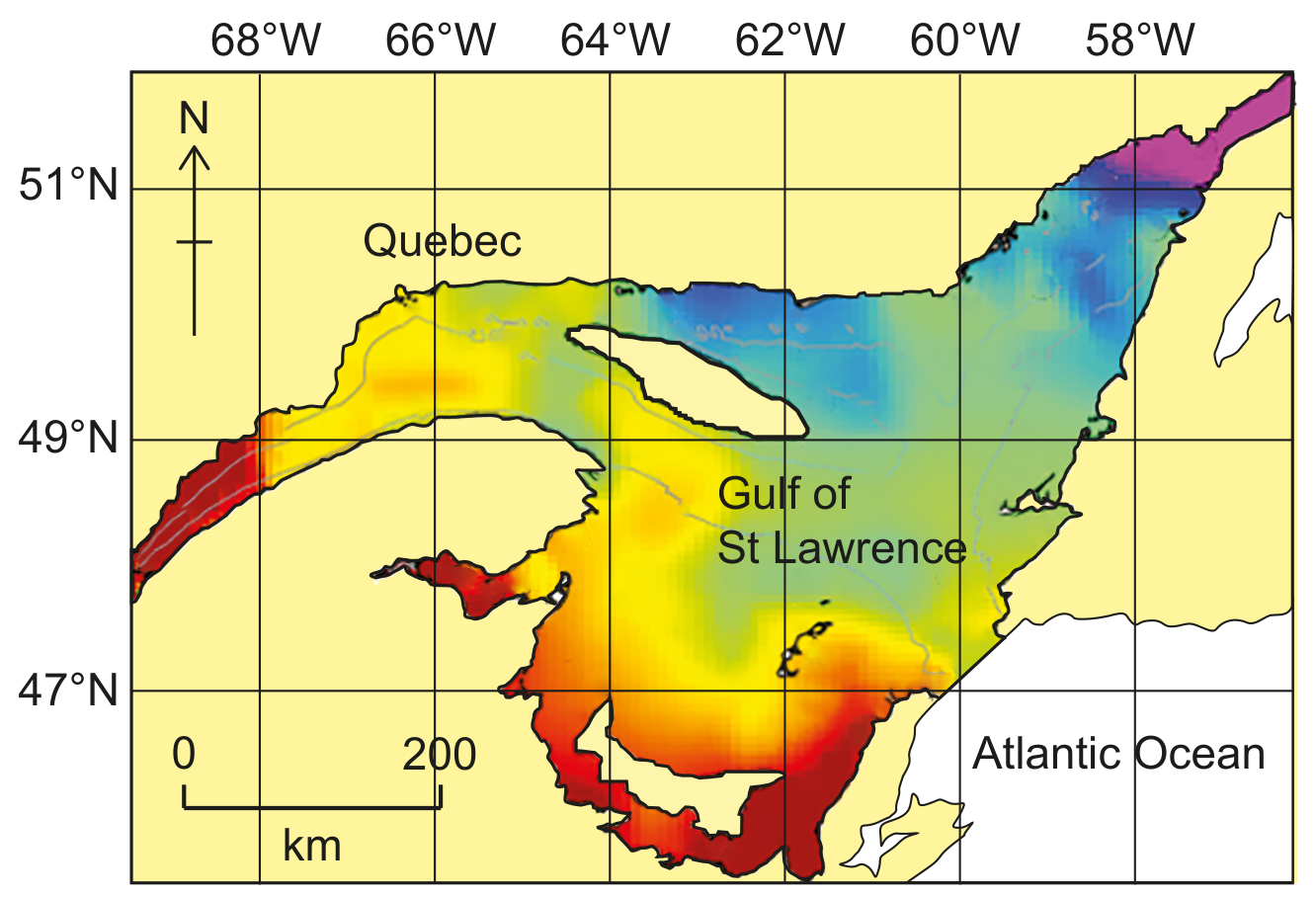
Figure 4(b): Mudflats along the St Lawrence River estuary at low tide

Figure 5(a): Salinity variation in the Large Ocean Management Area
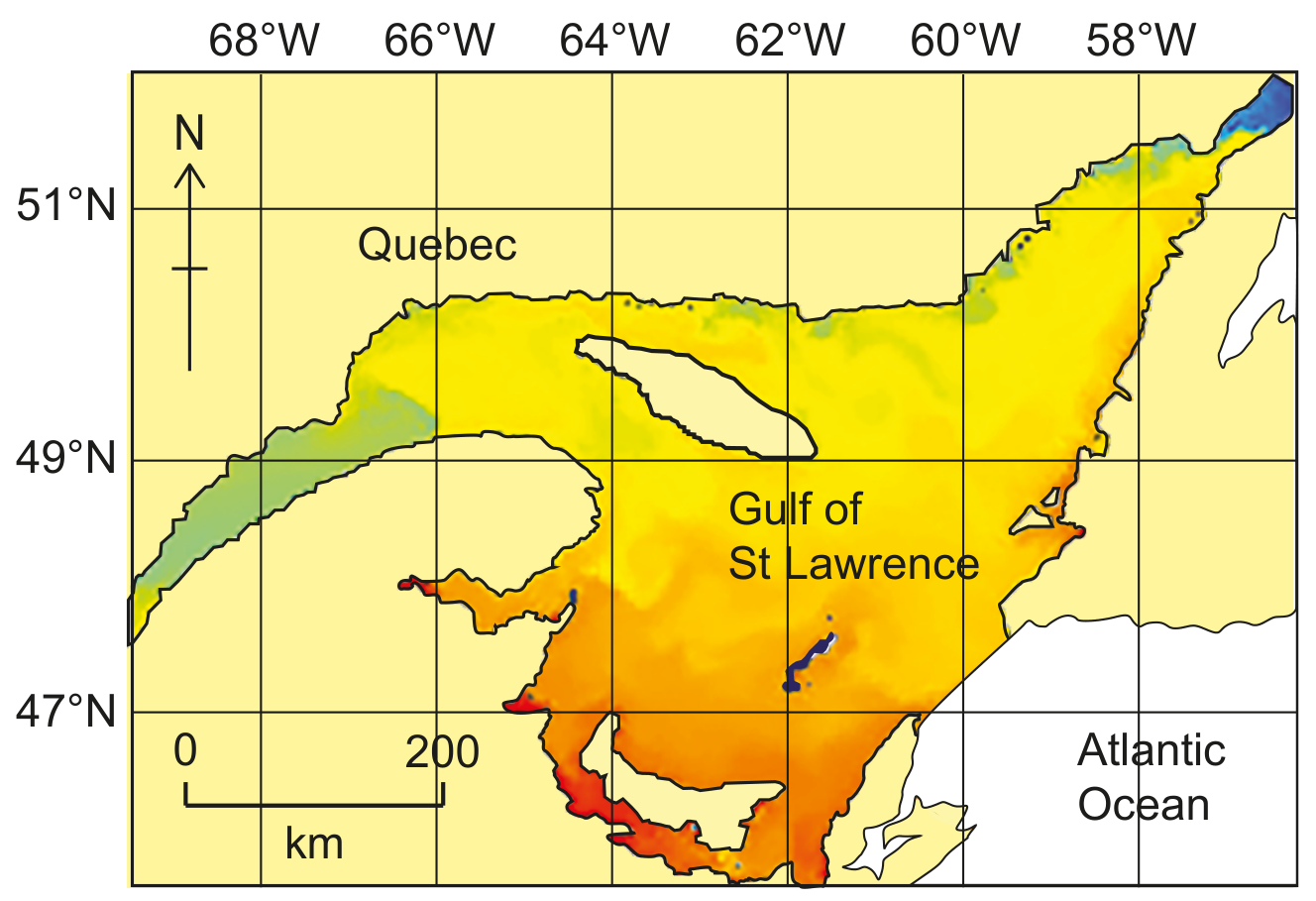
Figure 5(a): Salinity variation in the Large Ocean Management Area

Figure 5(b): Water-surface temperature variation across the LOMA

Figure 5(b): Water-surface temperature variation across the LOMA

The St Lawrence River estuary and Gulf of St Lawrence are recognized as a Large Ocean Management Area by the Canadian government.
The area is an important shipping route, highly productive, provides habitat for birds, whales and crabs, and provides nursery grounds for commercial fish species.
Management is challenging because stakeholder interests may conflict or be environmentally damaging.
[ 3 ]
[Maximum number: 2]
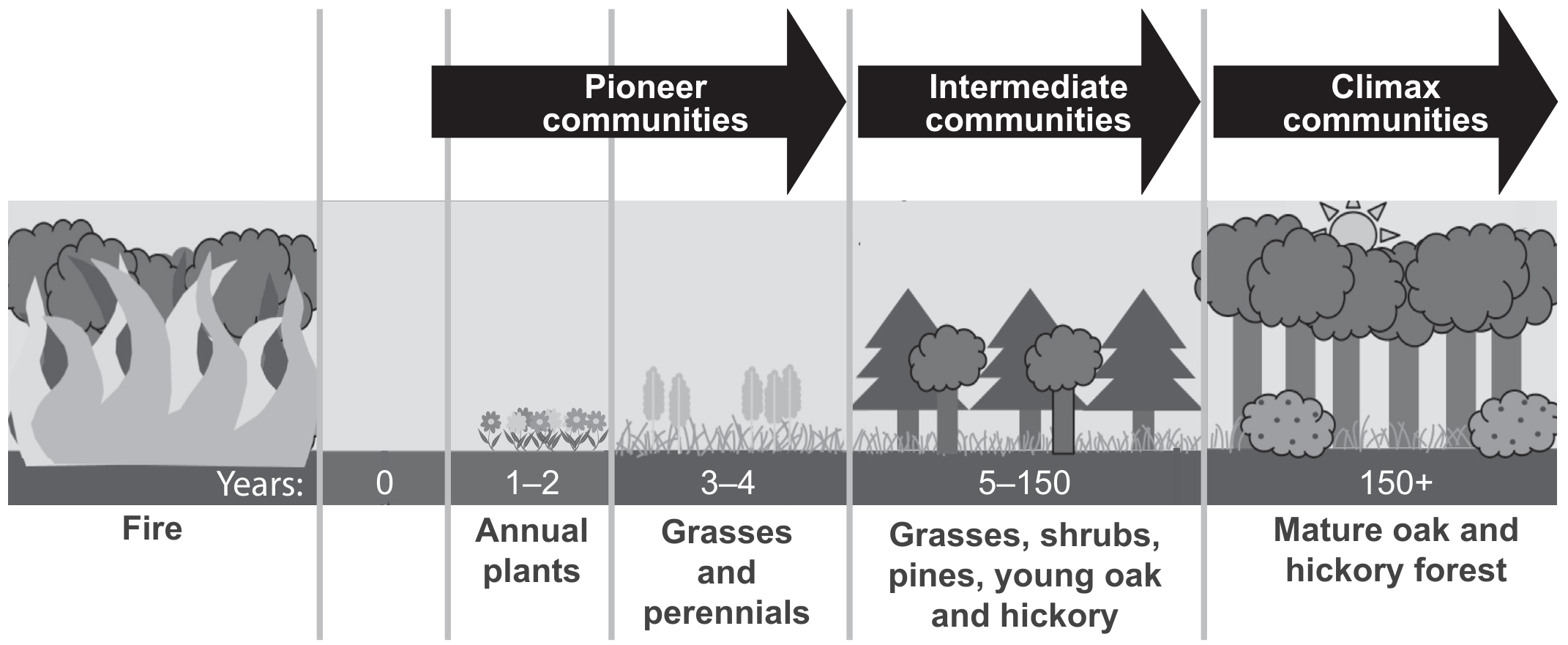
Figure 1: Stages of succession following disturbance by fire

Figure 1: Stages of succession following disturbance by fire

(a)

Outline two ways in which the food web is likely to change as a result of succession.

[ 2 ]
(a)
(i)

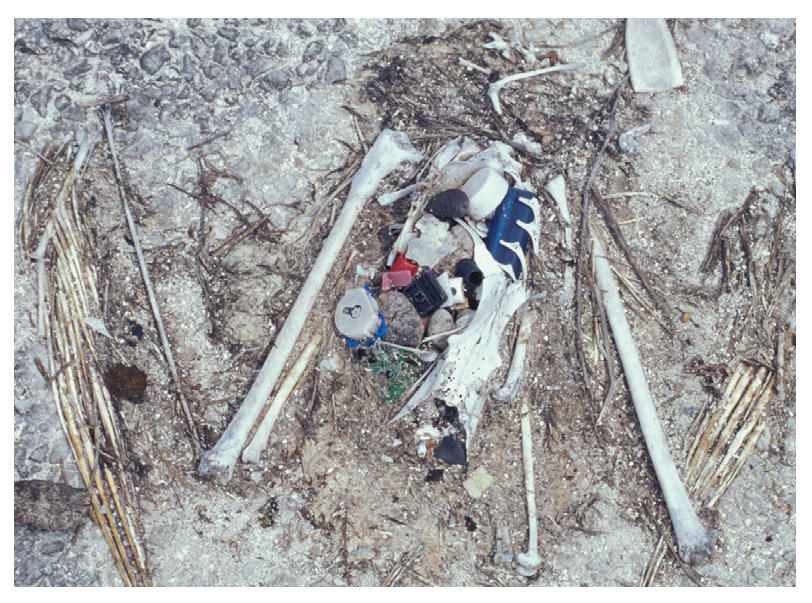
Explain why albatross chicks may starve if they eat plastic.

Figure 4(b): Dead albatross chick with plastic garbage in stomach

Figure 4(b): Dead albatross chick with plastic garbage in stomach

Figure 3/4: larger plastic pieces are taken in by fish, sea birds and animals, which may die of starvation.
One study estimates around 1 million sea birds, including albatrosses, and 100000 animals are killed by ingestion of plastic or entanglement in plastic fishing nets.
About half of all albatross species are endangered or critically endangered on the Red List.

[ 1 ]
(ii)

Explain why organisms at the top of the food web in the GPGP are likely to accumulate high concentrations of POPs (persistent organic pollutants).

Figure 3: the Great Pacific Garbage Patch is floating garbage in the North Pacific gyre; other ocean gyres also have garbage patches.
Estimates vary, with some estimating 3.5 million tonnes of plastic.
Garbage, mostly plastics from Pacific-bordering countries, floats to the GPGP in ocean currents and is trapped in the gyre.
Plastic pieces vary in size, may float at or just below the surface, and denser pieces may sink to the ocean floor.
Plastic is mostly non-biodegradable and breaks into smaller pieces; some small pieces absorb POPs as chemical sponges.

Figure 3/4: larger plastic pieces are taken in by fish, sea birds and animals, which may die of starvation.
One study estimates around 1 million sea birds, including albatrosses, and 100000 animals are killed by ingestion of plastic or entanglement in plastic fishing nets.
About half of all albatross species are endangered or critically endangered on the Red List.

[ 2 ]
(b)
(i)

State the two material inputs of photosynthesis.

[ 1 ]
[Maximum number: 2]

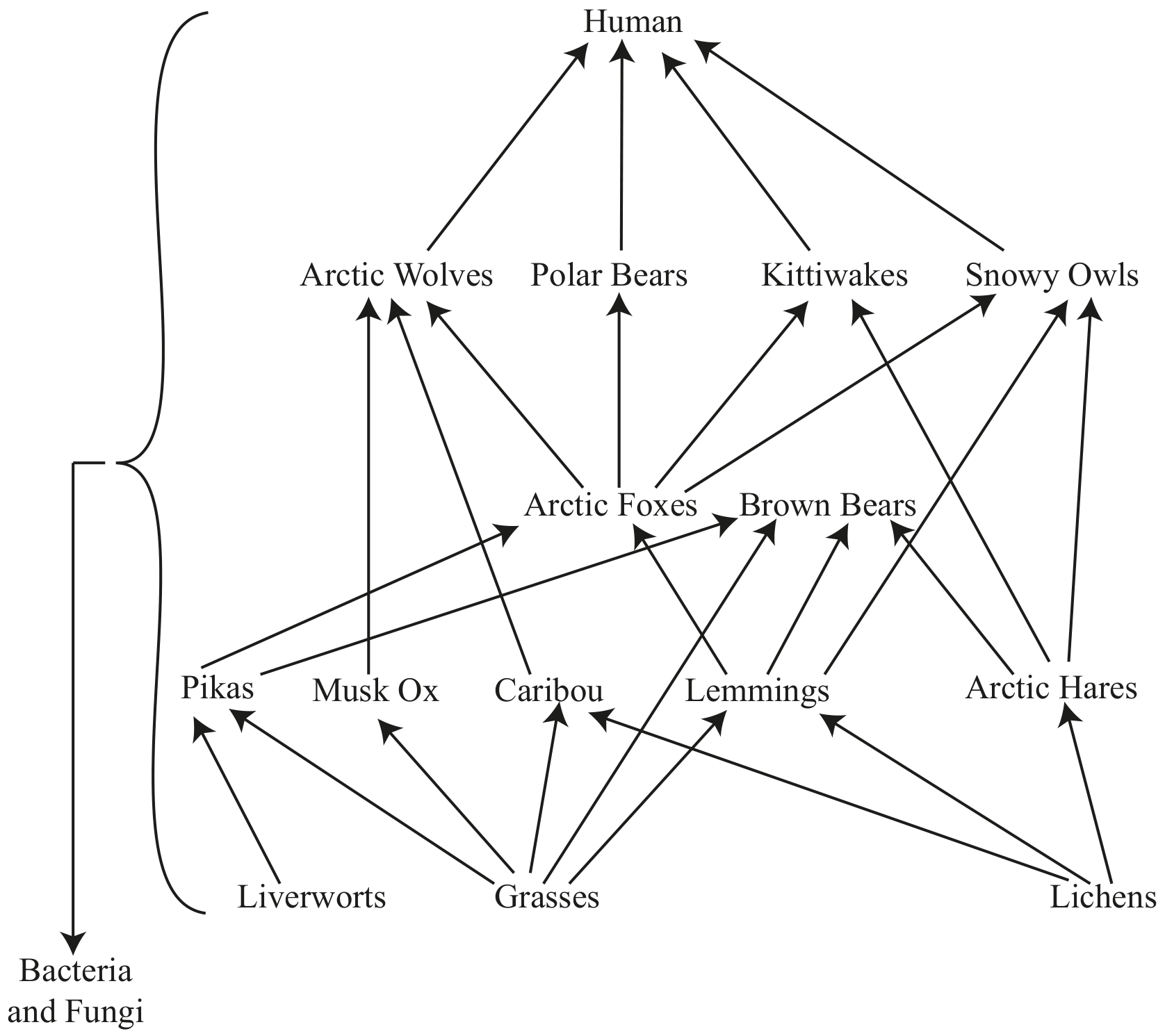
Figure 1 below shows a food web for an ecosystem within a Tundra biome.

Figure 1

Figure 1

(a)
(i)

With reference to Figure 1, state the ecological relationship between two [1] named species.

[ 1 ]
(ii)

State the trophic level of the Arctic foxes in this food web.

[ 1 ]
[Maximum number: 5]

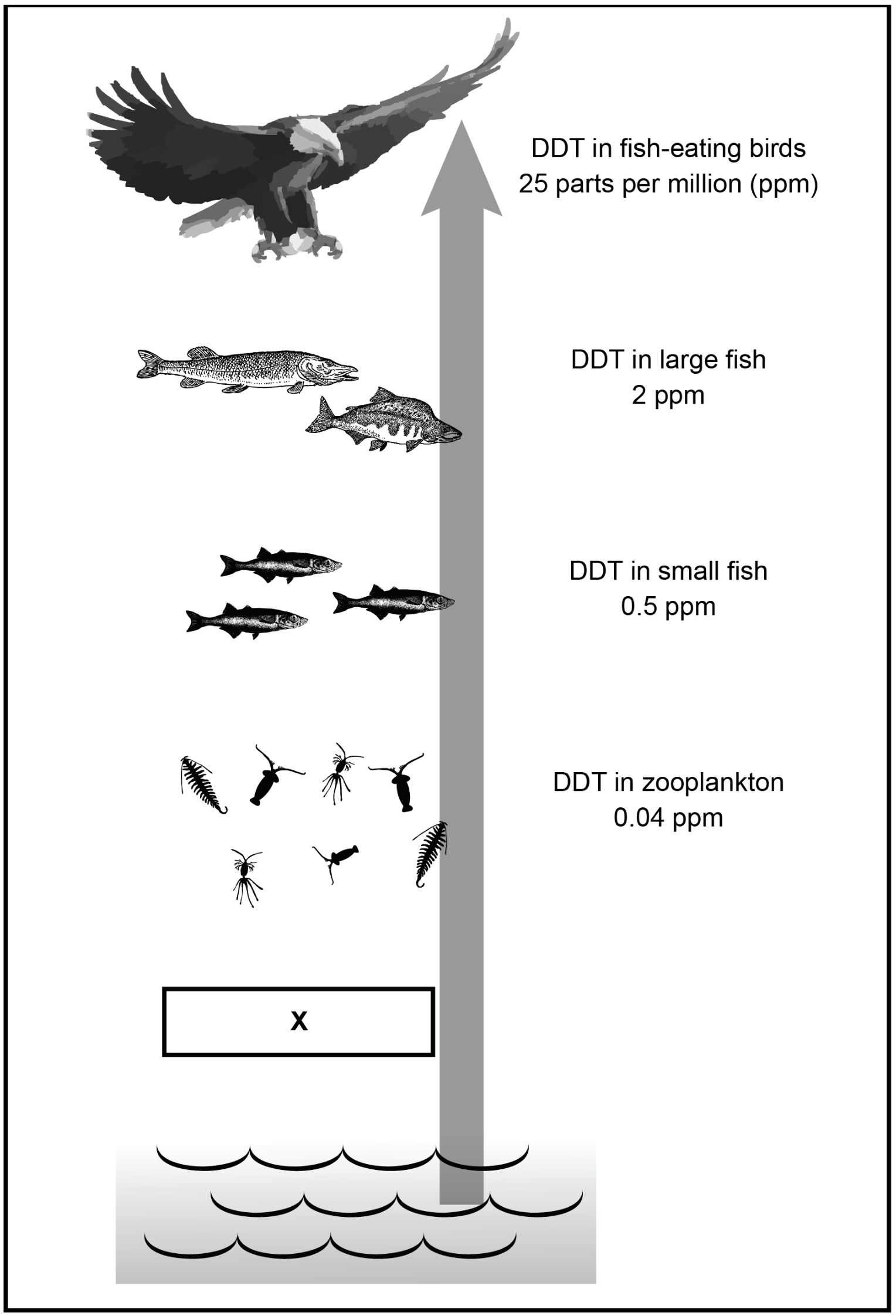
The concentration of DDT at different trophic levels of the food chain.

Figure 1: Levels of concentration of DDT in food chain

Figure 1: Levels of concentration of DDT in food chain

(a)

State the main source of energy for the food chain in Figure 1.

[ 1 ]
(b)

State the trophic level labelled X in Figure 1.

[ 1 ]
(c)

Identify one use of DDT that has led to its presence in the environment.

[ 1 ]
(d)

With reference to the concepts of bioaccumulation and biomagnification, outline how the concentration of DDT has changed along the food chain. be marked.

[ 2 ]
(a)
(i)

State how you could determine gross secondary productivity of the zebra.

[ 1 ]
(ii)

Explain how the second law of thermodynamics applies to this food chain.

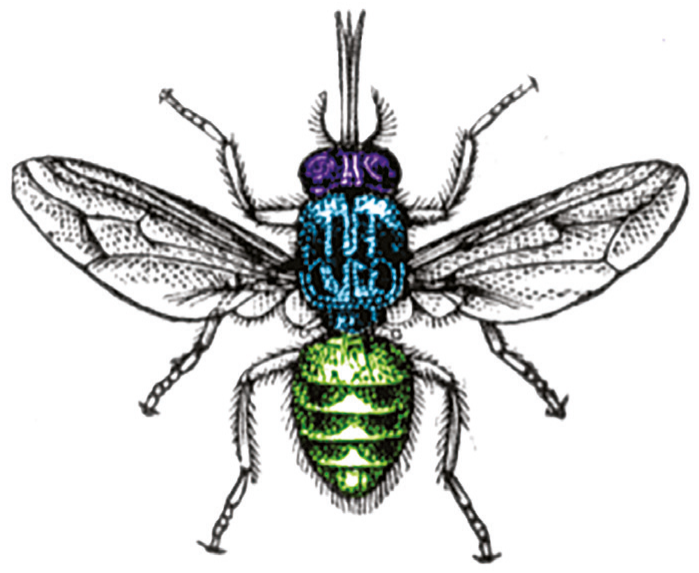
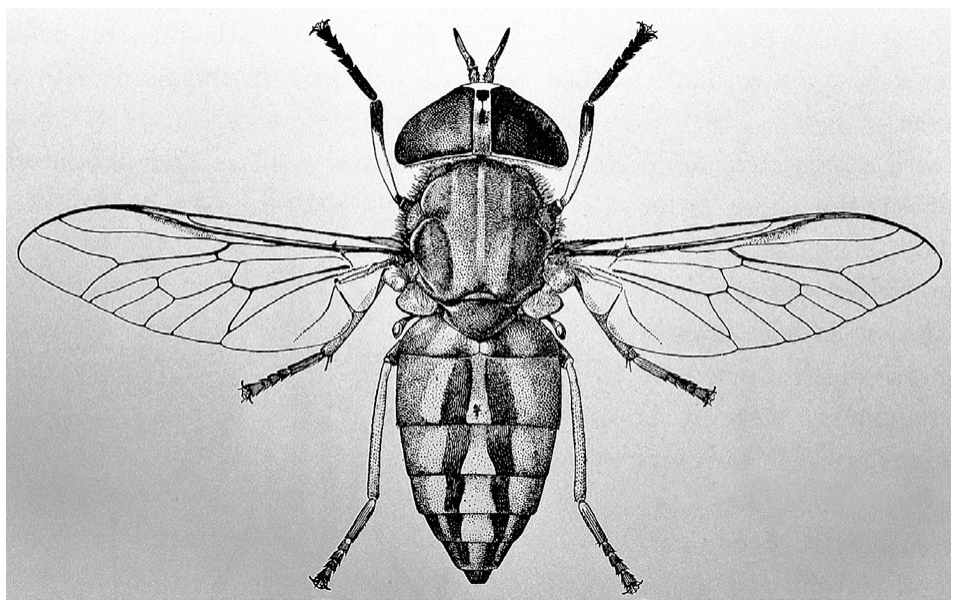
Figure 1(b): Biting flies in the savanna

Figure 1(b): Biting flies in the savanna

Figure 1(b): Biting flies in the savanna

Figure 1(b): Biting flies in the savanna

Biting flies bite and drink the blood of zebras. They commonly carry diseases that can be fatal to zebras.

[ 2 ]
(a)
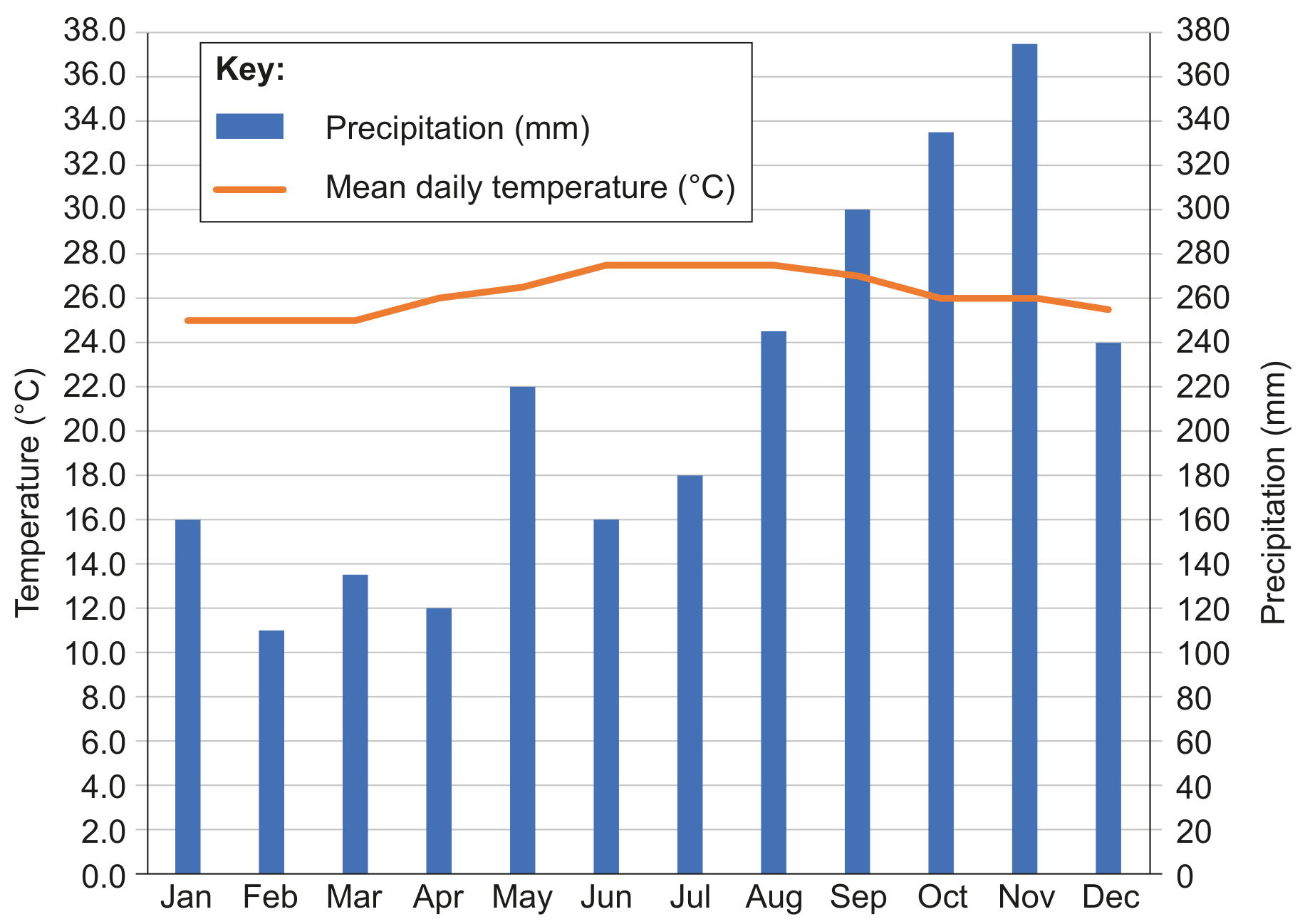
Figure 1(d): Climate graph for Roseau, Dominica

Figure 1(d): Climate graph for Roseau, Dominica

With reference to Figure 1(d), explain how the environmental conditions on Dominica result in high gross primary productivity.

[ 2 ]
(a)
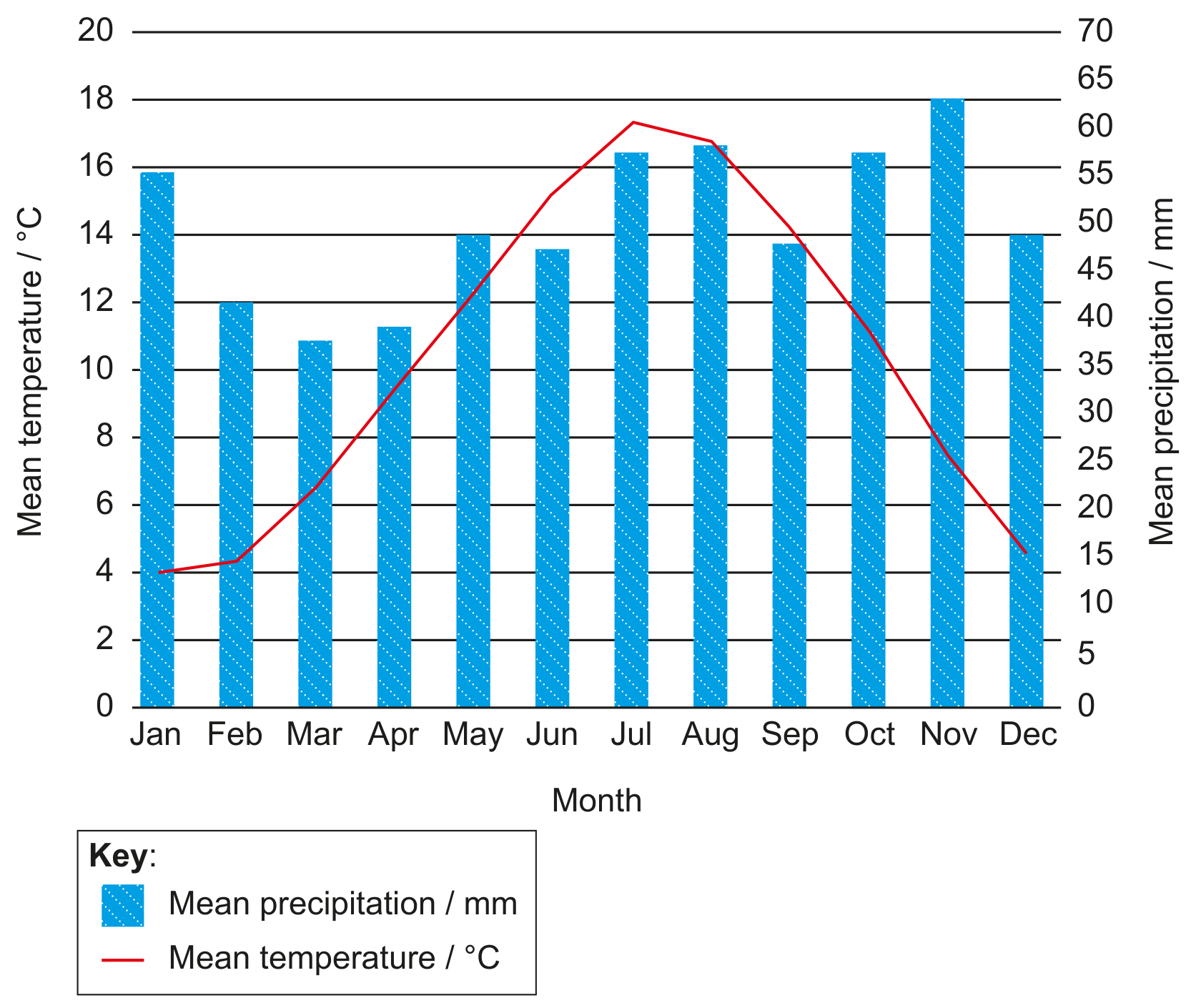
Figure 3: Climate graph for London

Figure 3: Climate graph for London

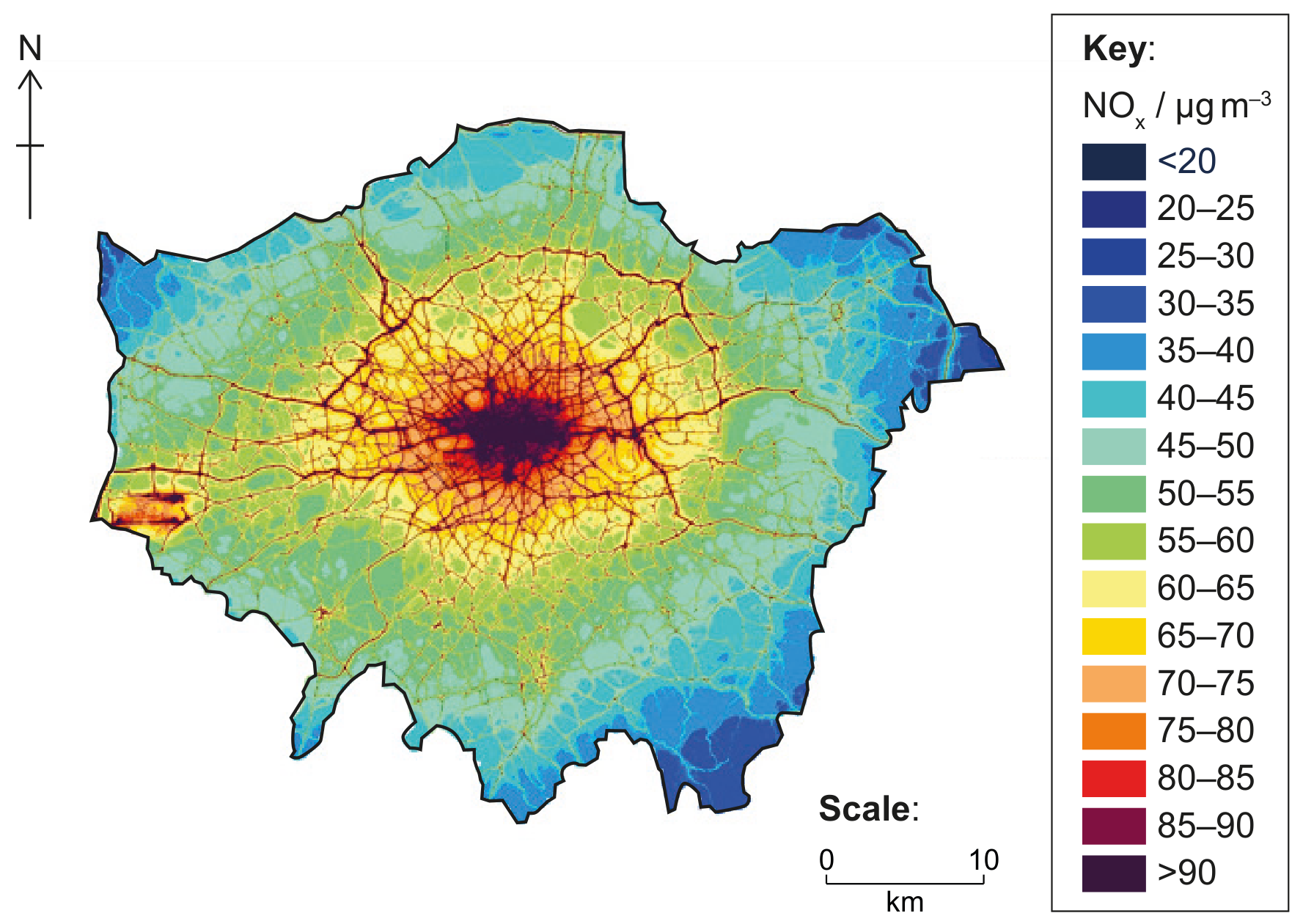
Figure 9: Annual mean oxides of nitrogen ( \(\mathrm{NO

Figure 9: Annual mean oxides of nitrogen ( \(\mathrm{NO

Outline one factor which limits the primary productivity of an ecosystem in London.

[ 1 ]
(a)

Bithynia feeds on plant material in the wetland ecosystem.

[ 1 ]
(i)

State its trophic level in the ecosystem.

[ 1 ]
(a)
(i)

Identify four factors that would affect the primary productivity of forest plantations in the Copperbelt Province.

Figure 2: Zambia has approximately 14.64 million people and an annual population growth rate of 2.8%.
Indigenous forest covers approximately 491348 km^2; wood fuel contributes about 80% of domestic energy consumption.
Zambia has abundant wildlife, forests, water resources and mineral deposits.

Figure 4(b): 84% of Zambia export income comes from mining, although there are efforts to increase income from agriculture and manufacturing.
Most mining occurs in the Copperbelt and Northwestern Provinces; Zambia is a major producer of copper and cobalt.
Historic mining in Copperbelt Province has left 21 waste rock dumps, 9 slag heaps and 45 tailing dams with toxic metal concentrations.
The Kafue River supplies local communities; young Tilapia are unable to survive near mining areas in the Kafue River.
Mining activity in Copperbelt Province has supported an increase in local population.

[ 2 ]
0