C4.2.16—Secondary production
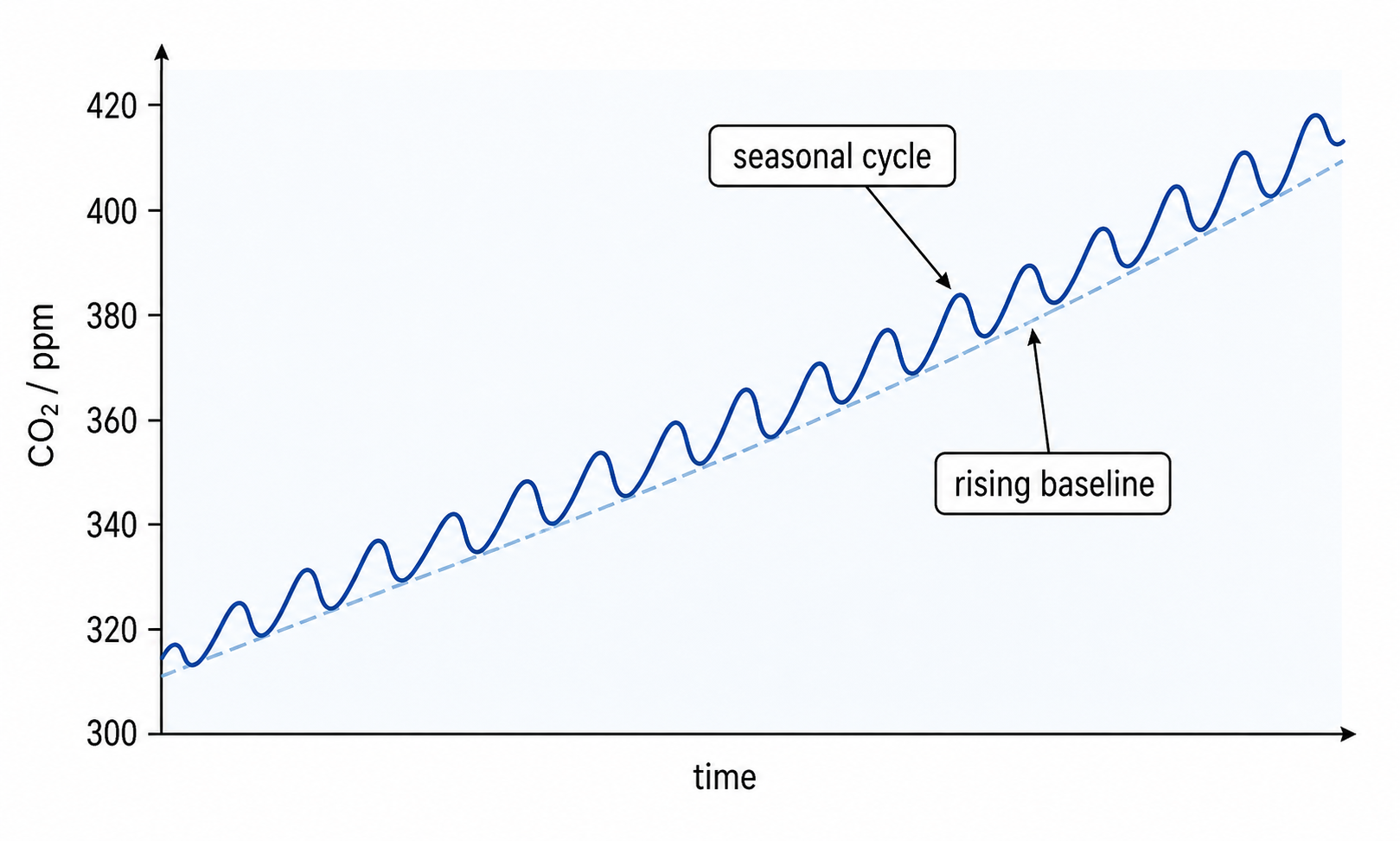
Secondary production explains how energy flow, matter cycling, trophic transfer or carbon movement is represented, measured or limited within ecosystems.
- Syllabus
- First assessment 2025
- Objective
- C4.2.16
- Level
- SL
Secondary production explains how energy flow, matter cycling, trophic transfer or carbon movement is represented, measured or limited within ecosystems.
Coverage 2018–2018 · Updated 16 Jul 2026
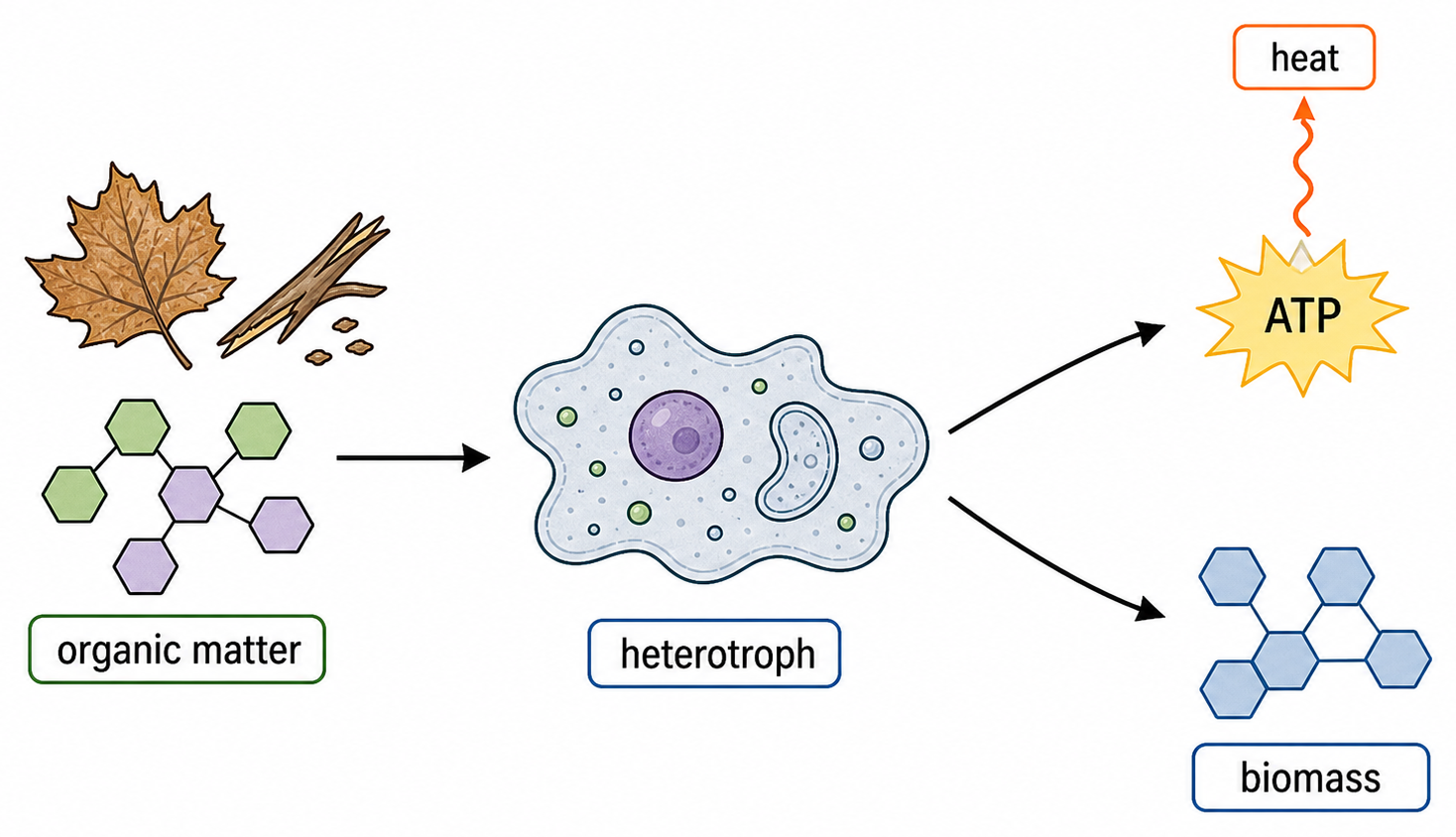
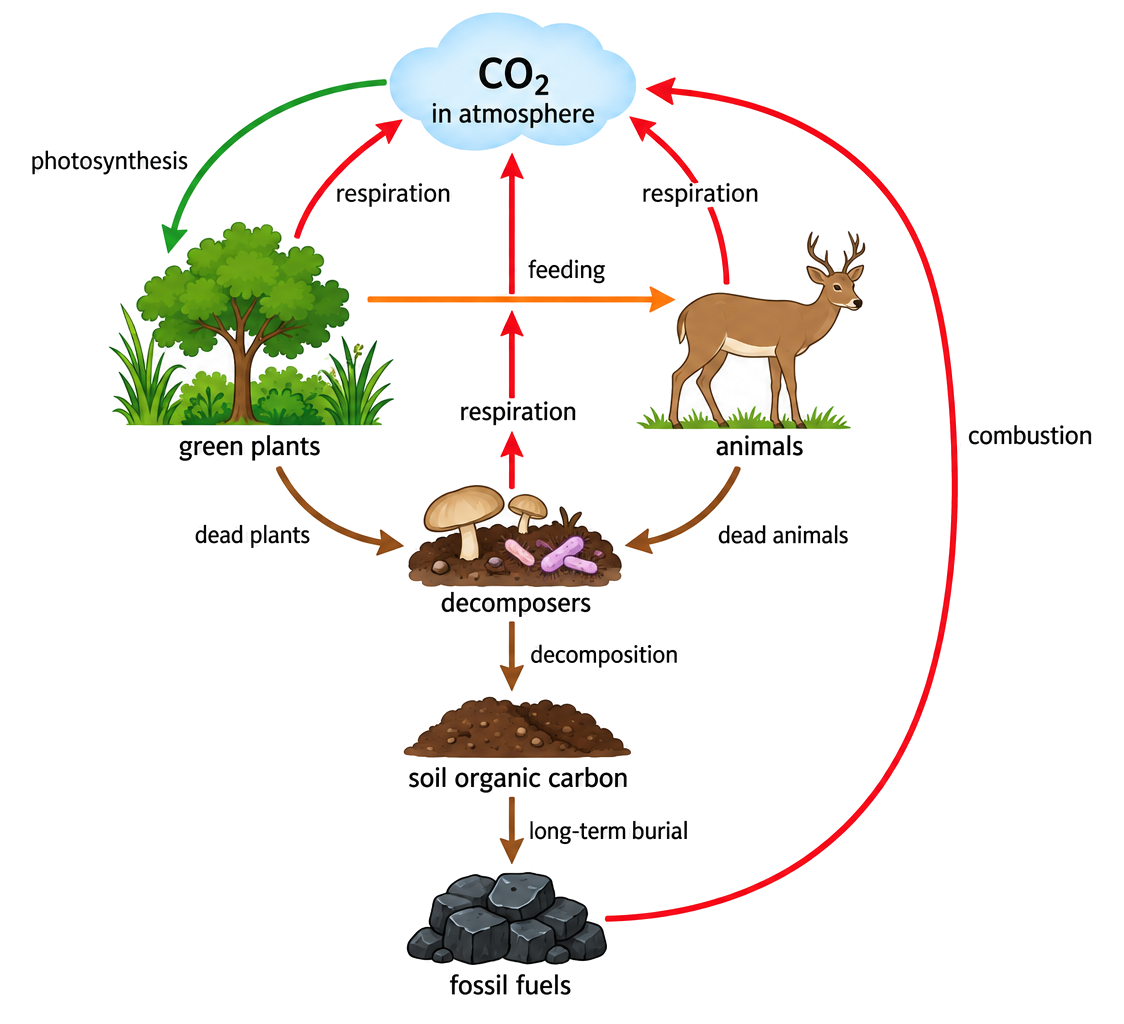
Secondary production is the accumulation of carbon compounds in heterotroph biomass through growth and reproduction.
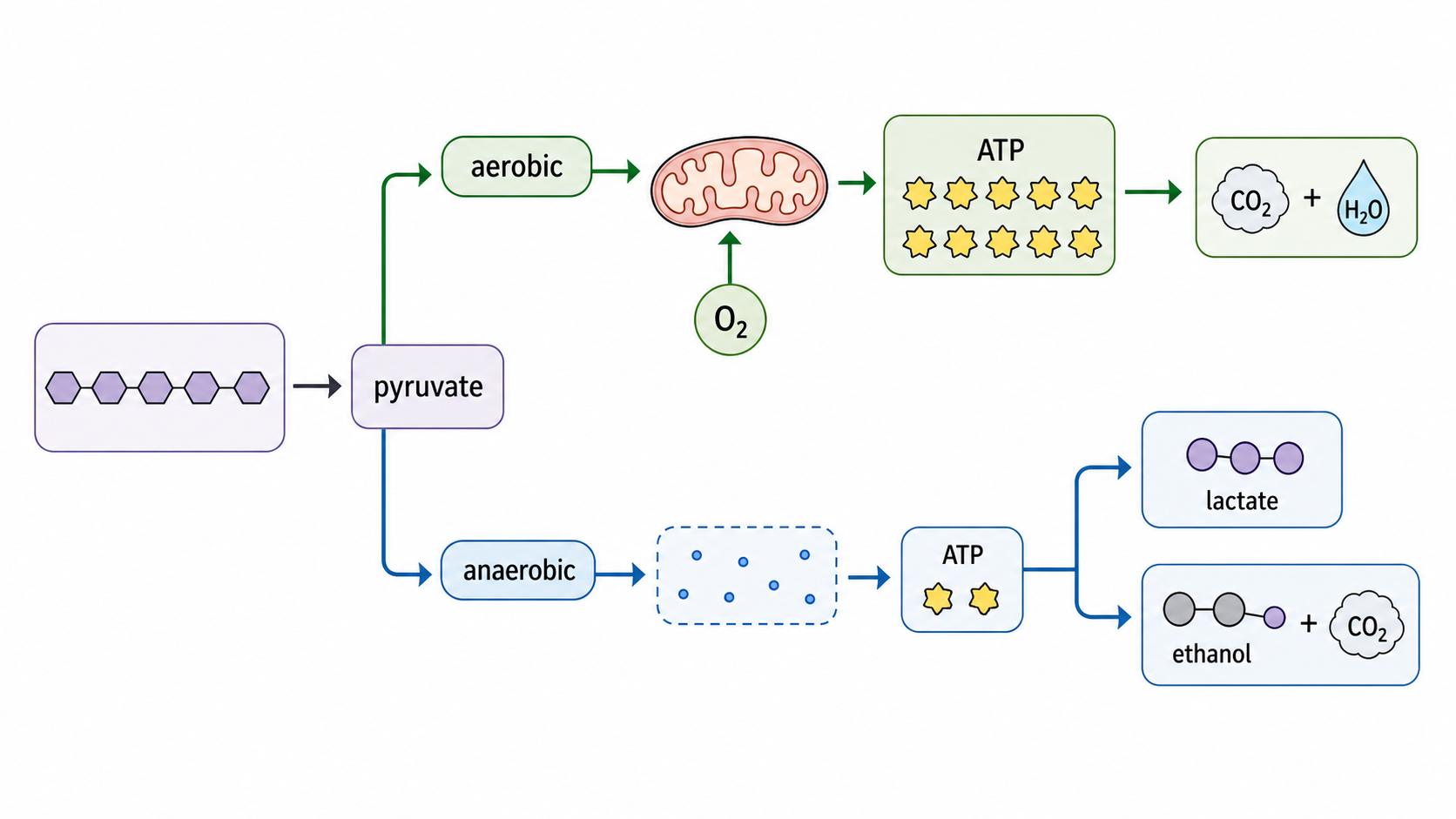
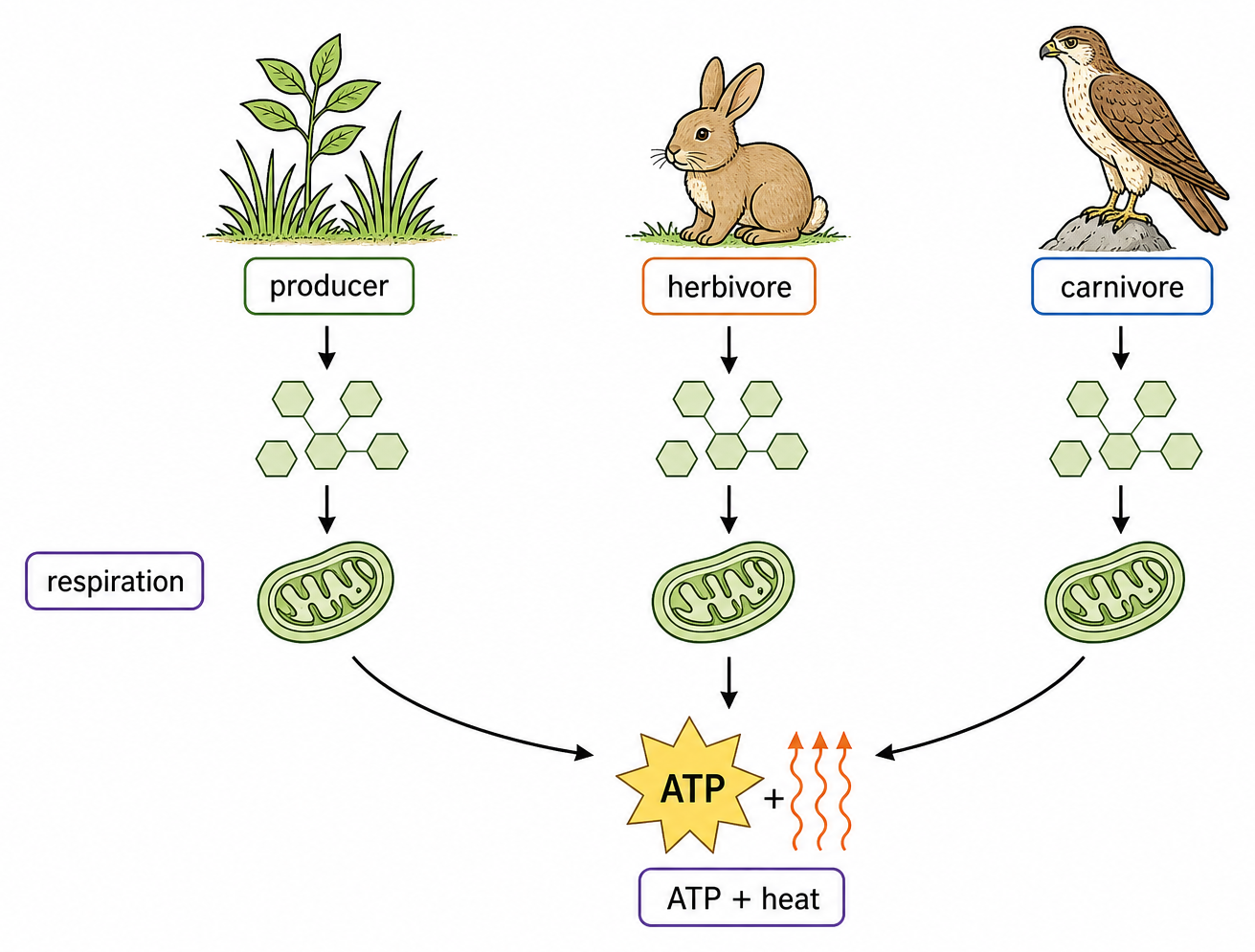
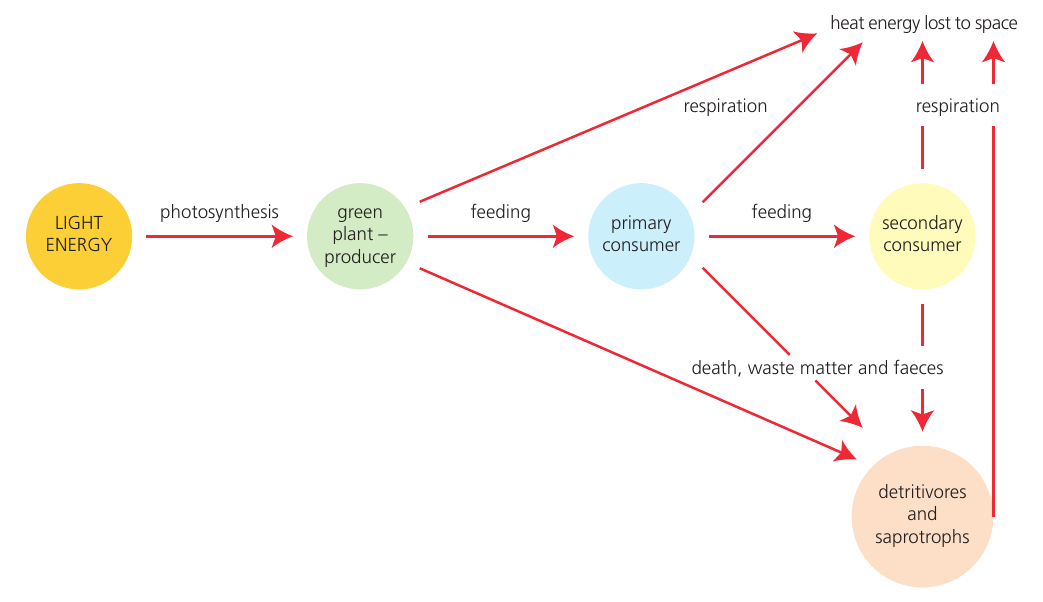
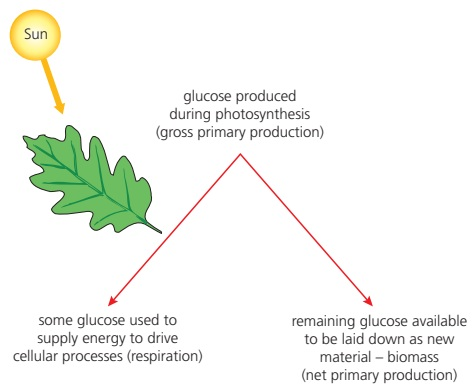
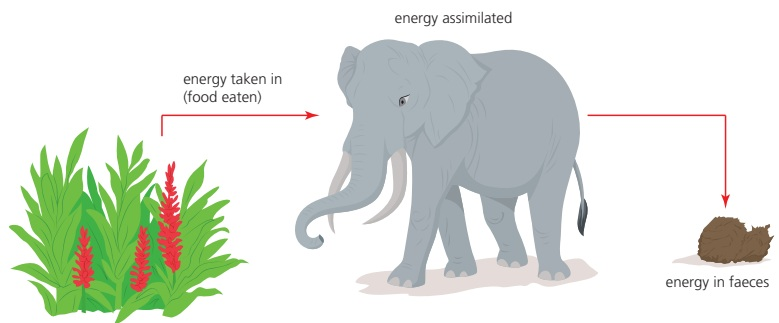
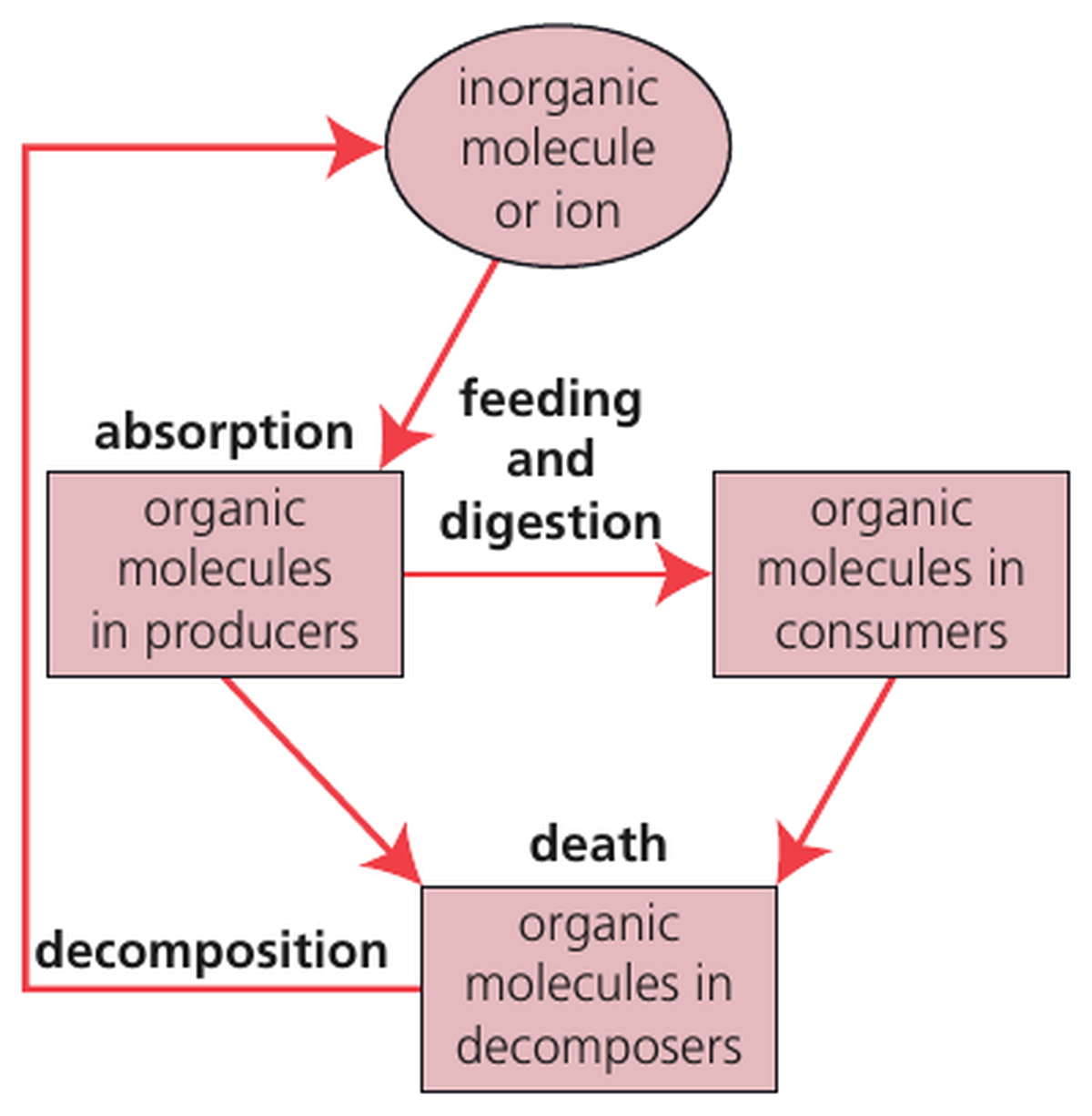
Heterotrophs obtain organic carbon by feeding, but not all intake becomes biomass. Some is not assimilated, and respiration converts absorbed carbon compounds to carbon dioxide and water while releasing energy.
Food carbon → ingestion/digestion → assimilation → respiration losses as CO₂ and water + retained carbon in growth/reproduction. Retained carbon is secondary production.
A growing fish retains part of assimilated food as new tissue, while respiring another part; only the retained new tissue contributes to secondary production.
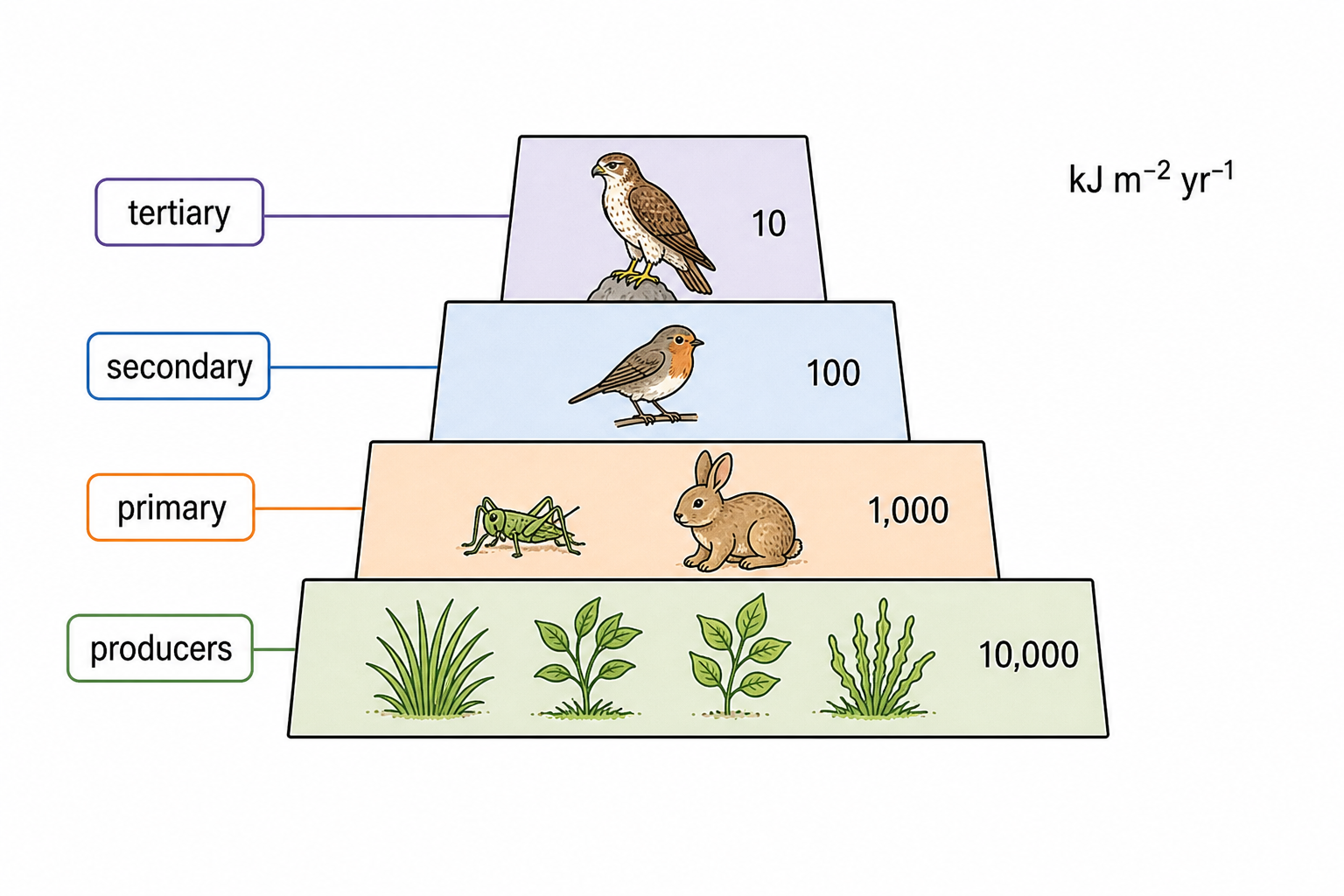
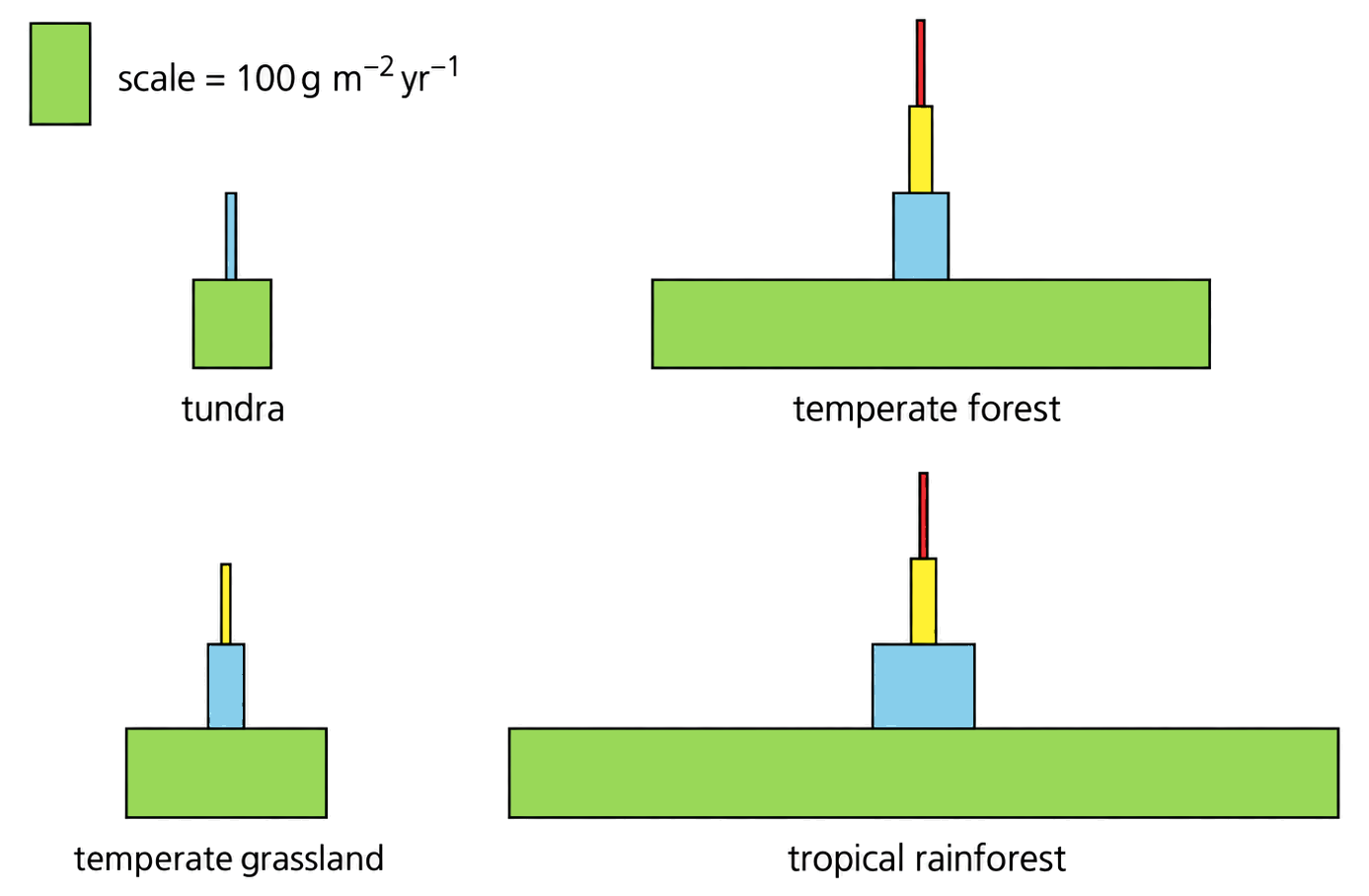
Secondary production is lower than primary production at ecosystem scale because carbon is lost from biomass at each heterotrophic transfer, especially through respiration.
This objective is assessed through structured response, commonly using Calculate.
Calculate
Build the answer around this relationship: Secondary production must be linked to the correct source, store, transfer or loss process.
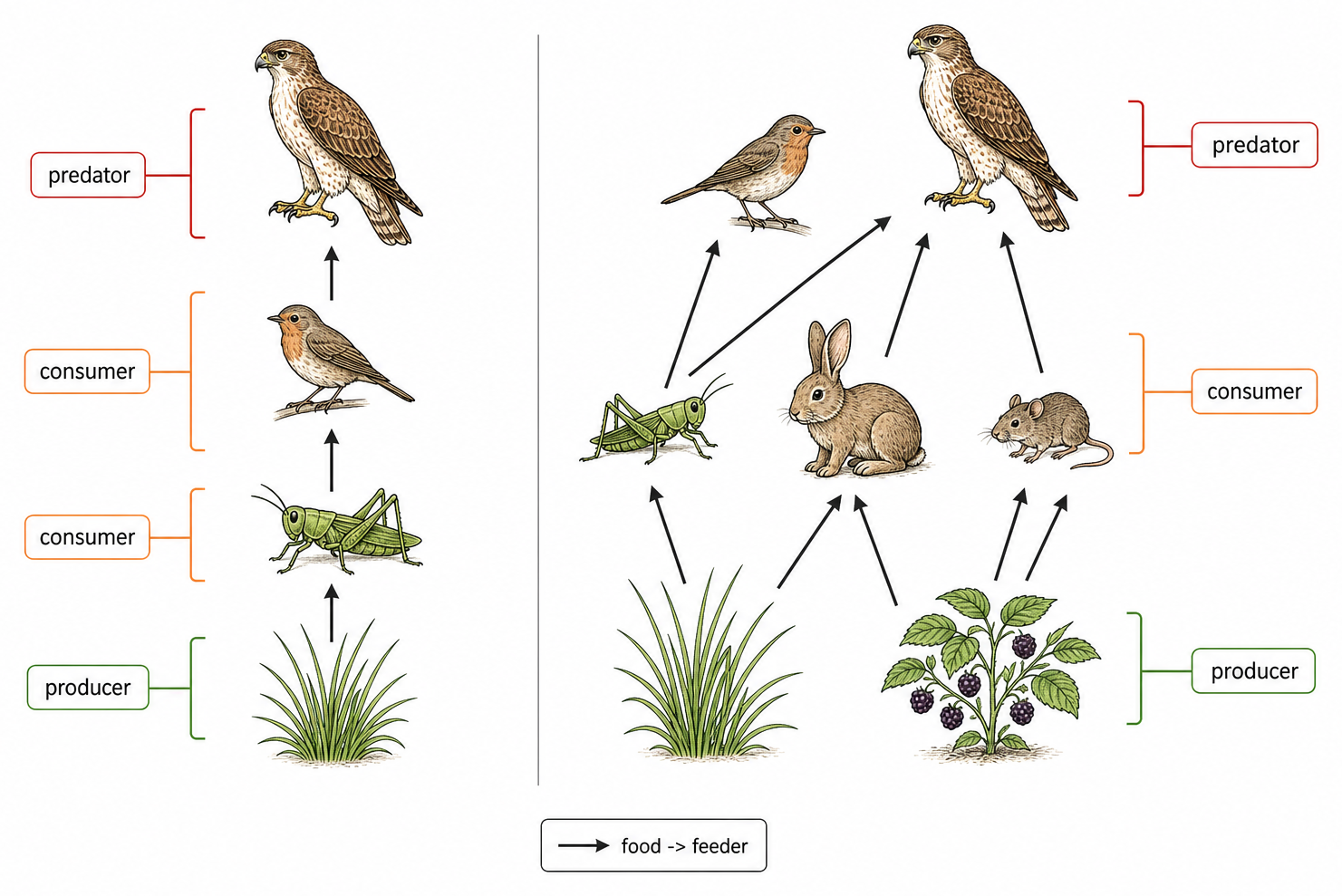
Reversing food-web arrows instead of showing energy transfer direction.
Representative question
Calculate how much food would be required to produce 20 kg of boar meat.
kg
120 kg