C1.1 Enzymes and metabolism
Enzymes and metabolism explain how catalysts, active sites, reaction conditions and pathway regulation control cellular chemical reactions in living systems.
- Syllabus
- First assessment 2025
- Topic
- C1.1
- Level
- SL
Enzymes and metabolism explain how catalysts, active sites, reaction conditions and pathway regulation control cellular chemical reactions in living systems.
Coverage 2010–2025 · Updated 15 Jul 2026
• Enzymes are mostly protein biological catalysts, with some RNA examples
• They work in small amounts and remain unchanged after catalysis
• Metabolism is all enzyme-controlled chemical reactions in cells
• Specific enzymes control which metabolic reactions occur and when
• Anabolism builds complex molecules by condensation and requires energy
• Catabolism breaks molecules by hydrolysis or oxidation and releases energy
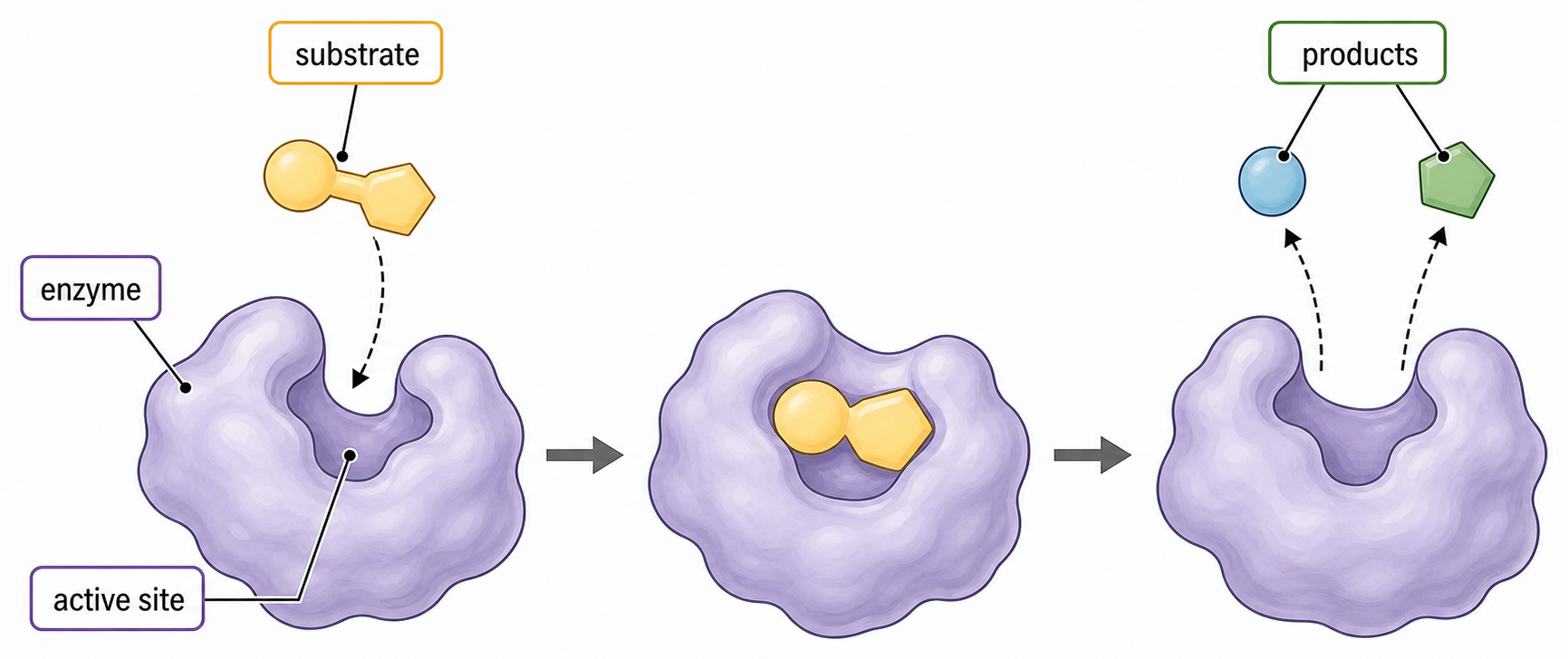
• Enzymes are usually globular proteins with a small active-site pocket
• The active site binds substrate, forms an ES complex, and catalyses reaction
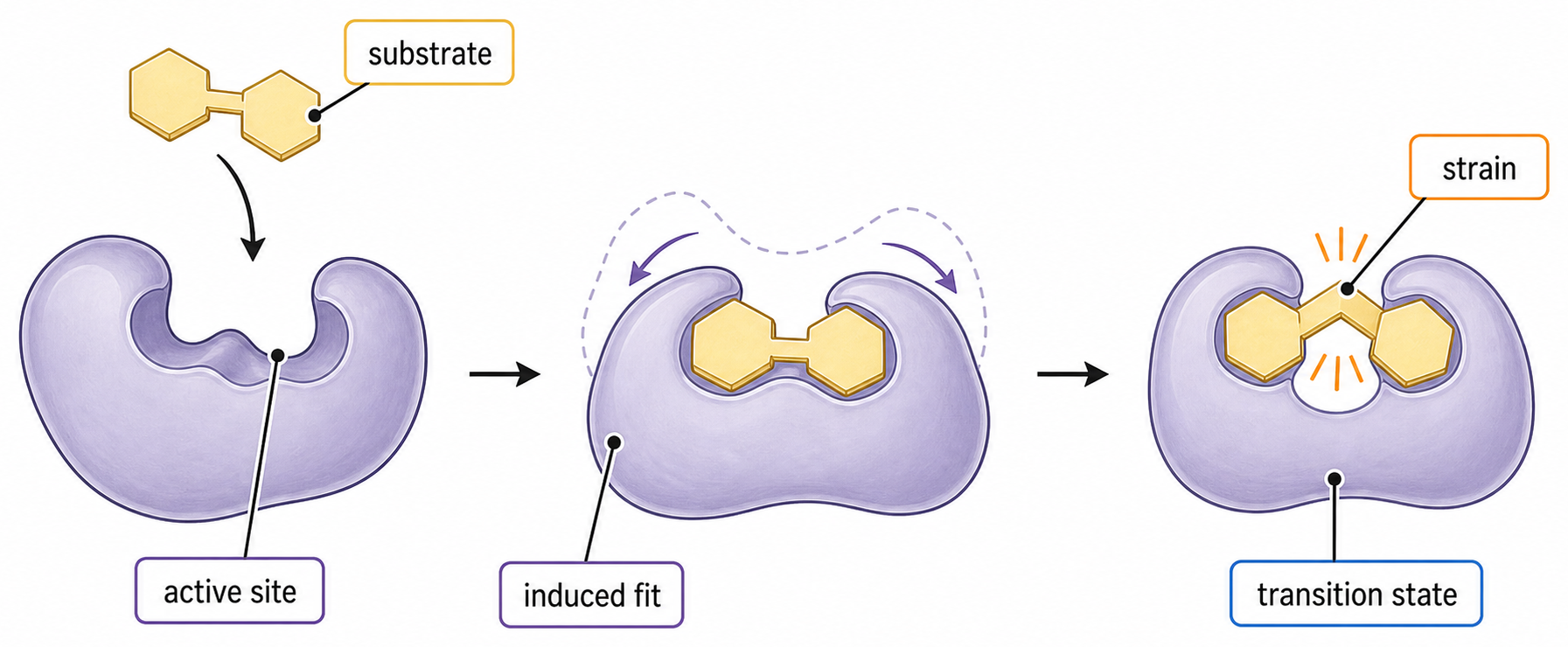
• Substrate binding induces shape changes in both enzyme and substrate
• Induced fit aligns catalytic groups and raises substrate toward transition state
• Molecular motion brings substrates and active sites into collision
• Higher kinetic energy increases successful active-site collisions
• Active-site amino acid arrangement determines substrate specificity
• Denaturation changes tertiary structure and active-site shape, not peptide bonds
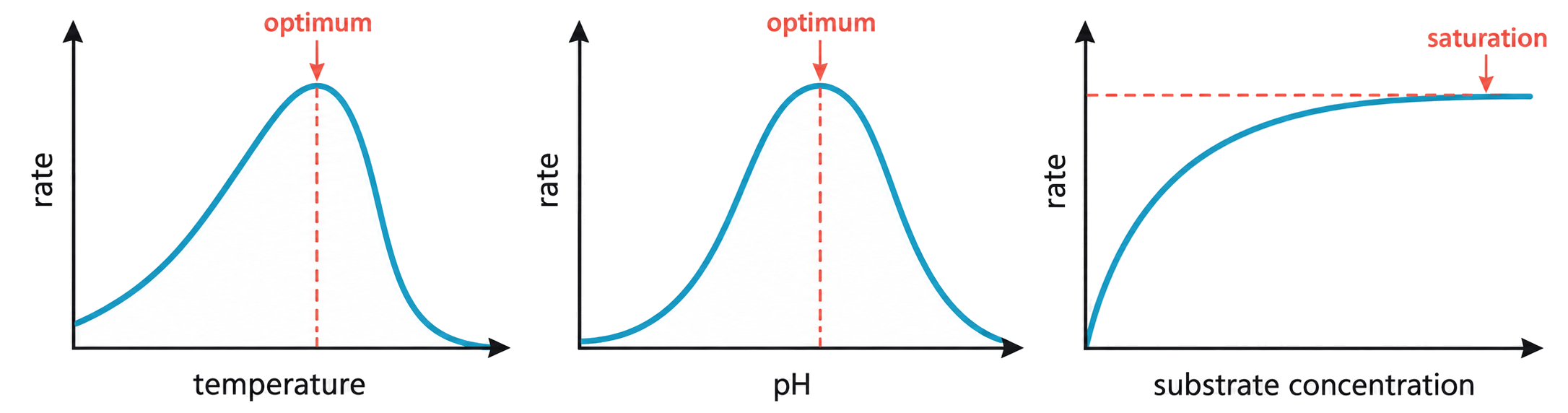
• Temperature increases rate to an optimum, then denaturation lowers activity
• pH changes active-site bonding; substrate concentration rises to saturation plateau
• Measure substrate loss or product formation per unit time
• Use initial rate, replicates, controls, and graphs from amylase or catalase assays
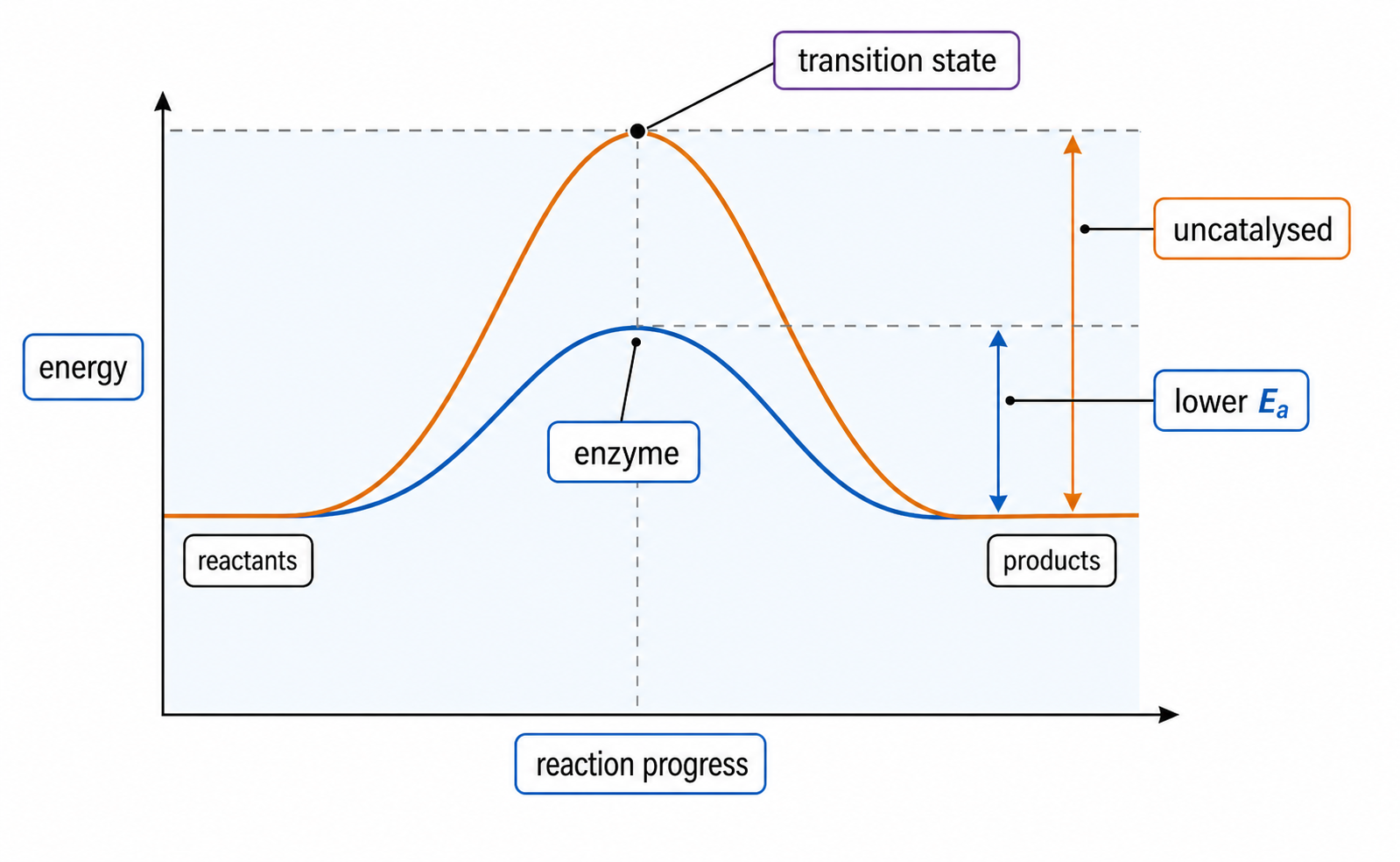
• Enzymes lower activation energy by providing an alternative pathway
• They stabilize transition states but do not remove the energy barrier