C4.2.13—Heat loss
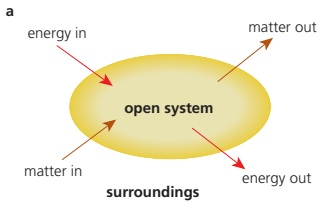
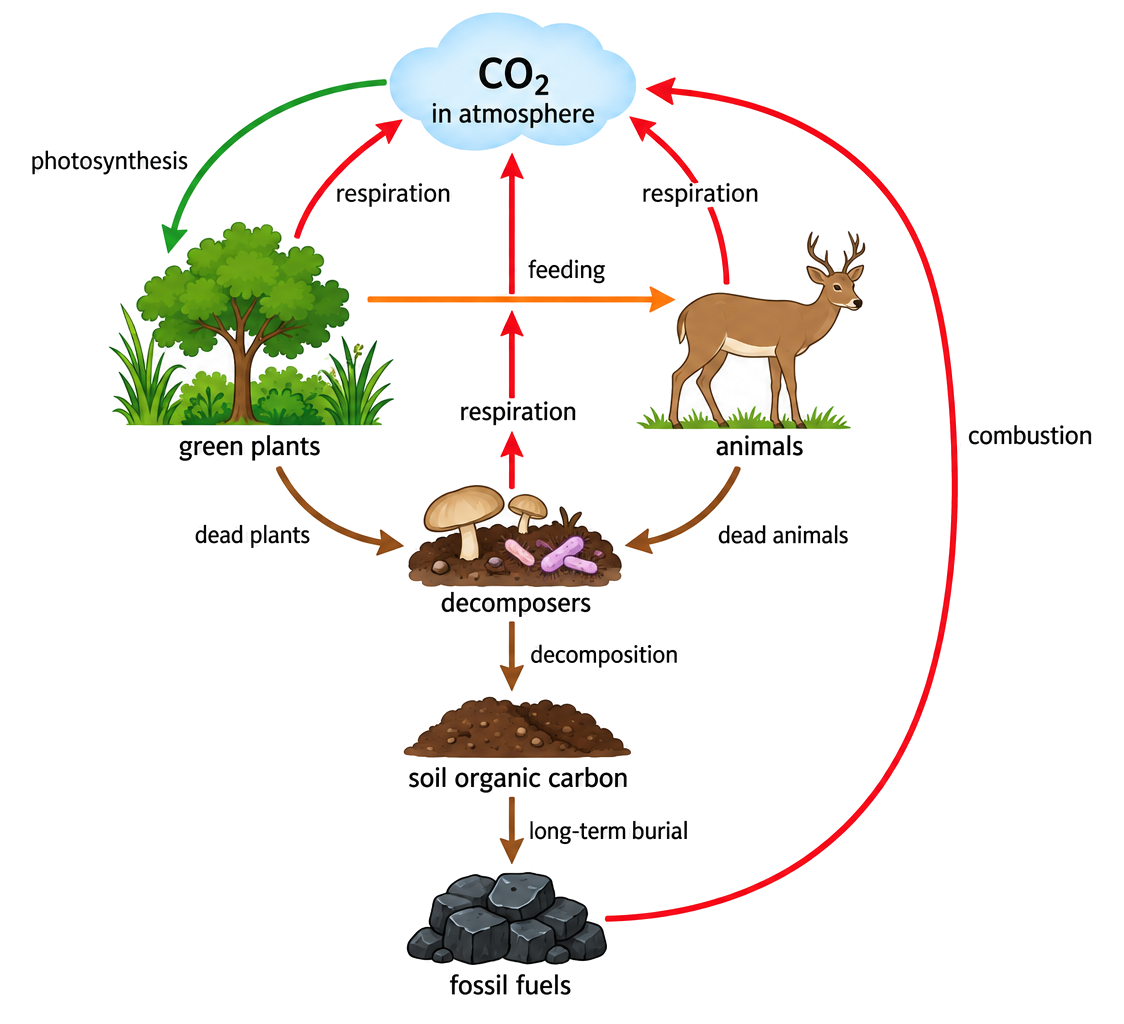
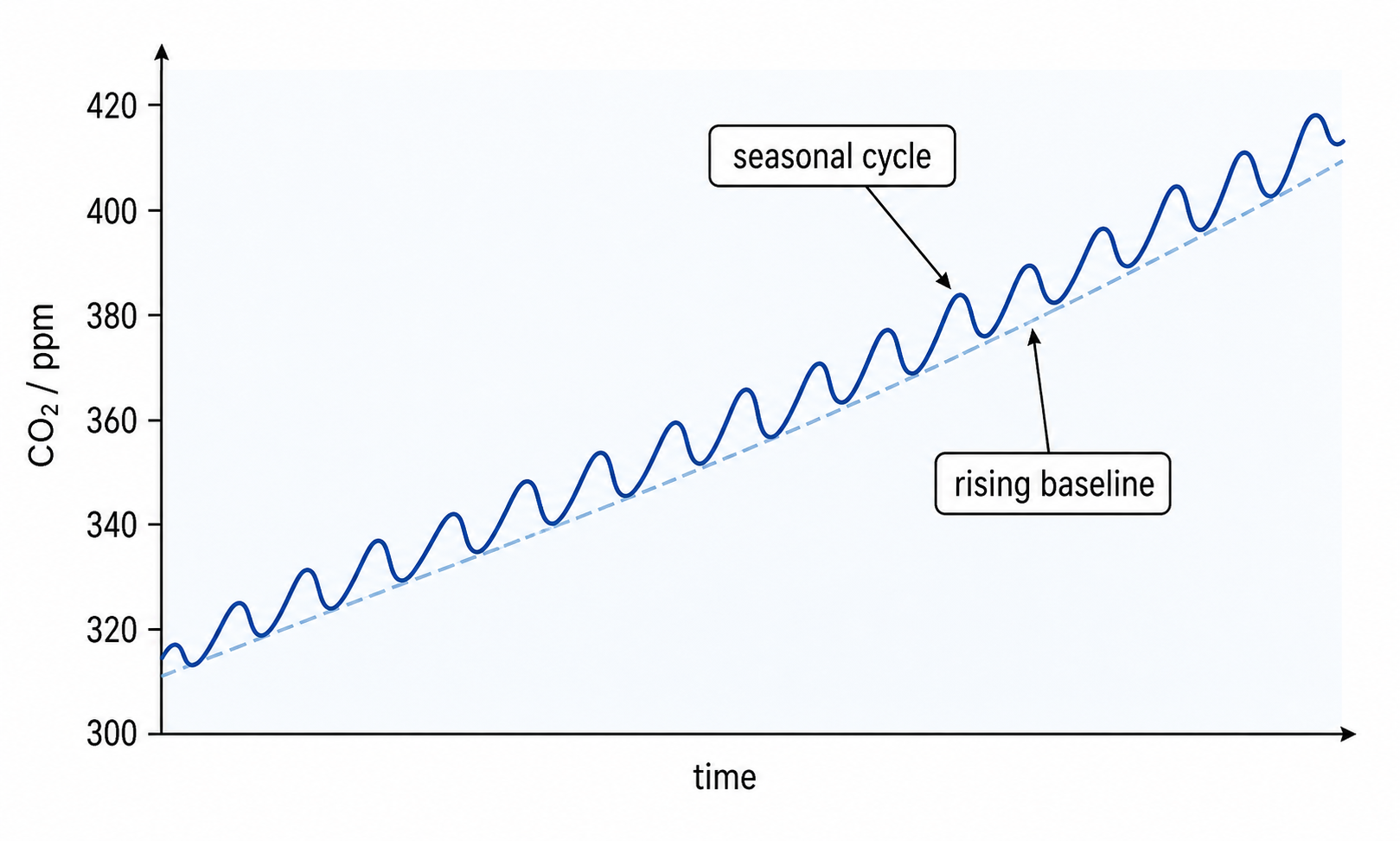
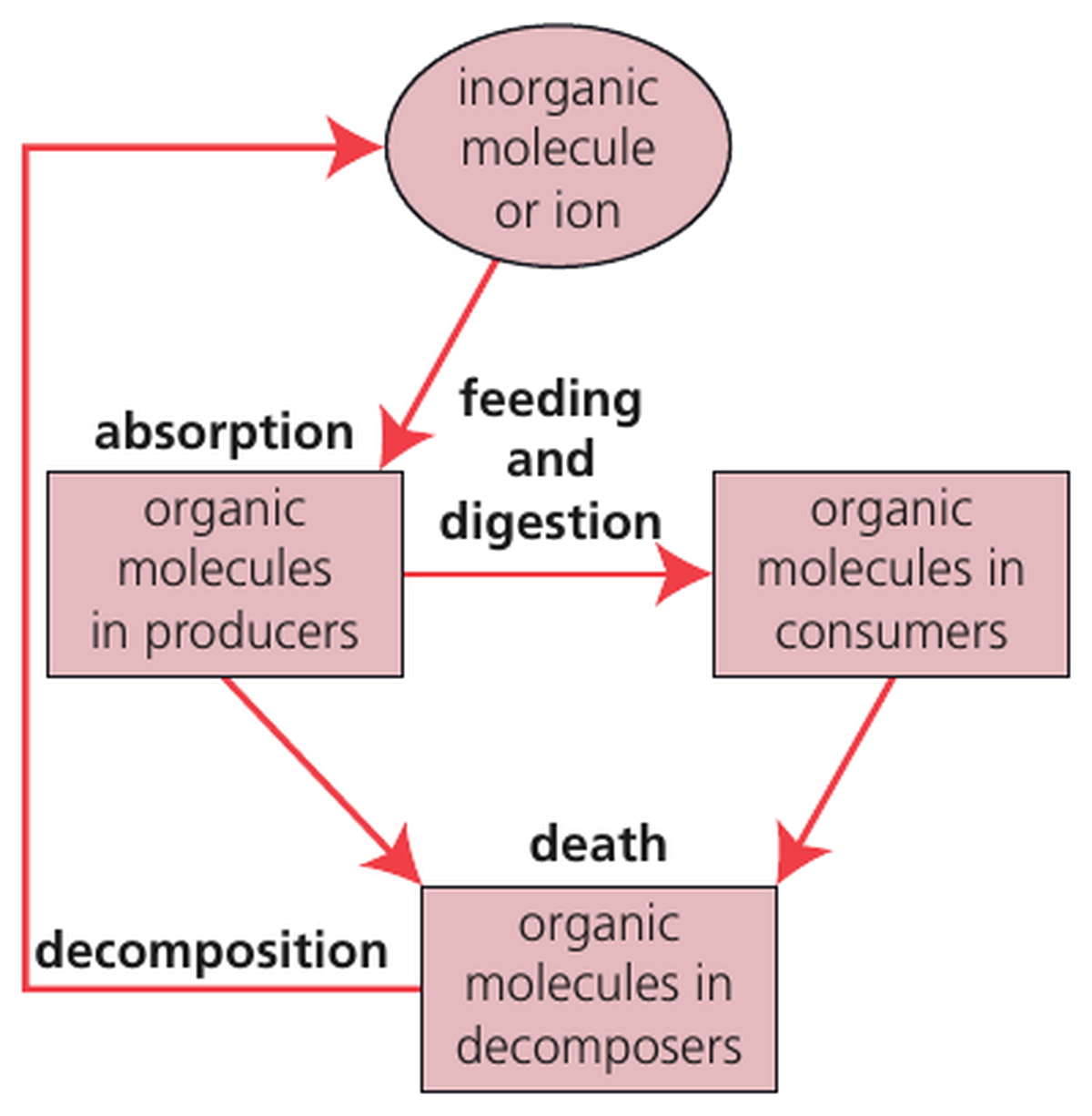
Heat loss explains how energy flow, matter cycling, trophic transfer or carbon movement is represented, measured or limited within ecosystems.
- Syllabus
- First assessment 2025
- Objective
- C4.2.13
- Level
- SL
Heat loss explains how energy flow, matter cycling, trophic transfer or carbon movement is represented, measured or limited within ecosystems.
Coverage 2017–2017 · Updated 16 Jul 2026
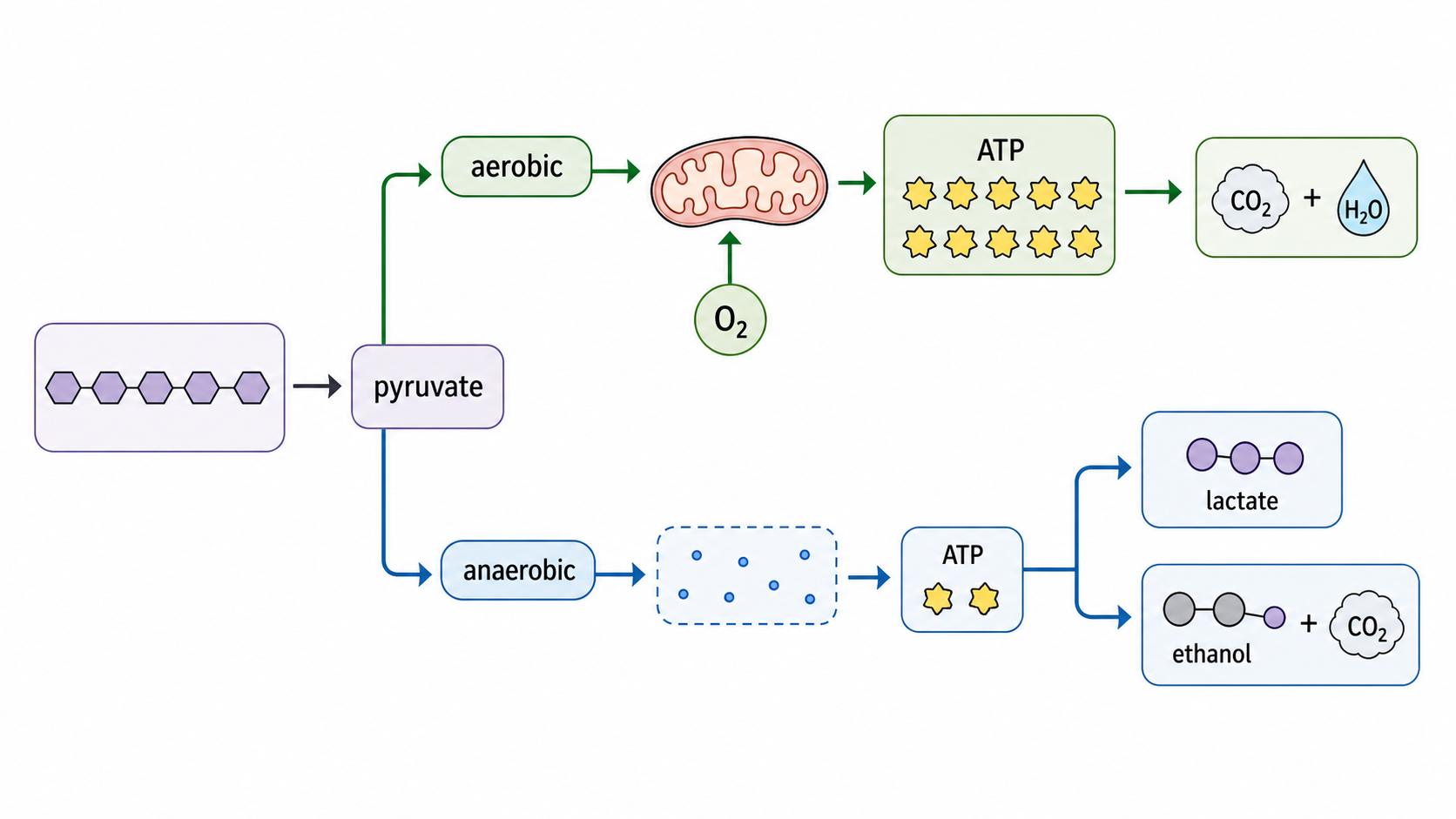
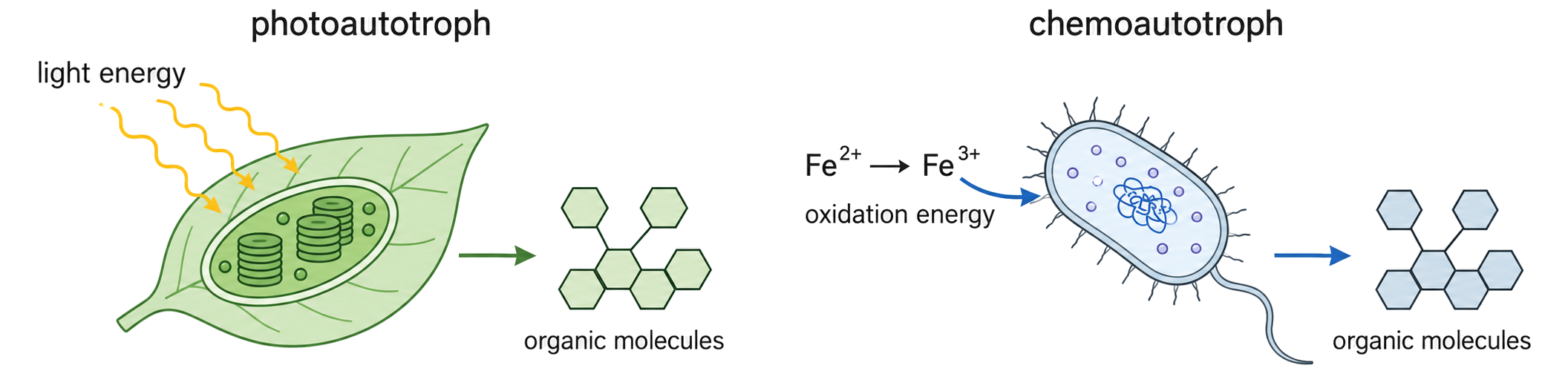
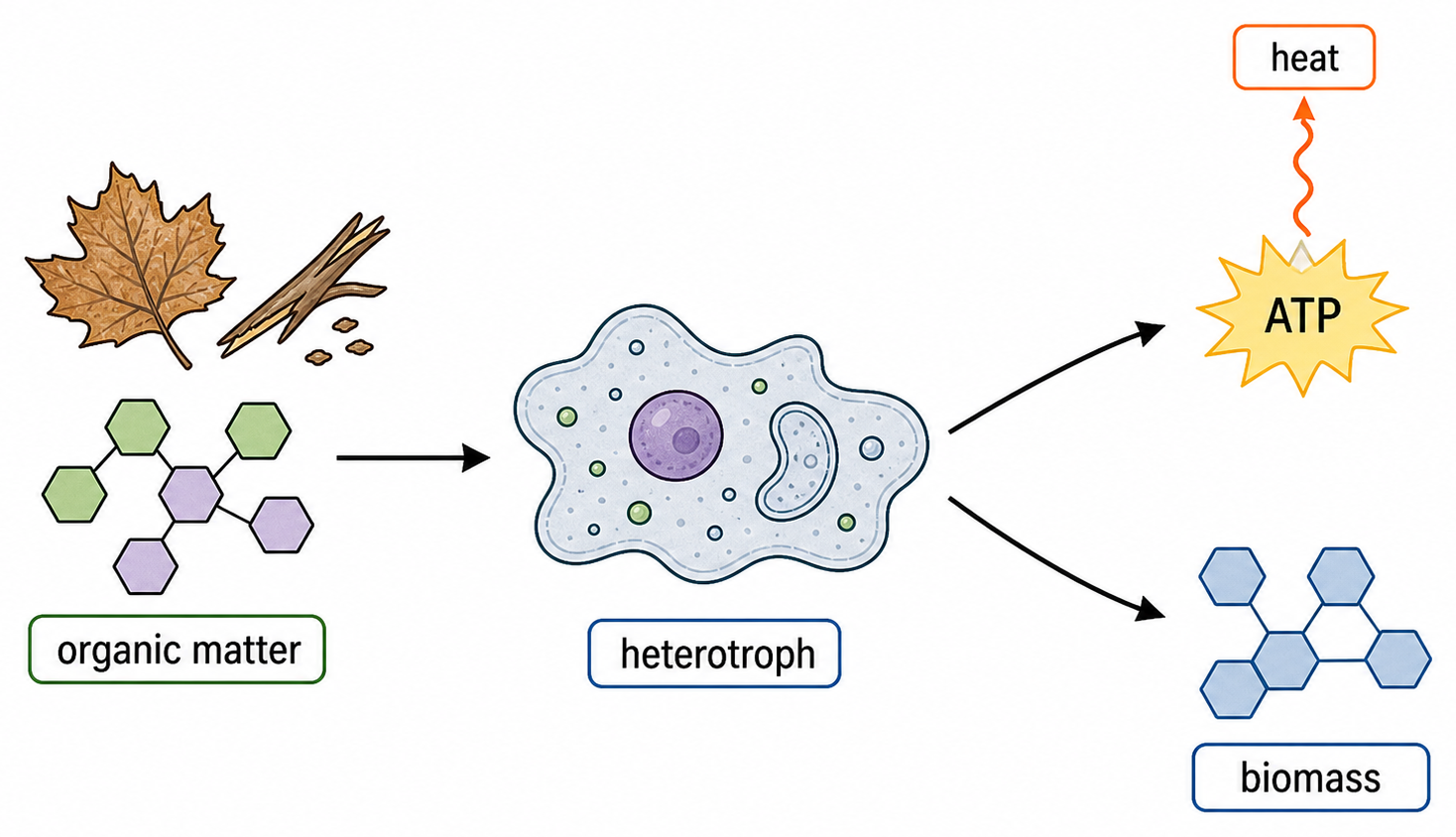
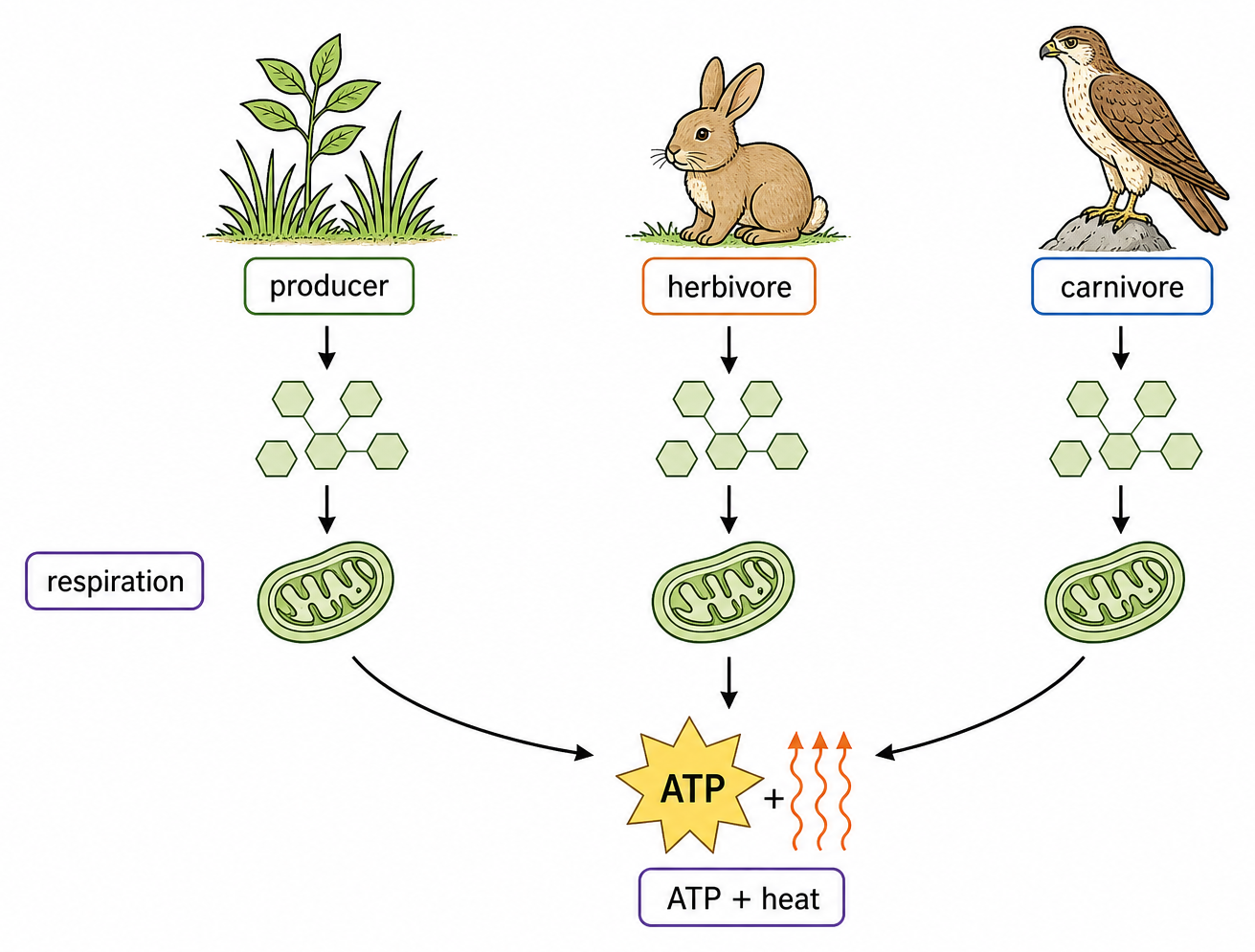
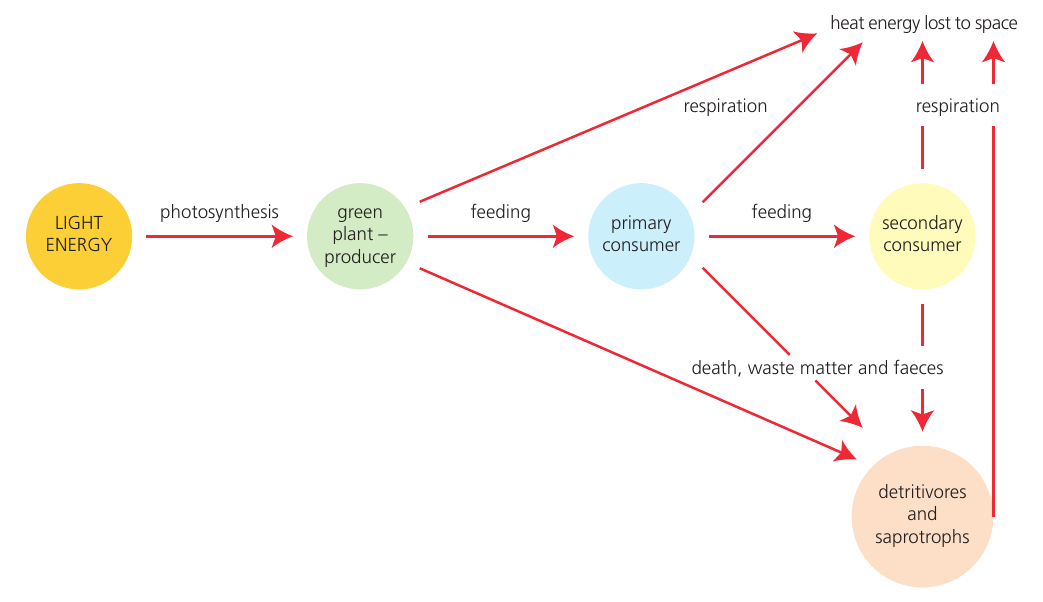
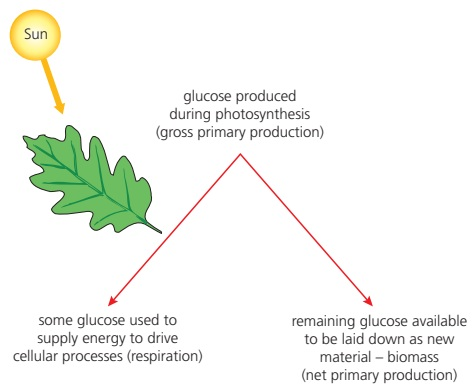
Both autotrophs and heterotrophs release heat when chemical energy is converted during cell respiration and when ATP is used for cell work.
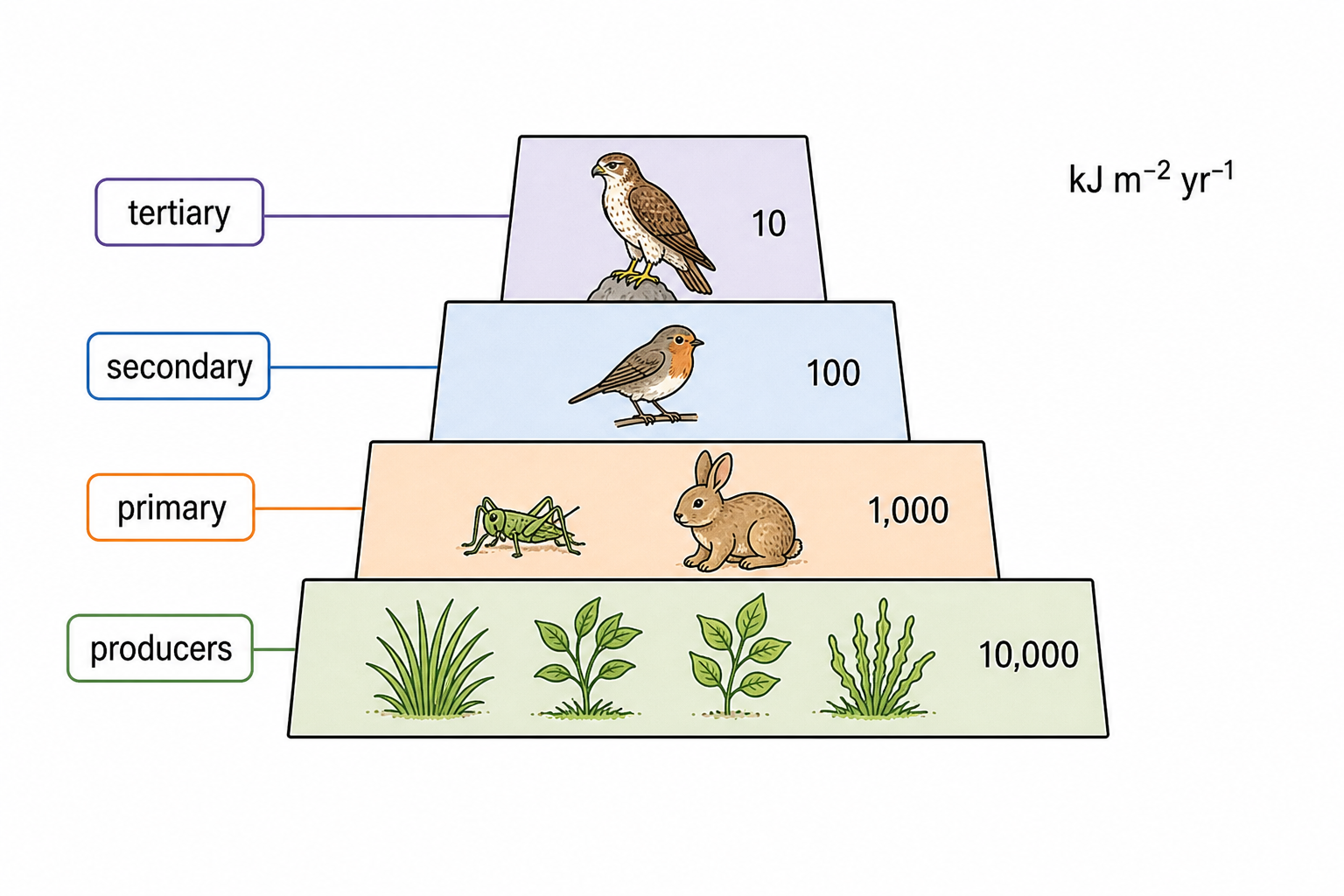
Energy transfers are not 100% efficient. Some substrate energy becomes heat while ATP is produced, and further heat is released when ATP hydrolysis drives synthesis, transport or movement.
Carbon-compound oxidation → ATP plus heat; ATP use → cell work plus heat; heat dissipates to the environment and is unavailable as chemical energy to the next trophic level.
A plant and a mammal both respire and lose heat during ATP production; both also release heat as ATP powers active transport or biosynthesis.
Heat loss is energy transfer, not loss of carbon mass. Ecosystems require continuing external energy input because dissipated heat is not recycled into chemical energy by organisms.
This objective is assessed through multiple choice, commonly using Identify.
Identify
Build the answer around this relationship: Heat loss must be linked to the correct source, store, transfer or loss process.
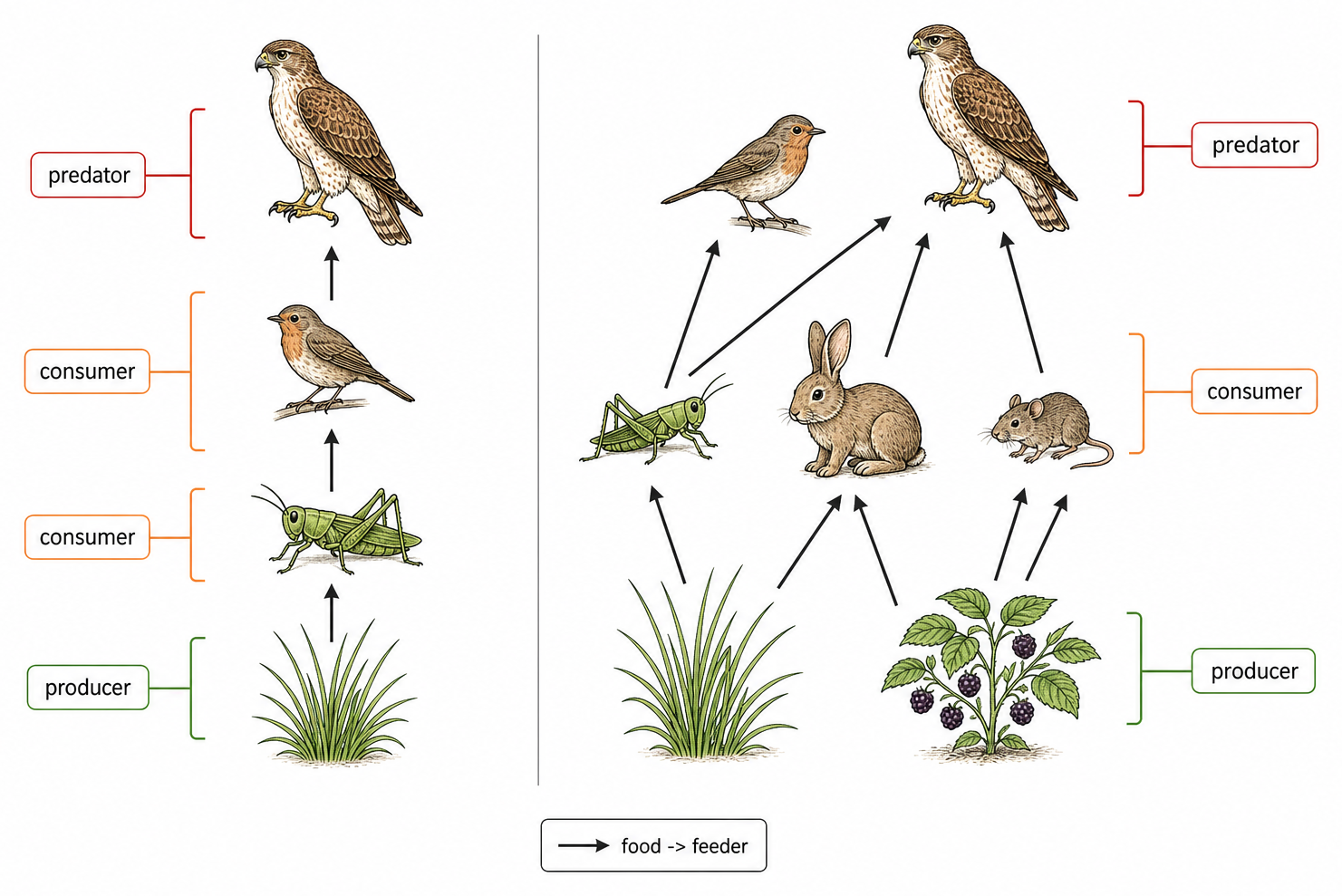
Reversing food-web arrows instead of showing energy transfer direction.
Representative question
Plankton are major producers in marine ecosystems. Only a small proportion of the energy harvested by plankton is passed to the primary consumers. Which process in phytoplankton results in the largest loss of energy that could otherwise be utilized by consumers?
Reproduction
Homeostasis
Excretion
Respiration
D