EduNinja
[Maximum number: 1]

The Sumatran orangutan, Pongo abelii, is found only on the island of Sumatra, Indonesia.
Fig. 1.1 shows a Sumatran orangutan.
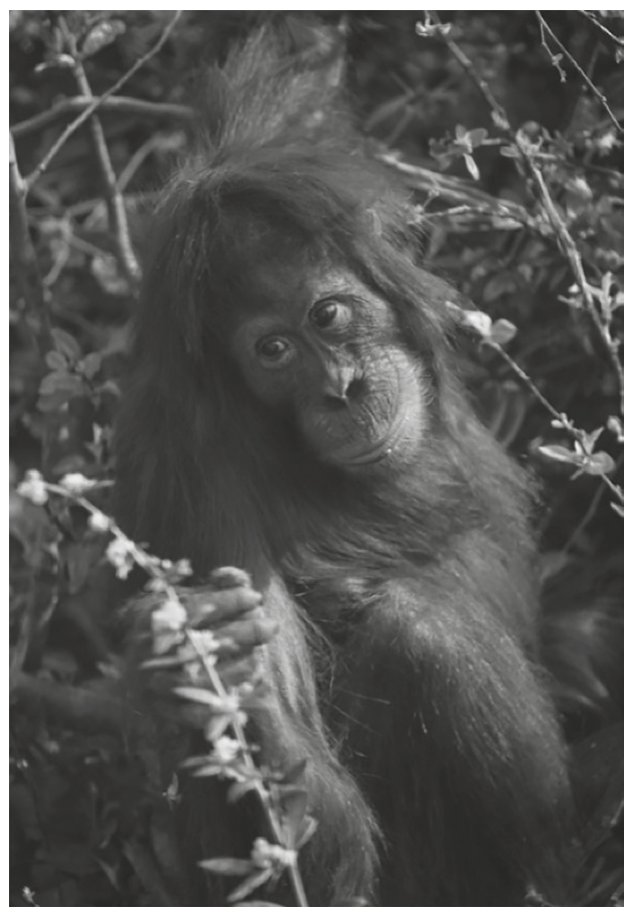
Fig. 1.1

Fig. 1.1

(a)

The International Union for Conservation of Nature (IUCN) is the world's largest global environmental organisation. The IUCN Red List of Threatened Species ™ { }^{\text {™ }} evaluates the conservation status of plant and animal species. The Sumatran orangutan is categorised as critically endangered on the IUCN Red List.

The Sumatran orangutan spends most of its time in trees and is very sensitive to habitat destruction.

Table 1.1 shows the area of natural forest of Sumatra and the numbers of orangutans in 1985 and 2016.
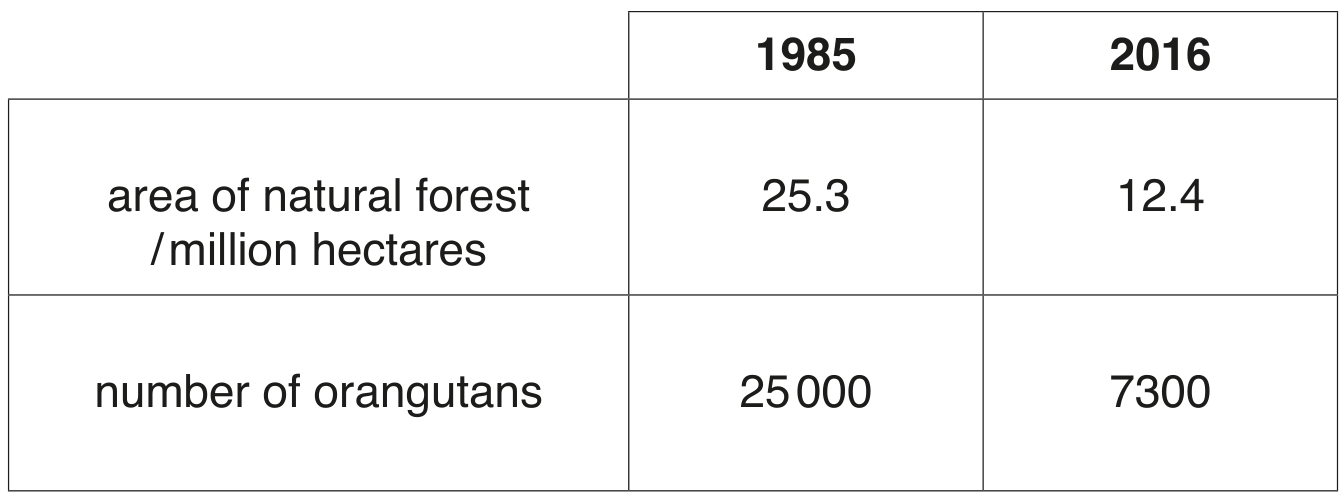
Table 1.1

Table 1.1

[ 1 ]
(i)

With reference to Table 1.1, state the relationship between area of natural forest and number of orangutans.
[ 1 ]
(a)

Explain what is meant by the term biodiversity.

[ 3 ]
[Maximum number: 2]

The St. Lawrence river in Canada has been identified as an area with very high biodiversity.

(a)

Explain how the term biodiversity can be considered at different levels.

[ 2 ]
[Maximum number: 3]

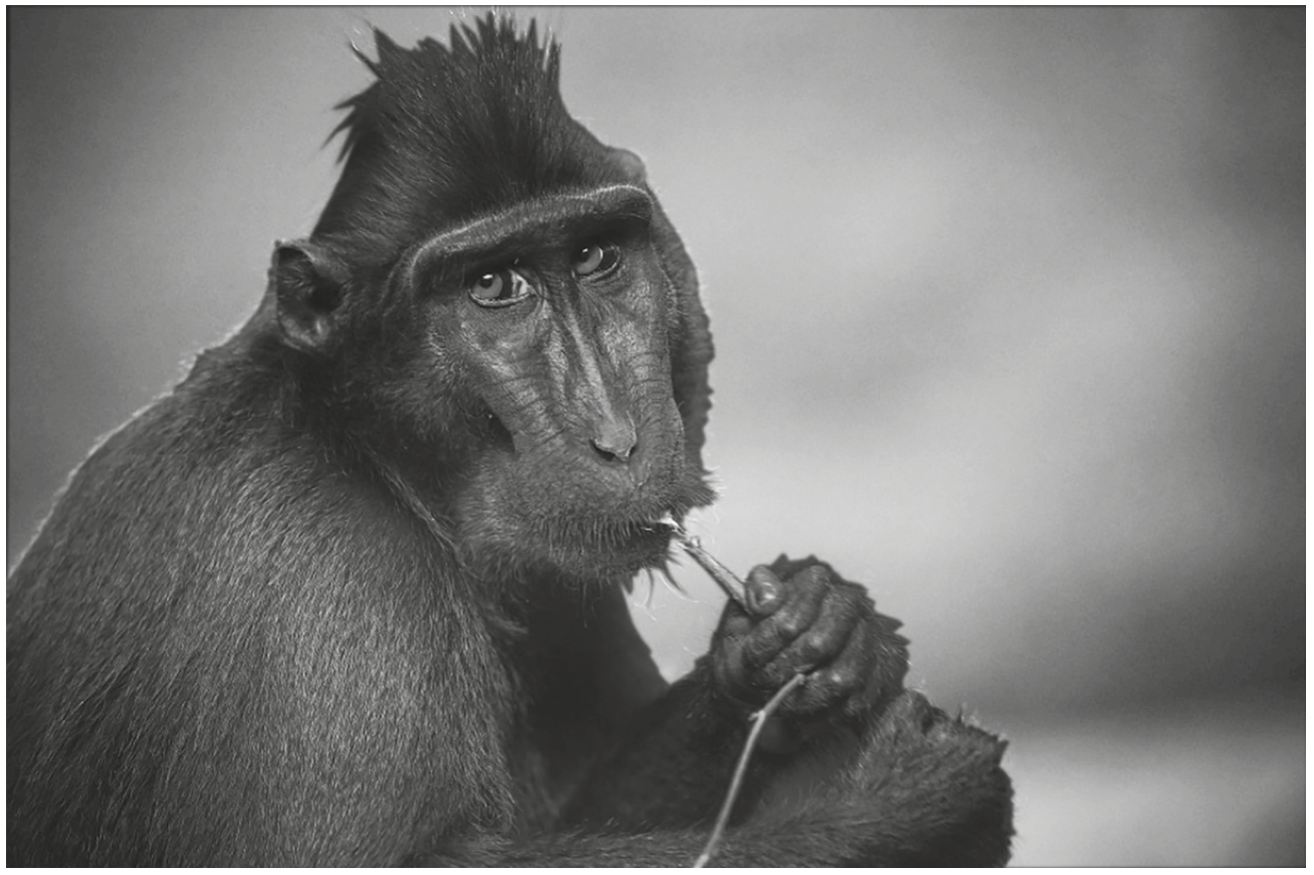
The Sulawesi macaque, Macaca nigra, is found on the large island of Sulawesi in Indonesia. The Sulawesi macaque is also found on other smaller islands close to Sulawesi, such as the island of Bacan.

Fig. 1.1 shows a Sulawesi macaque.

Fig. 1.1

Fig. 1.1

(a)

The International Union for Conservation of Nature (IUCN) is the world's largest global environmental organisation. The IUCN Red List of Threatened Species TM { }^{\text {TM }} evaluates the conservation status of plant and animal species. The Sulawesi macaque is categorised as critically endangered on the IUCN Red List.

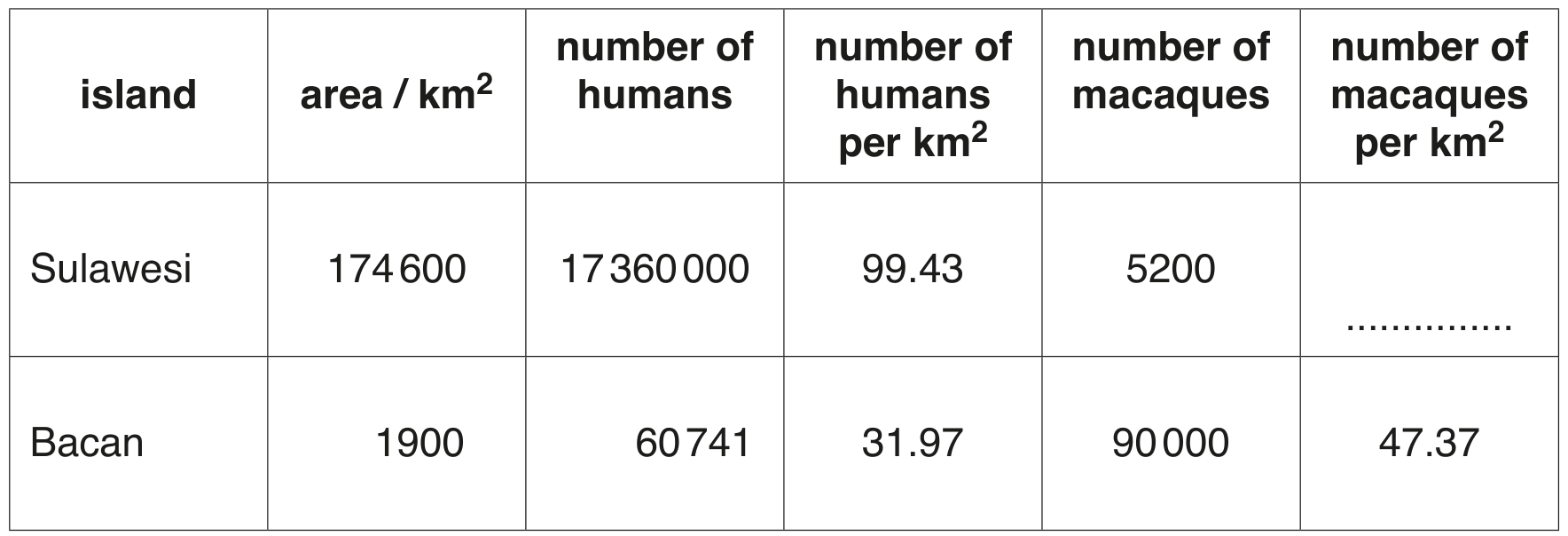
Table 1.1 shows the numbers of humans and the numbers of Sulawesi macaques on Sulawesi and Bacan.

Table 1.1

Table 1.1

[ 3 ]
(i)

Comment on the data shown in Table 1.1 and suggest reasons for the pattern shown.

[ 3 ]
[Maximum number: 3]

The natural ecosystem on Hawadax Island in Alaska was disrupted in the 1780s when brown rats, Rattus norvegicus, swam to the island from a sinking ship and then rapidly increased their population size.

The rats occupied a new niche on the island as predators. The rats ate the eggs and chicks of birds such as the black oystercatcher, Haematopus bachmani, and the glaucous-winged gull, Larus glaucescens. These birds make nests, lay eggs and rear their chicks on the beaches of the island.

(a)

To measure the abundance of invertebrates and seaweeds, the ecologists used this method:
- They laid 30 m tapes from high-tide mark to low-tide mark on the beach.
- They placed quadrats at 5 metre intervals next to the tapes.
- They took a photograph of each quadrat.
- They analysed the photographs to calculate the percentage cover of seaweeds and the percentage cover of invertebrates such as mussels and sea snails.

[ 3 ]
(i)

Biodiversity can be assessed at a number of different levels.

Identify the levels of biodiversity:
- that were assessed by this sampling technique
- that were not assessed by this sampling technique.

[ 3 ]
[Maximum number: 1]

Scientists are researching new ways to reduce the global atmospheric carbon dioxide ( CO2\mathrm{CO}_{2} ) concentration. There are concerns that an increasing atmospheric CO2\mathrm{CO}_{2} concentration may lead to effects that decrease biodiversity.

(a)

Planting large numbers of trees is one way to reduce global atmospheric CO2\mathrm{CO}_{2} concentration. Large scale culture of genetically modified C. vulgaris could also reduce global atmospheric CO2\mathrm{CO}_{2} concentration.

Suggest one advantage of using genetically modified C. vulgaris instead of trees to reduce global atmospheric CO2\mathrm{CO}_{2} concentration.

[ 1 ]
[Maximum number: 4]

Russian scientists have discovered the fruits of a flowering plant, Silene stenophylla, in the food store in a burrow of a ground squirrel in frozen sediments in Siberia.

Dating techniques suggest that the fruits were stored by the ground squirrel about 32000 years ago, shortly before the ground became permanently frozen.

Tissue samples were taken from the fruits and grown in a nutrient culture medium. After treatment with plant hormones to stimulate the growth of roots and shoots, 36 complete plants were produced.

These 'regenerated' plants, which looked identical to one another, flowered and after cross-pollination, produced seeds that were able to germinate.

(a)

The flowers of modern-day S. stenophylla look similar, but not identical, to the flowers of the 'regenerated' plants.

Outline how DNA sequencing could be used to compare the DNA of modern-day and ‘regenerated’ S. stenophylla.

[ 4 ]
[Maximum number: 3]

Azolla filiculoides is an aquatic fern that floats on the surface of lakes.
The nitrogen-fixing microorganism, Anabaena azollae, lives within the leaves of the fern. The beetle, Stenopelmus rufinasus, feeds on A.filiculoides.

(a)

Explain the importance of nitrogen-fixing organisms, such as A. azollae, in ecosystems.

[ 3 ]
[Maximum number: 5]

Biodiversity can be assessed at three different levels. One of these is the genetic variation within each species.

(a)

Outline two other levels at which biodiversity can be measured.

To calculate the genetic variation that exists within a species, scientists:
- obtain DNA sequences from many individuals of one species
- count the number of nucleotides that differ when the sequences of two individuals are compared
- repeat this with different pairs of individuals.

This allows scientists to calculate the mean number of differences at every nucleotide position along the sequence (mean number of nucleotide differences per site).

[ 2 ]
(b)

Explain why scientists use databases and computers to calculate the mean number of nucleotide differences per site.

[ 3 ]
(a)

One way to measure global biodiversity is to count the number of species of organisms.
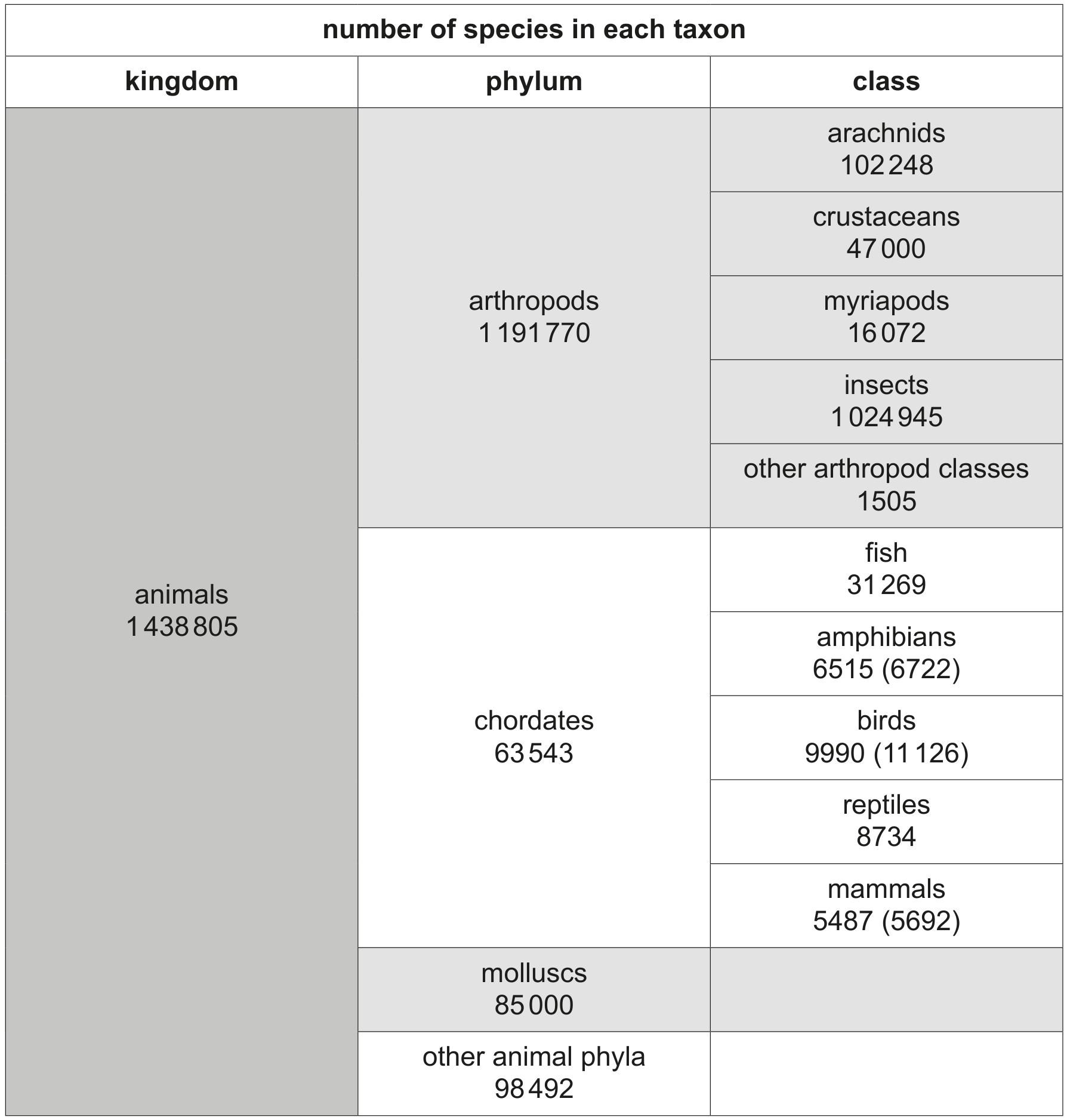
Table 3.1 shows estimates for 2009 of the number of species in some taxa of animals.
The numbers in brackets are the numbers that were updated in 2019 from the International Union for Conservation of Nature and Natural Resources (IUCN) for three intensively studied taxa.

Table 3.1

Table 3.1

[ 2 ]
(i)

Table 3.1 shows that the number of species of amphibians, birds and mammals has increased between 2009 and 2019.

Discuss whether the increase in numbers means that these classes of chordate are being successfully conserved.

[ 2 ]
0