EduNinja
[Maximum number: 1]

The courgette plant, Cucurbita pepo, produces edible fruits that vary in colour and shape.
Fruit colour in courgettes is controlled by the gene A / a.
Fruit shape in courgettes is controlled by the gene B/b.
- A yellow fruit is produced when the dominant allele A is present.
- A round fruit is produced when the dominant allele B is present.

Genes A / a and B/b occur on different chromosomes.
Table 1.1 shows the genotypes and phenotypes of four different varieties of courgette with respect to their fruit colour and shape.
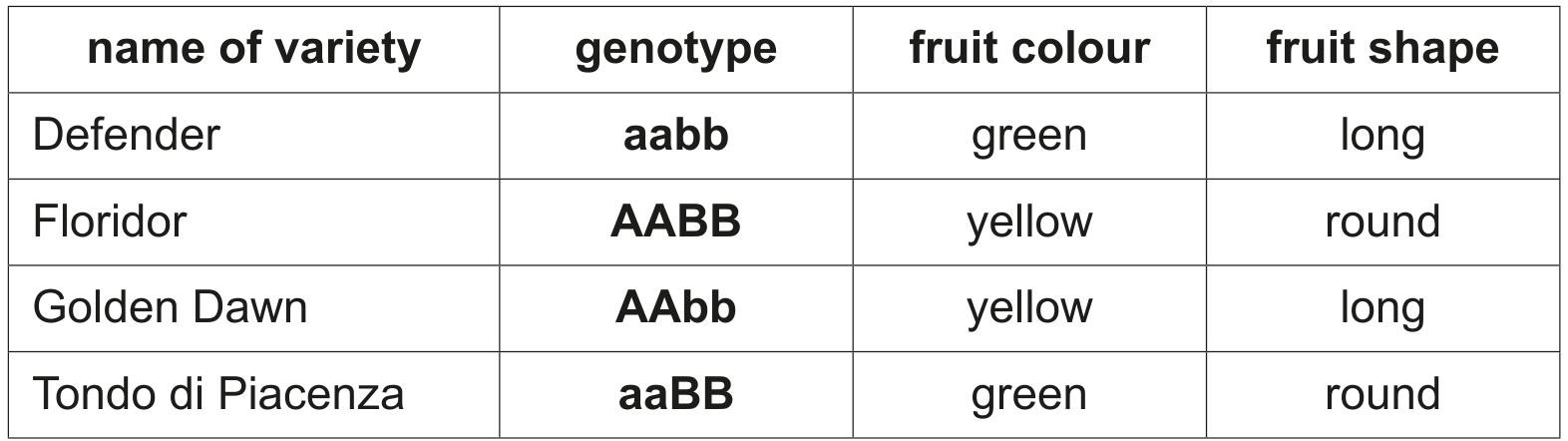
Table 1.1

Table 1.1

(a)
(i)

Watermelons are attacked by watermelon mosaic virus (WMV). In 1965, a WMV-resistant plant in the same family, Cucurbita ecuadorensis ( 2 n=40 ), was found growing wild in South America.

State why a WMV-resistant variety of watermelon cannot be obtained by breeding Cucurbita ecuadorensis with a normal diploid watermelon.
[ 1 ]
[Maximum number: 3]

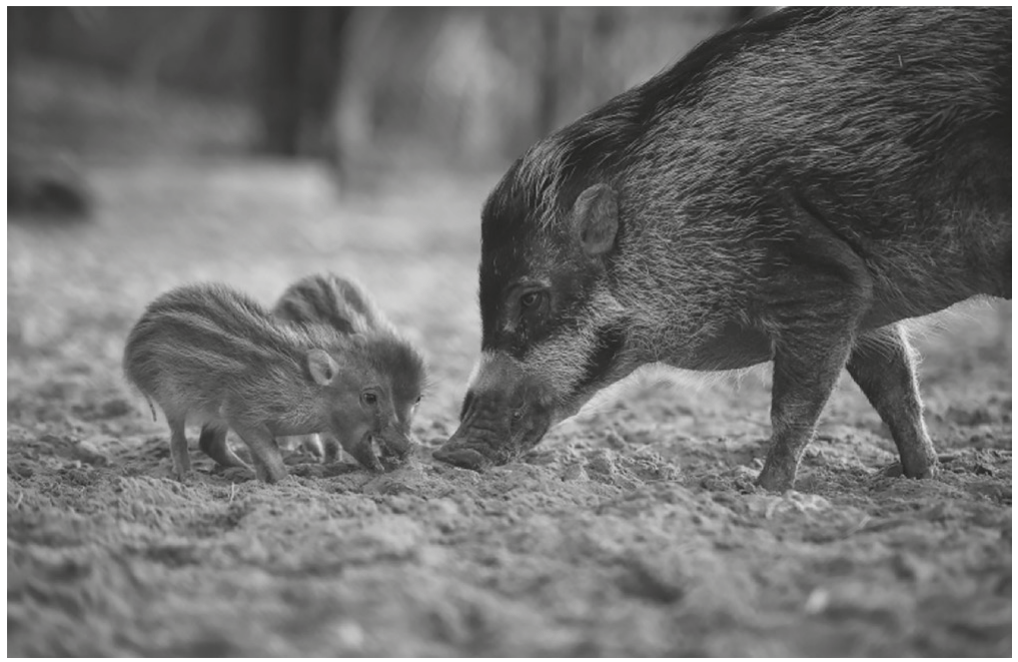
The Visayan warty pig, Sus cebifrons, is found on two islands in the Philippines.
Fig. 1.1 shows a female Visayan warty pig with her young.

Fig. 1.1

Fig. 1.1

(a)

Sometimes the Visayan warty pigs will breed with domestic pigs, Sus domesticus.

Suggest the consequences of this interspecific breeding.

[ 3 ]
(a)

The domestic dog, Canis familiaris, is found worldwide. It is able to breed with all other members of the genus to form fertile hybrids.

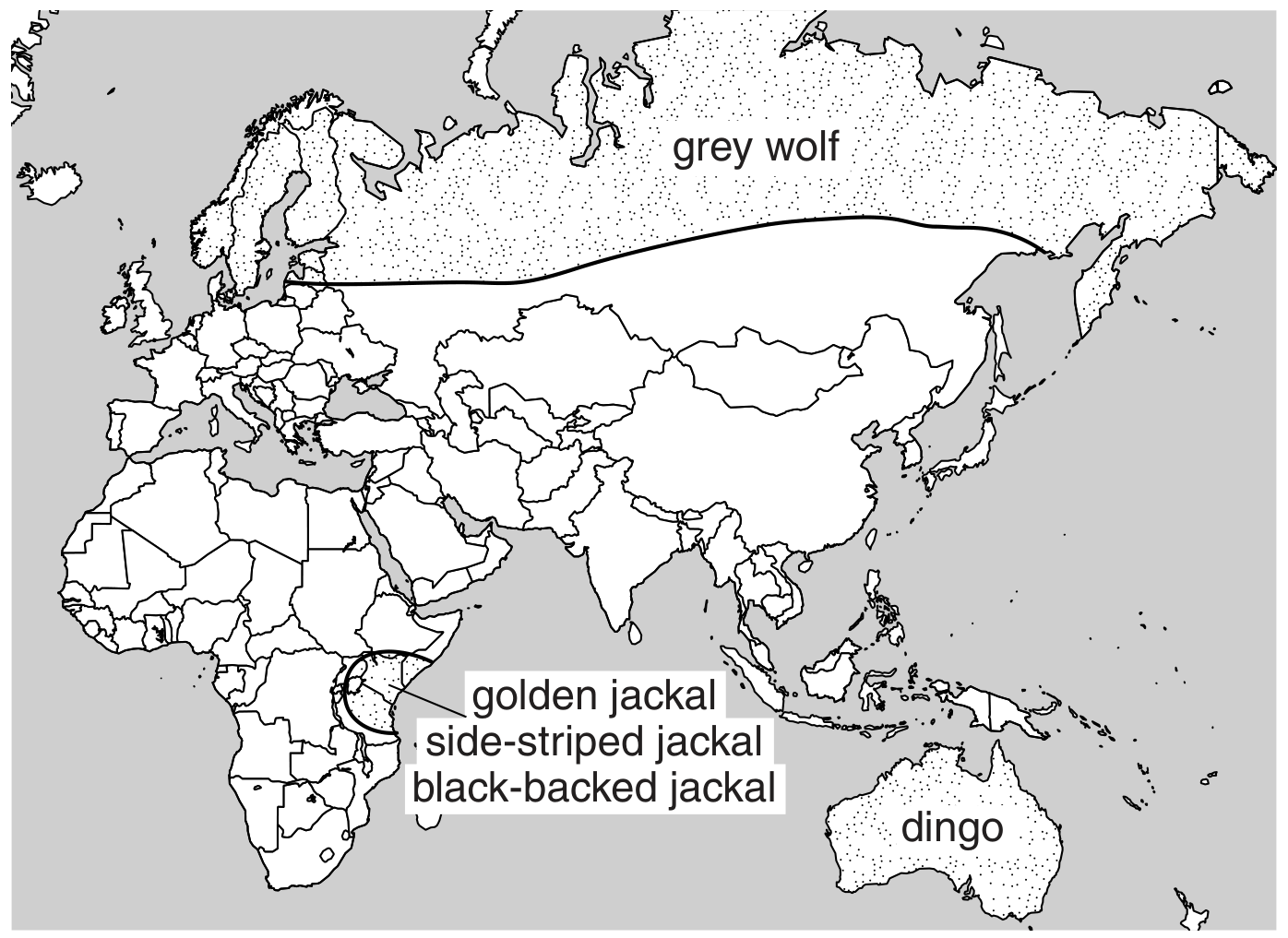
The distribution of some of the species belonging to the genus Canis is shown in Fig. 1.2.
The dingo and the grey wolf species have distinct ranges but the ranges of three species of jackal overlap in East Africa.

Fig. 1.2

Fig. 1.2

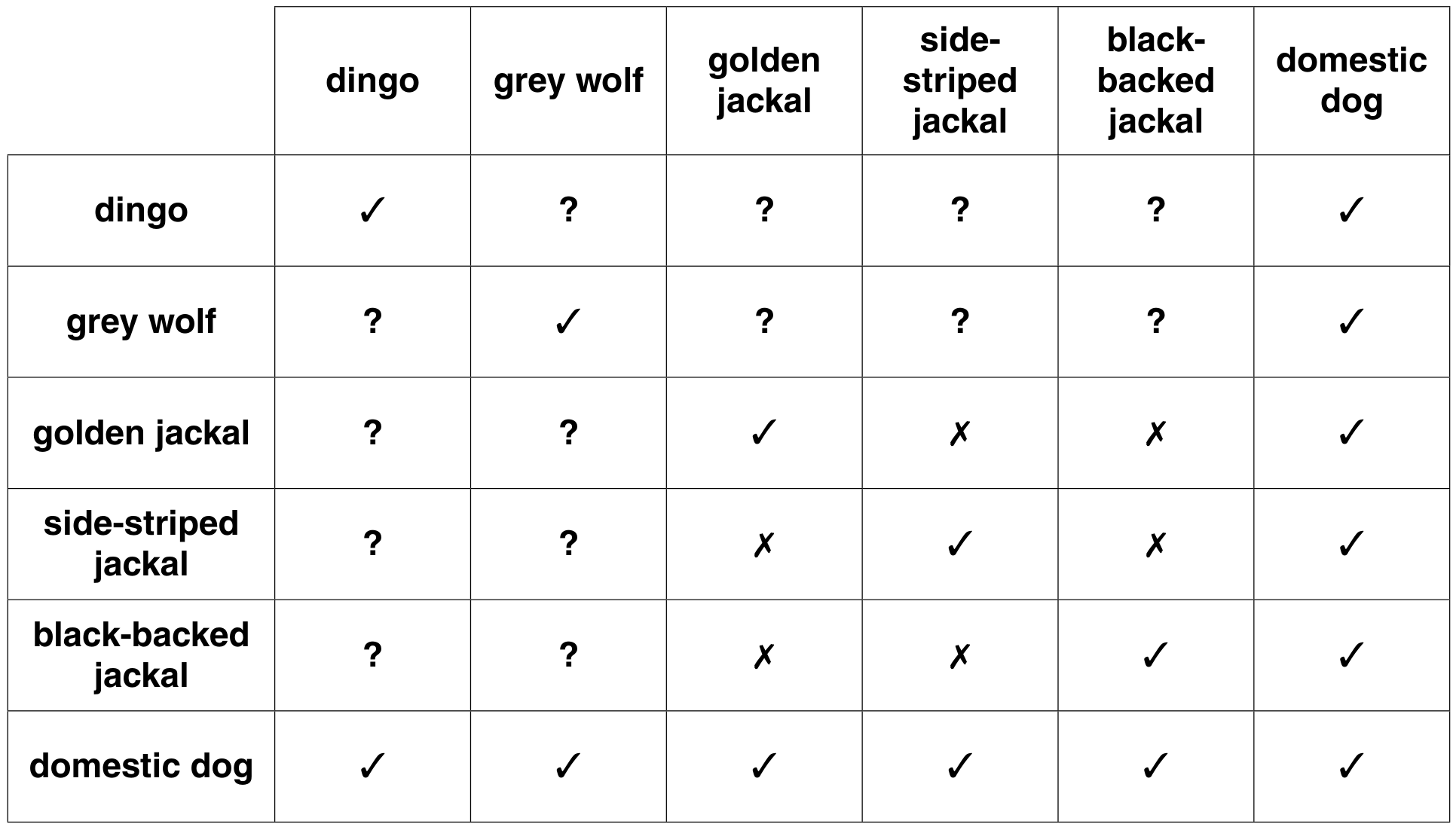
Table 1.1 shows whether members of different species of the genus Canis are able to breed with each other.

Table 1.1
key: \(\checkmark=\) able to interbreed \(\quad \boldsymbol{X

Table 1.1 key: \(\checkmark=\) able to interbreed \(\quad \boldsymbol{X

[ 2 ]
(i)

Using the information in Fig. 1.2 and Table 1.1, state:
- one reason why the members of the genus Canis could be described as one species
- one reason why they should be described as separate species.

[ 2 ]
[Maximum number: 2]

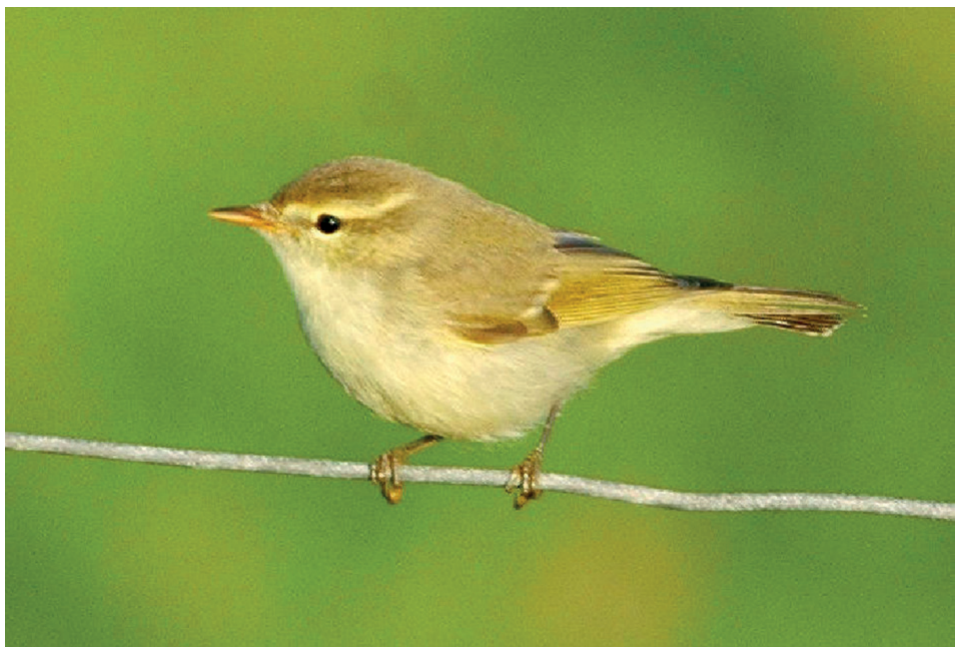
The greenish warbler, Phylloscopus trochiloides, is a species of small bird that originated in northern India, on the southern edge of the Himalayan mountain range.

Fig. 1.1 shows a greenish warbler.

Fig. 1.1

Fig. 1.1

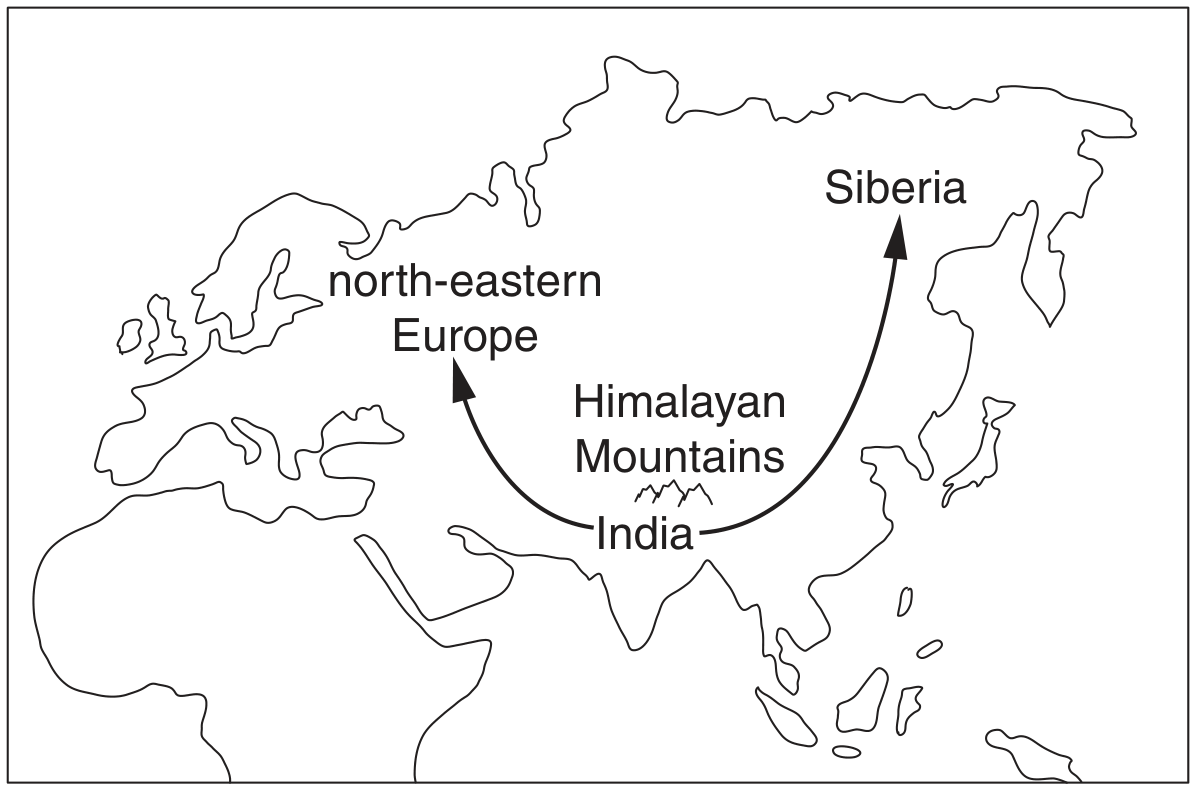
Thousands of years ago, populations of the greenish warbler spread around the western and eastern edges of the Himalayan mountain range to establish themselves in north-eastern Europe and Siberia.
- A gradual change in characteristics occurred in these populations, leading to different forms of the greenish warbler.
- One example of gradual change is in the song of the male warbler, which is very distinctive and is used in mating behaviour.
- When greenish warblers from north-eastern Europe meet those from Siberia no mating takes place.
- The greenish warblers from north-eastern Europe and Siberia are now considered to be two separate species.

Fig. 1.2 shows the spread of the greenish warbler.

Fig. 1.2 shows the spread of the greenish warbler.

(a)

Explain what is meant by the term species.

[ 2 ]
[Maximum number: 2]

Russian scientists have discovered the fruits of a flowering plant, Silene stenophylla, in the food store in a burrow of a ground squirrel in frozen sediments in Siberia.

Dating techniques suggest that the fruits were stored by the ground squirrel about 32000 years ago, shortly before the ground became permanently frozen.

Tissue samples were taken from the fruits and grown in a nutrient culture medium. After treatment with plant hormones to stimulate the growth of roots and shoots, 36 complete plants were produced.

These 'regenerated' plants, which looked identical to one another, flowered and after cross-pollination, produced seeds that were able to germinate.

(a)

Suggest a simple experiment, using plants of modern-day and 'regenerated' S. stenophylla to find out whether, after 32000 years, they are still the same species.

[ 2 ]
[Maximum number: 2]

Russian scientists have discovered the fruits of a flowering plant, Silene stenophylla, in the food store in a burrow of a ground squirrel in frozen sediments in Siberia.

Dating techniques suggest that the fruits were stored by the ground squirrel about 32000 years ago, shortly before the ground became permanently frozen.

Tissue samples were taken from the fruits and grown in a nutrient culture medium. After treatment with plant hormones to stimulate the growth of roots and shoots, 36 complete plants were produced.

These 'regenerated' plants, which looked identical to one another, flowered and after cross-pollination, produced seeds that were able to germinate.

(a)

Suggest a simple experiment, using plants of modern-day and 'regenerated' S. stenophylla to find out whether, after 32000 years, they are still the same species.

[ 2 ]
(a)

Suggest why the hybrid plant is not considered to be a new species of Spartina.

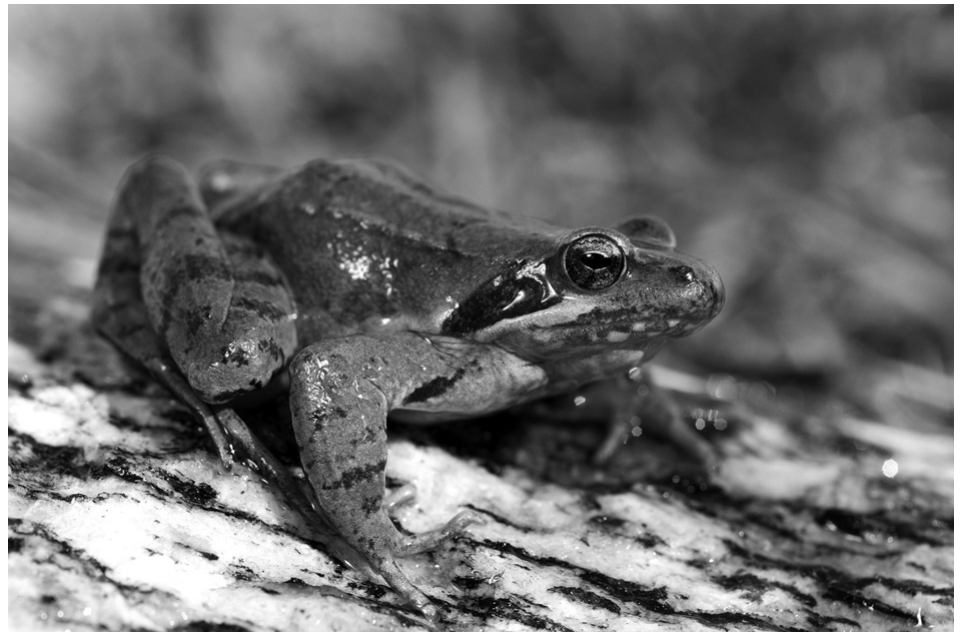
4 The Italian agile frog, Rana latastei, lives in woodlands in northern Italy. The adults breed by laying eggs in water in spring. The eggs hatch into tadpoles, which grow and develop for several weeks, before metamorphosing (changing) into adults and leaving the water. This must take place before cool weather arrives in autumn.

Fig. 4.1 shows an adult agile frog.

Fig. 4.1

Fig. 4.1

This frog is now an endangered species. Many woodlands have been destroyed, leaving only isolated patches in which small populations of the frogs live. In order to try to prevent some of these small populations dying out completely, it has been suggested that tadpoles from larger populations could be introduced into the small populations, in order to increase genetic diversity.

[ 1 ]
[Maximum number: 2]

Fruit flies of the genus Bactrocera are pests that damage fruit crops.
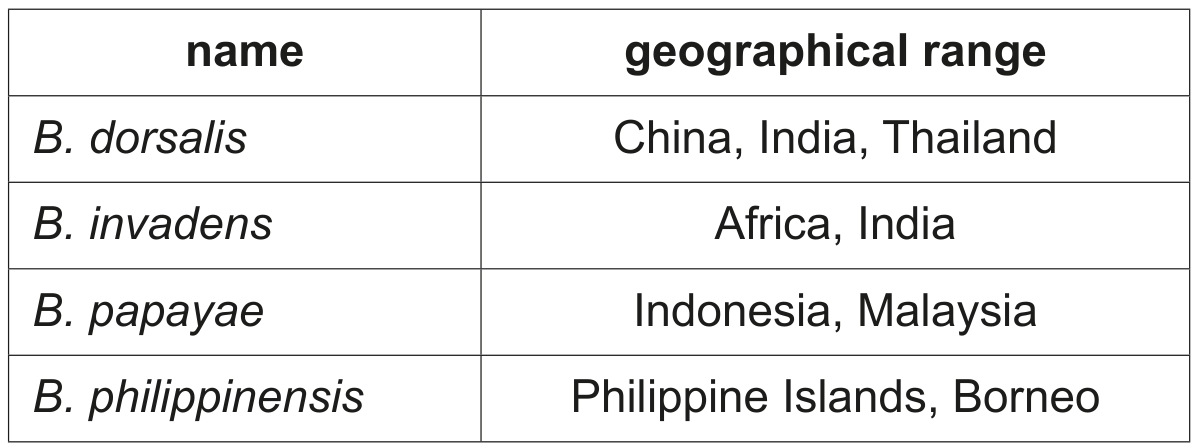
Table 3.1 gives the names and geographical ranges of Bactrocera fruit flies that were classified as four separate species.

Table 3.1

Table 3.1

In 2014, the classification of these flies was changed. All four species were recognised as belonging to a single species, B. dorsalis.

(a)
(i)

Suggest reasons why the four species were originally classified as separate species.

[ 2 ]
(a)

One way to measure global biodiversity is to count the number of species of organisms.
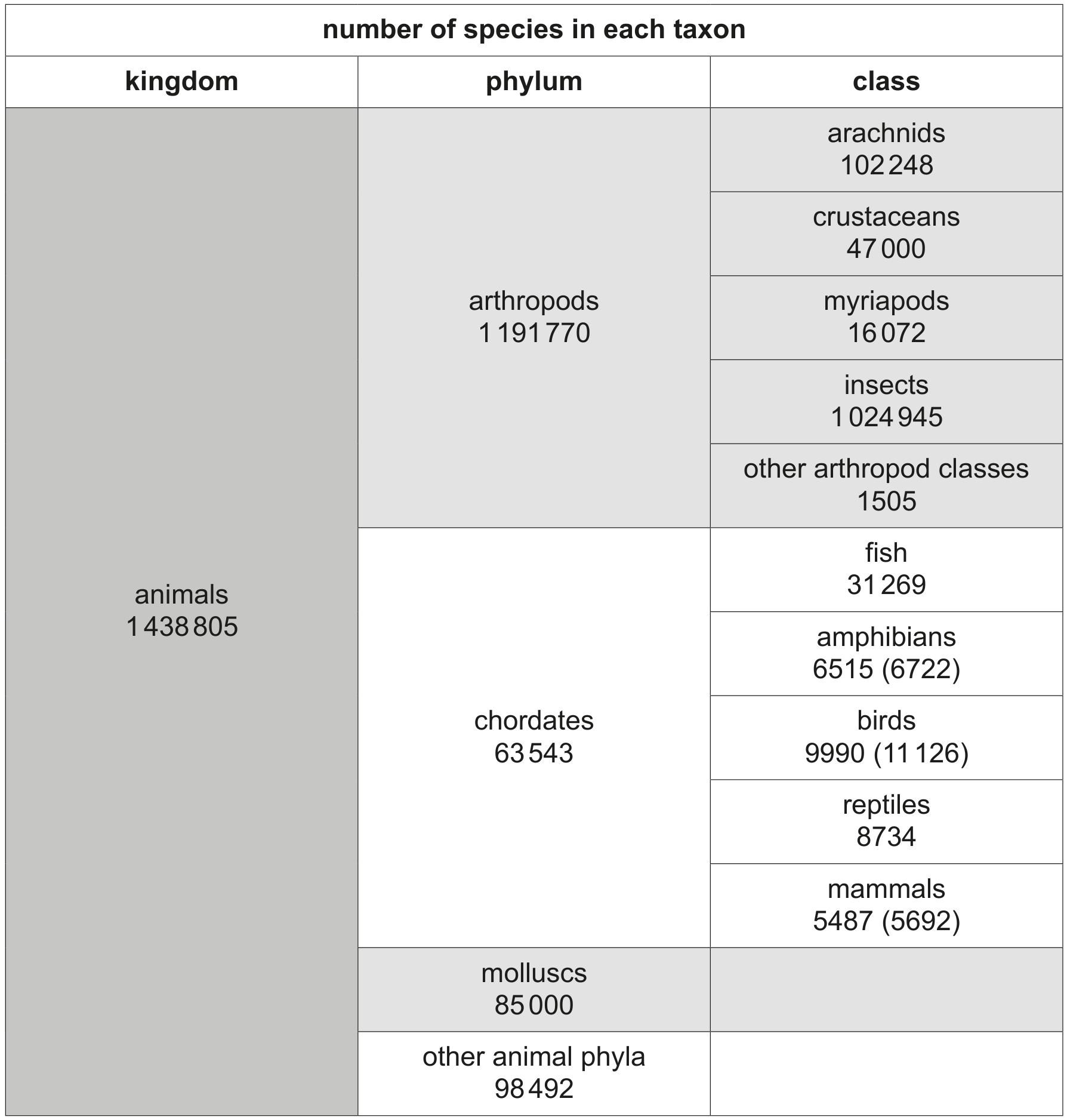
Table 3.1 shows estimates for 2009 of the number of species in some taxa of animals.
The numbers in brackets are the numbers that were updated in 2019 from the International Union for Conservation of Nature and Natural Resources (IUCN) for three intensively studied taxa.

Table 3.1

Table 3.1

[ 3 ]
(i)

List three features shared by animal species.

1

2

3

[ 3 ]
[Maximum number: 2]

Cats are members of the Felidae family. Two genera of Felidae are Leopardus and Panthera.

(a)

The genus Leopardus consists of species of wild cats that are small and spotted. In 2013, biologists investigated the evolution of Leopardus tigrinus in South America.

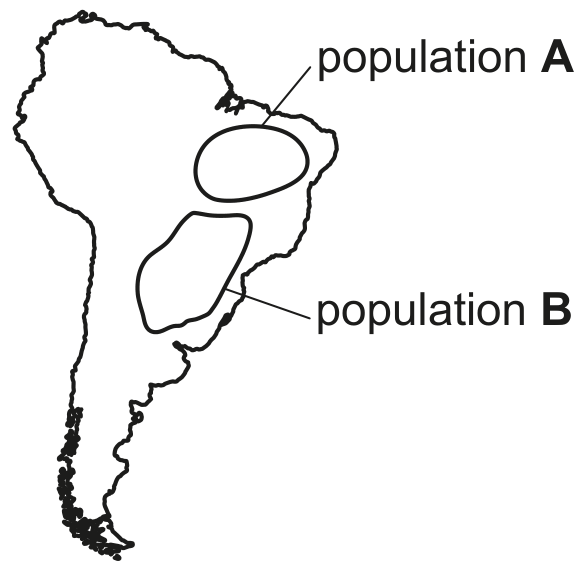
Fig. 3.1 shows the locations in South America of two populations of. L. tigrinus, population A and population B.

Fig. 3.1

Fig. 3.1

- Population A lives in grassland and desert habitats and population B lives in forest habitats.
- The cats in population A have a lighter coat colour and a different pattern of spots from the cats in population B.
- Genetic analysis shows that population A is genetically distinct from population B.
- Population B has now been reclassified as a new species, L. guttulus.

[ 2 ]
(i)

Define the term species.

[ 2 ]
0