EduNinja
[Maximum number: 1]

Steelhead trout, Oncorhynchus mykiss, are fish that live in streams in North America.
To increase the number of steelhead trout, captive breeding has occurred since 1992. Fish eggs and sperm are mixed and the young fish grow in large tanks of aerated water for the first year of their lives. Most are then released into the wild, however a few male and female fish are kept to become the parents of the next generation of captive-bred fish.

Each tank may hold up to 50000 fish. The young captive fish are fed processed food. Some young fish are unable to survive these conditions and a proportion die. Death is usually the result of poor wound-healing after accidents due to overcrowding and due to the spread of diseases.

(a)
(i)

Name the expected pattern of variation in wound-healing ability in a population of fish.
[ 1 ]
[Maximum number: 2]

The stickleback fish, Gasterosteus aculeatus, has two distinct forms, the saltwater form and the freshwater form. The larger, freshwater form is thought to have evolved from the smaller, saltwater form. Both forms have armour plating on each side of the body. The plates are made of bone and contain a high proportion of calcium.

The ectodysplasin gene, EDA, codes for a protein involved in the development of armour plates. The EDA gene has two alleles, low armour and high armour.

Three main morphs of armour plating have been described.
Complete morph armour plating:
- is found mainly in the saltwater form
- has many plates from head to tail to cover most of the body
- provides defence against large, predatory fish
- limits the growth of the fish.

Partial morph armour plating:
- is found mainly in the freshwater form
- has a reduced number of plates to cover only part of the body.

Low morph armour plating:
- is found mainly in the freshwater form
- has very few, undeveloped plates and no body cover.

(a)

Explain why the variation in armour plating in stickleback fish can be described as discontinuous.

[ 2 ]
[Maximum number: 3]

Salmon can be genetically modified (GM) to produce increased quantities of growth hormone, which is a protein. GM salmon modified in this way have a faster growth rate and reach their maximum body mass at a younger age than non-GM salmon.

(a)

Within any population of salmon there is variation in body mass. This is an example of continuous variation.

Explain what is meant by continuous variation and how it can be caused.

[ 3 ]
[Maximum number: 1]

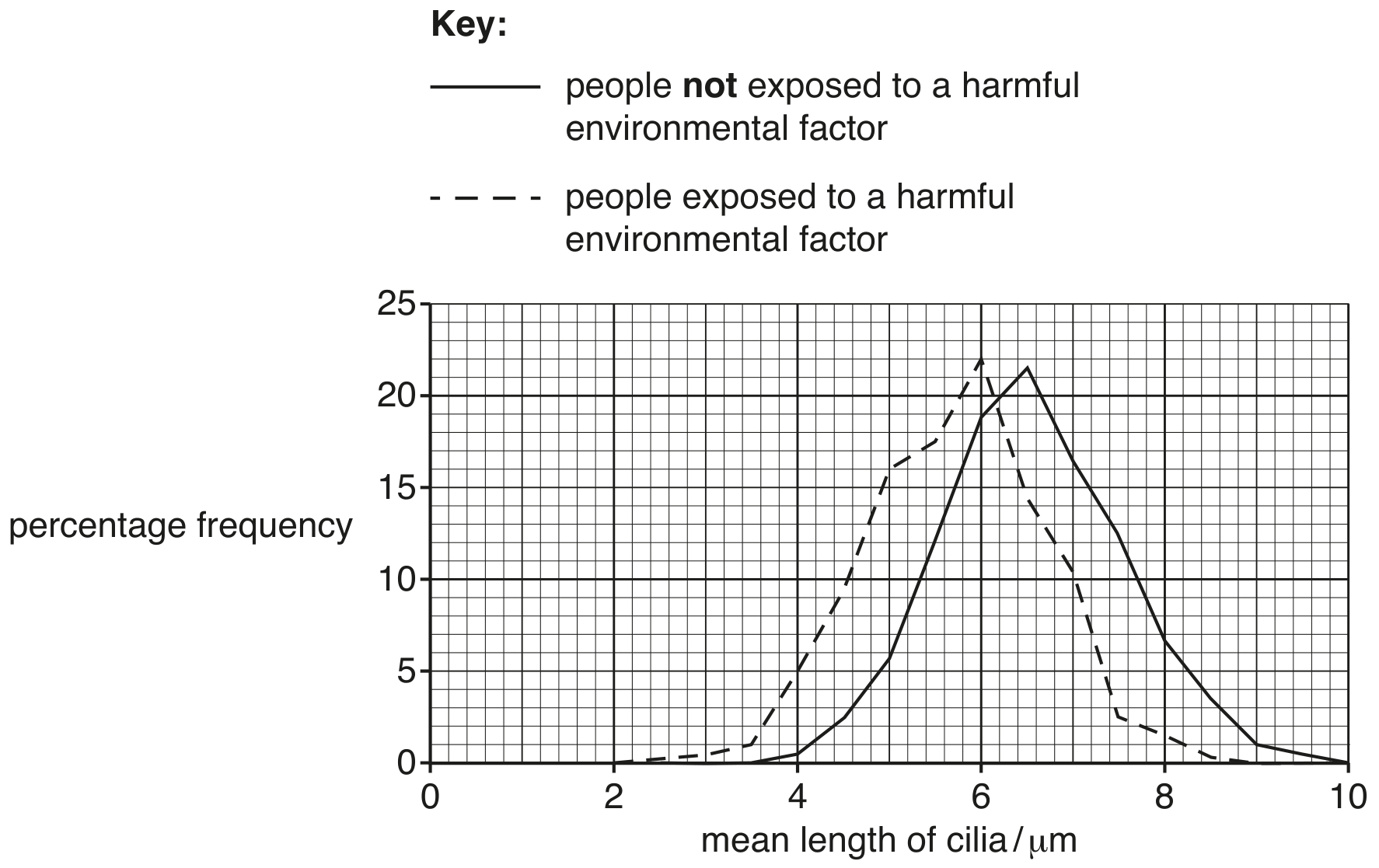
The cilia of ciliated epithelial cells show variation in length, within an individual and between different individuals.

Samples of ciliated epithelial tissue were removed from the airways of healthy people and the mean cilia length for each individual was calculated.

The people in the study formed two groups:
- people who were exposed to a harmful environmental factor
- people who were not exposed to a harmful environmental factor.

The results are shown in Fig. 3.1.

Fig. 3.1

Fig. 3.1

(a)
(i)

Name the type of variation shown for mean cilia length in each group of people in Fig. 3.1.

[ 1 ]
[Maximum number: 3]

Within a population, the variation for one characteristic is usually the result of genetic and environmental causes.

(a)

A study was carried out to investigate the effect of treating infected chickens with extracts from a plant, Bidens pilosa.

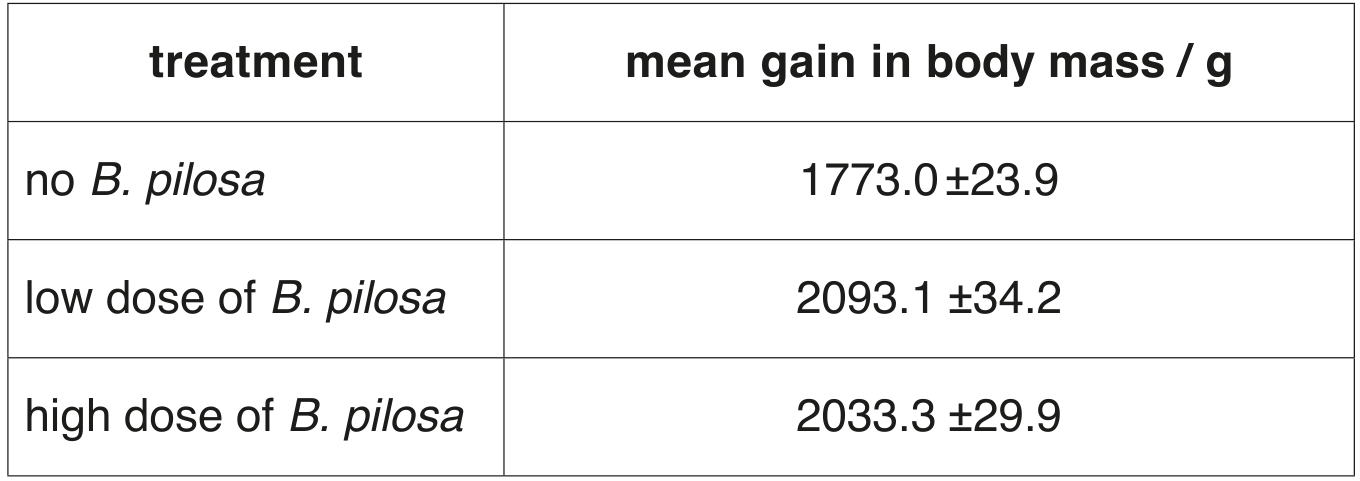
B pilosa is used in traditional medicine for the treatment of some infectious diseases. - Three populations, each containing 25 chickens infected with Eimeria were observed. - The body mass of each chicken was measured at the start of the study. - Each population was given a different treatment for 56 days: - standard diet with no B. pilosa extract - standard diet with low dose of B. pilosa extract - standard diet with high dose of B. pilosa extract. - The body mass of each chicken was measured at the end of the study and the gain in body mass over the 56 days was calculated. - The mean gain in body mass was calculated for each population. The results are shown in Table 3.1.

Table 3.1

Table 3.1

A statistical analysis of the results of the study of these three populations confirmed that there was a significant difference in mean gain in body mass between low dose B. pilosa and high dose B. Pilosa extract treatments.

[ 3 ]
(i)

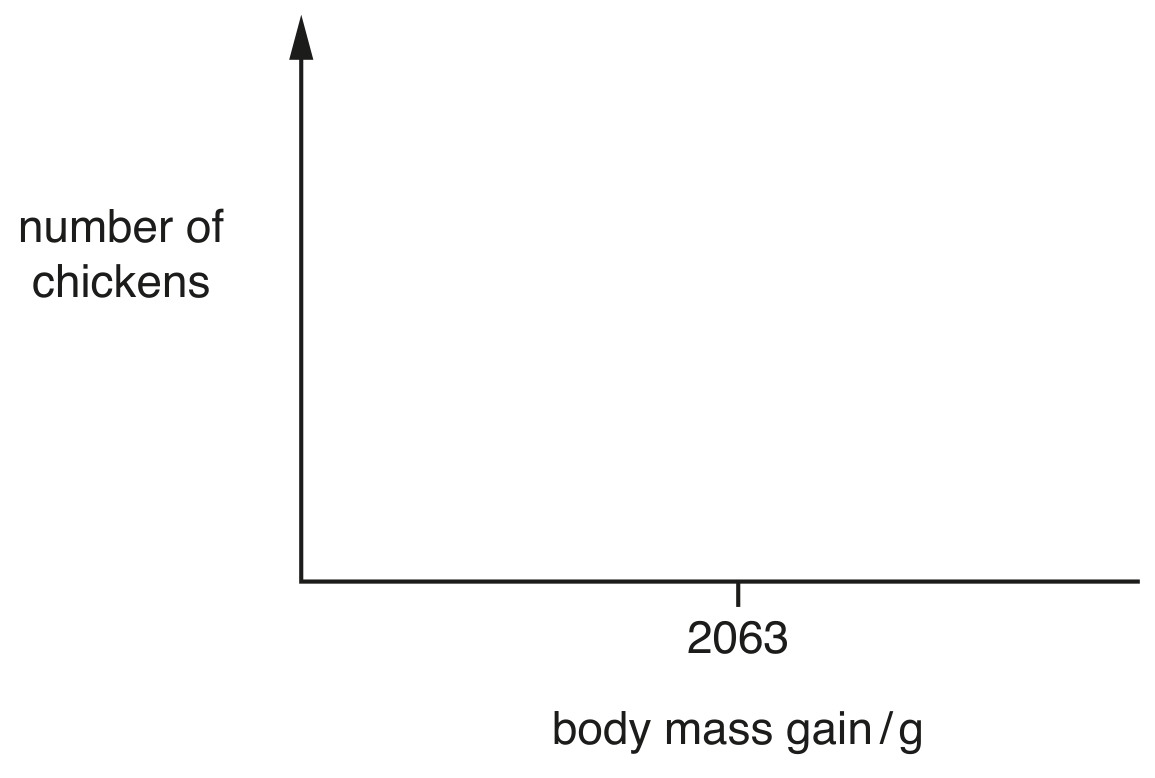
Sketch on Fig. 3.1 curves to show the pattern of variation for gain in body mass in chickens treated with low dose B. pilosa extract and in chickens treated with high dose B. pilosa extract.

Label one curve 'low dose' and the other curve 'high dose'.

Fig. 3.1

Fig. 3.1

[ 3 ]
[Maximum number: 2]

There are more than 600 plant species in the genus Ipomoea. Many species are grown for their attractive flowers, and some species are used as crop plants.

(a)

The Japanese morning glory, I. nil, has over 20 different flower colour phenotypes, including shades of blue, purple, red and pink.

The flower colour of I. nil is controlled by at least four genes. The flower colour can change gradually after the flowers open each morning and can change with fluctuations in the carbon dioxide concentration of the surrounding air.

A student concluded that the flower colour phenotype in I. nil shows continuous variation.
Suggest two reasons why the student made this conclusion.
1

2

[ 2 ]
[Maximum number: 3]

Maize is an important food crop that has been improved both by selective breeding and by genetic modification.

(a)

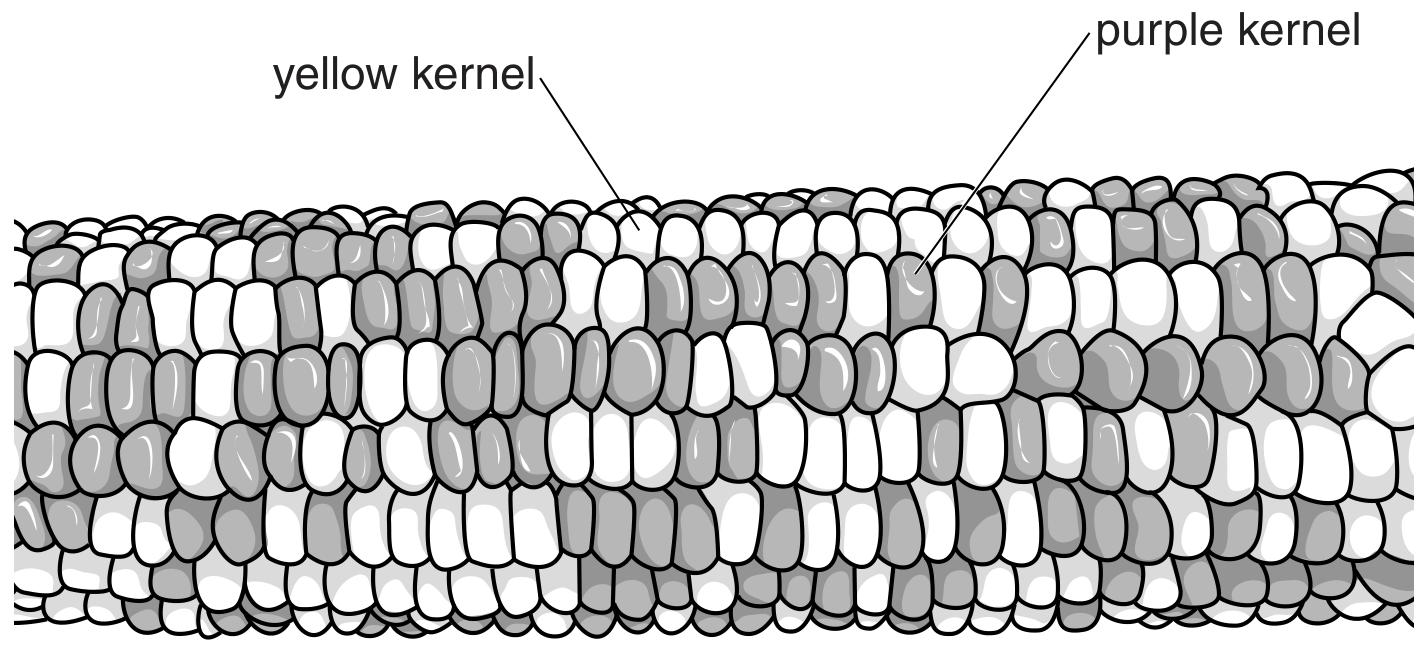
Fig. 4.1 shows part of a maize cob. The cob is made up of many individual seeds called kernels. Each kernel results from a separate fertilisation of a male and a female gamete. Some kernels are yellow and some are purple.

Fig. 4.1

Fig. 4.1

Name the type of variation shown in Fig. 4.1. Suggest a genetic explanation for this pattern of variation in colour.
type of variation
explanation

[ 3 ]
[Maximum number: 3]

Food crops like wheat may be improved by selective breeding and genetic modification.

(a)

Variation in height of a strain of wheat plants in a field shows a continuous pattern of variation.

Explain what is meant by continuous variation and explain why this type of variation occurs in a population.

[ 3 ]
[Maximum number: 2]

A 28-year study of Magellanic penguins, Spheniscus magellanicus, found in Argentina, provides evidence of natural selection.
Magellanic penguins lay their eggs in nests. They use their bills (beaks) to catch prey and feed their chicks (offspring) in the nest. Each breeding pair of penguins uses the same nest each year.

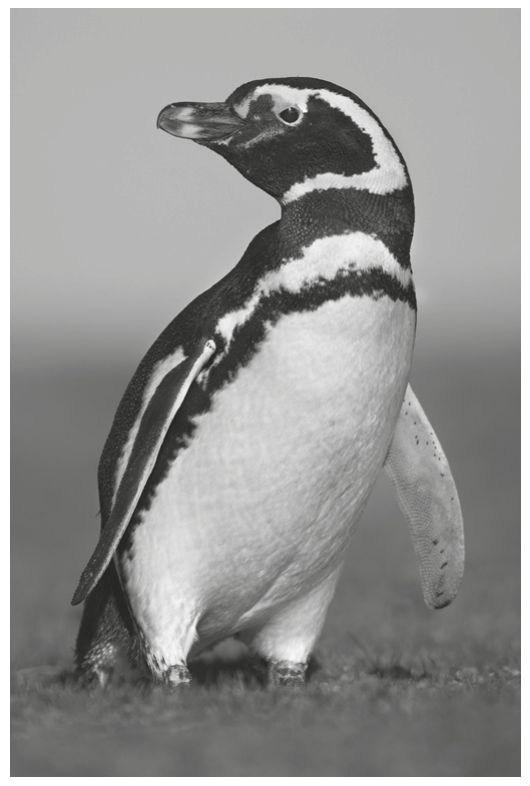
A Magellanic penguin is shown in Fig. 4.1.

Fig. 4.1

Fig. 4.1

- Data were collected for bill size every year from 1983 to 2010.
- Bill size was calculated using the length and depth of the bill.
- Bill size showed variation between the individuals.
- In 1983 all the penguins in one area were tagged.
- All tagged penguins were measured each year and their new chicks were tagged and measured.
- For each year of the study, an estimate of food availability was made.
- A statistical analysis was conducted to quantify whether selection had taken place.

(a)

Explain why bill size is an example of continuous variation.

[ 2 ]
0