EduNinja
[Maximum number: 3]

Vitamin A deficiency is a major health problem in parts of the world where children have a limited diet. Rice enhanced with pro-vitamin A has been produced through genetic engineering. This new rice, called Golden Rice, contains large amounts of β\beta-carotene, which is used in the human body to synthesise vitamin A. From this Golden Rice, newer varieties of Golden Rice have been developed by selective breeding.
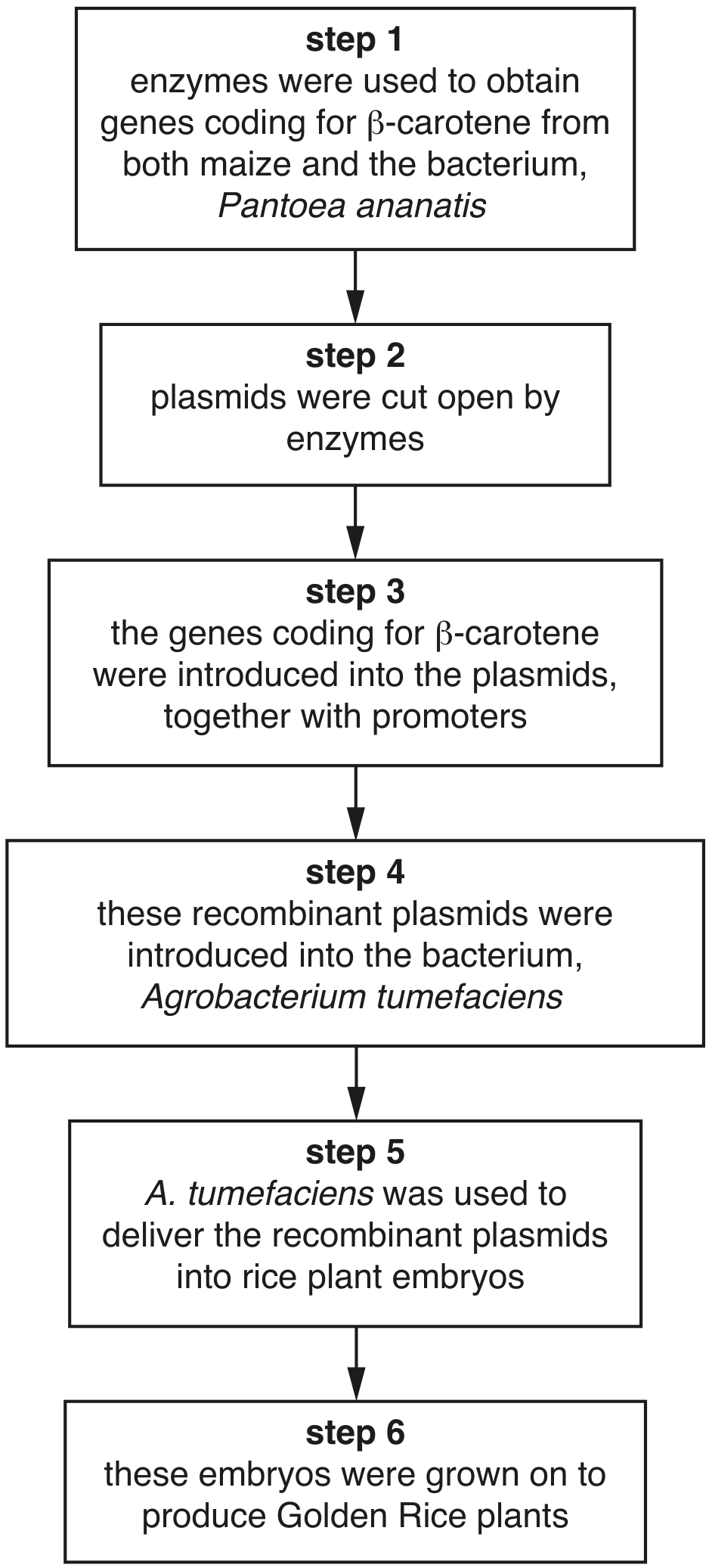
Fig. 3.1 shows how Golden Rice was originally produced by genetic engineering.

Fig. 3.1 shows how Golden Rice was originally produced by genetic engineering.

(a)

Rice is an important food crop in many different countries. Farmers in different parts of the world have developed rice varieties that grow well in the local climate and soil conditions.

Selective breeding programmes have been carried out in which Golden Rice was interbred with local rice varieties to produce varieties of Golden Rice that grow well in different localities.

Explain why the original Golden Rice had to be developed by genetic engineering, but locally-adapted varieties of Golden Rice could be developed by selective breeding.
[ 3 ]
[Maximum number: 2]

During the germination of barley seeds, amylase is produced.

(a)

Malting is a process involved in the production of a drink called beer. During malting, barley seed germination is controlled so that the sugars produced during germination can be used in the production of beer.

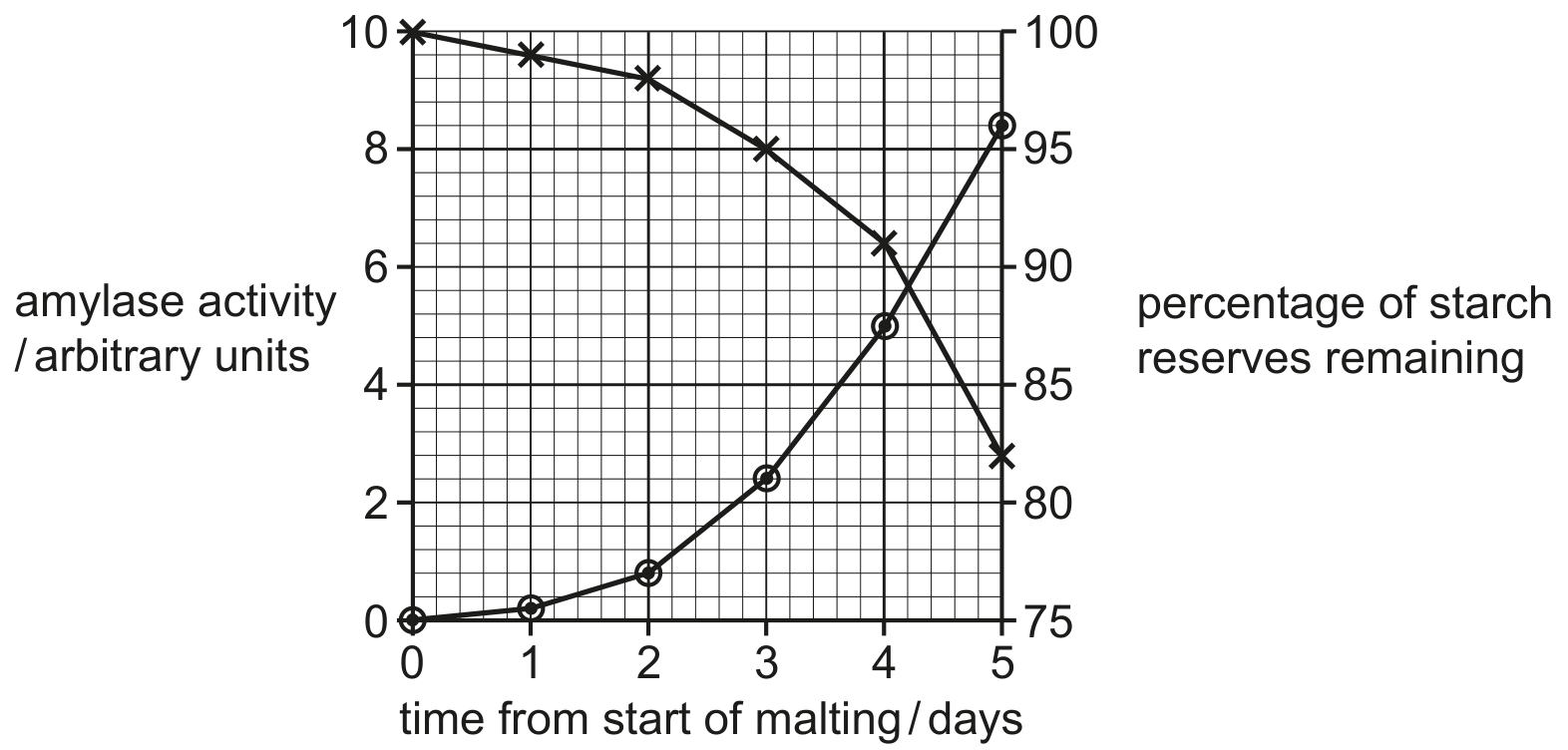
Fig. 3.1 shows two features of a germinating barley seed during the first five days of malting:
- activity of the amylase enzyme
- the percentage of starch reserves remaining in the barley seed.

Key
starch reserves
amylase activity

Fig. 3.1

Fig. 3.1

[ 1 ]
(i)

State the precise location of the starch reserves in the barley seed.

[ 1 ]
(b)

In the malting process, germination is stopped before the concentration of sugars in the germinating barley seeds exceeds a concentration that causes shoot or root growth.

Drying the germinating barley seeds at 50C50^{\circ} \mathrm{C} is one method used to stop malting.

[ 1 ]
(i)

Suggest why malting is stopped before shoot or root growth occurs.

[ 1 ]
[Maximum number: 4]

The Santa Cruz tarplant, Holocarpha macradenia, is a tall annual plant that grows only in the coastal grasslands in California. An annual plant is one that grows, flowers, produces seeds and dies in less than one year.

The tarplant used to be widely spread in California, but there are now only nine natural populations. It is listed as an endangered species.

(a)

Tarplant seeds can survive in the soil for several years. Dormant seeds can be encouraged to germinate by scraping the soil, which exposes them to light. This stimulates the production of gibberellin in these seeds, which brings about germination.

Explain how gibberellin brings about germination in seeds.

[ 4 ]
[Maximum number: 5]

Cultivated rice, Oryza sativa, is often grown in fields flooded with water.

(a)

Some varieties of cultivated rice are able to grow long internodes when they are submerged in water, keeping the leaves and flowers above water level (an internode is a length of stem between leaves). These varieties are known as deepwater rice.

The snorkel genes SK1 and SK2, thought to be responsible for this response, were identified in a variety of deepwater rice, C9285. A non-deepwater variety, T65, did not have these genes.

When submerged, rice plants produce the gaseous plant hormone ethene. This has a very low solubility in water, so it accumulates in the aerenchyma tissue in the rice stems.

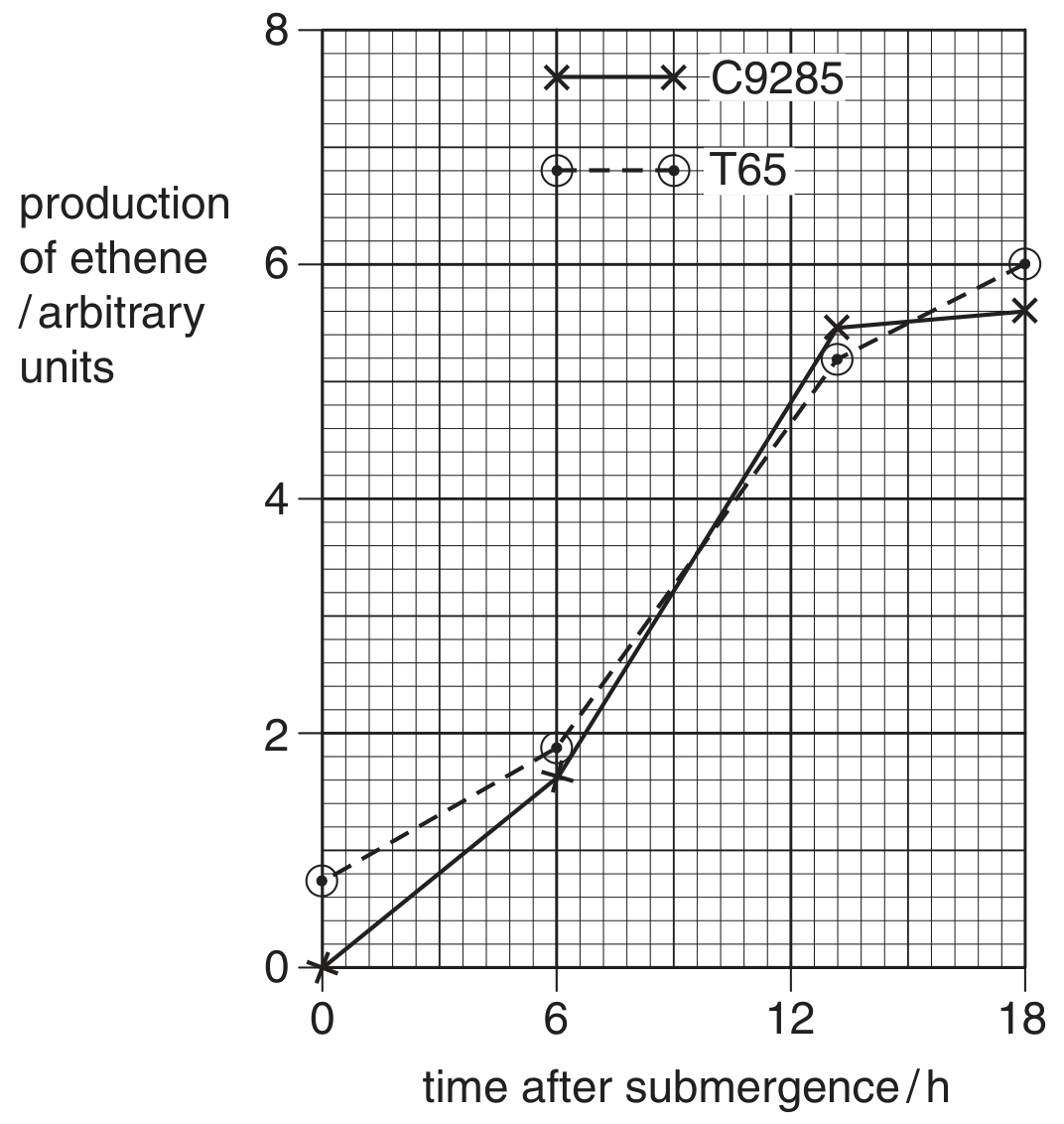
Fig. 4.1 shows the concentration of ethene in the aerenchyma of T65 and C9285 when the plants are submerged in water for 18 hours.

Fig. 4.1

Fig. 4.1

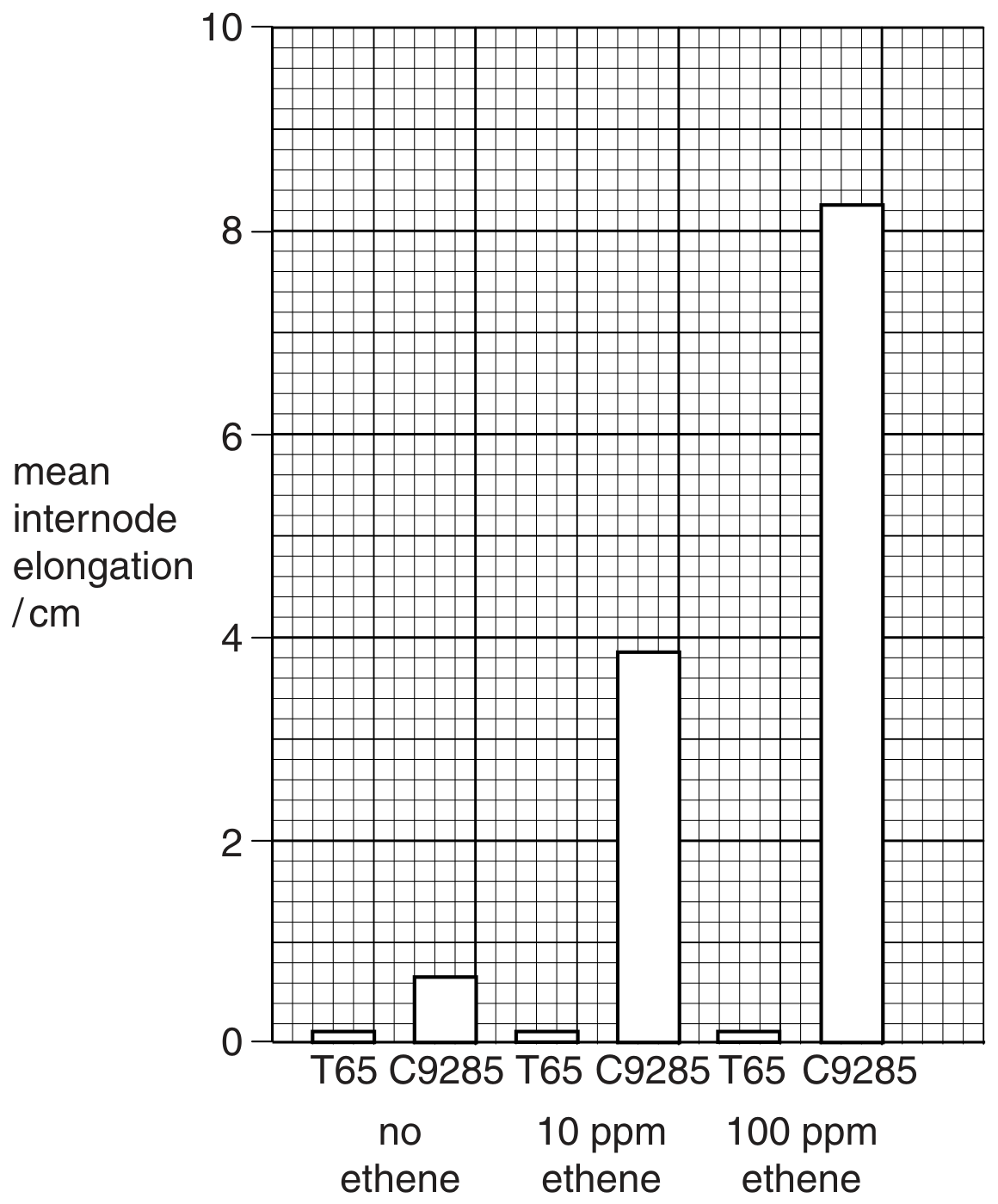
Fig. 4.2 shows the results of exposing T65 and C9285 to different concentrations of ethene in dry conditions.

Fig. 4.2

Fig. 4.2

[ 2 ]
(i)

With reference to Fig. 4.2, compare the effect of ethene on internode elongation in C9285 and T65.

[ 2 ]
(b)

The snorkel genes were found to be expressed when the plant was exposed to ethene. The expression of these genes results in increased production of gibberellin, GA.

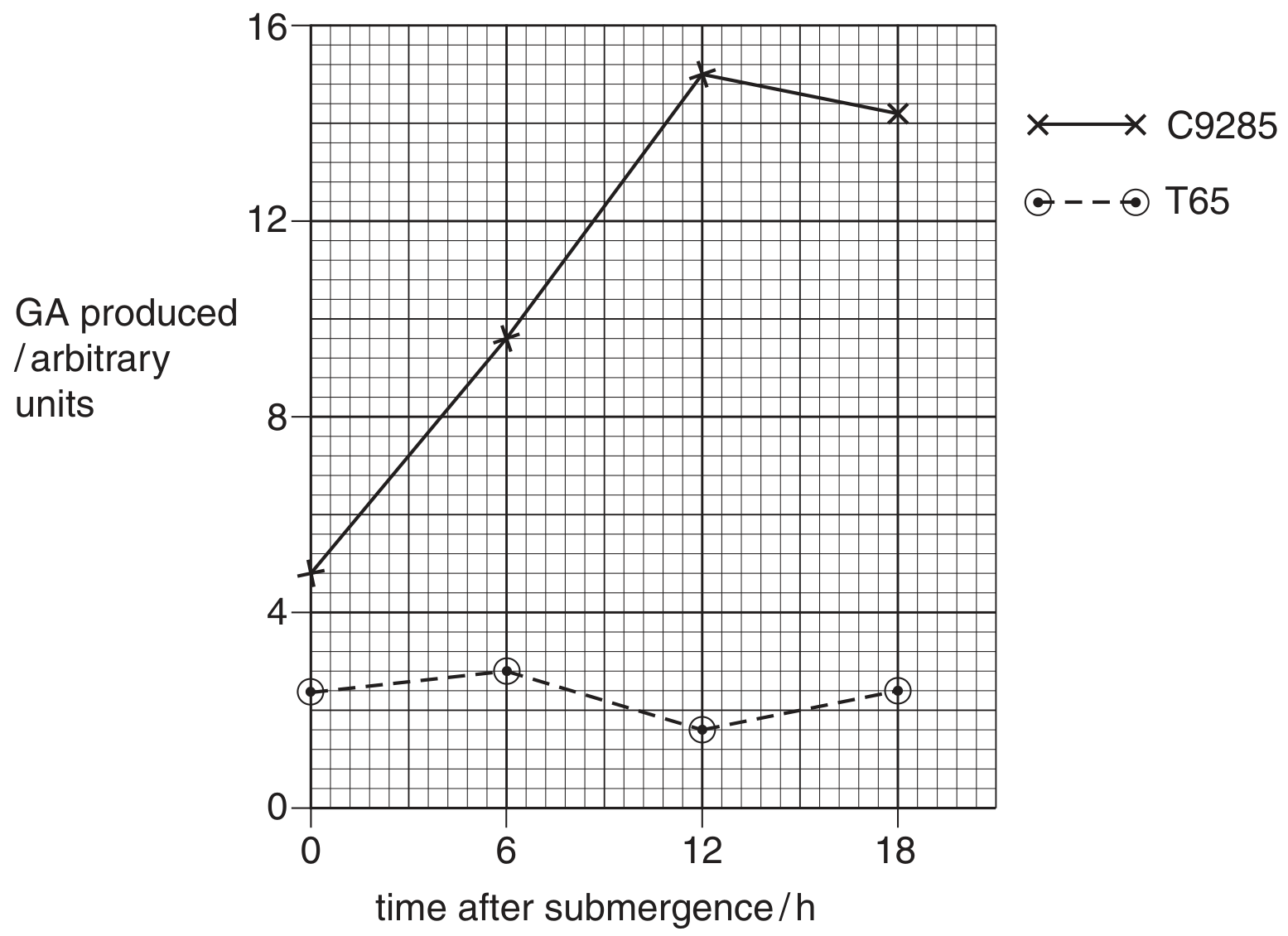
Fig. 4.3 shows the effect of submergence on GA production in C9285 and in T65.

Fig. 4.3

Fig. 4.3

With reference to Fig. 4.3, and your knowledge of the functions of GA, suggest an explanation for the differences in the effects of ethene in C9285 and T65 shown in Fig. 4.2.

[ 3 ]
[Maximum number: 3]

Genes have a role in determining the overall phenotype of an organism.

(a)

In the pea plant, Pisum sativum, the genotype lele results in plants with short stems (dwarf plants).

Explain how the lele genotype and its gene product results in dwarf plants.

[ 3 ]
(a)

Some plants are grown commercially for their flowers. Many of these plants are varieties that have short stems.

Two factors that affect the height of stems are:
- gibberellin
- the Le/le gene.

The Le/le gene has two alleles, Le and le.

[ 4 ]
(i)

Suggest an advantage of growing a short-stemmed variety of a flowering plant.

[ 1 ]
(ii)

Explain how the Le/le gene and gibberellin are involved in affecting the height of plant stems.

[ 3 ]
[Maximum number: 5]

Selective breeding has been used to improve the characteristics of crop plants, including maize and rice.

(a)

IR8 is a variety of rice plant that was developed in the 1960s.

IR8 was developed by breeding together two different varieties of rice:
- PETA, which produces a high yield
- DGWG, which is a dwarf variety.

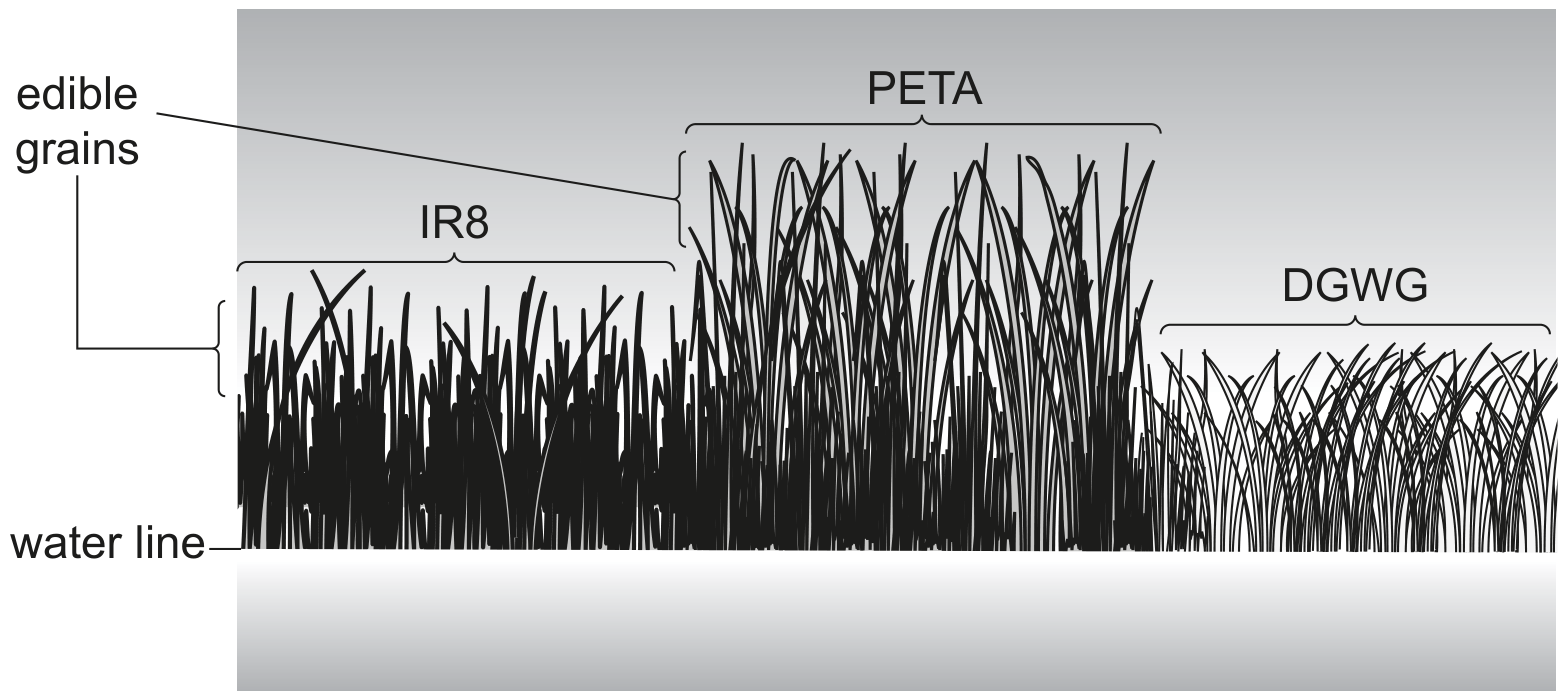
Fig. 6.1 is a diagram showing the three varieties of rice.

Fig. 6.1

Fig. 6.1

[ 1 ]
(i)

Suggest why IR8 is an improvement on the PETA variety of rice.

[ 1 ]
(b)

Thale cress, Arabidopsis thaliana, is another plant that has dwarf varieties.

Scientists treated three varieties of A. thaliana with gibberellin:
- the wild type (normal, non-dwarf variety)
- dwarf variety A
- dwarf variety B.

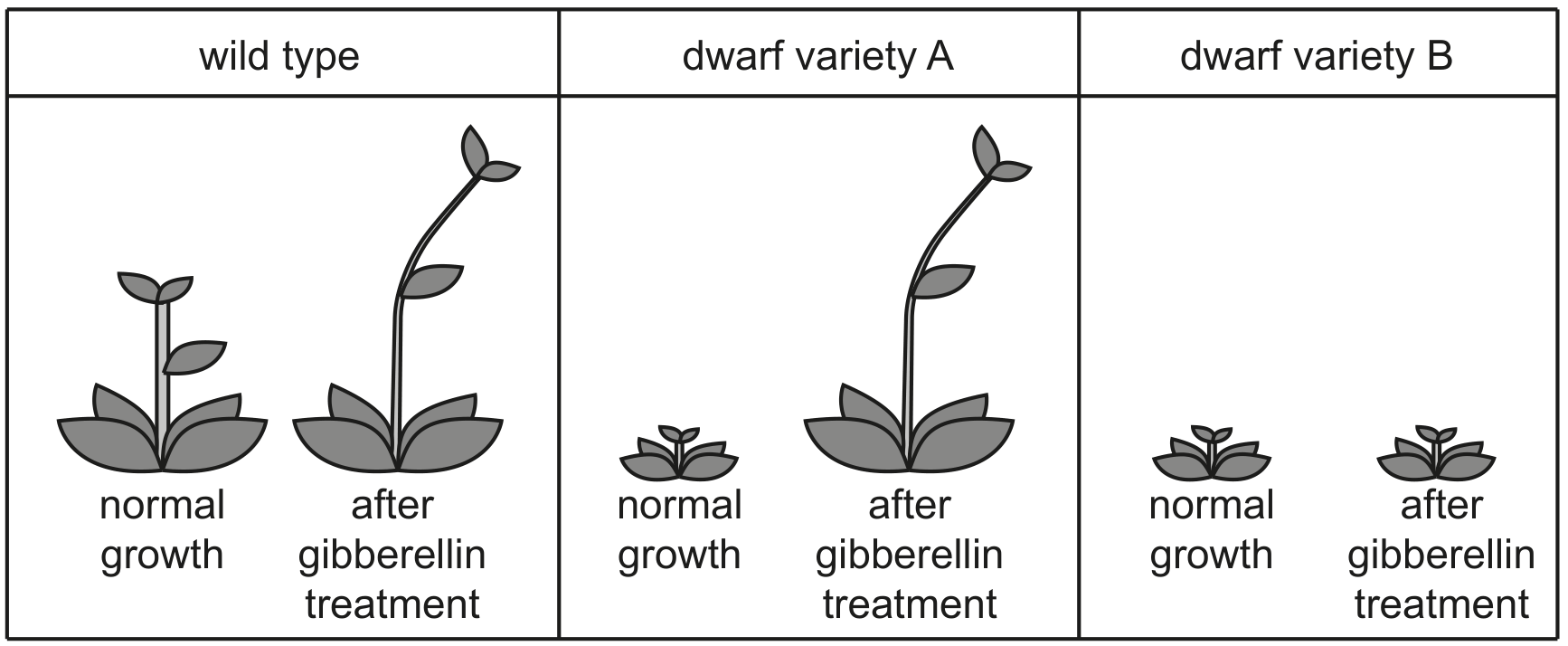
Fig. 6.2 shows the responses of the three varieties to treatment with gibberellin.

Fig. 6.2 shows the responses of the three varieties to treatment with gibberellin.

[ 4 ]
(i)

With reference to Fig. 6.2, suggest explanations for the different responses to gibberellin shown by dwarf variety A and dwarf variety B.

[ 4 ]
[Maximum number: 7]

The passage below summarises the effects of gibberellins on seed germination.

Complete the passage by using the most appropriate scientific term(s).

When a seed is shed from the parent plant, it is in a state of , which means it is metabolically inactive.

When water is absorbed by a seed, it stimulates the production of gibberellin by the within the seed. The gibberellin stimulates the synthesis of amylase by cells in the layer.

Amylase hydrolyses starch molecules in the converting them to soluble molecules. These molecules are converted to glucose which is transported to the embryo, providing a source of carbohydrate that can be respired to provide as the embryo begins to grow.

Gibberellin causes these effects by regulating genes that are involved in the synthesis of amylase. It has been shown that application of gibberellin to seeds can cause an increase in the of the DNA coding for amylase.

Answer one question.

(a)

Explain the control of gibberellin synthesis and outline how gibberellin stimulates stem elongation.

[ 8 ]
(a)

Explain the control of gibberellin synthesis and outline how gibberellin stimulates stem elongation.

[ 7 ]
0