EduNinja
[Maximum number: 6]

The Labrador retriever is a modern breed of dog that can have yellow, black or brown fur and pale, black or brown noses. The inheritance of fur and nose colour is the result of the interaction between genes at two different loci, the B locus and the E locus.

Fig. 1.1 shows a Labrador retriever.
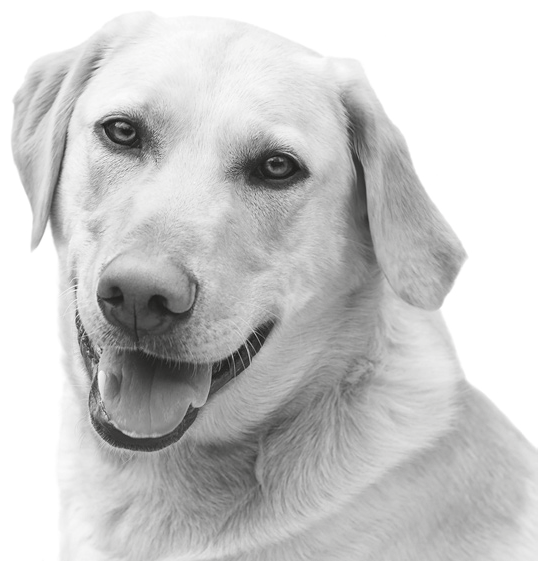
Fig. 1.1

Fig. 1.1

Table 1.1 shows how gene interaction results in different phenotypes.
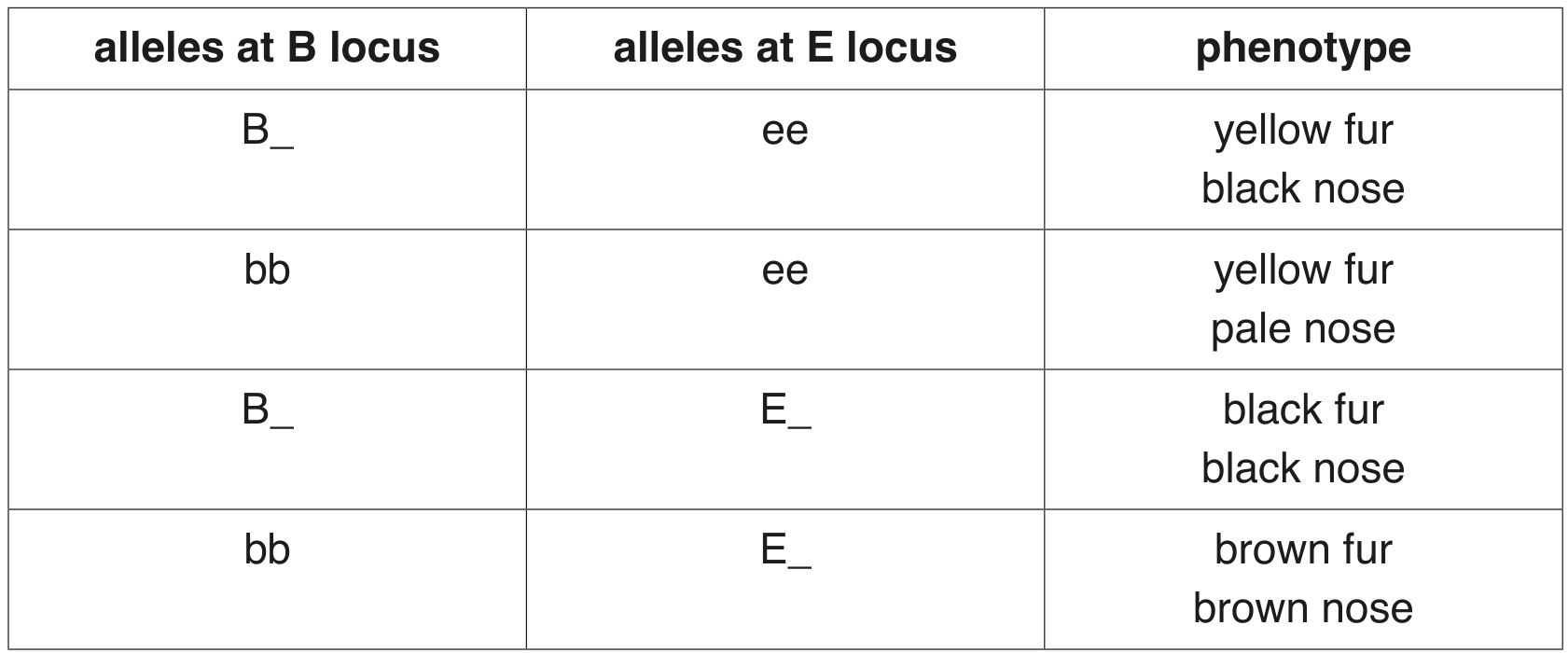
Table 1.1

Table 1.1

A male Labrador retriever, heterozygous at the B locus and homozygous recessive at the E locus, was mated with a female Labrador retriever heterozygous at both loci.

(a)

Use a genetic diagram to show the possible genotypes and phenotypes of the offspring from the mating between the two Labrador retrievers.
parental phenotypes
parental genotypes
gametes
offspring genotypes and phenotypes

[ 6 ]
[Maximum number: 6]

The courgette plant, Cucurbita pepo, produces edible fruits that vary in colour and shape.
Fruit colour in courgettes is controlled by the gene A / a.
Fruit shape in courgettes is controlled by the gene B/b.
- A yellow fruit is produced when the dominant allele A is present.
- A round fruit is produced when the dominant allele B is present.

Genes A / a and B/b occur on different chromosomes.
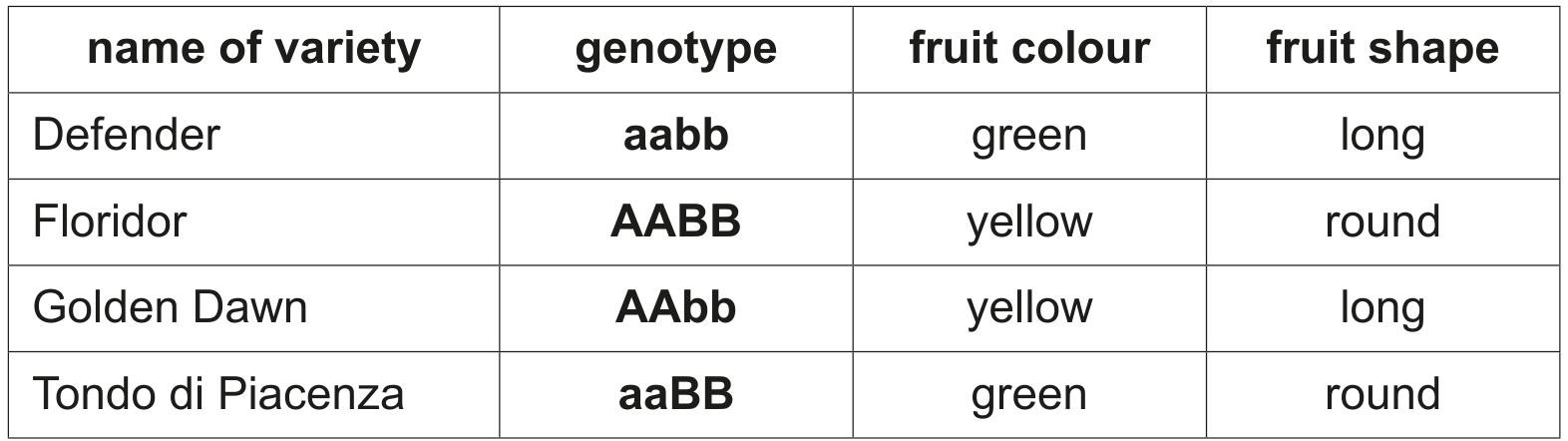
Table 1.1 shows the genotypes and phenotypes of four different varieties of courgette with respect to their fruit colour and shape.

Table 1.1

Table 1.1

(a)
(i)

The varieties Golden Dawn and Tondo di Piacenza were grown in the same garden and cross-pollination occurred between them. The gardener grew these cross-pollinated F1 seeds into plants that formed fruits.

The gardener did not know the genotypes of the parent plants and did not know that cross-pollination had occurred.

State the phenotype of the fruits of the F1 plants and explain why it was unexpected for the gardener.

[ 2 ]
(ii)

The gardener crossed two of these F1 plants.

Complete Fig. 1.1 with the F1 gametes, F2 genotypes and F2 phenotypes.
State the ratio of fruit phenotypes in the F2 offspring.

Fig. 1.1

Fig. 1.1

ratio of fruit phenotypes

[ 4 ]
[Maximum number: 4]

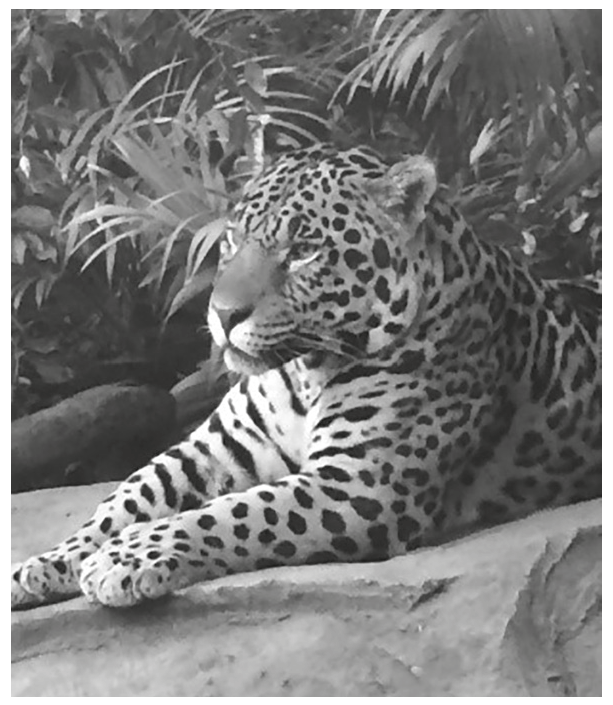
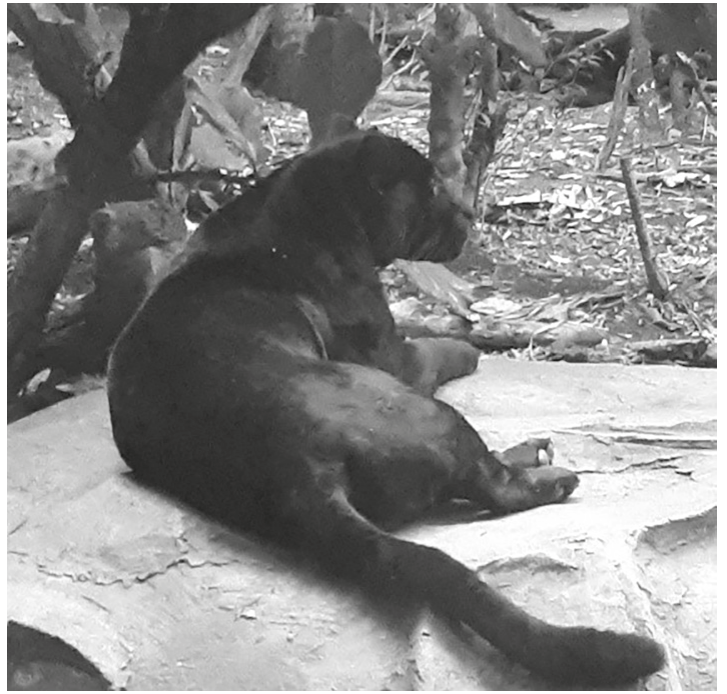
The jaguar, Panthera onca, is a large cat that lives mainly in South America. The majority of jaguars have light brown fur with black spots, as shown in Fig. 1.1. Some jaguars have completely black fur, as shown in Fig. 1.2.

Fig. 1.1

Fig. 1.1

Fig. 1.2

Fig. 1.2

(a)

The MC1R gene has two alleles and is located on an autosome.
- When two jaguars with light brown fur mate all the offspring have light brown fur.
- When two jaguars with black fur mate either all the offspring will have black fur or some offspring will have black fur and some will have light brown fur.

Using symbols, construct a genetic diagram to show how two jaguars with black fur can produce some offspring with black fur and some offspring with light brown fur.

[ 4 ]
(a)

An inherited form of DI may be caused by faulty membrane receptors. These receptors are coded for by a sex-linked allele.

[ 4 ]
(i)

Use a genetic diagram to show how parents who do not have this condition can have a child with the inherited form of DI.
symbols
parental genotypes
gametes
offspring genotypes
offspring phenotypes

[ 4 ]
[Maximum number: 3]

A mutation in a gene in the fruit fly, Drosophila melanogaster, gives rise to white-eyed flies instead of the normal red-eyed flies. The allele for red eyes (R) is dominant to the allele for white eyes (r).

A student crossed a red-eyed fly with a white-eyed fly.
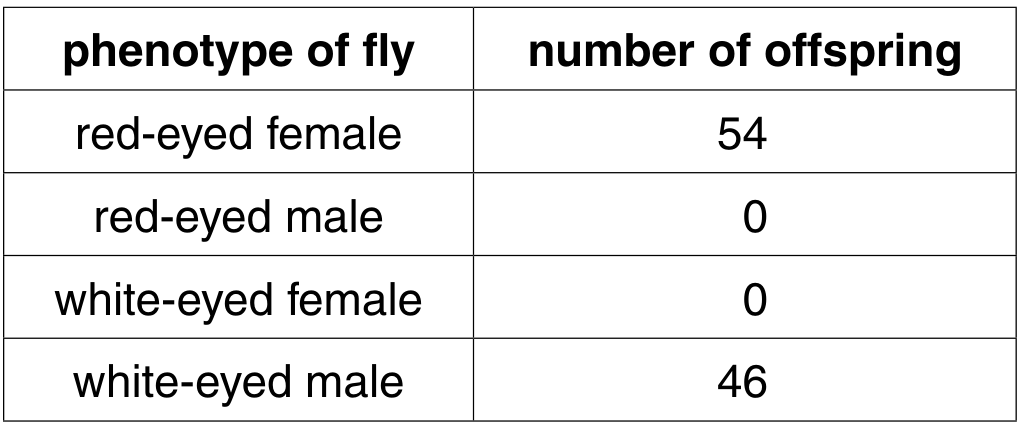
The results are shown in Table 1.1.

Table 1.1

Table 1.1

(a)

In Drosophila, males possess two different sex chromosomes, X and Y , as in humans.

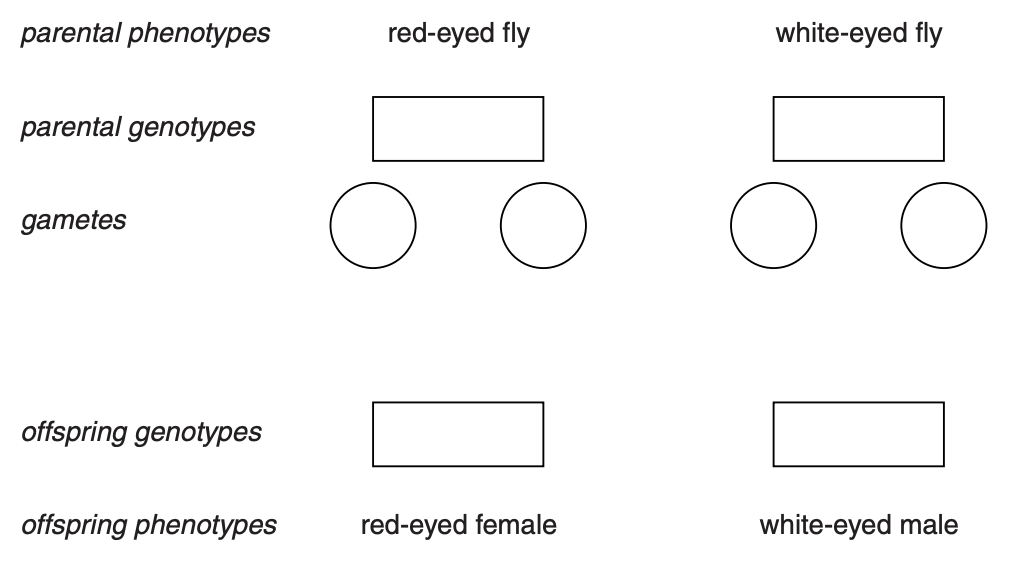
Complete the genetic diagram below to show how the results in Table 1.1 could have been produced.

Question image
[ 3 ]
[Maximum number: 4]

The scientist Gregor Mendel investigated differences in the length of the stem in the pea plant, Pisum sativum. In 1866, he published the results of his investigation into this trait (characteristic).

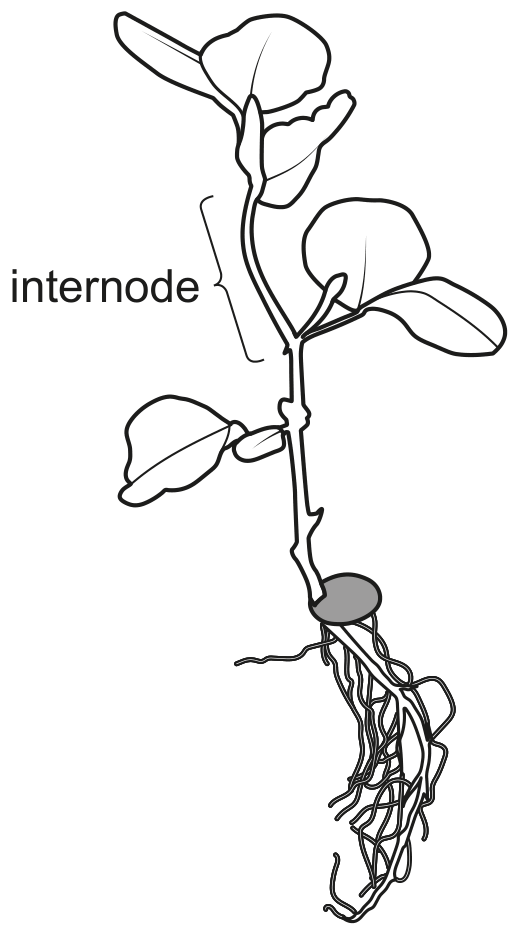
Fig. 2.1 shows a diagram of a pea plant.

Fig. 2.1

Fig. 2.1

Mendel observed that the pea plants he grew either had tall stems or dwarf (short) stems. In his investigation, Mendel carried out crosses using pea plants with these two phenotypes.

(a)

From the results of these crosses, Mendel demonstrated that tall stems were dominant to dwarf stems in pea plants.

It is now known that the stem length trait in pea plants is controlled by one gene that has two alleles:
- a dominant allele, Le
- a recessive allele, le.

Describe a cross that could be carried out and how the results of the cross could be analysed to determine the genotype of a pea plant with a tall stem.

[ 4 ]
(a)

In the small intestine, the enzyme lactase hydrolyses the disaccharide lactose into the monosaccharides glucose and galactose. A deficiency of lactase can lead to a condition known as lactose intolerance. The lactose passes undigested into the large intestine resulting in diarrhoea. Some babies are born with congenital lactase deficiency, which is an inherited condition, and require lactose-free milk from birth.

Suggest how two parents, who can digest lactose, can have a child with congenital lactase deficiency.

[ 2 ]
(a)

A dihybrid cross was carried out between homozygous dominant and homozygous recessive sweet pea plant parents to produce the F1 generation.

The offspring from the F1 generation were crossed to produce the F2 generation.

[ 5 ]
(i)

Draw a genetic diagram to show a dihybrid cross between two offspring from the F1 generation.

Assume that these genes are closely linked and that there are no crossing over events.

[ 4 ]
(ii)

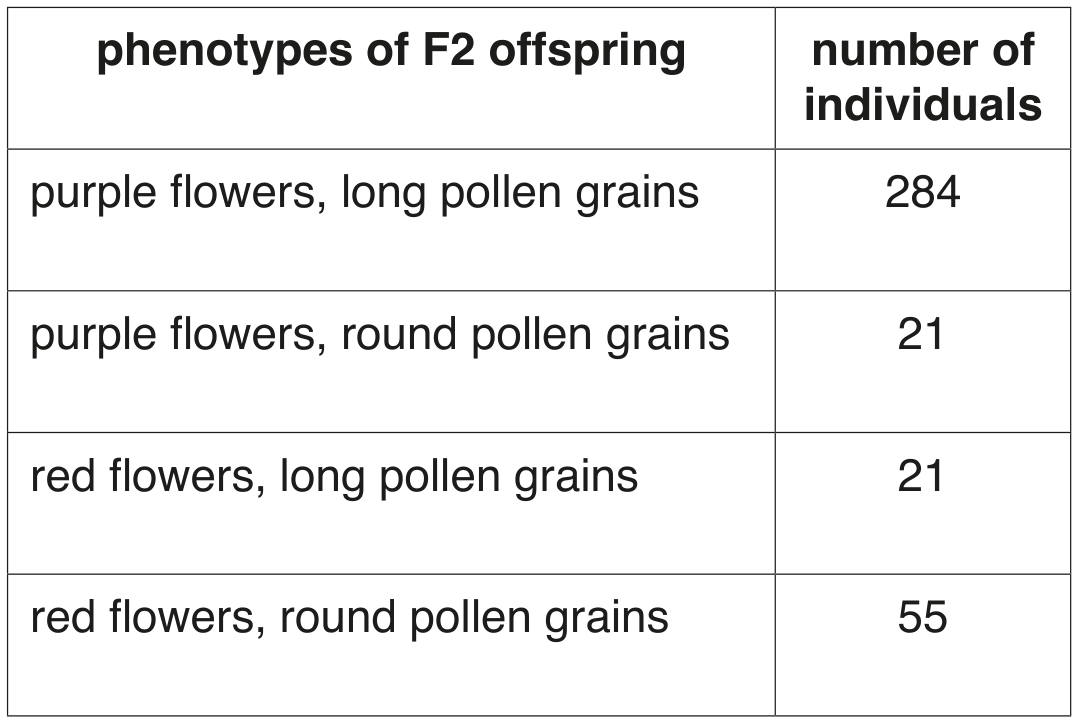
The actual results of the dihybrid cross are shown in Table 2.1.

Table 2.1

Table 2.1

State how the results support the fact that this is an example of autosomal linkage.

[ 1 ]
(b)
(i)

A test cross was carried out with sweet pea plants known to be heterozygous for both flower colour and pollen grain shape.

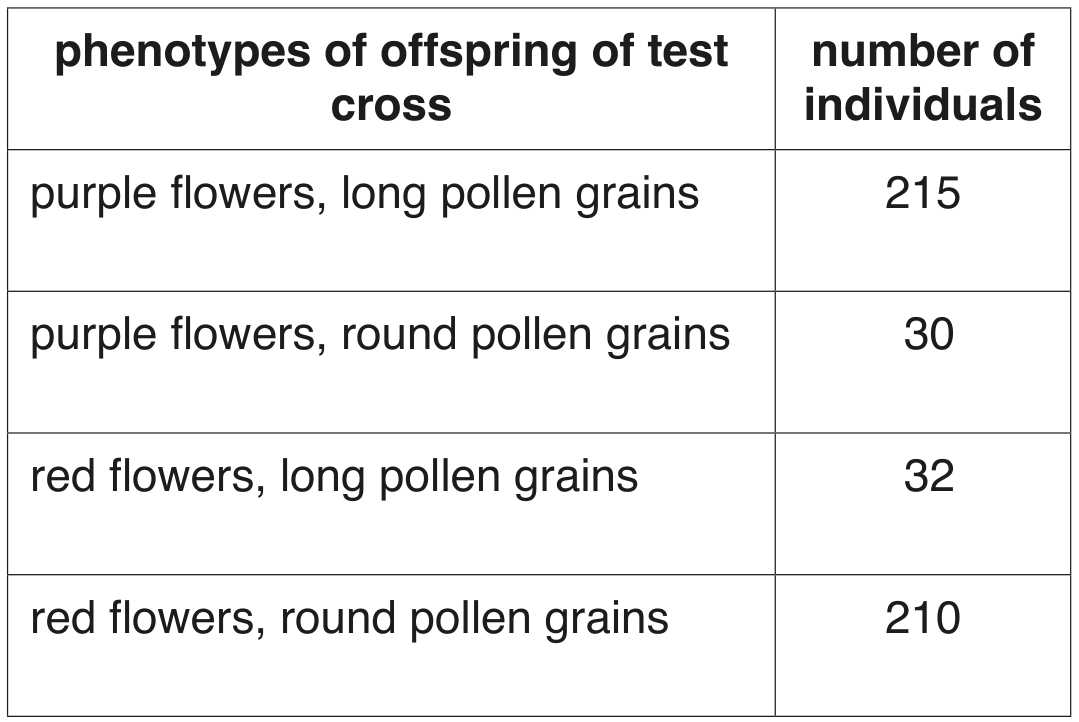
The results of the test cross are shown in Table 2.2.

Table 2.2

Table 2.2

The result of a test cross can be used to determine a crossover value (COV).
A crossover value is the percentage of the total number of offspring showing recombination.
The crossover value (COV) can be calculated using the formula shown in Fig. 2.1.

COV= number of recombinants  total number of individuals ×100\mathrm{COV}=\frac{\text { number of recombinants }}{\text { total number of individuals }} \times 100

Calculate the COV from the results shown in Table 2.2.

COV=\mathrm{COV}=

\%

[ 1 ]
(a)

In the fruit fly, Drosophila melanogaster, eye colour and wing shape are controlled by genes.
- E/e are alleles of a gene involved in eye colour.
- E results in red eyes, e results in purple eyes.
- N / n are alleles of a gene involved in wing shape.
- N results in normal (functional) wings, n results in vestigial (short, non-functional) wings.

These genes are both autosomal.
A dihybrid cross was carried out between a fly with red eyes and normal wings and a fly with purple eyes and vestigial wings. Both parents were homozygous for both genes. The offspring from the F1 generation were crossed to obtain the F2 offspring.

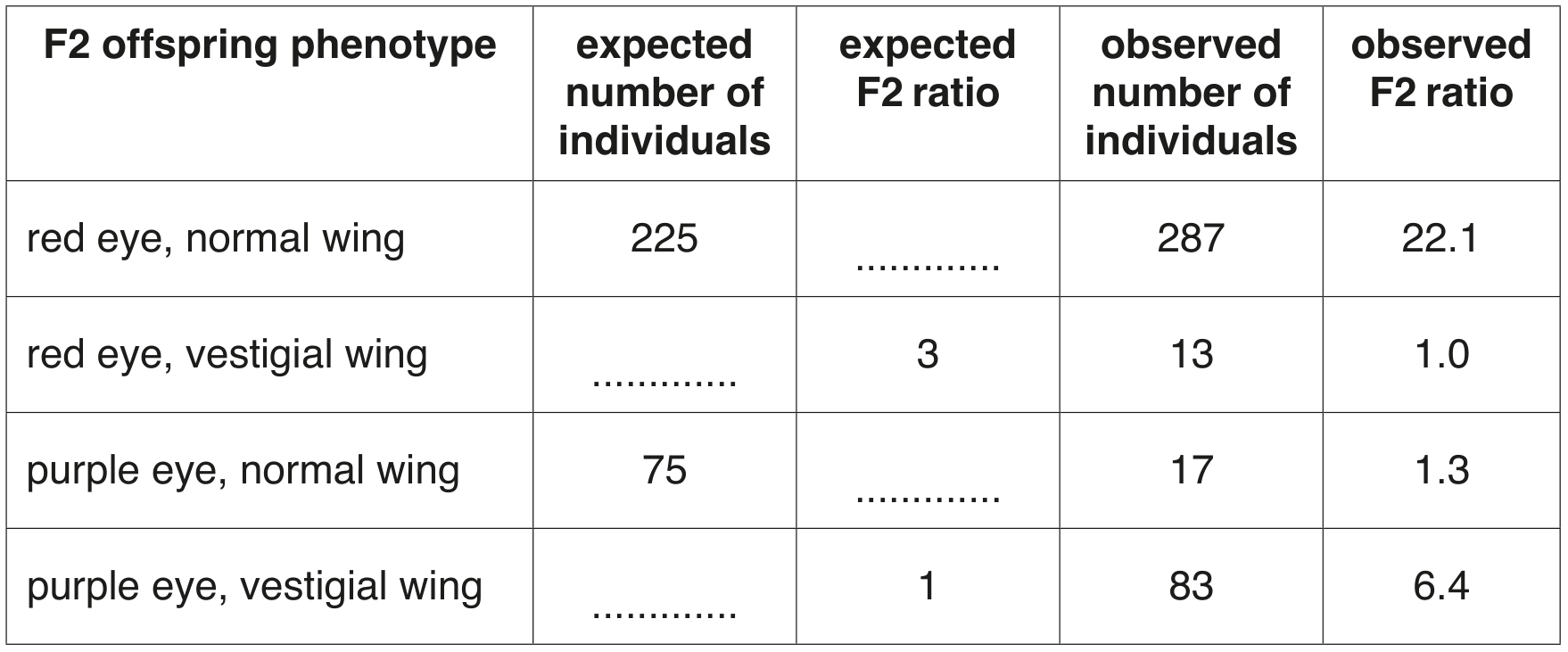
The results are shown in Table 2.1.

Table 2.1

Table 2.1

[ 6 ]
(i)

Complete the missing expected number of individuals and the expected F2 ratio in Table 2.1.

[ 2 ]
(ii)

A chi-squared test showed that the results for the F2 generation in Table 2.1 were significantly different from those expected.

To investigate this, test crosses were carried out using flies taken from the F 1 generation and flies that were homozygous recessive for both genes.
The investigator assumed that the genes were unlinked and expected a ratio of 1: 1: 1: 1.
Draw a genetic diagram of this test cross. Use the symbols E/e and N/n.

[ 4 ]
[Maximum number: 9]

In the fruit fly, Drosophila melanogaster, two different genes control body colour and eye colour.
- G / g are alleles of the body colour gene.
- G results in grey body, g results in black body.
- R / r are alleles of the eye colour gene.
- R results in red eyes, r results in brown eyes.

Each gene is autosomal.
A dihybrid cross was carried out using a fly with a grey body and red eyes crossed with a fly with a black body and brown eyes. Both parents were homozygous for both genes. The offspring from the F1 generation were crossed to obtain the F2 offspring.

(a)

A test cross can be carried out in order to identify flies from an F2 generation that are heterozygous for both genes.

Draw a genetic diagram to show how a test cross between a heterozygous grey-bodied, red-eyed F2 fly and a fly with a black body and brown eyes can produce four different offspring phenotypes.

Use the symbols G / g and R / r.

[ 4 ]
(b)

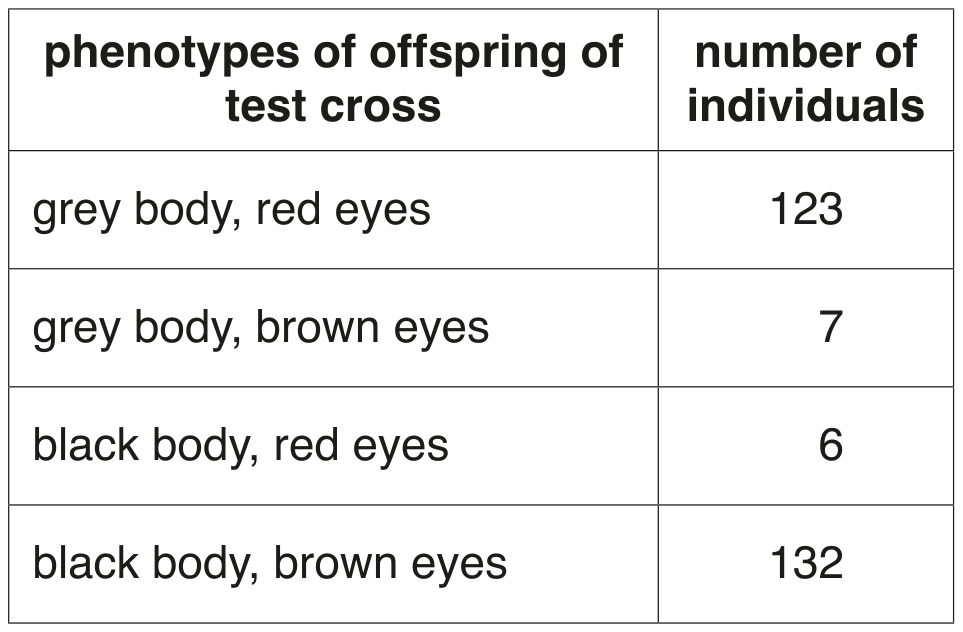
The results of the test cross in (b) are shown in Table 2.1. These results are significantly different from the expected results.

Table 2.1

Table 2.1

Describe how these results are different from the expected results and explain why they are different.

[ 5 ]
0