EduNinja
[Maximum number: 5]

A mutation in a gene in the fruit fly, Drosophila melanogaster, gives rise to white-eyed flies instead of the normal red-eyed flies. The allele for red eyes (R) is dominant to the allele for white eyes (r).

A student crossed a red-eyed fly with a white-eyed fly.
The results are shown in Table 1.1.
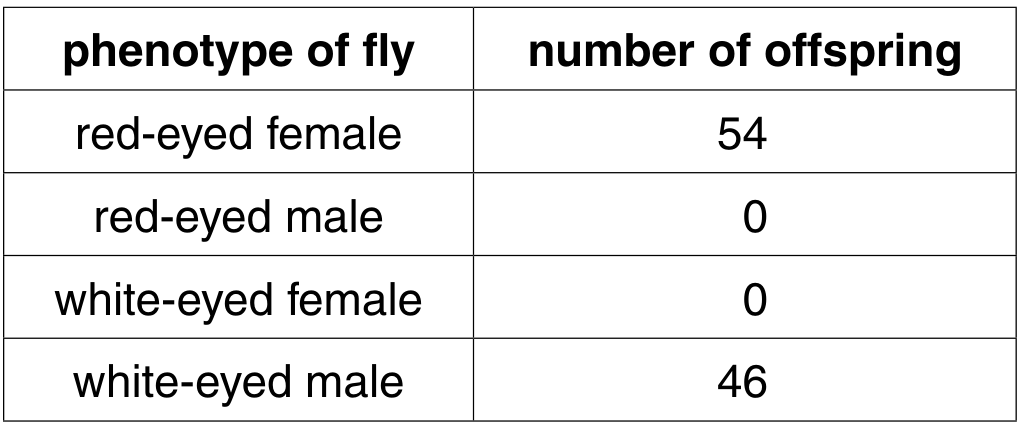
Table 1.1

Table 1.1

(a)
(i)

The chi-squared (χ2)\left(\chi^{2}\right) test can be used to analyse the results in Table 1.1.

The expected ratio of red-eyed females to white-eyed males is 1: 1.

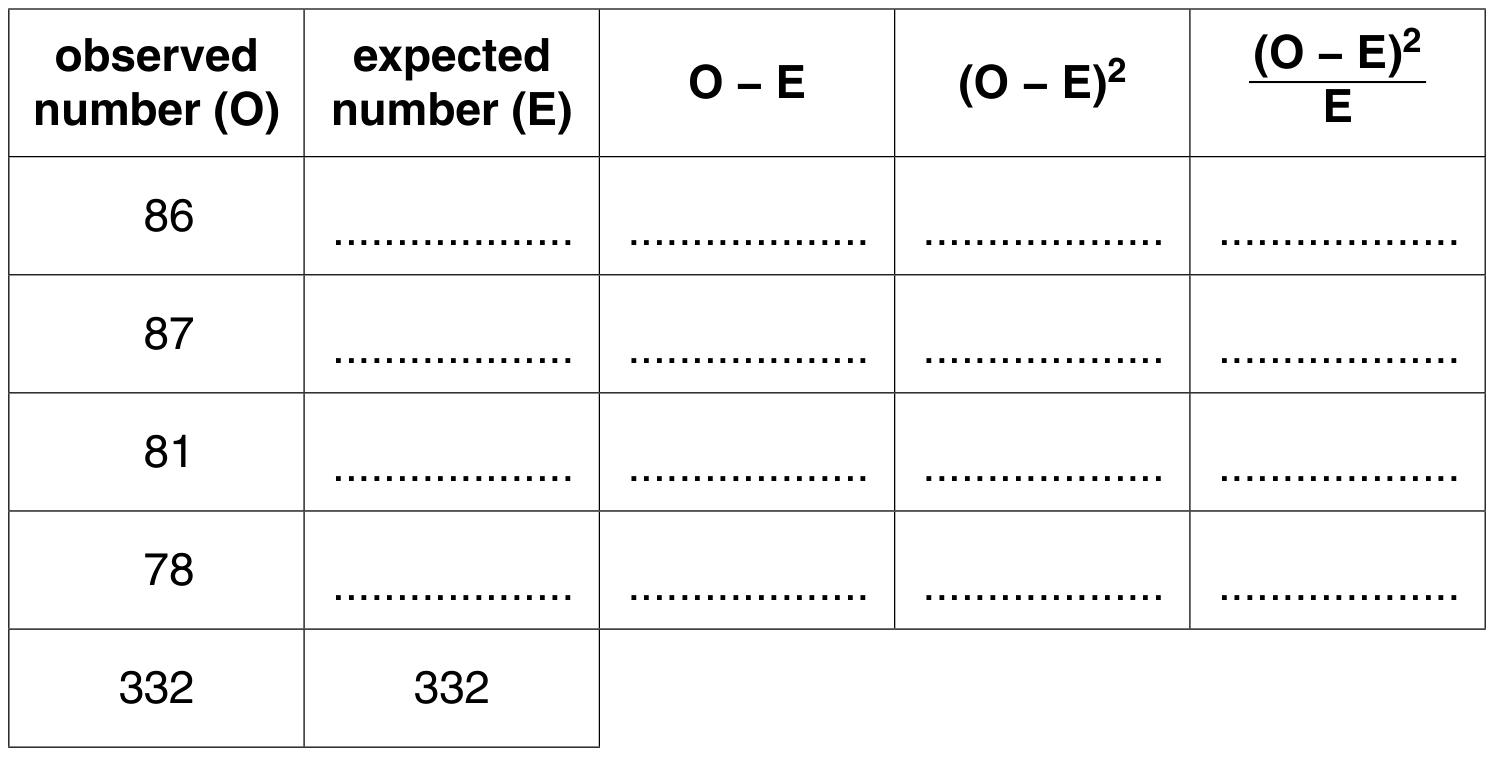
Complete Table 1.2 and use this to calculate a value for chi-squared (χ2)\left(\chi^{2}\right).
χ2=Σ(OE)2Ev=n1\chi^{2}=\Sigma \frac{(\mathrm{O}-\mathrm{E})^{2}}{\mathrm{E}} \quad v=\mathrm{n}-1
key
Σ=\Sigma= sum of
v= degrees of freedom
n= number of classes
O = observed value
E = expected value
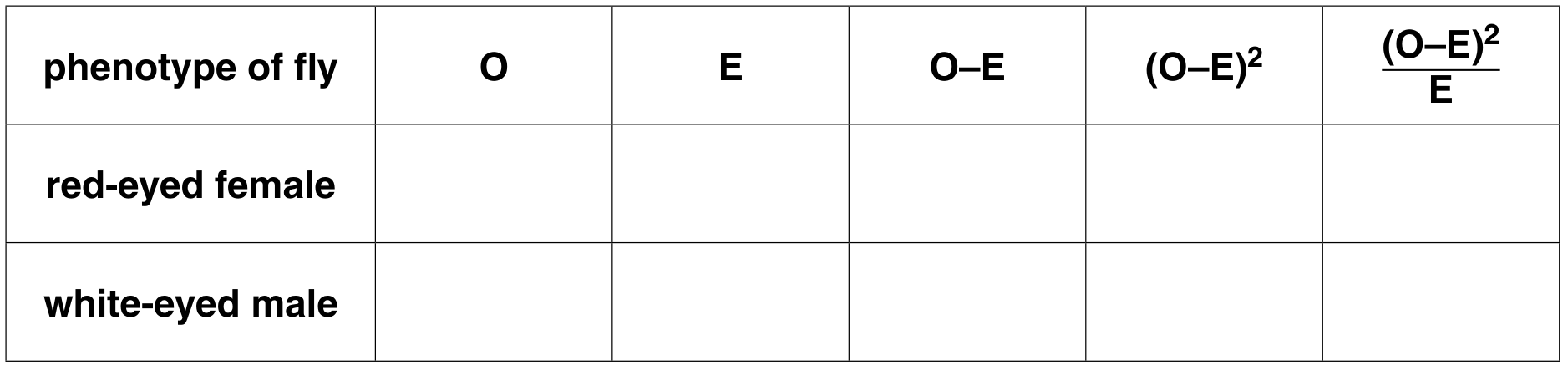
Table 1.2

Table 1.2

χ2=\chi^{2}=
[ 3 ]
(ii)

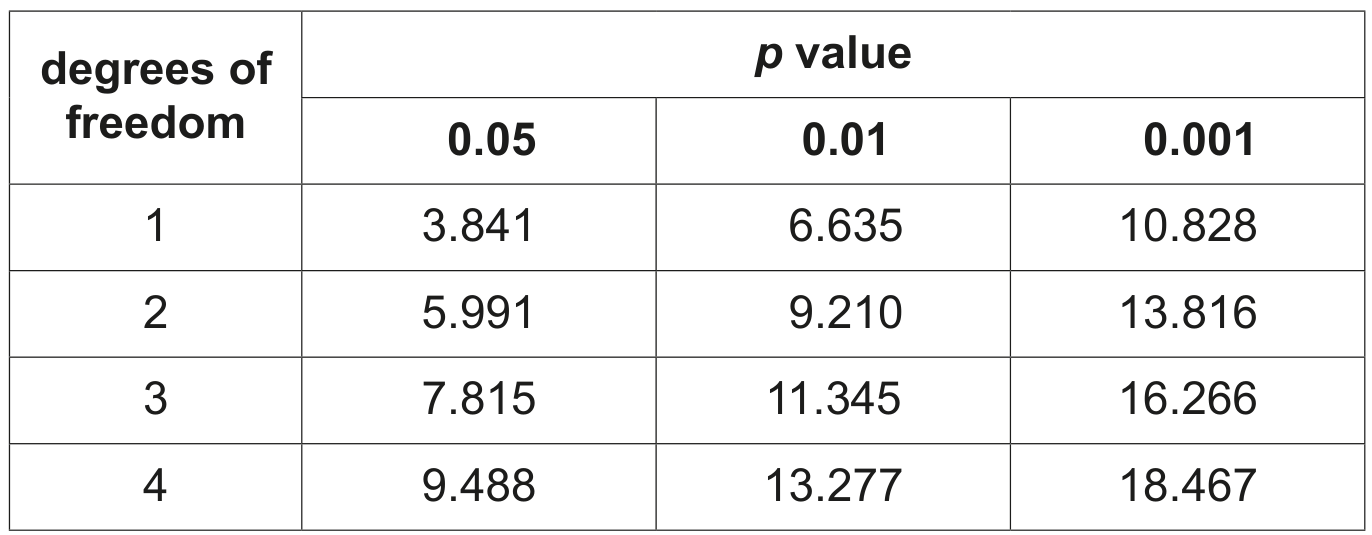
Use your calculated value of χ2\chi^{2} and the table of probabilities below, to test the significance of the difference between observed and expected results.
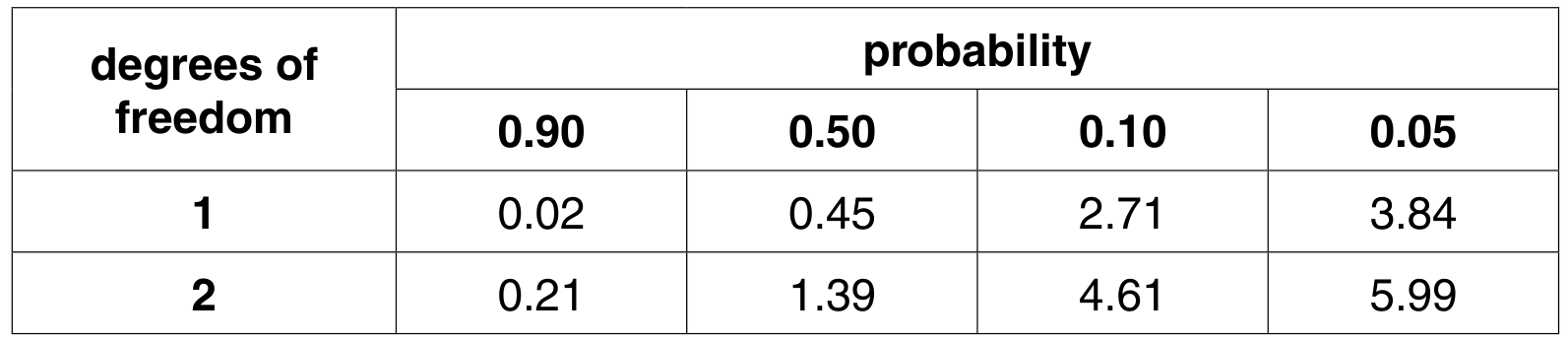
Table
[ 2 ]
[Maximum number: 2]

In the fruit fly, Drosophila melanogaster, two different genes control body colour and eye colour.
- G / g are alleles of the body colour gene.
- G results in grey body, g results in black body.
- R / r are alleles of the eye colour gene.
- R results in red eyes, r results in brown eyes.

Each gene is autosomal.
A dihybrid cross was carried out using a fly with a grey body and red eyes crossed with a fly with a black body and brown eyes. Both parents were homozygous for both genes. The offspring from the F1 generation were crossed to obtain the F2 offspring.

(a)

A statistical test showed that the results of the cross were significantly different from those expected.

State the name of the statistical test used and state the expected phenotypic ratio for the F2 generation.
statistical test
expected ratio

[ 2 ]
[Maximum number: 1]

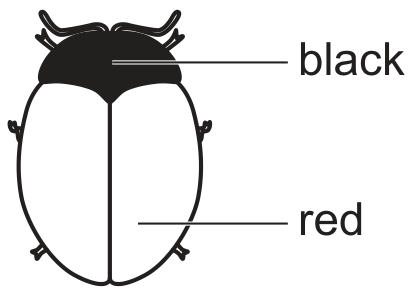
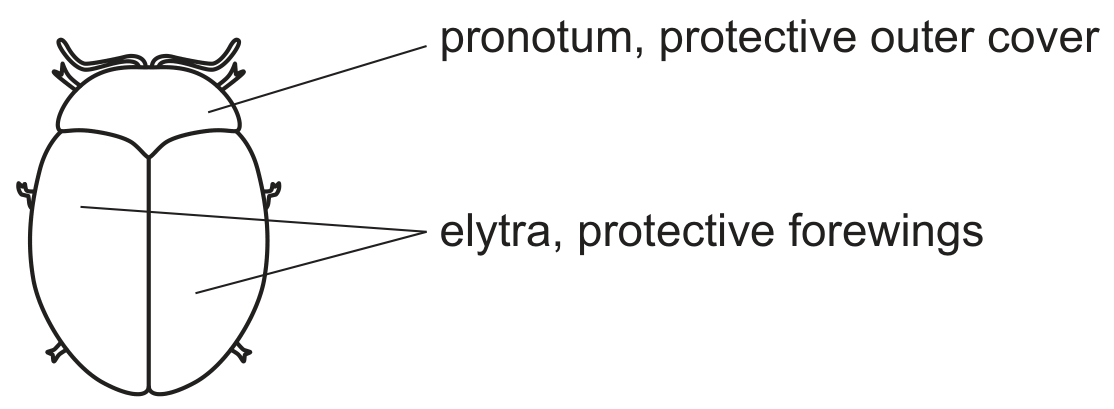
The tortoise beetle, Chelymorpha alternans, is an insect found in Panama that has several different colour patterns. Fig. 3.1 shows a tortoise beetle.

Fig. 3.1

Fig. 3.1

Researchers have identified a gene, L, that controls colour pattern in the pronotum and elytra. Gene L has four different alleles: LV,LT,LR\mathbf{L}^{\mathbf{V}}, \mathbf{L}^{\mathbf{T}}, \mathbf{L}^{\mathbf{R}} and Lr\mathbf{L}^{\mathbf{r}}.

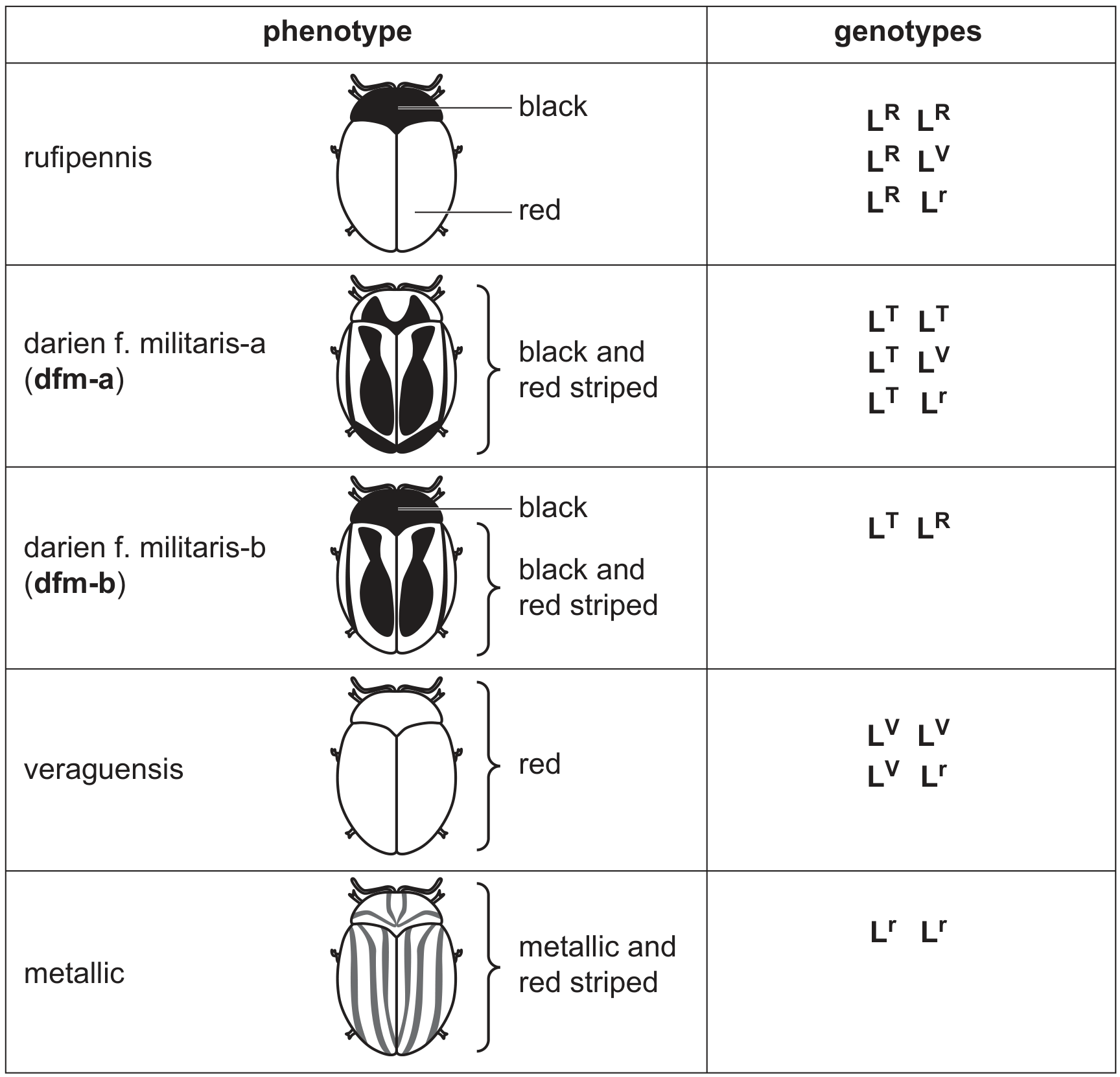
Table 3.1 shows five different colour pattern phenotypes of tortoise beetles and their genotypes.

Table 3.1

Table 3.1

Question image
(a)

Researchers carried out two crosses.

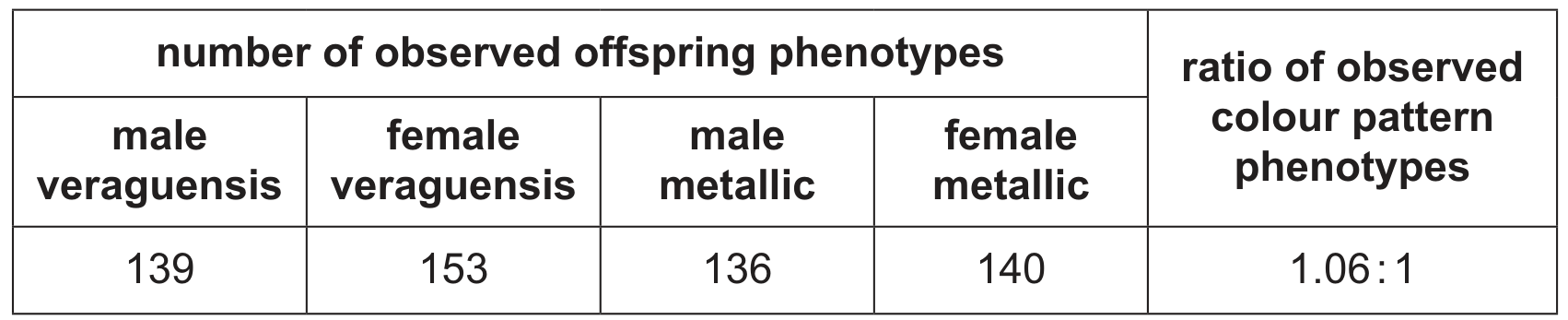
Cross 1: female veraguensis tortoise beetles were crossed with male metallic tortoise beetles.
The results are shown in Table 3.2.

Table 3.2

Table 3.2

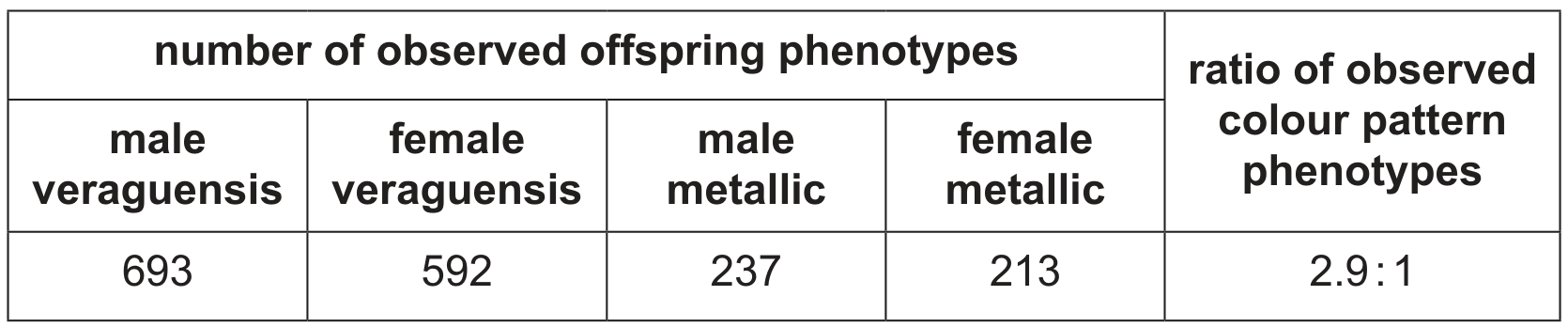
Cross 2: female veraguensis tortoise beetles were crossed with male veraguensis tortoise beetles.

The results are shown in Table 3.3.

Table 3.3

Table 3.3

[ 1 ]
(i)

Name a statistical test that can be used to determine whether the ratio of observed phenotypes is significantly different from the expected ratio.

Question image
[ 1 ]
[Maximum number: 2]

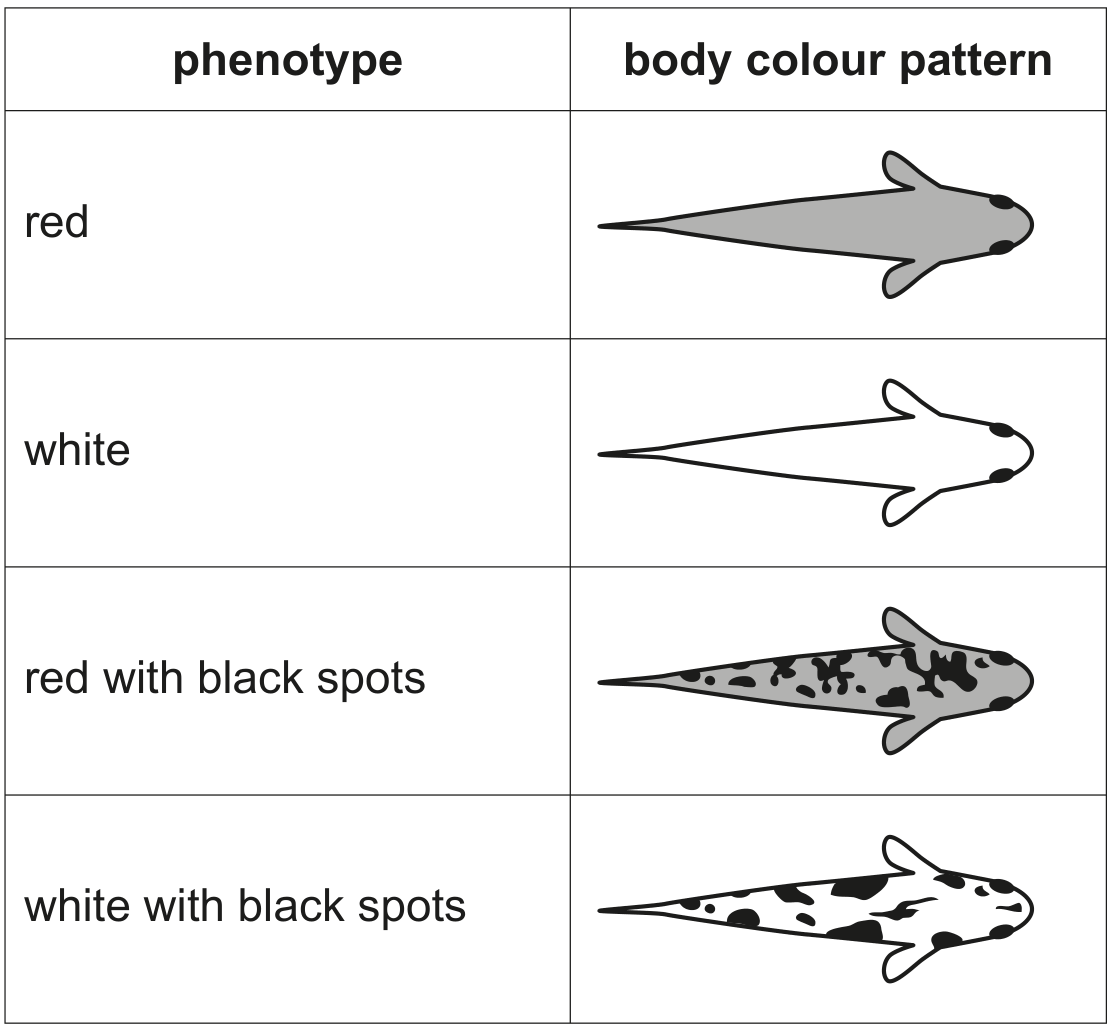
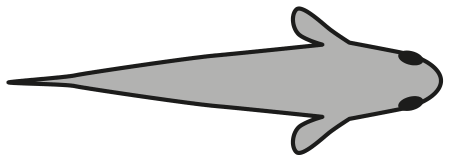
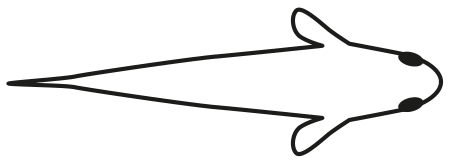
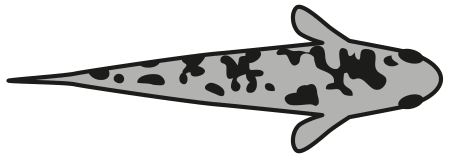
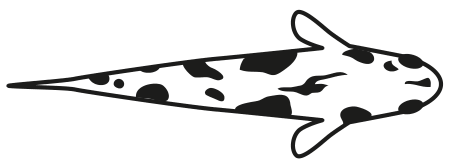
A freshwater fish species, Oryzias latipes, has individuals with four body colour patterns, as shown in Table 5.1.

Table 5.1

Table 5.1

Question image
Question image
Question image
Question image

Two unlinked genes determine the body colour patterns shown in Table 5.1.
One gene controls whether the body colour is red or white:
- dominant allele R= red
- recessive allele r= white.

The other gene controls whether black spots are present or not present:
- dominant allele B = with black spots
- recessive allele b= without black spots.

A fish that is homozygous recessive at both loci is white.
Genetic crosses were carried out to investigate the inheritance of the four different body colour patterns.

Males that were red with black spots, and homozygous at both loci, were crossed with females that were white. The F1 offspring were all red with black spots.

These F1 offspring were then crossed to produce the F2 generation.

(a)

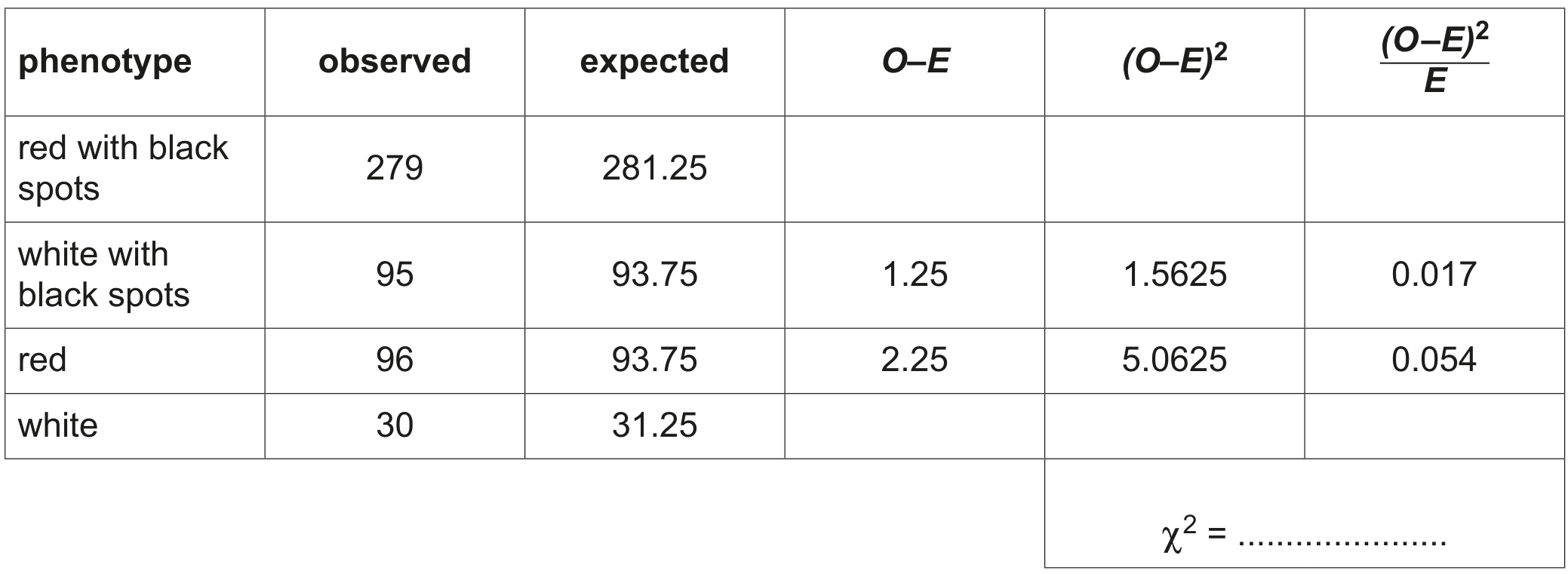
Table 5.2 shows the observed numbers obtained of each of the four different phenotypes for the F2 generation.

Table 5.2

Table 5.2

Table 5.2 compares the observed numbers with the numbers that would be expected in the F2 generation for a normal dihybrid ratio.

Calculate χ2\chi^{2} for the F2 generation by completing Table 5.2.
The formula for χ2\chi^{2} is:

χ2=(OE)2E\chi^{2}=\sum \frac{(O-E)^{2}}{E}
(b)

The critical value at p=0.05 and 3 degrees of freedom is 7.815.

Comment on whether the null hypothesis should be accepted or rejected.

Further analysis of the results from the F2 generation in Table 5.2 showed that there were no white males or white males with black spots.

In O. latipes, females have two X chromosomes and males have an X and a Y chromosome.
It was deduced that, in O. latipes:
- the gene that controls body colour is located on the X chromosome and the Y chromosome
- the gene that controls whether black spots are present or not is located on an autosome.

[ 2 ]
(a)

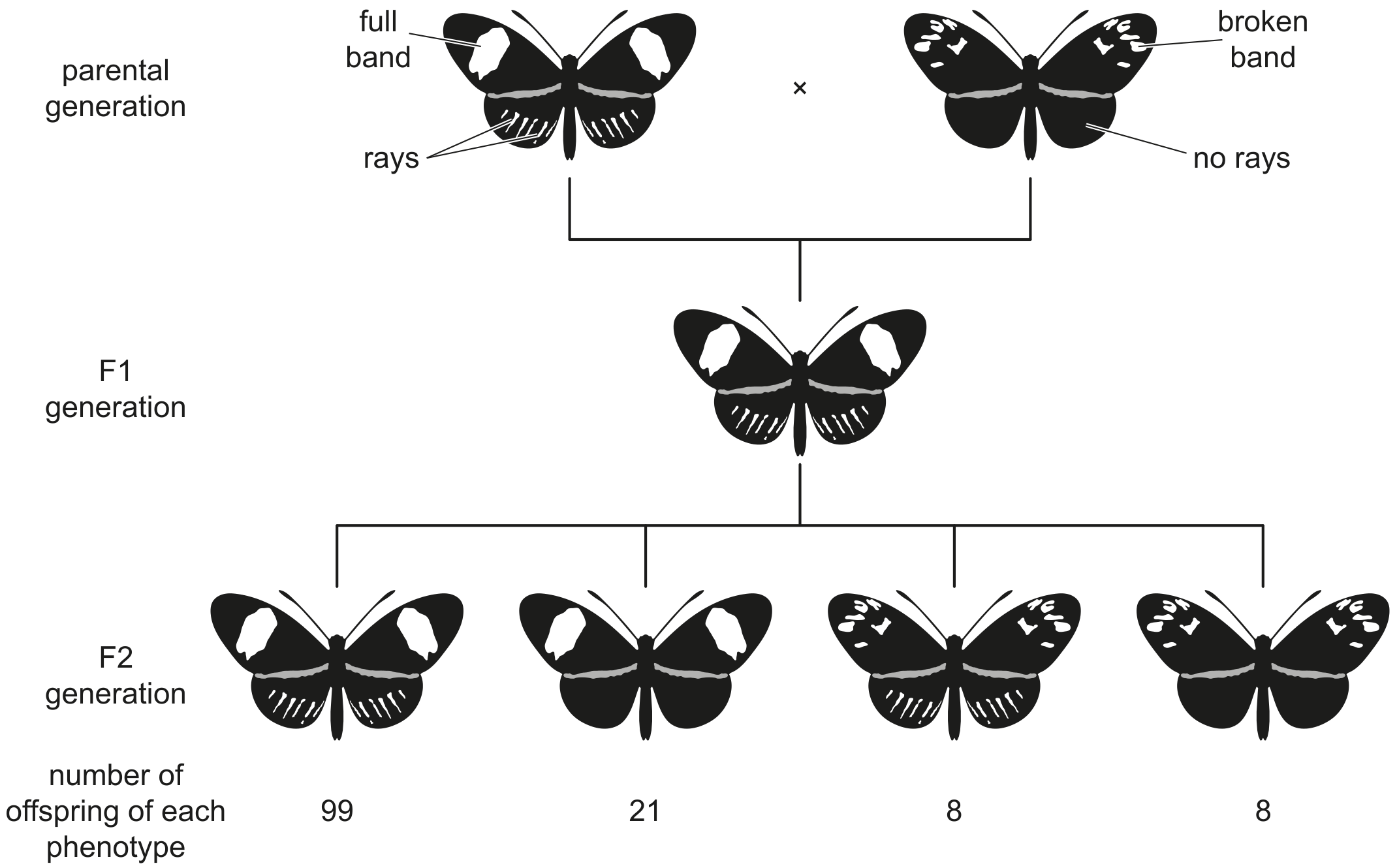
Wing pattern in the butterfly species Heliconius melpomene is controlled by genes on autosomal chromosomes.

The gene for banding pattern on the upper wing has two alleles:
- a dominant allele coding for a full band
- a recessive allele coding for a broken band.

The gene for ray pattern on the lower wing has two alleles:
- a dominant allele coding for rays
- a recessive allele coding for no rays.

Scientists crossed a butterfly that was homozygous dominant for both genes with a butterfly that was homozygous recessive for both genes. The scientists wanted to check whether the phenotypic ratio for offspring in the F2 generation agreed with the expected phenotypic ratio of 9:3:3:1.

The results of this genetic cross are shown in Fig. 4.2.

Fig. 4.2

Fig. 4.2

[ 6 ]
(i)

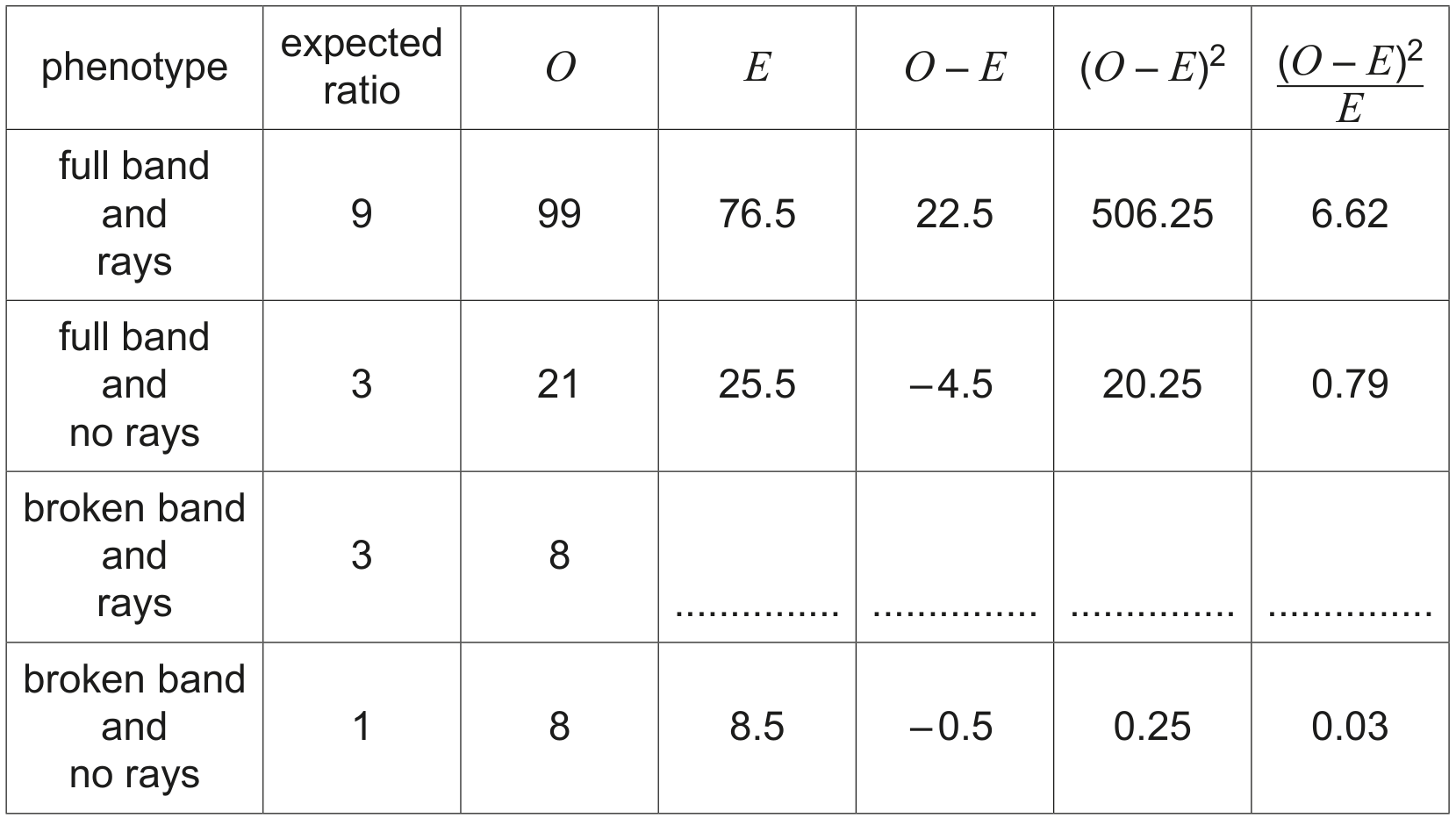
The scientists used the chi-squared (χ2)\left(\chi^{2}\right) test to compare their data to the expected phenotypic ratio of 9: 3: 3: 1. The formula for the chi-squared test is shown in Fig. 4.3.

χ2=Σ(OE)2E key to symbols O= observed value E= expected value \begin{aligned} \chi^{2}=\Sigma \frac{(O-E)^{2}}{E} & \text { key to symbols } \\ & O=\text { observed value } \\ & E=\text { expected value } \end{aligned}

Complete Table 4.1 and use the chi-squared formula in Fig. 4.3 to calculate the χ2\chi^{2} value for these data.

Table 4.1

Table 4.1

χ2=\chi^{2}=
[ 3 ]
(ii)

The critical value at the 0.05 probability level and three degrees of freedom is 7.81 .

Using the result of your calculation in (b)(ii), explain whether the results of the study agree with the expected ratio of phenotypes for the F2 generation.

[ 3 ]
[Maximum number: 4]

The fruit fly, Drosophila melanogaster, has autosomal genes for body colour and wing shape.
Gene B / b is involved in the production of body colour:
- B = dominant allele for brown body colour
- b= recessive allele for black body colour.

Gene D/d is involved in wing shape:
- D = dominant allele for straight wing
- d = recessive allele for curved wing.

A dihybrid test cross was carried out between flies heterozygous for body colour and for wing shape and flies homozygous recessive for body colour and for wing shape.

(a)

A chi-squared (χ2)\left(\chi^{2}\right) test was carried out to compare the observed results with the results that would be expected from a dihybrid cross involving genes on different autosomes.

The value of χ2=2097.836\chi^{2}=2097.836.
Table 5.2 shows the critical values for the χ2\chi^{2} distribution.

Table 5.2

Table 5.2

Explain how the value of χ2\chi^{2} and Table 5.2 can be used to assess the significance of the difference between the observed results and the expected numbers in Table 5.1.

[ 4 ]
[Maximum number: 1]

Traditional techniques for genetically modifying organisms use three enzymes:
- restriction endonuclease
- reverse transcriptase
- DNA ligase.

For example, these enzymes have been used to produce genetically modified (transgenic) pigs containing the GFP gene coding for green fluorescent protein, originally sourced from jellyfish.

(a)

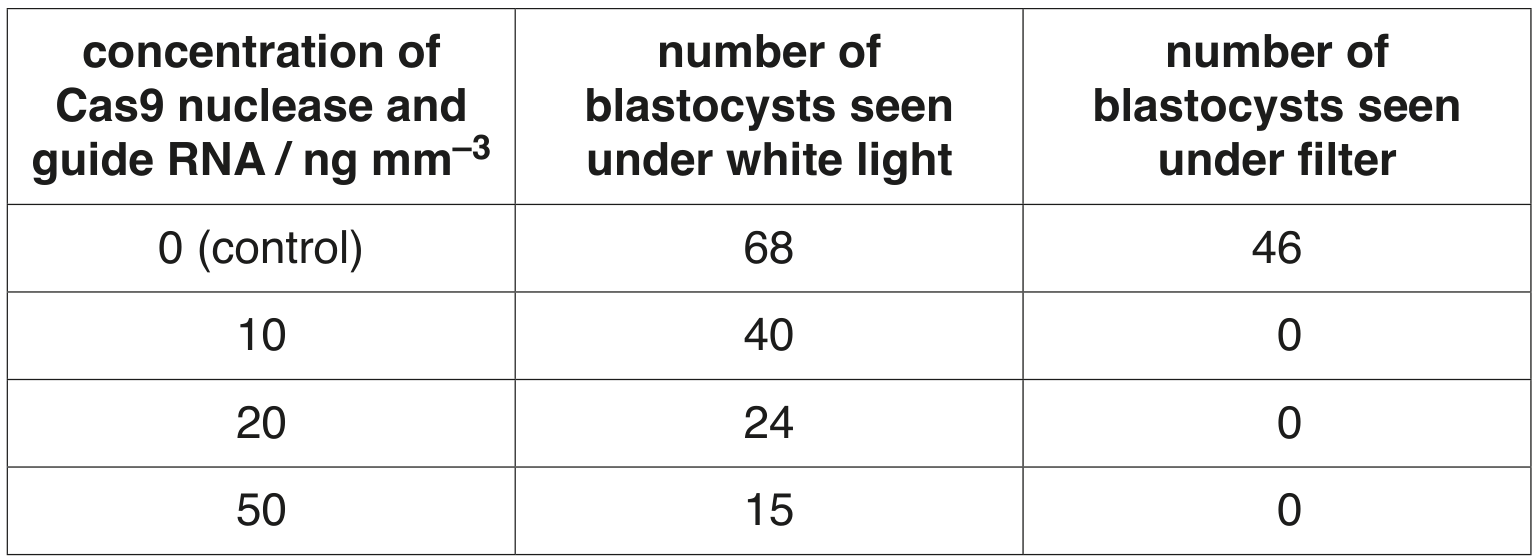
Some of the zygotes in each group survived and after six days each had developed into a group of cells called a blastocyst.

The blastocysts were counted using a light microscope. A filter was then added to the microscope, so that only blastocysts expressing the green fluorescent protein showed up. These were counted and the results are summarised in Table 5.1.

Table 5.1

Table 5.1

[ 1 ]
(i)

Name a statistical test that would allow you to test the significance of the difference between the percentage you calculated in (i) and the expected percentage.

[ 1 ]
[Maximum number: 7]

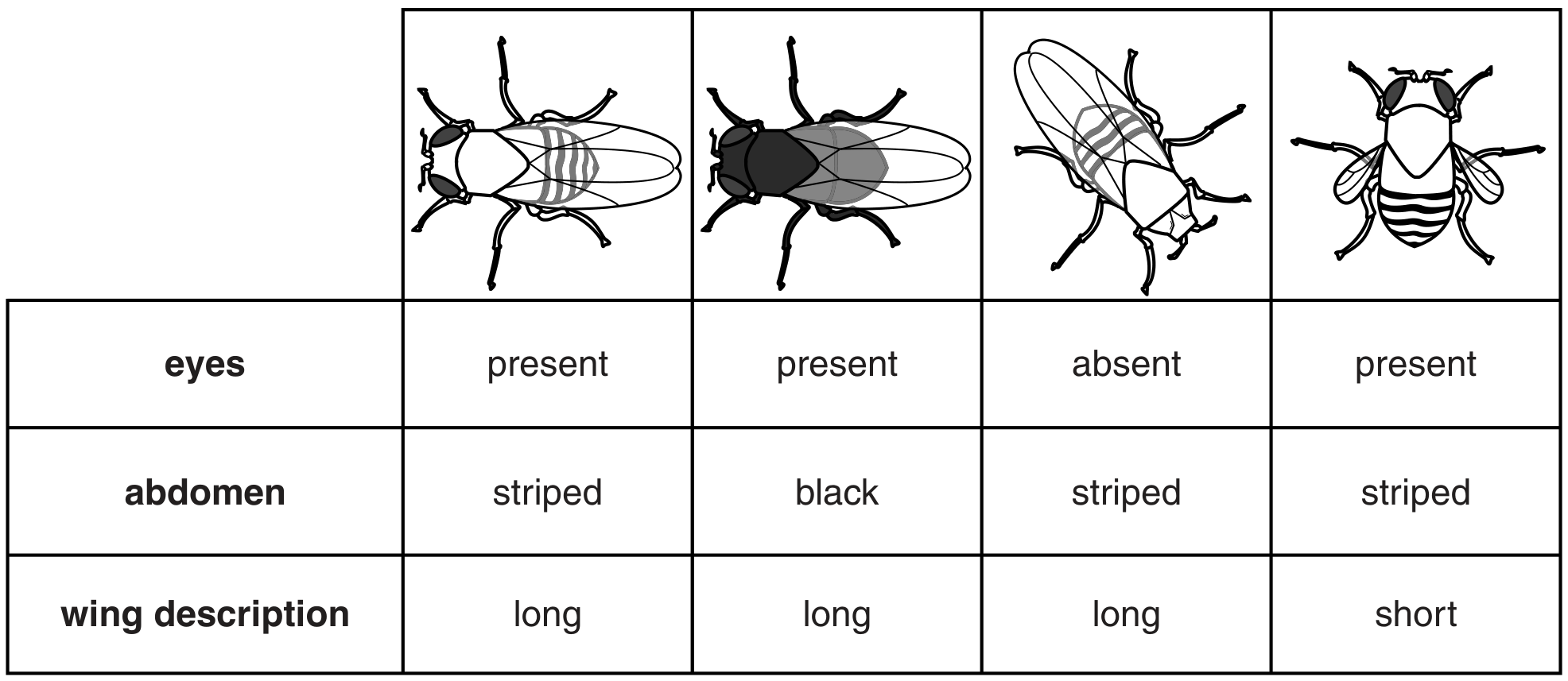
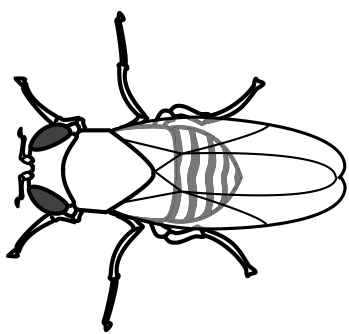
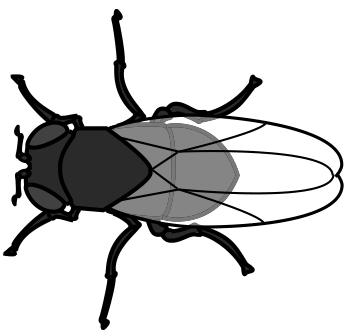
The fruit fly, Drosophila melanogaster, has eyes, a striped abdomen and wings longer than its abdomen. This is called a 'wild-type' fly.

Mutation has resulted in many variations of these features.
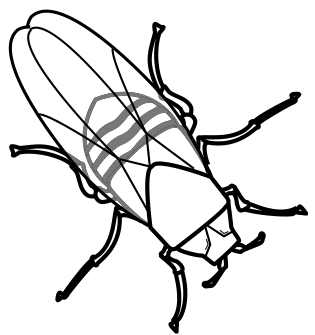
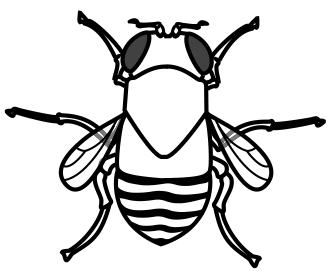
Table 6.1 shows diagrams of a wild-type fly and three other flies, each of which shows one recessive mutation.

Table 6.1

Table 6.1

Question image
Question image
Question image
Question image
(a)

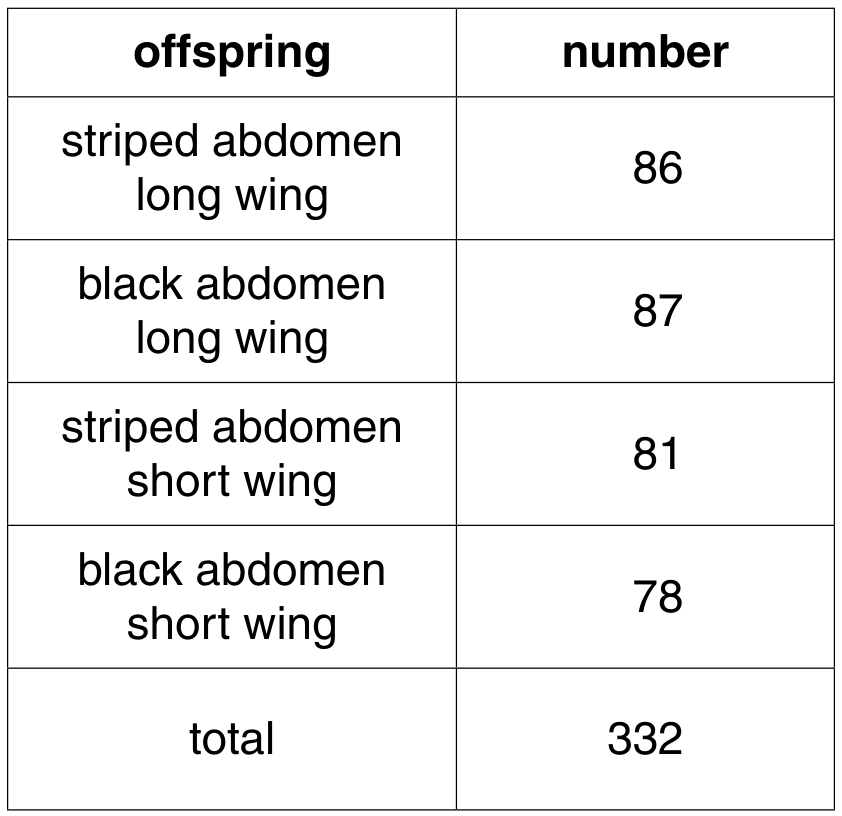
A cross was carried out between a fly heterozygous for striped abdomen and long wings and a fly with a black abdomen and short wings.

The results are shown below in Table 6.2.

Table 6.2

Table 6.2

A chi-squared test (χ2)\left(\chi^{2}\right) was carried out on these data.
Complete Table 6.3 and calculate the value of χ2\chi^{2}.

Table 6.3

Table 6.3

χ2=(OE)2E\chi^{2}=\sum \frac{(O-E)^{2}}{E}

Σ=\boldsymbol{\Sigma}= sum of...
χ2\chi^{2}

[ 5 ]
(b)

Table 6.4 shows χ2\chi^{2} values.

Table 6.4

Table 6.4

Using Table 6.4, explain what conclusions can be made about the results of the χ2\chi^{2} test.

[ 2 ]
[Maximum number: 2]

Domestic rabbits vary in the length and colour of their fur.
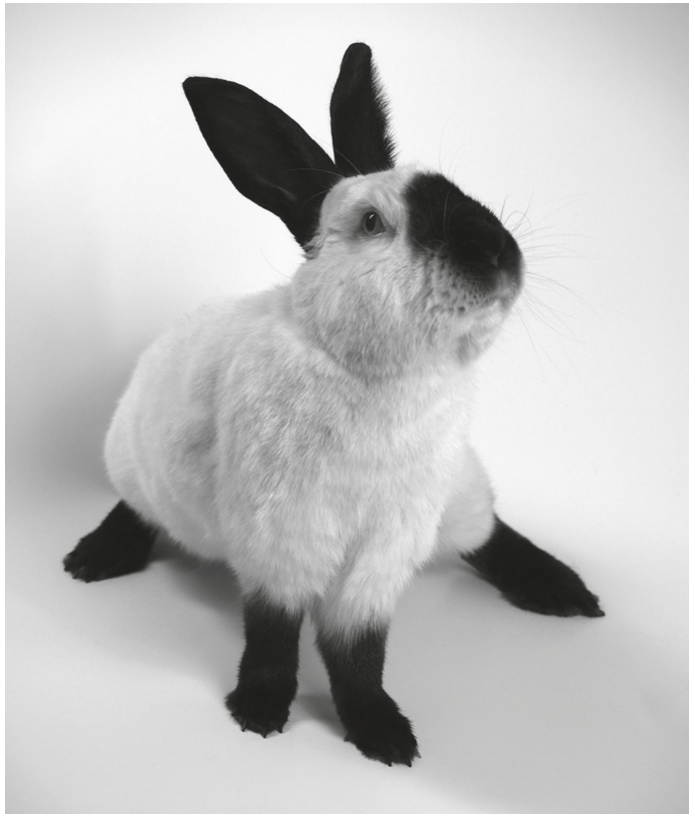
Fig. 6.1 shows a domestic rabbit with short fur and a fur colour pattern called Himalayan.

Fig. 6.1

Fig. 6.1

The two genes that determine the length and colour of the fur of this rabbit occur at the A / a locus and the B/bh/b\mathbf{B} / \mathbf{b}^{\mathbf{h}} / \mathbf{b} locus. These two gene loci are on separate chromosomes.
- The allele A results in short fur.
- The allele a results in long fur.
- A is dominant to a.
- The allele B results in black fur all over the body.
- The allele bh\mathbf{b}^{\mathbf{h}} results in black fur on the nose, ears, paws and tail of the rabbit, and white fur on the rest of the body (Himalayan pattern).
- The allele b results in white fur all over the body (albino).
- B is dominant to bh\mathbf{b}^{\mathbf{h}} and bh\mathbf{b}^{\mathbf{h}} is dominant to b.

(a)

A rabbit breeder performed multiple crosses of the type described in (b). This gave enough data to test the prediction that the genes for fur length and fur colour show independent assortment.

[ 2 ]
(i)

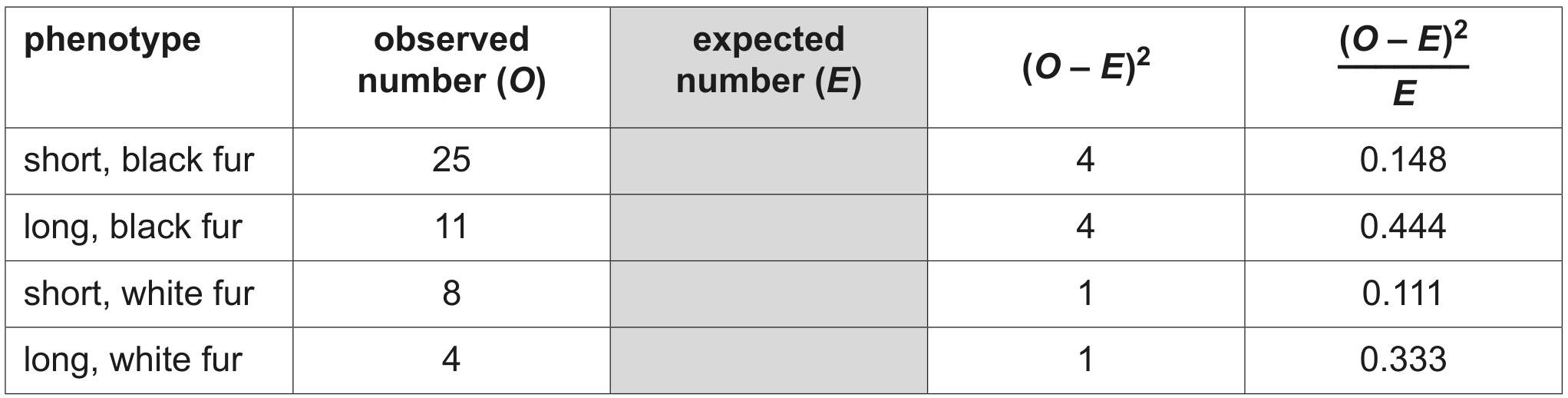
The rabbit breeder placed the results in a table and started to calculate the χ2\chi^{2} value.

Table 6.1

Table 6.1

Calculate the expected numbers and write them in the shaded column in Table 6.1.

[ 1 ]
(ii)

Use the formula provided and the figures in Table 6.1 to calculate the χ2\chi^{2} value.

χ2=Σ(OE)2Eχ2=\begin{array}{r} \chi^{2}=\Sigma \frac{(O-E)^{2}}{E} \\ \chi^{2}= \end{array}
[ 1 ]
0