(a)
The lower epidermis contains stomata.
[ 1 ]
(i)
State one structural difference between a guard cell and other lower epidermal cells.
[ 1 ]
 EduNinja
The lower epidermis contains stomata.
State one structural difference between a guard cell and other lower epidermal cells.
The lower epidermis contains stomata.
State one structural difference between a guard cell and other lower epidermal cells.
Fig. 4.1 shows a diagram of a stoma, its guard cells and adjacent epidermal cells.
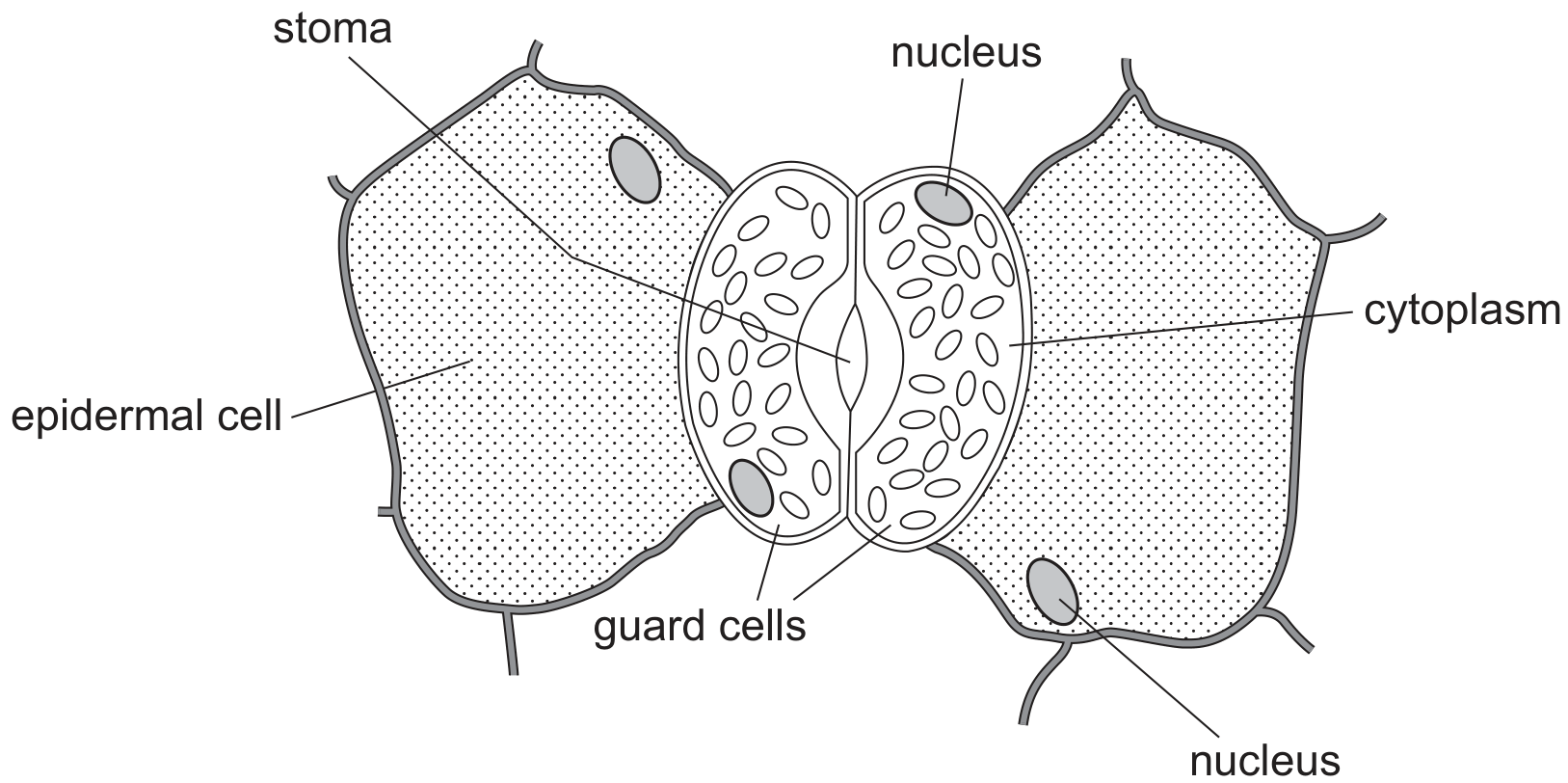
Fig. 4.1
Guard cells have chloroplasts while epidermal cells do not have chloroplasts.
State one other difference, visible in Fig. 4.1, between guard cells and epidermal cells.
During stomatal closure:
describe the change in volume of the guard cells.
Describe the mechanism occurring in guard cells that leads to the opening of a stoma.
Describe and explain the mechanism by which guard cells open stomata.
Explain the mechanism by which guard cells open stomata.
Stomata are involved in both transpiration and photosynthesis in plants.
Fig. 9.1 is a diagram of an open stoma, its guard cells and surrounding epidermal cells.
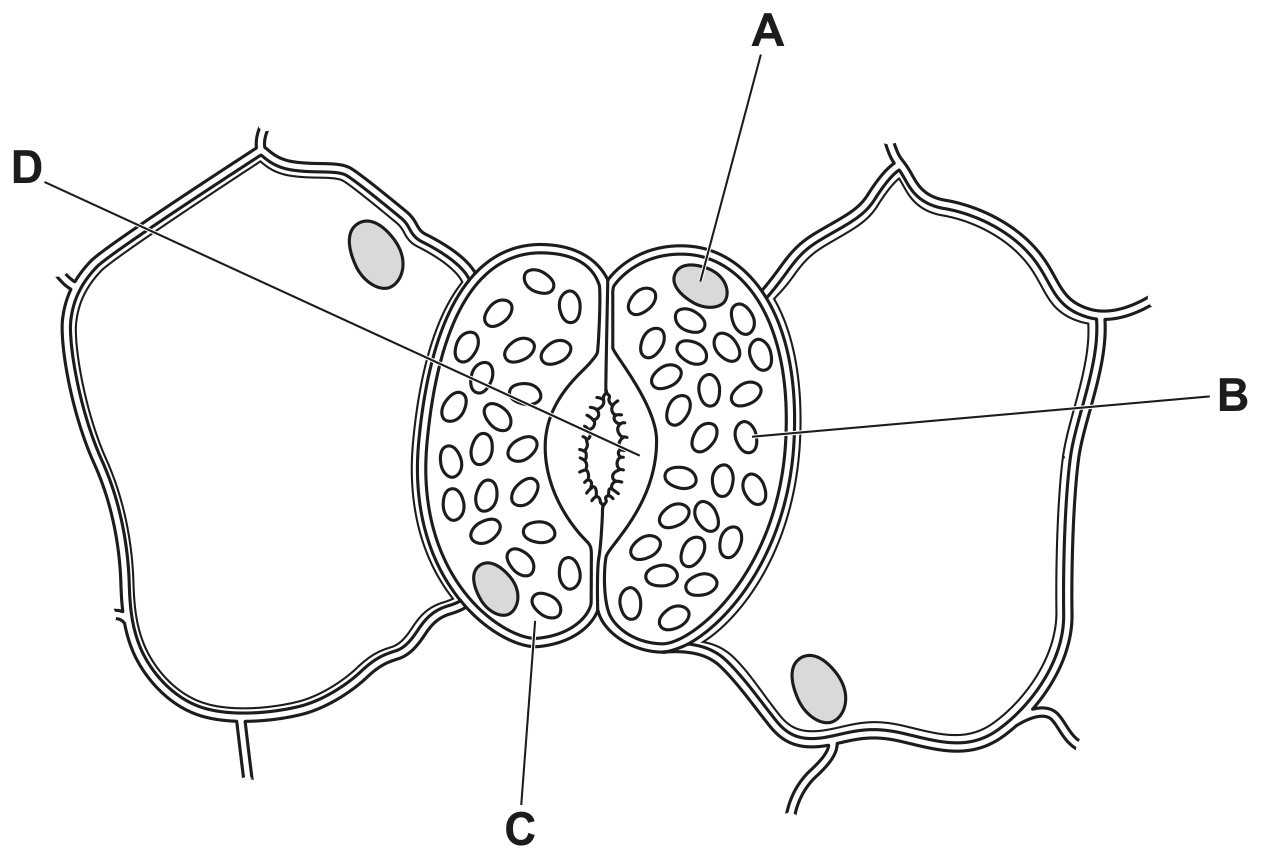
Fig. 9.1
Complete Table 9.1 by choosing the correct letter from Fig. 9.1 to match the feature stated in Table 9.1.
Each letter may be used once, more than once or not at all.
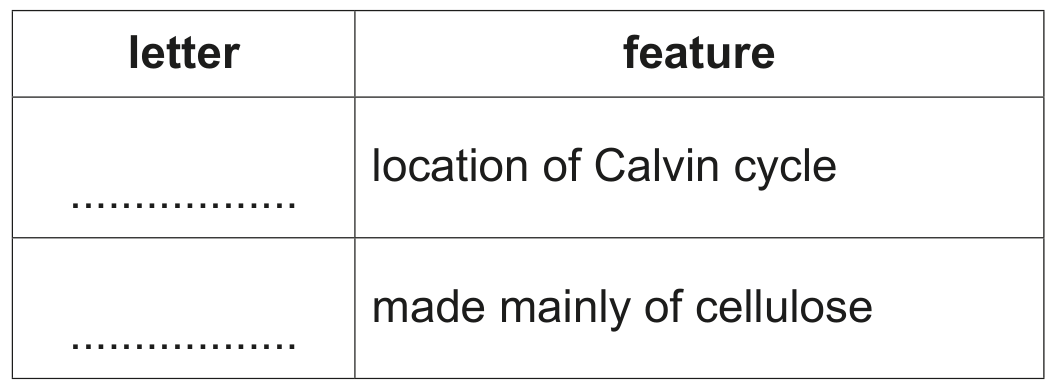
Table 9.1
Fig. 8.1 shows a diagram of a stoma, its guard cells and adjacent epidermal cells.
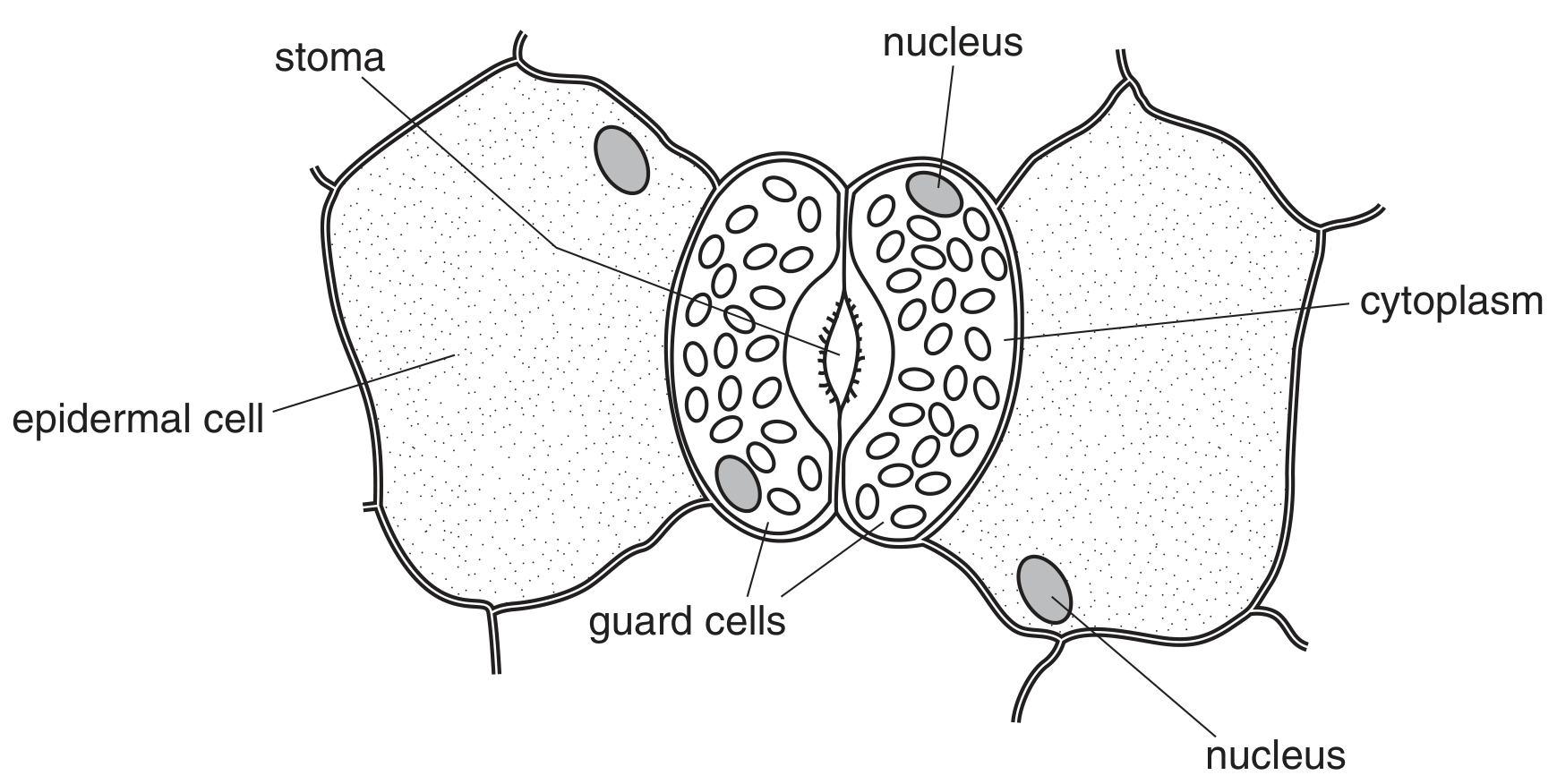
Fig. 8.1
Guard cells have chloroplasts while epidermal cells do not have chloroplasts.
State one other difference, visible in Fig. 8.1, between guard cells and epidermal cells.
Fig. 10.1 shows the structure of two guard cells.
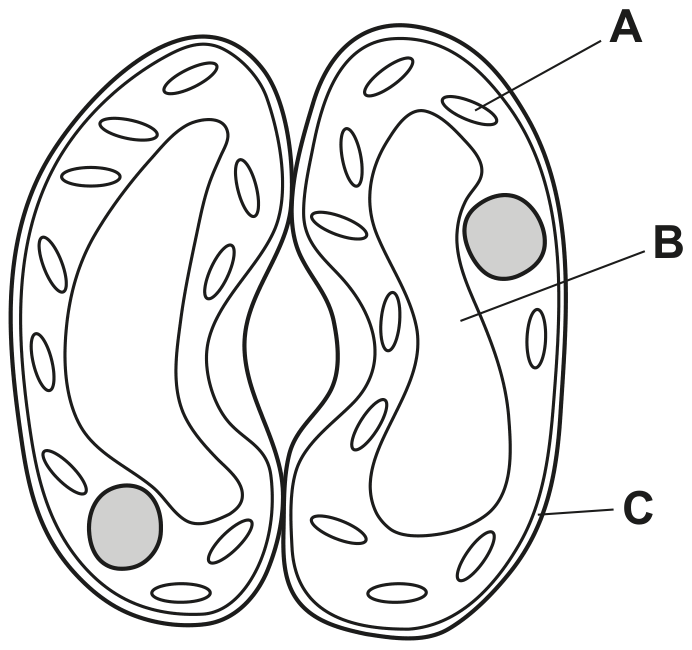
Fig. 10.1
Name the structures labelled A, B and C in Fig. 10.1.
A
B
C