(a)
All organisms respire. The ATP produced as a result of respiration is used as the energy currency of the cell.
[ 2 ]
(i)
Name the stages in which chemiosmosis occurs in respiration and in photosynthesis.
respiration
photosynthesis
[ 2 ]
 EduNinja
All organisms respire. The ATP produced as a result of respiration is used as the energy currency of the cell.
Name the stages in which chemiosmosis occurs in respiration and in photosynthesis.
respiration
photosynthesis
Which of these processes will require ATP?
1 transport of water in the xylem
2 semi-conservative replication of DNA
3 facilitated diffusion of amino acids into the cell
1, 2 and 3
1 and 2 only
2 and 3 only
2 only
In which of these organelles is ATP synthesised?
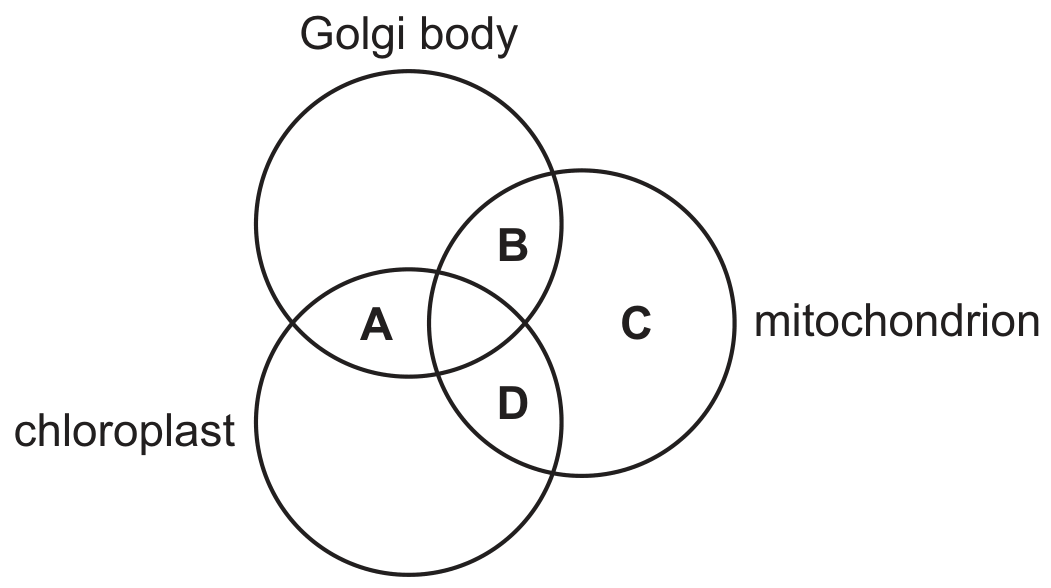
Respiration is a process that results in the synthesis of ATP. The ATP can be used within the cell for energy-requiring reactions and processes.
There are four stages in aerobic respiration: glycolysis, the link reaction, the Krebs cycle and oxidative phosphorylation.
Chemiosmosis is a process that occurs in mitochondria during aerobic respiration and in chloroplasts during photosynthesis.
Describe the differences between the process of chemiosmosis in mitochondria and the process of chemiosmosis in chloroplasts.
ATP is synthesised from ADP and in a phosphorylation reaction.
State the two different ways in which this phosphorylation reaction occurs in aerobic respiration.
Within a mammalian cell, ATP can be produced in a number of ways, including:
- substrate level phosphorylation during the Krebs cycle
- oxidative phosphorylation.
Table 7.1 compares both processes.
Complete Table 7.1.
Use a tick if the statement is correct or a cross (x) if the statement is incorrect. The first row has been done for you.
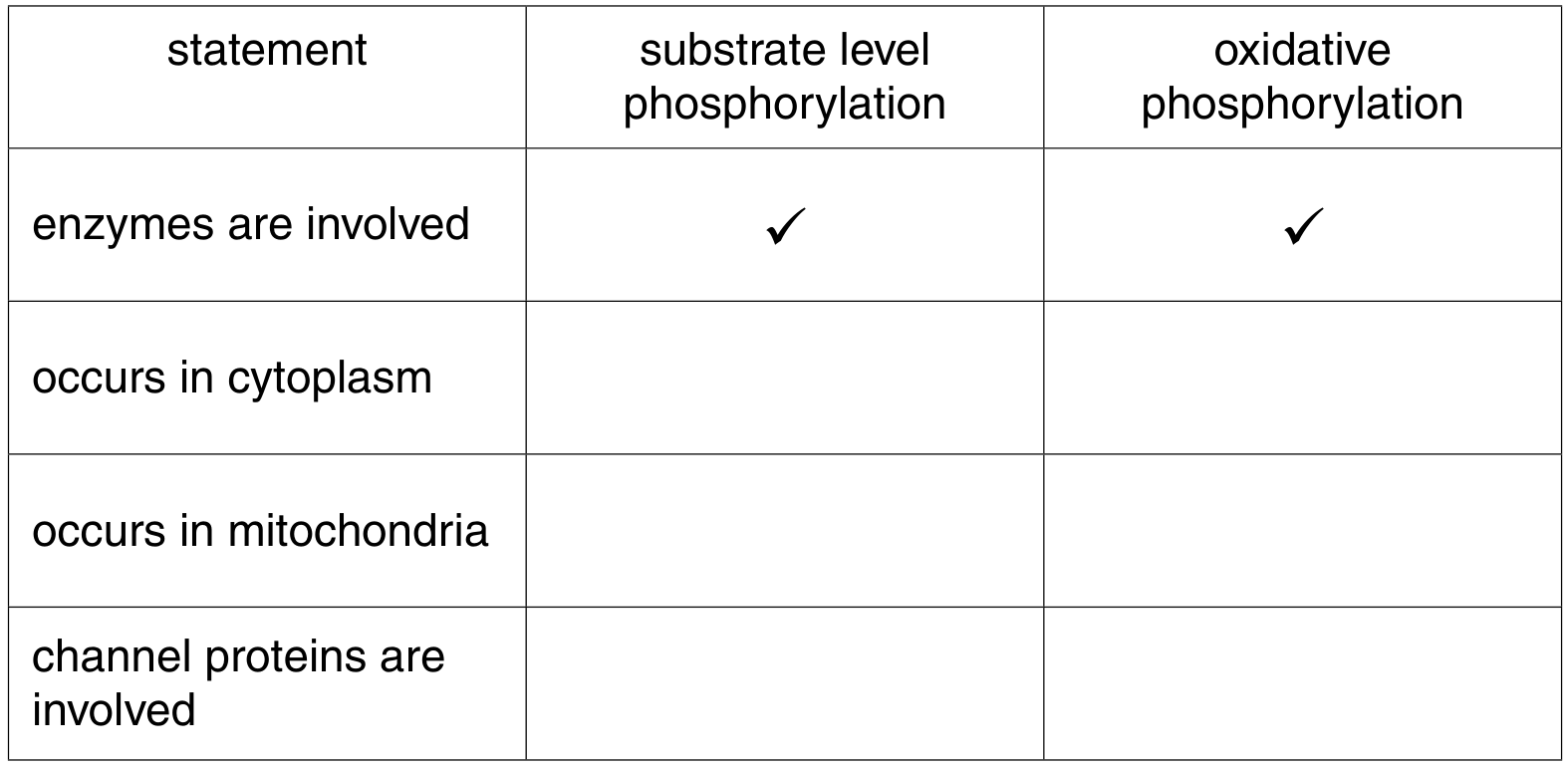
Table 7.1
ATP can be converted to ADP and inorganic phosphate by the enzyme ATPase. State the type of reaction taking place.
In respiration, most ATP is synthesised during oxidative phosphorylation. Some ATP is made by substrate-linked reactions in glycolysis and Krebs cycle.
Describe how ATP is made by substrate-linked reactions.