(a)
Describe and explain the features of ATP that make it suitable as the universal energy currency.
[ 4 ]
 EduNinja
Describe and explain the features of ATP that make it suitable as the universal energy currency.
Which statements about ATP are correct?
1 It is produced in mitochondria only.
2 It can be hydrolysed to form ADP.
3 It contains deoxyribose.
1 and 3
1 only
2 and 3
2 only
All organisms respire. The ATP produced as a result of respiration is used as the energy currency of the cell.
ATP cannot be stored in cells so it has to be continually re-synthesised to meet the demands of an organism.
A person with a total quantity of 0.2 moles of ATP needs to hydrolyse 150 moles of ATP per day.
Calculate how many times the total quantity of 0.2 moles of ATP has to be re-synthesised per hour to meet the demand of 150 moles per day.
Show your working and give your answer to the nearest whole number.
answer =
The components of a molecule of ATP (adenosine triphosphate) are shown in Fig. 3.1.
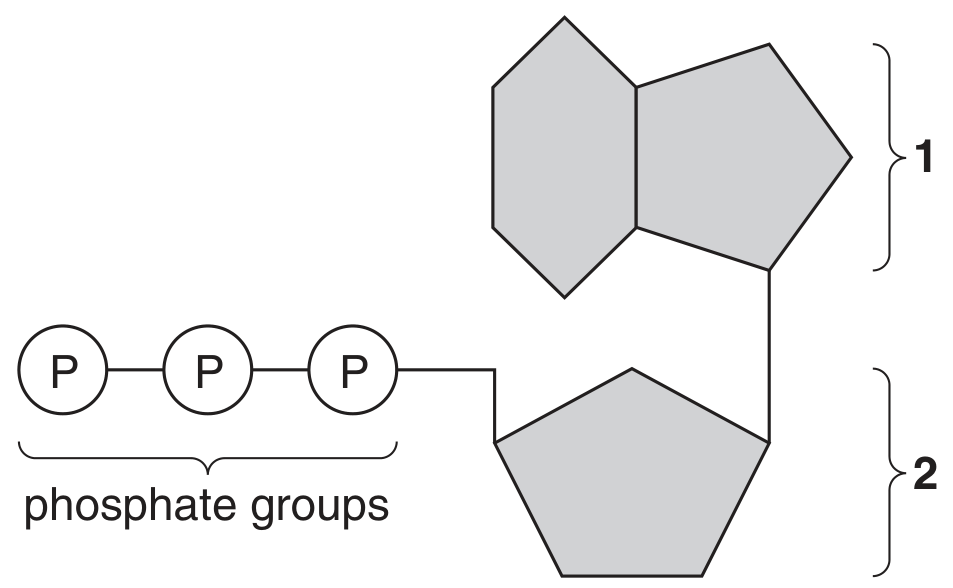
Fig. 3.1
With reference to Fig. 3.1, name components 1 and 2.
1
2
Describe the consequences for the cell of the following statements.
- Each cell has only a very small quantity of ATP in it at any one time.
- The molecules, ATP, ADP (adenosine diphosphate) or AMP (adenosine monophosphate) rarely pass through the cell surface membrane.
Fig. 3.1 is a transmission electron micrograph showing two adjacent cells in a leaf.
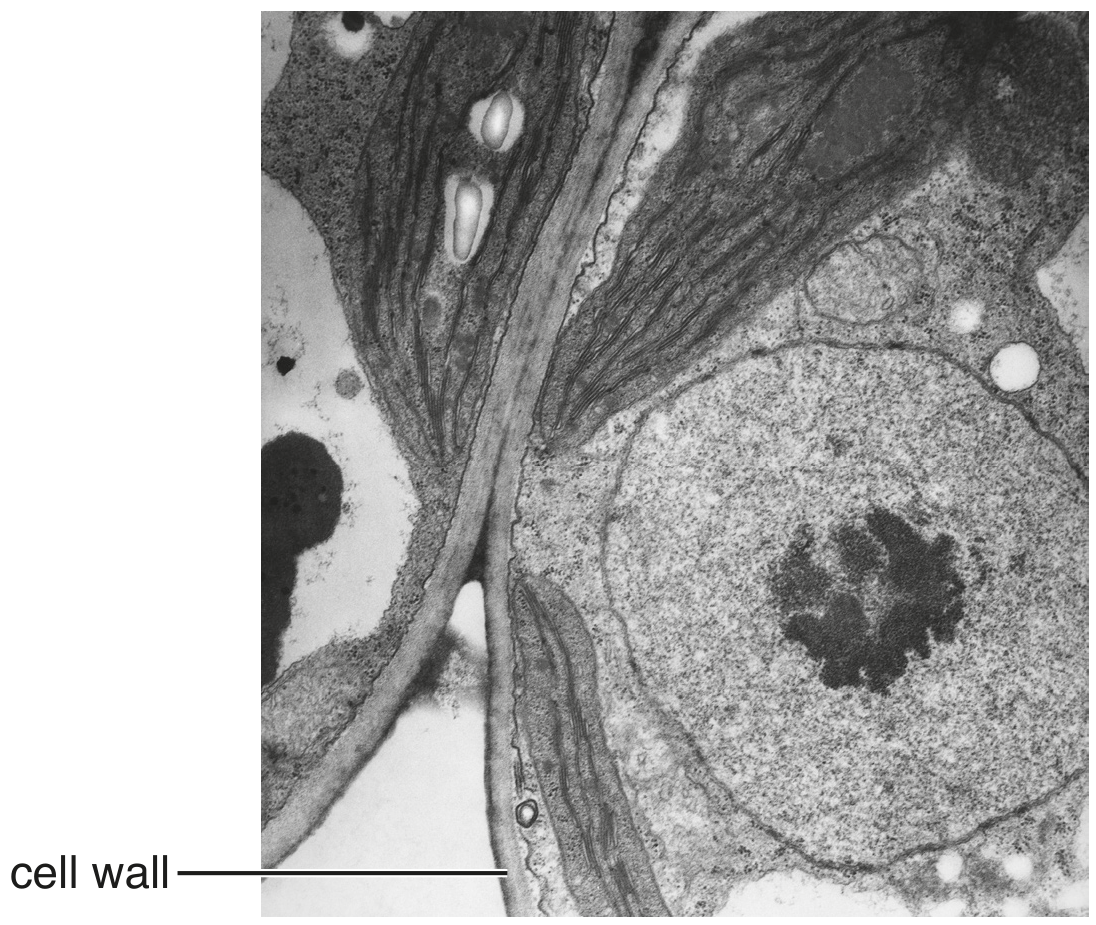
Fig. 3.1
Outline the role of ATP in a leaf cell.
Water is a main component of plant cells.
Which observations support a link between active transport and ATP production?
1 Active transport occurs only in living cells.
2 The rate of active transport decreases in low oxygen concentrations.
3 Companion cells have large numbers of mitochondria.
1, 2 and 3
1 and 2 only
2 and 3 only
3 only
Fig. 4.1 is a diagram of ATP.
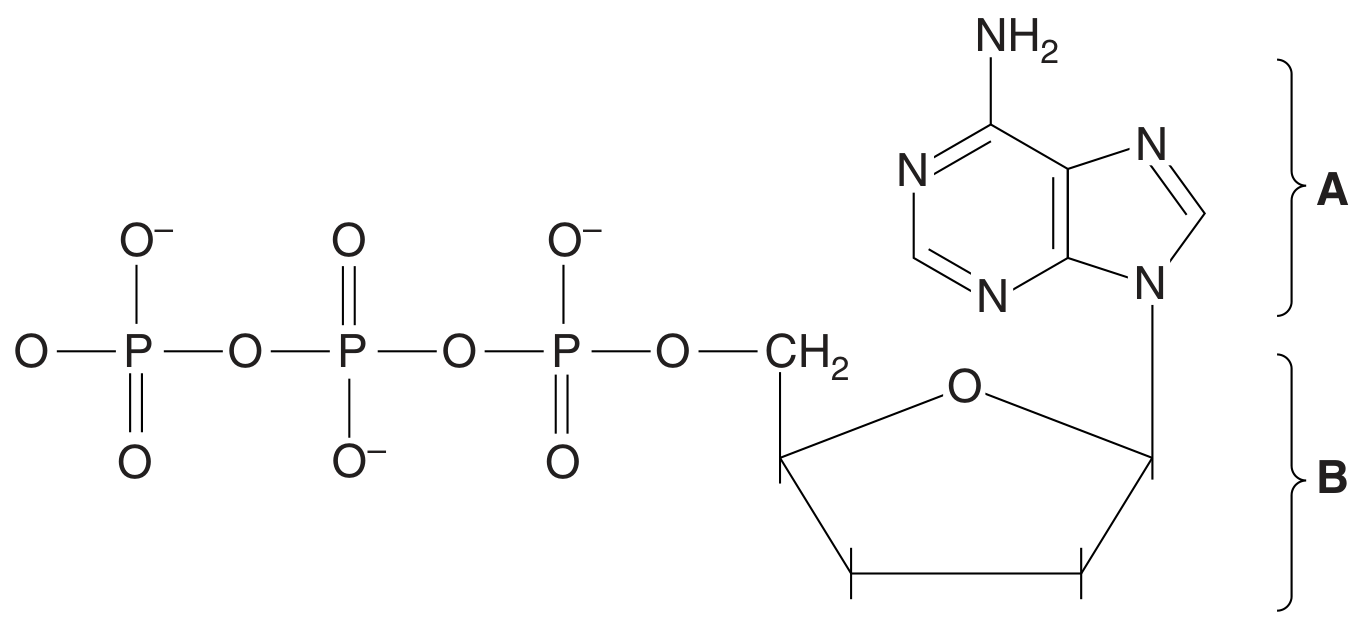
Fig. 4.1
Name A and B.
A
B
Describe how the structure of ATP is related to its role as energy currency.
The diagram represents a molecule of ATP.
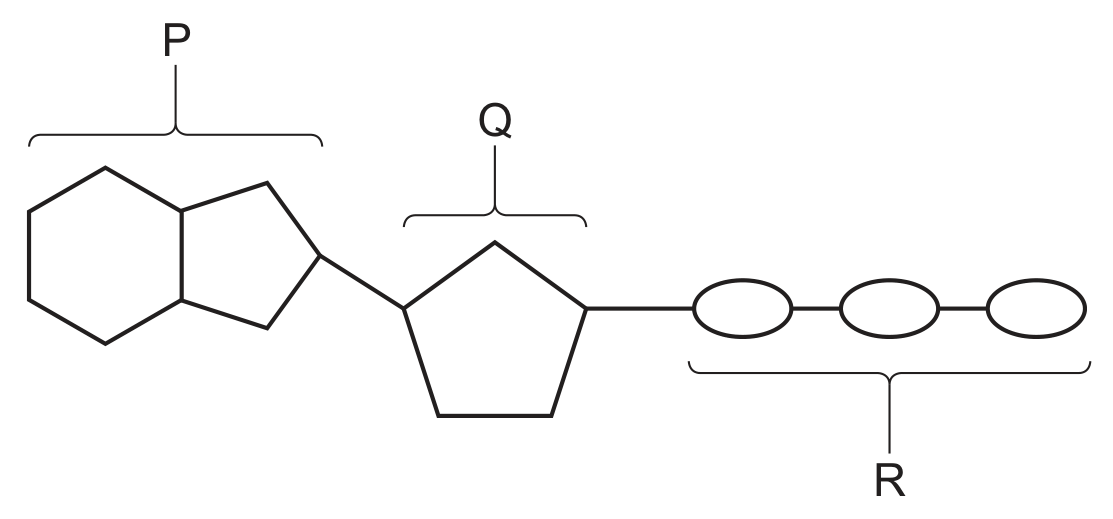
What are the components of ATP labelled P, Q and R ?
P
Q
R
adenine
deoxyribose
phosphates
adenosine
pentose
a phosphate group
adenosine
ribose
phosphorus
purine
pentose
phosphates
Fig. 4.1 shows the structure of an ATP molecule.
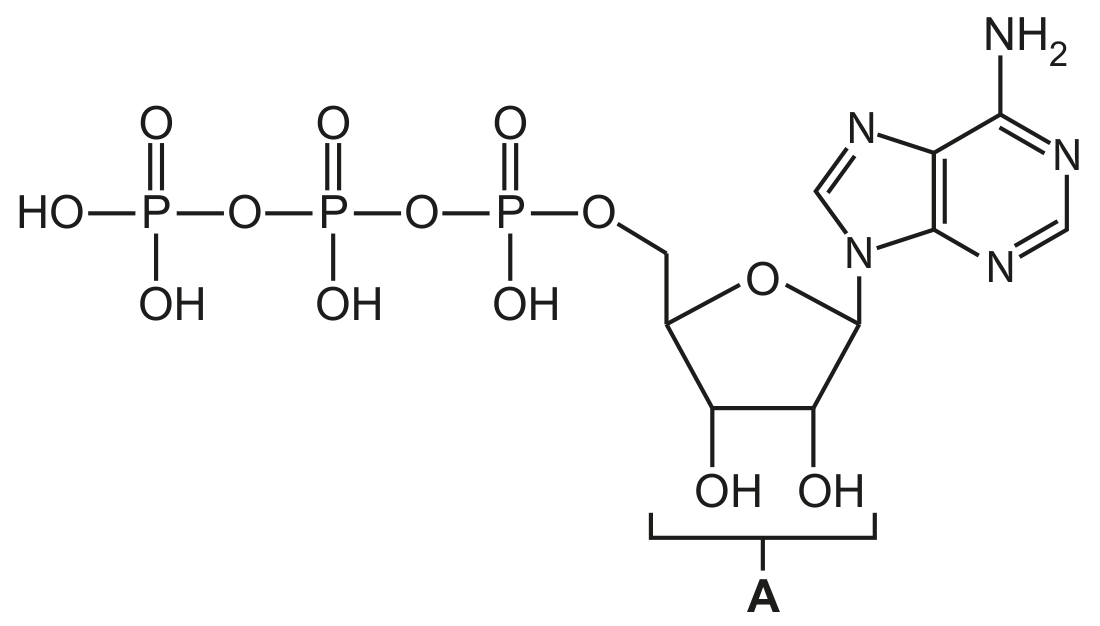
Fig. 4.1
State the name of the part of the ATP molecule labelled A in Fig. 4.1.
ATP is needed for many metabolic processes in living organisms.
Describe the properties of ATP that make it suitable for its role as the universal energy currency.