Q BankQuestion BankDocsDocuments

C4.1.1—Populations

Populations explains how ecological evidence links organisms, resources and interactions to population size, distribution or community structure in a habitat.

Syllabus
First assessment 2025
Objective
C4.1.1
Level
SL

Exam analysis

Chance of appearing4%of analysed past papers
Latest appearanceMay 2015
Most common paperPaper1
Typical marks1

Common command terms

  • Identify
  • Explain
  • State

Scoring notes

Common mistake
Confusing a population with a community or with all organisms in an ecosystem.

Recent exam appearances

May 2015Paper1 ["SL"] · TZ118[ 1 ]C4.1.1—Populations
November 2013Paper1 ["SL"] · TZ017[ 1 ]C4.1.1—Populations
May 2012Paper1 ["SL"] · TZ221[ 1 ]C4.1.1—Populations
May 2012Paper1 ["SL"] · TZ118[ 1 ]C4.1.1—Populations
May 2011Paper1 ["SL"] · TZ120[ 1 ]C4.1.1—Populations
Practice this objective

Coverage 2011–2015 · Updated 16 Jul 2026

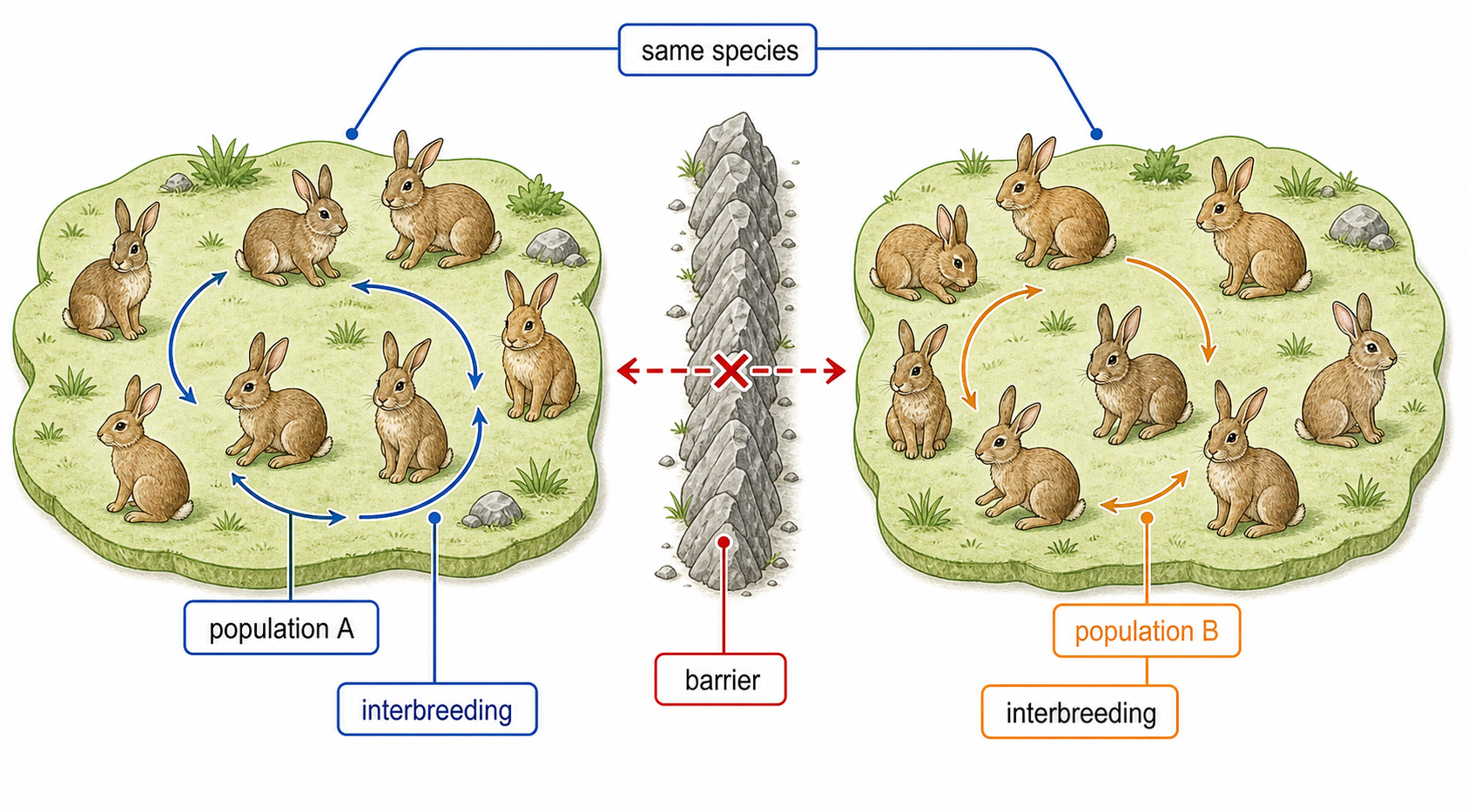
A population is one species in one area

A population is one species in one area.

A population is all individuals of the same species living in a defined area at a defined time. Its size and structure change through births, deaths, immigration and emigration.

state species, boundary and time; identify demographic process; distinguish population from community.

A pond frog population can grow after breeding, shrink during drought and receive newcomers from a connected pond.

A population is not every organism in a habitat; it has a species boundary.

Populations exam focus

Assessment in practice

1 marks
How it is assessed

This objective is assessed through structured response, commonly using Identify / Explain / State.

Command terms

Identify / Explain / State

What earns marks

Build the answer around this relationship: Populations must be linked to the correct ecological unit, method or species interaction.

Watch for

Confusing a population with a community or with all organisms in an ecosystem.

Representative question

Question 1

[Maximum number: 1]

State the biological term for a group of organisms of the same species living in an area.

Populations and Communities

  • A population is one species in an area; a community is all interacting populations there.
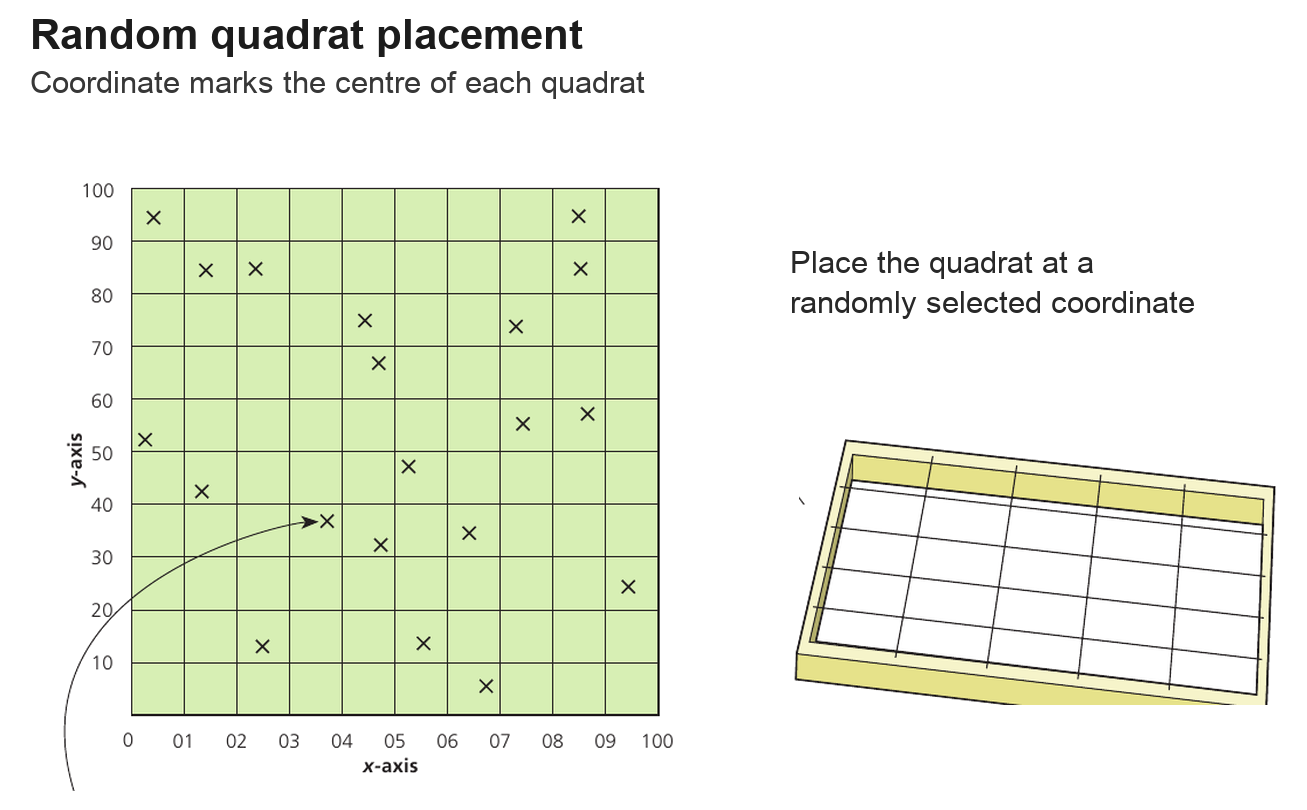
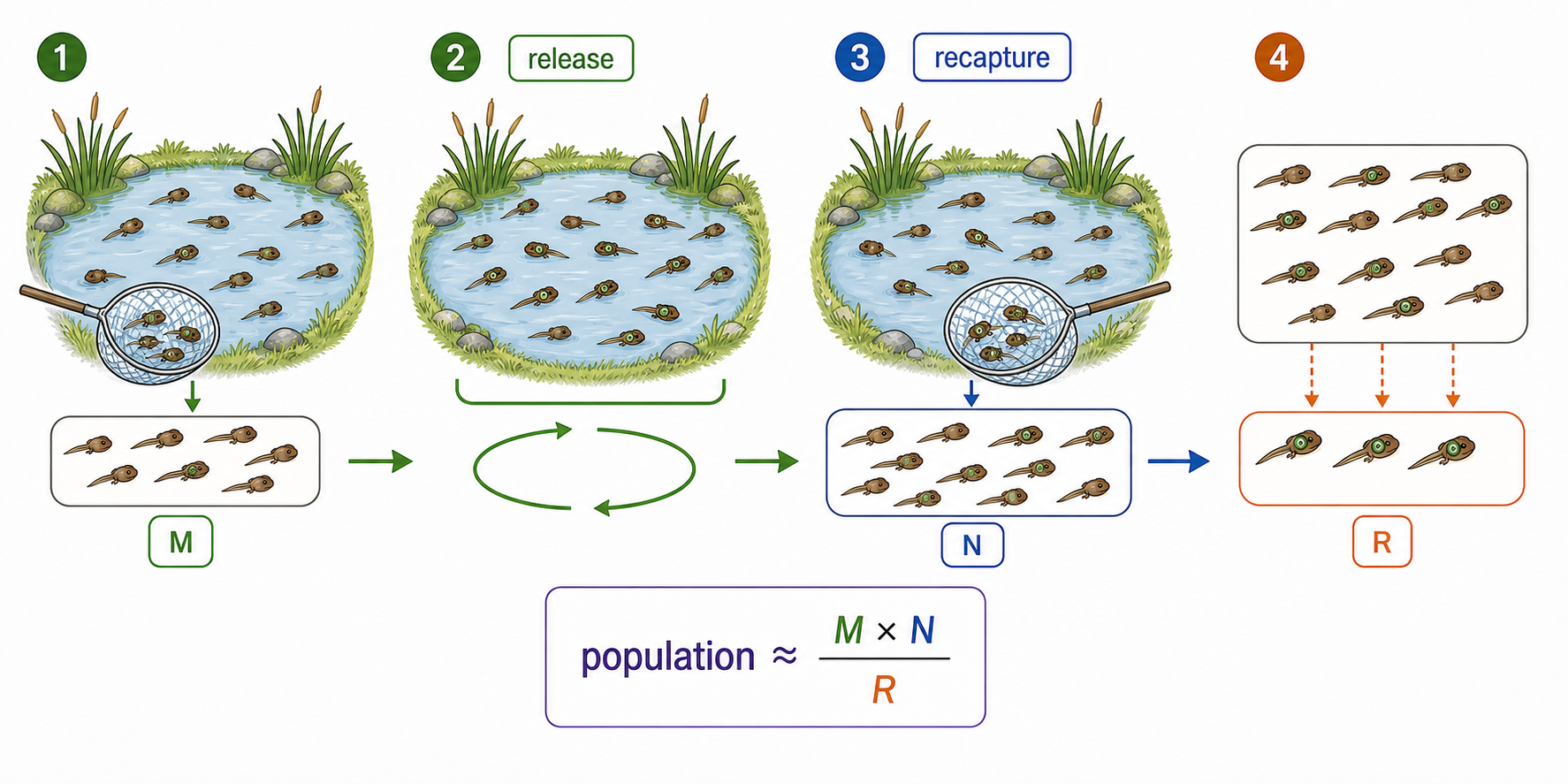
  • Estimate abundance with unbiased sampling: quadrats for sessile organisms and capture–mark–release–recapture for mobile animals, checking each method’s assumptions.
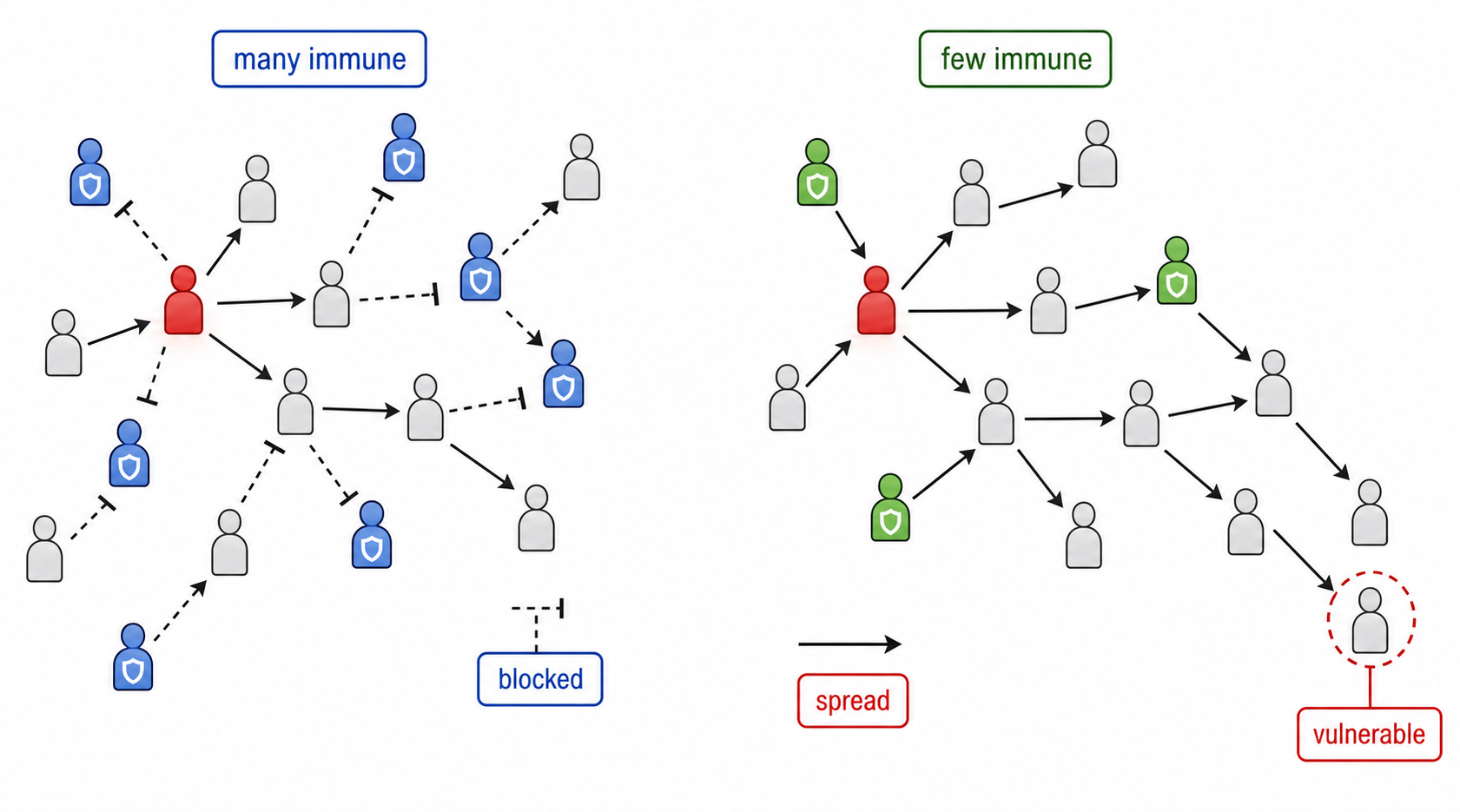
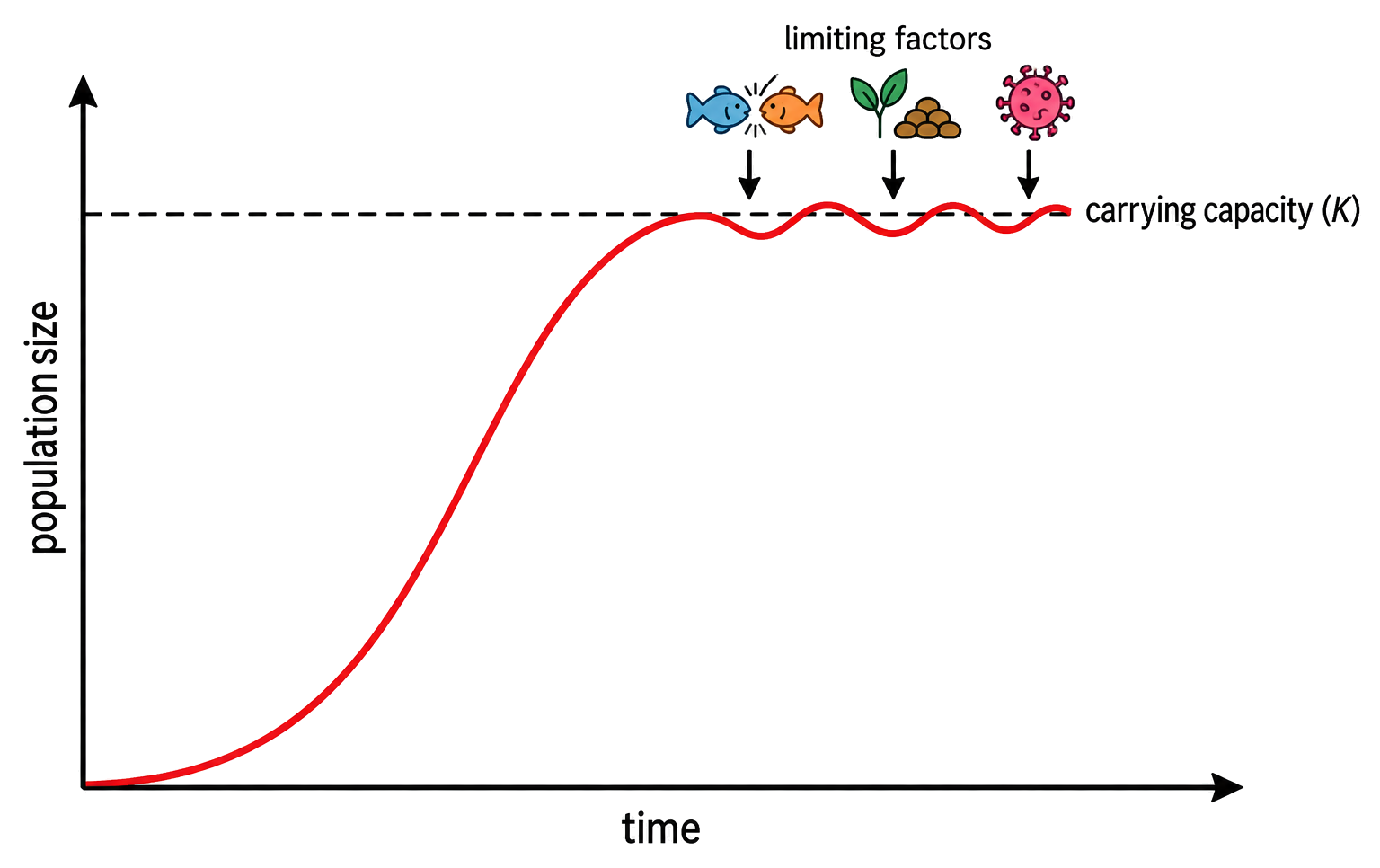
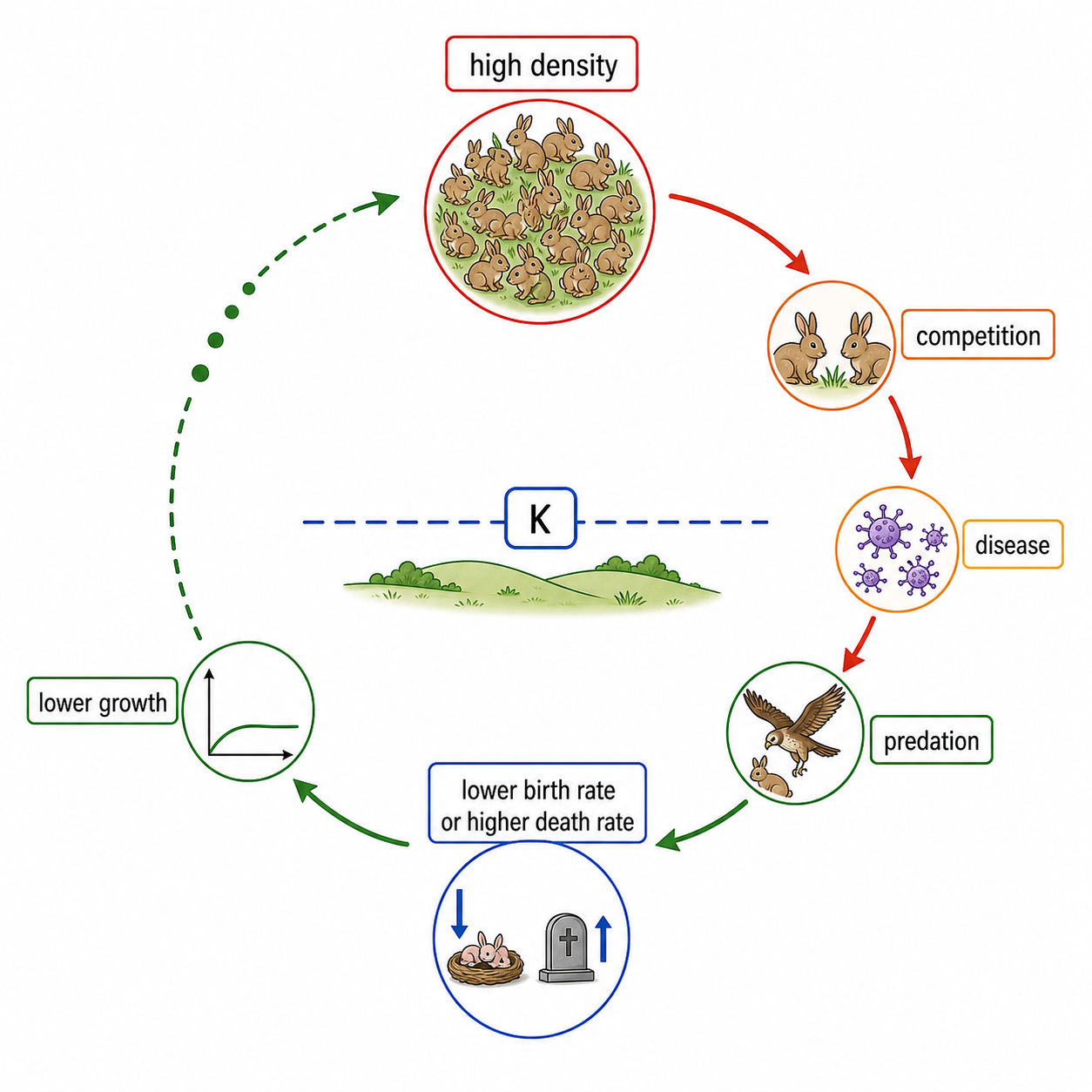
  • Density-dependent competition, predation, disease and waste create negative feedback around carrying capacity; exponential growth slows into a sigmoid curve as limits strengthen.
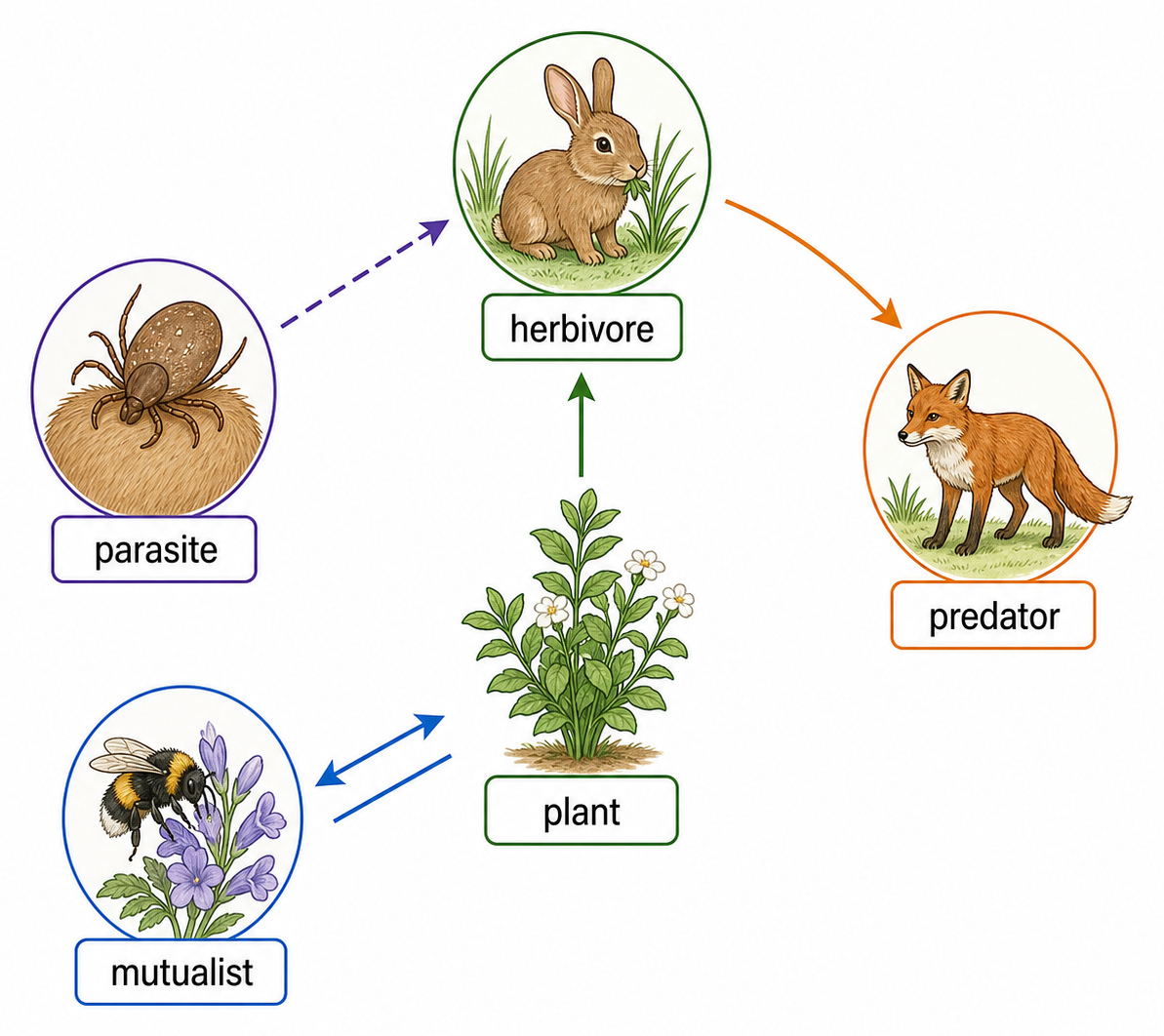
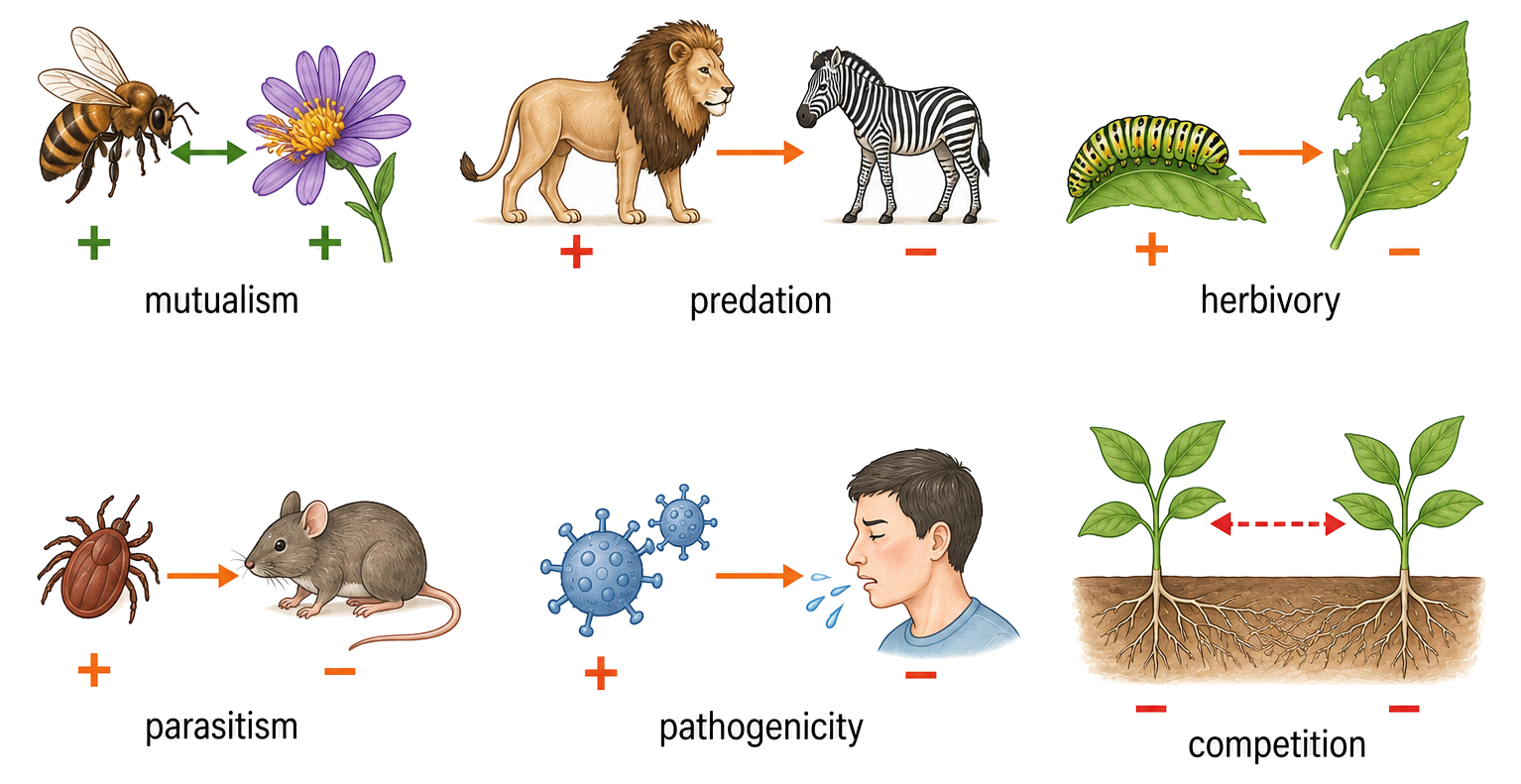
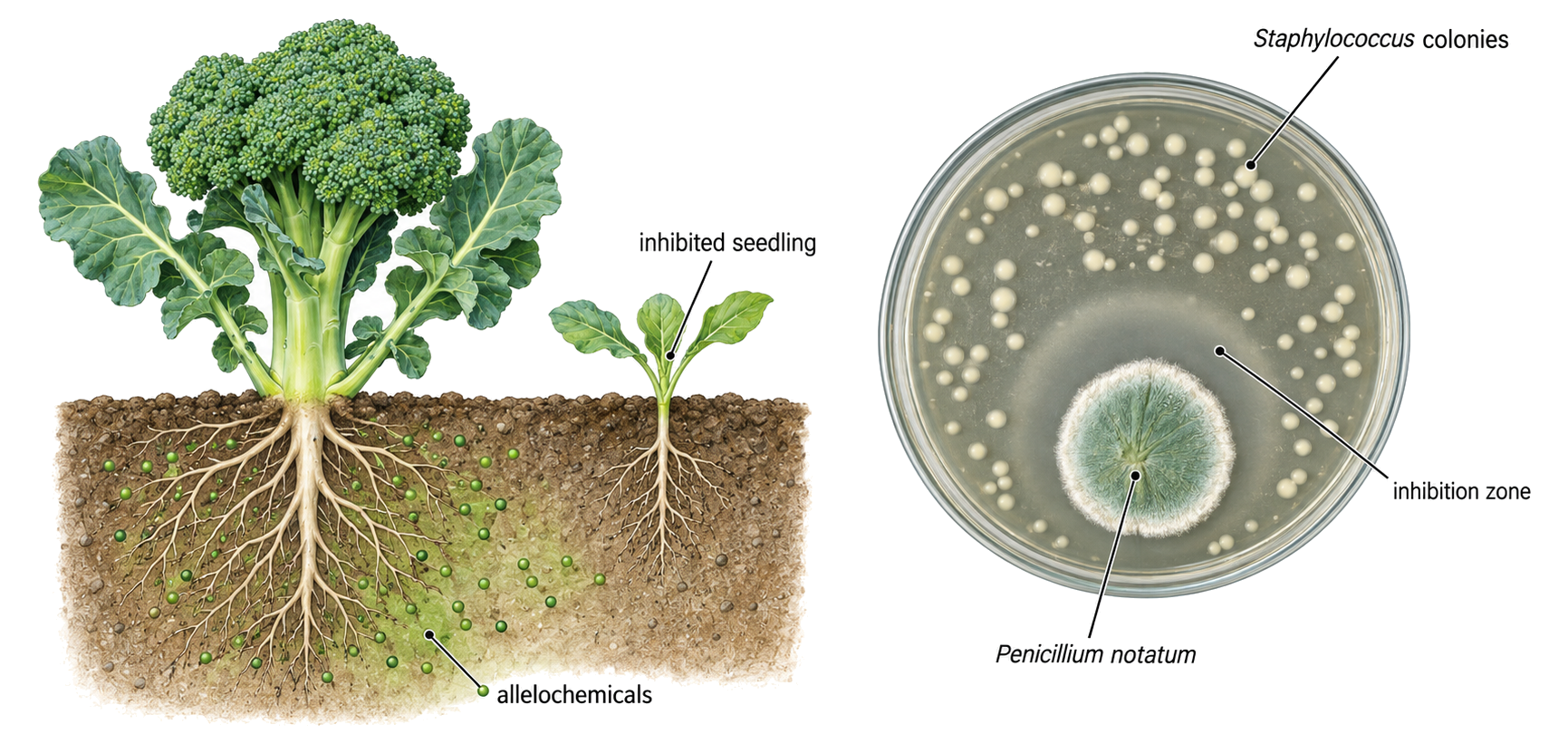
  • Classify interspecific relationships by costs and benefits: predation, herbivory, competition, mutualism, parasitism and pathogenicity.
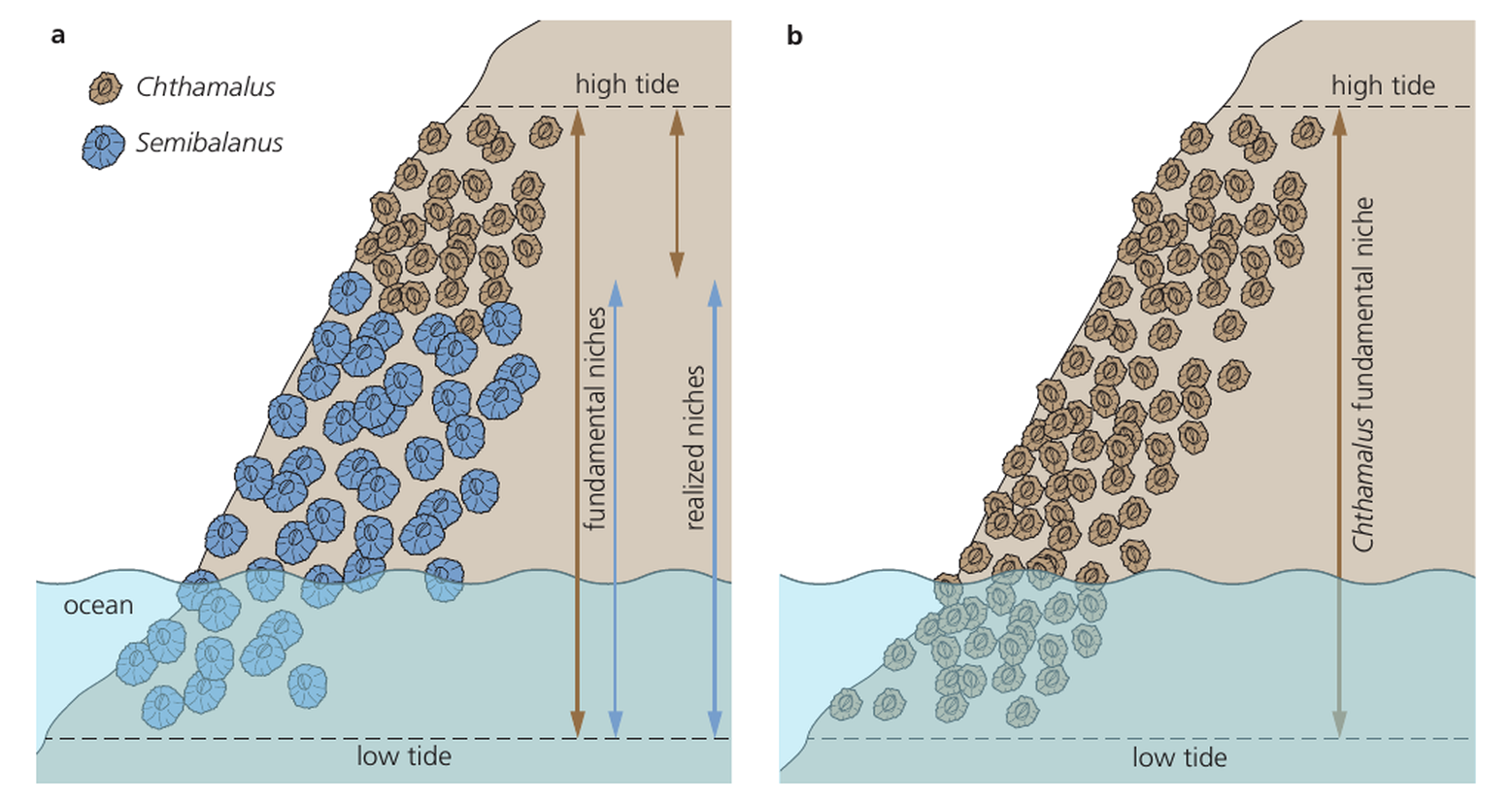
  • Invasive species may escape controls and displace endemic species. Removal experiments can reveal competition and fundamental versus realized niches.
  • Chi-squared tests assess species association from observed and expected quadrat counts.
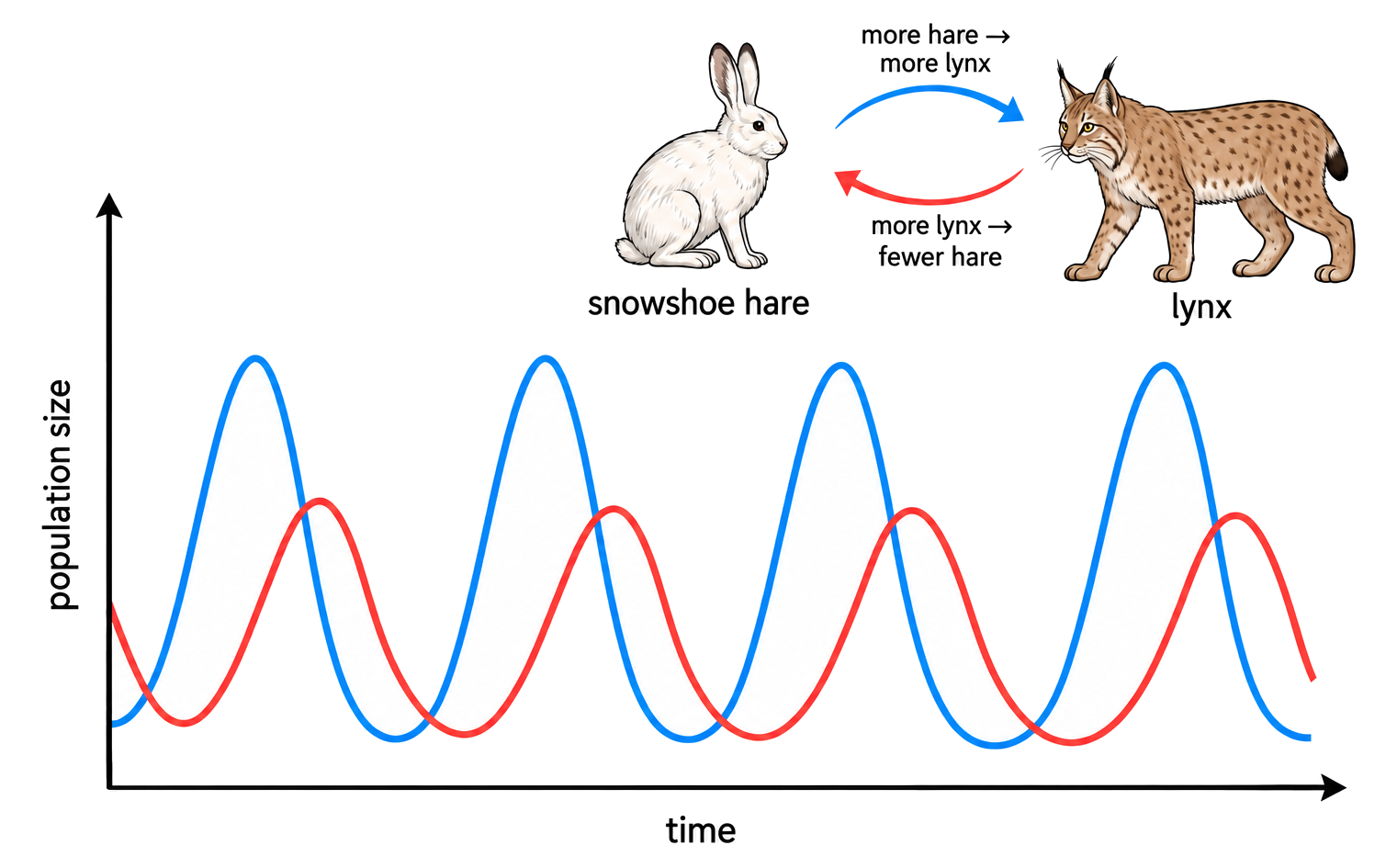
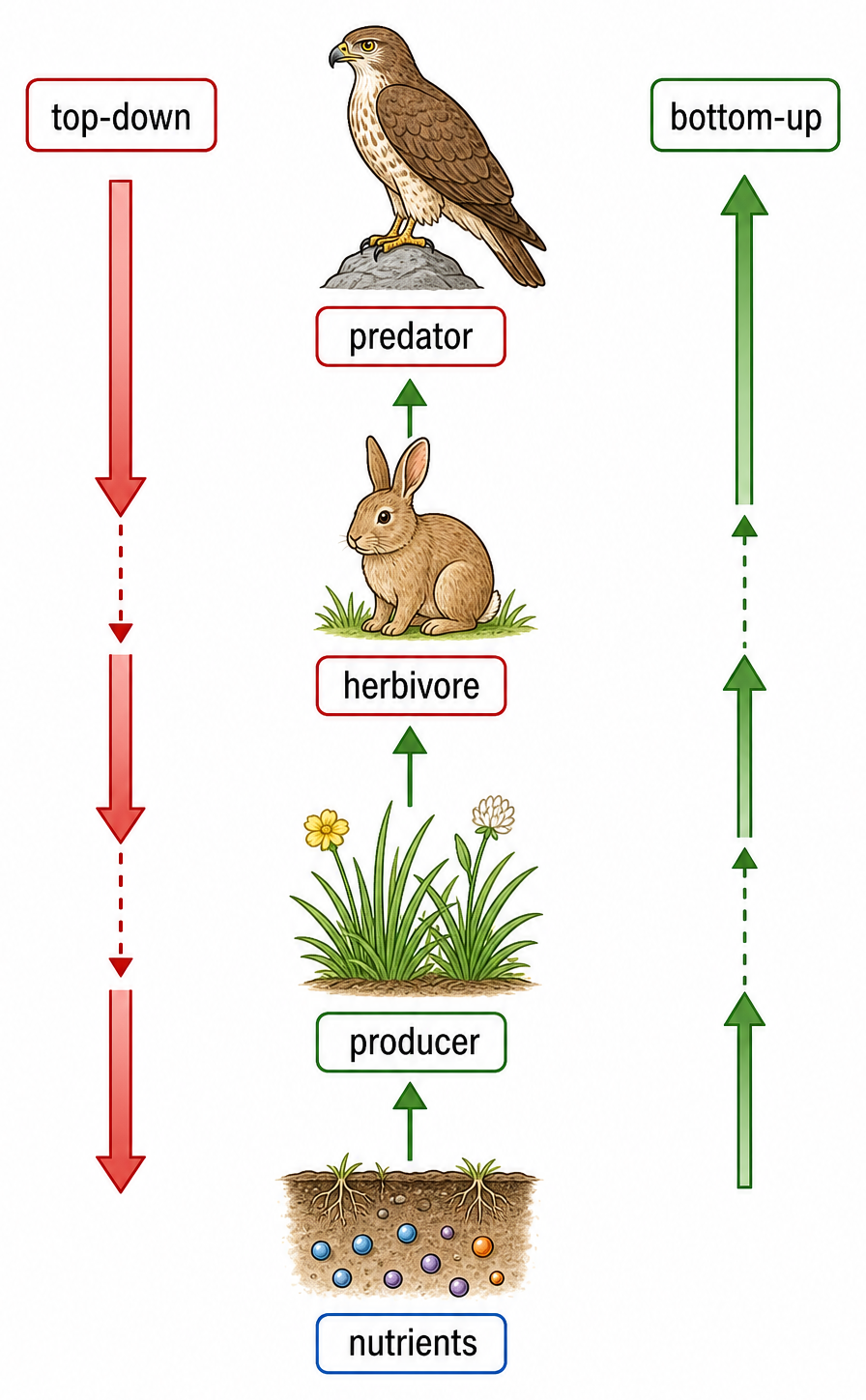
  • Predator peaks usually lag prey peaks; top-down control begins with consumers, while bottom-up control begins with resources or producers.

Concept essentials

  • Populations must be linked to the correct ecological unit, method or species interaction.
  • The evidence for populations depends on measurable abundance, distribution, survival or resource patterns.
  • Populations is clearest when cause, ecological process and population outcome are kept distinct.
  • Field or graph evidence for populations needs biological interpretation, not values alone.
ConceptIB Biology SL