C2.2.11 (HL)—Saltatory conduction

Saltatory conduction is rapid impulse transmission in myelinated axons where action potentials are regenerated at nodes of Ranvier, linking cellular mechanisms to rapid communication in nervous systems.
Syllabus
First assessment 2025
Objective
C2.2.11
Level
HL

Exam analysis

Chance of appearing4%of analysed past papers
Latest appearanceNovember 2025
Most common paperPaper1
Typical marks1–3

Common command terms

  • Outline
  • Explain

Recent exam appearances

November 2025Paper1B ["HL"] · TZ13(d)[ 3 ]C2.2.11 (HL)—Saltatory conduction
May 2022Paper1 ["HL"] · TZ124[ 1 ]C2.2.11 (HL)—Saltatory conduction
May 2021Paper1 ["HL"] · TZ224[ 1 ]C2.2.11 (HL)—Saltatory conduction
May 2017Paper1 ["HL"] · TZ235[ 1 ]C2.2.11 (HL)—Saltatory conduction
Practice this objective

Coverage 2017–2025 · Updated 15 Jul 2026

Myelin Enables Saltatory Conduction

HL only

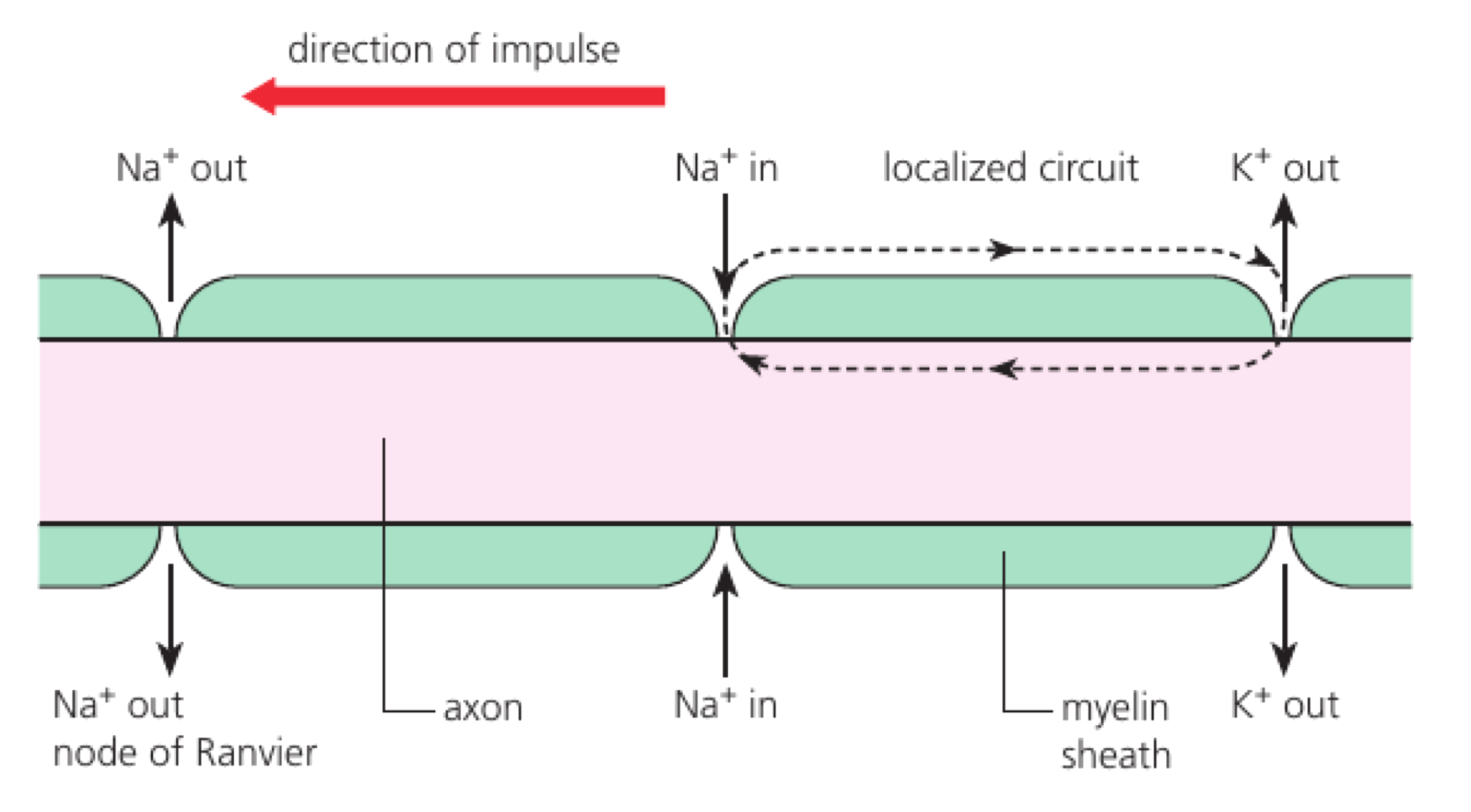
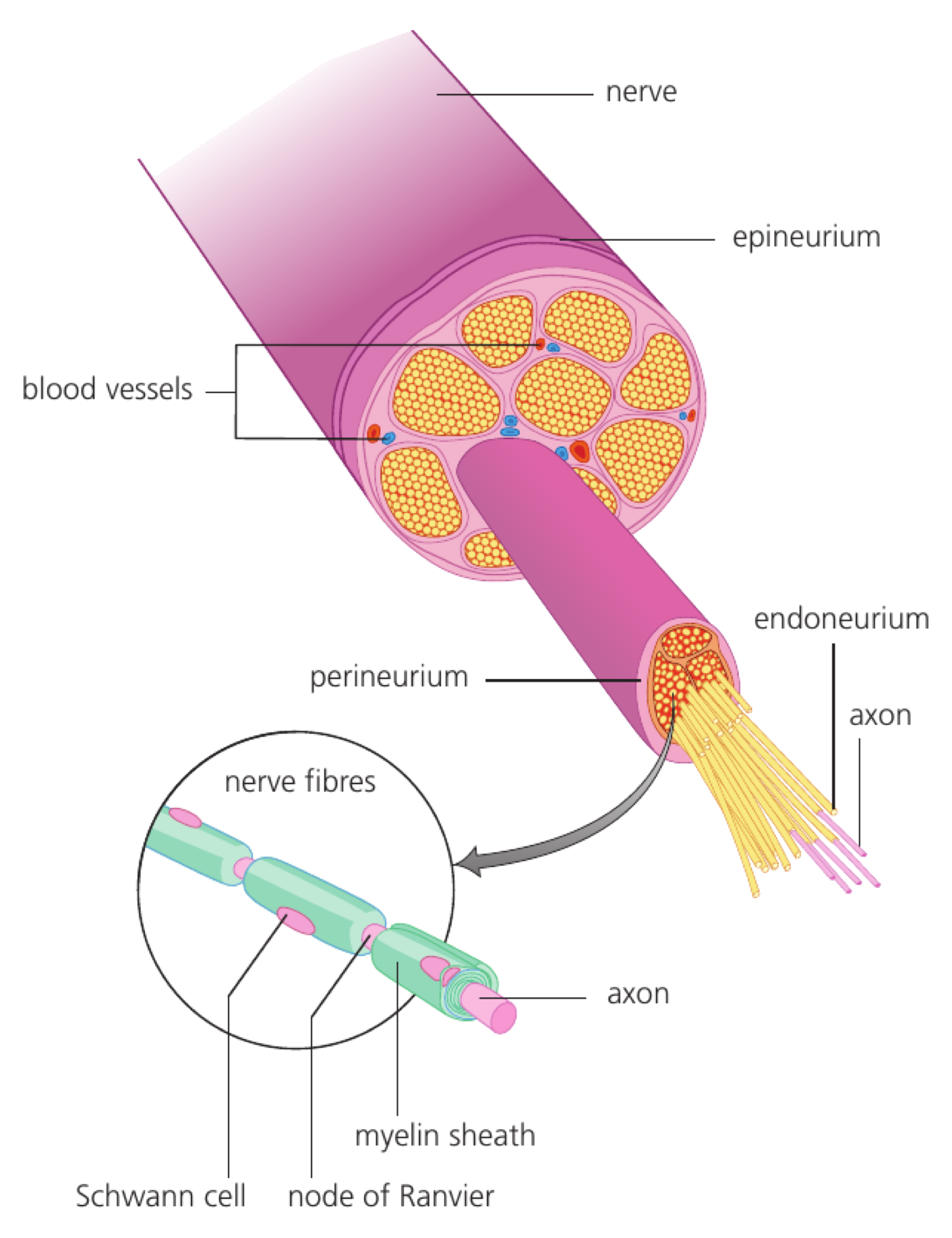
Saltatory conduction is rapid propagation in a myelinated fibre in which action potentials are regenerated from one node of Ranvier to the next.
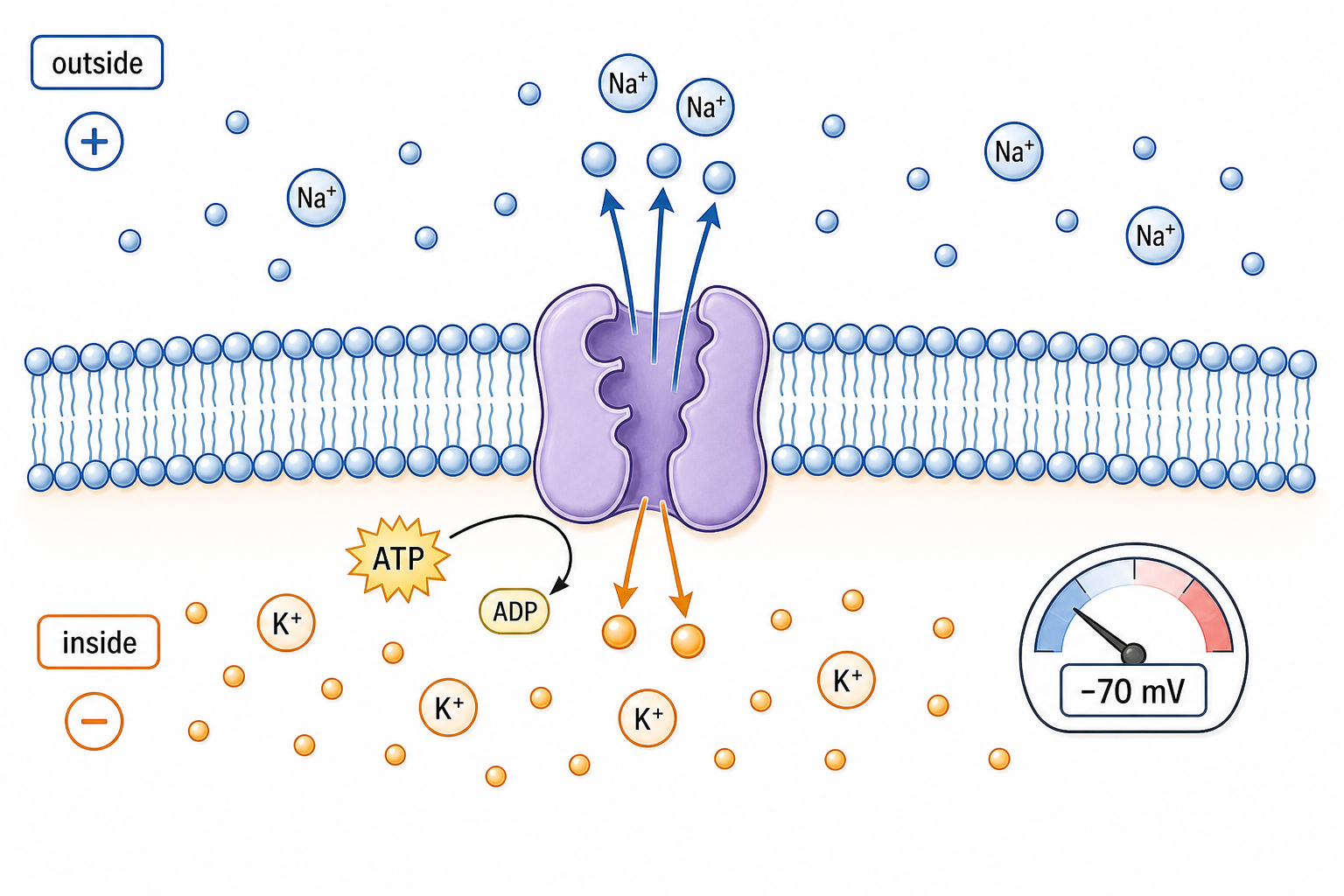
Myelin insulates internodes and reduces current loss. Ion channels and pumps are clustered at the exposed nodes, so local current spreads quickly beneath myelin and brings the next node to threshold.

Internode: insulated rapid current spread. Node: concentrated voltage-gated channels generate the next action potential and pumps maintain the ion gradients. Fewer membrane regions need direct ion exchange.

Demyelination increases current leakage, so the next node may reach threshold later or not at all, slowing or blocking the impulse.

The impulse appears to jump, but electrical current still spreads through the axon between nodes. Action potentials are regenerated only at nodes rather than travelling through empty space.

Saltatory conduction

HL only

Assessment in practice

1–2 marks
How it is assessed

This objective is assessed through structured response, commonly using Outline / Explain.

Command terms

Outline / Explain

What earns marks

Build the answer around this relationship: Myelin electrically insulates sections of the axon.

Representative question

Question 1

[Maximum number: 3]

Explain saltatory conduction.

Neural Control And Evidence

HL only
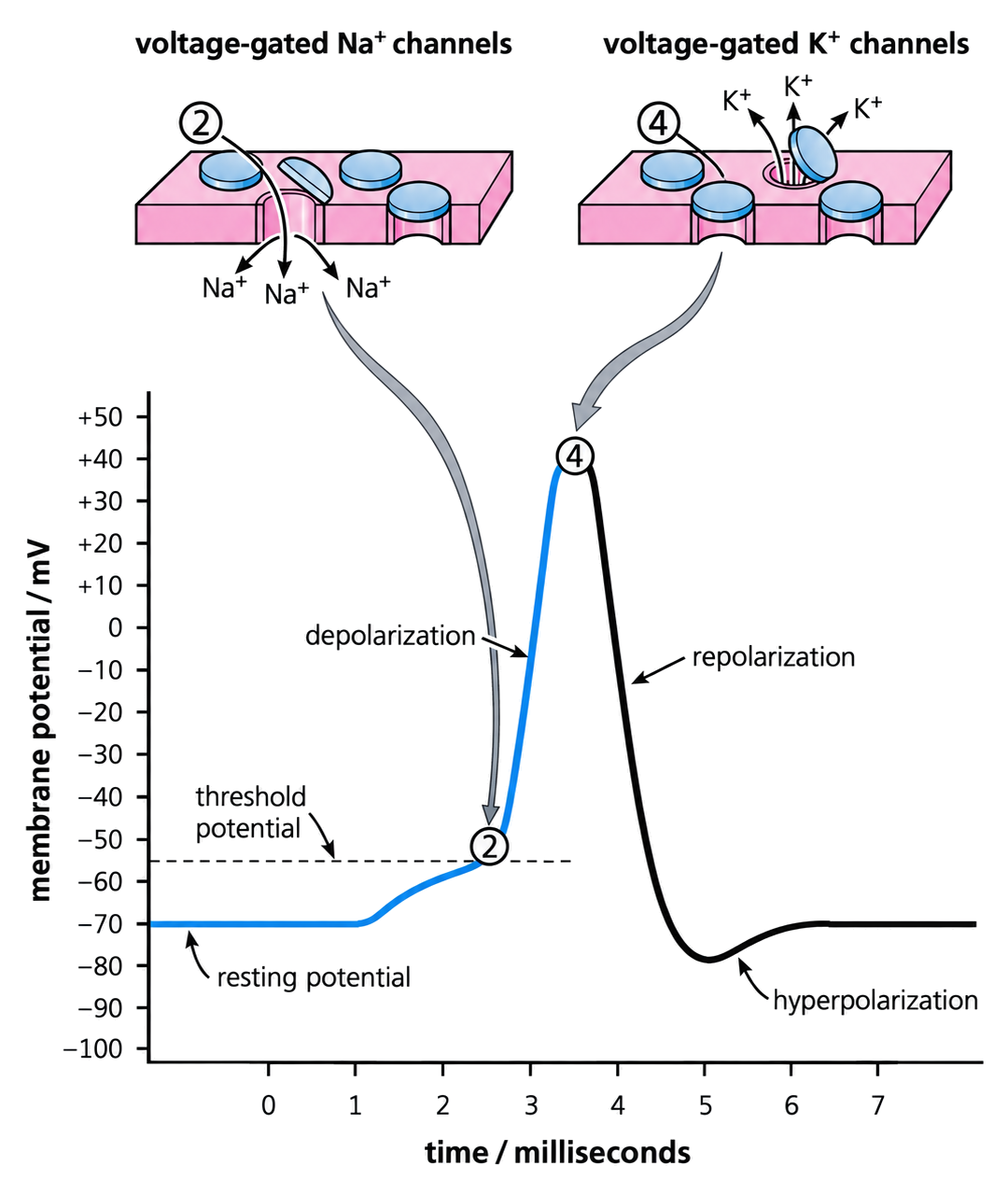
  • At threshold, voltage-gated Na+ channels depolarize the axon; K+ channels then repolarize it. Local currents propagate the impulse and the refractory period enforces direction.
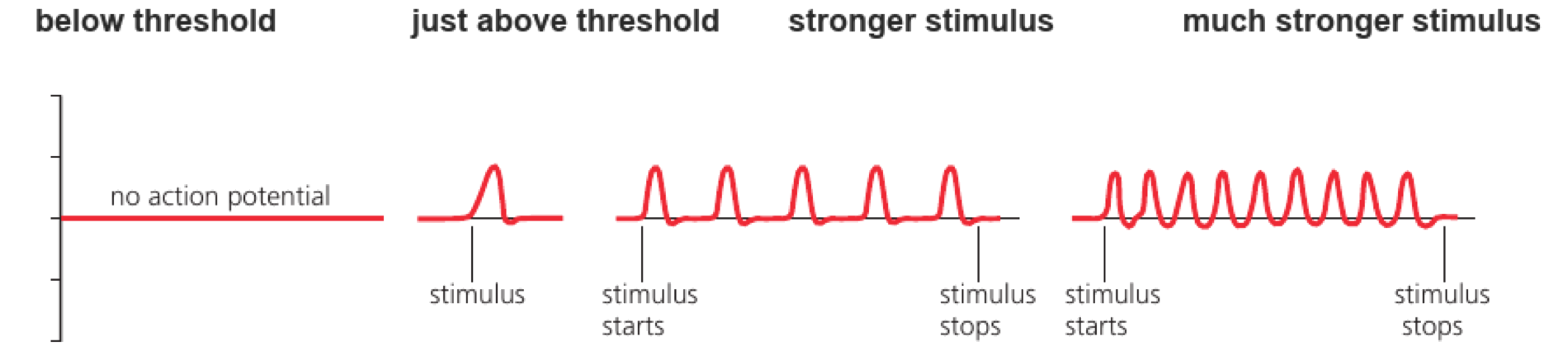
  • Action potentials are all-or-nothing; stimulus intensity is encoded by frequency. Myelin enables fast saltatory conduction between nodes of Ranvier.
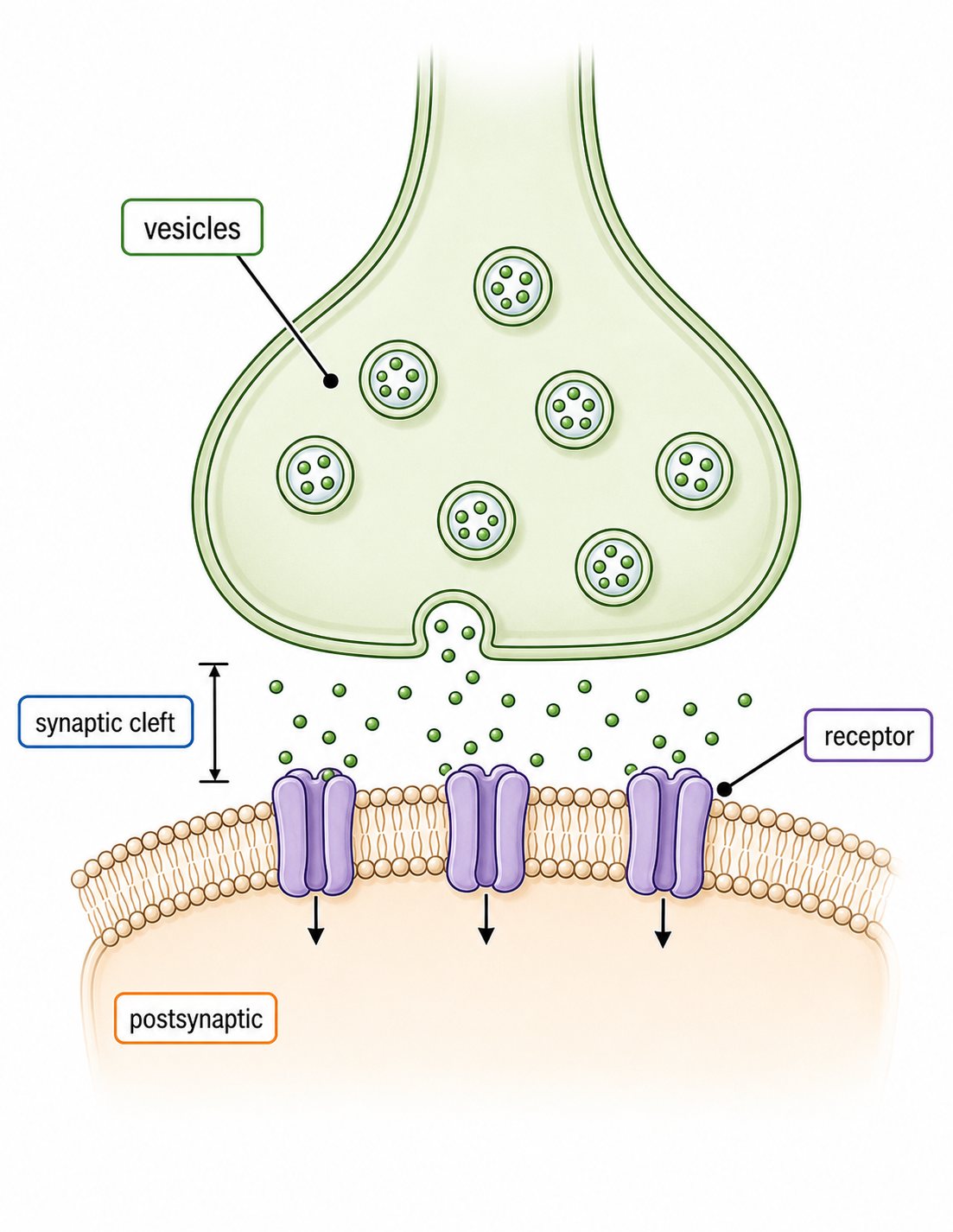
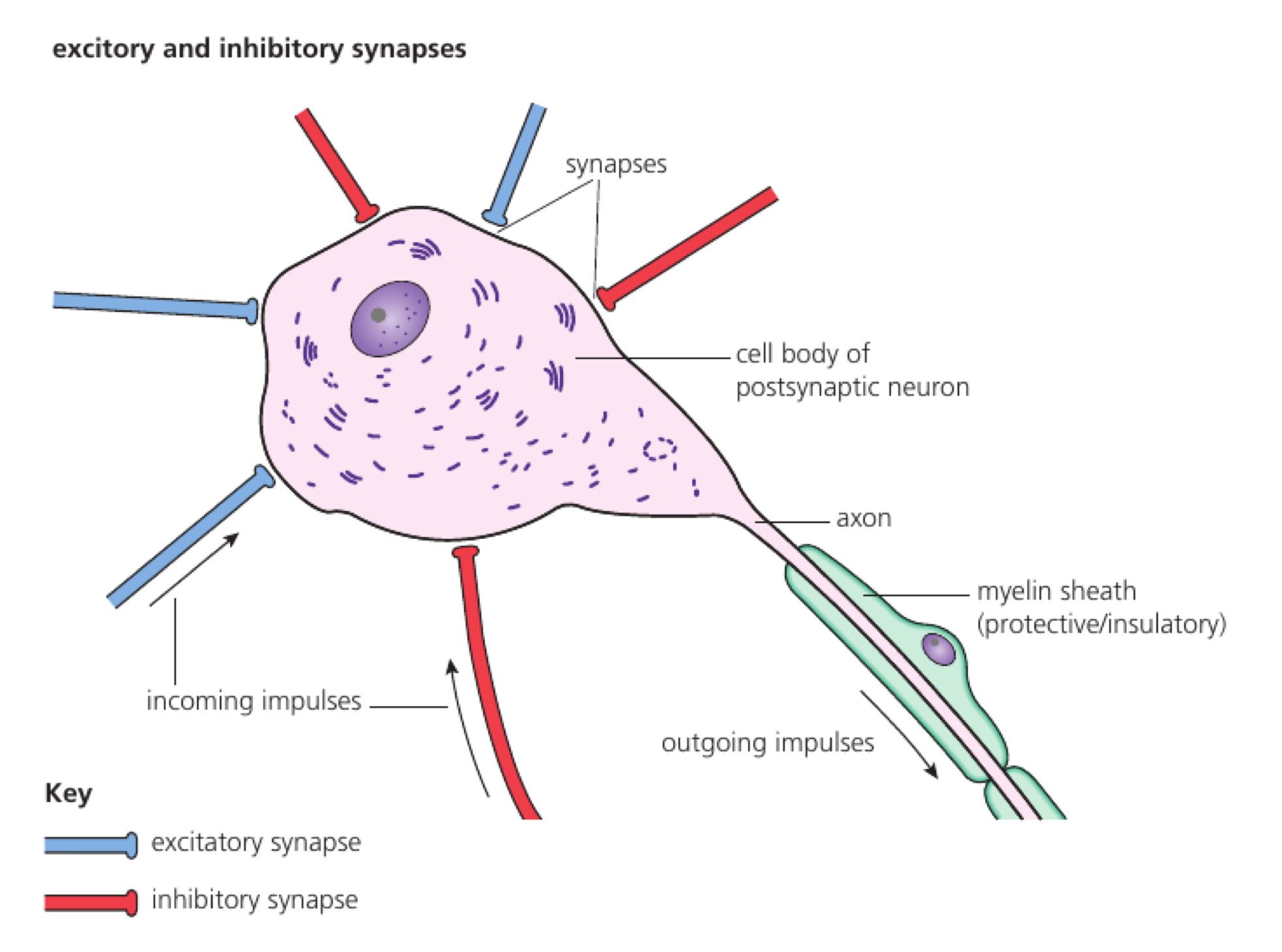
  • Synapses integrate excitatory and inhibitory inputs through spatial and temporal summation. Chemicals may mimic, block or prolong neurotransmitter action.
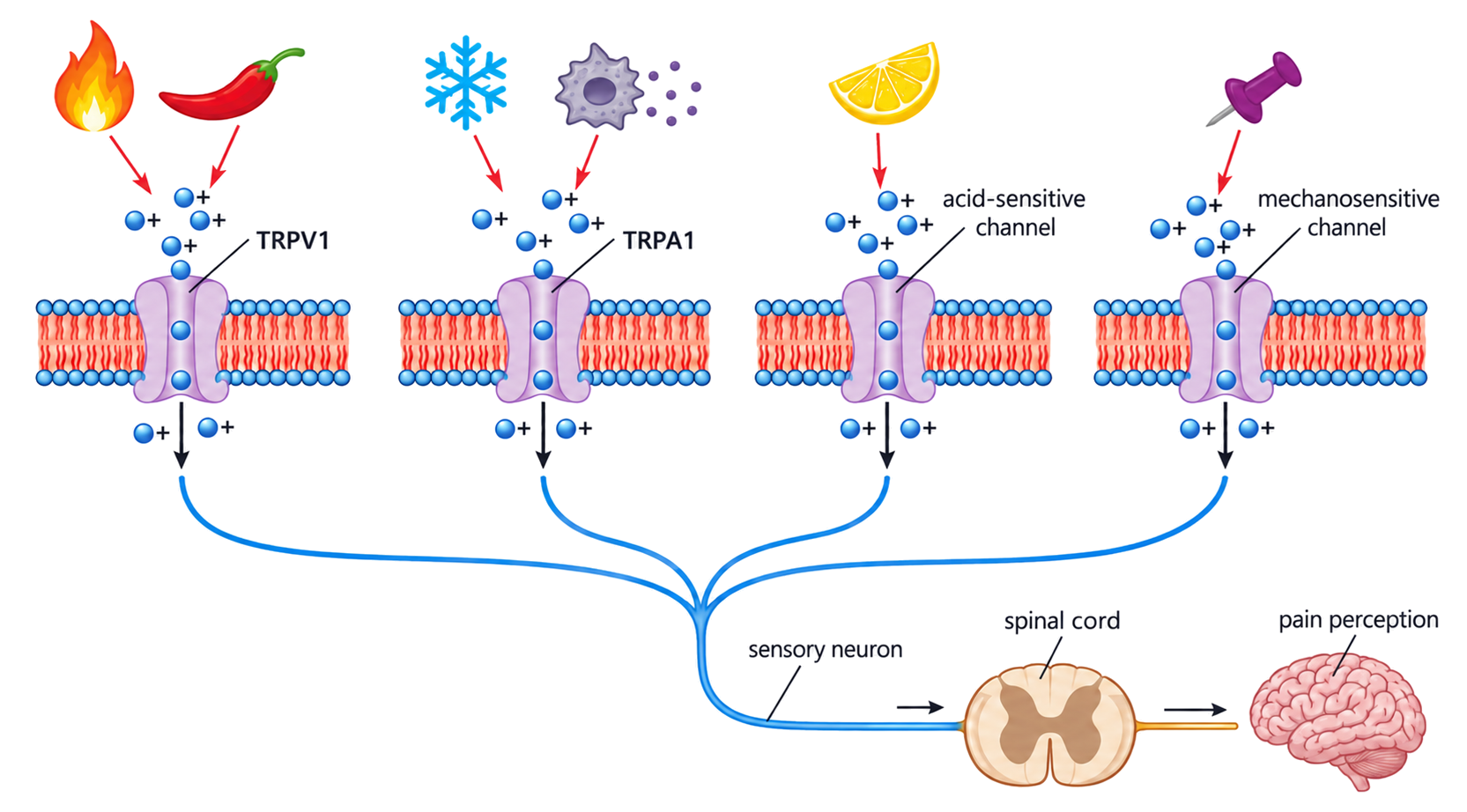
  • Pain receptors use TRP channels that respond to heat, acid, capsaicin or tissue damage.
  • EEG, MRI and fMRI link conscious processing to coordinated activity across brain regions, providing neural correlates rather than a single consciousness centre.

Concept essentials

  • Myelin electrically insulates sections of the axon.
  • Nodes of Ranvier are gaps where action potentials are regenerated.
  • Saltatory conduction makes impulses appear to jump between nodes.
  • Myelinated axons conduct impulses faster than comparable unmyelinated axons.