Q BankQuestion BankDocsDocuments

C2.2.1—Neurons

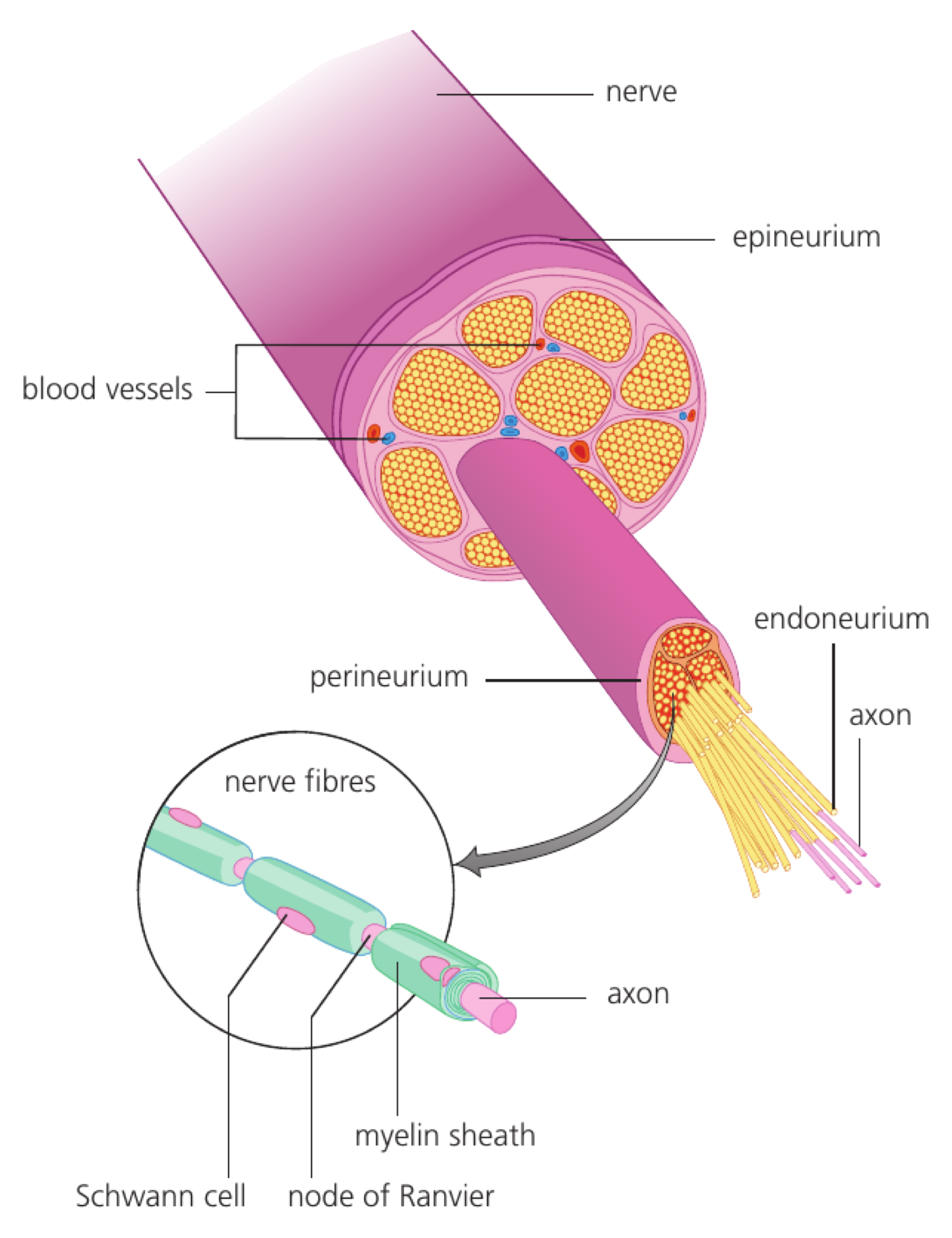
Neurons are specialized cells with dendrites, cell bodies, axons and terminals arranged to receive, conduct and pass on nerve impulses.

Syllabus
First assessment 2025
Objective
C2.2.1
Level
HL

Exam analysis

Chance of appearing4%of analysed past papers
Latest appearanceNovember 2024
Most common paperPaper3
Typical marks1

Common command terms

  • Label
  • Draw
  • State
  • Distinguish
  • Identify

Recent exam appearances

November 2024Paper3 ["HL"] · TZ07(c)(ii)[ 1 ]C2.2.1—Neurons
November 2024Paper3 ["HL"] · TZ07(c)(i)[ 1 ]C2.2.1—Neurons
May 2017Paper3 ["HL"] · TZ16(b)[ 2 ]C2.2.1—Neurons
May 2015Paper1 ["HL"] · TZ121[ 1 ]C2.2.1—Neurons
November 2014Paper1 ["HL"] · TZ027[ 1 ]C2.2.1—Neurons
Practice this objective

Coverage 2012–2024 · Updated 15 Jul 2026

Neurons Carry Information through Electrical and Chemical Signals

Neurons are specialized cells that receive, integrate and transmit information using membrane potentials and neurotransmitters.

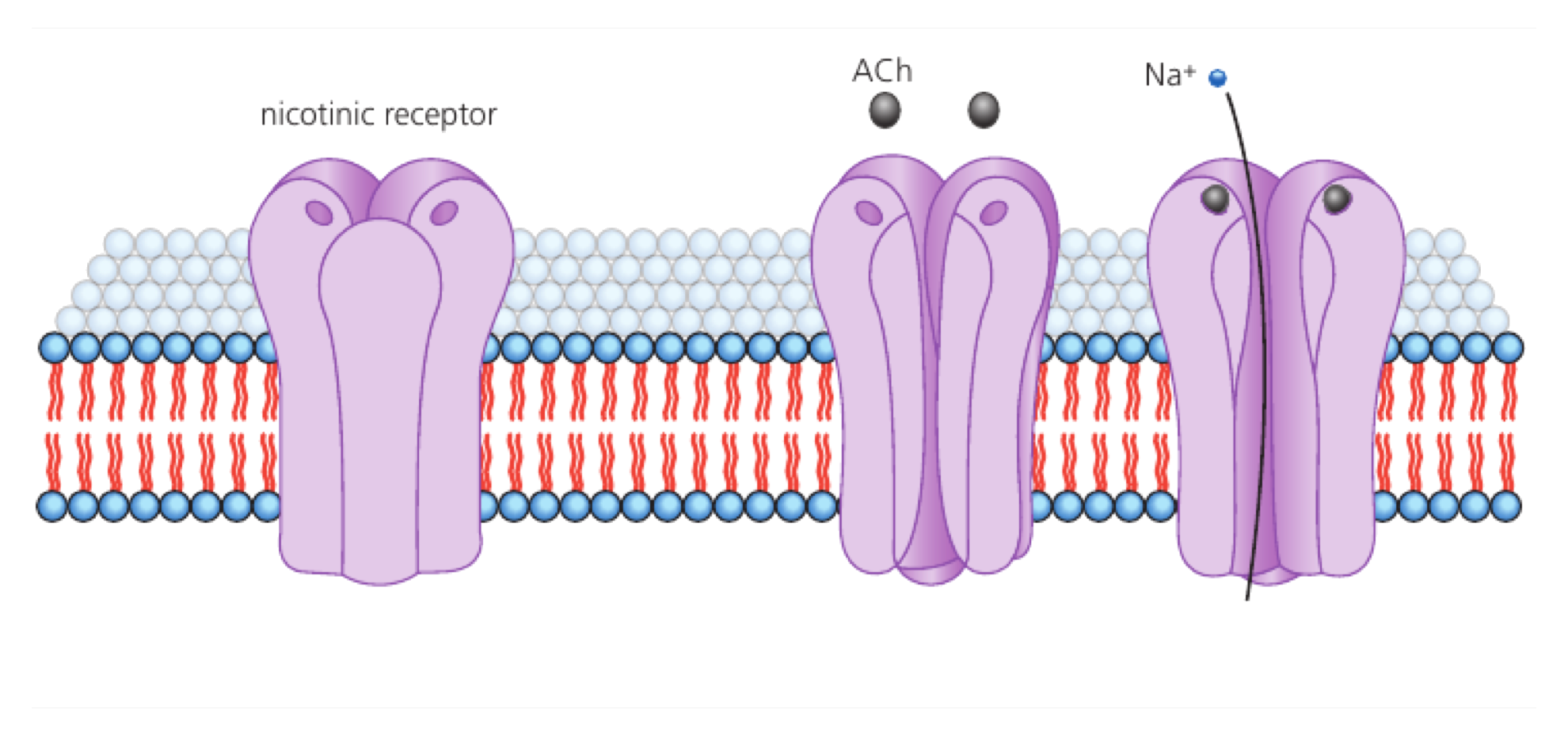
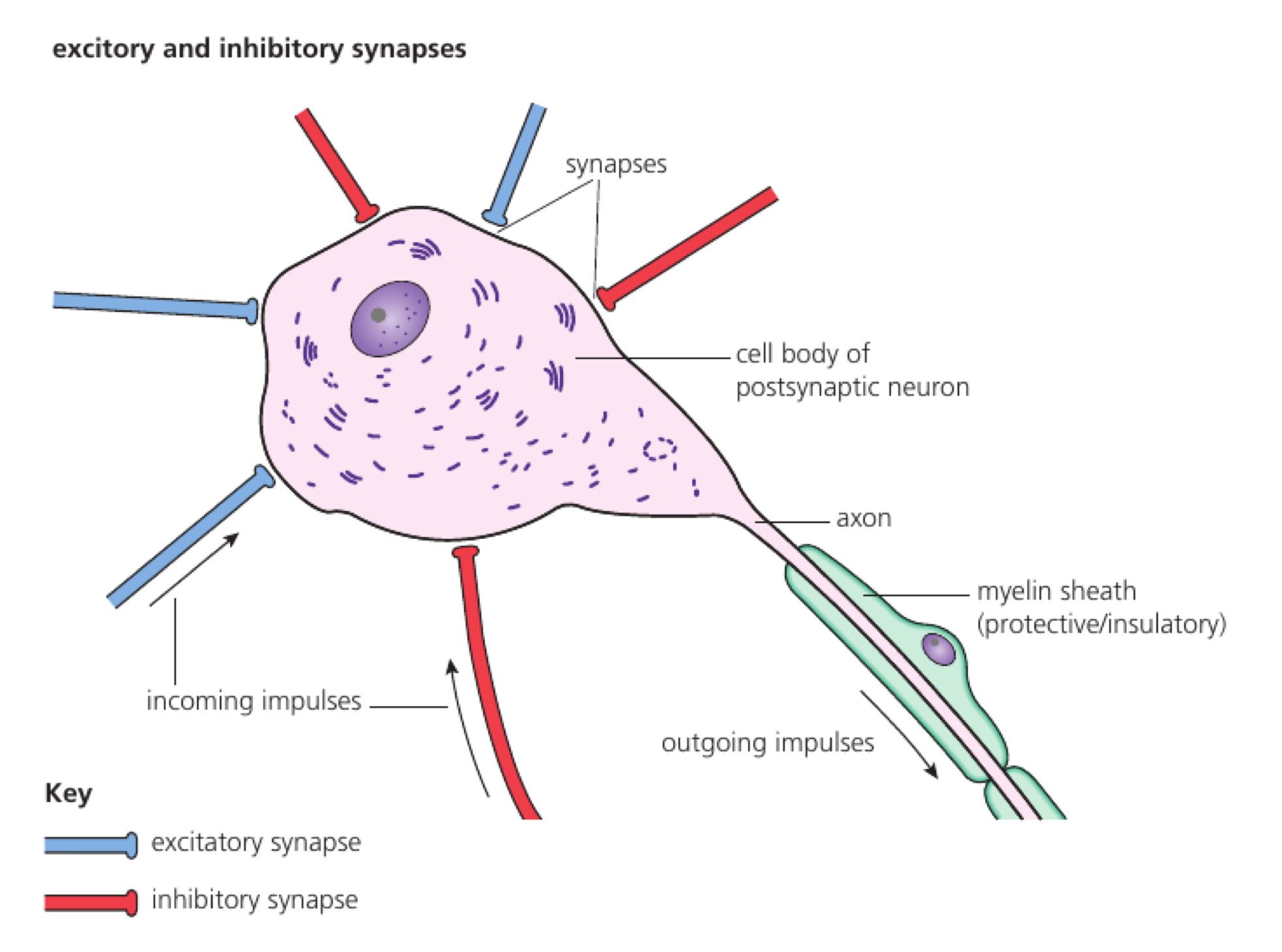
Dendrites receive inputs, the cell body integrates them, and an axon carries action potentials to terminals. Ion channels and synapses connect electrical changes inside one neuron with chemical communication between neurons. This division of labour lets the cell preserve a signal while passing it to the next stage.
Identify the functional regions:

  • dendrites and cell body: input
  • axon hillock: decision to fire
  • axon: impulse propagation
  • terminals: transmitter release

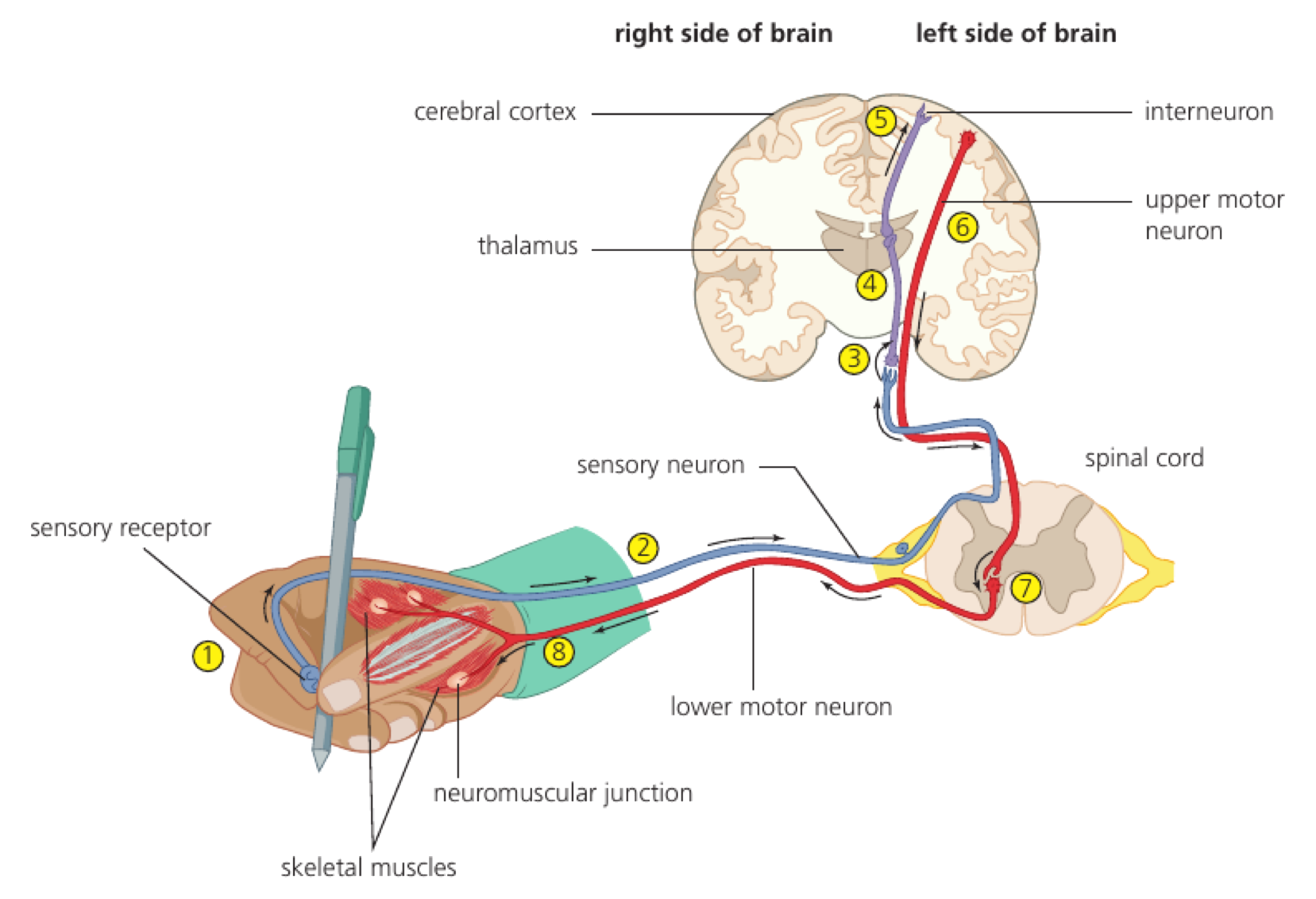
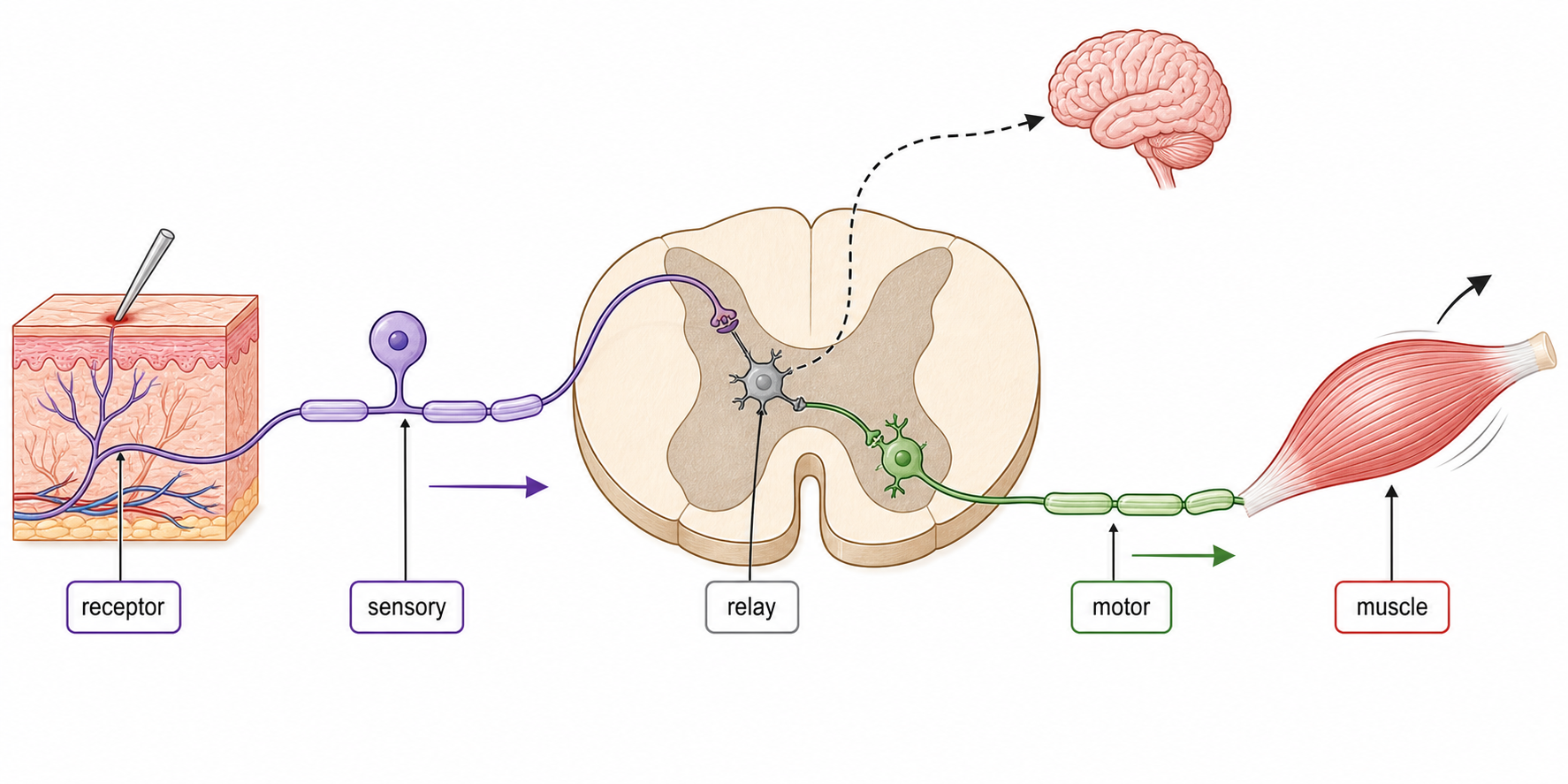
A sensory neuron converts pressure at the skin into receptor-potential changes and action potentials that reach the central nervous system.

Neuron shape varies with function; not every neuron has the same dendrite or axon arrangement.

Neurons exam focus

Assessment in practice

1–2 marks
How it is assessed

This objective is assessed through experimental design, commonly using Label / Draw / State.

Command terms

Label / Draw / State / Distinguish / Identify

What earns marks

Build the answer around this relationship: Dendrites receive signals and conduct them toward the cell body.

Representative question

Question 1

[Maximum number: 5]

Draw a labelled diagram of a motor neuron.

SL Transfer: Explain Core Neural Signalling

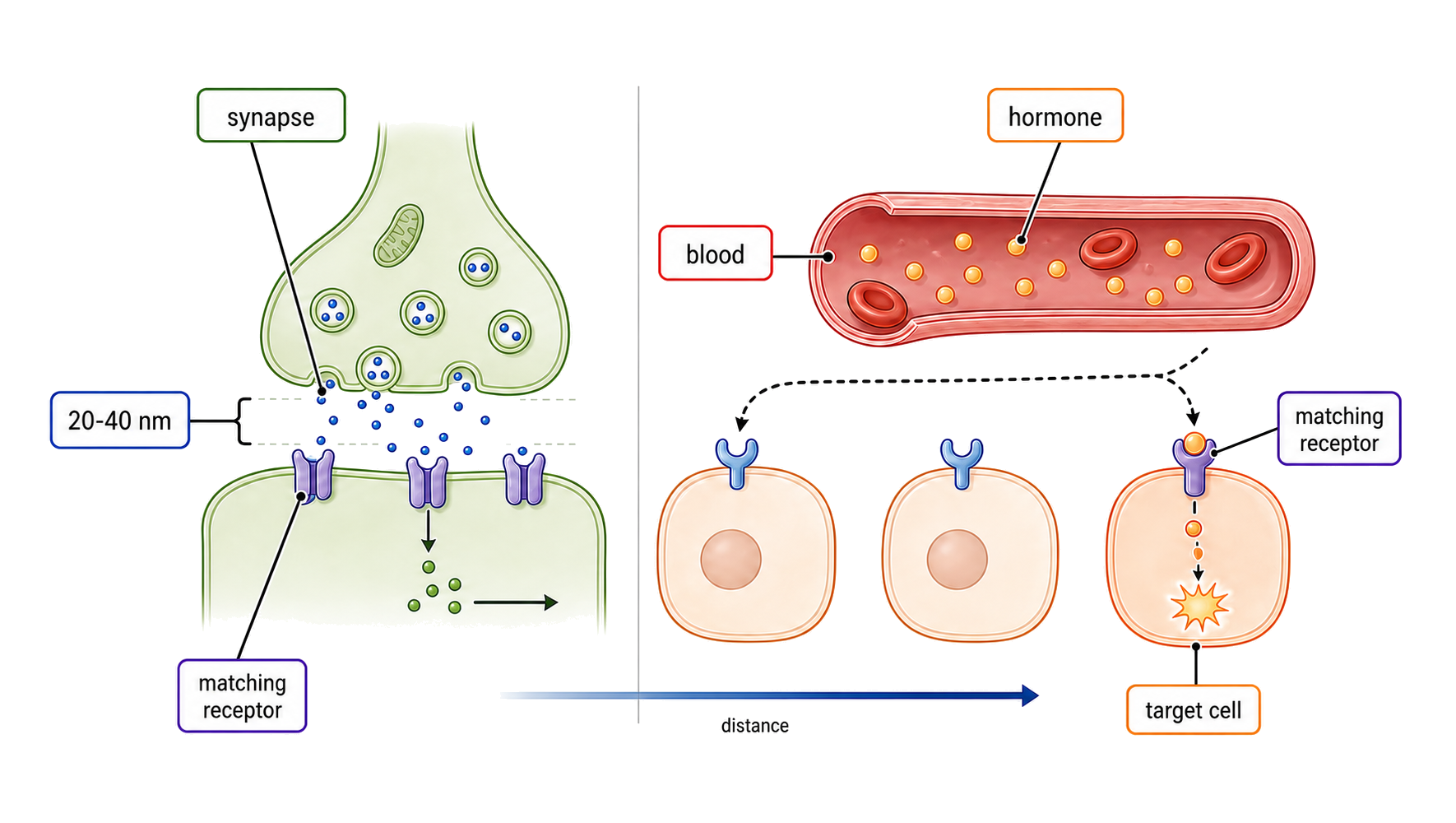
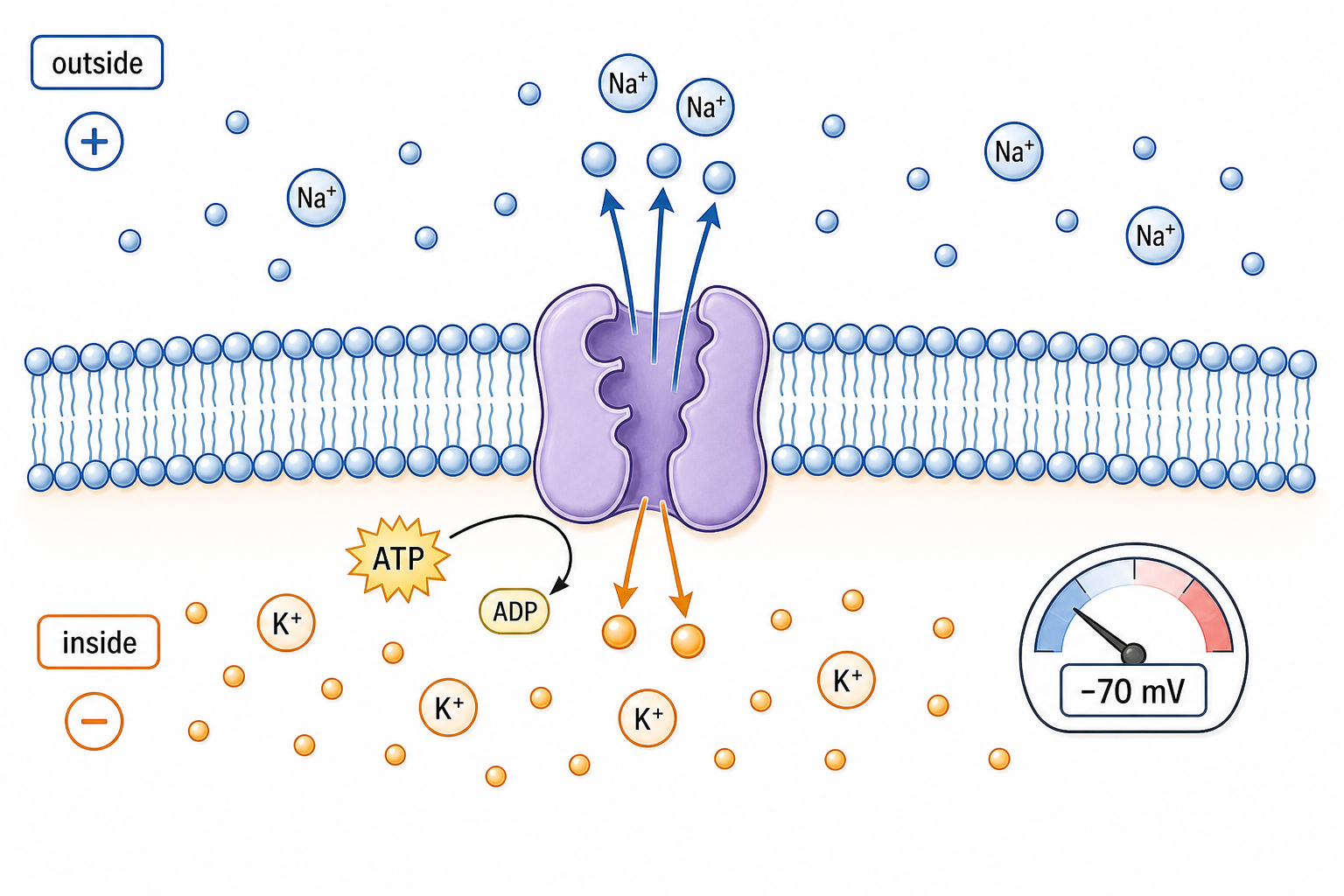
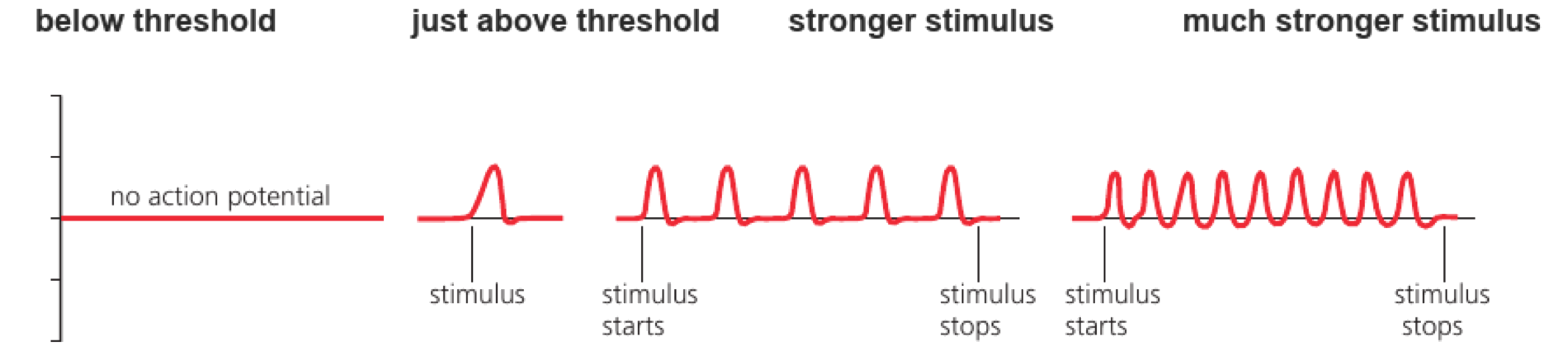
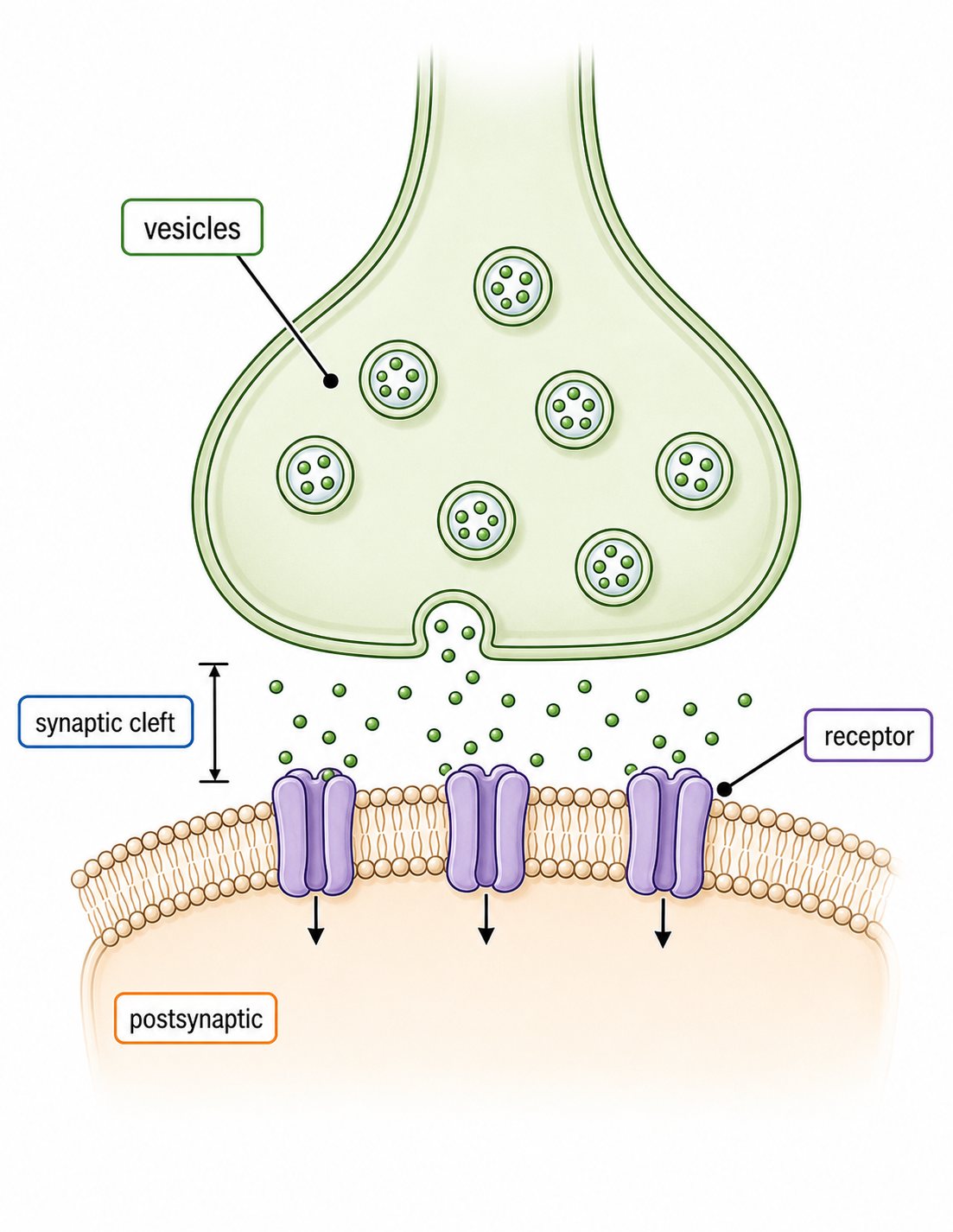
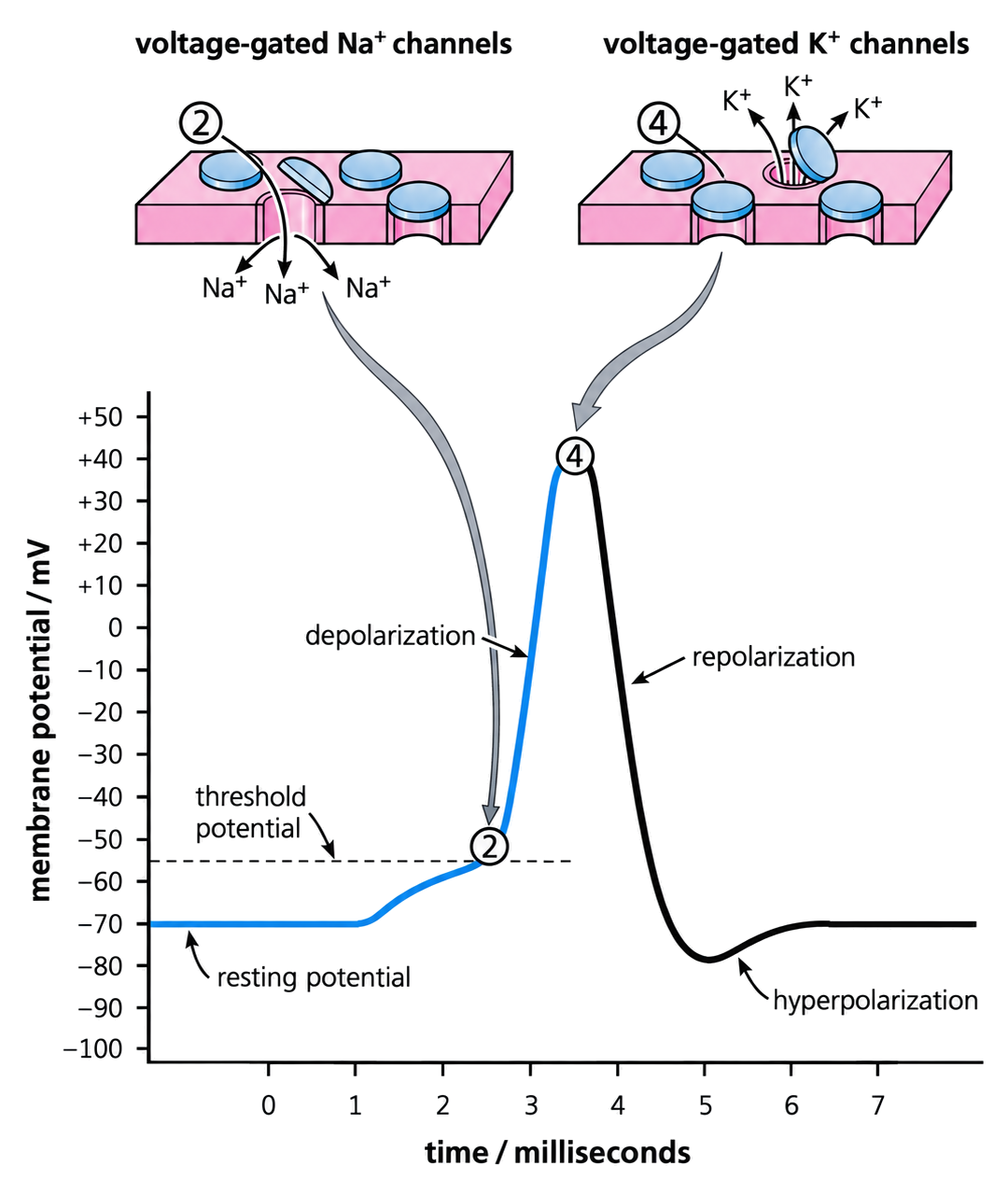
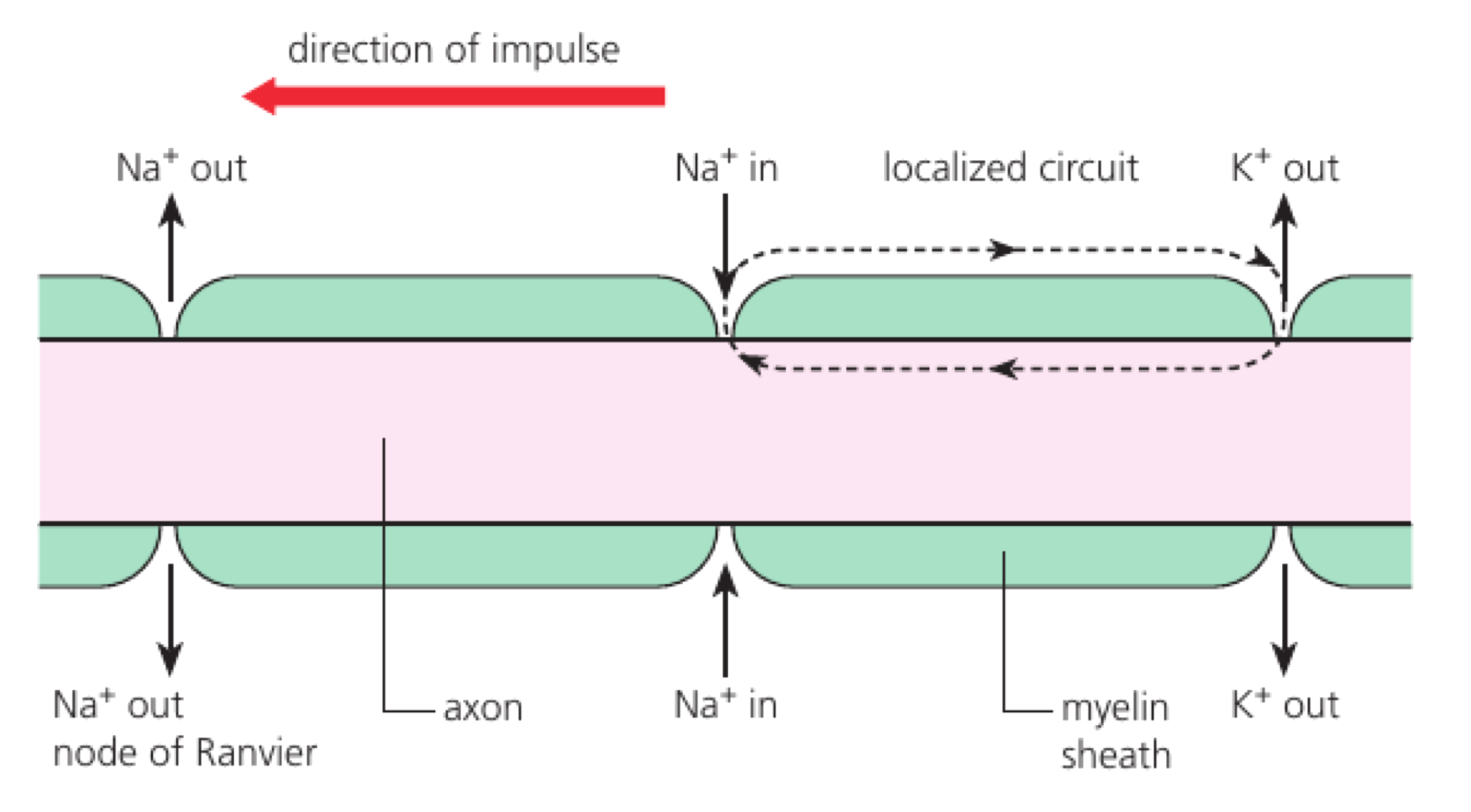
Neurons carry electrical impulses in the nervous system; motor, sensory, and relay neurons differ in axon, dendrite, and cell body arrangement. Sodium-potassium pumps use ATP to move 3 Na+ out and 2 K+ in; ion gradients make the resting axon polarized at about -70 mV. A nerve impulse is a propagated action potential along a nerve fibre; stimulus-triggered sodium influx reverses membrane polarity. Larger axon diameter lowers resistance and increases impulse speed; myelin sheaths and nodes of Ranvier enable faster saltatory conduction. Synapses connect neurons to neurons, muscles, or glands; chemical synapses transmit one way across a narrow synaptic cleft. Action potentials open voltage-gated Ca2+ channels in presynaptic terminals; Ca2+ causes vesicle fusion and neurotransmitter exocytosis into the cleft. Neurotransmitters diffuse and bind receptors on the postsynaptic membrane; EPSPs depolarize the membrane and make threshold more likely.

Concept essentials

  • Dendrites receive signals and conduct them toward the cell body.
  • Axons conduct nerve impulses away from the cell body toward terminals.
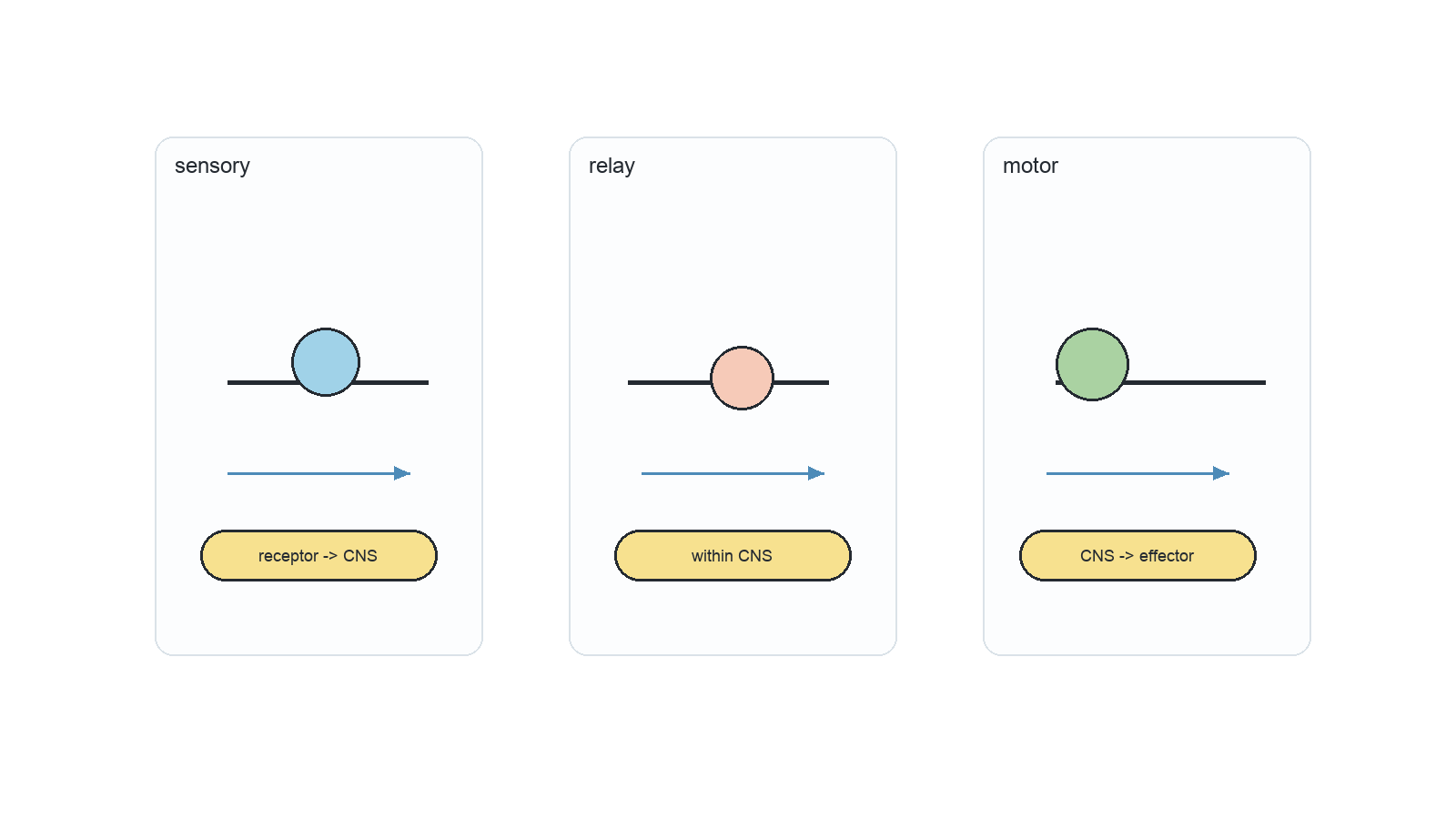
  • Sensory, relay and motor neurons form the main neuron types in reflex arcs.
  • A spinal reflex arc links receptor, sensory neuron, relay neuron, motor neuron and effector.
ConceptIB Biology HL