Q BankQuestion BankDocsDocuments

C2.2.13 (HL)—Inhibitory neurotransmitters

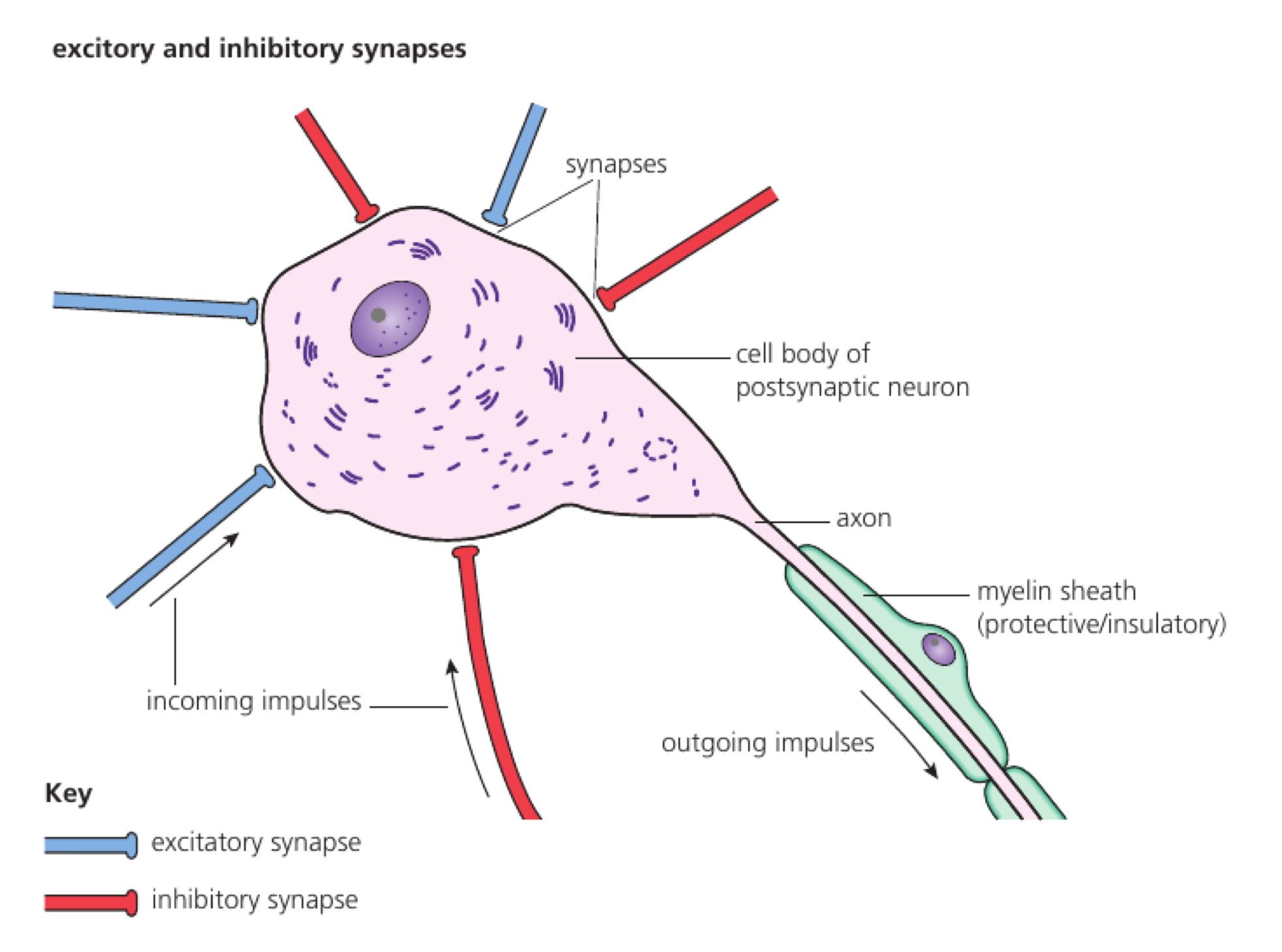
Inhibitory neurotransmitters reduce the chance of postsynaptic firing by hyperpolarizing membranes or counteracting excitatory inputs, linking cellular mechanisms to rapid communication in nervous systems.
Syllabus
First assessment 2025
Objective
C2.2.13
Level
HL

Inhibitory Neurotransmitters Reduce Firing Probability

HL only

Inhibitory neurotransmitters make a postsynaptic neuron less likely to reach action-potential threshold.
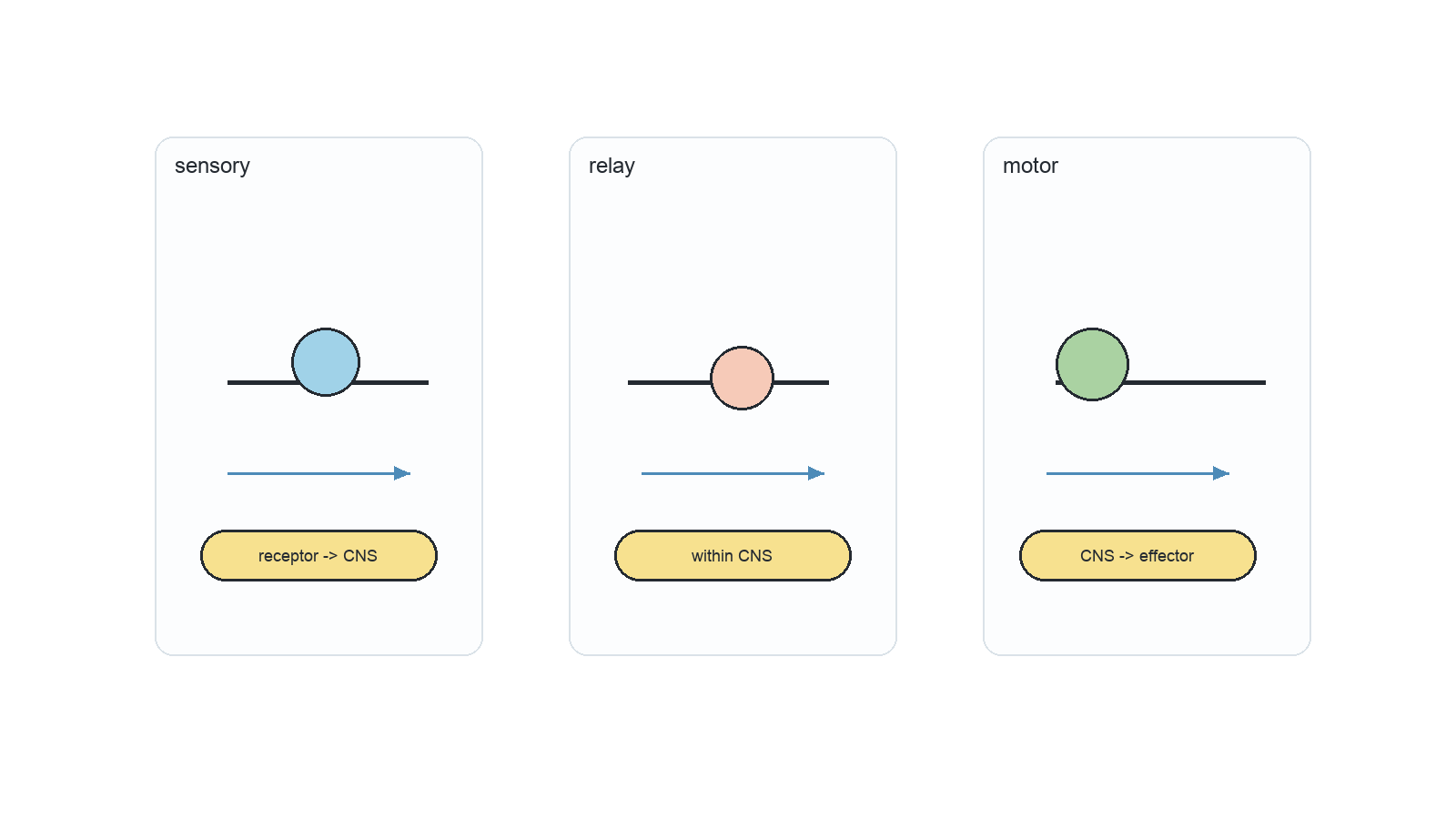
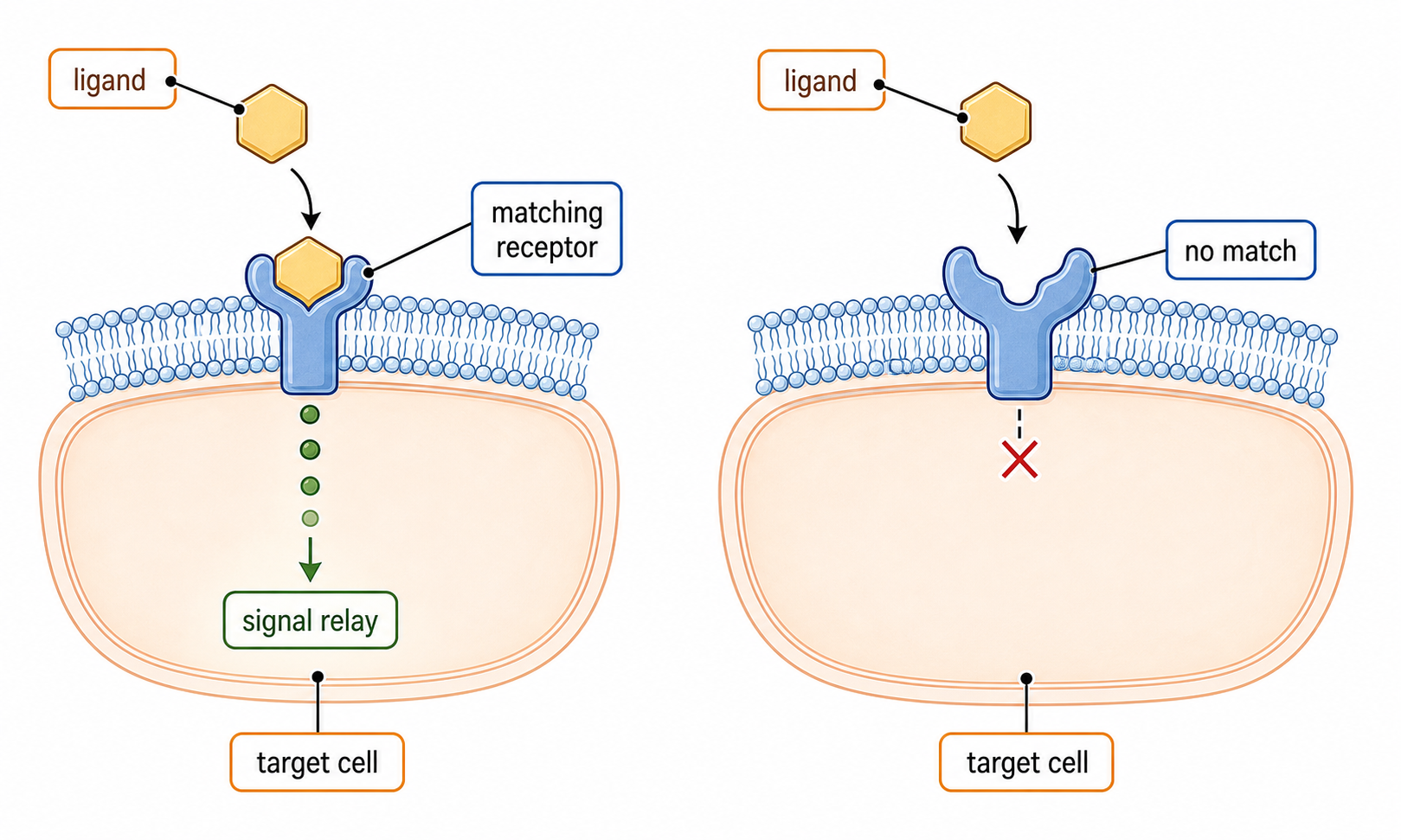
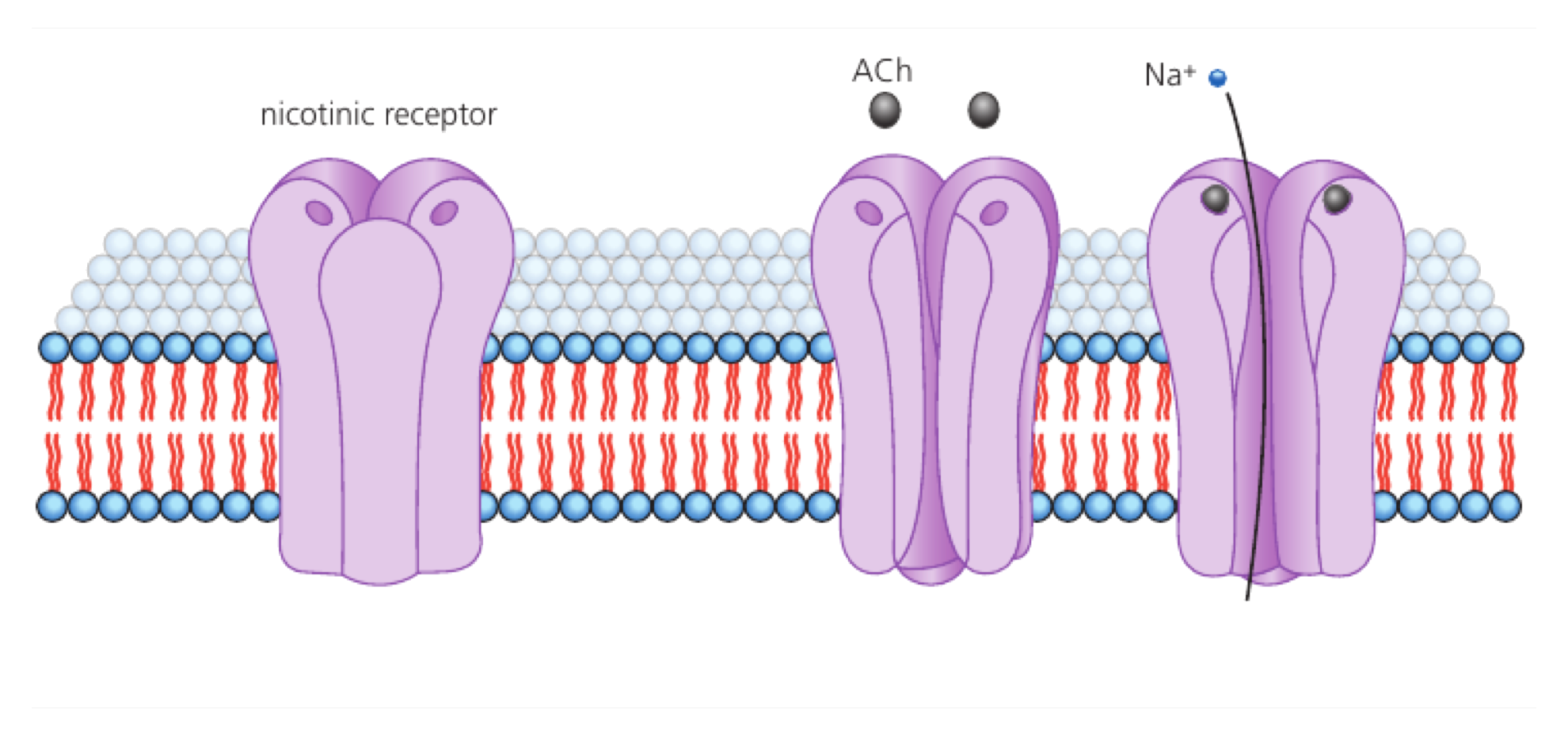
They may open chloride channels, increase potassium efflux or reduce excitatory channel activity. The resulting hyperpolarization or shunting inhibition opposes excitatory inputs. Inhibition is relational: the same transmitter can have different effects if receptor types differ, and the receiving circuit determines the outcome.

Identify inhibition by checking:

  • receptor and ion channel
  • current direction or conductance
  • membrane-potential effect
  • threshold probability

Opening chloride channels can stabilize the membrane near its resting potential and reduce the effect of a simultaneous EPSP.

Inhibition is not always a large negative voltage; increased conductance can also shunt excitatory current.

Neural Control And Evidence

HL only
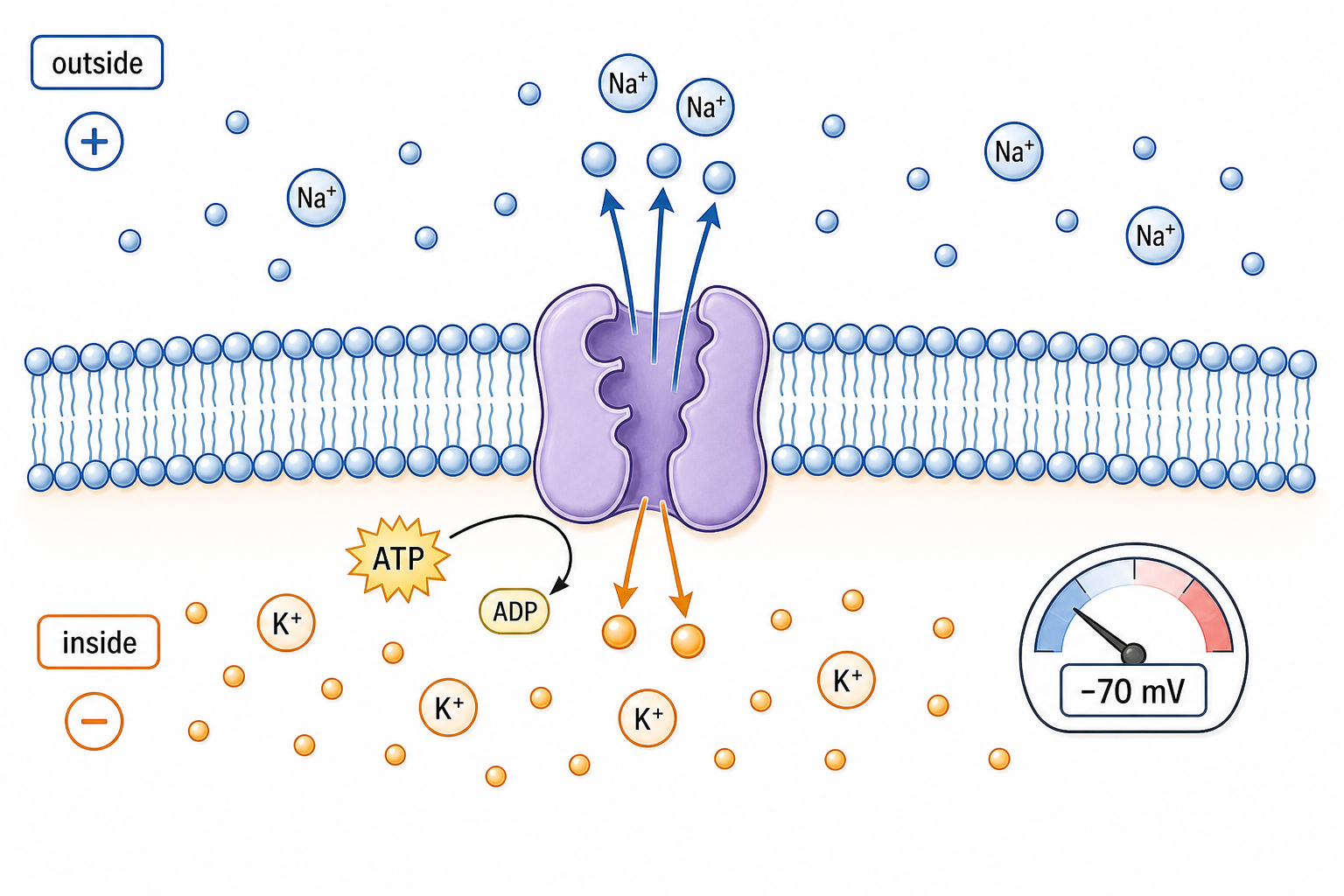
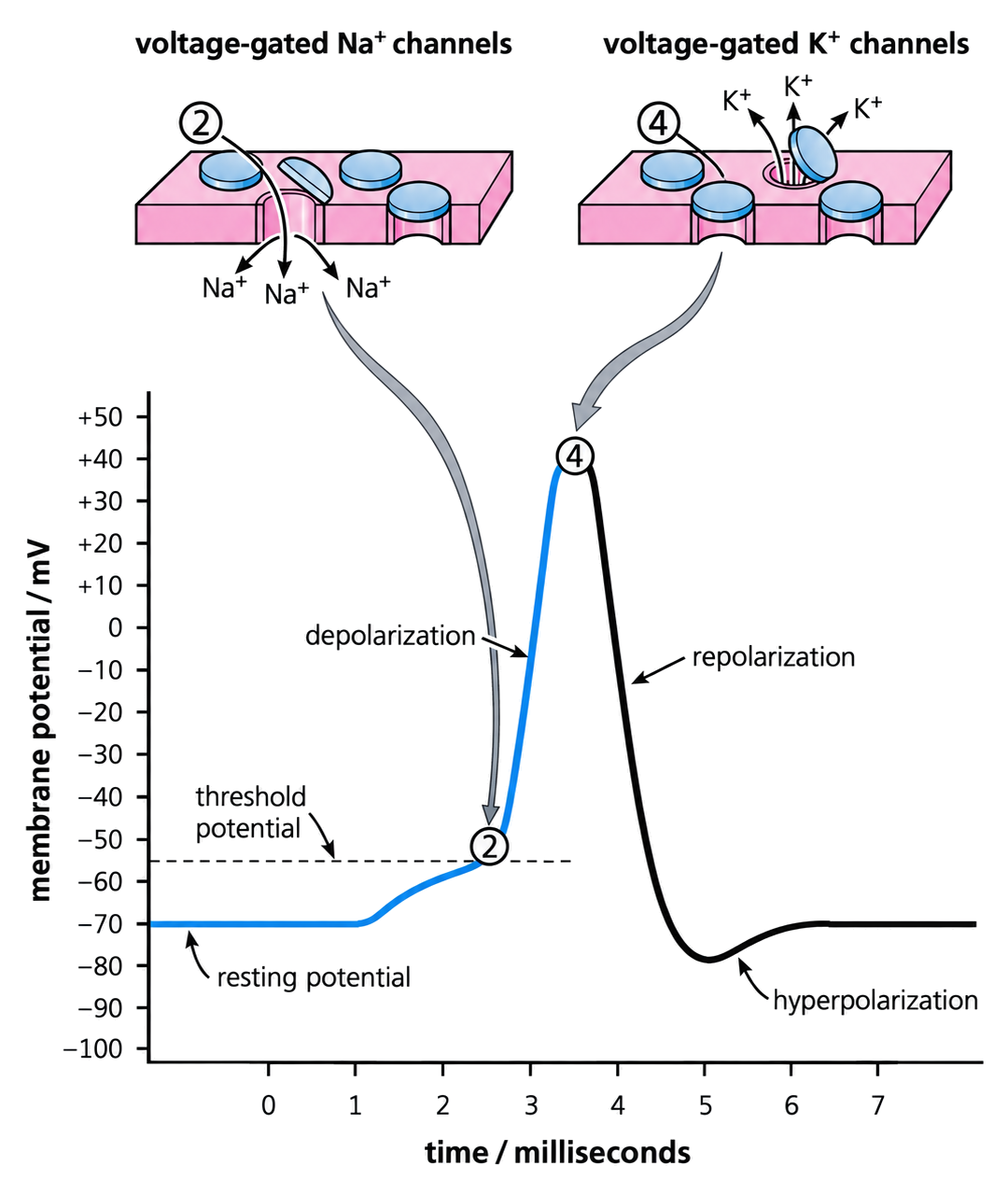
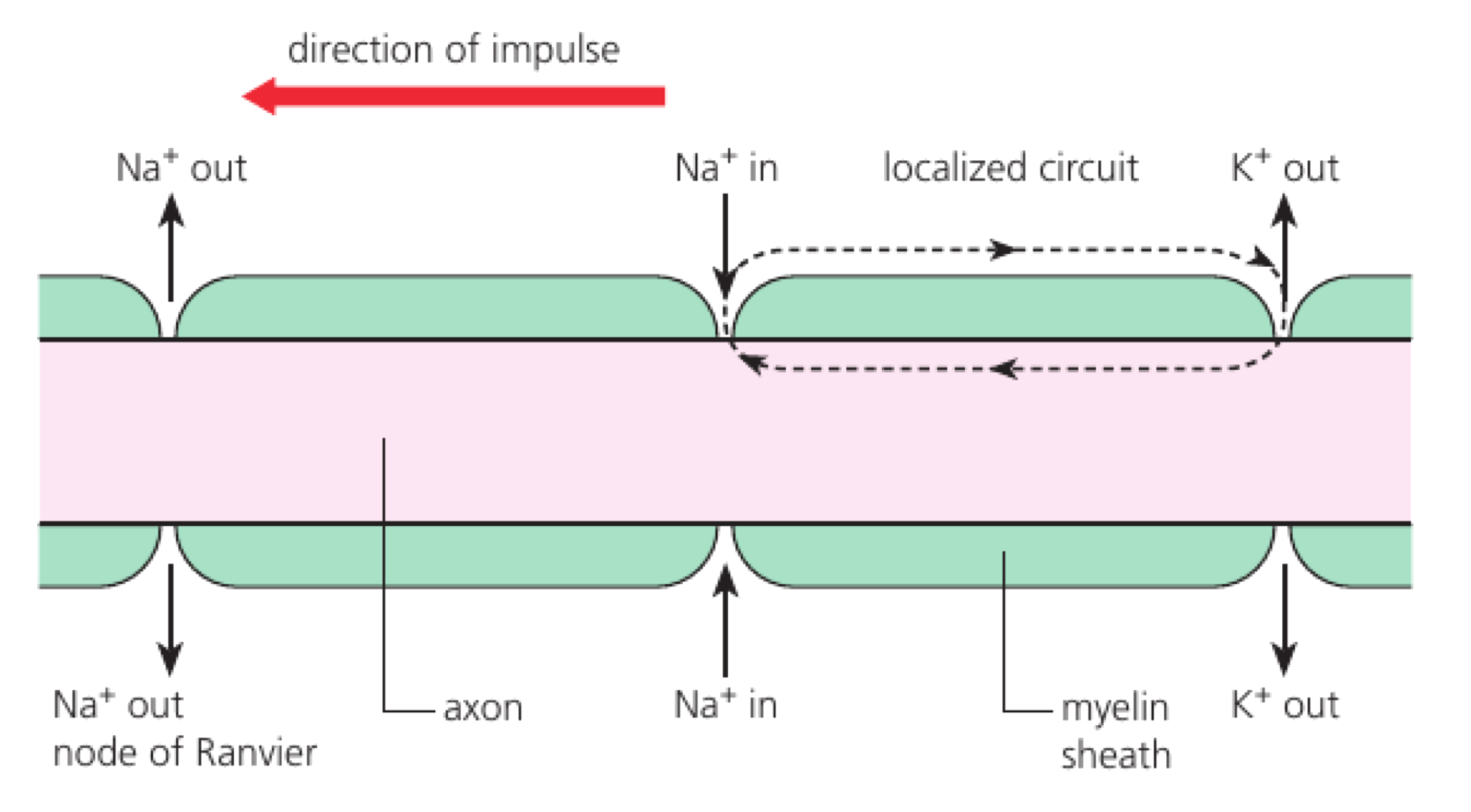
  • At threshold, voltage-gated Na+ channels depolarize the axon; K+ channels then repolarize it. Local currents propagate the impulse and the refractory period enforces direction.
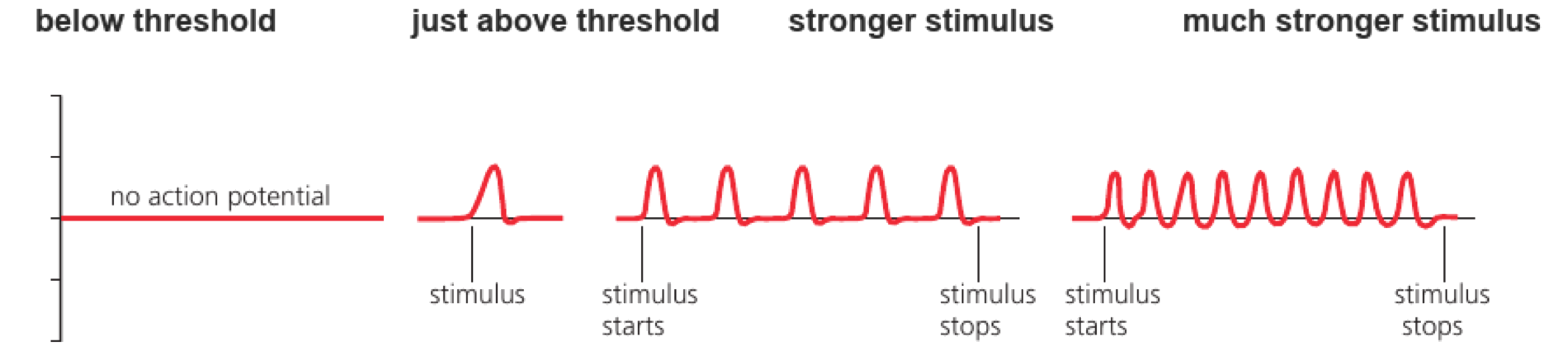
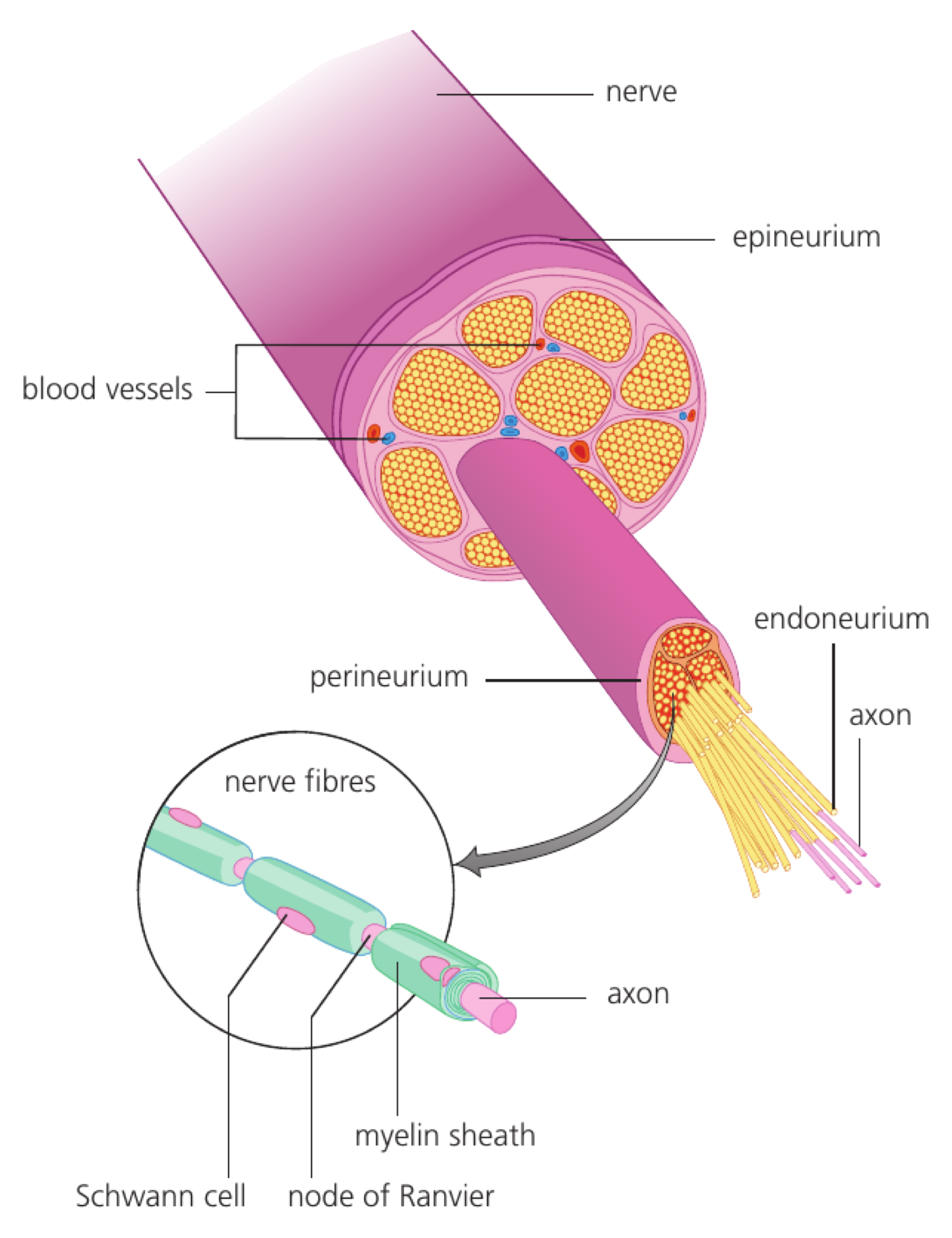
  • Action potentials are all-or-nothing; stimulus intensity is encoded by frequency. Myelin enables fast saltatory conduction between nodes of Ranvier.
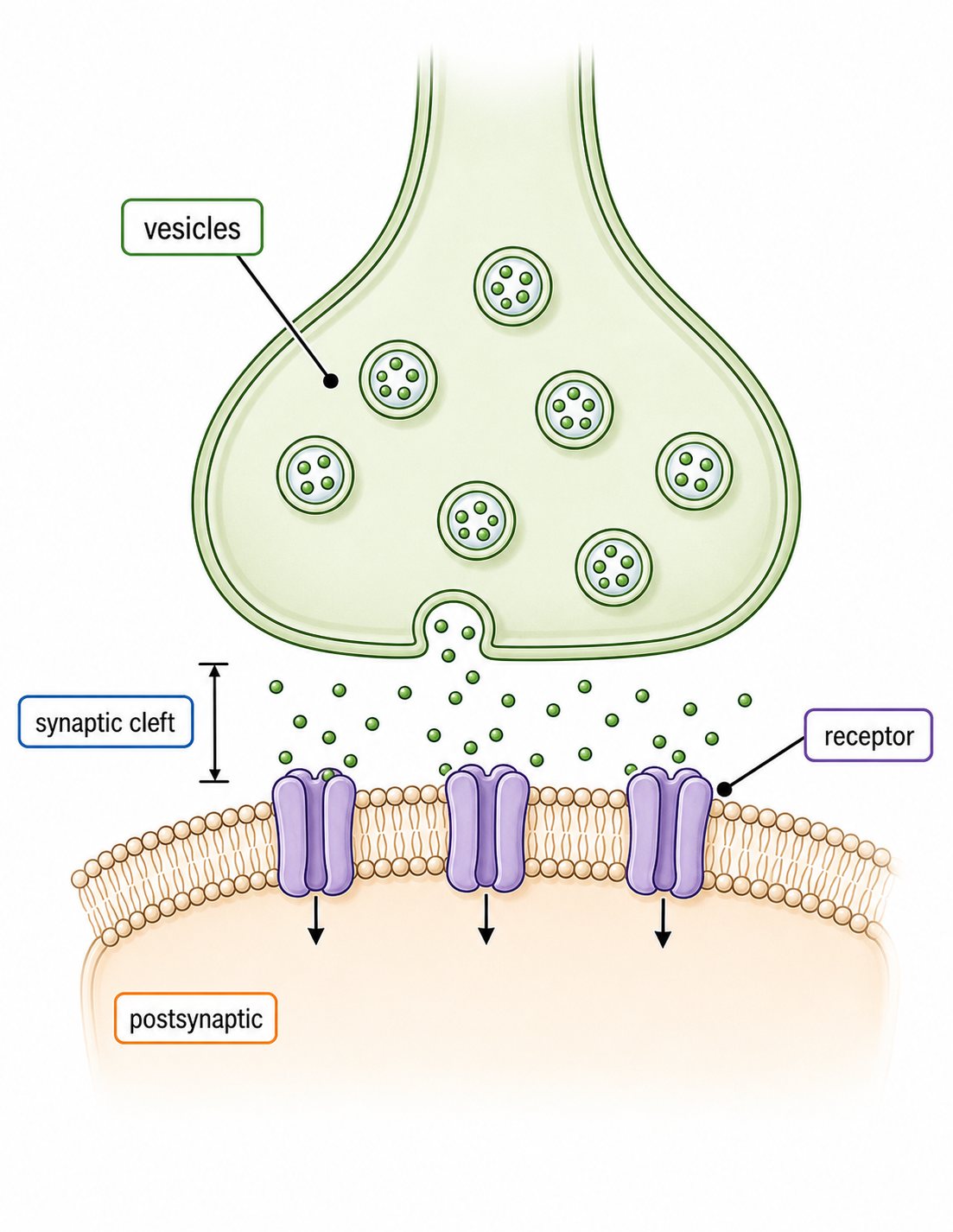
  • Synapses integrate excitatory and inhibitory inputs through spatial and temporal summation. Chemicals may mimic, block or prolong neurotransmitter action.
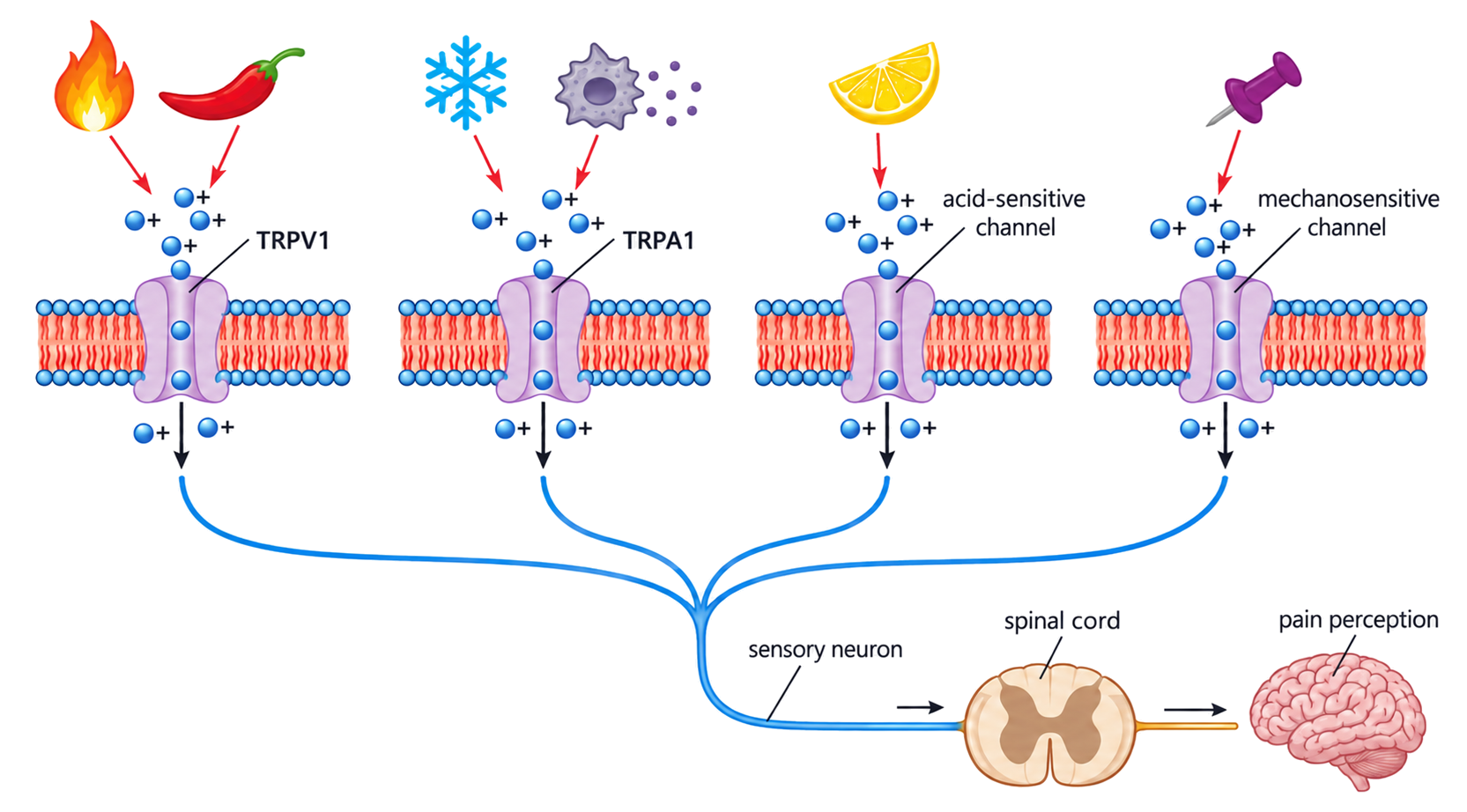
  • Pain receptors use TRP channels that respond to heat, acid, capsaicin or tissue damage.
  • EEG, MRI and fMRI link conscious processing to coordinated activity across brain regions, providing neural correlates rather than a single consciousness centre.

Concept essentials

  • Inhibitory neurotransmitters lower the probability of postsynaptic firing.
  • Hyperpolarization moves membrane potential farther from threshold.
  • Inhibitory effects can involve chloride entry or potassium exit.
  • Inhibition balances excitation in neural circuits.
ConceptIB Biology HL