C2.2.4—Variation in impulse speed

Impulse speed increases with axon diameter and myelination because insulation and wider axons reduce resistance to action-potential propagation, linking cellular mechanisms to rapid communication in nervous systems.
Syllabus
First assessment 2025
Objective
C2.2.4
Level
HL

Exam analysis

Chance of appearing4%of analysed past papers
Latest appearanceNovember 2025
Most common paperPaper1A
Typical marks1

Common command terms

  • Describe
  • Determine
  • Calculate
  • Suggest
  • Outline

Recent exam appearances

November 2025Paper1B ["HL"] · TZ13(c)(ii)[ 1 ]C2.2.4—Variation in impulse speed
November 2025Paper1B ["HL"] · TZ13(c)(i)[ 1 ]C2.2.4—Variation in impulse speed
November 2025Paper2 ["HL"] · TZ33(a)[ 2 ]C2.2.4—Variation in impulse speed
November 2025Paper1A ["HL"] · TZ318[ 1 ]C2.2.4—Variation in impulse speed
May 2025Paper1A ["HL"] · TZ317[ 1 ]C2.2.4—Variation in impulse speed
Practice this objective

Coverage 2025–2025 · Updated 15 Jul 2026

Impulse Speed Depends on Axon Design

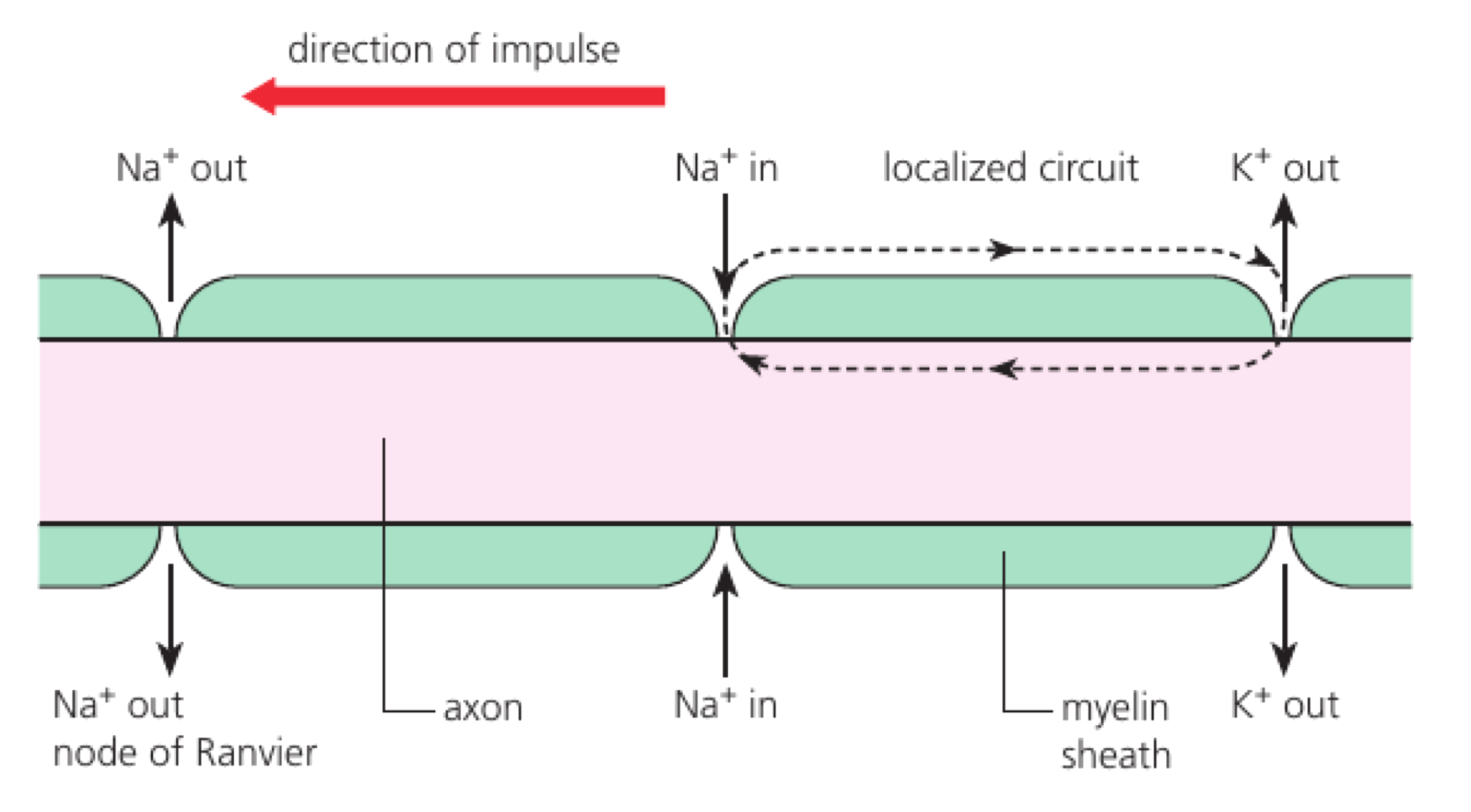
Impulse conduction speed increases with axon diameter and myelination because both allow local currents to influence the next excitable membrane region more rapidly.
Comparison Faster case Mechanistic reason
Giant squid axon vs smaller unmyelinated fibre Giant squid axon Larger diameter lowers internal resistance
Myelinated vs unmyelinated fibre Myelinated fibre Insulation limits leakage and impulses regenerate mainly at nodes

Describe a positive correlation when conduction speed rises as axon diameter rises, and a negative correlation when one variable falls as the other rises. The correlation coefficient r gives direction and strength; R² estimates the proportion of variation in conduction speed explained by the fitted relationship.

If r = 0.90 for diameter and speed, the association is strong and positive; R² = 0.81 means about 81% of the observed variation in speed is explained by the fitted relationship, not that diameter is proven to be the sole cause.

Correlation does not by itself prove causation. Faster impulses do not have larger action-potential amplitudes; speed and signal strength are different properties.

Variation in impulse speed

Assessment in practice

1 marks
How it is assessed

This objective is assessed through multiple choice, commonly using Describe / Determine / Calculate.

Command terms

Describe / Determine / Calculate / Suggest / Outline

What earns marks

Build the answer around this relationship: Larger axon diameter is associated with faster impulse transmission.

Representative question

Question 1

[Maximum number: 1]

The diagrams represent sections through different axons. Which axon has the slowest speed of impulse?

A
B

SL Transfer: Explain Core Neural Signalling

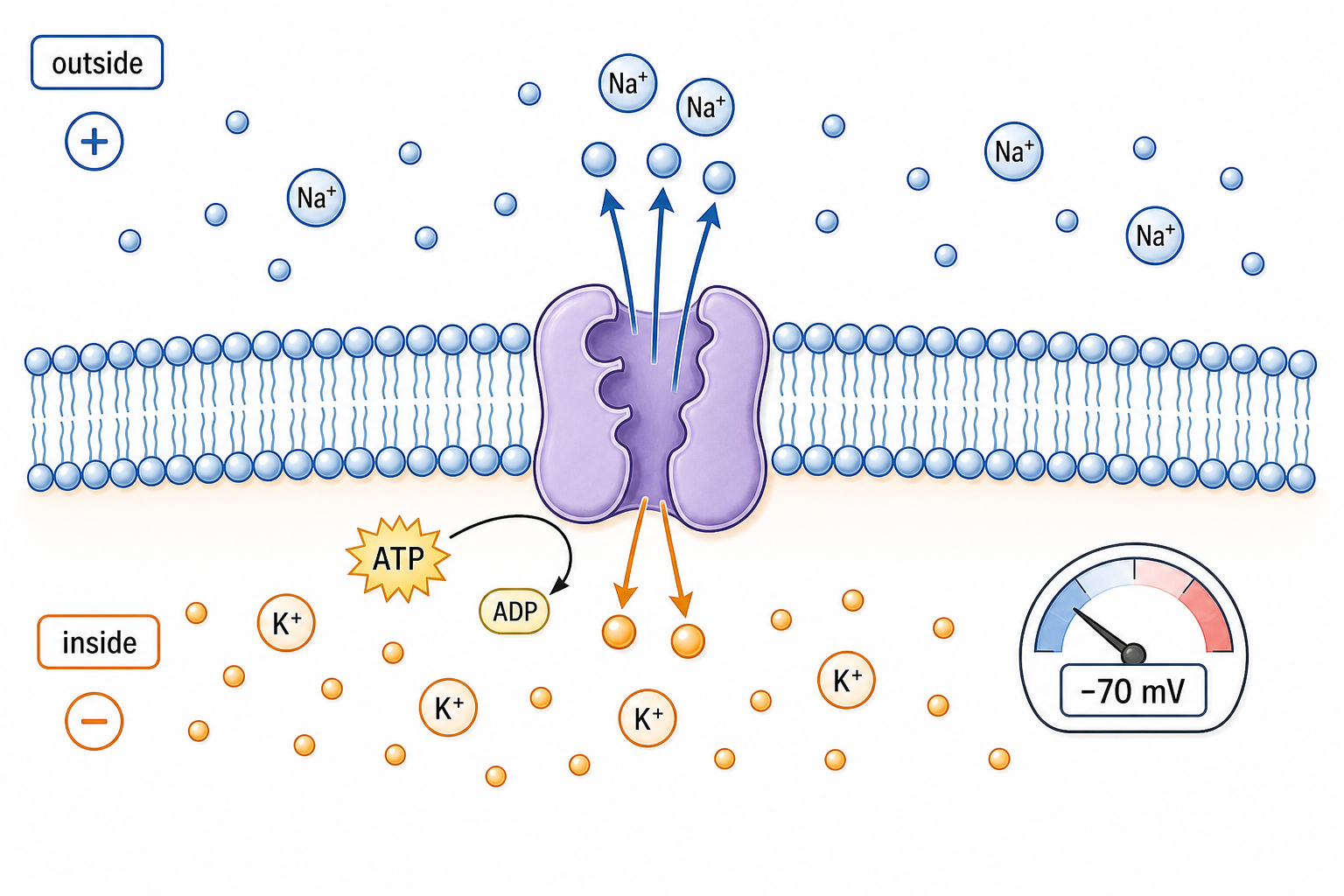
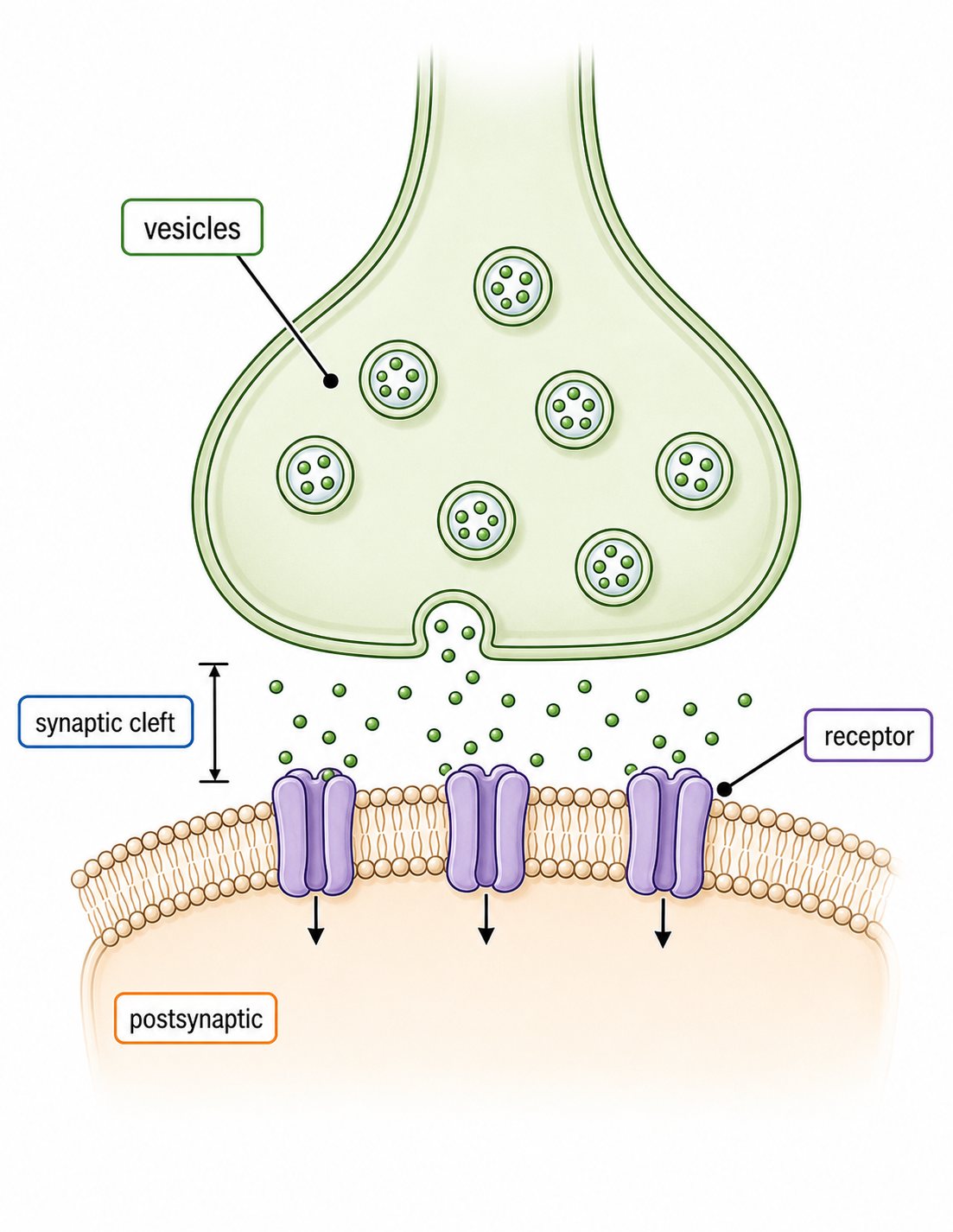
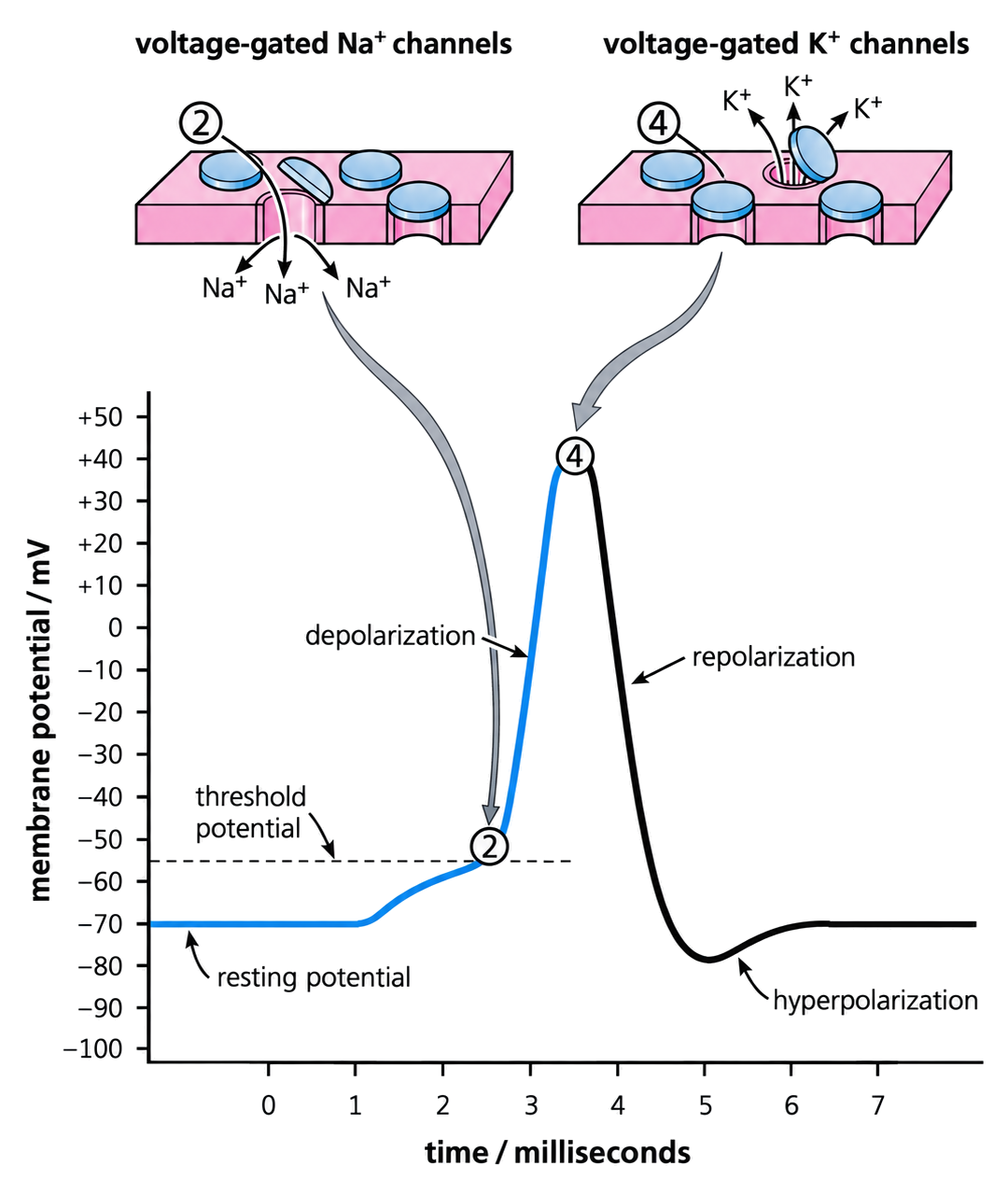
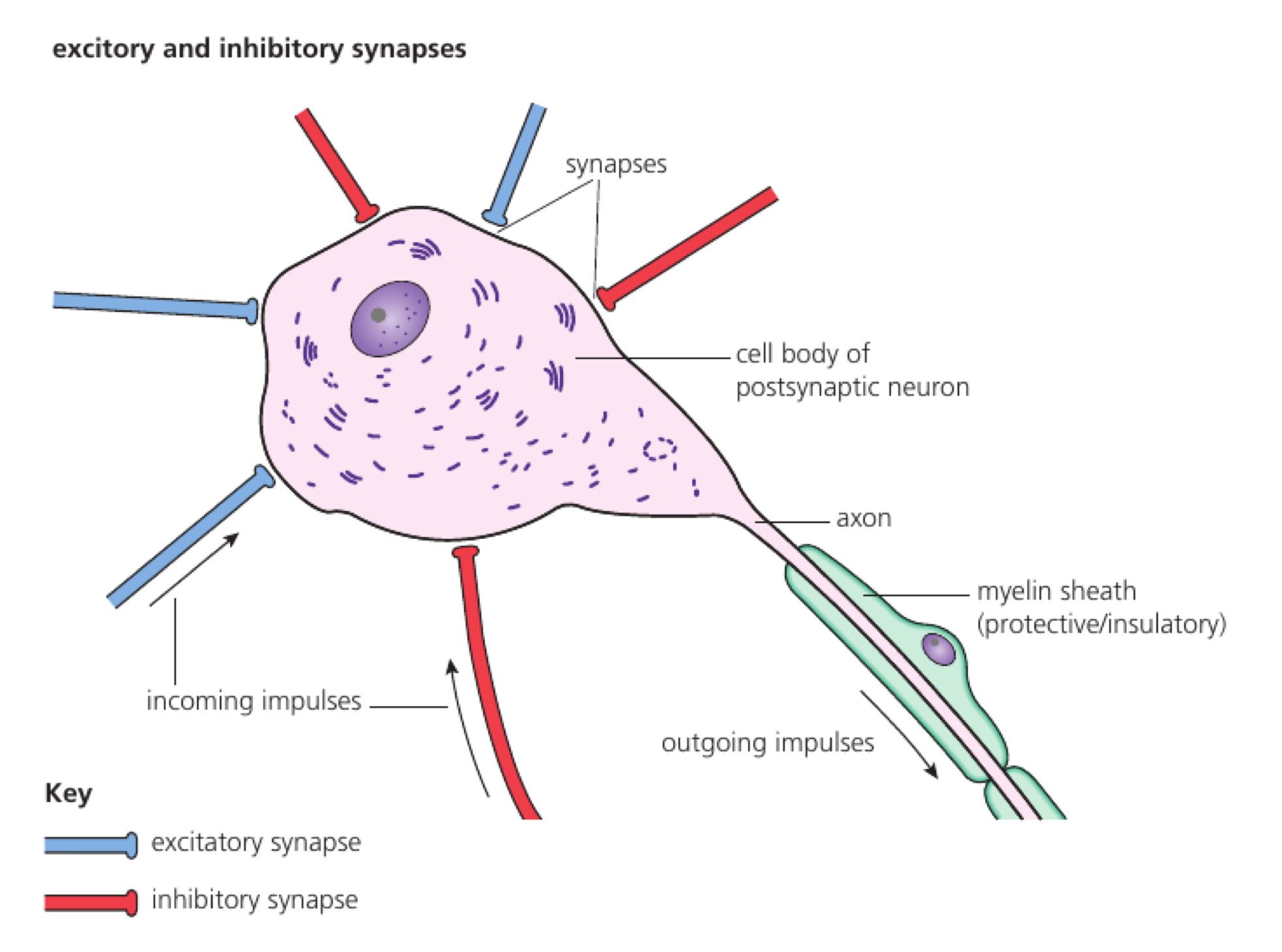
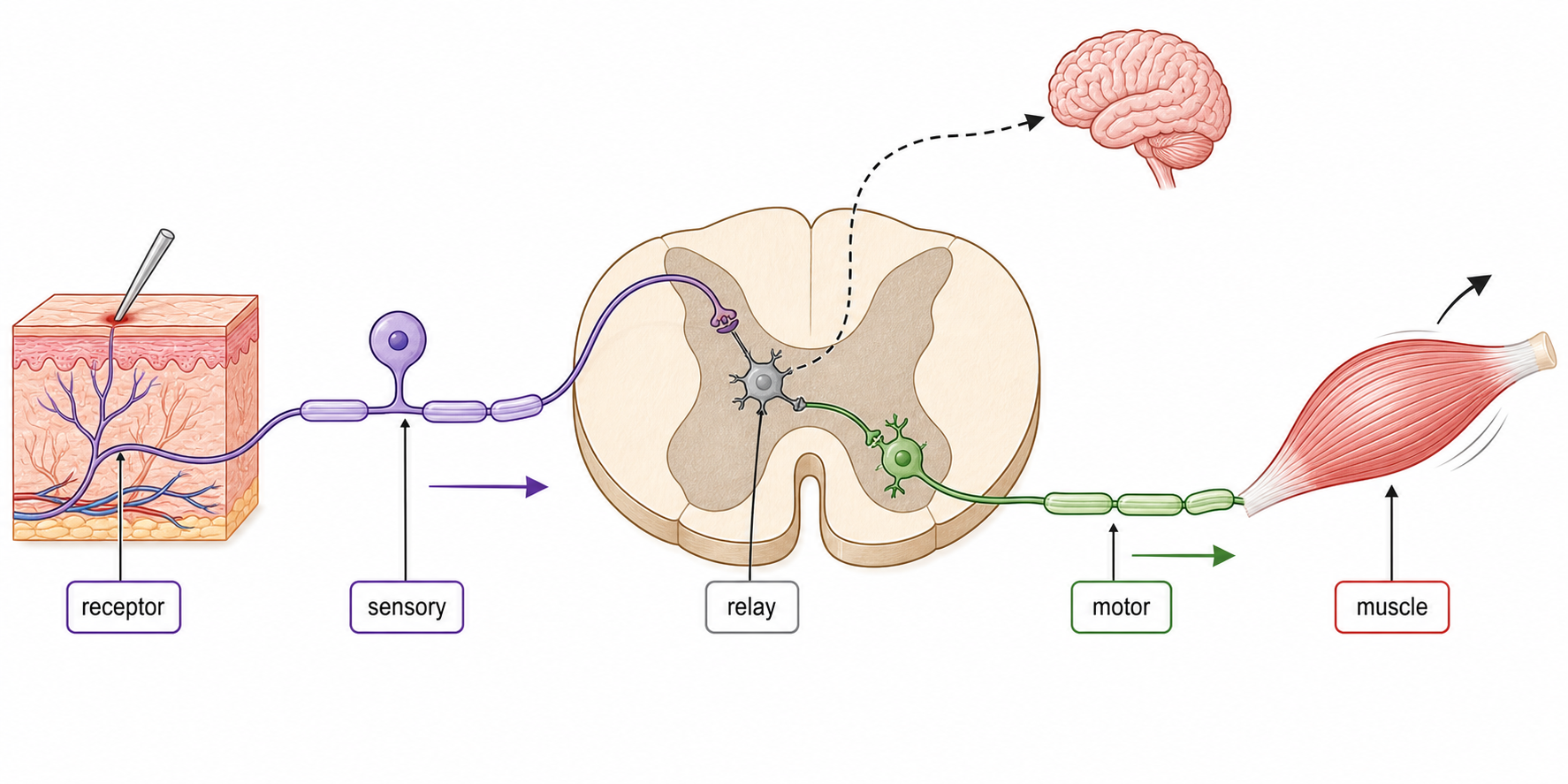
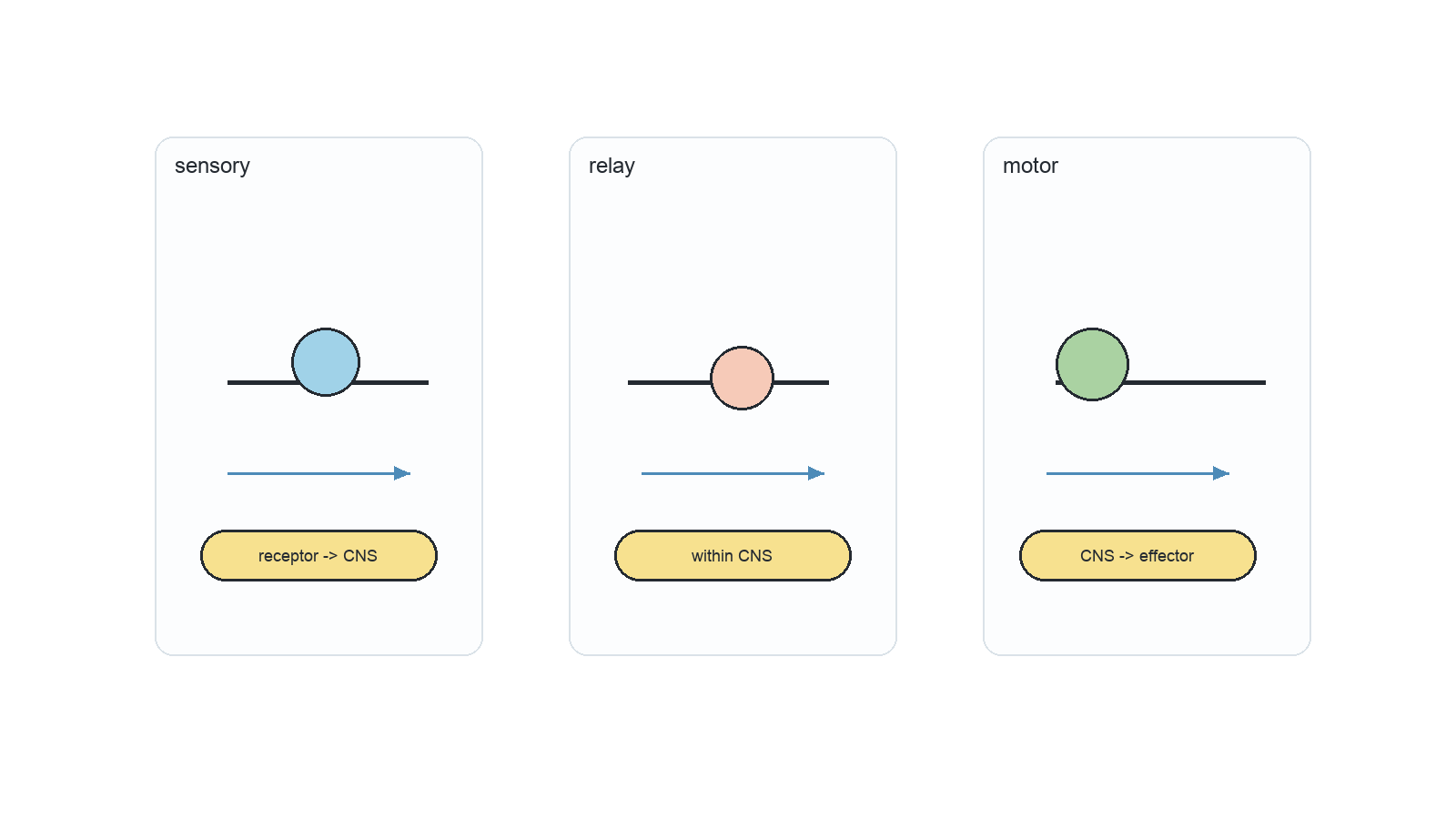
Neurons carry electrical impulses in the nervous system; motor, sensory, and relay neurons differ in axon, dendrite, and cell body arrangement. Sodium-potassium pumps use ATP to move 3 Na+ out and 2 K+ in; ion gradients make the resting axon polarized at about -70 mV. A nerve impulse is a propagated action potential along a nerve fibre; stimulus-triggered sodium influx reverses membrane polarity. Larger axon diameter lowers resistance and increases impulse speed; myelin sheaths and nodes of Ranvier enable faster saltatory conduction. Synapses connect neurons to neurons, muscles, or glands; chemical synapses transmit one way across a narrow synaptic cleft. Action potentials open voltage-gated Ca2+ channels in presynaptic terminals; Ca2+ causes vesicle fusion and neurotransmitter exocytosis into the cleft. Neurotransmitters diffuse and bind receptors on the postsynaptic membrane; EPSPs depolarize the membrane and make threshold more likely.

Concept essentials

  • Larger axon diameter is associated with faster impulse transmission.
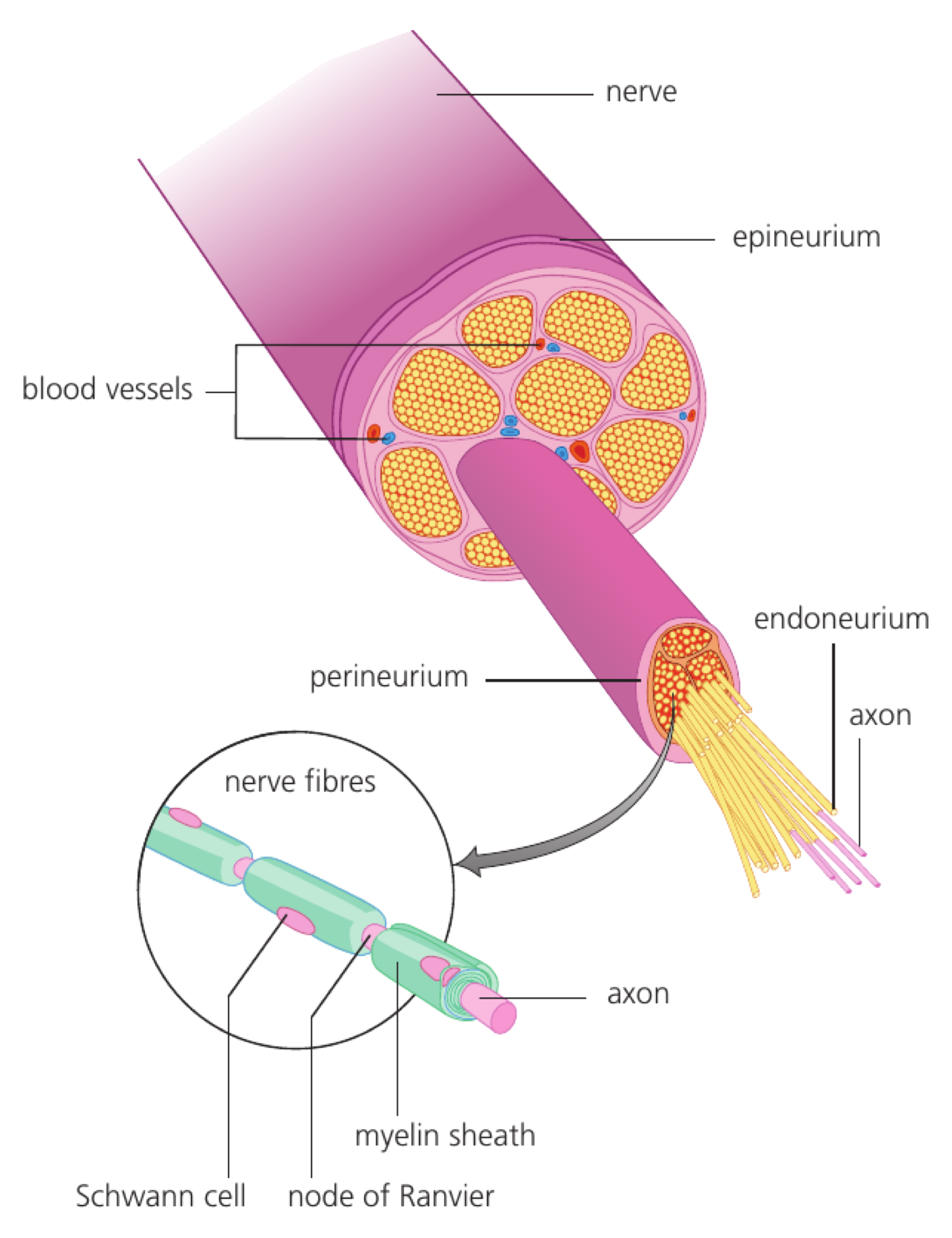
  • Myelin sheath is lipid-rich insulation around axons.
  • Nodes of Ranvier allow ion exchange at gaps in the myelin sheath.
  • Myelination increases conduction speed by supporting saltatory conduction.