EduNinja
[Maximum number: 2]

The wild Bactrian camel, Camelus ferus, lives only in the desert regions of Mongolia and northern China.

Fig. 1.1 shows a wild Bactrian camel.
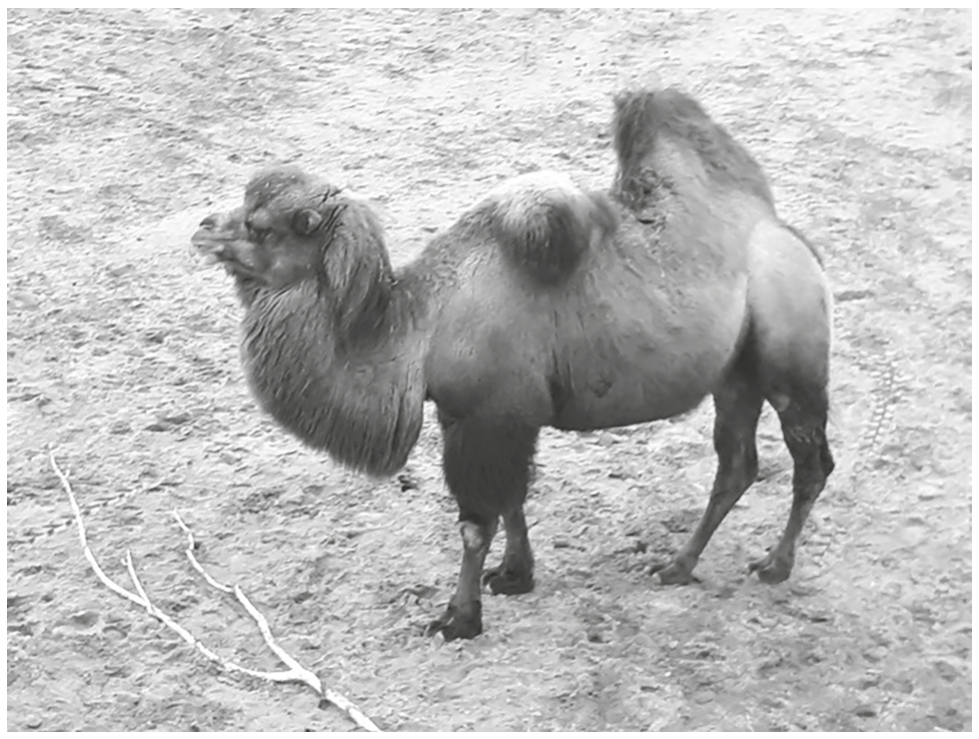
Fig. 1.1

Fig. 1.1

(a)

The wild Bactrian camel is at risk of extinction in the wild and is categorised as critically endangered by the International Union for Conservation of Nature (IUCN). There are only 950 wild Bactrian camels left in their natural habitat.

Suggest reasons why the wild Bactrian camel has become critically endangered.

[ 2 ]
[Maximum number: 3]

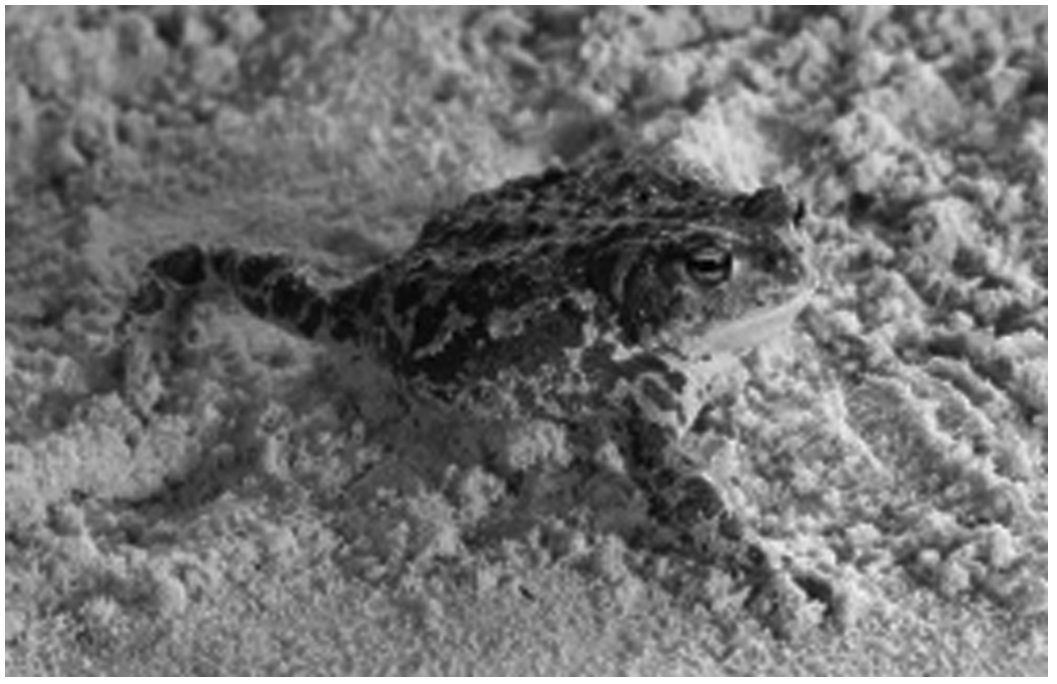
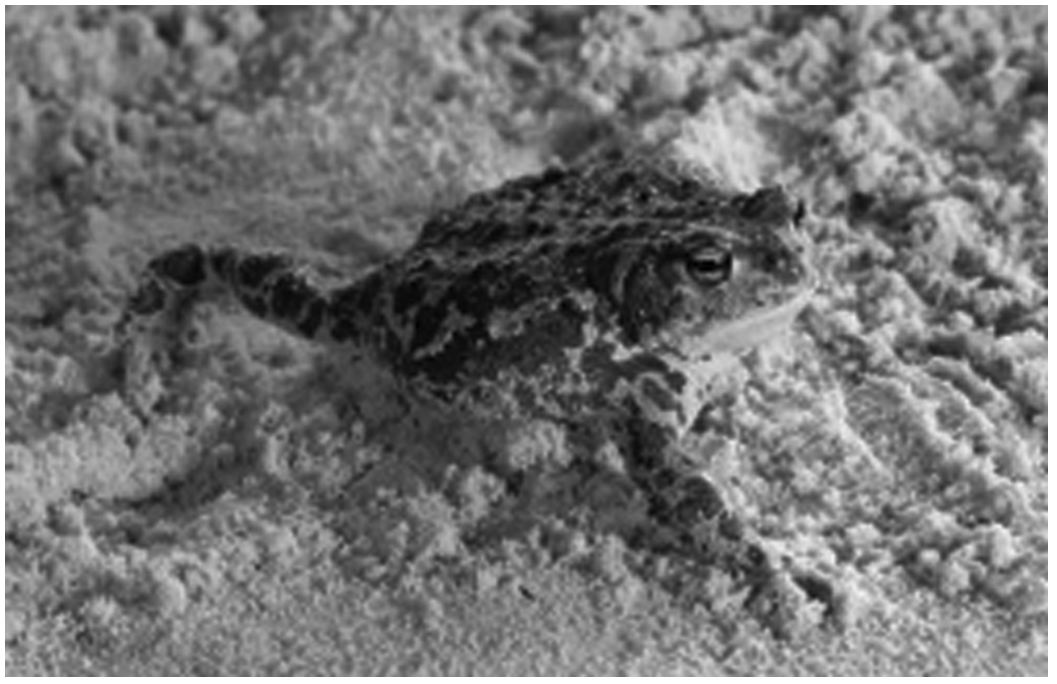
The natterjack toad, Bufo calamita, is an endangered amphibian species in the UK. It comes out of hibernation in April and breeds in pools by sand dunes along parts of the UK coast. A young natterjack toad will take about 10 weeks to develop from a fertilised egg. A natterjack toad feeds at night, by running at its prey, mainly insects and worms, on the sand dunes.

Fig. 1.1 shows a natterjack toad.

Fig. 1.1

Fig. 1.1

(a)

Suggest what may have caused the natterjack toad to become an endangered species in the UK.

[ 3 ]
[Maximum number: 2]

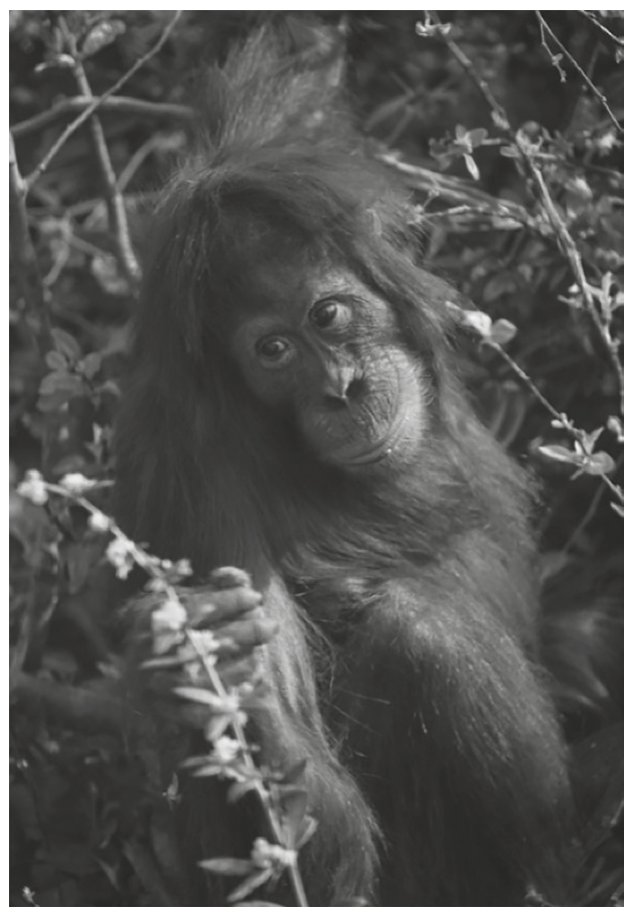
The Sumatran orangutan, Pongo abelii, is found only on the island of Sumatra, Indonesia.
Fig. 1.1 shows a Sumatran orangutan.

Fig. 1.1

Fig. 1.1

(a)

The International Union for Conservation of Nature (IUCN) is the world's largest global environmental organisation. The IUCN Red List of Threatened Species ™ { }^{\text {™ }} evaluates the conservation status of plant and animal species. The Sumatran orangutan is categorised as critically endangered on the IUCN Red List.

The Sumatran orangutan spends most of its time in trees and is very sensitive to habitat destruction.

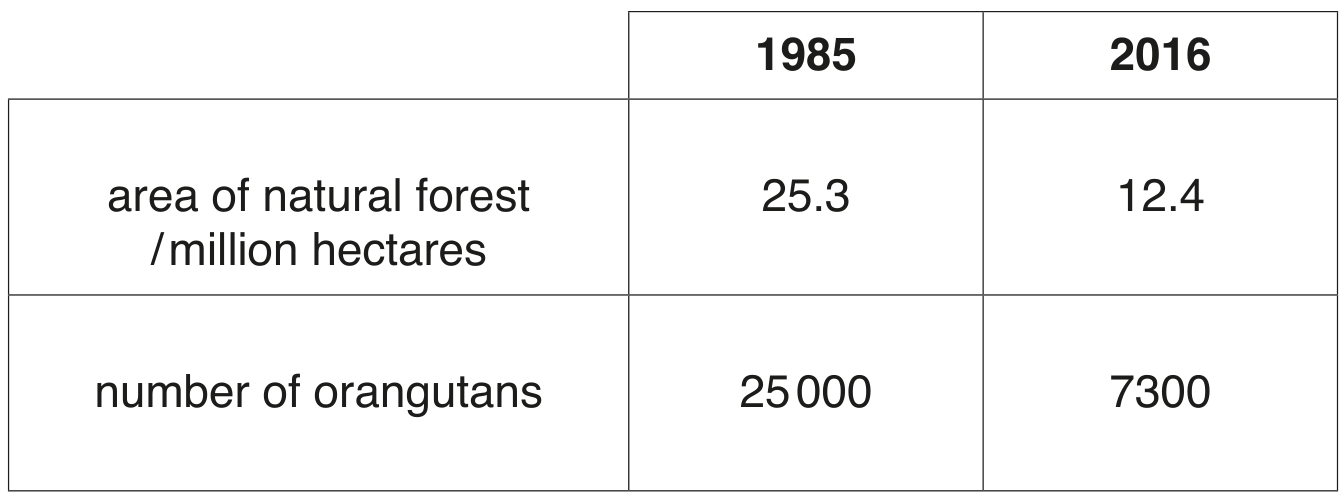
Table 1.1 shows the area of natural forest of Sumatra and the numbers of orangutans in 1985 and 2016.

Table 1.1

Table 1.1

(i)

Use your answer from (a)(ii) to estimate the number of years after 2016 that it will take for the Sumatran orangutan to become extinct in the wild, if conservation work is unsuccessful. years

(b)

Suggest two reasons for the decrease in numbers of Sumatran orangutans, other than habitat loss.

[ 2 ]
[Maximum number: 2]

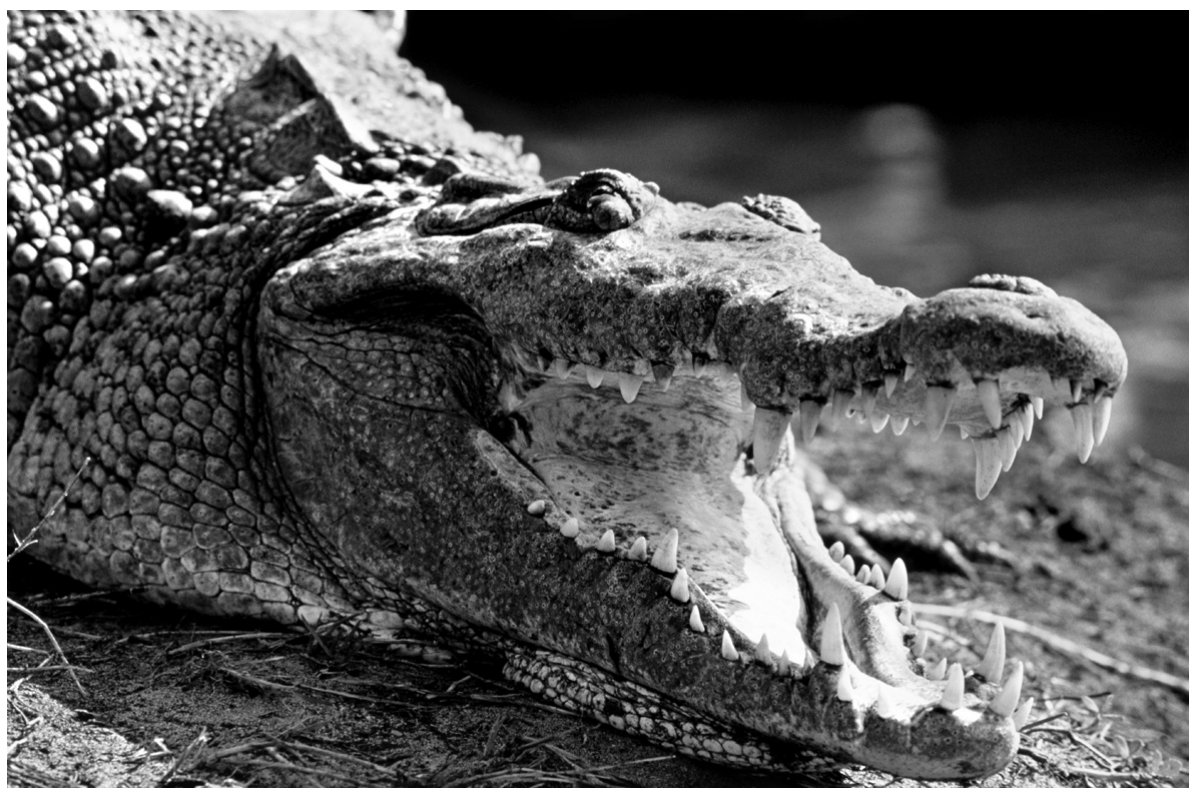
The American crocodile, Crocodylus acutus, was classified as an endangered species by the USA in 1975. It is found in estuarine regions of southern Florida.

Fig. 1.1 shows an American crocodile.

Fig. 1.1

Fig. 1.1

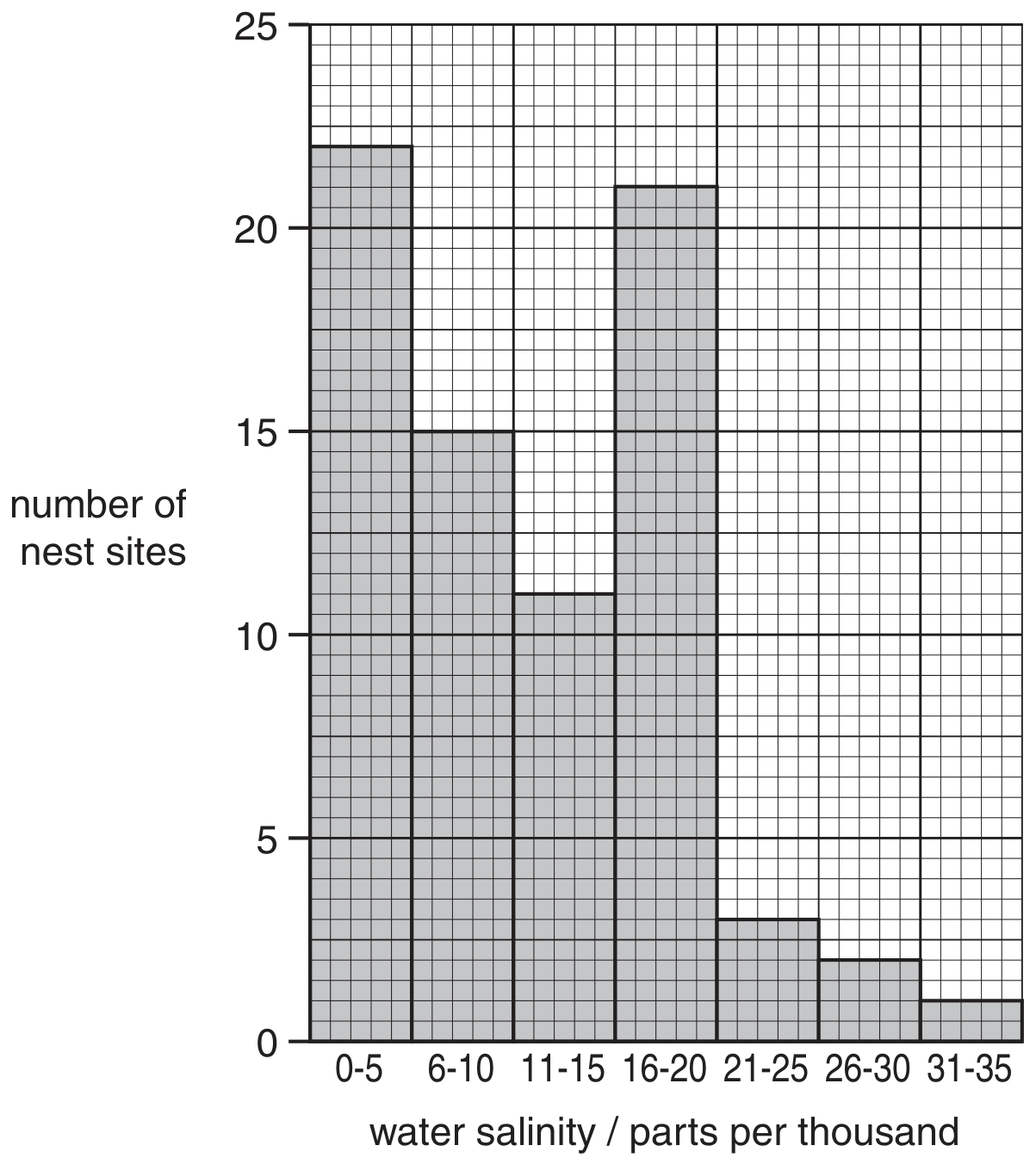
The salinity of the water was thought to play a part in the distribution of the American crocodile.

Fig. 1.2 shows the number of American crocodile nest sites in areas with water of varying salinity in southern Florida.

Fig. 1.2

Fig. 1.2

(a)

Much conservation work has been done in the Everglades National Park in Florida, which is a large wetland area. As a result the number of nest sites has increased from 8 in 1975 to 31 in 2000. This has led to a rise in the number of crocodiles.

[ 2 ]
(i)

Suggest two reasons why the population of crocodiles in the Everglades National Park has increased.
1.
2.

[ 2 ]
(a)

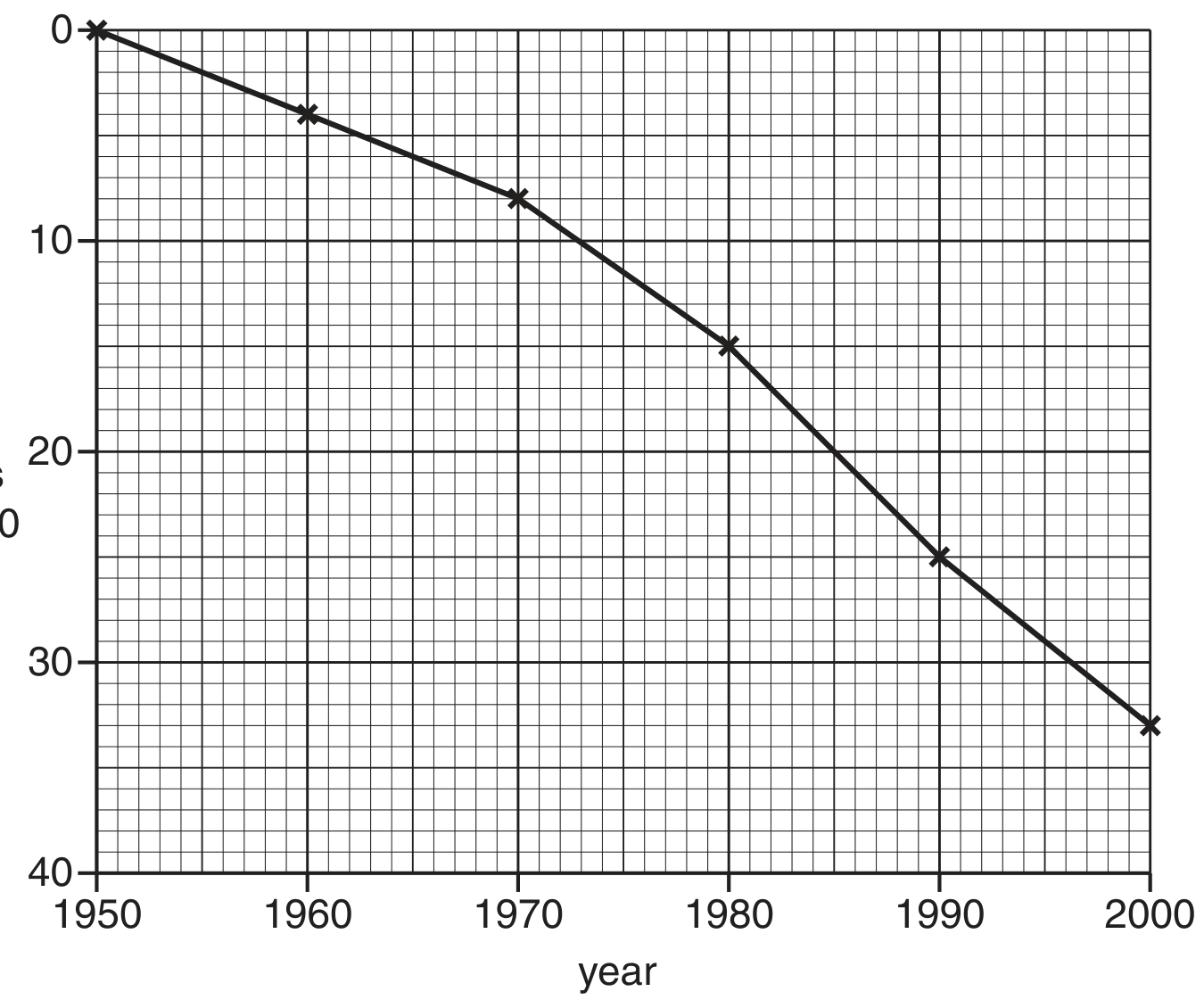
A 50-year study of marine animal biodiversity in the coastal waters of Canada was carried out.

The percentage decrease in the number of marine animal species between 1950 and 2000 is shown in Fig. 1.1.
percentage decrease in the number of marine animal species between 1950 and 2000

Fig. 1.1

Fig. 1.1

Suggest explanations for the decrease in the number of marine animal species between 1950 and 2000.

[ 3 ]
[Maximum number: 3]

The natterjack toad, Bufo calamita, is an endangered amphibian species in the UK. It comes out of hibernation in April and breeds in pools by sand dunes along parts of the UK coast. A young natterjack toad will take about 10 weeks to develop from a fertilised egg. A natterjack toad feeds at night, by running at its prey, mainly insects and worms, on the sand dunes.

Fig. 1.1 shows a natterjack toad.

Fig. 1.1

Fig. 1.1

(a)

Suggest what may have caused the natterjack toad to become an endangered species in the UK.

[ 3 ]
[Maximum number: 4]

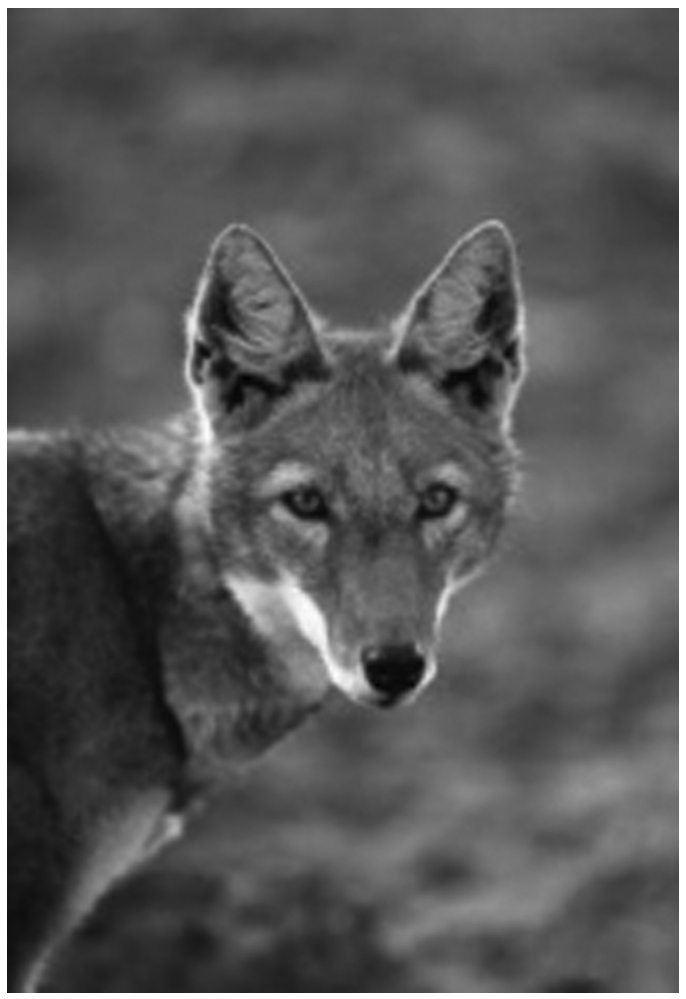
The Ethiopian wolf, Canis simensis, is a member of the Canidae family of carnivores.
Fig. 1.1 shows an Ethiopian wolf.

Fig. 1.1

Fig. 1.1

(a)

The Ethiopian wolf is classified as an endangered species by the International Union for the Conservation of Nature and Natural Resources (IUCN). It publishes an annual list of endangered species called the Red List.

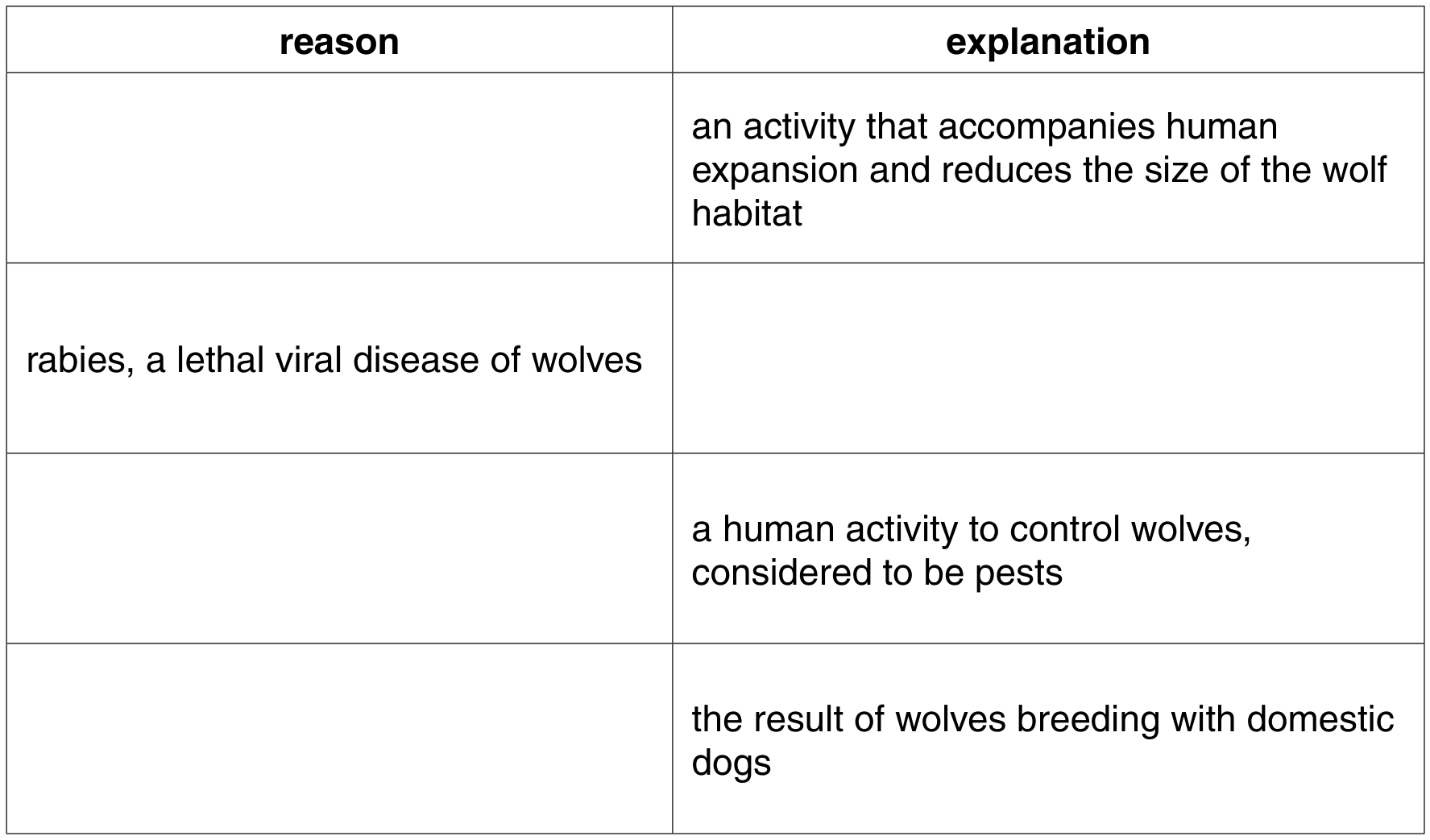
Complete Table 1.1 to summarise four of the main reasons, with further explanation, as to why the Ethiopian wolf has become an endangered species.

Table 1.1

Table 1.1

[ 4 ]
[Maximum number: 4]

The St. Lawrence river in Canada has been identified as an area with very high biodiversity.

(a)

The St. Lawrence river runs through very busy industrial areas. It has many ports for cargo ships, a good fishing trade and many whale-watching boat trips for tourists.

Decades of whale hunting has caused a large decrease in whale population sizes. Since whale hunting was banned, whale populations have not recovered.

Seven of the thirteen whale species in the St. Lawrence river have been rated as endangered species.

Suggest two reasons why the populations of whales have not recovered since the ban on whale hunting.

[ 2 ]
(b)

Fat samples from under the skin of individual whales of several different species were taken. These were analysed and the concentrations of the toxins DDT and PCBs were measured.

Suggest why whales were found to have accumulated very high concentrations of DDT and PCBs in their fatty tissues.

[ 2 ]
(a)

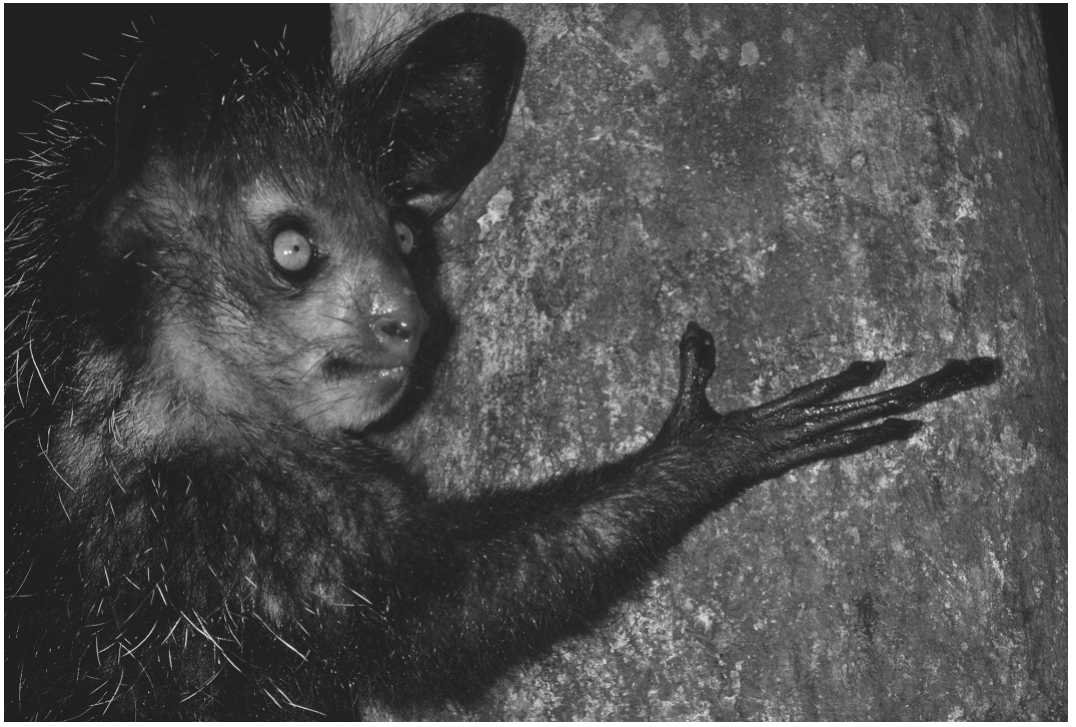
The aye-aye, Daubentonia madagascariensis, is a primate native to Madagascar. Aye-ayes are nocturnal (active at night) and make their nests high up in trees. They feed on insect larvae in the trunks of trees.

Fig. 1.1 shows an aye-aye.

Fig. 1.1

Fig. 1.1

The International Union for Conservation of Nature (IUCN) is the world's largest global environmental organisation. The IUCN Red List of Threatened Species TM { }^{\text {TM }} evaluates the conservation status of plant and animal species.

The aye-aye is categorised as endangered on the IUCN Red List, which means that it faces a very high risk of becoming extinct in the wild.

[ 1 ]
(i)

Suggest one reason why aye-ayes have become endangered.

[ 1 ]
[Maximum number: 3]

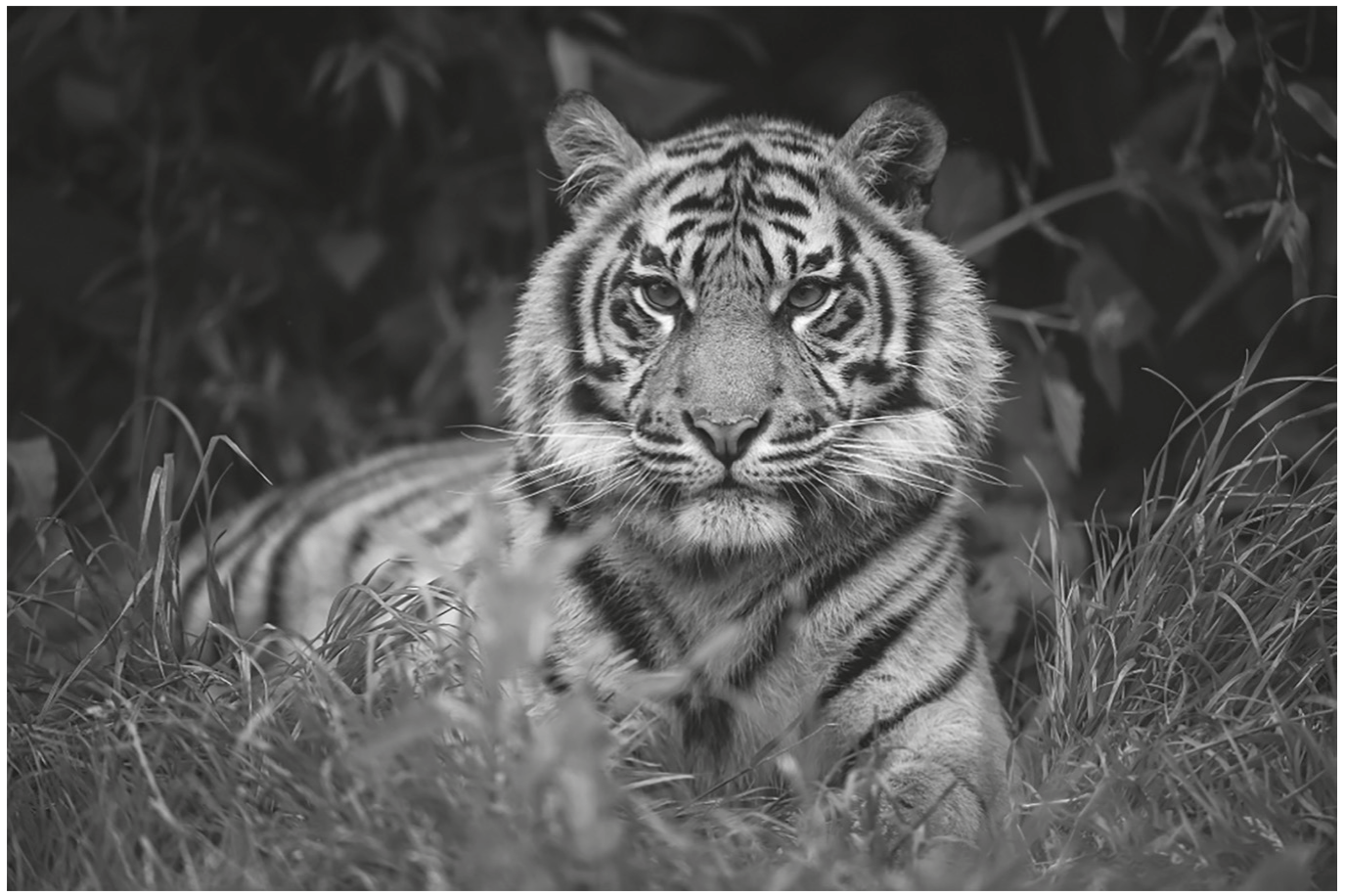
The Sumatran tiger lives on the island of Sumatra, Indonesia.
Fig. 1.1 shows a Sumatran tiger.

Fig. 1.1

Fig. 1.1

(a)

The International Union for Conservation of Nature (IUCN) is the world's largest global environmental organisation. The IUCN Red List of Threatened Species ™ { }^{\text {™ }} evaluates the conservation status of plant and animal species.
The Sumatran tiger is categorised as critically endangered on the IUCN Red List. There are approximately 400 Sumatran tigers left in the wild.

Suggest reasons why the Sumatran tiger has become critically endangered.

[ 3 ]
0